




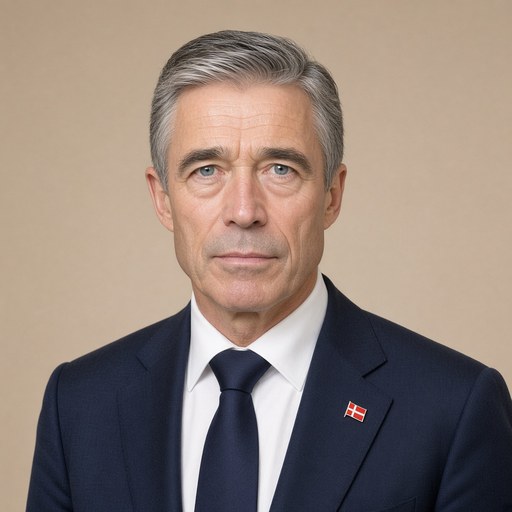
Prime Minister Anders Fogh Rasmussen's Constitution Day Speech 2007 in Fuglsang Park, Toreby and Byparken, Roskilde
 Anders Fogh Rasmussen · Prime Minister of Denmark
- Context
- Rasmussen addressed Constitution Day celebrations on June 5, 2007, speaking at Fuglsang Park and Roskilde about Danish democracy, freedoms, and recent free speech challenges.
- Main themes
- Freedom of expression, Danish constitution, democracy, law of succession and gender equality, Muhammad cartoon crisis, UN resolution on religious protection, fundamental freedoms, Danish national identity, totalitarianism vs. free speech
- Duration
- ~23 min
- Words
- 2,752
- Sentences
- 189
- Readability
- 47
- Grade
- 10.1
- Syntax
- 2.60
- Vocabulary
- 2.13
Translated from Danish
The broad sphere of national life a sentence belongs to. Every sentence has an Arena, so it is the denominator the other indices are read against.
Other189 sentences in 89 paragraphs
Denmark received its free constitution on June 5, 1849. The people gained power, and absolute monarchy was abolished. Not through bloody uprisings as in other countries. No, here at home, it was all over in one afternoon in Copenhagen in the spring of 1848. It was a revolution in peace and tolerance. Civilized and bloodless. And finished in time for everyone to get home for dinner.
That is probably typically Danish. And good for that.
The Constitution is a spacious framework for Danish democracy. So spacious that it does not need to be changed every other moment. And that is how a constitution should be.
The Constitution guarantees fundamental freedoms. The protection of individual freedom is crucial for a democracy. Therefore, the freedoms must be carved in granite. Therefore, it should be difficult to change the Constitution. And therefore, the Constitution can and should only be changed if there is massive support among the population for it.
I see no current need to change the Constitution. But let me remind you that we are in the process of changing the law of succession. And that change follows the same procedure as a change to the Constitution.
We will change the law of succession to ensure equality to the Danish throne. According to the current law of succession, a boy precedes a girl. From now on, it will be the firstborn who becomes the regent – regardless of whether it is a boy or a girl.
We adopted this change in the Folketing already last year. But to become law, the change must be adopted once more in the Folketing after the next parliamentary election. And then there must be a referendum on the matter.
So it is long and cumbersome. But equality between women and men is an important principle. Therefore, I strongly hope that the law will be adopted in the referendum when we get there.
* * *
The Constitution guarantees us a number of fundamental freedoms.
They are all important. But freedom of expression is the most precious freedom we have. For if we do not have the right to freely communicate our thoughts to others, if we do not have the right to discuss and criticize, then none of the other freedoms are really worth much.
Freedom of expression includes the right to criticize those in power – politicians, civil servants, anyone who has authority and power. Freedom of expression includes the right to demand that those in power be replaced. And this right is fundamentally important for the protection of the other freedoms.
All the other freedoms – personal freedom, property rights, the inviolability of the home, freedom of religion, freedom of assembly, and so on – would in reality not be worth much if citizens do not have the right to freely express themselves, discuss, criticize, object. And ultimately demand the replacement of those in power if they violate the freedoms.
Therefore, freedom of expression is the most important and valuable of all freedoms.
But freedom of expression also helps to ensure progress and development in society.
Freedom of expression is the freedom to come up with new thoughts and ideas that can move us forward. New thoughts and ideas that may challenge old notions. New thoughts and ideas that may even provoke – and thus initiate a new development.
Through this process, old truths are constantly challenged by new knowledge, new theories, new ways of seeing things.
That is why freedom of expression is so crucial.
Just over a year ago, freedom of expression was seriously put to the test here in the country. Following the publication by Jyllands-Posten of 12 drawings of the Prophet Muhammad.
We all remember the dramatic images of violent demonstrations against Denmark in a number of Muslim countries. It made a strong impression on all of us to see the Danish flag being burned, to see Danish embassies in flames, to hear and see the threats against Denmark and Danes.
Three weeks ago, I visited Jordan. There I experienced that the image of angry Muslims and the Danish flag in flames has long been forgotten.
What remains is the image of a country that stood firm when our fundamental values came under pressure. Today, Denmark is respected. Because we stood guard over freedom of expression.
It is that freedom that totalitarian forces try to limit.
That it is serious, we saw again here in March.
A number of Muslim countries presented a resolution at the UN that calls on member states to introduce legislation that limits freedom of expression in the name of respect for religion. The resolution suggests that religions as such, particularly Islam, can be protected in the same way as individual rights.
The resolution was adopted.
It is quite thought-provoking that this decision to limit freedom of expression was adopted by a majority of countries, many of which do not themselves live up to the principles of freedom and democracy.
It is also quite thought-provoking that the resolution to limit freedom of expression was adopted in a body called the "Human Rights Council." Of all places, the decision to call for restrictions on freedom of expression is made in the body that is otherwise established to protect human rights.
Fortunately, this resolution is not legally binding. And let me make it quite clear: Denmark does not intend to comply with such a resolution. We will not change our legislation.
Freedom of expression also includes the right to critical debate about religion. We are firmly in favor of freedom of religion. Therefore, we fight for the individual’s right to freely practice their religion everywhere in the world. Therefore, we condemn any expression, any action, and any attempt to demonize people based on their religion or ethnic background. And therefore, we combat any persecution of or discrimination against people based on their religious beliefs.
But freedom of expression also includes the right to critical debate about religious texts, codes of conduct, and symbols.
One cannot abolish or limit freedom of expression by demanding or asserting that something is sacred and therefore exempt from discussion.
Faith alone does not give the individual an unassailable moral superiority.
* * *
Equal rights for all – and thus also equality between women and men – is a fundamental principle in our society.
It is a core principle that the individual has rights and duties as a human being and not depending on gender or class or lineage.
But it is not only an obvious principle that women and men should have equal opportunities in society.
It is also common sense. It is indeed a principle that has brought our society a long way forward and upward economically, socially, and educationally.
Denmark is one of the countries in the world where a relatively high number of women are active in the labor market. The increasing participation of women in the workforce has created growth and prosperity in Denmark.
Women receive education on par with men. Yes, we have reached the point where there are more women than men in higher education.
When Denmark today has the most flexible and dynamic economy in Europe, it is partly thanks to the active contribution of women in society.
To support this development, we have built a welfare society where we collectively solve a number of tasks that traditionally rested on women in families.
Children are cared for in daycare centers and childminding. The elderly who cannot take care of themselves receive care and support.
This welfare service has contributed to freeing women. For it was not the men who took care of these caregiving tasks in the old society.
We must ensure that the offerings and quality in public welfare services are top-notch. For that helps to ensure a dynamic and flexible society with good competitiveness. And it helps to ensure equality between women and men.
I am not saying that we have ensured full equality between women and men in all respects. But compared to other countries, we have come a long way.
And the experiences we have gained in Denmark could be beneficially utilized in other parts of the world.
This applies, for example, to many Arab countries. For religious and historically cultural reasons, women are largely absent from economic and political life and do not enjoy the same rights as men.
Several UN reports have established that one of the biggest obstacles to economic and social progress in the Arab world is that one half of the population – women – are to a greater or lesser extent excluded from actual societal life.
Women do not have sufficient access to health and education. This results in high mortality rates among women and a significant waste of human resources.
These UN reports have been prepared by, among others, Arab scholars and experts. They say that the liberation of women is a prerequisite for an Arab renaissance. And their recommendations are crystal clear.
Women in Arab countries must have the same opportunities as men to participate in all desirable activities in the labor market and in society.
There is a need for reforms in the Arab world focusing on equal access to health and education, personal freedom, and protection of women's rights.
I completely agree. And the Danish government actively supports such reforms in Arab countries. Among others, in Morocco, Jordan, and Yemen.
It is disheartening when religion and old cultural customs and prejudices suppress personal freedom, keep women in a subordinate position to men, and block economic, social, and educational progress.
Another example is Africa. Across practically the entire African continent, women suffer from a lack of equality. In some places for historical and cultural reasons, in others for religious reasons. And it is largely women who feel the violence and oppression associated with the many wars and conflicts in Africa.
The lack of equality between women and men has deprived Africa of many development opportunities. For it is particularly women who are responsible for feeding the family. 80 percent of the food produced in Africa is grown by women. And agricultural production could increase by over 20 percent if women had the same education, rights, and resources as men.
Indeed, lack of education is a major problem. Very often, girls are taken out of school when they reach their teenage years. Partly for economic reasons, because the family needs their labor. Partly for cultural reasons, because they start families and marry at an early age.
Africa suffers greatly under these outdated traditions and dogmas. For it is clear that women are the focal point in the village and in the family. By giving women stronger rights and the same opportunities as men, Africa could achieve great economic and social progress.
That is why the government has decided to strengthen support for women in Africa. By supporting a woman, we help an entire family on their way.
We will support girls in getting a proper education. We will support women in starting their own businesses more easily. We will support women being better legally protected, for example, regarding property rights and inheritance rights. We will support women being better protected against violence and sexual abuse.
And we will support women in Africa receiving better rights and better treatment in the healthcare system. It is especially important to give women better protection against HIV/AIDS infection. And against unwanted pregnancies.
It is fundamentally important for progress in Africa that women can decide for themselves how many children they want to have.
Therefore, they must have better access to family planning, including better access to contraception.
But here we again run into religion. For a very strong alliance between the Catholic Church, evangelical circles in the USA, and Muslim countries opposes the use of condoms and other contraception and preaches sexual abstinence as the best means to prevent HIV/AIDS and prevent pregnancy.
One can certainly say that. But it is obviously completely unrealistic. One must take one's starting point in real life.
It is disheartening when fundamentalist religiosity is allowed to block common sense, rational thinking, and scientific documentation.
And it is largely women who must suffer under fundamentalism. And ultimately, it is Africa and the Middle East that lose out on women's lack of equality.
* * *
That is why it is so important to distinguish between religion and politics. It is desirable that religion takes up less space in the public sphere.
Of course, we cannot and should not impose restrictions on religious expressions. That would contradict freedom of expression. Yes, critical debate about religion is indeed an important part of freedom of expression – just as critical debate about any form of authority in society is vital for a free democracy.
It is also important to respect that the individual may have a deep religious conviction and derive invaluable help from being able to go somewhere with their sorrow and joy, doubt and gratitude, hopelessness and optimism. There are people who have pulled themselves out of deep personal problems through a strong faith. We should acknowledge and respect that.
And of course, religious conviction will influence the individual’s attitudes toward many of the themes being discussed in society. In that way, faith influences both attitudes and actions. It is unavoidable. In that sense, religion will always be present in the public sphere – at least in a free society.
However, the crucial issue is how religion influences society and its organization.
And here it is important to distinguish between religion and politics.
In practice, this means that politicians do not interfere in the individual’s faith or in the internal life of churches and religious communities. In full respect of the constitutionally guaranteed freedom of religion.
But it also means that laws and regulations are elevated above and are neutral in relation to different religious beliefs. In the Danish rule of law, it is the laws of the Folketing that apply – not the Bible, the Koran, or other sacred texts.
This means that women and men have equal rights in Danish society. And that they are secured in legislation, regardless of what religious beliefs may exist regarding the matter.
This means that the rights of homosexuals are universally valid principles in Danish society. That they are secured in legislation. And are not dependent on what religious beliefs may exist regarding these principles.
This means that all citizens in Denmark have equal rights and obligations regardless of religious belief. It goes both ways. On the one hand, the state should not interfere in, for example, religiously motivated clothing or food culture. It is precisely a personal matter – even in the public sphere.
On the other hand, no one should be able to refuse to make themselves available to the labor market with reference to religiously motivated personal codes of conduct. And it should be a given that an employer can freely establish reasonable rules for dress code in the workplace.
Laws and regulations must apply equally to all, regardless of whether one is Christian, Muslim, Jewish, or whatever one may be.
In general, it could contribute to religious peace in the public sphere if we were much less preoccupied with religious symbols. It is striking how much it can stir emotions to see Muslim women wearing headscarves. Let them be. Let the well-known Danish open-mindedness ensure the right to dress as one wishes – even in the public sphere.
On the other hand, we sometimes encounter from certain religious circles an unreasonable insistence on consideration for special, religiously motivated arrangements in situations where Danish customs clash with other norms and religious beliefs. It would clearly contribute to fewer religious tensions in the public sphere if there were appropriate flexibility, pragmatism, and adaptability shown by religious circles in these situations.
We need to be more aware of the principles and attitudes that have made Denmark a society with strong cohesion. We do this by insisting that religion is primarily a private matter.
If we are to maintain the strong cohesion that is so essential for Denmark's progress and stability, it is necessary that we also in the future meet each other in the public sphere as human beings and citizens of Denmark – and not as representatives of different religions.
Let us remember the good Danish open-mindedness. Open-mindedness is that the individual, grounded in their own firm beliefs, recognizes the right of others to think differently.
Open-mindedness is the freedom to be different.
Freedom of expression and open-mindedness. That is the core of democracy.
The original Danish. The tags above are read on the English translation's sentences.
Danmark fik sin frie forfatning den 5. juni 1849. Folket fik magten, og enevælden blev afskaffet. Ikke ved blodige opstande som i andre lande. Nej, herhjemme blev det overstået på en eftermiddag i København i foråret 1848. Det var en revolution i fred og fordragelighed. Civiliseret og ublodig. Og overstået tids nok til, at alle kunne nå hjem og spise aftensmad.
Det er nok typisk dansk. Og godt for det.
Grundloven er en rummelig ramme om det danske folkestyre. Så rummelig, at den ikke behøver at blive ændret hvert andet øjeblik. Og sådan skal en grundlov også være.
Grundloven sikrer de grundlæggende frihedsrettigheder. Beskyttelsen af det enkelte menneskes frihed er afgørende for et folkestyre. Derfor skal frihedsrettighederne være mejslet i granit. Derfor skal det være svært at ændre grundloven. Og derfor kan og skal grundloven kun ændres, hvis der er massiv opbakning i befolkningen til det.
Jeg ser ikke noget aktuelt behov for at ændre grundloven. Men lad mig minde om, at vi er i færd med at ændre tronfølgeloven. Og den ændring følger samme procedure som en ændring af grundloven.
Vi vil ændre tronfølgeloven for at sikre ligestilling til den danske trone. Efter den gældende tronfølgelov går dreng forud for pige. Fremover skal det være den førstefødte, der bliver regent – uanset om det er en dreng eller en pige.
Vi har vedtaget denne ændring i Folketinget allerede sidste år. Men for at blive lov skal ændringen vedtages én gang til i Folketinget efter næste folketingsvalg. Og derefter skal der være folkeafstemning om sagen.
Så det er langt og omstændeligt. Men ligestilling mellem kvinder og mænd er et vigtigt princip. Derfor håber jeg stærkt, at loven bliver vedtaget ved folkeafstemningen, når vi kommer dertil.
* * *
Grundloven sikrer os en række grundlæggende frihedsrettigheder.
De er alle vigtige. Men ytringsfriheden er den mest kostbare frihedsrettighed, vi har. For har vi ikke ret til frit at meddele vore tanker til andre, har vi ikke ret til at diskutere og kritisere, ja, så er ingen af de øvrige frihedsrettigheder i virkeligheden meget værd.
Ytringsfriheden indeholder retten til at kritisere magthaverne – politikerne, embedsmændene, enhver der har myndighed og autoritet. Ytringsfriheden indeholder retten til at kræve magthaverne skiftet ud. Og denne ret er helt grundlæggende for beskyttelsen af de øvrige frihedsrettigheder.
Alle de øvrige frihedsrettigheder – den personlige frihed, ejendomsretten, boligens ukrænkelighed, religionsfrihed, forsamlingsfrihed og så videre – ville i realiteten ikke være meget værd, hvis ikke borgerne har ret til frit at ytre sig, diskutere, kritisere, gøre indsigelse. Og i yderste fald kræve udskiftning af magthaverne, hvis de krænker frihedsrettighederne.
Derfor er ytringsfriheden den vigtigste og mest værdifulde af alle frihedsrettighederne.
Men ytringsfriheden er også med til at sikre fremskridt og udvikling i samfundet.
Ytringsfriheden er friheden til at komme med nye tanker og idéer, der kan bringe os fremad. Nye tanker og idéer, der måske gør op med gamle forestillinger. Nye tanker og idéer, der måske oven i købet provokerer – og dermed sætter gang i en ny udvikling.
Gennem denne proces bliver gamle sandheder hele tiden udfordret af ny viden, nye teorier, nye måder at se tingene på.
Derfor er ytringsfriheden så afgørende.
For godt et år siden blev ytringsfriheden for alvor sat på prøve her i landet. I forlængelse af Jyllands-Postens offentliggørelse af 12 tegninger af profeten Muhammed.
Vi husker alle de dramatiske billeder af voldelige demonstrationer mod Danmark i en række muslimske lande. Det gjorde et stærkt indtryk på os alle at se Dannebrog blive brændt, at se danske ambassader i flammer, at høre og se truslerne mod Danmark og danskere.
For tre uger siden var jeg på besøg i Jordan. Der oplevede jeg, at billedet af vrede muslimer og Dannebrog i brand for længst er glemt.
Tilbage står billedet af et land, som stod fast, da vore grundlæggende værdier kom under pres. I dag står der respekt om Danmark. Fordi vi stod vagt om ytringsfriheden.
Det er den frihed, som totalitære kræfter prøver at begrænse.
At det er dyb alvor, så vi igen her i marts måned.
En række muslimske lande fremlagde i FN en resolution, som opfordrer medlemslandene til at indføre lovgivning, der begrænser ytringsfriheden af hensyn til respekten for religion. Resolutionen lægger op til, at religioner som sådan, særligt Islam, kan være beskyttelsesobjekt på linje med individers rettigheder.
Resolutionen blev vedtaget.
Det er ganske tankevækkende, at denne beslutning om at begrænse ytringsfriheden blev vedtaget af et flertal af lande, hvor mange ikke selv lever op til principperne om frihed og folkestyre.
Det er også ganske tankevækkende, at resolutionen om at begrænse ytringsfriheden blev vedtaget i et organ, der hedder ”Menneskerettighedsrådet”. Af alle steder bliver beslutningen om at opfordre til indskrænkninger i ytringsfriheden truffet i det organ, som ellers er oprettet til at beskytte menneskerettighederne.
Lykkeligvis er denne resolution ikke juridisk bindende. Og lad mig gøre det ganske klart: Danmark agter ikke at rette sig efter en sådan resolution. Vi ændrer ikke vores lovgivning.
Ytringsfriheden indebærer nemlig også retten til kritisk debat om religion. Vi går klart ind for religionsfrihed. Derfor kæmper vi for det enkelte menneskes ret til frit at udøve sin religion over alt i verden. Derfor fordømmer vi enhver ytring, enhver handling og ethvert forsøg på at dæmonisere mennesker på baggrund af deres religion eller etniske tilhørsforhold. Og derfor bekæmper vi enhver forfølgelse af eller diskrimination imod mennesker på basis af deres religiøse overbevisning.
Men ytringsfriheden indeholder også retten til kritisk debat om religiøse skrifter, leveregler og symboler.
Man kan ikke afskaffe eller begrænse ytringsfriheden ved at kræve eller hævde, at noget er helligt og derfor undtaget fra diskussion.
Tro alene giver ikke det enkelte menneske den uangribelige moralske overhøjhed.
* * *
Lige rettigheder for alle – og dermed også ligestilling mellem kvinder og mænd – er et fundamentalt princip i vort samfund.
Det er et bærende princip, at det enkelte menneske har rettigheder og pligter som menneske og ikke afhængigt af køn eller stand eller slægt.
Men ikke blot er det et selvindlysende princip, at kvinder og mænd bør have lige muligheder i samfundet.
Det er også sund fornuft. Det er faktisk et princip, som har bragt vort samfund langt fremad og opad økonomisk, socialt og uddannelsesmæssigt.
Danmark er ét af de lande i verden, hvor forholdsvis flest kvinder er aktive på arbejdsmarkedet. Kvindernes stigende erhvervsdeltagelse har skabt vækst og velstand i Danmark.
Kvinderne får uddannelse på linje med mændene. Ja, vi er nået dertil, at der er flere kvinder end mænd på de videregående uddannelser.
Når Danmark i dag står med den mest fleksible og dynamiske økonomi i Europa, så er det blandt andet takket være kvindernes aktive indsats i samfundet.
For at understøtte denne udvikling har vi opbygget et velfærdssamfund, hvor vi i fællesskab løser en række af de opgaver, som før i tiden traditionelt hvilede på kvinderne i familierne.
Børnene bliver passet i daginstitutioner og dagpleje. De ældre, der ikke kan klare sig selv, får omsorg og pleje.
Denne velfærdsservice har bidraget til at frigøre kvinderne. For det var jo ikke mændene, der tog sig af disse omsorgsopgaver i det gamle samfund.
Vi skal sikre, at tilbud og kvalitet i den offentlige velfærdsservice er i top. For det er med til at sikre et dynamisk og fleksibelt samfund med god konkurrenceevne. Og det er med til at sikre ligestilling mellem kvinder og mænd.
Jeg siger ikke, at vi på alle punkter har sikret fuld ligestilling mellem kvinder og mænd. Men sammenlignet med andre lande er vi nået langt.
Og de erfaringer, vi har høstet i Danmark, kunne med fordel nyttiggøres i andre dele af verden.
Det gælder for eksempel mange arabiske lande. Af religiøse og historisk-kulturelle grunde er kvinder i høj grad fraværende i det økonomiske og politiske liv og nyder ikke samme rettigheder som mændene.
Flere FN-rapporter har fastslået, at én af de største forhindringer for økonomiske og sociale fremskridt i den arabiske verden er, at den ene halvdel af befolkningen – kvinderne – i større eller mindre grad er sat uden for det egentlige samfundsliv.
Kvinderne har ikke tilstrækkelig adgang til sundhed og uddannelse. Det resulterer i overdødelighed blandt kvinder og et stort spild af menneskelige ressourcer.
Disse FN-rapporter er udarbejdet bl.a. af arabiske videnskabsfolk og eksperter. De siger, at kvinders frigørelse er en forudsætning for en arabisk renæssance. Og deres anbefalinger er krystalklare.
Kvinderne i de arabiske lande skal have samme muligheder som mænd for at deltage i alle ønskelige aktiviteter på arbejdsmarkedet og i samfundet.
Der er behov for reformer i den arabiske verden med fokus på lige adgang til sundhed og uddannelse, personlig frihed og beskyttelse af kvinders rettigheder.
Jeg er helt enig. Og den danske regering støtter aktivt sådanne reformer i de arabiske lande. Bl.a. i Marokko, Jordan og Yemen.
Det er forstemmende, når religion og gamle kulturelle skikke og fordomme undertrykker den personlige frihed, holder kvinderne i et underordnelsesforhold til mændene og blokerer for økonomiske, sociale og uddannelsesmæssige fremskridt.
Et andet eksempel er Afrika. Over praktisk talt hele det afrikanske kontinent lider kvinderne under mangel på ligestilling. Nogle steder af historisk-kulturelle grunde, andre steder af religiøse grunde. Og det er i høj grad kvinderne, der mærker volden og undertrykkelsen i forbindelse med de mange krige og konflikter i Afrika.
Den manglende ligestilling mellem kvinder og mænd har berøvet Afrika en masse udviklingsmuligheder. For det er særligt kvinderne, der har ansvaret for at brødføde familien. 80 procent af den mad, der bliver produceret i Afrika, bliver dyrket af kvinder. Og landbrugsproduktionen kunne øges med over 20 procent, hvis kvinder fik samme uddannelse, rettigheder og ressourcer som mænd.
Netop manglende uddannelse er et stort problem. Ganske ofte bliver pigerne taget ud af skolen, når de kommer i teenage-årene. Dels af økonomiske grunde, fordi familien behøver deres arbejdskraft. Dels af kulturelle grunde, fordi de stifter familie og indgår ægteskab i en tidlig alder.
Afrika lider hårdt under disse gammeldags traditioner og dogmer. For det er tydeligt, at kvinderne er omdrejningspunktet i landsbyen og i familien. Ved at give kvinderne stærkere rettigheder og samme muligheder som mændene, kunne Afrika nå store økonomiske og sociale fremskridt.
Derfor har regeringen besluttet at forstærke støtten til kvinder i Afrika. Ved at støtte en kvinde, hjælper vi en hel familie på vej.
Vi vil støtte, at piger kan få en ordentlig uddannelse. Vi vil støtte, at kvinder nemmere kan starte egen virksomhed. Vi vil støtte, at kvinder bliver bedre beskyttet retligt, f.eks. når det gælder ejendomsret og arveret. Vi vil støtte, at kvinder bliver bedre beskyttet mod vold og seksuelle overgreb.
Og vi vil støtte, at kvinder i Afrika får bedre rettigheder og bedre behandling i sundhedsvæsenet. Især er det vigtigt at give kvinderne bedre beskyttelse mod smitte med HIV/AIDS. Og mod uønskede graviditeter.
Det er helt fundamentalt for fremskridt i Afrika, at kvinderne selv kan bestemme, hvor mange børn, de vil have.
Derfor skal de have bedre adgang til familieplanlægning, herunder bedre adgang til prævention.
Men her støder vi igen ind i religion. For en meget stærk alliance mellem den katolske kirke, højkristelige kredse i USA og de muslimske lande modarbejder brug af kondomer og anden prævention og prædiker seksuel afholdenhed som bedste middel til at forebygge HIV/AIDS og forhindre graviditet.
Det kan man selvfølgelig sige. Men det er selvsagt aldeles urealistisk. Man er nødt til at tage sit udgangspunkt i det virkelige liv.
Det er forstemmende, når fundamentalistisk religiøsitet får lov at blokere for sund fornuft, rationel tænkning og videnskabelig dokumentation.
Og det er i høj grad kvinderne, der må lide under fundamentalismen. Og til syvende og sidst er det Afrika og Mellemøsten, der taber på kvindernes manglende ligestilling.
* * *
Derfor er det så vigtigt skelne mellem religion og politik. Det er ønskeligt, at religion kommer til at fylde mindre i det offentlige rum.
Naturligvis kan og skal vi ikke lægge begrænsninger på religiøse ytringer. Det ville stride mod ytringsfriheden. Ja, kritisk debat om religion er tilmed en vigtig del af ytringsfriheden – ligesom kritisk debat om enhver form for autoritet i samfundet er vital for et frit folkestyre.
Det er også vigtigt at respektere, at det enkelte menneske kan have en dyb religiøs overbevisning og have uvurderlig hjælp af at kunne gå et sted hen med sin sorg og glæde, tvivl og taknemmelighed, håbløshed og optimisme. Der er mennesker, der har reddet sig ud af dybe personlige problemer gennem en stærk tro. Det bør vi erkende og respektere.
Og naturligvis vil den religiøse overbevisning påvirke den enkelte persons holdninger til mange af de temaer, der bliver diskuteret i samfundet. På den måde påvirker troen både holdninger og handlinger. Det er uomgængeligt. I den forstand vil religionen altid være til stede i det offentlige rum – i hvert fald i et frit samfund.
Det afgørende er imidlertid, hvordan religionen påvirker samfundet og dets indretning.
Og her er det vigtigt at skelne mellem religion og politik.
I praksis betyder det, at politikerne ikke blander sig i det enkelte menneskes tro eller i kirkernes og de religiøse samfunds indre liv. I fuld respekt for den grundlovsfæstede frihed til religionsudøvelse.
Men det betyder også, at love og regler er hævet over og neutrale i forhold til forskellige religiøse opfattelser. I den danske retsstat er det Folketingets love, der gælder – ikke Biblen, Koranen og andre hellige skrifter.
Det betyder, at kvinder og mænd har lige rettigheder i det danske samfund. Og at de er sikret i lovgivningen, uanset hvad der måtte være af religiøse opfattelser af den sag.
Det betyder, at homoseksuelles rettigheder er alment gyldige principper i det danske samfund. At de er sikret i lovgivningen. Og ikke er afhængige af, hvad der måtte være af religiøse opfattelser af disse principper.
Det betyder, at alle borgere i Danmark har lige rettigheder og pligter uanset religiøs opfattelse. Det går to veje. På den ene side skal staten ikke blande sig i f.eks. religiøst motiveret klædedragt eller madkultur. Det er netop et personligt anliggende – også i det offentlige rum.
På den anden side skal ingen f.eks. kunne nægte at stå til rådighed for arbejdsmarkedet med henvisning til religiøst motiverede, personlige leveregler. Og det bør være en selvfølge, at en arbejdsgiver frit kan fastsætte saglige regler for påklædning på arbejdspladsen.
Love og regler skal gælde ens for alle, uanset om man er kristen, muslim, jøde, eller hvad man måtte være.
I det hele taget kunne det bidrage til religiøs fred i det offentlige rum, hvis vi var meget mindre optaget af religiøse symboler. Det er voldsomt, som det kan hidse gemytterne op at se muslimske kvinder bære tørklæde. Lad dog dem om det. Lad det velkendte danske frisind sikre retten til at klæde sig, som man vil – også i det offentlige rum.
På den anden side møder vi undertiden fra visse religiøse kredse en urimelig insisteren på hensyntagen til specielle, religiøst motiverede særordninger i situationer, hvor danske sædvaner støder sammen med andre normer og religiøse forestillinger. Det ville klart bidrage til færre religiøse spændinger i det offentlige rum, hvis der fra religiøse kredse blev udvist en passende fleksibilitet, pragmatisme og tilpasningsevne i de situationer.
Vi skal i højere grad være bevidste om de principper og holdninger, der har gjort Danmark til et samfund med en stærk sammenhængskraft. Det gør vi ved at insistere på, at religion først og fremmest er en privatsag.
Hvis vi skal opretholde den stærke sammenhængskraft, der er så væsentlig for Danmarks fremgang og stabilitet, er det nødvendigt, at vi også i fremtiden møder hinanden i det offentlige rum som mennesker og borgere i Danmark – og ikke som repræsentanter for forskellige religioner.
Lad os huske det gode danske frisind. Frisind er, at den enkelte med ståsted i egne faste holdninger anerkender andres ret til at mene noget andet.
Frisind er frihed til forskellighed.
Ytringsfrihed og frisind. Det er kernen i folkestyret.