




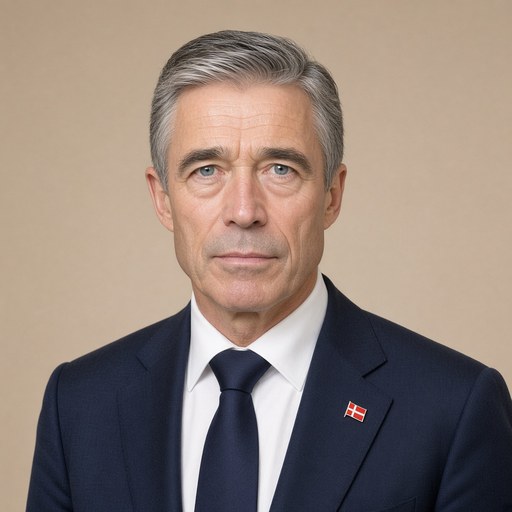
Prime Minister Anders Fogh Rasmussen's opening statement at the press conference on Iraq on February 21, 2007.
 Anders Fogh Rasmussen · Prime Minister of Denmark
- Context
- Rasmussen addressed a press conference on 21 February 2007 to announce Denmark's phased military and civilian strategy changes in Iraq.
- Main themes
- Danish military withdrawal from Iraq, transition of security responsibility to Iraqis, helicopter contribution to southern Iraq, civilian reconstruction support, Iraqi refugee assistance, increased Danish deployment to Afghanistan, coalition cooperation, NATO training mission, Danish People's Party political agreement
- Duration
- ~14 min
- Words
- 1,658
- Sentences
- 88
- Readability
- 40
- Grade
- 12.3
- Syntax
- 2.69
- Vocabulary
- 2.38
Translated from Danish
The broad sphere of national life a sentence belongs to. Every sentence has an Arena, so it is the denominator the other indices are read against.
Other88 sentences in 23 paragraphs
Welcome to the press conference, where the government will present its plans for a change in the Danish effort in Iraq. The Danish government has, at the request of the Iraqi government and at the request of the UN, contributed to the reconstruction of Iraq for over three years. There are two overarching goals with the support we have provided to Iraq. First, to help the Iraqis take over responsibility for security in their own country, and second, to support the elected government in the reconstruction of the country, not just in terms of the economy and business, but also in developing a sustainable democracy in Iraq.
Despite much violence and unrest, Iraq has, within a relatively short time, conducted a referendum on a new constitution and held two elections, installed a democratically elected parliament, and formed a unity government. It remains the Danish government's policy to support Iraq and continuously adjust the support so that the Iraqis increasingly take over and take responsibility. This applies both to security and to the reconstruction of the country.
Against this background, the government has decided to implement a series of changes to our military and civilian assistance to Iraq over the next six months. In short, it involves three elements: First, the Danish battalion will be withdrawn home by August and replaced by a helicopter contribution for the rest of the year. At the same time, we will increase support for training the Iraqi military forces. Second, we will increase civilian support to the government in Baghdad, including by providing more advisors to a number of ministries; and finally, third, we will significantly increase support to help Iraqi refugees in the surrounding area.
The government also finds it important that Denmark actively contributes to creating stability and security in Afghanistan. Therefore, the government will propose that we increase the number of Danish soldiers in Afghanistan, and this will be made possible when the battalion in Iraq returns home. The plan that the government is presenting here will be submitted to the Folketing in the coming weeks, and I can inform you that it has been agreed with the Danish People's Party, but we certainly hope that it can also be supported by other parties.
We have made these decisions because we expect that the Iraqis will take over responsibility for security in southern Iraq during 2007. This has already happened in two out of four provinces in southern Iraq. And in Basra, where the Danish forces are stationed alongside British soldiers, significant progress has been made in preparing for the Iraqis to take over responsibility for security here as well. As the Iraqis take over responsibility themselves, we can adjust the coalition's tasks, and we can reduce the number of soldiers.
The government has therefore decided to propose to the Folketing to maintain the Danish battalion in Basra unchanged until August 2007, after which it will be withdrawn as mentioned. This will happen when the contingent of soldiers that has just begun their work in Iraq has been deployed for the normal period of six months. At the same time, the government will seek a mandate in the Folketing to deploy a Danish helicopter contribution to southern Iraq from August until the end of the year. This will consist of four observation helicopters. Finally, we will strengthen our contribution to training the Iraqi military forces. This will take place within the framework of NATO's training mission and the coalition's training program.
The decision that has been made has been made in close cooperation with our coalition partners, primarily the United Kingdom. The United Kingdom, as you know, leads the multinational division in Iraq, which the Danish soldiers are part of. And I would like to take this opportunity to express my strong appreciation for the cooperation we have with the United Kingdom. The British Prime Minister Tony Blair is currently informing that the British government has decided to reduce the number of troops in Iraq by May.
We have continuously had consultations with our coalition partners and with the Iraqi government. Thus, I spoke with both President Bush and Prime Minister Blair yesterday. Today, I spoke with the Iraqi Prime Minister Maliki. He has consistently expressed the desire for Iraq to take over responsibility for security. He indicated this already in May last year when I met him in Baghdad, and it has been the line since. In today's conversation, Prime Minister Maliki expressed his pleasure that the situation in the south has developed in such a way that the Iraqis can take on more responsibility, and he confirmed that it remains the Iraqis' intention to take over responsibility for all four provinces in southern Iraq. I can also inform you that I have spoken today with my Lithuanian colleague, Prime Minister Gediminas Kirkilas, and I did so because Lithuania contributes troops to the Danish battalion in Iraq.
So much for the military aspect of the effort in Iraq. The second goal of our support to Iraq is to assist the Iraqis in the reconstruction of their country, and therefore the government has decided to strengthen the civilian effort, including by increasing support to the central authorities in Baghdad. It is precisely here that there is a need to strengthen capacity, and we will therefore send up to 10 advisors who can advise various ministries. Finally, the government will propose a significant strengthening of assistance to Iraqi refugees. We will do this by significantly ramping up our assistance to refugees in the surrounding area. In total, we will allocate 100 million kroner in 2007. The funds will be distributed so that approximately 30 million kroner will be used to continue efforts to assist refugees in Iraq, while the remaining 70 million kroner will go to protection and assistance for refugees in neighboring countries.
And finally, I would like to conclude with a few remarks about Afghanistan. The adjustment of our military presence in Iraq will, after the return of the battalion, provide an opportunity for us to strengthen our engagement in Afghanistan. It is crucial that NATO wins in the fight against the Taliban. The Taliban seeks to stop the positive development that is otherwise underway in Afghanistan. Denmark is already making a significant contribution in Afghanistan, but we are open to sending more troops. They are needed, and therefore the government will initiate discussions with the parties that support the Danish military presence in Afghanistan. Thus, the decisions we have made here are expressions of an unwavering Danish effort in the fight against international terrorism. The adjustment that is now taking place in the effort in Iraq is in accordance with Iraqi wishes and is agreed upon and closely coordinated with our partners in the international coalition. And finally, we continue and strengthen our efforts to assist the democratically elected government in Iraq. To help it with the reconstruction of Iraqi society. And that we continue and strengthen our efforts to assist refugees in Iraq and in the neighboring countries to Iraq.
Appendix to the speech
1. The Danish battalion in Basra. A mandate is sought in the Folketing for the Danish battalion in Basra to be maintained unchanged until August 2007, after which it will be withdrawn.
2. Danish helicopter contribution. A mandate is sought in the Folketing for the deployment of a Danish helicopter contribution in the period from August to December 2007. The contribution will consist of 4 observation helicopters and involve approximately 55 personnel.
These are observation helicopters of the type Fennec, which were also deployed to Iraq in 2005, where they supported the monitoring of the operational area during the elections.
3. Strengthening of the military training effort. The contribution to the Coalition Military Assistance Training Team (CMATT), which is part of the coalition forces responsible for training and developing the Iraqi defense, will be strengthened. Currently, Denmark contributes two people to CMATT, including the deputy commander. The Danish effort is carried out in Baghdad.
We are willing to maintain the Danish contribution to NATO's training activities in Iraq. Denmark is currently providing 21 personnel for NATO's training mission in Iraq.
4. Restructuring of the police training effort. The police training effort will be restructured from local police training in southern Iraq to police advising at the central level in Baghdad.
5. Strengthening of the advisory effort in Baghdad. The advisory effort in Baghdad will be strengthened by the Ministry of Foreign Affairs starting on March 1, 2007, the establishment of a management unit in Baghdad with up to 10 advisors for capacity building of central Iraqi ministries (initially in the areas of agriculture, human rights, and the rule of law). An additional allocation of 90 million kroner will be provided for the reconstruction effort. Ongoing activities in southern Iraq will be consolidated and concluded so that they can be handed over to the Iraqis as planned.
6. Increase in regional efforts for refugees. A strengthened regional effort will be launched in 2007 of up to 100 million kroner, which will be used so that approximately 30 million kroner will go to a continuation of regional efforts in Iraq in 2007, while the remaining approximately 70 million kroner will be used for efforts for protection and assistance to refugees in neighboring countries.
7. Other UN contributions. The mandate for the Danish C-130 transport aircraft, which has been deployed as UNAMI transport support to the UN in Iraq, will expire at the end of June 2007.
From the Danish side, requests from the UN for the resolution of specific tasks, including in connection with the conduct of local elections in Iraq, will be positively considered.
8. Strengthening Denmark's engagement in Afghanistan. The decision to withdraw the battalion in Iraq by August opens the possibility to strengthen the Danish engagement in Afghanistan.
The government will therefore initiate consultations with the parties behind the current decision proposal with a view to strengthening the Danish engagement in Afghanistan.
The original Danish. The tags above are read on the English translation's sentences.
Velkommen til pressemødet, hvor regeringen vil præsentere sine planer for en ændring af den danske indsats i Irak. Det er jo sådan, at den danske regering på anmodning af den ira-kiske regering og på anmodning fra FN i over tre år har bidraget til genopbygningen af Irak. Der er to overordnede mål med den støtte, vi har givet til Irak. For det første at hjælpe ira-kerne til selv at overtage ansvaret for sikkerheden i deres eget land, og for det andet at støtte den folkevalgte regering i genopbygningen af landet, ikke bare når det gælder økonomi og erhverv, men også i forhold til at udvikle et bæredygtigt demokrati i Irak.
Trods megen vold, trods megen uro, så har Irak indenfor forholdsvis kort tid gennemført en folkeafstemning om en ny forfatning, og gennemført to valg, indsat et demokratisk valgt parlament og dannet en samlingsregering. Det er fortsat den danske regerings politik at støt-te Irak og løbende justere støtten, sådan at irakerne selv i stadig større grad tager over og tager ansvar. Det gælder både i forhold til sikkerhed og i forhold til genopbygning af landet.
På den baggrund har regeringen besluttet i løbet af de næste 6 måneder at gennemføre en række ændringer af vores militære og civile bistand til Irak. Kort fortalt drejer det sig om tre elementer: For det første, den danske bataljon bliver trukket hjem til august og erstattet af et helikopterbidrag resten af året. Samtidig vil vi øge støtten til træning af de irakiske militære styrker. For det andet, så vil vi øge den civile støtte til regeringen i Bagdad, bl.a. ved at stille flere rådgivere til rådighed for et antal ministerier; og endelig, for det tredje, så vil vi meget kraftigt øge støtten til at hjælpe irakiske flygtninge i nærområdet.
Regeringen finder det samtidig væsentligt, at Danmark bidrager aktivt til at skabe stabilitet og sikkerhed i Afghanistan. Derfor vil regeringen foreslå, at vi øger antallet af danske soldater i Afghanistan, og det bliver der skabt mulighed for, når bataljonen i Irak er vendt hjem. Den plan, som regeringen her præsenterer, vil blive forelagt Folketinget i løbet af de kom-mende uger, og jeg kan oplyse, at den er aftalt med Dansk Folkeparti, men vi håber da be-stemt, at den kan blive støttet af andre partier også.
Vi har truffet disse beslutninger fordi vi forventer, at irakerne i løbet af 2007 vil overtage ansvaret for sikkerheden i det sydlige Irak. Det er allerede sket i to ud af fire provinser i det sydlige Irak. Og i Basra, hvor de danske styrker er placeret sammen med de britiske solda-ter, er man nået ganske langt i forberedelsen af, at irakerne også her kan overtage ansvaret for sikkerheden. Og i takt med at irakerne selv overtager ansvaret, så kan vi tilpasse koalitionens opgaver, og vi kan reducere antallet af soldater.
Regeringen har derfor besluttet at foreslå Folketinget at videreføre den danske bataljon i Basra uændret frem til august 2007, hvorefter den som nævnt bliver trukket hjem. Det vil altså ske, når det hold af soldater, der netop har indledt deres arbejde i Irak, har været udsendt i den normale periode på 6 mdr. Samtidig vil regeringen søge mandat i Folketinget til at udsende et dansk helikopterbidrag til det sydlige Irak fra august og året ud. Det vil bestå af fire observationshelikoptere. Endelig vil vi styrke vores bidrag til træning af de irakiske militære styrker. Det vil ske indenfor rammerne af NATO’s træningsmission og koalitionens træningsprogram.
Den beslutning, der er truffet, er truffet i tæt samarbejde med vore koalitionspartnere, først og fremmest Storbritannien. Storbritannien leder som bekendt den multinationale division i Irak, som de danske soldater indgår i. Og jeg vil gerne benytte lejligheden til at udtale min stærke påskønnelse af det samarbejde, vi har med Storbritannien. Den britiske premierminister Tony Blair er netop nu i færd med at orientere om, at den britiske regering har besluttet at reducere antallet af tropper i Irak til maj.
Vi har løbende haft konsultationer med vore koalitionspartnere og med den irakiske regering. Således talte jeg med både præsident Bush og premierminister Blair i går. I dag har jeg talt med den irakiske premierminister Maliki. Han har konsekvent udtrykt ønske om, at Irak selv overtager ansvaret for sikkerheden. Det tilkendegav han allerede i maj sidste år, da jeg mødte ham i Bagdad, og det har været linien siden. I samtalen i dag udtrykte premierminister Maliki glæde over, at situationen i syd har udviklet sig sådan, at irakerne selv kan over-tage mere ansvar og han bekræftede, at det fortsat er irakernes hensigt at overtage ansvaret for alle fire provinser i det sydlige Irak. Jeg kan så i øvrigt oplyse, at jeg også i dag har talt med min litauiske kollega, premierminister Gediminas Kirkilas, og det har jeg gjort fordi, Litauen bidrager med tropper til den danske bataljon i Irak.
Så vidt den militære side af indsatsen i Irak. Det andet mål med vores støtte til Irak er at bistå irakerne med genopbygningen af deres land, og derfor har regeringen besluttet at styrke den civile indsats, bl.a. ved at vi øger støtten til de centrale myndigheder i Bagdad. Det er netop her, der er behov for at styrke kapaciteten, og vi vil derfor udsende op til 10 rådgivere, der kan rådgive i forskellige ministerier. Endelig vil regeringen lægge op til en meget kraftig forstærkning af hjælpen til irakiske flygtninge. Det vil vi gøre ved meget kraftigt at op-trappe vores hjælp til flygtninge i nærområdet. Samlet vil vi afsætte 100 mio. kr. i 2007. Midlerne vil fordele sig således, at cirka 30 mio. kr. vil blive brugt til en fortsættelse af indsatsen for at hjælpe flygtninge i Irak, mens de resterende 70 mio. kr. vil gå til beskyttelse og bistand til flygtninge i nabolandene.
Og så vil jeg endelig runde af med et par bemærkninger om Afghanistan. Tilpasningen af vores militære tilstedeværelse i Irak vil efter hjemtagelse af bataljonen give mulighed for, at vi styrker vores engagement i Afghanistan. Det er helt afgørende, at NATO vinder i opgøret med Taliban. Taliban som jo ønsker at stoppe den positive udvikling, som jo ellers er i gang i Afghanistan. Danmark yder allerede et stort bidrag i Afghanistan, men vi er positive overfor at sende flere tropper. Der er brug for dem, og derfor vil regeringen indlede drøftelser med de partier, som står bag den danske militære tilstedeværelse i Afghanistan. Så samlet er de beslutninger, vi her har truffet, udtryk for en usvækket dansk indsats i kampen mod den internationale terrorisme. Den tilpasning, der nu sker af indsatsen i Irak, den sker i overensstemmelse med irakiske ønsker, og efter aftale og i tæt koordination med vore partnere i den internationale koalition. Og endelig så fortsætter og styrker vi indsatsen med at hjælpe den demokratisk valgte regering i Irak. Hjælpe den med genopbygningen af det irakiske samfund. Og at vi fortsætter og styrker indsatsen for at hjælpe flygtninge i Irak og i nabolandene til Irak.
Bilag til talen
1. Den danske bataljon i Basra. Der søges mandat i Folketinget til, at den danske bataljon i Basra vi-dereføres uændret frem til august 2007, hvorefter den trækkes hjem.
2. Dansk helikopterbidrag. Der søges mandat i Folketinget til udsendelse af et dansk helikopter-bidrag i perioden august - december 2007. Bidraget vil udgøres af 4 observationshelikoptere og omfatte ca. 55 personer.
Der er tale om observationshelikoptere af typen Fennec, der også i 2005 var udsendt til Irak, hvor de støttede overvågningen af operationsområdet under valgene
3. Styrkelse af den militære træningsindsats. Bidraget til Coalition Military Assistance Training Team (CMATT), der hører under den del af koalitionsstyrkerne, som har ansvaret for træning og udvikling af det irakiske forsvar, styrkes. Aktuelt bidrager Danmark med to personer til CMATT, herunder den næstkommanderende. Den danske indsats udføres i Bagdad.
Vi er villige til at fastholde det danske bidrag til NATO’s træningsaktiviteter i Irak. Danmark har pt. stillet 21 personer til rådighed for NATO’s træningsmission i Irak.
4. Omlægning af polititræningsindsatsen. Polititræningsindsatsen omlægges fra polititræning lokalt i det sydlige Irak til politirådgivning på det centrale niveau i Bagdad.
5. Styrkelse af rådgivningsindsatsen i Bagdad. Rådgivningsindsatsen i Bagdad styrkes ved, at Udenrigsministeriet den 1. marts 2007 påbegynder etableringen af en styringsenhed i Bagdad med op til 10 rådgivere til kapacitetsopbygning af centrale irakiske ministerier (i første omgang inden for landbrugsområdet, menneskerettigheds- og retsstatsområdet). Der gives en ekstra bevilling på 90 mio. kr. til genopbygningsindsatsen. Igangværende aktiviteter i det sydlige Irak konsolideres og afrundes således at de kan overdrages planmæssigt til irakerne.
6. Øgning af nærområdeindsatsen for flygtninge Der lanceres en styrket nærområdeindsats i 2007 på op til 100 mio kr., som vil blive anvendt således, at ca. 30 mio. kr. vil gå til en fortsættelse af nærområdeindsatser i Irak i 2007, mens de resterende ca. 70 mio. kr. vil blive brugt til indsatsen for beskyttelse og bistand til flygtninge i nabolandene.
7. Øvrige FN-bidrag. Mandatet for det danske C-130 transportfly, der er udsendt som UNAMI transportstøtte til FN i Irak, udløber med udgangen af juni 2007.
Fra dansk side vil man positivt overveje anmodninger fra FN om løs-ning af konkrete opgaver, herunder i forbindelse med afvikling af lo-kalvalg i Irak.
8. Styrkelse af Danmarks engagement i Afghanistan. Beslutning om at hjemtage bataljonen i Irak til august åbner mulighed for at styrke det danske engagement i Afghanistan.
Regeringen vil derfor indlede konsultationer med partierne bag det nuværende beslutningsforslag med henblik på at styrke det danske engagement i Afghanistan.