




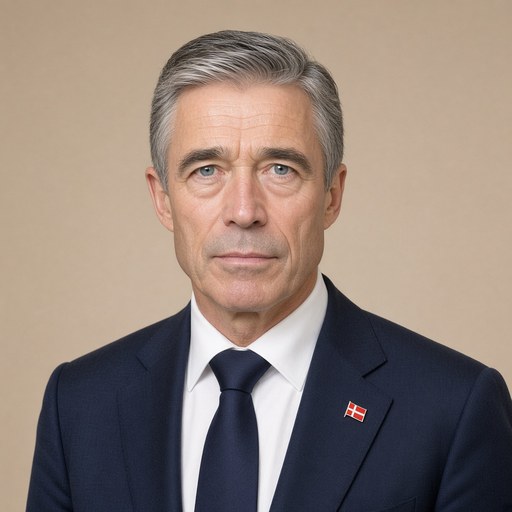
Prime Minister Anders Fogh Rasmussen's speech at the World Energy Council conference on March 15, 2007.
 Anders Fogh Rasmussen · Prime Minister of Denmark
- Context
- Rasmussen addressed the World Energy Council conference on March 15, 2007, outlining Danish and EU energy policy amid global challenges of rising consumption, fossil fuel dependence, and supply security.
- Main themes
- Energy policy, fossil fuel dependence, renewable energy, energy security, climate change and greenhouse gas emissions, global energy consumption growth, EU energy policy, supply security, Danish energy strategy, geopolitical energy risks, energy transition opportunities
- Duration
- ~18 min
- Words
- 2,155
- Sentences
- 145
- Readability
- 42
- Grade
- 10.3
- Syntax
- 2.71
- Vocabulary
- 2.17
Translated from Danish
The broad sphere of national life a sentence belongs to. Every sentence has an Arena, so it is the denominator the other indices are read against.
Other145 sentences in 63 paragraphs
"Danish Energy Policy – Global Challenges and Opportunities"
Thank you for the invitation to speak here today.
Energy policy is high on the government's political agenda these years. This is not a coincidence.
The future energy policy is crucial for development in Denmark, in the EU, and in the rest of the world. Energy consumption has increased in line with rising prosperity around the globe. At the same time, many of the most used energy sources are under increasing pressure. Both because they are being depleted and concentrated in fewer and not always stable producing countries. And because they have negative consequences for the development of the environment and climate.
It is important that we in Denmark and in the EU take the lead in addressing the challenges and seizing the opportunities that development brings.
This is the background for the government's national energy policy proposal and for our active efforts in connection with the recently concluded agreement at the EU summit last week, where we agreed on a new ambitious EU energy policy.
We have set clear and ambitious goals for energy policy development in Denmark and in the EU. I see these goals as a first step on the way and emphasize the need to secure the resources that can realize the goals. We must increase our ambitions going forward as technological development allows.
* * *
Let me start by mentioning the three central energy policy challenges for both Denmark and the EU as well as the rest of the world.
The first challenge concerns energy consumption. There is a prospect that global energy consumption will continue to grow significantly in the future. The International Energy Agency expects that the world's energy consumption will grow by at least 50% over the next 25 years if we do not take active measures.
This is a dramatic increase. The background is, of course, that the world is becoming wealthier. Fortunately, this is especially true in the developing world. Over 70% of the expected increase can be attributed to developing countries, with China alone accounting for 30%.
It is encouraging that more people around the world are sharing in prosperity. But it is necessary to acknowledge that this development will put pressure on energy supply everywhere in the world.
The second challenge concerns the consumption of fossil fuels. That is, oil, gas, and coal.
Global energy consumption is dominated by fossil fuels. And there is a prospect that the use of fossil fuels will increase in line with rising energy consumption in the future. This is due to the simple fact that there are too few competitive alternative energy sources available today.
In Denmark, we have invested heavily in renewable energy for many years. This might lead some to believe that we are significantly less dependent on fossil fuels than the rest of the world.
But even though we have come a long way, the reality is that as much as 85% of our energy consumption comes from fossil fuels.
Dependence on fossil fuels is a threat to the environment. Energy consumption based on fossil fuels is today by far the largest source of greenhouse gas emissions globally. For example, if we take CO2 emissions from energy consumption, they account for 80% of the EU's total greenhouse gas emissions.
The third challenge concerns the fact that global oil and gas production is increasingly concentrated in the Middle East, North Africa, and Russia. This increases the world's political and economic dependence on the major energy-producing countries.
The EU Commission expects, for example, that EU countries will be almost entirely dependent on imported oil within a foreseeable number of years. The EU's own oil production is expected to account for only about 5% of oil consumption in 25 years, while domestic production of natural gas is only expected to account for about 15% of consumption.
The recent disputes over oil and gas between Russia, its neighbors, and partners, and the potential spillover effects for the EU have reminded us that this increased dependence on imports can make the EU significantly more vulnerable. Energy policy has thus become an important part of security policy.
In Denmark, we are currently in a favorable position regarding the supply of oil and gas. But one day, the oil will run out. And we must prepare for that situation already in these years.
* * *
These challenges can have significant negative consequences. Globally, in the EU, and in Denmark. Let me highlight three factors that will be crucial in the coming years.
The first concerns the security policy aspects of reduced supply security. We must not – either in the EU or in Denmark – become dependent on buying oil and natural gas from a few and sometimes politically unstable countries and regions.
The second concerns our ability to ensure continued growth and prosperity. We must secure stable and reliable energy resources. This is crucial for the competitiveness of businesses and thus for our employment and exports.
And the third concerns stopping the human-induced part of global warming so that we can leave a healthy planet for our descendants.
Active measures are needed to address the challenges we face. This applies both to Denmark itself, but especially to the EU. But if we handle the situation correctly, we can turn challenges into opportunities.
* * *
The outcome of last week's summit underscored the common will at the EU level to take the challenges seriously. This is a topic that the EU's Energy Commissioner Andris Piebalgs will elaborate on. But let me briefly outline some of the central results from a Danish perspective.
First,
we adopted a binding target that 20% of the EU's energy needs in 2020 must be met by renewable energy. The share of renewable energy is currently about 6% on average in the EU. Therefore, this is an ambitious but realistic target.
This is a very significant result. First, our dependence on imported energy from unstable regions will decrease. Second, it represents a very significant contribution to meeting the EU's climate goals, demonstrating that we are putting action behind the words in climate policy. Third, we send a necessary signal to industry, investors, and policymakers that they can count on a significant investment in renewable energy.
Second,
we agreed on a target to save 20% of the EU's energy consumption by 2020. We now expect the Commission to present concrete proposals for energy-saving measures in areas such as transport, buildings, and electrical appliances.
In Denmark, we have shown that a focus on energy efficiency and renewable energy can go hand in hand with growth and employment. Denmark's economy has grown by 70% over the last 25 years without an increase in energy consumption. At the same time, we have increased the share of renewable energy to 15% of total energy consumption.
Third,
we decided to strengthen the internal market for electricity and gas through liberalization and a more developed and efficient infrastructure. This initiates the dismantling of the many barriers that currently hinder healthy competition in the energy sector within the EU. From the Danish side, we particularly emphasize that there should be ownership separation between the companies that operate the networks and the commercial energy companies. This will create increased competition and provide clear incentives to expand Europe's energy network.
Overall, these are very significant results that we from the Danish side can be extremely satisfied with. From the Danish side, we have all along pushed to keep the ambition level high. Already in the autumn, the government, with support from a broad majority in the Folketing, sent a Danish input to the EU's new energy policy to the EU Commission.
But I would like to emphasize that I see last week's EU summit as just a first step on the way. Europe's energy policy challenges cannot be addressed in one fell swoop. Therefore, from the Danish side, we will continue to work for an increasingly coordinated and ambitious energy policy in the EU in the coming years.
* * *
Recently, the desire to ensure a sustainable energy policy that also increases supply security has risen to the top of the political agenda – not just in Europe, but also in, for example, the USA and China.
Denmark's export of energy and environmental technology has grown significantly over the last 10 years. And it is expected to reach nearly 50 billion DKK in 2006. We are globally leading in energy technologies such as wind, biomass, and fuel cells. The rapidly growing global market for green energy technology therefore presents unique opportunities for export and employment in the Danish energy and environmental technology sector. We must seize these opportunities.
* * *
In Denmark, we have a good technological and energy policy foundation to take on the new challenges in the energy sector. The government has recently presented its response to these challenges.
The government has set clear and ambitious goals for Danish energy policy. Our goal is for Denmark to be 100% independent of fossil fuels. Our energy consumption should come solely from renewable energy sources.
A goal of Denmark being 100% independent of fossil fuels is, of course, a very long-term goal. It requires long-term planning, significant investments, and strong technological development if we are to reach the finish line. Therefore, it is already now that we must make the right decisions.
We have already come a long way. Today, renewable energy, as mentioned, accounts for 15% of our energy consumption. And we are among the best in the world at utilizing energy efficiently. Many envy us and want to learn from us.
* * *
As a first step on the way, the government has presented its ambitious energy proposal 'A Visionary Danish Energy Policy', which was published on January 19 of this year. The proposal outlines the goals for Danish energy policy towards the year 2025.
We will focus strongly on increasing the use of renewable energy. Our goal is to double the share of renewable energy so that we reach at least 30% of total energy consumption by 2025.
We will ensure an even more efficient use of energy through a significant strengthening of energy-saving efforts with energy savings of 1.25% per year throughout the period.
And we will increase research and technology development in the energy sector significantly. By 2010, we will double the publicly funded effort in research on energy technologies, reaching 1 billion DKK per year.
These goals will mean that Denmark reduces the use of fossil fuels by 15% by 2025, and that we maintain the current level of energy consumption without stifling economic growth.
Thus, energy consumption in Denmark in 2025 will remain unchanged over a 50-year period since the first oil crisis. This will be a completely unique achievement.
It is a great challenge. But it is not unrealistic. It requires that we take targeted action with the right strategies, technologies, and instruments. And if technological development allows, we will set even more ambitious goals in connection with the planned mid-term evaluation in 2015.
The government's proposal aims to combine political regulation and market mechanisms. So we ensure that investments are made where we get the most energy and environmental benefits for our money.
We must ensure that the new energy sources are efficient and profitable. We must ensure an energy and environmental policy that goes hand in hand with growth and strong competitiveness. That utilizes and expands Denmark's strengths in energy technology. That does not stifle jobs but creates jobs.
With the government's energy proposal, we set new goals. New goals that ensure that Denmark continues to be at the forefront of energy and environment in Europe and the rest of the world. New goals that ensure that Danish energy policy is both environmentally and economically sustainable.
* * *
It is crucial that we meet the major energy policy challenges through active political action. This applies both nationally in Denmark and in the EU. Through visionary goals and the instruments that can bring those goals to life, we can turn challenges into opportunities to ensure continued security, stability, growth, and progress. And to ensure a healthy environment for us and our descendants.
With the Danish vision for energy policy over the next 20-30 years and with the EU's new significant efforts in the area, we have taken the first, essential steps on the way. And I am convinced that we will be able to follow up these steps with more necessary decisions – also in the future.
But political action is not enough in itself. If we are to reach our goals, active participation is required from all parts of society. From citizens, organizations, and businesses. We must all take responsibility. A conference like this is an important element in ensuring continued public attention to energy policy. And in ensuring the necessary cooperation among the key actors.
I wish you a fruitful conference.
The original Danish. The tags above are read on the English translation's sentences.
”Dansk Energipolitik – globale udfordringer og muligheder”
Tak for indbydelsen til at tale her i dag.
Energipolitikken står højt på regeringens politiske dagsorden i disse år. Det er ikke tilfældigt.
Den fremtidige energipolitik er afgørende for udviklingen i Danmark, i EU og i resten af verden. Energiforbruget er steget i takt med, at velstanden i verden stiger. Samtidig er mange af de mest anvendte energikilder under stadig større pres. Både fordi de bruges op og koncentreres på færre og ikke altid stabile producentlande. Og fordi de har negative konsekvenser for udviklingen i miljø og klima.
Det er vigtigt, at vi i Danmark og i EU går forrest og løfter de udfordringer og drager fordel af de muligheder, udviklingen fører med sig.
Det er baggrunden for regeringens nationale energipolitiske udspil og for vores aktive indsats i forbindelse med den netop indgåede aftale på EU-topmødet i sidste uge, hvor vi blev enige om en ny ambitiøs EU-energipolitik.
Vi har sat klare og ambitiøse mål for den energipolitiske udvikling i Danmark og i EU. Jeg ser disse mål som et første skridt på vejen og lægger vægt på at sikre de midler, der kan realisere målene. Vi må øge vore ambitioner fremover i takt med, at den teknologiske udvikling tillader det.
* * *
Lad mig starte med at nævne de tre helt centrale energipolitiske udfordringer for såvel Danmark og EU som for resten af verden.
Den første udfordring
handler om energiforbruget. Der er udsigt til, at det globale energiforbrug fortsat vil vokse markant fremover. Det Internationale Energiagentur forventer, at verdens energiforbrug vil vokse med mindst 50 % de næste 25 år, hvis vi ikke gør noget aktivt.
Det er en voldsom stigning. Baggrunden er selvfølgelig, at verden bliver rigere. Det gælder heldigvis ikke mindst i den tredje verden. Over 70 % af den forventede stigning kan henføres til udviklingslandene, og Kina alene står for 30 %.
Det er glædeligt, at flere mennesker verden over får del i velstanden. Men det er nødvendigt at forholde sig til, at udviklingen vil lægge pres på energiforsyningen alle steder i verden.
Den anden udfordring
handler om forbruget af fossile brændsler. Det vil sige olie, gas og kul.
Verdens energiforbrug domineres af fossile brændsler. Og der er udsigt til, at anvendelsen af de fossile brændsler vil stige i takt med det stigende energiforbrug fremover. Det skyldes, at der simpelthen findes for få konkurrencedygtige alternative energikilder i dag.
I Danmark har vi igennem mange år satset massivt på vedvarende energi. Det kunne få nogle til at tro, at vi er betydeligt mindre afhængige af de fossile brændsler end resten af verden.
Men selvom vi er nået langt, er realiteten, at hele 85 pct. af vores energiforbrug stammer fra de fossile brændsler.
Afhængigheden af fossile brændsler er en trussel mod miljøet. Energiforbrug baseret på fossile brændsler er i dag langt den største kilde til udledning af drivhusgasser globalt. Tager vi fx CO2-udledninger fra energiforbruget udgør de 80 % af EU's samlede udledninger af drivhusgasser.
Den tredje udfordring
omhandler det forhold, at den globale olie- og gasproduktion i stigende grad bliver koncentreret i Mellemøsten, Nordafrika og Rusland. Dermed stiger verdens politiske og økonomiske afhængighed af de store energiproducentlande.
EU-Kommissionen forventer f.eks., at EU-landene allerede inden for en overskuelig årrække vil være næsten helt afhængige af importeret olie. EU’s egenproduktion af olie forventes kun at udgøre godt 5 pct. af olieforbruget om 25 år, mens egenproduktionen af naturgas kun forventes at udgøre godt 15 pct. af forbruget.
De seneste stridigheder om olie og gas mellem Rusland, dets naboer og samarbejdsparter og de potentielle afledte effekter for EU har mindet os om, at denne øgede importafhængighed kan gøre EU betydeligt mere sårbar. Energipolitikken er derved blevet en vigtig del af sikkerhedspolitikken.
I Danmark er vi i dag i en gunstig position, når det gælder forsyning af olie og gas. Men en dag slipper olien op. Og den situation skal vi forberede os på allerede i disse år.
* * *
Disse udfordringer kan få betydelige negative konsekvenser. Globalt, i EU og i Danmark. Lad mig her fremhæve de tre forhold, der vil være helt afgørende i de kommende år.
Det drejer sig
for det første
om de sikkerhedspolitiske aspekter af en ringere forsyningssikkerhed. Vi skal ikke – hverken i EU eller i Danmark – gøre os afhængige af at købe olie og naturgas fra nogle få og til tider politisk ustabile lande og regioner.
Det drejer sig
for det andet
om vore muligheder for at sikre fortsat vækst og velstand. Vi skal sikre stabile og sikre energiressourcer. Det er helt afgørende for erhvervslivets konkurrenceevne og dermed for vores beskæftigelse og eksport.
Og det drejer sig
for det tredje
om at stoppe den menneskeskabte del af den globale opvarmning, så vi kan efterlade en sund klode til vore efterkommere.
Der er brug for aktiv handlen for at håndtere de udfordringer, vi står over for. Det gælder både for Danmark selv, men i allerhøjeste grad også i EU. Men hvis vi håndterer situationen rigtigt, kan vi vende udfordringer til muligheder.
* * *
Resultatet af topmødet i sidste uge understregede den fælles vilje på EU-plan til at tage udfordringerne alvorligt. Det er et emne, som EU’s Energikommissær Andris Piebalgs vil sige mere om. Men lad mig kort ridse nogle af de centrale resultater op set fra et dansk perspektiv.
For det første
vedtog vi en bindende målsætning om, at 20 % af EU’s energibehov i 2020 skal dækkes af vedvarende energi. Andelen af vedvarende energi er i dag ca. 6 % i gennemsnit i EU. Der er derfor tale om en ambitiøs men realistisk målsætning.
Dette er et meget væsentligt resultat. For det første vil vores afhængighed af importeret energi fra ustabile regioner blive mindre. For det andet er der tale om et meget væsentligt bidrag til at opfylde EU’s klimamålsætning, som viser, at vi sætter handling bag ordene i klimapolitikken. For det tredje sender vi et helt nødvendigt signal til industrien, investorer og politiske beslutningstagere om, at de kan regne med en markant satsning på vedvarende energi.
For det andet
blev vi enige om et mål om at spare 20 % af EU’s energiforbrug i 2020. Vi forventer nu, at Kommissionen vil fremsætte konkrete forslag til energisparetiltag inden for områder som transport, bygninger og elektriske apparater.
I Danmark har vi vist, at en satsning på energieffektivisering og vedvarende energi kan gå hånd i hånd med vækst og beskæftigelse. Danmarks økonomi er i løbet af de sidste 25 år vokset med 70 % uden, at energiforbruget er vokset. På samme tid har vi øget andelen af vedvarende energi til 15 % af det samlede energiforbrug.
For det tredje
vedtog vi at styrke det indre marked for el og gas gennem liberalisering og en mere udbygget og effektiv infrastruktur. Dermed indledes en nedbrydning af de mange barrierer, der i dag hindrer sund konkurrence på energiområdet inden for EU. Fra dansk side lægger vi særligt vægt på, at der sker en ejermæssig adskillelse mellem de selskaber, som driver nettene, og de kommercielle energiselskaber. Det vil skabe øget konkurrence og give klare incitamenter til at udbygge Europas energinet.
Der er samlet set tale om meget væsentlige resultater, som vi fra dansk side kan være endog overordentligt tilfredse med. Fra dansk side har vi hele vejen været med til at presse på for at holde ambitionsniveauet oppe. Allerede i efteråret sendte regeringen med støtte fra et bredt flertal i Folketinget et dansk indspil til EU’s nye energipolitik til EU-kommissionen.
Men jeg vil gerne understrege, at jeg ser EU-topmødet i sidste uge som blot et første skridt på vejen. Europas energipolitiske udfordringer kan ikke løftes med ét snuptag. Fra dansk side vil vi derfor i de kommende år forsat arbejde for en stadig mere koordineret og ambitiøs energipolitik i EU.
* * *
I den seneste tid er ønsket om at sikre en bæredygtig energipolitik, som samtidig øger forsyningssikkerheden, rykket op i toppen af den politiske dagsorden – ikke bare i Europa, men også i fx USA og Kina.
Danmarks eksport af energi- og miljøteknologi har de sidste 10 år været stærkt voksende. Og ventes at nå op på næsten 50 mia. kr. i 2006. Vi er globalt førende inden for energiteknologier som vind, biomasse og brændselsceller. Det hastigt voksende globale marked for grøn energiteknologi indebærer derfor unikke muligheder for eksport og beskæftigelse i den danske energi- og miljøteknologiske sektor. Dem skal vi udnytte.
* * *
I Danmark har vi et godt teknologisk og energipolitisk udgangspunkt for at tage de nye udfordringer på energiområdet op. Regeringen har for nylig fremlagt sit svar på udfordringerne.
Regeringen har sat klare og ambitiøse mål for dansk energipolitik. Vores mål er, at Danmark skal være 100 pct. uafhængig af fossile brændsler. Vores energiforbrug skal udelukkende komme fra vedvarende energikilder.
Et mål om, at Danmark skal være 100 pct. uafhængig af fossile brændsler er selvfølgelig et meget langsigtet mål. Det kræver langsigtet planlægning, betydelige investeringer og en stærk teknologisk udvikling, hvis vi skal nå helt i mål. Derfor er det allerede nu, at vi skal træffe de rigtige beslutninger.
Vi er allerede nået et godt stykke vej. I dag udgør vedvarende energi som sagt 15 pct. af vores energiforbrug. Og vi er i dag en af verdens allerbedste til at udnytte energi effektivt. Det er der mange, der misunder os og gerne vil lære af.
* * *
Som et første skridt på vejen har regeringen fremlagt sit ambitiøse energiudspil ’En visionær dansk energipolitik’, som blev offentliggjort den 19. januar i år. Udspillet beskriver målene for dansk energipolitik frem mod år 2025.
Vi vil satse
stærkt på en øget anvendelse af vedvarende energi. Vores mål er at fordoble andelen af vedvarende energi, så vi når op på mindst 30 pct. af det samlede energiforbrug i 2025.
Vi vil sikre
en endnu mere effektiv udnyttelse af energien gennem en markant styrkelse af energispareindsatsen med energibesparelser på 1,25 % om året i hele perioden.
Og vi vil øge
forskning og teknologiudvikling på energiområdet markant. Frem mod 2010 vil vi fordoble den offentligt finansierede indsats af forskning i energiteknologier, så den når op på 1 mia. kr. om året.
Disse mål vil betyde, at Danmark reducerer brugen af fossile brændsler med 15 pct. frem mod 2025, og at vi fastholder det nuværende energiforbrug uden at lægge låg på den økonomiske vækst.
Dermed vil energiforbruget i Danmark i 2025 være uændret over en 50-årig periode siden den første oliekrise. Det vil være en helt unik præstation.
Det er en stor udfordring. Men det er ikke urealistisk. Det kræver, at vi sætter målrettet ind med de rigtige strategier, teknologier og virkemidler. Og hvis teknologiudviklingen tillader det, vil vi sætte endnu mere ambitiøse mål i forbindelse med den planlagte midtvejsevaluering i 2015.
Regeringens udspil lægger op til at kombinere politisk regulering og markedsmekanismer. Så vi sikrer, at investeringerne sker, hvor vi får mest mulig energi og miljø for pengene.
Vi skal sikre, at de nye energikilder er effektive og rentable. Vi skal sikre en energi- og miljøpolitik som går hånd i hånd med vækst og stærk konkurrenceevne. Som udnytter og udbygger de danske styrkepositioner inden for energiteknologi. Som ikke kvæler arbejdspladser, men skaber arbejdspladser.
Med regeringens energiudspil sætter vi nye mål. Nye mål, som sikrer, at Danmark fortsat ligger i front med energi og miljø i Europa og resten af verden. Nye mål, som sikrer, at dansk energipolitik er både miljømæssigt og økonomisk bæredygtig.
* * *
Det er afgørende, at vi møder de store energipolitiske udfordringer gennem aktiv politisk handlen. Det gælder både i national dansk regi og i EU. Gennem visionære målsætninger og de virkemidler, der kan føre målene ud i livet, kan vi vende udfordringerne til muligheder for at sikre fortsat sikkerhed, stabilitet, vækst og fremgang. Og for at sikre et sundt miljø for os og vore efterkommere.
Med den danske vision for energipolitikken de næste 20-30 år og med EU’s nye markante indsats på området har vi taget de første, væsentlige skridt på vejen. Og jeg er overbevist om, at vi vil være i stand til at følge disse skridt op med flere nødvendige beslutninger – også i fremtiden.
Men politisk handlen er ikke nok i sig selv. Hvis vi skal nå vore mål kræves aktiv medvirken fra alle dele af samfundet. Fra medborgere, organisationer og erhvervsliv. Vi må alle tage et ansvar. En konference som denne er et vigtigt element i at sikre en fortsat stor offentlig bevågenhed om energipolitikken. Og i at sikre det nødvendige samarbejde mellem de afgørende aktører.
Jeg ønsker jer en udbytterig konference.