




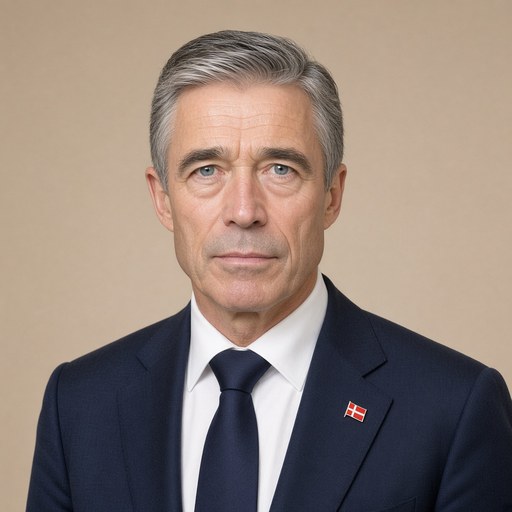
Prime Minister Anders Fogh Rasmussen's speech at the launch of the Danish Refugee Council's National Collection 2002.
 Anders Fogh Rasmussen · Prime Minister of Denmark
- Context
- Rasmussen addressed the launch of the Danish Refugee Council's National Collection 2002 in Denmark on 1 November 2002, urging public support and outlining a new government refugee initiative.
- Main themes
- Refugees and displaced persons, neighboring area initiative, Danish Refugee Council, humanitarian aid, refugee repatriation and reintegration, host country support, international responsibility, Afghanistan reconstruction, development aid, refugee camp vocational training
- Duration
- ~7 min
- Words
- 875
- Sentences
- 51
- Readability
- 42
- Grade
- 10.8
- Syntax
- 2.60
- Vocabulary
- 2.06
Translated from Danish
The broad sphere of national life a sentence belongs to. Every sentence has an Arena, so it is the denominator the other indices are read against.
Other51 sentences in 32 paragraphs
It is a great pleasure for me to be here today at the launch of the Danish Refugee Council's National Collection 2002.
The Danish Refugee Council does an incredibly important job around the world. This work requires significant financial resources. I therefore urge as many as possible to sign up as collectors on the collection day, November 10. The Danish Refugee Council deserves a large and successful collection result.
* * *
The effort towards the world's refugees in the neighboring areas is a topic that has the government's attention.
The harsh reality speaks for itself:
There are around 12 million refugees and up to 25 million internally displaced persons in the world today.
More than 9 out of 10 of the world's refugees are in developing countries. They are most often in the neighboring areas of the countries they have fled from due to war, conflict, and hunger. Over 90% of the world's refugees therefore have neither the strength nor the resources to flee very far.
The overall picture includes millions of fates, experiencing the brutal reality of being forced to leave their homes, their belongings, and the very foundation of their lives. They may be separated from their families. They are condemned to a life in another country, full of uncertainty about the future and in deep poverty.
They flee to countries that are just as poor as the ones they come from.
One example is Tanzania. Tanzania has taken in about half a million refugees, even though the country has an economy the size of Roskilde County.
Tanzania and Zambia alone host nearly a million refugees, mainly from Burundi, the Democratic Republic of Congo, and Angola.
Such a situation often leads to further conflicts in the host country, where the local population often lives under equally poor – or worse – economic and social conditions.
Therefore, the flow of refugees can lead to instability and thus the risk of further conflict.
We have a responsibility to help these countries and these people. We need to address this problem. There is a pressing need for the international community to do more for refugees and internally displaced persons.
* * *
Therefore, the government has launched a new initiative for refugees in the neighboring areas.
With the new neighboring area initiative, we will work to ensure refugees a safe and decent life in the neighboring areas. This is not only a prerequisite for them to be as close to their original homes as possible. It is also a prerequisite for them to maintain hope of returning home one day.
Ensuring safety for people on the run and providing food, medicine, and shelter are important tasks that we are already trying to address today through our humanitarian efforts. The neighboring area initiative should be seen as an extension of this work.
The initiative is a helping hand to the most resource-poor refugees and to the countries that host them.
With the neighboring area initiative, the government will, among other things, focus on how refugees in the host country can contribute to economic development rather than being perceived as a cause of problems.
We want, in cooperation with the local community, to ensure that refugees are activated to a much greater extent than is currently the case. Time in the camps should, for example, be used to obtain vocational training that may make it easier to return to their home country.
The guiding principle is precisely that the Danish effort should help create the foundation for refugees to return home again. In addition to educational initiatives, this may involve access to clean drinking water, sanitation, and support for agriculture and the environment.
Through the neighboring area initiative, the government will also contribute to initiatives aimed at ensuring that internally displaced persons can return home again. Thus, the government is already supporting a reintegration project in Sri Lanka, carried out by the Danish Refugee Council.
The government also supports efforts to implement one of the largest repatriation programs in recent years in Afghanistan. This is done through targeted efforts via the 785 million kroner that the government has already decided to provide in aid to Afghanistan until 2006.
Together with the international community's efforts, this makes it possible for the many refugees in neighboring countries and other asylum countries to return permanently to Afghanistan.
The funds for the reconstruction of countries that are undergoing promising development should primarily be used to create democratic institutions, develop the agricultural sector, and support education, health, and other initiatives that help create the basic conditions for refugees and internally displaced persons to return home to tolerable conditions.
* * *
We all know that there has been – and is – a heated debate in Danish society about immigration and refugee policy. But I believe that there is agreement across all divides that it is a sensible effort to help refugees to a better existence in their neighboring areas.
The Danish Refugee Council's National Collection is precisely a concrete help to refugees in their neighboring areas.
I would therefore like to repeat my call to sign up as a collector. It is a humanitarian act in favor of people in need.
I wish you good luck with the collection.
Thank you.
The original Danish. The tags above are read on the English translation's sentences.
Det er mig en stor glæde at være tilstede her i dag ved lanceringen af Dansk Flygtningehjælps Landsindsamling 2002.
Dansk Flygtningehjælp gør et utroligt vigtigt stykke arbejde rundt om i verden. Dette arbejde kræver store økonomiske ressourcer. Jeg skal derfor opfordre så mange som muligt til at melde sig som indsamlere på indsamlingsdagen den 10. november. Dansk Flygtningehjælp fortjener et stort og godt indsamlings resultat.
* * *
Indsatsen overfor verdens flygtninge i nærområderne er et emne, der har regeringens bevågenhed.
Den barske virkelighed taler for sig selv:
Der er omkring 12 millioner flygtninge og op mod 25 millioner internt fordrevne i verden i dag.
Mere end 9 ud af 10 af verdens flygtninge opholder sig i udviklingslandene. De opholder sig oftest i nærområderne til de lande, de er flygtet fra som følge af krig, konflikter og sult. Over 90 % af verdens flygtninge har altså hverken kræfter eller ressourcer til at flygte ret langt.
Det samlede billede tæller millionvis af skæbner, der oplever brutalt at blive tvunget til at forlade deres hjem, deres ejendele og hele deres livsgrundlag. De bliver muligvis skilt fra deres familie. De er henvist til et liv i et andet land, fulde af uvished om fremtiden og i dyb fattigdom.
De flygter til lande der er lige så fattige, som hvor de selv kommer fra.
Et eksempel er Tanzania. Tanzania har taget imod ca. en halv million flygtninge, selv om landet har en økonomi på størrelse med Roskilde Amt.
Alene Tanzania og Zambia huser tilsammen næsten en million flygtninge, hovedsagelig fra Burundi, Den Demokratiske Republik Congo og Angola.
En sådan situation fører ofte til yderligere konflikter i værtslandet, hvis lokalbefolkning oftest lever under lige så ringe – eller ringere - økonomiske og sociale kår.
Derfor kan flygtningestrømmen føre til ustabilitet og dermed risiko for yderligere konflikt.
Vi har et ansvar for at hjælpe disse lande og disse mennesker. Vi er nødt til at tage fat i dette problem. Der er hårdt brug for, at det internationale samfund gør mere for flygtninge og internt fordrevne.
* * *
Derfor har regeringen har lanceret en ny indsats for flygtninge i nærområderne.
Med den nye nærområdeindsats vil vi arbejde for at sikre flygtningene et sikkert og anstændigt liv i nærområderne. Dette er ikke blot en forudsætning for, at de kan blive så tæt på deres oprindelige hjem som muligt. Det er også en forudsætning for, at de kan bevare håbet om at vende hjem igen en skønne dag.
At sikre mennesker på flugt og sørge for mad, medicin og tag over hovedet er vigtige opgaver, som vi allerede søger at løse i dag gennem vores humanitære indsats. Nærområdeindsatsen skal ses som en overbygning til dette arbejde.
Indsatsen er en håndsrækning til de mest ressourcesvage flygtninge og til de lande, der huser dem.
Med nærområdeinitiativet vil regeringen bl.a. fokusere på, hvorledes flygtningene i værtslandet kan bidrage til en økonomisk udvikling frem for at blive opfattet som årsag til problemer.
Vi ønsker i samarbejde med lokalsamfundet at sikre, at flygtningene aktiveres i langt højere grad, end tilfældet er i dag. Tiden i lejrene skal f. eks. bruges til at få en håndværkeruddannelse, der måske kan gøre det lettere at vende tilbage til hjemlandet.
Det bærende princip er netop, at den danske indsats skal være med til at skabe grundlaget for, at flygtningene igen kan vende hjem. Foruden uddannelsesinitiativer kan der være tale om adgang til rent drikkevand, sanitet samt støtte til landbrug og miljø.
Gennem nærområdeindsatsen vil regeringen også bidrage til initiativer, der har til formål at sikre, at internt fordrevne igen kan vende hjem. Således støtter regeringen allerede et reintegrationsprojekt i Sri Lanka, som udføres af Dansk Flygtningehjælp.
Regeringen støtter også bestræbelserne på at gennemføre ét af de største repatrieringsprogrammer i de seneste år i Afghanistan. Dette sker gennem målrettede indsatser via de 785 millioner kroner, som regeringen allerede har besluttet at yde i bistand til Afghanistan frem til 2006.
Sammen med det internationale samfunds indsats i øvrigt gøres det muligt for de mange flygtninge i nabolandene og øvrige asyllande at vende permanent tilbage til Afghanistan.
Midlerne til genopbygning af lande, der er inde i en lovende udvikling, skal primært anvendes til at skabe demokratiske institutioner, udvikling af landbrugssektoren samt støtte til uddannelse, sundhed og andre initiativer, der er med til at skabe de grundlæggende forudsætninger for, at flygtninge og internt fordrevne kan vende hjem til tålelige forhold.
* * *
Vi ved alle, at der har været – og er – en heftig debat i det danske samfund om udlændinge- og flygtningepolitikken. Men jeg tror, at der på tværs af alle skel er enighed om, at det er en fornuftig indsats at hjælpe flygtninge til en bedre tilværelse i deres nærområde.
Dansk Flygtningehjælps Landsindsamling er netop en konkret hjælp til flygtningene i deres nærområder.
Jeg vil derfor gerne gentage min opfordring til at melde sig som indsamler. Det er en humanitær gerning til fordel for mennesker i nød.
Jeg ønsker held og lykke med indsamlingen.
Tak.