




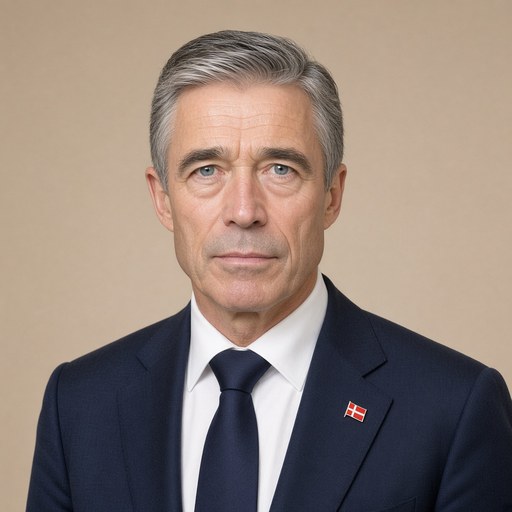
Prime Minister Anders Fogh Rasmussen's speech in connection with the opening of the Nordic Council's anniversary session on October 29, 2002.
 Anders Fogh Rasmussen · Prime Minister of Denmark
- Context
- Rasmussen addressed the Nordic Council's 50th anniversary session in Helsinki on October 29, 2002, celebrating Nordic cooperation and its role in Europe.
- Main themes
- Nordic cooperation, European Union integration, EU enlargement, Nordic identity and values, Baltic Sea region development, Denmark's EU presidency, Nordic Council anniversary, openness and liberalism, cultural and historical ties, northern dimension in EU policy
- Duration
- ~5 min
- Words
- 625
- Sentences
- 49
- Readability
- 50
- Grade
- 9.4
- Syntax
- 2.49
- Vocabulary
- 2.23
Translated from Danish
The broad sphere of national life a sentence belongs to. Every sentence has an Arena, so it is the denominator the other indices are read against.
Other49 sentences in 19 paragraphs
"Nordic Countries in Europe"
Your Majesties, Royal Highnesses, Excellencies, ladies and gentlemen.
It is a great pleasure to be here today. For we have much to celebrate. Much to be proud of. We can look back on 50 years of cooperation between the Nordic countries. This is a unique collaboration that has made a significant contribution to the economic and social development in our countries.
The Nordic Council and the Nordic Council of Ministers have achieved many visible results. Nordic cooperation remains vital and far-reaching. The self-governing areas - Greenland, the Faroe Islands, and Åland - actively participate in the collaboration. The Nordic ties and the Nordic spirit continue to be something truly special for all of us.
Much has changed since the Nordic Council was founded in 1952. Not least in Europe. Visionary leaders fostered the idea of creating a strong European community. A community that could prevent new wars between the countries of Europe. This led to the formation of the European Communities – today the European Union.
Denmark was the first Nordic country to join the EEC. This happened in 1973. Later – in 1995 – Finland and Sweden followed. Iceland and Norway became associated with the European Union in 1994 through the agreement on the European Economic Area – EEA.
Thus, we are all connected to the EU. We all benefit from the advantages of the EU's internal market. And for all of us, it is true that our future will be significantly influenced by the developments in European cooperation.
Therefore, it is right and important that we increasingly view Nordic cooperation in relation to the broader European cooperation.
The Nordic region has much to offer Europe. Many on the European continent see Nordic cooperation as something excellent. As an ideal. Therefore, people listen to us. The Nordic region has a voice. It speaks through our common identity, our history, and our culture.
In the work "Nordic Mythology," the Danish poet Grundtvig speaks of "freedom for Loki as well as for Thor." This statement expresses a fundamental value in Nordic democracy. The fundamental value that multiple perspectives can coexist side by side. We all must be here.
We must shape European cooperation with our values. The values that characterize the Nordic peoples and Nordic cooperation: openness, liberalism, and prudence.
Denmark holds the presidency of the EU this semester. We are actively and purposefully working to ensure that at the European Council meeting in Copenhagen in December, we decide to expand the EU with ten new member states.
From 2004, they will be members of the EU, and the Baltic Sea will be surrounded by EU countries.
Once, it was the merchants of the Hanseatic League who crossed the Baltic Sea and the Atlantic, binding Northern Europe together from Iceland in the west to Estonia in the east, from Lofoten in the north to Cologne in the south.
In 21st century Europe, it is the EU and the European Economic Area, EEA, that form the framework for an increasingly strong cooperation between the Nordic countries and the rest of Europe.
Together, the Nordic countries and the countries around the Baltic Sea should contribute to strengthening the northern dimension in the EU's policy.
We have the chance to develop the Baltic Sea region into a strong center for trade, education, research, and culture. In the 21st century, the Nordic region and the Baltic Sea region can become one of Europe's strong growth centers.
We can proudly celebrate Nordic cooperation here in Helsinki. The Nordic region is our platform in Europe. Together we are greater. Together we can leave our mark on the development in Europe.
With the hope of continued positive development in Nordic cooperation, I congratulate the Nordic Council on its anniversary.
The original Danish. The tags above are read on the English translation's sentences.
”Norden i Europa”
Deres Majestæter, kongelig højheder, excellencer, mine damer og herrer.
Det er en stor glæde at være her i dag. For vi har meget at fejre. Meget at være stolte af. Vi kan se tilbage på 50 års samarbejde mellem de nordiske lande. Der er tale om et enestående samarbejde, som har ydet et væsentligt bidrag til den økonomiske og sociale udvikling i vore lande.
Nordisk Råd og Nordisk Ministerråd har opnået mange synlige resultater. Det nordiske samarbejde er fortsat vitalt og vidtfavnende. De selvstyrende områder - Grønland, Færøerne og Åland - deltager aktivt i samarbejdet. De nordiske bånd og den nordiske ånd er fortsat noget helt særligt for os alle.
Meget har forandret sig, siden Nordisk Råd blev grundlagt i 1952. Ikke mindst i Europa. Fremsynede ledere fostrede tanken om at skabe et stærkt europæisk fællesskab. Et fællesskab, som kunne forhindre nye krige mellem landene i Europa. Det førte til dannelse af De Europæiske Fællesskaber – i dag Den Europæiske Union.
Danmark var det første nordiske land, som tilsluttede sig EF. Det skete i 1973. Siden hen – i 1995 – fulgte Finland og Sverige. Island og Norge blev i 1994 tilknyttet Den Europæiske Union via aftalen om Det Europæiske Økonomiske Samarbejdsområde – EØS.
Vi er således alle knyttet til EU. Vi nyder alle godt af fordelene ved EU’s indre marked. Og for os alle gælder det, at vor fremtid i høj grad vil blive påvirket af udviklingen i det europæiske samarbejde.
Derfor er det rigtigt og vigtigt, at vi i stigende grad ser det nordiske samarbejde i forhold til det bredere europæiske samarbejde.
Norden har meget at tilbyde Europa. Mange på det europæiske kontinent ser det nordiske samarbejde som noget ypperligt. Som et ideal. Derfor lytter man til os. Norden har en stemme. Den taler gennem vor fælles identitet, vor historie og vor kultur.
I værket, ”Nordens Mytologi” taler den danske digter, Grundtvig, om ”frihed for Loke såvel som for Thor”. Dette udsagn udtrykker en grundværdi i det nordiske folkestyre. Den grundværdi, at flere opfattelser kan eksistere side om side. Vi skal alle være her.
Vi skal præge det europæiske samarbejde med vore værdier. De værdier, der kendetegner de nordiske folk og det nordiske samarbejde: åbenhed, frisind og besindighed.
Danmark har i dette halvår formandskabet i EU. Vi arbejder aktivt og målrettet for, at vi på Det Europæiske Råds møde i København i december beslutter at udvide EU med ti nye medlemslande.
Fra 2004 vil de være medlemmer af EU, og Østersøen vil være omkranset af EU-lande.
En gang var det hansestædernes købmænd, som krydsede Østersøen og Atlanten og bandt Nordeuropa sammen fra Island i vest til Estland i øst, fra Lofoten i nord til Køln i syd.
I det 21. århundredes Europa er det EU og Det Europæiske Økonomiske Samarbejdsområde, EØS, som danner rammen om et stadig stærkere samarbejde mellem Norden og det øvrige Europa.
I fællesskab bør de nordiske lande og landene omkring Østersøen bidrage til at styrke den nordlige dimension i EU’s politik.
Vi har chancen for at udvikle Østersø-regionen til et stærkt centrum for handel, uddannelse, forskning og kultur. I det 21. århundrede kan Norden og Østersø-regionen blive ét af Europas stærke vækstcentre.
Vi kan med stolthed fejre det nordiske samarbejde her i Helsingfors. Norden er vor platform i Europa. Sammen er vi større. Sammen kan vi sætte vort præg på udviklingen i Europa.
Med håbet om en fortsat positiv udvikling i det nordiske samarbejde ønsker jeg Nordisk Råd tillykke med jubilæet.