




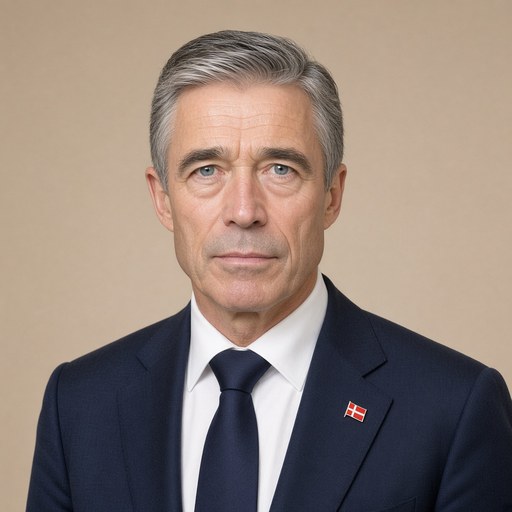
Prime Minister Anders Fogh Rasmussen's speech at the memorial stone for Flemming Juncker, May 4, 2004.
 Anders Fogh Rasmussen · Prime Minister of Denmark
- Context
- Rasmussen spoke at a memorial stone dedication for resistance leader Flemming Juncker on May 4, 2004, marking the 59th anniversary of Denmark's liberation.
- Main themes
- Danish Liberation Day commemoration, Flemming Juncker's wartime legacy, resistance movement in Jutland, individual agency in history, moral courage and civic duty, wartime collaboration versus resistance, role of decisive leadership in crisis, chance and contingency in history, Danish reputation among the Allies
- Duration
- ~15 min
- Words
- 1,748
- Sentences
- 133
- Readability
- 63
- Grade
- 7.7
- Syntax
- 2.53
- Vocabulary
- 2.14
Translated from Danish
The broad sphere of national life a sentence belongs to. Every sentence has an Arena, so it is the denominator the other indices are read against.
Other133 sentences in 62 paragraphs
May 4, 1945 is a date that is etched into our history. Denmark's Liberation. The defeat of the oppressors.
It was the day when the weight of five cursed years was lifted from our shoulders.
It is not just the past. The 4th of May must also be etched into our history in the future.
We must also remember the 4th of May because there was a real risk that the Day of Liberation might never have come.
History is not predetermined.
We often forget this. We often feel like spectators to history. So much happens around us that we feel we have no stake or part in. We merely observe the course of events.
For what difference could we small people possibly make? What good would it do? Shouldn't we rather concentrate on our own? On ourselves and our nearest ones?
The ambition to make a difference for oneself and one's nearest is certainly sympathetic.
And the tendency to observe the world from one's armchair is certainly understandable.
But Juncker was precisely not the man who merely leaned back and contented himself with observing the world's folly. On the contrary.
He could not help but engage. That is why he made a difference. In business. In public debate. And in the great struggle between Freedom and its Enemies, I am thinking of World War II.
When looking back at history, one can indeed be led to believe that most was predetermined.
That Denmark had to succumb in just a few hours when the German might invaded on April 9.
That the policy of collaboration had to unfold as it did.
That the patience of the population had to run out after a few years.
That the Allies had to win in the end.
That Denmark had to be liberated by the English.
And that we had to find our safe place in Western societies.
But no. None of that was predetermined. And much depended on chance.
If, for example, Hitler had been killed as a soldier during World War I, it would have completely changed world history.
And that is the story of all world history. It is the history of chance.
And precisely because history is not predetermined, precisely because much is unpredictable and a bit chaotic and random, precisely for that reason can people's efforts make a difference.
Yes, precisely for that reason we have a duty to step up. Not so much as politicians, but as human beings.
If we do not make an effort to bring order to chaos ourselves, others will exploit us.
Flemming Juncker was one of those who stepped up when Denmark needed him.
He could have sat peacefully on his farm by the fire. He could have shaken his head at the world's folly. He could have ducked down - and let the storm rage on.
He did not do that. It was not part of his personality.
For as he said: 'I have always tried, based on the background of chance, to make life a little better than it might otherwise have been. I have never lost courage.'
That is why Flemming Juncker became a role model for others. His motivation was simply a sense of decency. He saw it as a natural obligation to side with the good.
And others did as he did. The war was a time of clarification. At least with regard to human qualities.
Juncker proved to be the born leader. His nickname was 'The Elephant' and his friends described him as the last Viking, a giant in every direction, physically and mentally. He was the rock.
He simply became the dominant force in the Jutland part of the resistance movement. He organized the Jutland underground army and the British supplies to Denmark up to the liberation. And he did it excellently.
Juncker's work during the war is perhaps a confirmation that there is a need for decisive leaders in times of crisis. Leaders who are not guided by habitual thinking and unnecessary caution.
The sabotage actions in Jutland weakened the occupying power's ability to move troops and supplies. Their great significance is perhaps best illustrated by the effort that was made to counter the resistance actions. It cost many resistance fighters their lives, and we should remember that on an evening like this.
The events in Denmark were noted by the Allies. There is no doubt that the efforts of the resistance movement contributed to improving Denmark's reputation.
It was not the government's, the Parliament's, and established Denmark's merit that the collaboration with the occupying power ceased. On the contrary, official Denmark had obediently complied with the occupying power from the very beginning of Denmark's occupation on April 9, 1940, collaborating at all levels, and urged the population to do the same.
Upon his appointment as foreign minister in 1940, Erik Scavenius declared that 'the great German victories' had 'struck the world with astonishment and admiration.' He believed that Denmark should now find its place in a necessary and mutually active collaboration with the Nazis.
Not only did Denmark's political leadership decide to follow a passive adaptation policy. The then government consciously and openly chose an active policy towards the occupying power in the hope that some of the sovereignty would be respected.
New historical research reveals that it was even a very active adaptation policy. Many were convinced of a German victory. Both politicians, civil servants, and organizations began to prepare Denmark's place in the new, Nazi-dominated Europe. Centrally placed officials were busy with plans to transform the Danish economy according to Nazi planned economic patterns.
The main argument for the collaboration policy was that all Danish resistance against the German might was futile. That one could merely be a spectator to the course of events.
By collaborating with the occupying power, Denmark and the Danish population were spared from most of the horrors of war. And it succeeded. The Danes avoided the worst destruction. Agriculture and industry benefited from the war. So from such a dubious premise, some might call the collaboration policy necessary, wise, and appropriate.
But that is a very dangerous line of thought. If everyone had thought like the Danish collaboration politicians, Hitler would most likely have won the war, and Europe would have become Nazi.
But fortunately, the British and later the Americans and Russians did not think like the Danish elite. They fought a battle of life and death against the Nazis. They would not accept that history should award the palms of victory to the oppressors. And in doing so, they secured our freedom.
Fortunately, there were also Danes - women and men - like Flemming Juncker involved in the fight. They stepped up. They came from all walks of life. Some were already considered natural leaders. Others became so along the way.
The resistance movement saved Denmark's honor. We came through the war and occupation with an acceptable reputation – albeit with a few scratches on the surface. When the war ended, Denmark was on the winning side, even though we did not win the war. The war was won because the English and Americans landed on the French Atlantic coast at the same time that Hitler had previously fought a draining war against the Soviet Union. These nations sacrificed thousands of young soldiers' lives to fight Hitler and his reign of terror.
In June, we mark the 60th anniversary of the invasion on the shores of Normandy. When I see the enormous war cemeteries with thousands of white crosses, I think with gratitude and solidarity of the American and British people's efforts and sacrifices to secure our freedom and peace.
We also owe a great thanks to the Danish resistance fighters who, through sabotage against the Germans and collaboration with the Allies, defied the collaboration politicians. They ultimately secured Denmark a place on the right side in the fight against the Nazis. People like Flemming Juncker.
Now, one must of course be careful not to pass judgment on the past based on today's premises.
But even judged by the standards of the time, Danish policy seems naive.
In the struggle between democracy and dictatorship, one cannot remain neutral. One must take a stand for democracy and against dictatorship. It is at this point that the active adaptation policy constituted a political and moral failure.
On New Year's Day 1944 - three days before he was murdered at Hørbylunde - Kaj Munk said in a sermon in Vedersø: "In the matter of Right and Wrong, one should never ask whether it pays off, for it is in the Devil's Interest."
Far too often in the course of history, we Danes have merely sailed under the flag of convenience and let others fight for our freedom and peace.
We must learn from history. We must learn from our mistakes.
As Flemming Juncker said: 'One must look back at all the things one has done wrong. That is one of the most fruitful things.'
The lesson from resistance fighters like Flemming Juncker is that if we take our values seriously, with freedom, democracy, and human rights, then we must also make an active contribution to defend them. Even against difficult odds. Even when unpopular and dangerous decisions must be made.
During World War II, it was others who helped us in our time of need.
Now, through our membership in NATO and the EU, we belong to those who have the opportunity to help. And we have a duty to do so - learning from the experiences of the occupation period.
Evil and cruelty have not changed. Whether it is the Nazi SS, Saddam Hussein's executioners, or today's fanatical terrorists, they are all characterized by deliberately killing completely innocent civilians, men, women, and children. Solely to spread fear and terror.
We cannot - and will not - stand idly by while people are oppressed in the former Yugoslavia, Afghanistan, or Iraq. Our past obliges us to do what we can to spread the freedom, peace, and security that we ourselves enjoy to other parts of the world.
Here at Flemming Juncker's memorial stone, we must acknowledge that there is no moral or practical alternative to engaging.
Flemming Juncker was right when he said that wars are 'foolishness in groups.' But there comes a time when the foolishness must come to an end. Here, Flemming Juncker took the lead.
Let us honor our compatriots' efforts in the resistance movement and the defense of freedom and democracy.
The original Danish. The tags above are read on the English translation's sentences.
Den 4. maj 1945 er en dato, som står mejslet ind i vores historie. Danmarks Befrielse. Undertrykkernes nederlag.
Det var dagen, hvor vægten af fem forbandede år blev løftet fra vore skuldre.
Det er ikke bare fortid. Også i fremtiden skal den 4. maj være mejslet ind i vores historie.
Vi skal også huske den 4. maj, fordi der var en reel risiko for, at Befrielsesdagen aldrig var kommet.
Historien er nemlig ikke given på forhånd.
Det glemmer vi tit. Vi føler os jo så tit som tilskuere til historien. Der sker jo så meget om ørene på os, som vi ikke føler, at vi har lod eller del i. Vi nøjes med at betragte begivenhedernes gang.
For hvilken forskel skulle vi små mennesker dog kunne gøre? Hvad skal det dog nytte? Skulle vi ikke hellere koncentrere os om vores eget? Om os selv og vore nærmeste?
Ambitionen om at gøre en forskel for sig selv og sine nærmeste er helt bestemt sympatisk.
Og tendensen til at observere verden fra sin lænestol er helt bestemt forståelig.
Men Juncker var netop ikke manden, der blot lænede sig tilbage og nøjedes med at observere verdens dårskab. Tværtimod.
Han kunne ikke lade være med at engagere sig. Derfor gjorde han en forskel. I erhvervslivet. I den offentlige debat. Og i den store kamp mellem Friheden og dens Fjender, jeg tænker på 2. Verdenskrig.
Når man ser tilbage på historien, kan man som sagt godt blive forledt til at tro, at det meste var givet på forhånd.
At Danmark måtte bukke under på nogle få timer, da den tyske overmagt rykkede ind den 9. april.
At samarbejdspolitikken måtte forløbe som den gjorde.
At befolkningens tålmodighed måtte slippe op efter nogle år.
At de Allierede måtte vinde til sidst.
At Danmark måtte blive befriet af englænderne.
Og at vi måtte finde vores trygge plads i de vestlige samfund.
Men nej. Intet af det var givet på forhånd. Og meget afhang af tilfældigheder.
Hvis, f.eks., Hitler var blevet slået ihjel som soldat under første verdenskrig, havde det jo ændret verdenshistorien fuldstændigt.
Og sådan er hele verdenshistorien. Det er tilfældighedernes historie.
Og netop fordi historien ikke er given på forhånd, netop fordi meget er uforudsigeligt og en smule kaotisk og tilfældigt, netop derfor kan menneskers indsats gøre en forskel.
Ja, netop derfor har vi en pligt til at træde i karakter. Ikke så meget som politikere, men som mennesker.
Hvis ikke vi selv gør en indsats for at få styr på kaos, vil andre udnytte os.
Flemming Juncker var en af dem, der trådte til, da Danmark havde brug for ham.
Han kunne have siddet fredeligt på sin gård ved kaminens ild. Han kunne have rystet på hovedet over verdens dårskab. Han kunne have dukket sig - og ladet stormen rase ud.
Det gjorde han ikke. Det var ikke en del af hans personlighed.
For som han sagde: 'Jeg har hele tiden prøvet, ud fra tilfældighedernes baggrund, at gøre livet lidt bedre end det måske ellers var blevet. Jeg har aldrig tabt modet'.
Derfor blev Flemming Juncker et forbillede for andre. Hans motivering var slet og ret anstændighedsfølelse. Han så det som en naturlig forpligtelse at melde sig på det godes side.
Og andre gjorde som han. Krigen var en afklaringens tid. I hvert fald med hensyn til menneskelige egenskaber.
Juncker viste sig som den fødte leder. Hans tilnavn var 'Elefanten' og hans venner har beskrevet ham som den sidste viking, en gigant i alle retninger, fysisk og psykisk. Han var klippen.
Han blev ganske enkelt den dominerende kraft i den jyske del af modstandsbevægelsen. Han organiserede den jyske undergrundshær og de britiske leverancer til Danmark frem til befrielsen. Og han gjorde det fremragende.
Junckers arbejde under krigen er nok en bekræftelse på, at der er brug for handlekraftige ledere i trængselstider. Ledere, der ikke lader sig styre af vanetækning og unødig forsigtighed.
Sabotageaktionerne i Jylland svækkede besættelsesmagtens evne til at flytte tropper og forsyninger. Deres store betydning illustreres vel bedst ved den indsats, som blev gjort for at imødegå modstandsaktionerne. Det kostede mange modstandsfolk livet, og det bør vi huske en aften som denne.
Begivenhederne i Danmark blev bemærket hos de allierede. Der er ingen tvivl om, at modstandsbevægelsens indsats bidrog til at forbedre Danmarks omdømme.
Det var ikke regeringens, Folketingets og det etablerede Danmarks fortjeneste, at samarbejdet med besættelsesmagten ophørte. Tværtimod havde det officielle Danmark fra starten af Danmarks besættelse den 9. april 1940 lydigt rettet sig efter besættelsesmagten, samarbejdet på alle niveauer, og opfordret befolkningen til at gøre det samme.
Ved sin tiltrædelse som udenrigsminister i 1940 erklærede Erik Scavenius at 'de store tyske sejre' havde 'slået verden med forbavselse og beundring'. Han fandt, at Danmark nu skulle finde sin plads i et nødvendigt og gensidigt aktivt samarbejde med nazisterne.
Ikke nok med at Danmarks politiske ledelse besluttede at følge en passiv tilpasningspolitik. Den daværende regering valgte bevidst og åbenlyst en aktiv politik overfor besættelsesmagten i det håb, at noget af suveræniteten ville blive respekteret.
Ny historisk forskning afslører, at der tilmed var tale om en meget aktiv tilpasningspolitik. Mange var overbevist om tysk sejr. Både politikere, embedsmænd og organisationer begyndte at forberede Danmarks plads i det nye, nazistisk-dominerede Europa. Centralt placerede embedsmænd syslede med planer om at omdanne dansk økonomi efter nazistisk planøkonomisk mønster.
Hovedargumentet for samarbejdspolitikken var, at al dansk modstand mod den tyske overmagt var nytteløs. At man blot kunne være tilskuer til begivenhedernes gang.
Ved at samarbejde med besættelsesmagten blev Danmark og den danske befolkning skånet for de fleste af krigens rædsler. Og det lykkedes. Danskerne slap for de værste ødelæggelser. Landbrug og industri tjente på krigen. Så ud fra et sådant gustent overlæg vil nogle måske kalde samarbejdspolitikken nødvendig, klog og hensigtsmæssig.
Men det er en meget farlig tankegang. Hvis alle havde tænkt som de danske samarbejdspolitikere, ville Hitler med stor sandsynlighed have vundet krigen, og Europa var blevet nazistisk.
Men briterne og senere amerikanerne og russerne tænkte heldigvis ikke som den danske elite. De kæmpede en kamp på liv og død mod nazisterne. De ville ikke finde sig i, at historien skulle give sejrens palmer til undertrykkerne. Og derved sikrede de vores frihed.
Heldigvis var der også danskere - kvinder og mænd - som Flemming Juncker med i kampen. De trådte i karakter. De kom fra alle samfundslag. Nogle blev i forvejen anset for naturlige ledere. Andre blev det undervejs.
Modstandsbevægelsen reddede Danmarks ære. Vi kom igennem krigen og besættelsen med et acceptabelt omdømme – om end med et par ridser i lakken. Da krigen sluttede, var Danmark på det vindende hold, selv om vi ikke vandt krigen. Krigen blev vundet, fordi englænderne og amerikanerne gik i land ved den franske atlanterhavskyst samtidig med, at Hitler forinden havde kæmpet en udmarvende krig mod Sovjetunionen. Disse nationer ofrede tusindvis af unge soldaters liv for at bekæmpe Hitler og hans rædselsregime.
I juni markerer vi 60 året for invasionen på Normandiets kyster. Når jeg ser de enorme krigskirkegårde med tusindvis af hvide kors, tænker jeg med taknemmelighed og solidaritet på det amerikanske og britiske folks indsats og ofre for at sikre vor frihed og fred.
Vi skylder også en stor tak til de danske modstandsfolk, som gennem sabotage mod tyskerne og samarbejde med de allierede trodsede samarbejdspolitikerne. De sikrede i sidste ende Danmark en plads på den rigtige side i kampen mod nazisterne. Mennesker som Flemming Juncker.
Nu skal man naturligvis være forsigtig med at fælde domme over fortiden på nutidens præmisser.
Men selv bedømt på datidens præmisser forekommer den danske politik naiv.
I kampen mellem demokrati og diktatur kan man ikke stå neutralt. Man må tage stilling for demokratiet og mod diktaturet. Det er på dette punkt, at den aktive tilpasningspolitik udgjorde et politisk og moralsk svigt.
Nytårsdag 1944 - tre dage før han blev myrdet ved Hørbylunde - sagde Kaj Munk i en prædiken i Vedersø: ”I Sagen Ret og Uret skal man aldrig spørge, om det betaler sig, for det er i Djævelens Interesse.”
Alt for ofte i historiens løb har vi danskere blot sejlet under bekvemmelighedsflag og ladet andre slås for vor frihed og fred.
Vi skal lære af historien. Vi skal lære af vore fejltagelser.
Som Flemming Juncker sagde: 'Man skal kaste et tilbageblik på alle de ting, man har gjort forkert. Det er noget af det mest frugtbare'.
Læresætningen fra modstandsfolk som Flemming Juncker er, at hvis man mener noget alvorligt med vore værdier, med frihed, demokrati og menneskerettigheder, så må vi også selv yde et aktivt bidrag til at forsvare dem. Også imod svære odds. Selv når der skal træffes upopulære og farlige beslutninger.
Under 2. Verdenskrig var det andre, der hjalp os i nødens stund.
Nu hører vi gennem vores medlemskab af NATO og EU til dem, der har muligheden for at hjælpe. Og det har vi en pligt til at gøre - belært af erfaringerne fra besættelsestiden.
Ondskaben og grusomheden har ikke forandret sig. Om det er de nazistiske SS’ere, Saddam Husseins bødler eller nutidens fanatiske terrorister, så er de alle sammen kendetegnet ved med fuldt overlæg at slå fuldstændigt uskyldige civile mænd, kvinder og børn ihjel. Alene for at sprede frygt og terror.
Vi kan ikke - og vil ikke - se stiltiende til, mens mennesker bliver undertrykt i det tidligere Jugoslavien, Afghanistan eller Irak. Vores fortid forpligter os til at gøre, hvad vi kan for at udbrede den frihed, fred og sikkerhed, som vi selv nyder godt af, til andre områder af verden.
Her ved Flemming Junckers mindesten må vi konstatere, at der ikke er noget moralsk eller praktisk alternativ til at engagere sig.
Flemming Juncker havde ret, da han sagde, at krige er 'tåbeligheder i flok'. Men der kommer et tidspunkt, hvor tåbelighederne må have en ende. Hér stillede Flemming Juncker sig i spidsen.
Lad os ære vore landsmænds indsats i modstandsbevægelsen og forsvaret for frihed og demokrati.