




The Ruhr, The Conference Of Lausanne And The Port Of Memel
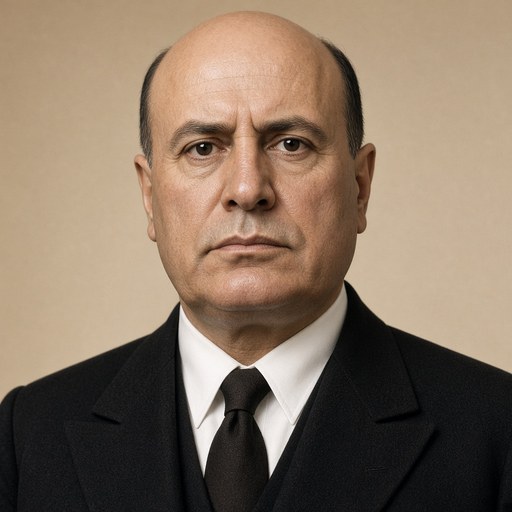
 Benito Mussolini · Prime Minister of Italy
- Context
- Mussolini, as Prime Minister, spoke on foreign policy to the Cabinet, the Chamber of Deputies and the Senate in early February 1923, covering the Ruhr, Lausanne, Memel, and ratification of the Washington and Santa Margherita agreements.
- Main themes
- French and Belgian occupation of the Ruhr, Italian neutrality on the Ruhr, Conference of Lausanne and Turkish claims, Memel and Lithuanian rights, ratification of the Washington Convention, Agreements of Santa Margherita, Treaty of Rapallo, status of Fiume and Zara, Fascist foreign policy, Italian emigrants and transatlantic cables, Allied war debts, eight-hour day
- Duration
- ~52 min
- Words
- 6,210
- Sentences
- 249
- Readability
- 46
- Grade
- 12.9
- Syntax
- 3.05
- Vocabulary
- 2.32
The broad sphere of national life a sentence belongs to. Every sentence has an Arena, so it is the denominator the other indices are read against.
Other249 sentences in 68 paragraphs
The Prime Minister. With reference to foreign affairs, the situation, as far as Italy is concerned, cannot be said to have altered much in the interval which has elapsed between the last Cabinet meeting and to-day.
The German resistance on economic grounds has provoked aggravation of the measures—both military and political—which are being taken by France and Belgium, but from which Italy, following her previous line of conduct, has kept apart.
The complications which were—or could have been—feared, so far have not occurred. Fresh factors have not entered into the close duel which is being fought on the Ruhr. Russia has not altered her attitude as a State, although the dominating party continues to give clamorous verbal demonstrations of solidarity with the German proletariat.
The serious disquietude which had been manifested by the Powers of the Little Entente is diminishing. There had been rumours—more or less without foundation and spread, perhaps, with the object of producing complications—of plans for repeating in Hungary what France had done on the Ruhr, which were attributed to one State or another. These have given Italy the opportunity of confirming and clearly establishing her attitude of opposition to any movement which could extend the conflict to other zones or give the opportunity of attacking the validity of the treaties of peace already concluded.
The Italian Government has been and is following attentively the coal situation on the Ruhr, above all as regards its reaction on other events. I can say that all internal measures, reduction of the train services, including those from abroad, and contracts for fresh supplies, have been quickly and diligently carried through, because, whatever may happen, no paralysis of our industrial activity or of our communications must result. In connection with the supplies of raw materials, I have the pleasure to announce to the Cabinet that the Italian Government has succeeded in concluding a favourable agreement with the Polish Government for oil.
As I said last time, the events on the Ruhr have had the most serious consequences in the developments at the Conference of Lausanne, which has now arrived at its last stage. The Italian Delegation has carried out successful work there with the object of obtaining peace in the East.
The Italian Government has not been among the last to recognise the legitimate rights of Turkey, and thinks to-day that it would not be in her interests to entrench herself in a position of absolute intransigence. It may be that Turkey has not realised the extensive programme that was laid down by the Grand National Assembly of Angora, but it cannot be denied that a great part of that programme has been put into execution, since the Turks from Angora have returned not only to Smyrna but to Constantinople and Adrianople, and have got their way, it can be said, in questions of the highest importance, such as that of the domination of the Straits and that of Capitulations.
Taken as a whole, although the general situation continues to be very critical, there seems to be a small ray of light upon the horizon. The action of the Italian Government is directed decidedly towards a policy of general peace.
As regards the question of Memel, the Italian Government has pursued a temperate policy, inspired by principles of equity and justice. It is not possible to do less than recognise the rights of Lithuania over that port, but the Lithuanian Government cannot be allowed to substitute itself for the Allied Powers in deciding its fate.
We, then, have remained in an attitude of solidarity with the Allies in the measures taken for facing the situation there. But we have, on the other hand, tried effectively to reduce those measures to the necessary minimum, avoiding those of such a nature as to provoke further complications.
The Prime Minister. Honourable Members,—I do not think that it is worth while losing time in a general discussion upon the qualities of men, good and bad, and upon the question as to whether the war of 1914 will be the last or the one before the last. That would be perfectly idle and would only lead to academic discussions. Let us, instead, turn our attention more practically to the Project of Law which I have presented.
The Convention of Washington was closed a year ago. Now the delay in the ratification of the treaty on the part of Italy has already had ambiguous and, I should almost say, unfavourable consequences in the international world. It will be a good thing, then, to proceed at once to complete this act.
The Conference at Washington shared the fate of all the conferences. It opened with great hopes, flashing before our eyes the possibility of eternal peace. Then the concrete results frustrated these hopes. I confess that I do not believe in perpetual and universal peace. In the life of the peoples, notwithstanding ideals—noble and worthy of respect—there exist the permanent factors of race, and the greatness and decadence of nations, which lead to differences often only settled by a recourse to arms. Now it is not a case of weighing these conventions with a view to peace; they represent a breath, a pause, and it is useless to enquire if they have been laid down for idealistic or for business reasons. In any case I declare that Italy did well to adhere to this Convention. If she had not done so, we should have appeared in the eyes of the world as Imperialists and jingoists, which is far from what we have in our hearts and minds. The fact that the Government asks the Chamber for this ratification gives an idea of the general trend of the Fascista foreign policy.
(The ratification of the Treaty is approved of without discussion, only the Communists being against it.)
The National Government, which has worked indefatigably for three months to set the country going upon the path to better fortunes, has in these days signed the Convention for the laying of cables which are to put our country into communication with you, who represent it in the numerous, rich and patriotic colonies beyond the Atlantic.
The enthusiasm for this work, so necessary to our life as a great nation, seemed at one time to have died down, but to-day with the rise of youth upon the scenes of Italian politics, that which it seemed would be relegated to some remote future has been transformed into a concrete and almost immediate reality. It is not you, who suffer almost more than any the pangs of homesickness for our adored country, who need to be shown the usefulness and necessity of this undertaking, which will be carried through in the shortest space of time possible. It will render frequent, daily and, above all, free the communications between the forty million Italians who live in our beautiful peninsula and the six millions who live beyond the ocean. All the Italians who can give financial and moral support must co-operate so that the undertaking may succeed. The Italian Government does not appeal in vain to its emigrant citizens, because it knows that distance makes the love of their country stronger and more intense.
The cables, which in two or three years will bind together Italy and the Americas across the boundless ocean, are like a gigantic arm which the country stretches out to her distant sons to draw them to her and to make them share more intimately her griefs and her joys, her work, her greatness and her glory.
The Prime Minister. Honourable Members,—Last November I began my statement to Parliament of the programme of the National Government as regards foreign policy with the following words:
“The fundamental principle upon which our foreign policy is based is that treaties of peace, once signed and ratified, must be carried out whether they are good or bad. A self-respecting nation cannot follow another course. Treaties are not eternal or irreparable; they are chapters and not epilogues in history; to put them into practice means to try them. If in the course of execution they are proved to be absurd, this in itself may constitute the new element which may open the possibility of a further examination of the respective positions.”
The preceding Government had undertaken to present to Parliament the Agreements concluded at Santa Margherita, and signed at Rome on the 23rd October last. This undertaking I now fulfil.
These Agreements, contrary to what has been stated by someone, do not contain any new political pledges on the part of Italy, but regulate the relations between the Commune of Zara and the surrounding territory of Dalmatia, make clear some recognised rights on the part of citizens who are Italian by option, and endeavour, by means of friendly agreements, to find a possibility of giving and assuring a peaceful and industrious life to the troubled city of Fiume.
Owing to the way in which it is drawn up—whether on account of its diffuseness in those clauses which touch upon territorial questions, and its brevity in others, or whether on account of the seeming precedence given to the task of the commissions which ought, according to the letter of the treaty itself, to proceed exclusively to the settlement of territorial questions, while for the commissions to which were entrusted the settlement of other questions, limits were established, a priori, of a certain amplitude (Art. VI.)—the Treaty of Rapallo has given Yugoslavia the opportunity of maintaining that it was necessary first to effect the evacuation of the territories over which the sovereignty of the Serbo-Croat-Slovak Kingdom had been recognised, and then of proceeding to the stipulations of the agreements for the regulation of the new relations between the two countries.
They tried to justify this with arguments of a political nature. That is to say, they saw, in the first place, that the opposition met with in various Italian political spheres to the transactions concluded at Rapallo had stirred up the discontent and opposition of the Yugoslavs to the treaty; secondly, that the suspended execution of the Territorial Clauses, evidently attributed to some Italian parties, had given the impression to the Yugoslavs that Italy did not want to proceed to the carrying out of the treaty; thirdly, that, in consequence, the parliamentary opposition to a policy of friendliness towards Italy had become very marked, and rendered extremely difficult the adoption of direct provisions for the favourable regulation of these relations; and lastly, that if, instead, the prearranged course had been followed—that of proceeding, say, first to the evacuation of the territories—a radical change of position would have been realised, which would have allowed of the conclusion of more favourable agreements.
In Italy, on the other hand, the discontent was increased by an idea, entertained by many, that the new State, which had also arisen as the result of Italy’s victorious war, ought to give to the citizens, and in Italian interests, privileges no less great than those granted by the Austro-Hungarian Monarchy, not taking into account that a national State, newly formed, may have particular exigencies and susceptibilities. The contrast of such opposite tendencies ended by creating in the relations between the two countries an atmosphere of uneasiness, which has at times reached an acute stage. And in Italy, the intransigence of some circles found justification, above all, in the weakness of the Governments, inasmuch as they had ground for fearing that all our rights would be trodden underfoot the moment we no longer had tangible securities in our hands. By the Agreements which are now handed to us, the Government of Belgrade has recognised the necessity of determining the régime which will have to regulate the reciprocal relations of the new boundaries before passing to the definite execution of the Territorial Clauses.
As for the substance of the Agreements, it is my conviction that their greater or less efficacy will depend upon the spirit in which they are carried out, because never, perhaps, has it been so true, as in this case, that the most perfect pacts become empty formulas if a doubtful or hostile spirit is brought to their execution.
I observe, in conclusion, that the uncertainty which has been manifested in the foreign policy of Italy as regards the Treaty of Rapallo has created a situation unfavourable to her, often preventing her from taking a decided attitude, which would have been in her interest, in most essential questions of a general nature, and making her appear in a light contradictory to her position as a Great Power.
My intense, though brief, experience of Government has shown me that it is not possible to carry out a strong foreign policy without having decisive and clearly defined attitudes as regards the other States.
Italy must get away from this weak situation, must regain her full liberty and efficiency of action also in this sphere. We shall, therefore, carry out the treaty resolutely and loyally, exacting its scrupulous observance. We shall watch over this as is our right and duty. And we wait for time to pass definite judgment upon the soundness and the fate of to-day’s Conventions.
With this understanding, I ask you, Honourable Members, to approve of the following Project of Law:
“Full and entire execution is given to the Agreements and Conventions signed at Rome on 23rd October 1921, between the Kingdom of Italy and the Kingdom of the Serbs, the Croats and the Slovenes for the execution of the Treaty of Rapallo of 12th November 1920.”
The Prime Minister. Honourable Members,—With the approval of the Agreements of Santa Margherita, there came to an end what might be called “the Foreign Policy week” of the Italian Government; a week that might also be called pacific, since it began with the ratification of the Convention of Washington, which represents a pause in the great naval armament, and ends with the approval of the Agreements of Santa Margherita, which are the consequence of the Treaty of Rapallo already ratified and partly carried out.
In closing this week of the life of Parliament, I realise that the Chamber has done good work, and that it has during this session undoubtedly raised, in some ways, its prestige in the country. (Comments.) The questions with which the Chamber has dealt are large; they are not concerned with treaties and bills of minor importance, as some have said.
I refuse to embark, as was attempted on the Left, upon the usual discussions of a general character which do not conclude anything. While I am on this bench, the Chamber will not be changed into an electoral meeting.
No Discussion. There is nothing to discuss as regards home policy; that which happens, happens because it is my direct and clear desire and in accordance with my precise orders, and for which I naturally assume full personal responsibility. (Comments.)
It is useless, therefore, to go to the police officials, because the orders are mine. It does not affect me to know of the existence of a plot, in the sense usually attributed to that word; this will be settled by competent authorities. But there are those who thought that they would fight with impunity against the State and Fascismo. By now they must be disillusioned; and they will be more so in the future. The difference between the Liberal and Fascista States consists precisely in this: that the Fascista State does not defend itself only, but attacks, and those who intend to slander it abroad and to undermine its authority at home must be warned that their manœuvres bring with them unforeseen consequences. The enemies of the Fascisti must not be surprised if I treat them severely as enemies.
As regards the speech of Filippo Turati, my old fighting scent did not deceive me when a few days ago I refused the advances which came to me from that quarter through Gregorio Nofri, who, having been in Russia, felt the overpowering necessity of becoming anti-Bolshevist. Strayed sheep do not enter my fold. I am still faithful to my old tactics. I do not seek anybody. I do not refuse anybody. I put faith above all in my own forces. This is why, lately—after the meeting of the Great Fascista Council—I desired that there should be a closer union with those parties with which, fighting on national ground, friendly relations can be established for common work. But all this, let it be said at once, has not been done for parliamentary purposes, but for the sake of cohesion, unity and the pacification of the country.
I agree wholly with that which the Hon. Cavazzoni said yesterday with regard to the eight-hour day. I declared, before a meeting of eight hundred printers, that the eight-hour day represents an inviolable conquest on the part of the working classes. To-day there are those who dream of setting on foot a long discussion because opposing ideas are attributed to this and that member of the Cabinet. I give definite notice that the Government, in one of its forthcoming meetings, will decide once and for all the question of the eight-hour day. This having been said, and I hope that everybody will understand also the sense of all I have not said, I pass on to the subject of foreign policy.
A Circumspect Policy of Activity. In the meantime, I cannot accept the statement of the Hon. Lucci, who makes out that I am original. In the first place, he must give me time. In the second, there is no originality in foreign affairs, and I refuse to be original, if this originality would result in the slightest damage to my country. And I cannot accept, either, his too idealistic point of view. I see the world as it really is, that is to say, a world of unbounded egoism. If the world was Arcadia, it would be pleasant to amuse oneself with nymphs and shepherds; but I do not see anything of all this, and even when the more or less respectable standards of great principles are displayed, I see behind them interests which seek for a footing in the world. If all foreign policy were brought into the region of pure idealism, it would certainly not be Italy who would refuse to join in. But it is not so; hence all that the Hon. Lucci says belongs to the music of the most distant spheres.
When I first took up my position on this bench, there was a moment of trepidation in certain sections of international politics. It was thought that the advent to power of Fascismo would mean, at the very least, war with Yugoslavia. After a few months, international opinion is fully reassured. The foreign policy of Fascismo cannot be, especially in these historic times, other than extremely circumspect, though at the same time very active.
The nation, having issued from the splendid and blood-stained travail of the war, is now fully intent on the work of building up its political, economic, financial and moral life. To compel it to make an effort which was not absolutely necessary, would be to follow an anti-national and suicidal policy. At London, as at Lausanne, Italian foreign policy has pursued this direction; at Lausanne, above all, the work of the Italian Delegation has been highly appreciated. If peace was not concluded there, it was not the fault, in any way, of Italy.
On the other hand, it is not good to speak too pessimistically of the development of affairs in the Eastern Mediterranean. It must not be thought that a certain harmless showing of teeth, sometimes the result of reciprocal restlessness, means the beginning of a war. I think that if Greece is prudent and the Entente remains firmly united—as in the case of their ships in the port of Smyrna—that Turkey too, since she has realised a large part of the programme laid down at Angora, will become reasonable. There is no reason, therefore, to fear military complications in Europe. Still Italy will keep a careful look-out that the disturbances resulting upon the events in the Ruhr district shall not have serious consequences among the countries of the Danube basin.
The situation on the Ruhr is stationary. I declare once again that Italy could not have followed a different line of policy. The time for fine gestures is past, as they are useless. The attitude which was advocated by certain elements on the Left would have been equally useless. We could not have prevented the French from marching on the Ruhr, and we might have encouraged the German resistance. Also the other plan of our mediation could not have been carried out, because no mediation of any kind is possible if it is not asked for and welcomed. Besides, England has limited herself to non-technical participation in the operations on the Ruhr, but has not pushed her difference of opinion with France to the point of withdrawing her troops from the Rhine. It is opportune to add that France has not asked us, up to now, for formal and concrete assistance. Should this happen, it is evident that Italy should reserve to herself the right of exposing all the complex system of the relations between the two countries.
The Last Phase of the Adriatic Drama. As to the Agreements of Santa Margherita, of which the Chamber is asked to approve, they represent the last phase of our sad and lamentable Adriatic drama. I could here reply in detail, I could show the Hon. Chiesa, for example, how only yesterday, 9th February, I received a telegram from Belgrade to this effect: “The Ministry of Yugoslavia communicates that orders have been sent to the authorities of Spalato that the premises of the school shall be evacuated and put at the disposal of the school itself, and that the house which adjoins the Church of Santo Spirito shall be emptied and handed over.” I could correct other inaccuracies, but it is not my business, it is not worth while to descend to the discussion of detail. I am always of the opinion that this Convention must be carried out in order to test it. At the same time, I do not feel like defending, at too great a length, a treaty of which I did not approve when it was concluded, and which I still hold to be, as regards a great many of its clauses, absurd and harmful to Italian interests. But matters, to-day, stand thus: either the treaty must be definitely enforced or denounced. Since, in present conditions, it cannot be denounced, for that would mean the reopening of all difficulties, there remains nothing but its loyal and scrupulous application on our part, as loyal and scrupulous as the application on the part of Belgrade will have to be.
To wait indefinitely for events which may occur is the worst of systems at this moment. It is necessary to put an end to a situation which has become unbearable and which gave us all the disadvantages without assuring us of what might be the advantages of clearly defined relations. Moreover it is difficult to understand why the Treaty of Rapallo, of all the treaties which have been made from the beginning of history, should be the only one irreparable and perpetual. No treaty has ever withstood new conditions of affairs developed by the progress of time. The essential thing, to my mind, is to place ourselves in such a position that an eventual revision will enable us to vindicate our eternal rights with dignity and power.
The Government in favour of Fiume and Zara. By the application of the Agreements of Santa Margherita the Fascista Government gives a solemn proof of its probity, its spirit of decision and of absolute loyalty. Belgrade must do the same. Yugoslavia must take into account the intrinsic value of this act, and follow, where the Italians who remain in Dalmatia are concerned, a policy of freedom and judicious action; as a policy which would tend to suppress the Italian element in Dalmatia would not be tolerated by the Fascista Government. By the ratification of these Agreements the Government offers Yugoslavia the opportunity of furthering the economic relations between the two countries.
The Government, which has already done all it can, within the limits of its possibilities, for Fiume and Zara, will continue to work with the utmost energy and diligence for these two cities. The evacuation of Susak having been carried out—and of Susak only, because the Delta and Porto Baros will still be occupied by our troops until Fiume has become juridically a perfect State—Italy will continue to interest herself in the fate of Fiume, so that she may be restored in a short time to her ancient splendour.
As for Zara, her destiny is serious and difficult, and I, for one, understand the tragedy of that city and the suffering of all the Italians scattered in Dalmatia up as far as Cattaro. But Zara, the sentinel of Dalmatia, is ready to bear, with the spirit of absolute national discipline, the completion of the last act of the Adriatic drama.
The Government will meet its needs immediately, because Zara must live, because Zara beyond the Adriatic represents one of the most vital portions of the Italian people. And the people of Zara and Dalmatia may be sure that the Government will watch over their fate with the most loving care. These are not merely words spoken to help them through this difficult time; deeds will follow them.
As for public, national opinion, it is unanimous in feeling that these Agreements had to be applied in order that Italy might be free in the ever closer international competition, free to carry out a policy of defence of her interests and free to influence with increasing activity the course of events. I think that the best part of the Italian people agree in this line of home and foreign policy.
QUESTIONS OF FOREIGN POLICY BEFORE THE SENATE. THE RUHR; FIUME; ZARA AND
The Prime Minister. Honourable Senators,—After having written the prefaces and the introductions to the Bills, and after the speech made in the other branch of Parliament, I do not think that there remains much to say.
The very rapidity of the discussion itself bears witness to the fact that all these treaties and agreements are already, in a certain sense, superseded. By this I do not wish to deny their importance, but it is a question of treaties and conventions of some time back, and life to-day moves at a very great rate. I do not disguise the fact that in continuing the eternal theory of conferences, people have reason to show a certain scepticism about the likelihood of results.
Why Italy intervenes. Senator Crespi tried to carry the discussion on to general ground—the burning ground of debts and reparations. He demands new pacts; but there are none. Perhaps there cannot be any. With reference to a recent appeal for Italy’s intervention in this matter, if responsible members of Governments, and especially those engaged or interested in the conflict, turned to Italy, the only nation in the world which, at this moment, is following a policy of peace— —I should not hesitate one moment in answering the appeal.
There is a new factor, Senator Crespi, which it would be a good thing to take into consideration, though it is one which tends to stifle rather than arouse enthusiasm. It is that England and the United States have come to an agreement. England has undertaken to pay her debts to America. It is no good, therefore, for us to entertain too many illusions about the likelihood of a cancellation of our debts. It would be perfectly just, I think, from the strictly moral point of view; but the criteria and principles of absolute morality do not as yet guide the relations of the peoples. (Approval.)
It was said in a foreign Parliament that Italy had attempted to mediate between France and Germany. No such attempt was ever made. My duty was to make investigations in the European capitals, and I have done so. But having gathered that there was no possibility of proceeding in that direction, I drew back, as to continue would have been a great mistake. I think, however, that the crisis has reached its culminating point. It is a question now of knowing whether the Entente still exists and still will exist. (Comments.)
I do not think that I shall be revealing secrets if I say here what meets the eye of anyone who reads the daily news in the papers. Not a single event has occurred, not a single question arisen, without the problem of the unity of action of the Entente having been brought forward. Of necessity in this political situation there can be no improvised action and still less originality. All foreign policies, not excluding that of Russia, which is simply terrifying in form and method, are of a cautious and circumspect nature at this moment. There is no reason why Italy should follow a different course. When it is a question of the interests of our nation and of forty million inhabitants who have the right to live, it is necessary to be careful about improvisations, and it is necessary to take into account that, besides our wishes, there are also the wishes of others.
If we had coalfields; if we had in some way solved the problem of raw materials; if we could dispose of large reserves of gold in order to keep up the value of our money, we could follow a given policy, even one of generosity towards Germany. But we cannot afford the luxury of prodigality and generosity when we have to toil to carry on life, when we have to summon all our energies to avoid falling into the abyss.
And so you will agree with me, Honourable Members, that Italy could not keep aloof from that which is taking place on the Ruhr, could not deprive herself of participation in an economical and technical capacity. It is always better, in my opinion, to be present, because sometimes complicated problems find unexpected solutions. It was not possible to run the risk capriciously of not being present, in the event—not at all improbable—of an economic agreement, as regards iron and coal, between Germany and France.
Zara and Dalmatia. Coming to the Agreements of Santa Margherita, I understand perfectly the grief and anguish expressed in the words of Senators Tamassia and Tivaroni. Undoubtedly sentiment is a great spiritual force, both in the lives of individuals and of peoples, but it cannot be the one dominating influence of foreign policy.
It is necessary to have the courage to say that Italy cannot remain for ever penned up in one sea, even if it is the Adriatic. Beyond the Adriatic there is the Mediterranean and other seas which can interest us. The Treaty of Rapallo was, in my opinion, a lamentable transaction, which was the result of a difficult internal situation and of a foreign policy which was not marked by its excessive autonomy. And here allow me to repeat that a strong and dignified foreign policy cannot be carried out if the nation does not present a daily example of iron discipline. (Approval.) I do not think that these Agreements of Santa Margherita sign the death warrant of Zara and Dalmatia. With the last concessions we have saved the use of the Italian language for our brothers there. Now I think it was Gioberti who said that where the language is spoken there is the nation. For this reason, if these brothers of ours can speak, write and learn in their mother tongue, I think that already one of the foundations of their Italian nationality is saved.
For a decade the Italians of Zara and Dalmatia have resisted the furious attempts at denationalisation made by the Hapsburg Monarchy. In those days Italy could not give active assistance to those brothers; now you see that she has another realisation of herself. Those brothers of ours, who might have felt themselves forgotten if the Agreements of Santa Margherita were applied by another nation, cannot feel the same when the definite and necessary application of the Treaty of Rapallo is carried out by the Government over which I have the honour of presiding and of which the members are those who won the victory. We firmly believe that the strict and scrupulous application of the Agreements of Santa Margherita on our part, as well as on the part of Yugoslavia, will save the Italian character of Zara and Dalmatia. There is no need for me to repeat that treaties are transactions, and are like the steps of an equilibrist. No treaty is eternal and perpetual; all that is happening to-day under our eyes gives us clear warning.
The Question of Fiume. We shall then carry out these Agreements immediately and loyally. It must not be thought that the Third Zone is a kind of vast continent, and that in it we have immense forces. It is a question of the territory round Zara and a group of islands; all told, we have only 120 policemen, 18 custom-house guards, and 20 soldiers. At Susak we have a battalion of infantry. It will be a case of turning them back to the line of Eneo, because until it is known what is to become of Fiume, Porto Baros and the Delta, they will remain under the control of Italian troops. What is this Arbitration Commission? It represents an attempt to bring about the existence of that more or less vital creature, first conceived at Rapallo, known as the Independent State of Fiume. One thing is certain, at any rate, and that is that there are three Italians on the Commission. And another thing is certain, and that is that it is not absolutely necessary for Fiume to become a new province of the realm. That there should actually be a prefect at Fiume is to me a secondary matter; the important thing is that Fiume shall keep her spirit sound and intact, that she shall remain Italian, and that such means shall be found that shall make her a city which lives in itself and for itself and not only through the largess of the Italian State.
The Government, which sometimes makes deeds precede words, has already taken steps for the provision of Zara, economically, politically and spiritually. The same has been done for Dalmatia. It is necessary to admit frankly that since the coming of the Fascista Government the Yugoslavs have been less intransigent with regard to us. There is no doubt that the definite carrying out of the Treaty of Rapallo is the cause of great grief to the citizens of Fiume and Zara, of Dalmatia and many in the old kingdom.
(Cries of “It is true.”)
Mussolini. At other times there might perhaps have been difficulties. But the Government over which I have the honour of presiding does not hesitate; it faces difficulties, I was almost going to say seeks them. I intend to regulate as soon as possible all that more or less successful heritage of foreign policy left me by my predecessors. It is no good being alarmed by what happens. I have what I dare to call a Roman conception of history and life. Things must never be thought to be irreparable. Rome did not believe in the irreparable, even after the battle of Cannæ, when she lost the flower of her generation. On the contrary, you will remember that the Senate went out to meet Terentius Varro, who, having wished to undertake the battle against the advice of Paulus Æmilius, was certainly one of those responsible for the defeat. Rome fell, and rose up again; she marched slowly, but she marched; she had a goal to reach, and she intended to reach it. Italy, our Italy, the Italy which we carry in our hearts, and which is our pride, must be like this; the Italy which accepts her destiny when it is imposed, by hard necessity, but only while she prepares her spirit and her forces to overcome it some day. (Loud and prolonged applause, many Senators advance to congratulate the Prime Minister. Silence being once more established, Mussolini continues.)
I propose that the Senate, having concluded the discussion suspended yesterday evening, should be adjourned. I do not know for how long. The Government must be left free to work and to prepare work for the Chamber and the Senate.
Meanwhile, I feel the necessity of thanking the President, who has directed the proceedings with that tact and high wisdom for which he is known. I am glad that the Senate, in approving of these political and commercial treaties—which are two aspects of the same policy—has thus brought to a conclusion a part of our foreign policy. I beg the President to accept the expression of my profound admiration.
Tittoni, President of the Senate, replies, reciprocating the words of the Prime Minister and praising his spirit and his patriotic faith. He pays tribute to the way in which the Hon. Mussolini has assumed, with a firm hand, the direction of public interests.