





- Context
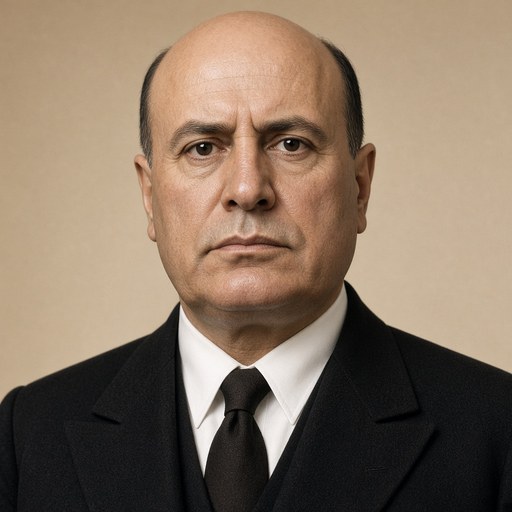
- Mussolini, as President of the Council, addressed the Chamber of Deputies on November 16, 1922, presenting his new coalition Government, asserting the Fascist revolution's rights and requesting full powers.
- Main themes
- Revolution of the Blackshirts, threat to turn the Chamber into a bivouac, coalition Government, tribute to the King, respect for the peace treaties, Italy's position within the Entente, bilateral trade treaties over conferences, balanced budget and economies, discipline and public order, reorganisation of police and armed forces, request for full powers
- Duration
- ~22 min
- Words
- 2,604
- Sentences
- 115
- Readability
- 47
- Grade
- 12.1
- Syntax
- 3.00
- Vocabulary
- 2.31
Translated from Italian Source: it.wikisource.org ↗
The broad sphere of national life a sentence belongs to. Every sentence has an Arena, so it is the denominator the other indices are read against.
Other115 sentences in 53 paragraphs
Gentlemen, (signs of very keen attention) what I am doing today, in this Chamber, is an act of formal deference towards you, and one for which I ask you for no token of special gratitude.
For many years, indeed for too many years, government crises were raised and resolved by the Chamber through more or less tortuous manoeuvres and ambushes, so much so that a crisis was regularly described as an assault, and the Ministry was pictured as a rickety mail coach.
Now it has happened for the second time, within the space of a decade, that the Italian people – in its best part – has overridden a Ministry and given itself a Government outside, above and against any designation by Parliament.
The decade I speak of lies between May 1915 and October 1922.
I leave it to the melancholy zealots of super-constitutionalism to hold forth, more or less plaintively, on this. I affirm that the revolution has its rights. I add, so that everyone may know it, that I am here to defend and to strengthen to the highest degree the revolution of the "Blackshirts", integrating it intimately as a force of development, of progress and of balance into the history of the Nation. (Loud applause on the right).
I refused to win overwhelmingly, and I could have won overwhelmingly. I imposed limits on myself. I told myself that the best wisdom is the kind that does not abandon you after victory. With three hundred thousand young men armed to the teeth, determined to do anything and almost mystically ready to act on my order, I could have punished all those who have defamed Fascism and tried to drag it through the mud. (Approval on the right).
I could have made this deaf and grey Chamber into a bivouac for my squads… (Loud applause on the right — Noise — Comments).
MODIGLIANI. Long live Parliament! Long live Parliament!
MUSSOLINI, President of the Council of Ministers, Minister of the Interior and ad interim of Foreign Affairs. …I could have bolted the doors of Parliament and formed a Government made up exclusively of Fascists. I could have: but I did not wish to, at least not in this first phase.
Our adversaries remained in their hiding places: they have calmly come out of them, and they have been granted freedom of movement: which they are already taking advantage of to spit venom once more and to lay ambushes, as at Carate and Bergamo, at Udine, at Muggia.
I have formed a coalition Government, and not with the aim of having a parliamentary majority, which I can today do perfectly well without (Applause on the extreme right and on the extreme left — Comments), but in order to gather to the aid of the gasping Nation all those who, above the nuances of party, wish to save that same Nation.
I thank from the bottom of my heart my collaborators, ministers and undersecretaries; I thank my colleagues in Government, who chose to take on with me the heavy responsibilities of this hour: and I cannot fail to recall with warmth the attitude of the Italian working masses, who have supported the Fascist movement with their active or passive solidarity.
I believe, too, that I am expressing the thought of this entire Assembly, and certainly of the majority of the Italian people, in paying warm tribute to the Sovereign, who refused to lend himself to the futile reactionary attempts of the last hour, averted civil war, and made it possible to infuse into the weary arteries of the parliamentary State the new, impetuous Fascist current that emerged from the war and was exalted by victory. (Cries of: Long live the King! — The ministers and a great many deputies rise to their feet and applaud loudly and at length).
Before we came to this post, we were asked on all sides for a programme. It is not, alas, programmes that are lacking in Italy: rather, it is men, and the will to carry the programmes out. All the problems of Italian life, all of them I say, have already been solved on paper: but the will to translate them into deeds has been lacking. The Government today represents that firm and resolute will.
Foreign policy is what, especially at this moment, most particularly occupies and preoccupies us.
I shall speak of it at once, because I believe that with what I shall say I will dispel many apprehensions. I shall not deal with every subject, because in this field too I prefer action to words.
The fundamental guidelines of our foreign policy are the following: the peace treaties, whether good or bad, once they have been signed and ratified, must be carried out. A State that respects itself can have no other doctrine. (Loud approval).
Treaties are not eternal, they are not irreparable: they are chapters of history, not the epilogue of history. To carry them out means to put them to the test.
If in the course of carrying them out their absurdity becomes apparent, that may constitute the new fact that opens the possibility of a further examination of the respective positions. Like the Treaty of Rapallo, so the Santa Margherita agreements, which derive from it, are being brought by me before Parliament.
Having established that, once they are complete, that is, ratified, treaties must be loyally carried out, I move on to establish another foundation of our foreign policy, namely the repudiation of all the hazy "reconstructionist" ideology.
We grant that there is a kind of unity, or rather, of interdependence, in the economic life of Europe. We grant that this economy must be rebuilt, but we deny that the methods adopted so far serve that purpose.
For the purposes of European economic reconstruction, bilateral trade treaties, the basis of the broadest economic relations between peoples, are worth more than the cumbersome and confused plenary conferences, whose lamentable history everyone knows. As regards Italy specifically, we intend to pursue a policy of dignity and of national advantage (Loud approval on the right).
We cannot allow ourselves the luxury of a policy of senseless altruism or of complete devotion to the designs of others. I give so that you may give. (Loud approval).
The Italy of today counts, and must count adequately. This is beginning to be recognised beyond our borders as well. We do not have the bad taste to exaggerate our power, but neither do we wish to diminish it out of excessive and pointless modesty.
My formula is simple: nothing for nothing. Whoever wishes to have concrete proof of friendship from us, let them give us such proof of concrete friendship. (Approval on the right).
Fascist Italy, just as it does not intend to tear up the treaties, so, for many reasons of a political, economic and moral order, it does not intend to abandon its wartime allies.
Rome stands in line with Paris and London, but Italy must assert herself and must put before the Allies that courageous and severe examination of conscience which they have not faced from the armistice to this day. (Loud approval).
Does an Entente still exist, in the substantive sense of the word? What is the position of this Entente with regard to Germany, with regard to Russia, with regard to a Russo-German alliance? What is the position of Italy within the Entente, of an Italy which, not solely through the weakness of her Governments, has lost strong positions in the Adriatic and the Mediterranean, while some of her fundamental rights are being called into question once more; of an Italy which has had no colonies, nor raw materials, and is crushed, literally, by the debts incurred to achieve the common victory?
In the talks I shall have with the prime ministers of France and of England, I intend to address with complete clarity, in all its complexity, the problem of the Entente and the consequent problem of Italy's position within the Entente.
From this examination two hypotheses will emerge: either the Entente, healing its internal difficulties and its contradictions, will truly become a homogeneous, balanced, egalitarian bloc of forces – with equal rights and equal duties – or else its hour will have struck, and Italy, regaining her freedom of action, will loyally provide by means of another policy for the protection of her interests. (Loud approval).
I hope that the first eventuality comes about: also in view of the seething of the whole Eastern world and of the growing intimacy between Russia, Turkey and Germany.
But for this to happen, it is necessary once and for all to leave the mere terrain of conventional phrases: it is time, in short, to leave behind the diplomatic expedient that is renewed and repeated at every conference, and to enter the terrain of historical facts, that is, the terrain on which it is possible to determine the course of events in one direction or another.
A foreign policy such as ours, a policy of national advantage, a policy of respect for treaties, a policy of fair clarification of Italy's position within the Entente, cannot be passed off as an adventurous policy or an imperialist one in the vulgar sense of the word.
We wish to pursue a policy of peace: but not a policy of suicide.
The guidelines of domestic policy can be summed up in these words: economies, work, discipline. The financial problem is fundamental: we must achieve, with the greatest possible speed, a balanced state budget. A regime of thrift: intelligent use of expenditure: support for all the productive forces of the Nation: an end to all the residual trappings of war (Loud approval).
On the financial situation, which, though serious, is capable of rapid improvement, my colleague Tangorra will report to you at length when requesting provisional budgetary authority. Whoever says work says the productive bourgeoisie and the working classes of the towns and the countryside. No privileges for the former, no privileges for the latter, but protection of all interests that are in harmony with those of production and of the Nation.
The working proletariat, whose lot concerns us, though without culpable demagogic indulgence, has nothing to fear and nothing to lose, but certainly everything to gain, from a financial policy that saves the State budget and averts that bankruptcy which would be felt disastrously, above all by the humblest classes of the population. Our emigration policy must free itself of excessive paternalism, but let the Italian citizen who emigrates know that he will be firmly protected by the representatives of the Nation abroad.
The increase in a Nation's prestige in the world is proportionate to the discipline it displays at home. There is no doubt that the internal situation has improved, but not yet as much as I would wish.
I do not intend to lull myself with easy optimism. I am no lover of Pangloss.
The great cities, and in general all the cities, are calm: episodes of violence are sporadic and peripheral, but they will have to end.
Citizens, whatever party they belong to, will be able to move about freely: all religious faiths will be respected, with particular regard for the dominant one, which is Catholicism: the liberties of the Statute will not be infringed: the law will be enforced at any cost.
The State is strong and will show its strength against everyone, even against any Fascist lawlessness, should it arise, since that would be an unconscious and impure lawlessness that would no longer have any justification. (Loud applause — Comments).
I must add, however, that almost all Fascists have fully embraced the new order of things. The State does not intend to abdicate before anyone whatsoever.
Whoever rises up against the State will be punished. This explicit warning is addressed to all citizens, and I know that it must sound particularly welcome to the ears of the Fascists, who have fought and won in order to have a State that imposes itself on everyone, I say on everyone, with the necessary inexorable energy.
We must not forget that, beyond the minorities who engage in militant politics, there are forty million excellent Italians who work, who reproduce, who perpetuate the deep strata of the race, who ask, and who have the right, not to be thrown into chronic disorder, the sure prelude to general ruin. (Very loud, general, prolonged applause).
Since sermons – evidently – are not enough, the State will see to selecting and perfecting the armed forces that guard it: the Fascist State will perhaps form a single police force, perfectly equipped, highly mobile and of high moral spirit; while the Army and Navy – most glorious and dear to every Italian – withdrawn from the vicissitudes of parliamentary politics, reorganised and strengthened, will represent the supreme reserve of the Nation at home and abroad. (Very loud applause — Cries of: Long live the Army! — The ministers and the deputies of the right, the centre and the left rise to their feet and applaud loudly and at length)
Gentlemen! From further communications you will learn the Fascist programme, in its details and for each individual ministry. I do not wish, as long as it is possible for me, to govern against the Chamber: but the Chamber must be aware of its particular position, which makes it liable to dissolution in two days or in two years. (Laughter — Applause on the right and on the extreme left — Comments).
We ask for full powers because we wish to assume full responsibility. Without full powers you know perfectly well that not a single lira – I say a single lira – of savings would be made. By this we do not intend to exclude the possibility of willing collaboration, which we shall cordially accept, whether it comes from deputies, from senators or from individual competent citizens. Each of us has a religious sense of our difficult task. The country supports us and awaits us.
We shall give it no more words, but deeds. We make a formal and solemn commitment to restore the budget to health, and we shall restore it. We wish to pursue a foreign policy of peace, but at the same time of dignity and firmness: and we shall pursue it. We have set ourselves the aim of giving the Nation discipline, and we shall give it. Let none of our adversaries of yesterday, of today, of tomorrow delude themselves about the brevity of our stay in power. (Laughter — Comments — Applause on the right).
A childish and foolish illusion, like that of yesterday. Our Government has formidable foundations in the conscience of the Nation and is supported by the best, the freshest generations of Italians.
There is no doubt that in these last days a gigantic step towards the unification of spirits has been taken. The Italian fatherland has found itself once again, from north to south, from the mainland to the generous islands, which will never again be forgotten (Approval), from the great cities to the industrious colonies of the Mediterranean and the Adriatic. Do not, gentlemen, throw any more idle chatter at the Nation. Fifty-two speakers registered to speak on my communications are too many. (Laughter — Comments).
Let us rather work with a pure heart and an alert mind to ensure the prosperity and greatness of the Fatherland.
So may God help me to bring my arduous labour to a victorious end. (Very loud applause on the right and on other benches — Prolonged comments — Many deputies go to congratulate the Honourable President of the Council).
The original Italian. The tags above are read on the English translation's sentences.
Signori, (segni di vivissima attenzione) quello che io compio oggi, in questa Aula, è un atto di formale deferenza verso di voi e per il quale non vi chiedo nessun attestato di speciale riconoscenza.
Da molti, anzi da troppi anni, le crisi di Governo erano poste e risolte dalla Camera attraverso più o meno tortuose manovre ed agguati, tanto che una crisi veniva regolarmente qualificata come un assalto, ed il Ministero rappresentato da una traballante diligenza postale.
Ora è accaduto per la seconda volta, nel volgere di un decennio, che il popolo italiano – nella sua parte migliore – ha scavalcato un Ministero e si è dato un Governo al di fuori, al di sopra e contro ogni designazione del Parlamento.
Il decennio di cui vi parlo sta fra il maggio del 1915 e l’ottobre del 1922.
Lascio ai melanconici zelatori del supercostituzionalismo, il compito di dissertare più o meno lamentosamente su ciò. Io affermo che la rivoluzione ha i suoi diritti. Aggiungo, perchè ognuno lo sappia, che io sono qui per difendere e potenziare al massimo grado la rivoluzione delle «camicie nere», inserendola intimamente come forza di sviluppo, di progresso e di equilibrio nella storia della Nazione. (Vivi applausi a destra).
Mi sono rifiutato di stravincere, e potevo stravincere. Mi sono imposto dei limiti. Mi sono detto che la migliore saggezza è quella che non vi abbandona dopo la vittoria. Con trecentomila giovani armati di tutto punto, decisi a tutto e quasi misticamente pronti ad un mio ordine, io potevo castigare tutti coloro che hanno diffamato e tentato di infangare il Fascismo. (Approvazioni a destra).
Potevo fare di questa Aula sorda e grigia un bivacco di manipoli… (Vivi applausi a destra — Rumori — Commenti).
MODIGLIANI. Viva il Parlamento! Viva il Parlamento! (Rumori e apostrofi da destra — Applausi all’estrema sinistra).
MUSSOLINI. presidente del Consiglio dei ministri, ministro dell’interno e ad interim degli affari esteri …potevo sprangare il Parlamento e costituire un Governo esclusivamente di fascisti. Potevo: ma non ho, almeno in questo primo tempo, voluto.
Gli avversari sono rimasti nei loro rifugi: ne sono tranquillamente usciti, ed hanno ottenuto la libera circolazione: del che approfittano già per risputare veleno e tendere agguati come a Carate e Bergamo, a Udine, a Muggia.
Ho costituito un Governo di coalizione e non già coll’intento di avere una maggioranza parlamentare, della quale posso oggi fare benissimo a meno (Applausi all’estrema destra ed all’estrema sinistra — Commenti), ma per raccogliere in aiuto della Nazione boccheggiante quanti, al di sopra delle sfumature dei partiti, la stessa Nazione vogliono salvare.
Ringrazio dal profondo del cuore i miei collaboratori, ministri e sottosegretari; ringrazio i miei colleghi di Governo, che hanno voluto assumere con me le pesanti responsabilità di questa ora: e non posso non ricordare con simpatia l’atteggiamento delle masse lavoratrici italiane che hanno confortato il moto fascista colla loro attiva o passiva solidarietà.
Credo anche di interpretare il pensiero di tutta questa Assemblea e certamente della maggioranza del popolo italiano, tributando un caldo omaggio al Sovrano, il quale si è rifiutato ai tentativi inutilmente reazionari dell’ultima ora, ha evitato la guerra civile e permesso di immettere nelle stracche arterie dello Stato parlamentare la nuova impetuosa corrente fascista uscita dalla guerra ed esaltata dalla vittoria. (Grida di: Viva il Re! — I ministri e moltissimi deputati sorgono in piedi e applaudono vivamente e lungamente).
Prima di giungere a questo posto da ogni parte ci chiedevano un programma. Non sono, ahimè, i programmi che difettano in Italia: sibbene gli uomini e la volontà di applicare i programmi. Tutti i problemi della vita italiana, tutti dico, sono già stati risolti sulla carta: ma è mancata la volontà di tradurli nei fatti. Il Governo rappresenta, oggi, questa ferma e decisa volontà.
La politica estera è quella che, specie in questo momento, più particolarmente ci occupa e preoccupa.
Ne parlo subito, perchè credo, con quello che dirò, di dissipare molte apprensioni. Non tratterò tutti gli argomenti, perchè, anche in questo campo, preferisco l’azione alle parole.
Gli orientamenti fondamentali della nostra politica estera sono i seguenti: i trattati di pace, buoni o cattivi che siano, una volta che sono stati firmati e ratificati, vanno eseguiti. Uno Stato che si rispetti non può avere altra dottrina. (Vive approvazioni).
I trattati non sono eterni, non sono irreparabili: sono capitoli della storia, non epilogo della storia. Eseguirli significa provarli.
Se attraverso la esecuzione si appalesa il loro assurdo, ciò può costituire il fatto nuovo che apre la possibilità di un ulteriore esame delle rispettive posizioni. Come il trattato di Rapallo, così gli accordi di Santa Margherita, che da quello derivano, vengono da me portati dinnanzi al Parlamento.
Stabilito che, quando siano perfetti, cioè ratificati, i trattati debbono essere lealmente eseguiti, passo a stabilire un altro fondamento della nostra politica estera, cioè il ripudio di tutta la fumosa ideologia «ricostruzionista».
Noi ammettiamo che ci sia una specie di unità, o meglio, di interdipendenza della vita economica europea. Ammettiamo che si debba riedificare questa economia, ma escludiamo che i metodi sin qui adottati giovino allo scopo.
Valgono più, ai fini della ricostruzione economica europea, i trattati di commercio a due, base delle più vaste relazioni economiche fra i popoli, che le macchinose e confuse conferenze plenarie, la cui lacrimevole istoria ognuno conosce. Per ciò che riguarda precisamente l’Italia noi intendiamo di seguire una politica di dignità e di utilità nazionale (Vive approvazioni a destra).
Non possiamo permetterci il lusso di una politica di altruismo insensato o di dedizione completa ai disegni altrui. Do ut des. (Vive approvazioni).
L’Italia di oggi conta, e deve adeguatamente contare. Lo si incomincia a riconoscere anche oltre i confini. Non abbiamo il cattivo gusto di esagerare la nostra potenza, ma non vogliamo nemmeno per eccessiva ed inutile modestia diminuirla.
La mia formula è semplice: niente per niente. Chi vuole avere da noi prove concrete di amicizia, tali prove di concreta amicizia ci dia. (Approvazioni a destra).
L’Italia fascista, come non intende stracciare i trattati, così per molte ragioni di ordine politico, economico e morale non intende abbandonare gli alleati di guerra.
Roma sta in linea con Parigi e Londra, ma l’Italia deve imporsi e deve porre agli Alleati quel coraggioso e severo esame di coscienza ch’essi non hanno affrontato dall’armistizio ad oggi. (Vive approvazioni).
Esiste ancora una Intesa nel senso sostanziale della parola? Quale è la posizione di questa Intesa di fronte alla Germania, di fronte alla Russia, di fronte ad una alleanza russo-tedesca? Qual’è la posizione dell’Italia nell’Intesa, dell’Italia che non soltanto per debolezze dei suoi Governi ha perduto forti posizioni nell’Adriatico e nel Mediterraneo, mentre si ripongono in discussione taluni dei suoi diritti fondamentali ; dell’Italia che non ha avuto colonie, nè materie prime ed è schiacciata, letteralmente, dai debiti fatti per raggiungere la vittoria comune?
Mi propongo, nei colloqui che avrò coi primi ministri di Francia e di Inghilterra di affrontare con tutta chiarezza, nella sua complessità il problema dell’Intesa ed il problema conseguente della posizione dell’Italia in seno dell’Intesa.
Da questo esame due ipotesi scaturiranno: o l’Intesa, sanando le sue angustie interne, le sue contraddizioni, diventerà veramente un blocco omogeneo, equilibrato, egualitario di forze – con eguali diritti ed eguali doveri – oppure sarà suonata la sua ora e l’Italia, riprendendo la sua libertà di azione, provvederà lealmente con altra politica alla tutela dei suoi interessi. (Vive approvazioni).
Mi auguro che la prima eventualità si verifichi: anche in considerazione del ribollire di tutto il mondo orientale e della crescente intimità russo-turco-tedesca.
Ma perchè ciò sia, è necessario uscire una buona volta dal semplice terreno delle frasi convenzionali: è tempo insomma di uscire dallo spediente diplomatico che si rinnova e si ripete ad ogni conferenza, per entrare in quello dei fatti storici, sul terreno cioè in cui è possibile determinare in un senso o nell’altro un corso degli avvenimenti.
Una politica estera come la nostra, una politica di utilità nazionale, una politica di rispetto ai trattati, una politica di equa chiarificazione della posizione dell’Italia nell’Intesa, non può essere gabellata come una politica avventurosa o imperialista nel senso volgare della parola.
Noi vogliamo seguire una politica di pace: non però una politica di suicidio.
Le direttive di politica interna si riassumono in queste parole: economie, lavoro, disciplina. Il problema finanziario è fondamentale: bisogna arrivare colla maggiore celerità possibile al pareggio del bilancio statale. Regime della lesina: utilizzazione intelligente delle spese: aiuto a tutte le forze produttive della Nazione: fine di tutte le residuali bardature di guerra (Vive approvazioni).
Sulla situazione finanziaria, che pure essendo grave, è suscettibile di rapido miglioramento, vi riferirà ampiamente il mio collega Tangorra in sede di richiesta dell’esercizio provvisorio. Chi dice lavoro, dice borghesia produttiva e classi lavoratrici delle città e dei campi. Non privilegi alla prima, non privilegi alle ultime, ma tutela di tutti gli interessi che si armonizzano con quelli della produzione e della Nazione. (Vivi applausi).
Il proletariato che lavora, e della cui sorte ci preoccupiamo, ma senza colpevoli demagogiche indulgenze, non ha nulla da temere e nulla da perdere, ma certamente tutto da guadagnare da una politica finanziaria che salvi il bilancio dello Stato ed eviti quella bancarotta che si farebbe sentire in disastroso modo specialmente sulle classi più umili della popolazione. La nostra politica emigratoria deve svincolarsi da un eccessivo paternalismo, ma il cittadino italiano che emigra sappia che sarà saldamente tutelato dai rappresentanti della Nazione all’estero.
L’aumento del prestigio di una Nazione nel mondo, è proporzionato alla disciplina di cui dà prova all’interno. Non vi è dubbio che la situazione all’interno è migliorata, ma non ancora come vorrei.
Non intendo cullarmi nei facili ottimismi. Non amo Pangloss.
Le grandi città ed in genere tutte le città sono tranquille: gli episodi di violenza sono sporadici e periferici, ma dovranno finire.
I cittadini, a qualunque partito siano iscritti, potranno circolare: tutte le fedi religiose saranno rispettate, con particolare riguardo a quella dominante che è il cattolicismo: le libertà statutarie non saranno vulnerate: la legge sarà fatta rispettare a qualunque costo.
Lo Stato è forte e dimostrerà la sua forza contro tutti, anche contro l’eventuale illegalismo fascista, poichè sarebbe un illegalismo incosciente ed impuro che non avrebbe più alcuna giustificazione. (Vivi applausi — Commenti).
Debbo però aggiungere che la quasi totalità dei fascisti ha aderito perfettamente al nuovo ordine di cose. Lo Stato non intende abdicare davanti a chicchessia.
Chiunque si erga contro lo Stato sarà punito. Questo esplicito richiamo va a tutti i cittadini, ed io so che deve suonare particolarmente gradito alle orecchie dei fascisti, i quali hanno lottato e vinto per avere uno Stato che si imponga a tutti, dico a tutti, colla necessaria inesorabile energia.
Non bisogna dimenticare che al di fuori delle minoranze che fanno della politica militante ci sono quaranta milioni di ottimi italiani i quali lavorano, si riproducono, perpetuano gli strati profondi della razza, chiedono ed hanno il diritto di non essere gettati nel disordine cronico, preludio sicuro della generale rovina. (Vivissimi generali, prolungati applausi).
Poichè i sermoni – evidentemente – non bastano, lo Stato provvederà a selezionare e a perfezionate le forze armate che lo presidiano: lo Stato fascista costituirà forse una polizia unica, perfettamente attrezzata, di grande mobilità e di elevato spirito morale; mentre Esercito e Marina – gloriosissimi e cari ad ogni italiano – sottratti alle mutazioni della politica parlamentare, riorganizzati e potenziati, rappresenteranno la riserva suprema della Nazione all’interno ed all’estero. (Vivissimi applausi — Grida di: Viva l’Esercito! — I ministri e i deputati della destra, del centro e di sinistra sorgono in piedi e applaudono vivamente e lungamente)
Signori! Da ulteriori comunicazioni apprenderete il programma fascista, nei suoi dettagli e per ogni singolo dicastero. Io non voglio, fin che mi sarà possibile, governare contro la Camera: ma la Camera deve sentire la sua particolare posizione che la rende passibile di scioglimento fra due giorni o fra due anni. (Ilarità — Applausi a destra e all’estrema sinistra — Commenti).
Chiediamo i pieni poteri perchè vogliamo assumere le piene responsabilità. Senza i pieni poteri voi sapete benissimo che non si farebbe una lira – dico una lira – di economia. Con ciò non intendiamo escludere la possibilità di volonterose collaborazioni che accetteremo cordialmente, partano esse da deputati, da senatori o da singoli cittadini competenti. Abbiamo ognuno di noi il senso religioso del nostro difficile compito. Il paese ci conforta ed attende.
Non gli daremo ulteriori parole, ma fatti. Prendiamo impegno formale e solenne di risanare il bilancio e lo risaneremo. Vogliamo fare una politica estera di pace ma nel contempo di dignità e di fermezza: e la faremo. Ci siamo proposti di dare una disciplina alla Nazione e la daremo. Nessuno degli avversari di ieri, di oggi, di domani si illuda sulla brevità del nostro passaggio al potere. (Ilarità — Commenti — Applausi a destra).
Illusione puerile e stolta come quella di ieri. Il nostro Governo ha basi formidabili nella coscienza della Nazione ed è sostenuto dalle migliori, dalle più fresche generazioni italiane.
Non v’è dubbio che in questi ultimi giorni un passo gigantesco verso la unificazione degli spiriti è stato compiuto. La patria italiana si è ritrovata ancora una volta, dal nord al sud, dal continente alle isole generose, che non saranno più dimenticate (Approvazioni), dalle metropoli alle colonie operose del Mediterraneo e dell’Adriatico. Non gettate, signori, altre chiacchiere vane alla Nazione. Cinquantadue inscritti a parlare sulle mie comunicazioni, sono troppi. (Ilarità — Commenti).
Lavoriamo piuttosto con cuore puro e con mente alacre per assicurare la prosperità e la grandezza della Patria.
Così Iddio mi assista nel condurre a termine vittorioso la mia ardua fatica. (Vivissimi applausi a destra e su altri banchi — Commenti prolungati — Molti deputati si recano a congratularsi con l’onorevole presidente del Consiglio).