




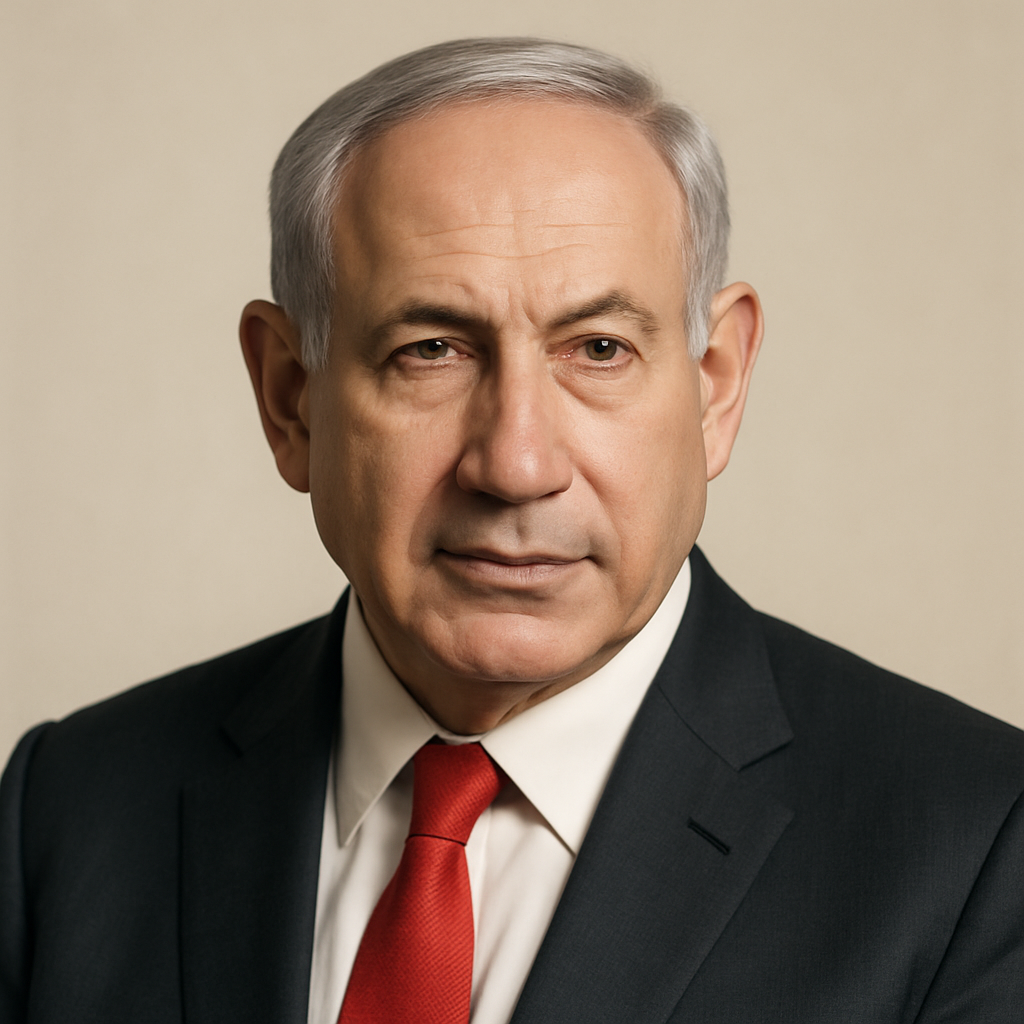
PM Netanyahu Meets with Croatian President Kolinda Grabar-Kitarovic
 Benjamin Netanyahu · Prime Minister of Israel
- Context
- Netanyahu welcomed Croatian President Grabar-Kitarovic to Israel in July 2019 for her third visit, focused on bilateral cooperation in cyber, technology, and security.
- Main themes
- Israel-Croatia bilateral relations, cybersecurity cooperation, radical Islam and terrorism, Iran as malevolent force, antisemitism, innovation and technology, EU leadership, trade relations, condolences for Kabul attack, Middle East security, European security
- Duration
- ~4 min
- Words
- 474
- Sentences
- 27
- Readability
- 60
- Grade
- 9.3
- Syntax
- 2.86
- Vocabulary
- 1.96
The broad sphere of national life a sentence belongs to. Every sentence has an Arena, so it is the denominator the other indices are read against.
Other27 sentences in 7 paragraphs
Welcome to Israel again. This is your third visit, and I think it reflects the friendship between our two countries, and your attitude towards Israel.
That friendship that we are talking about is going to be exemplified in this visit by an agreement on cyber. And we’re working on technology, working on security. I think we should work more on our trade. It’s a bit lower than what it can be and will be I’m sure. Your visit will help strengthen all of these aspects and more. There are many more areas that we can cooperate together.
I want to extend my condolences to the Croatian people following the attack in Kabul. I know you lost a soldier and some people are wounded. We wish them a speedy recovery.
I think this exemplifies the dual challenge that we face, and since you’re going to head the EU, I think that it’s an opportunity to send this message to all the nations of Europe. The twin challenges that I think makes Israel particularly significant for Europe is one, to seize a bright future, to fashion a bright future; and second, to resist a dark past. What happened in Kabul and what we’re all facing, and you’re facing too, is the attempt by radical Islam to bring back humanity to a very dark period. Some of them would like to take us to the beginning of the Middle Ages, and this is exemplified obviously by Daesh, but in my opinion also by, first and foremost by Iran. That is a much more powerful and malevolent force.
Israel is in the forefront of the battle against radical Islam. If Israel wasn’t here in the Middle East, then I think the Middle East would fall to radical Islam. The fact that we are here, the fact that we protect ourselves, is obviously very important for us, but in defending ourselves, we’re defending the entire Middle East. And by defending the Middle East, we defend Europe. This is the first point about resisting a dark past.
As far as seizing a bright future, we’re in the midst of a revolution, and the future belongs to those who innovate. Israel is the innovation nation. You have great capacities in Croatia, and I think that we can enhance them.
When I talk about resisting a dark past, I’m talking also about, of course about the scourge of antisemitism that is raising its head. I know you have family history, your own family history in this regard, and I know that you will lead the effort, both in Croatia and in the EU, against the rebirth of antisemitism. I think the opportunities for enhancing the friendship between us and giving a better life for our peoples are real and I’m sure that we’ll make them closer and more real by this visit.