




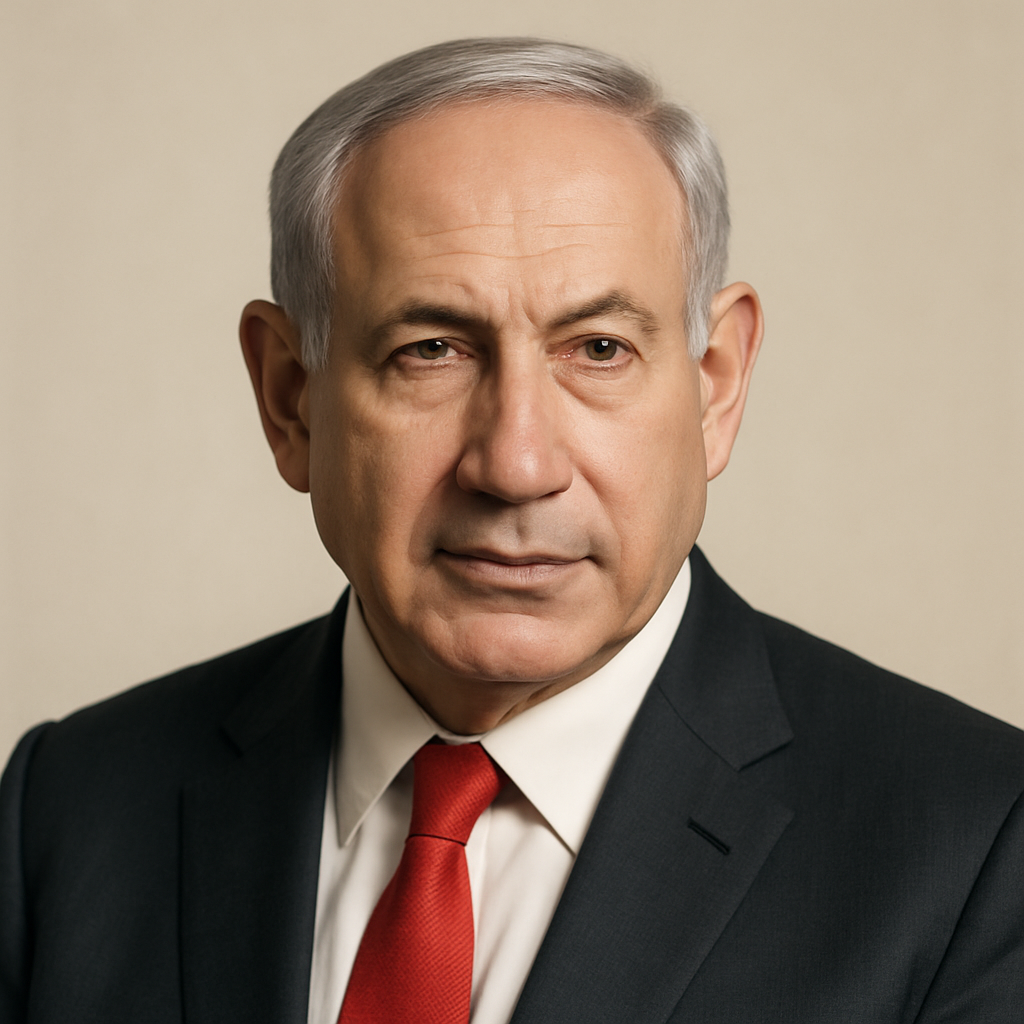
Prime Minister Netanyahu participated in a virtual panel of the World Economic Forum – WEF.
 Benjamin Netanyahu · Prime Minister of Israel
- Context
- Netanyahu addressed a World Economic Forum virtual panel on October 21, 2020, discussing Israel's COVID-19 response and digital divide challenges.
- Main themes
- COVID-19 pandemic response, digital divide, e-learning and education, lockdown decisions, digital infrastructure, 5G and fiber connectivity, school reopening, pandemic economic recovery, technology access equity
- Duration
- ~4 min
- Words
- 507
- Sentences
- 35
- Readability
- –
- Grade
- –
- Syntax
- –
- Vocabulary
- –
Translated from Hebrew
The broad sphere of national life a sentence belongs to. Every sentence has an Arena, so it is the denominator the other indices are read against.
Other35 sentences in 5 paragraphs
"It’s a pleasure to be with you and my friends President Duque and President Kagame and all of you. And my staff is moving around here. I’m actually in my office here at the Prime Minister’s Residence. I stopped a coronavirus cabinet meeting which we’re dealing with some of these questions that I’ll address that you asked me to address. I regret that I have to go back there because we’re in the midst of these discussions on how to stem the tide.
Israel was in a very high position of infections. We are now I think probably the lowest in Europe but we were the highest a few weeks ago. We have to take a decision that was very tough on a general lockdown and we did it. It is a very hard political decision to make. It brought the numbers rapidly down, but they’ll climb back up because the virus is the virus is the virus. So one of the things that we’re considering is education. What do we do with the schools? How do we open them? The reason that is an acute question is not merely because of the virus but because of the digital divide. Because if you don’t want to open them up and you use e-learning, what about those who don’t have e-learning? For example, that’s prevalent in the Orthodox community or the Arab citizens of Israel.
So one of the things that we decided to do, just now five minutes ago, is to allocate money to buy computers for these kids so we can cross first of all the digital divide inside the country itself. To give everyone the opportunity. That’s the first thing that I would like to address since these were the questions that were afforded to me.
How do we at least reduce the digital divide? One is infrastructure. It’s computers. It’s fibers. Some of these fast fibers that go to more of these remote places in our country, even though we have a tiny country. We have central places where the 5G companies will go and other remote areas where they won’t go because it’s not profitable. We’re actually, in order not to be held back, we told them OK we are reducing the universal requirements of spreading fiber everywhere, spread it to where it’s profitable, which is most of the country. But those that are not there what we’re going to do is create a special fund so that we can have fiber reach everyone. Fiber, computers, number one. It’s simple. It’s not obviously but it is actually conceptually simple. You have to make sure that the physical wherewithal of the modern digital world reaches everyone.
And that enables us e-learning both in corona and in the future. It’s clearly where it’s going. My son is a university student and he just told me that he finished his first day in e-learning. They’ve been doing e-learning for the last six months and he says, I’m not sure I should say this, but he says,"
The original Hebrew. The tags above are read on the English translation's sentences.
It’s a pleasure to be with you and my friends President Duque and President Kagame and all of you. And my staff is moving around here. I’m actually in my office here at the Prime Minister’s Residence. I stopped a coronavirus cabinet meeting which we’re dealing with some of these questions that I’ll address that you asked me to address. I regret that I have to go back there because we’re in the midst of these discussions on how to stem the tide.
Israel was in a very high position of infections. We are now I think probably the lowest in Europe but we were the highest a few weeks ago. We have to take a decision that was very tough on a general lockdown and we did it. It is a very hard political decision to make. It brought the numbers rapidly down, but they’ll climb back up because the virus is the virus is the virus. So one of the things that we’re considering is education. What do we do with the schools? How do we open them? The reason that is an acute question is not merely because of the virus but because of the digital divide. Because if you don’t want to open them up and you use e-learning, what about those who don’t have e-learning? For example, that’s prevalent in the Orthodox community or the Arab citizens of Israel.
So one of the things that we decided to do, just now five minutes ago, is to allocate money to buy computers for these kids so we can cross first of all the digital divide inside the country itself. To give everyone the opportunity. That’s the first thing that I would like to address since these were the questions that were afforded to me.
How do we at least reduce the digital divide? One is infrastructure. It’s computers. It’s fibers. Some of these fast fibers that go to more of these remote places in our country, even though we have a tiny country. We have central places where the 5G companies will go and other remote areas where they won’t go because it’s not profitable. We’re actually, in order not to be held back, we told them OK we are reducing the universal requirements of spreading fiber everywhere, spread it to where it’s profitable, which is most of the country. But those that are not there what we’re going to do is create a special fund so that we can have fiber reach everyone. Fiber, computers, number one. It’s simple. It’s not obviously but it is actually conceptually simple. You have to make sure that the physical wherewithal of the modern digital world reaches everyone.
And that enables us e-learning both in corona and in the future. It’s clearly where it’s going. My son is a university student and he just told me that he finished his first day in e-learning. They’ve been doing e-learning for the last six months and he says, I’m not sure I should say this, but he says,