




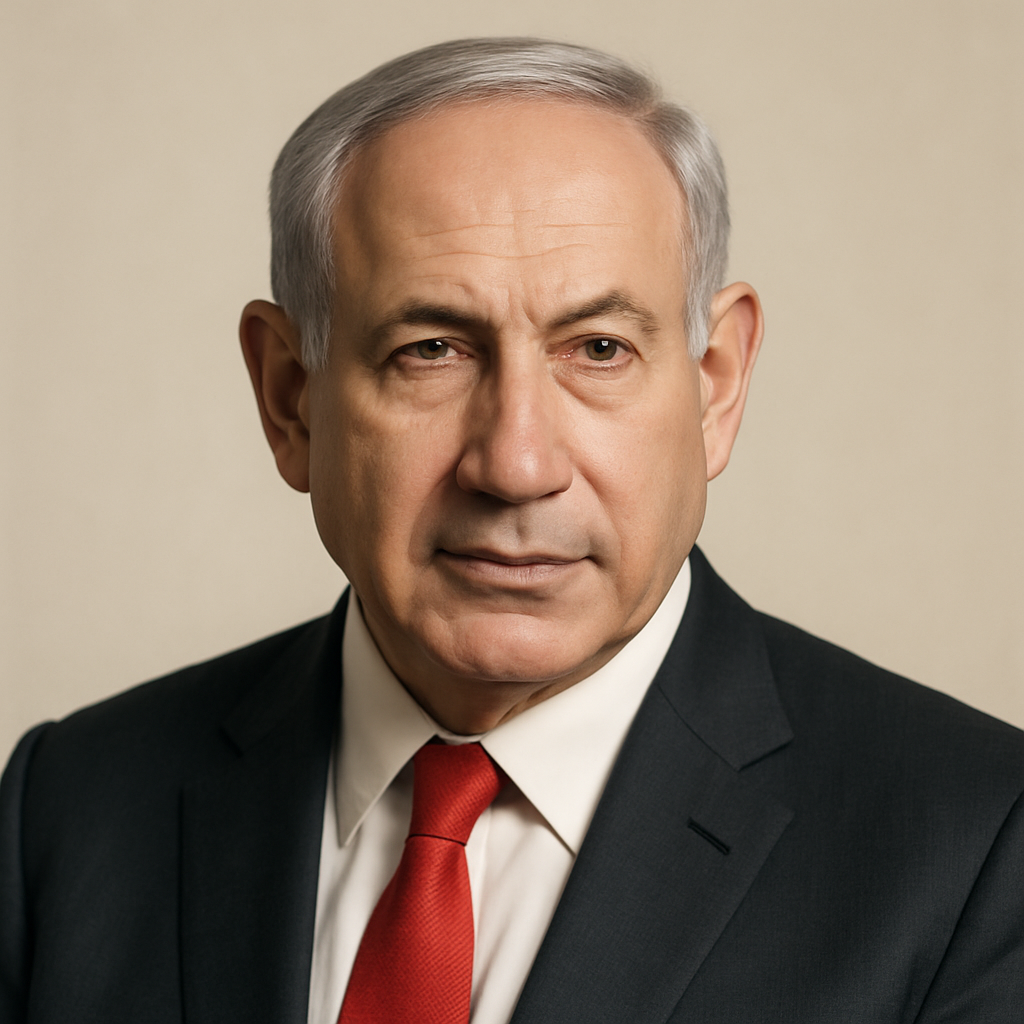
PM Netanyahu speaks at the Conference for Senior Security and Foreign Affairs Officials
 Benjamin Netanyahu · Prime Minister of Israel
- Context
- Netanyahu addressed senior security and foreign affairs officials on December 25, 2025, outlining Israel's strategic priorities in AI, defense, and alliance-building.
- Main themes
- National security, artificial intelligence development, foreign investment, weapons and munitions, strategic alliances, normalization and peace, bureaucratic reform, talent recruitment, cyber capabilities, information systems, legal advisor constraints
- Duration
- ~2 min
- Words
- 240
- Sentences
- 12
- Readability
- 59
- Grade
- 9.9
- Syntax
- 2.87
- Vocabulary
- 1.95
The broad sphere of national life a sentence belongs to. Every sentence has an Arena, so it is the denominator the other indices are read against.
Other12 sentences in 3 paragraphs
Virtual Prime Minister", "what is that talk? cyber, what is that?". Today, we are in second place worldwide, in absolute terms, in receiving foreign investment. The U.S., then us, then Germany, and we need to reach a similar situation in AI. I am certain we can do it, and we must do it, with regards to munitions, weapons platforms, information systems. At the moment, I am speaking about national security, because without national security we have nothing. We will have to be at the top of the list. This will allow us to form alliances and diversify them; it will help us withstand pressures. This will also help us achieve peace arrangements and normalization with those others who will seek our partnership.
Beyond the broad picture I described, the creation of alliances, the munitions that we need, the development of systems, and the integration between ministries – you need to bring in the best people. You need to fight for these people, and we need to be thinking, Danny [Acting Civil Service Commissioner], about how to create the freedom to appoint people.
You must have the ability and the freedom to do this, to bypass all the insane hurdles for appointments, which are all bureaucratic and are all under the control of legal advisors who thwart them on a daily basis. This we need to tear down, because otherwise we will not have the forces who would lead that change