





- Context
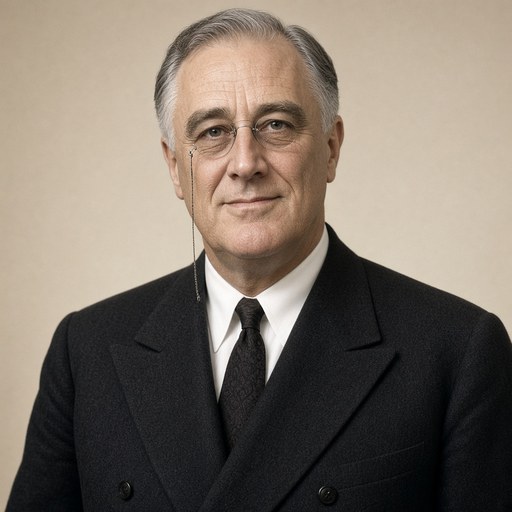
- Roosevelt spoke informally from the rear platform of his train at Dodge City, Kansas, on October 12, 1936, during his reelection campaign, defending drought relief and New Deal borrowing as paying back many times over.
- Main themes
- Drought relief in the Great Plains, interdependence of farm and industrial prosperity, rising wheat prices, federal debt versus national income growth, recovery since 1933, cost of relief and farm and home preservation, Roosevelt's 1936 reelection campaign, presidential duties while campaigning, future of farming and cattle raising in Western Kansas
- Duration
- ~7 min
- Words
- 815
- Sentences
- 37
- Readability
- 74
- Grade
- 8.4
- Syntax
- 3.14
- Vocabulary
- 1.74
Source: The American Presidency Project ↗
The broad sphere of national life a sentence belongs to. Every sentence has an Arena, so it is the denominator the other indices are read against.
Other37 sentences in 8 paragraphs
My friends, I have been through here many, many times before. I wish that this time I could have been in this part of the State by daylight, because I have wanted to see as much of conditions here as I could with my own eyes. I know some of the problems that you have had, especially in this drought year.
But I am not going to talk to you about your own local affairs or about your State affairs because you know more about them than I do. I do want to say a few words about what we have been trying to do all through this drought area during the past few months, and what we are going to try to do this winter and next spring.
The problem we are up against is almost nationwide. For while the drought area does not cover the whole Nation, the results of the drought affect people in the East and all the way out on the Pacific Coast. That is well borne out by the brighter side of the picture we have seen during these past three years—a renewed and growing prosperity which affects all parts of this interdependent Nation. The fact of an increasing purchasing power means that the merchants in all of these towns are selling more goods. When they sell more goods, it means that the people in the industrial areas have more work, and if they have more work, they can eat more beef and more wheat. When they buy more beef and more wheat, the farmers are more prosperous. That is what makes it a rounded picture. While I recognize the fact, for instance, that you have had a mighty short wheat crop this year, it is just so much better that wheat is bringing a dollar a bushel or more instead of the thirty cents of four years ago. I think we are coming to recognize the interdependence of all groups all over the country.
I was saying this morning that three years ago, when I came through, there were a lot of tourists going through the West but that they were going through on box cars and on the tops of trains. Now there are more tourists, but they are going through in Pullmans. And the cost of it? Yes, there has been cost in keeping people from starvation, in keeping people from losing their farms and their homes. But it is money not only well spent; it is money which is coming back a thousand times over.
What we have to do is to bring some of these figures with nine or twelve zeros after them down to a point where you and I can understand them. I shall put it to you this way. I shall put it in the form of a question: If somebody came to you and said, "If you will borrow $800 and by borrowing that $800 increase your annual income by $2,200," would you borrow it or not? Well, that is about what has happened in the past three years. The Federal Government has gone into debt a net amount of eight billion dollars, but the annual national income has increased over twenty-two billion dollars. I am fairly confident that if we keep things going the way they are now headed, if we tackle problems like the drought with the idea that you people and your children and your children's children are going to remain here and keep on being farmers or raising cattle in this section—I am confident that when I come back here again during the next four years I shall find things much better than they are today.
Incidentally, let me remind you that I am making the same kind of talk out here in Western Kansas that I am making back East. This is, as you know, a very informal talk. I wish I could visit with you a little longer.
I am going to ask you to excuse me, however, for a very simple reason. I have a sort of double duty to perform these days. I am a candidate for reelection, and this is, therefore, I suppose, a political trip. Nevertheless, at almost every station that we have come to, I have been receiving documents and papers to be signed and telegrams or telephone messages on which I have to take action. This afternoon there have been an unusually great number of things sent to me to pass upon. I have to remember the fact, therefore, that in addition to being a candidate I am still the President of the United States.
So, my friends, I am going to ask you to excuse me because I simply have to go back to work on mail and telegrams, if I am to get to bed before midnight. I wish you all sorts of luck. Good night.