




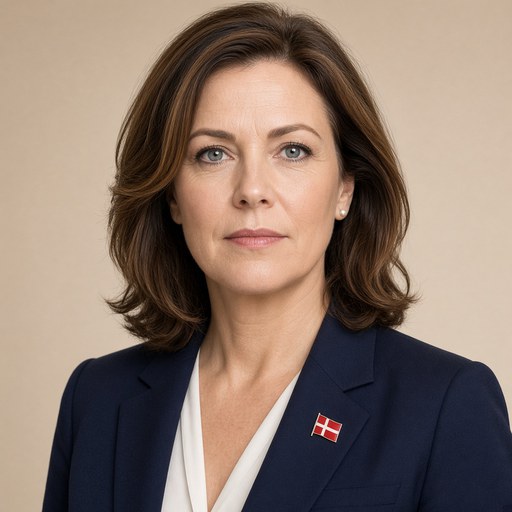
Prime Minister Helle Thorning-Schmidt's Constitution Day Speech 2012
 Helle Thorning-Schmidt · Prime Minister of Denmark
- Context
- Thorning-Schmidt addressed a Constitution Day audience on June 5, 2012, reflecting on Danish democratic values and collective responses to economic hardship.
- Main themes
- Danish constitution and democracy, collective responsibility, economic crisis, welfare state, political cooperation, fundamental rights, Danish national identity, European economic situation, historical resilience, labor market challenges
- Duration
- ~20 min
- Words
- 2,354
- Sentences
- 173
- Readability
- 67
- Grade
- 7.3
- Syntax
- 2.56
- Vocabulary
- 1.99
Translated from Danish
The broad sphere of national life a sentence belongs to. Every sentence has an Arena, so it is the denominator the other indices are read against.
Other173 sentences in 56 paragraphs
The story of how Denmark got its constitution tells us a lot about ourselves as a nation. It took place in peace and quiet. There was not much gunpowder and bullets. The transition from absolute monarchy to constitutional monarchy occurred in all tranquility in 1848. And on June 5, 1849, Denmark received its constitution.
In reality, the constitution is a modest collection of paragraphs. Yes, in fact, it contains just over 4,000 words – which is roughly the length of two or three school essays. It consists of 89 paragraphs. In comparison, the traffic law has over 140 paragraphs. And the law on financial activities has over 400 paragraphs.
But even though the constitution is among our smallest in scope, its significance is unparalleled. With it, we gained our fundamental rights gathered in a constitution. The right to speak. The right to vote. The right to believe. Inviolable rights.
But what truly gives the constitution substance and strength is the way we have chosen to use it. The constitution is, at its core, a way to resolve disagreements.
There are countries where democracy is used to widen the gap between opinions and people. Where the rules are used to promote one and only one particular viewpoint. Where listening is perceived as confusion. And where the simple recognition that we need each other, even when making decisions, is labeled as weakness.
In Denmark, we have made a different choice. We have used the constitution to create a historically unique harmonious society.
Where people do not bow their heads when asked for their opinion, but instead raise their hands. Where we, generation after generation, have been able to leave a richer and stronger Denmark to those who came after. And where we care about everyone and not just those who live in the house or the stairwell next door. We have created a Denmark that is whole.
And we have done this together. There is no party. There is no group. And there is no political force that can take all the credit for what we have created.
On the contrary. We have found strength in sharing responsibility. We have found the right solutions by bending towards each other. And by reaching out for the common good, we have achieved more than anyone thought possible. That is the strength of Danish democracy. We are at our best when we stand together.
This was true in the 1930s when politicians gathered in the Prime Minister's apartment in Østerbro and literally found a common solution at the last minute. It was true in the years after World War II when we built the welfare state. It was true in the 1980s when employees and employers jointly took responsibility for ensuring the competitiveness of Danish companies. It was true in the 1990s when large and broad political agreements helped to combat mass unemployment. And it was the same determination that lay behind the major political agreements of the 2000s, the welfare agreement.
Each time, difficult decisions have been carried through not despite the Danes but because of them. For the population knows well that there are no quick-fix solutions that do not also require something from them. The Danes know that easy solutions are rarely the right solutions. And the Danes know that when it matters, we need to stand together.
Today, Denmark finds itself in a harsh economic reality. A reality that will not only shape the rest of the year but the rest of the decade. We have lost over 170,000 jobs in just a few years. Large surpluses have turned into historic deficits.
Therefore, we as politicians will have to make difficult choices.
And the first choice we must make is whether we will solve the task together, or whether we believe we can do it better individually? Will we set aside rhetoric for results?
Do we have the courage to say to our own: "We did not get it exactly as we wanted, but the solution we stand behind is a big step in the right direction, and it provides security for the population"?
That is the question the population rightly can ask their elected representatives this Constitution Day.
The government's choice is clear. We want to lift together. To find sustainable solutions for the whole and not just for individual groups.
This also means that the government will be ready to acknowledge the parties and forces in Danish society that will help bear the burden. Influence goes hand in hand with responsibility.
And do not be mistaken about the scope of the task.
Europe has not experienced a comparable economic setback since World War II. Millions have lost their jobs. Business owners are closing up shop in the streets from Slagelse to Seville. A generation of young people is losing their footing in the labor market. It is simply a tragedy. Decades of mismanagement of public finances mean that some European countries today are subject to harsh demands for cuts and savings.
What happens in Europe matters for Denmark. Companies are lacking orders. It is harder to create jobs. New and greater demands are being placed on our shared economy.
And the task is not made easier by the fact that we in Denmark failed to prepare for hard times.
When others improved, we became more expensive. This means that our companies today struggle to compete with countries that we could previously beat with a strong combination of high quality and a fair price.
Who is hit hardest? Yes, shareholders can feel it in the annual accounts. And perhaps the bonus will not be as large in the executive circles. But it primarily affects the people who lose their jobs when the company closes down or downsizes. That is how it is.
As mentioned, we have lost over 170,000 jobs in the private sector during the crisis. These are jobs that will not return on their own. It says everything about the task we face. The bill is not paid.
Just as we did not strengthen our competitiveness in time, we have also not fully addressed the simple fact that it is more expensive when we have more elderly people and fewer to finance welfare. In the early 2000s, there were four in the workforce for every pensioner. In 2020 – which is just around the corner – there will only be three in the workforce for every pensioner.
I believe we can all see that it is not sustainable if we want to maintain the care for our elderly that we all value so highly. It is not sustainable if we want to preserve and develop the free healthcare that we all appreciate. And it will also be difficult to afford the education we want to give our children a strong push into the labor market, which should provide them with opportunities and help them fulfill their roles as active and stronger citizens.
There are many ways to solve the challenge. It is an honest thing to say; we must prioritize harder in welfare. There is no money for our healthcare. Parents must pay for their children's education. Fair enough.
But I wish those who believe that said it a little louder. It would be refreshingly honest talk. I just have a hard time hearing them speak particularly loudly when it gets serious.
In the same way, I wish those who believe that there is fundamentally no need for change would spend a little time explaining how we will create new jobs. And I would like to hear their suggestions on how we ensure that we can also afford welfare for our children, the sick, and the elderly in the future.
The Social Democrats have not chosen the easy path. We have not tried to fool anyone into thinking that jobs would come back quickly, and that there will be golden opportunities. On the contrary, we have for quite some time clearly stated that the Danes must work harder to maintain the welfare we want. Just as we have said that it is not sustainable in the long run to deplete our common fund if we want a strong community.
The Social Democrats and the government have not said that it will be easy. But we have said that it is possible. We can create new jobs, and we can maintain and even develop our welfare. But it requires one thing. Namely, that we all work more.
Therefore, the red thread in the government's policy is to do everything we can to create more jobs and get more people into work.
If we all work more, and the more who get jobs in the coming years, there will be money to pay for elderly care. For every extra hour we work, there will be more resources to continue treating patients with the best medicine. There will be money so that children do not have to deal with the same schoolbooks that we did. There will be money to invest in those who did not receive much education when entering the labor market. There will be money to invest in the research and development that will make our companies better than their competitors.
But it requires, as mentioned, one thing. Namely, that we all work more.
I have been saying this for several years now. And the same has politicians and economic experts said again and again.
Many have told me that they do not understand this message in a time of unemployment. I understand that well. For it sounds strange to many Danes that we should work more. Many simply experience that there is no need for them in the labor market. Or that the neighbor's son cannot get an internship. Or that there are large layoffs in reputable companies. Or that jobs are being moved out of Denmark.
To them, I would say; I understand that it sounds strange that the government asks you to work more when there are all these other challenges here and now. Perhaps we and I myself have not always been so good at explaining why that is the case.
But the government's task is to do two things at once; We must create the foundation for growth and new jobs here and now, and we must also ensure that the Danish economy is ready for the next upswing. If we are not ready for the next wave, it will flatten out just as quickly as it has come.
For the bottom line is that in just a few years, we will lack labor. There will be a shortage of skilled teachers in our schools. There will be a shortage of skilled metalworkers in the industry. And there will be a shortage of skilled craftsmen for our large infrastructure projects.
If we do not start finding solutions now, we will fail in our task. If we do not start working more now to strengthen competitiveness, we risk that the next upswing will quietly pass by Denmark.
I admit that it is not a simple message.
But the government would fail in its responsibility to the population if we do not keep going. We fail in our responsibility if we do not tell exactly how serious the situation is in the Danish economy.
Therefore, we will continue. And we insist that the difficult choices be made in time. Even if we take some hits for it. We insist on speaking up to the Danes and the tradition we have in Denmark of making the right choices at the right times. Even if it requires something from all of us.
And that time is now.
Therefore, the government has called for tripartite negotiations with employees and employers. It is exactly 25 years since we received the so-called Joint Declaration that paved the way for one of the world's most robust and solidarity-based pension systems. It was an agreement that ensured a job boom instead of a wage boom. Today we reap the fruits of a previous generation's timely prudence.
And that is why the government has presented a comprehensive and fully financed proposal for tax relief on work. Because when the ordinary wage earner has to work more, it should also pay off. If the single mother works an extra hour, she should feel it when she receives her pay.
With the tax reform, the government wants all three million Danish wage earners to receive a tax cut. Therefore, we will double the employment deduction.
We want 250,000 ordinary wage earners to be lifted out of the top tax bracket. Today, one in three metalworkers pays top tax. If the tax reform is implemented as it stands, in the future it will only be one in ten.
And we want to lend a helping hand to those we have talked about helping for several years, but where it may have been too much talk and noble intentions: the poorest pensioners and single parents.
As mentioned, the government's tax cuts are fully financed. It is not pie in the sky and money in a diagram. It is a solid tax reform that will help strengthen growth in Danish society.
Therefore, I am also a happy and satisfied Prime Minister who can state that all parties in the Folketing agreed yesterday on an important element of the tax reform.
Namely, that we give companies the opportunity to depreciate their investments in a more favorable way. It is a proposal that will give companies a much-needed boost. And which will not least help create 7,500 new jobs in Denmark next year.
Yesterday we saw that the parties in the Folketing were able to set aside their disagreements. We saw that the parties in the Folketing were able to rise above what each of them had previously believed. The election campaign was gone. Seriousness came in. Yesterday we showed the population that we are capable of taking on the responsibility that has been entrusted to us.
We lived up to the spirit of Danish democracy. We used the constitution in the best possible way.
May you all have a continued wonderful Constitution Day.
The original Danish. The tags above are read on the English translation's sentences.
Historien om hvordan Danmark fik sin grundlov fortæller meget om os som nation. Det foregik i fred og ro. Krudt og kugler var der ikke meget af. Overgangen fra enevælde til almenvælde foregik i al fredsommelighed i 1848. Og den 5. juni 1849 fik Danmark sin grundlov.
I virkeligheden er grundloven en beskeden samling paragraffer. Ja, faktisk fylder den kun lidt mere end 4.000 ord – det svarer vel i omfang til to-tre skolestile. Den er på 89 paragraffer. Til sammenligning er færdselsloven på over 140 paragraffer. Og loven om finansiel virksomhed er på over 400 paragraffer.
Men selv om grundloven i omfang hører til vores mindste, så er dens betydning uden sidestykke. Med den fik vi vores grundlæggende rettigheder samlet i en forfatning. Retten til at tale. Retten til at stemme. Retten til at tro. Ukrænkelige rettigheder.
Men det som for alvor giver grundloven saft og kraft er den måde, vi har valgt at bruge den på. Grundloven er i sin kerne en måde at løse uoverensstemmelser på.
Der findes lande, hvor demokratiet bliver brugt til at gøre afstanden mellem holdninger og mennesker større. Hvor reglerne bliver brugt til at fremme ét og kun ét bestemt synspunkt. Hvor det at lytte bliver opfattet som forvirret. Og hvor den simple erkendelse, at vi har brug for hinanden, også når vi tager beslutninger, bliver stemplet som svaghed.
I Danmark har vi truffet et andet valg. Vi har brugt grundloven til at skabe et, i historisk lys, enestående harmonisk samfund.
Hvor mennesker ikke bøjer nakken, når de bliver spurgt om deres mening, men i stedet rækker hånden op. Hvor vi, generation efter generation, har været i stand til at overlade et rigere og stærkere Danmark til dem, som kom efter. Og hvor vi kærer os om alle og ikke kun dem, der bor i huset eller opgangen ved siden af. Vi har skabt et Danmark som er helt.
Og det har vi gjort i fællesskab. Der findes ikke et parti. Der findes ikke en gruppe. Og der findes ikke en politisk kraft, som kan tage hele æren for det vi har skabt.
Tværtimod. Vi har fundet styrke i at dele ansvaret. Vi har fundet de rigtige løsninger ved at bøje os mod hinanden. Og ved at række ud efter det fælles bedste er vi nået længere end nogen havde troet muligt. Det er styrken ved det danske demokrati. Vi er bedst, når vi står sammen.
Det gjaldt i 30’erne, da politikerne samledes i statsministerens lejlighed på Østerbro og i bogstaveligste forstand fandt en fælles løsning i sidste time. Det gjaldt i årene efter 2. verdenskrig, hvor vi byggede velfærdssamfundet. Det gjaldt i 1980’erne, hvor lønmodtagere og arbejdsgivere i fællesskab påtog sig et ansvar for at sikre danske virksomheders konkurrenceevne. Det gjaldt i 1990’erne, hvor store og brede politiske aftaler var med til at få bugt med massearbejdsløsheden. Og det var den samme beslutsomhed, som lå bag 00’ernes store politiske forlig, velfærdsaftalen.
Hver gang er svære beslutninger blevet båret igennem ikke på trods af danskerne men på grund af dem. For befolkningen ved godt, at der ikke findes snuptagsløsninger, som ikke stiller krav til dem også. Danskerne ved, at nemme løsninger sjældent er de rigtige løsninger. Og danskerne ved, at når det gælder, så har vi brug for at stå sammen.
I dag befinder Danmark sig i en hård økonomisk virkelighed. En virkelighed, der ikke bare vil præge resten af året, men resten af årtiet. Vi har mistet over 170.000 arbejdspladser på få år. Store overskud er blevet til historiske underskud.
Derfor kommer vi som politikere til at træffe svære valg.
Og det første valg vi skal træffe er om vi vil løse opgaven i fællesskab, eller om vi tror, vi kan klare det bedre hver for sig? Vil man tilsidesætte retorikken for resultaterne?
Har man modet til at sige til sine egne: ”Vi fik det ikke præcis som vi ville, men den løsning vi står bag er et stort skridt i den rigtige retning, og den giver tryghed for befolkningen.”
Det er spørgsmålet befolkningen med rette kan stille til deres folkevalgte dette års grundlovsdag.
Regeringens valg er klart. Vi ønsker at løfte i fællesskab. At vi finder holdbare løsninger for helheden og ikke kun for enkeltgrupper.
Det betyder naturligvis også, at regeringen vil være parat til at anerkende de partier og kræfter i det danske samfund, som vil være med til at bære byrden. Indflydelsen går hånd i hånd med ansvaret.
Og tag ikke fejl om opgavens omfang.
Europa har ikke oplevet et tilsvarende økonomisk tilbageslag siden 2. verdenskrig. Millioner har mistet deres arbejde. Erhvervsdrivende drejer nøglen om i gaderne fra Slagelse til Sevilla. En generation af unge er ved at miste deres fodfæste på arbejdsmarkedet. Det er ganske enkelt en tragedie. Manglende styr på de offentlige finanser gennem årtier betyder, at enkelte europæiske lande i dag er underlagt barske krav om nedskæringer og besparelser.
Hvad der sker i Europa, har betydning for Danmark. Virksomhederne mangler ordrer. Det er sværere at skabe job. Der bliver stillet nye og større krav til vores fælles økonomi.
Og opgaven bliver ikke mindre af, at vi i Danmark undlod at forberede os på dårlige tider.
Da andre blev bedre, blev vi dyrere. Det betyder, at vores virksomheder i dag har svært ved at konkurrere med lande, som vi tidligere kunne slå på en stærk kombination af høj kvalitet og en fair pris.
Hvem rammer det hårdest? Jo aktionærerne kan mærke det på årsregnskabet. Og måske bliver bonussen ikke så stor i chefkredsen. Men det rammer først og fremmest de mennesker, som mister deres job, når virksomheden drejer nøglen om eller skærer ned. Sådan er det.
Som sagt; vi har mistet over 170.000 arbejdspladser i den private sektor under krisen. Det er arbejdspladser, som ikke kommer tilbage af sig selv. Det siger alt om den opgave, vi står overfor. Regningen er ikke betalt.
På samme måde som vi ikke fik styrket vores konkurrenceevne i tide, så har vi heller ikke fuldt og helt fået tacklet det simple faktum, at det er dyrere, når vi bliver flere ældre og færre til at finansiere velfærden. I begyndelsen af 00’erne var der fire i arbejdsstyrken for hver pensionist. I 2020 – som er lige om hjørnet – vil der kun være tre i arbejdsstyrken for hver pensionist.
Jeg tror, at vi alle sammen kan se, at det ikke er holdbart, hvis vi vil bevare den omsorg for vores ældre, som vi alle sætter så højt. Det er ikke holdbart, hvis vi vil bevare og udvikle den gratis sundhed, vi alle sætter pris på. Og det bliver også svært at få råd til den uddannelse, vi ønsker skal give vores børn et stærkt skub ind i arbejdslivet, som skal give dem muligheder, og som skal være med til at fylde rollen ud som aktive og stærkere borgere.
Der er mange måder at løse udfordringen på. Det er en ærlig sag at sige; så må vi prioritere hårdere i velfærden. Der er ikke råd til vores sundhed. Forældrene må betale for deres børns uddannelse. Fair nok.
Men jeg ville ønske, at de som mener det sagde det lidt højere. Det vil være befriende ærlig tale. Jeg har bare svært ved at høre dem tale særligt højt, når det bliver alvor.
På samme måde ville jeg ønske, at de som mener, at der dybest set ikke er brug for forandring brugte lidt tid på at forklare, hvordan vi så får skabt nye arbejdspladser. Og jeg ville ønske at høre deres bud på, hvordan vi sikrer, at vi også i fremtiden får råd til velfærden for vores børn, syge og gamle.
Socialdemokraterne har ikke valgt den nemme vej. Vi har ikke forsøgt at bilde nogen ind, at jobbene ville komme tilbage hurtigt, og at der bliver guld og grønne skove. Tværtimod har vi i ganske lang tid sagt klart og tydeligt, at danskerne skal arbejde hårdere for at fastholde den velfærd vi gerne vil have. Ligesom vi har sagt, at det ikke går i længden at udhule vores fælles kasse, hvis vi vil have et stærkt fællesskab.
Socialdemokraterne og regeringen har ikke sagt, at det bliver nemt. Men vi har sagt, at det godt kan lade sig gøre. Vi kan få nye arbejdspladser, og vi kan fastholde og endda udvikle vores velfærd. Men det kræver en ting. Nemlig at vi alle sammen arbejder mere.
Derfor er den røde tråd i regeringens politik at gøre alt hvad vi kan for at få flere arbejdspladser og få flere i arbejde.
Hvis vi alle sammen arbejder mere, og jo flere der kommer i job i de kommende år, bliver der råd til at betale for ældreplejen. For hver time vi arbejder ekstra bliver der bedre råd til, at vi kan blive ved med at behandle patienterne med den bedste medicin. Der bliver råd til at børn ikke skal rode med de samme skolebøger, som vi selv gjorde. Der bliver råd til at investere i de mennesker, som ikke fik så meget uddannelse med sig ind i arbejdslivet. Der bliver råd til at investere i den forskning og udvikling, som skal gøre vores virksomheder bedre end deres konkurrenter.
Men det kræver som sagt en ting. Nemlig, at vi alle sammen arbejder mere.
Det har jeg sagt igennem flere år nu. Og det samme har politikere og økonomiske eksperter sagt igen og igen.
Mange har sagt til mig, at de ikke fatter det budskab i en tid, hvor der er arbejdsløshed. Jeg forstår det godt. For det lyder da mærkeligt for rigtig mange danskere, at vi skal arbejde mere. For mange oplever ganske enkelt, at der ikke er brug for dem på arbejdsmarkedet. Eller at naboens søn ikke kan få en praktikplads. Eller at der er store fyringsrunder på hæderkronede virksomheder. Eller at arbejdspladser bliver flyttet ud af Danmark.
Til dem vil jeg sige; Jeg forstår godt, at det klinger mærkeligt, at regeringen beder jer om at arbejde mere, når der er alle de andre udfordringer her og nu. Måske har vi og jeg selv heller ikke altid være så gode til at fortælle, hvorfor det er sådan.
Men regeringens opgave er at gøre to ting på en gang; Vi skal skabe grobund for vækst og nye arbejdspladser her og nu, og vi skal samtidig sikre, at dansk økonomi er klar til det næste opsving. Hvis vi ikke er klar til næste bølge, så flader den ud ligeså hurtigt den er kommet.
For bundlinjen er, at vi om meget få år vil mangle arbejdskraft. Der vil mangle dygtige lærere i vores skoler. Der vil mangle dygtige metalarbejdere i industrien. Og der vil mangle dygtige håndværkere til vores store infrastrukturprojekter.
Hvis ikke vi allerede nu går i gang med at finde løsningerne, så svigter vi vores opgave. Hvis ikke vi allerede nu arbejder mere, så vi kan styrke konkurrenceevnen, så risikerer vi, at det næste opsving stille og roligt svæver forbi Danmark.
Jeg indrømmer, at det ikke er et enkelt budskab.
Men regeringen ville svigte sit ansvar overfor befolkningen, hvis ikke vi bliver ved og ved. Vi svigter vores ansvar, hvis ikke vi fortæller præcis, hvor alvorlig situationen er i dansk økonomi.
Derfor bliver vi ved. Og vi insisterer på, at de svære valg bliver truffet i tide. Også selvom vi får nogle knubs af det. Vi insisterer på at tale op til danskerne og den tradition vi har i Danmark om at træffe de rigtige valg på de rigtige tidspunkter. Selvom det kræver noget af os alle sammen.
Og det tidspunkt er nu.
Derfor har regeringen indkaldt til trepartsforhandlinger med lønmodtagere og arbejdsgivere. Det er præcis 25 år siden, at vi fik den såkaldte Fælleserklæring som banede vejen for et af verdens mest robuste og solidariske pensionssystemer. Det var en aftale, som sikrede jobfest i stedet for lønfest. I dag høster vi frugterne af en tidligere generations rettidige omhu.
Og det er derfor, at regeringen har fremlagt et samlet og fuldt finansieret bud på lettelser af skatten på arbejde. For når den helt almindelige lønmodtager skal arbejde mere, så skal det også kunne betale sig. Hvis den enlige mor arbejder en time ekstra, så skal hun kunne mærke det, når hun får sin løn.
Med skattereformen ønsker regeringen, at samtlige tre millioner danske lønmodtagere får en skattelettelse. Derfor vil vi fordoble beskæftigelsesfradraget.
Vi ønsker, at 250.000 almindelige lønmodtagere bliver løftet ud af topskatten. I dag betaler en ud af tre metalarbejdere topskat. Bliver skattereformen gennemført, som den ligger, vil det i fremtiden kun være en ud af ti.
Og vi ønsker at give en håndsrækning til dem, som vi i flere år har talt om at hjælpe, men hvor det måske er blevet for meget ved snakken og de ædle intentioner: De fattigste pensionister og de enlige forsørgere.
Som sagt er regeringens skattelettelser fuldt finansieret. Det er ikke fugle på taget og penge i et diagram. Det er en bundsolid skattereform, som vil være med til at styrke væksten i det danske samfund.
Derfor er jeg også en glad og tilfreds statsminister, som kan konstatere, at alle Folketingets partier i går blev enige om et vigtigt element i skattereformen.
Nemlig at vi giver virksomhederne mulighed for at afskrive deres investeringer på en mere fordelagtig måde. Det er et forslag, som vil give virksomhederne et tiltrængt rygstød. Og som ikke mindst vil være med til at skabe 7.500 nye arbejdspladser i Danmark næste år.
I går så vi, at Folketingets partier var i stand til at lægge uenighederne til side. Vi så, at Folketingets partier var i stand til at sætte sig udover, hvad de hver især tidligere har ment. Væk var valgkampen. Ind kom alvoren. I går viste vi befolkningen, at vi er i stand til at løfte det ansvar, som vi er blevet betroet.
Vi levede op til ånden i det danske folkestyre. Vi brugte grundloven på den bedst tænkelige måde.
Kan I have en fortsat dejlig grundlovsdag.