





- Context
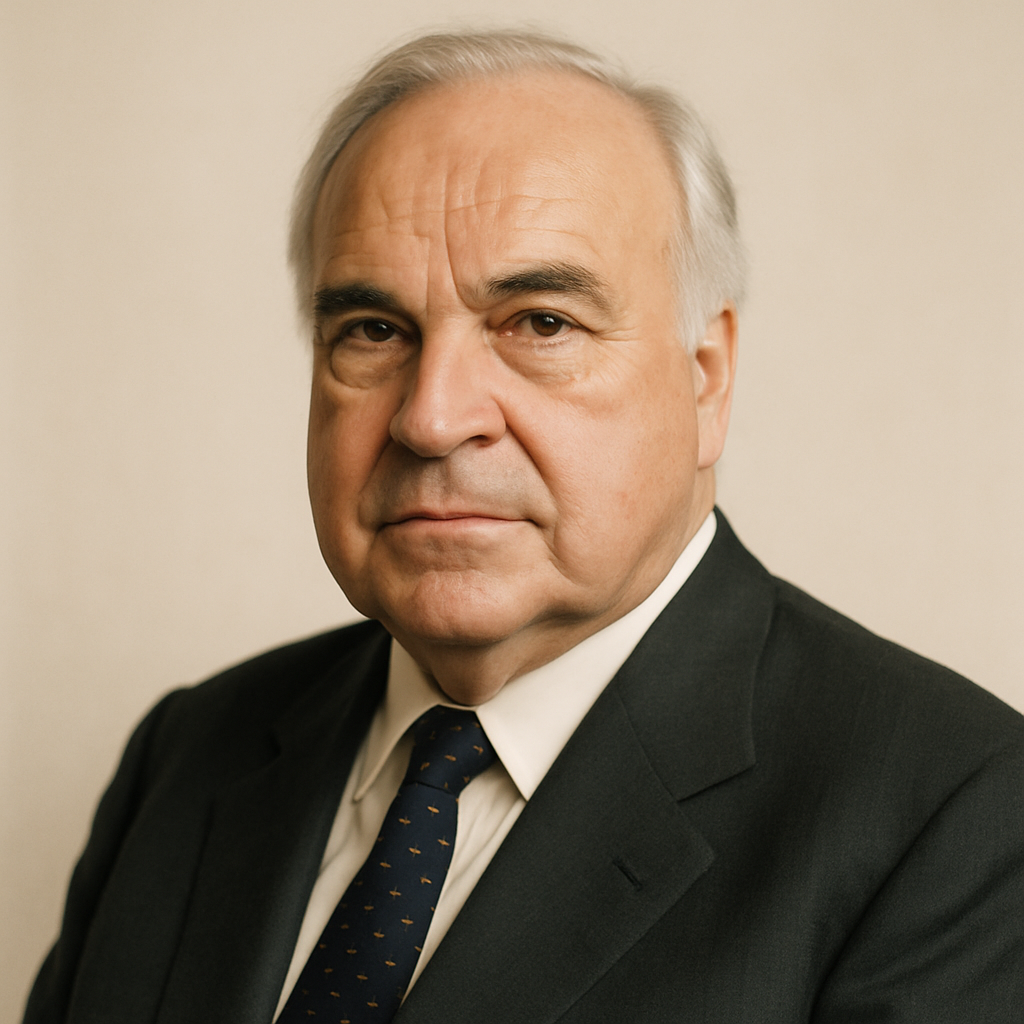
- German Chancellor Helmut Kohl delivered a speech at the Munich Security Conference on 15 February 1996, addressing European security issues following the end of the Cold War.
- Main themes
- Common European security and defense policy, transatlantic cooperation, NATO enlargement, Partnership for Peace, European integration, Common Foreign and Security Policy, Bundeswehr's role in international peacekeeping
- Duration
- ~26 min
- Words
- 3,147
- Sentences
- 175
- Readability
- 38
- Grade
- 12.4
- Syntax
- 2.80
- Vocabulary
- 2.15
The broad sphere of national life a sentence belongs to. Every sentence has an Arena, so it is the denominator the other indices are read against.
Other175 sentences in 59 paragraphs
Chancellor of the Federal Republic of Germany
In his speech to the 33rd Munich Conference on Security Policy, Helmut Kohl called for the creation of a common European security and defense policy.
It is a pleasure for me to participate once again today in the Munich Conference on Security Policy. As a forum for the transatlantic exchange of ideas, the body you established has long enjoyed an excellent international reputation. The participants in these meetings have always derived particular benefit from the talks and discussions here in Munich. We all have reason to thank you, Mr von Kleist, in particular for this.
Today, Europe is in the midst of a decisive phase in shaping our common future. The aim is to secure lasting peace and freedom for our entire continent. The foundations for this are the resolute continuation of European integration and close transatlantic cooperation. At the same time, Europe must be prepared to assume greater co-responsibility and individual responsibility.
However, we must also take every opportunity to consolidate security in Europe by utilizing and strengthening proven institutions such as the Council of Europe and the OSCE. The Munich conference is a good opportunity for an intensive exchange of views, which can provide important impetus for our future work.
We are meeting here at a time when the Atlantic Alliance is bearing impressive witness to its determination to act and at the same time to its ability to tackle new tasks. By taking the lead role in the international peacekeeping force in the former Yugoslavia, the Alliance is demonstrating its ability to act.
The alliance is gradually growing into new tasks. The USA, European states, Russia, Japan and also Islamic countries are working together in the former Yugoslavia to achieve one goal: We want to make a joint effort to help ensure that the long-suffering population in this region can finally live in peace again. This cooperation can be of groundbreaking importance for securing peace and future coexistence in Europe. This major peacekeeping operation by the Atlantic Alliance also shows that we can rely on the transatlantic alliance, which is indispensable for our common security.
Through its substantial contribution to the international peacekeeping force, the United States has made it clear that peace and stability in Europe is a common, transatlantic concern. The deployment of many thousands of American soldiers to support peace in the former Yugoslavia shows that the Americans stand by their commitment in Europe. We Europeans are grateful to them for this.
The NATO Council will meet in Berlin in June. NATO’s future tasks and security in Europe will be important topics. Just like the subject matter, the venue is also an expression of the changed situation in Europe. Just a few years ago, such a meeting in Berlin would have been unthinkable. Today it is the norm.
At the NATO summit in Brussels in January 1994, the Alliance offered the countries of Central, Eastern and South-Eastern Europe a “Partnership for Peace”. At the same time, the Alliance confirmed that it is open to the membership of other European countries. The Alliance thus wants to contribute to security and stability in the coming Europe.
The recently presented study on NATO enlargement has paved the way for further developments. This year, the Alliance will continue its intensive dialogue with the countries of Central and Eastern Europe. It is important that the Alliance’s practical cooperation with the countries of the former Warsaw Pact is further advanced, especially now. Good progress has already been made in this respect. I am thinking, for example, of the joint exercises within the framework of the Partnership for Peace, in which units from Poland, the Czech Republic and Romania, for example, have taken part alongside soldiers from NATO countries. I would also like to mention Hungary’s willingness to make its territory available for the organization of supplies for the American troops in Bosnia.
The desire of our eastern neighbours to join the Alliance is legitimate. It is being put forward by democratic states in our common Europe. It also enjoys broad support in the parliaments and among the public of NATO member states.
We must approach the opening up of NATO with care and political prudence, as this involves steps of fundamental importance for the Alliance itself and for security in a future Europe. We Germans and Europeans have a fundamental interest in ensuring that NATO remains stable and capable of acting in the future. However, we also have the greatest interest in developing a partnership-based, friendly relationship with Russia and Ukraine.
We must take into account the well-understood security interests of Russia and Ukraine. It goes without saying that it can only be detrimental to an issue of this importance if it becomes an issue in the Russian, but also in the American presidential election campaign.
The Alliance takes Russia’s concerns seriously. It has therefore declared its willingness to develop and deepen cooperation with Russia from the outset. The German government has strongly advocated this. It is our wish that this cooperation will lead to a special relationship between NATO and Russia, which could become the core of the future security architecture in Europe.
We must take note of the changes in Russia. We should never forget that Russia is a great country, a country with a great history, a great tradition and with important contributions to the culture of mankind. In this sense, Russia’s involvement in the peace process in the former Yugoslavia can point the way to a new quality of relations between Russia and NATO. This cooperation can be a model for future cooperation in Europe.
Collective defense remains the Alliance’s core mission. However, the Alliance must also increasingly be able to manage crises and ensure security and stability throughout Europe. In order to fulfill these new tasks, the Alliance’s existing political and military structures and procedures must be adapted and further developed. An important aspect of this is the participation of non-members in peace operations.
However, leaner and more flexible alliance structures are also necessary in order to advance the further development and shaping of the European security and defense identity. In future, Europe must be in a position to fulfill military tasks itself in individual cases in coordination with the Atlantic Alliance. I particularly welcome the fact that France has decided to participate in the future reform of NATO within the Atlantic Alliance and to intensify its cooperation with NATO’s military and military-political bodies. Europe’s ability to act within the Alliance will benefit from this.
Just a few years before the turn of the millennium, we find ourselves in a transitional phase of historic significance in Europe. After the fall of the Iron Curtain, the collapse of communism and the peaceful reunification of Germany, opportunities for a new form of cooperation are opening up for our continent. These must be utilized through the further construction of Europe.
Peace and freedom on our continent cannot be taken for granted. They must be secured anew every day. The immediate threat of the East-West conflict has been replaced by incalculable risks that are no less serious.
There is no sensible alternative to an ever closer union of the European peoples. We all need a united Europe. The policy of European unification is in reality the question of war and peace in the 21st century. Nationalism has brought great suffering to our continent — just think of the first 50 years of this century.
“Nationalism, that is war.” This is what my late friend François Mitterrand said to the European Parliament in Strasbourg on 17 January 1995. If there is no momentum to continue the work of European integration, then there will not only be stagnation, but also regression. However, we do not want a return to the old-style nation state. It cannot solve the major problems of the 21st century. But we also need Europe so that our common word carries weight in the world. We can only adequately assert our common interests if we speak with one voice and join forces. And we need Europe to remain competitive on the world markets. Only together can we hold our own in global competition with the other major economic areas.
We Germans also have very specific reasons why we need a united Europe more than others. We have more neighbours than any other country in Europe. What happens there affects us directly — and vice versa. We owe a great deal to European unification. Germany has a fundamental national interest in all its neighbours one day belonging to the European Union.
However, it is also a matter of common sense that we Germans should always be aware of how our neighbours see us. This image is still characterised today by historical burdens, but also by the population of 80 million people and the economic power of a united Germany. German foreign policy must therefore be clearly committed to the principles and goals of European unification. It is therefore the goal of the Federal Government that I lead to resolutely advance the process of European unification and make it irreversible.
The Intergovernmental Conference on the Reform of the European Union will meet in Turin at the end of March. One of the priority tasks of the conference will be to give the European Union a clearer profile in foreign and security policy. I am aware that there is a great deal of skepticism here, especially in view of the experience of recent years.
Nevertheless, Europe must be prepared to take on more responsibility for European and international crisis management tasks in the future. The WEU has an important role to play here, both as a European pillar of the Atlantic Alliance and as a defense component of the European Union. Without a defense component, the work of European unification will always remain incomplete.
We cannot expect the United States to always take on the role of the guardian of order in the European house in the face of the multitude of possible conflicts. This is why greater European efforts are needed to further develop the Common Foreign and Security Policy.
The creation of an independent European security and defense identity will certainly not be achieved overnight. But we must now set a substantial course. Our medium-term goal is and remains the integration of the WEU into the European Union. The Intergovernmental Conference must take us a long way along this path on the basis of the Maastricht Treaty. The Intergovernmental Conference should look for steps to bring the two institutions closer together. There is already broad agreement that the objectives of the WEU’s Petersberg Declaration on humanitarian missions and peacekeeping operations should be enshrined in the Maastricht Treaty. This would indeed be an important step not only for institutional rapprochement, but would also bring EU member states that are not yet members closer to the EU.
In addition, we should also consider giving the European Council the authority to issue directives for the WEU and a solidarity clause for all member states of the European Union, analogous to the mutual assistance guarantee in the WEU and NATO treaties. It is unacceptable that in the European Union, which we see as a community of solidarity, some are responsible for security and defense and others for trade.
Without a genuine common foreign and security policy, without the pooling of its member states’ strengths, the European Union will not be able to realize its values and interests in Europe and worldwide in the long term. At the Intergovernmental Conference we must therefore — in addition to bringing the WEU closer to the European Union — also consistently develop the provisions of the Maastricht Treaty on the Common Foreign and Security Policy.
In my opinion, we should define areas of common European interest and commit to joint action in these areas. Of course, we also need the appropriate instruments and structures for this. So far, the opportunities in Brussels to produce the necessary analyses as a basis for our joint action have been inadequate. In order to be able to act, we also need to create better conditions for speaking with one voice.
Developments in our neighboring regions are of crucial importance for security in Europe. Joint, sustained efforts are needed to promote political and economic stability in these regions. In addition to Central and Eastern Europe, I would like to mention the Mediterranean region from North Africa to the Middle East.
Poverty, misery and a lack of prospects for the younger generation are breeding grounds for religious fanaticism, which in turn is increasingly becoming a threat to peace. It is of fateful importance for the future of this region that the peace process between Israel and the Arab states is a success.
One should not believe that treaties alone can create peace, but they can open the door to peace. However, if the majority of the population sees no prospects for a humane and peaceful future, the danger of radicalization and fundamentalism grows. Together with other countries, Europe must play its part in realizing the peace process. We should also carefully consider whether a kind of Marshall Plan for the development of a pacified Middle East would not be necessary for reconstruction in Europe, as was the case after the Second World War.
European efforts to strengthen the Common Foreign and Security Policy must not lead to a weakening of the transatlantic partnership. We must do both: give Europe the ability to act and strengthen transatlantic ties. These have ensured us a life of peace and freedom for over forty years. They are and remain of vital importance for security and stability in Europe.
We want to further consolidate and deepen Europe’s partnership with the United States. This includes greater coordination and cooperation in all areas of common interest. We welcome the Transatlantic Agenda and the Action Plan for the coming years, which were agreed at the summit meeting between the Spanish EU Presidency and President Clinton on 3 December 1995.
The aim of German foreign policy is to further deepen German-American relations in the face of changing global political conditions. This includes expanding our cooperation in business, science and culture and, above all, more encounters between young people on both sides of the Atlantic.
In November 1993, President Clinton and I launched the German-American Academic Council, which is primarily intended to be a forum for young academics to meet. The opportunities for economic exchange are also far from exhausted. I would like to see more German companies investing in the United States and more American companies investing in Germany, especially in the new federal states. That is a good investment in the future.
We Germans suffered directly from the division of our country during the Cold War. We know from this experience: Peace and freedom do not come for free.
Two years ago, I said at this point: “Historical experience demands that Germany does not stand aside when it comes to peace and freedom in the world and in Europe. We want to and must take responsibility alongside our partners.” And I added: “Reliability and the ability to form alliances are the cornerstones of German foreign policy. German special paths in Europe and the world inevitably lead to political isolation.”
Last December, we took the decision to contribute 4,000 Bundeswehr soldiers to the international peacekeeping force to secure the peace treaty for Bosnia-Herzegovina. Germany is thus emphasizing in a concrete way its willingness to play an active role in securing peace in Europe.
The very serious debate in the German Bundestag and the broad parliamentary approval of the deployment of the German contingent last December showed that our country is prepared to meet the international community’s growing expectations of a united Germany.
Let me take this opportunity to say something about the integration of our Bundeswehr into the democratic society of the Federal Republic of Germany. For 40 years, the Bundeswehr has made a significant contribution to securing peace within the framework of the Atlantic Alliance. At the celebrations to mark its fortieth anniversary last year, it became clear that the Bundeswehr can rely on the support of our population. This support has also grown because the experiences in the former Yugoslavia, just an hour’s flight from Germany, have shown many Germans that the German soldiers there, together with their comrades from the Alliance, also guarantee our freedom and our peace.
Germany needs a Bundeswehr that can meet the changing requirements and is equipped accordingly. This also includes maintaining compulsory military service. It is and remains an expression of civic responsibility in a free and democratic society. We need armed forces that are capable of national defence. They must also be capable of responding to crises within the framework of the Alliance. Finally, they must be available to the international community when our help is needed.
In recent years, the Bundeswehr has increasingly supported the United Nations in peacekeeping tasks — for example in Yugoslavia and Iraq as well as previously in Cambodia and Somalia. This is also an expression of solidarity with our allies, as we have experienced for over 40 years in guaranteeing our security and freedom. Demonstrating this solidarity should be a matter of course for us Germans. After difficult domestic political discussions, the Federal Constitutional Court provided the necessary legal clarification with its judgment last summer.
Together with our partners and friends, we want to overcome the challenges we face in shaping the security of a future Europe. The integration of important parts of the German armed forces with units of European allies shows the path we have travelled.
I would mention the EUROKORPS, cooperation in the Franco-German brigade and the newly created German-Dutch corps as important examples. I am also thinking of the possibility envisaged between Germany and France of allowing young conscripts to do their military service in the other country. We should also follow this example with other partners.
Who would have thought ten or even twenty years ago that we would have come this far together in Europe today? The Atlantic Alliance and European integration have made a decisive contribution to peace, freedom and growing prosperity in Europe. We have achieved this despite all the difficulties and some setbacks.
That is why I am certain that Europe is coming, and this also applies to security and defense policy. Let us put aside pusillanimity and narrow-mindedness and continue to move forward step by step — with calm and patience, a sense of proportion and the right compass.
Photo credit: picture-alliance / dpa
Related content
Chapter 3: Transition and Expansion (1990–1999) More
Chapter 3: Transition and Expansion (1990–1999)
William S. Cohen (1995) Photo credit: picture-alliance / dpa More
William S. Cohen (1995)
Photo credit: picture-alliance / dpa
William J. Perry (1996) Photo credit: Cynthia Johnson/Getty Images More
William J. Perry (1996)
Photo credit: Cynthia Johnson/Getty Images