





- Context
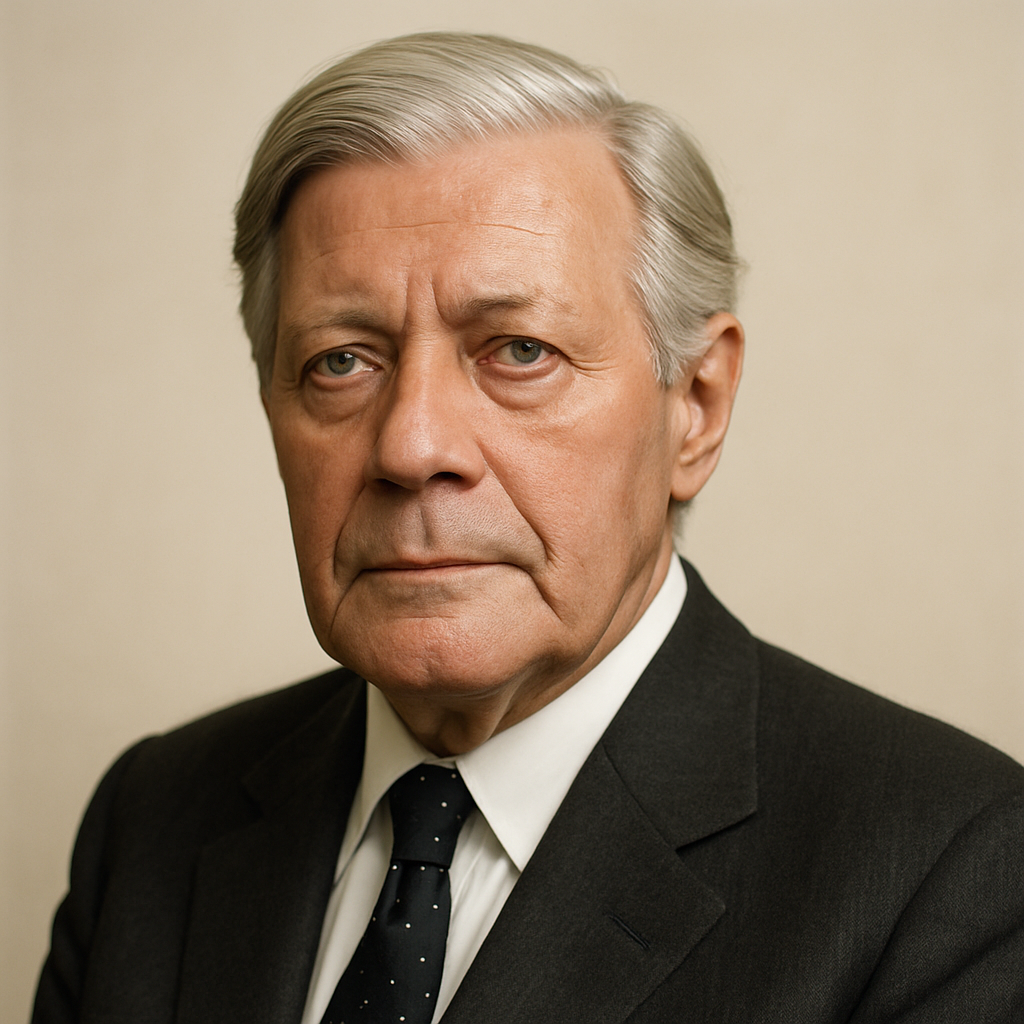
- Helmut Schmidt delivered a speech at the Munich Security Conference on 15 February 1967, addressing security concerns during the Cold War era.
- Main themes
- German reunification, European security system, NATO and military balance, Eastern European relations, Ostpolitik, non-proliferation treaty, economic integration
- Duration
- ~48 min
- Words
- 5,706
- Sentences
- 184
- Readability
- 34
- Grade
- 16.1
- Syntax
- 3.56
- Vocabulary
- 2.19
The broad sphere of national life a sentence belongs to. Every sentence has an Arena, so it is the denominator the other indices are read against.
Other184 sentences in 62 paragraphs
Member of the German Bundestag of the Federal Republic of Germany
Helmut Schmidt dedicated his speech to the 4th Wehrkunde Conference to the role of a divided Germany within the European system of security.
When considering the headline and the topic that has been assigned to me here, one must assume that the German problem is certainly the cardinal issue for Europe’s future security.
However, I find it very questionable whether it can be presented in a way that makes sense to all parties involved, and whether it can be convincingly embedded in the context of the general security interests of the nations of Europe, especially by a German. Furthermore, I believe this is a bit difficult for another reason, if I may allow myself a personal “footnote,” because for far too long, we have been conducting our analyses and predictions exclusively within the circle of Western allies, and as a result, the views, interests, and analytical results of our eastern — how shall I say it — neighbors, partners, or adversaries, have only been considered in a very reflective way. Perhaps it would be useful to more frequently consider whether Eastern interlocutors should be included in such conversations more often than we have until now.
I assume that the German problem remains the main disruptive factor in Europe, that the continuation of German division is the real source of concern in Europe, because the German people cannot and will not accept their division; because of the unresolved border issues; because there are significant tensions between Bonn and East Berlin; because there is not only concern in the East but also in the West about a possible explosive development of such tensions; because abroad there are sporadic concerns, and these concerns are occasionally fueled, about a relapse into German nationalism; because in both the East and the West there are significant concerns about the size and power of a possibly reunified Germany; and finally, because both German territories represent the actual staging ground for the largest military concentrations Europe has ever seen in peacetime.
Uncertainty about the German problem also arises because the respective allies of the Federal Republic of Germany on the one hand and the so-called GDR on the other do not feel entirely secure about the future course of the two German states. If I now consider the Federal Republic of Germany, our most important ally, the United States, expects an Atlantic course from us for the sake of our security, but at the same time, the U.S. makes it clear that the threat is not actually as great as it has previously portrayed it. Conversely, the French demand from us a far-reaching departure from the Atlantic concept, overlooking the fact that we, in turn, are convinced that our security, insofar as it is threatened, can only be maintained with the support we receive from the United States. The British expect our support for the desired accession to the EEC, which has been blocked by France, and overlook the fact that we have no leverage over Paris to persuade it to open the door. As for the Soviet Union, they misunderstand us — this is still a mild term; one should rather say they distort the basic tendency of our politics and public opinion in our country as revanchist and aggressive.
And as for the self-perception of German foreign policy within the Federal Republic of Germany, I can say for the past year, 1966, it was marked by deep confusion over the foreign policy latitude of the Federal Republic, confusion over the right or most appropriate course, confusion also over security policy necessities, confusion over the ranking of military security and political problems. Hand in hand with this went an internal political destabilization, the collapse of a coalition, and the somewhat spectacular rise of a new right-wing extremist party, all at the same time as an unfamiliar and not easily accepted recession, which, if measured by international standards, would not seem as severe as it does when measured by the internal German psychology.
Since the end of 1966, there has been an attempt to stabilize public opinion in Germany through a new coalition, an attempt to restore authority to the government. But there can be no doubt that the foreign policy and security problems of the Federal Republic of Germany at the end of 1966, at the beginning of 1967, are no different from what they were for the old government in mid-1966. Finally, there is uncertainty about the future significance and course of the government in East Berlin. It has obviously gained some leeway with Moscow. It uses this leeway, among other things, to agitate excessively against the Federal Republic of Germany. Provocateurs who, by exaggerating, somewhat reduce the effect of their provocations, making them less credible even in the eyes of their immediate friends. Nevertheless, they do manage to bring several Eastern European states and communist parties into a dilemma, forcing them to consider how strongly they depend — whether in Warsaw, Prague, or elsewhere — on East Berlin for ideological, strategic-political, or economic reasons, and how far they must yield as a result. At various times, different responses will be found in various Eastern European capitals, so that the future influence and weight of the so-called GDR cannot be predicted with certainty.
If I may now attempt to sketch the current state of the reunification issue from a German perspective in just a few points, I would do so in three parts.
The construction of the Berlin Wall in 1961 and the psychological and conceptual shift that accompanied it within the Federal Republic shattered the illusion that had largely dominated the 1950s and had characterized public opinion in Germany at least throughout that decade. The illusion, namely, that NATO and time were working in favor of German reunification. The construction of the wall in August 1961 will probably be retrospectively seen as the end of the Adenauer era in German politics.
Since then, there has been a growing realization among large parts of the population in the Federal Republic that reunification, from today’s perspective, can only be achieved within an overall European framework. There is an increasing awareness that reunification is only conceivable if, firstly, the four powers agree and reach a consensus on the conditions and prerequisites; secondly, both German parts agree; and thirdly, all the Western and Eastern European neighbors of the German nation agree. I say that the awareness in this direction is growing, and I add that the sense of urgency regarding the reunification issue seems to have increased in recent years among the population of the Federal Republic, and today, among the issues that one might rank in terms of urgency in a public survey, it likely ranks at the very top. This is also reflected in public opinion polls.
Although within the Federal Republic there is growing recognition that German reunification is only possible within the context of European reunification, there remains a considerable, and I believe understandable, fear of potential central agreements between East and West on key issues that could affect Europe’s configuration and security. There is particular concern about bilateral agreements between Washington and Moscow on central issues, because, as Robert Osgood mentioned earlier, there is a fear that the German problem could simply be frozen in such agreements.
Let me add a few remarks, which I do not present as the opinions of others, but as my own, concerning the international configuration of states in the 1970s. At the 4th Wehrkundetagung in Munich, we are discussing America and Europe, transformations in world politics, and I am specifically asked to speak about Germany and the future European security system.
Let me try to make a few remarks about the future, particularly how it may manifest here in Europe. The term “polycentrism” has often been used in presentations and discussion contributions. Personally, I consider it, just like the term “bipolarity,” to be an overly simplistic conceptualization that is prone to mislead. First of all, there has certainly been, is, and will be something like bipolarity in a number of fields between Washington and Moscow. Some of this is antagonistic bipolarity, some of it is cooperative bipolarity, to use Weizsäcker’s term — take, for example, the Non-Proliferation Treaty; it is also about securing common interests of the two superpowers vis-à-vis everyone else.
But in addition to this bipolarity, which is partly antagonistic and partly cooperative, there are not only the “non-aligned countries,” but also, above all, a certain independence of several allies, who are gaining increasing independence, not only nuclear allies, who use it to varying degrees (like England and France), but also non-nuclear allies, who have already made use of their growing independence to varying extents and will certainly continue to do so in the near future. Apart from these smaller allies, still somewhat fitting into the bipolarity scheme of the two leading powers, there are large areas of the world where “atomic competition” prevails, to use a national economic term; this will also be the case in the next decade.
It seems to me, however, that what is crucial for the 1970s is that, instead of a bipolar situation, a triangular situation is emerging, which is already being anticipated today and is already felt very palpably in Asia. I have the impression that this emerging triangular situation will make the overall configuration of world politics much more unstable than we have experienced in the last ten or twelve years, especially since, for many people, and for me as well, the future world politics of China seems quite open, particularly given the fact that many, including myself, can hardly make any predictions about the domestic developments in China at present and what potential foreign policy consequences might arise from that.
What I want to say next, I say under the assumption that the Southeast Asian conflict remains regionally confined, as it has been so far, and under the assumption that there is no direct military confrontation between the United States and the Soviet Union, no direct military confrontation between the United States and China, and no direct confrontation between the Soviet Union and China. I want to exclude all of that here. Whether one can truly exclude this is very questionable. If any of the aforementioned military confrontations were to occur, they would change the world situation within a very short time, and also the European situation to such an extent that, from today’s perspective, it seems impossible to predict or calculate.
I would like to make a second “footnote” here: I believe — despite all the wishful thinking of people like Starlinger, Adenauer, de Gaulle — that we cannot entirely rule out the possibility that, due to the competition for political leadership of world communism, due to the rivalry between Peking and Moscow for leadership, Moscow might, in the short term and temporarily, be driven to create more tension in Europe against the West. I think this possibility should not be excluded, especially if it were to come down to Moscow showing the other communists that it is not yielding to capitalist imperialism, or if Moscow feels compelled to intervene more strongly in the Vietnamese conflict, even though it would prefer not to do so for well-considered reasons. I believe that such a possibility should not be ruled out, especially when I, like others, speak of continued détente in Europe.
If the Southeast Asian conflict were to escalate or have stronger global consequences, our American friends should know and assume that the tendency toward neutrality in this conflict, which has so far been not just a tendency but an explicit policy voiced by France — Senator Baumel has just done so again — this tendency will extend to many more European states. This is to be expected, and our American friends should take this into account. It has been surprising to me how relatively restrained public opinion in the Federal Republic has been so far regarding the Vietnam War. We have been quite reserved in our public opinion, despite the close relationship with our most important ally. But this need not remain the case; we cannot rely on it completely.
If we set aside the potential entanglements that could arise from Southeast Asia, I would still, in the best case, say that even in the 1970s, the two superpowers, the two semi-European powers, the Soviet Union and the United States, will be equally interested in maintaining the “status quo” in Europe. Both know that, due to the tremendous risks of a nuclear clash in Europe, where they are directly militarily and nuclearly confronted, they are condemned to relative immobility toward each other. Consequently, they will not want to move, nor will they want to address European issues, especially the German issue, by themselves. As a result of this immobility of the two superpowers in Europe and the diminishing tension between them, it is now becoming very clear that the maneuvering room for other players in Europe has increased. Some have already exploited this to the extreme, while others have not gone that far. But the space for action has not only grown for Paris or Bucharest; it has also grown for Prague, for Bonn, and for others. It will continue to grow. It will continue to grow, unless the fear of a conflict between the two superpowers flares up again, which could occur here in Europe.
In other words, the two semi-European superpowers will, I believe, significantly lose their command position over their respective European allies in the 1970s. There will be an even greater loosening of bloc unity and solidarity in foreign policy, both in Eastern and Western Europe. The disintegration phenomena within NATO, which Ambassador Grewe rightly lamented, and which we all see and have been observing with growing concern for years, find (certainly not yet to the same extent, but in terms of the same tendency, as the same causes and reasons are behind them) corresponding mirror-image processes in Eastern Europe.
If I may summarize all this, it seems to me — whether I like it or not, I don’t enjoy it very much — that the 1970s will de facto be characterized as a “Europe of Fatherlands,” a pan-European Europe of nation-states. It seems to me that there is much evidence to suggest that Europe will develop in this direction.
Western European integration has been in retreat for years, and there is hardly anything to suggest that this trend of the last four, five, six years could reverse. A completely different matter is that many of us, myself included, would not wish this. In Eastern Europe, similarly, there is no progress in the Council for Mutual Economic Assistance (COMECON). Let me now speak about potential dangers to the security and peace of Europe. Theoretically, as always for nearly twenty years, a Soviet attack is possible, whether by surprise or after careful planning or a slowly developing critical escalation. However, I align myself with those who, for many reasons, consider this highly unlikely.
Let me make a “footnote” here about the famous problem of “capabilities versus intentions.” Depending on what one wants to prove politically, depending on how it fits into one’s political daily agenda, one person presents the results of their military intelligence apparatus to prove what the Soviets have in terms of divisions, tanks, airplanes, and missiles; and the other says: yes, your numbers may be correct, but I am assuming what the Soviets intend; and moreover, both sides — or, more recently, all three parties involved in this conversation — also distort the numbers they present. None of us should trust political figures in this area without verification. Everyone must rely on their own political judgment to properly assess them. With that in mind, I believe that when evaluating the political and strategic possibilities of the 1970s, one must take a balanced approach, considering both the scale of what others have and their capabilities, as well as what they intend today and may intend in the future; but above all, one should use the scale that comes from attempting, as far as possible, to put oneself in the other side’s position and project into the future from there. If one analyzes the world — and Europe — from the Soviet Union’s perspective on interests, there is no interest for the Soviet Union in a war with the West because, in that case, China would be the laughing third party. In one sentence, this would likely be the outcome of a rational analysis of a Soviet policy in the 1970s, assuming that the policy is rational. (A side note: It is a bold endeavor to attribute a consistently rational foreign policy to another state, or even to one’s own state. We must always consider the possibility that something else may occur for irrational reasons.)
A second possible danger (which I consider much more real and significant) is the maintenance of constant pressure from the Soviet Union on Europe, or individual European states, which can be intensified depending on the situation and weakened depending on the counterpressure. The third danger certainly lies in the possibility of acute crises that neither of the superpowers may want or cause but could, for example, be triggered by Mr. Honecker or whoever succeeds Mr. Ulbricht.
I believe it is necessary to keep in mind, in this context, that from an Eastern European perspective, additional dangers for Europe arise. For example, there is someone in Eastern Europe — based on my impression — who genuinely believes that Western German aggression poses a real danger, namely Mr. Gomulka. Others use this as propaganda, but there are certainly many in Eastern Europe who would believe in a real German threat from the moment they got the impression that Germany had control over nuclear weapons. Secondly, there are certainly many people in Eastern Europe who would believe in a real German threat if they got the impression of a substantial increase and rearmament of the Bundeswehr following an Anglo-American withdrawal from Europe. Thirdly, there are certainly a lot of reasonable people in Eastern Europe who would believe in a real German threat if they got the impression that the Allied control over Germany was ending or that there was a significant military autonomy of the Federal Republic of Germany. Therefore, there is also significant interest in Eastern Europe in keeping NATO functional, at least to the extent that it maintains control over Germany.
In this regard, the answers from our two guests from France and the UK to my somewhat exaggerated question were not entirely complete. This interest is not only one arising from Eastern Europe; it also undoubtedly plays a role among our Western allies. Not least, as I must remind you, the contractual agreement for the United Kingdom to maintain a certain number of military forces in Germany was not made at the request of the Soviets, nor was it made to balance out a specific Soviet troop number, but it had to do with reassuring French concerns regarding Germany.
Personally, I believe that a truly overwhelming threat to Europe’s security in the 1970s or in the longer term would arise if there were a loss of balance of military power in Europe. As long as the balance of military power is somewhat maintained, I have little real fear or concern. However, the balance of military power in Europe already seems to be threatened today by the clear tendency towards unilateral troop withdrawals by Western states.
It seems to me that it is wishful thinking to act and speak as if the ability to mass conventional troops can no longer have any effect in the future in the nuclear age. Only someone trying to turn necessity into a virtue would claim that. I believe that conventional troop massing will still play a role, especially when nuclear states are involved on both sides, even more so than in the 1950s. They will play an even greater role the less we can credibly threaten each other with nuclear weapons, because both sides are nuclear-armed. I do not believe that, however technically and militarily feasible it may be, an “airlift” could politically replace withdrawn troops, because it would seem very difficult for me, as an American president at the moment of a critical escalation, to undertake the dramatic gesture — the undoubtedly psychological and political escalation — that would be caused by shipping a certain number of American troops towards the European continent. Unilateral withdrawal, meaning only on the Western side, means danger, accelerates the dissolution process of the Western alliance for psychological and political reasons, and opens the door for increased Soviet pressure.
Furthermore, an overly extensive American and British withdrawal, but especially a withdrawal of French troops, could be interpreted in Eastern Europe — and perhaps not even misinterpreted — as a loss of control over the Federal Republic of Germany, and therefore, analyzed as a real threat. (I am not saying this must be correct; I am only suggesting that one must also put oneself in the other side’s position to understand it.) The erosion of alliances, which was discussed this morning, would also qualitatively progress very quickly due to a quantitative imbalance.
By the way, there are also other forms of imbalance that have hardly played a role in international discussions so far, but which, in connection with the problems raised by the Non-Proliferation Treaty and the issues it will raise in the coming years, I believe could play a role. The imbalance, for example, that there are two national states in Western Europe with nuclear weapons, whereas this is not the case in Eastern Europe. France and the UK are already largely outside the framework of the Western alliance; France much more so than the UK. This is still considered tolerable in Eastern Europe.
No one has yet given much thought to this, because there is trust in Eastern Europe regarding the peaceful nature of these two states. This creates a broad field for psychological and political complications, which, as it seems to me, have not yet been considered in Europe at all. Similarly, the awareness of imbalance in Europe could emerge if a country like Sweden or Switzerland were forced to the conclusion of proliferation. I just want to hint at this here to get a more comprehensive catalog of possible imbalances in Europe.
As the final point of a possible threat to European security, I would like to mention the impairment of peaceful development in all of Europe caused by governments and public opinion in countries overestimating their own security needs. Most of the time, we, those of us who deal with military strategy — particularly professional soldiers — are concerned with making others aware that they are underestimating the threat to security. However, I want to point out that a great danger also lies in overestimating it. Both Warsaw, as well as East Berlin and, at certain times in recent years, Bonn, have tended, or have tended, to maximize their security problems — to maximize the perceived danger — and then subsequently to maximize what they supposedly or actually need to counter the threat.
Overall, Europe will undoubtedly be shaken much more in the 1970s, whether there will be a Non-Proliferation Treaty or not, and whatever it looks like, by the issue of nuclear security guarantees than before.
If, for example, the two superpowers were to produce and install “anti-ballistic missiles” on a significant scale, this might further destabilize Europe, especially if there were a “time lag” regarding ABM arms between the United States and the Soviet Union. But even if both make progress in this area simultaneously, the psychological backlash in a completely unprotected Europe will lead to consequences that are hard to foresee today. And if exaggerated security thinking were to take hold in this field, I would see it as a threat to a peaceful development process.
Let me now make a few remarks about the opportunities for positive development for all of Europe. I can define the task based on a few comments made by our friend André Beaufre at the Vienna meeting of the London “Institute for Strategic Studies” at the end of 1966. Beaufre said at the time: Since the essential dangers in Europe — and especially their core cause, the German issue — are overall European problems, and since they will only become more difficult with an indefinite continuation of the current situation, it is necessary to end the division of the continent and Germany. I quote: “At the same time, however, the German reunification, if it is to be sought for these reasons, must not restore a powerful state at the heart of Europe, which, especially by striving to restore the borders of 1939, would become a source of concern for Europe.” I assume that Beaufre expresses in these two or three sentences what all our Western European friends think but do not all say as clearly.
The French response to this problem, as we heard again from Mr. Baumel, is that a united Europe must grow together again. This united Europe, which includes Romania, Hungary, Poland, Czechoslovakia, etc., must grow together in a way that is large enough to balance out Germany, to have counterweights against Germany. It is added that this could only be possible and achievable after a very long period of evolution.
Beaufre then went on to ask, and one could quote similar remarks from many other papers by our Western European friends: “How can this long-term perspective of a European political development leading to the reunification of all of Europe be reconciled with the need to maintain security during this process?” He then provides the answer himself: “The alliances must not hinder this process of détente, they must not become the brake on evolution, and they must not present themselves, particularly to the other side, as aggressive war machines. The task of the alliances is to provide guarantees against any serious, violent disturbance, but also against a possible reversal of this entire developmental trend. Therefore, détente must not jeopardize the credibility of strategic protection.”
So, we have reached the paradoxical point. Beaufre argues that mutual de-escalation and the reduction of military deployments are possible and useful. As paradoxical as this formulation may sound, and as much as one can critically interpret it, I still believe, as far as I can foresee the future, that André Beaufre is right. If I translate him into military terms, it would mean: The attempt to maintain the balance of power not only globally — this is a matter for the United States — but also within the European theater, can only succeed if a balance of the superpowers’ engagement in Europe is preserved. Moreover, the balance should be transposed from higher levels to lower levels. This does not necessarily have to be achieved through arms control treaties, as there are many conceivable processes for that; this is a topic in itself. I believe that, militarily speaking, it also means reducing any pressure for automatic nuclear reactions.
In this regard, I am in stark contrast to the previous doctrine of former German foreign and defense policy. As for how the current government will position itself, we will have to wait and see.
Furthermore, I believe that it would be in the interest of those who wish for this European development process to structure their own armed forces in such a defensive manner, with respect to armament, structure, and deployment, as can be responsibly justified.
Here’s a “footnote”: It seems to me that the debate over the necessity or feasibility of a European, or more precisely, a Western European nuclear force is quite superfluous because no one — except for some Germans — actually wants it, and no one is willing to make their existing nuclear weapons available for it. This does not seem to me to be a problem for the 1970s but rather, at the earliest, for the 1980s and more likely for the next century.
When asked what German politics can do in such a context, I believe that in the coming years it will contribute to such a development by, first, pursuing an Ostpolitik à la Brandt, with an attempt at diplomatic relations with several Eastern European countries; second, attempting to calm tensions through the exchange of non-aggression pacts (this would not only be à la Brandt, but this policy began quite promisingly under Schröder, although it was unfortunately interrupted); third, trying to strengthen integration in economic and trade matters; and finally, by adopting a more defined policy towards the so-called GDR than before.
Certainly, the will to avoid “de jure” or “de facto” recognition will remain. However, I assume it would be useful (and I could imagine that the new Kiesinger-Brandt government will also do this) to address East Berlin not just once in ten years, but many times throughout a year with concrete questions and proposals. Not questions about reunification, but questions such as those concerning the bridge over the Saale, the opening of a border crossing, or issues of similar importance. If this is done four or five times in a year, Ulbricht or Honecker might afford to say no four or five times, but by the sixth time, it will no longer be possible. You just need to present them many times with questions that are clear and sensible to the West German population, achievable and reasonable to the people in the zone, and above all sensible to the Communists in Prague, Bucharest, Rome, Paris, and elsewhere, and that would appear reasonable to public opinion worldwide.
Then, no one can afford to keep saying no indefinitely. They cannot afford to do so if they do not want to isolate themselves completely.
One of the main mistakes of Bonn’s policy towards East Berlin in the past ten years has been that, with one or two exceptions — the most recent being the attempt to exchange speakers — East Berlin was allowed to take the initiative.
The security policy for the near future should, as I see it, be as defensive as possible, as far as the Federal Republic is concerned. For example, it is not necessary for us to have a particularly large share in SACEUR’s strike task, but I would not completely give up any share. I would prefer a better division of labor at sea and in the air; however, on land, all divisions that stand side by side must also be equally equipped, have the same mission, and be able to fulfill it with the same resources. I would prefer the German army to be smaller but of higher quality than it is today. I would explicitly wish for the renunciation of nuclear co-possession, but not the renunciation of co-planning all matters concerning the alliance’s strategy, including nuclear issues, and no renunciation of a regional veto in case nuclear weapons are to be fired from our soil or against targets on German soil.
I would like to conclude with four remarks:
Reunification remains a fixed goal. The previous path, which ended around 1961, did not give the impression that it led us in the right direction; whether the new path leads in the right direction remains uncertain; but it must be attempted.
I would like to highlight one aspect, particularly in relation to the connection between the German issue and the security of Europe, namely the aspect of the German people’s trust in the Germany policy of their Allies. Our Allies know, as I have said for ourselves, that there is no chance for comprehensive international negotiations on the German issue in the foreseeable future. They know, just as we do, that reunification could only be the result of a very long historical process. But still, there must not be any disinterest from the Allies regarding the German issue. I quote Henry Kissinger, who expresses exactly what we Germans should also be telling our allies, our friends: “An alliance that does not show sufficient respect, understanding, and activity toward this overriding German interest can, in the eyes of Germans, soon lose its meaning.” I do not say this as a threat, but simply as a statement of the expected development of public opinion in my country.
I would like to emphasize once again that, at least in the relevant points here, I agree with the French analysis, namely that the solution to the German issue, as seen from today’s perspective, can only be possible within the broader European context. For this reason alone, we Germans must necessarily maintain the Franco-German friendship politically and strengthen its functionality, regardless of whether this means much or little for our security.
Because the dependence of Western Europe’s security and Germany’s security on American support is evident, the Federal Republic of Germany cannot make a principled decision against the political strategy of the United States, no matter what that may mean for our other policies, even though the tactical room for maneuver of German politics has been expanded by the conflicts between Paris and Washington. It seems quite certain that the Federal Republic of Germany will, in any case, use the expanding space to pursue what it may see as the interests of the German nation. Even the Federal Republic of Germany, where after the war the will and enthusiasm for a political unity of Western Europe was strongest, is increasingly entering into the development that is most strongly driven by France, and which I have tried to define purely prognostically and without personal judgment, in such a way that the 1970s will be characterized by the slogan once used by de Gaulle: “A Europe of Fatherlands.”
Photo credit: Roger Jackson & Peter Cade/Central Press/Hulton Archive/Getty Images
Related content
Chapter 1: The Formative Years (1963–1979) More
Chapter 1: The Formative Years (1963–1979)
Karl Theodor Freiherr von und zu Guttenberg (1966) Photo credit: MSC / SZ More
Karl Theodor Freiherr von und zu Guttenberg (1966)
Photo credit: MSC / SZ
John G. Tower (1970) Photo credit: Dave Mathias/The Denver Post via Getty Images More
John G. Tower (1970)
Photo credit: Dave Mathias/The Denver Post via Getty Images