




- Context
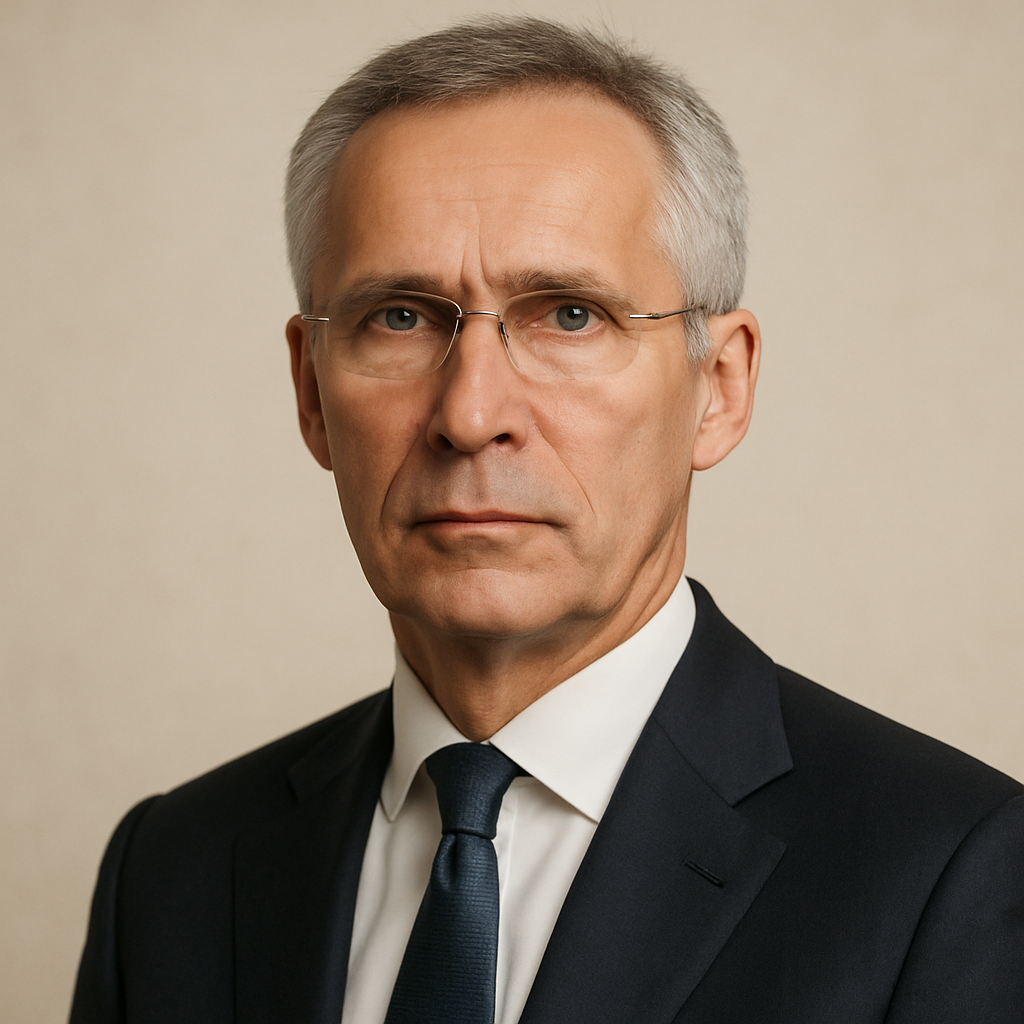
- Gerhard Stoltenberg delivered a speech at the Munich Security Conference on 15 February 1990, amid the backdrop of the Cold War's end and German reunification discussions.
- Main themes
- Fall of the Berlin Wall, European integration, NATO's evolving role, German reunification, arms control and disarmament, Eastern European democratization, transatlantic relations
- Duration
- ~37 min
- Words
- 4,462
- Sentences
- 193
- Readability
- 31
- Grade
- 14.6
- Syntax
- 3.06
- Vocabulary
- 2.20
The broad sphere of national life a sentence belongs to. Every sentence has an Arena, so it is the denominator the other indices are read against.
Other193 sentences in 60 paragraphs
Minister of Defense of the Federal Republic of Germany
In his speech to the 27th Wehrkunde Conference, Gerhard Stoltenberg addressed the momentous change resulting from the fall of the Berlin Wall just a few months earlier.
The face of Europe is changing. In a dramatic upheaval of historic importance much has begun to move, and what appeared to be firmly established structures are transforming or beginning to dissolve. Until last year the forced division of Europe seemed an immutable fact of life; at best to be mitigated gradually in its consequences, the dictatorship of a totalitarian socialism weighed heavily on half of our continent. Today, the picture of Europe is more and more one determined by the ideas of freedom and democracy. There are still contradictions and risks; especially the latest internal developments in the Soviet Union are characterized by worsening conflicts, creating new uncertainties. But the changes in Eastern Europe open up new political chances for us to dynamically shape the future, chances which we intend to use.
As we enter the last decade of this century it is especially important to develop perspectives for a new system of cross-border political, cultural, economic and, not least, security cooperation in all of Europe under the banner of freedom. In doing so, illusionary political concepts or abstract visions are as out of place as is faintheartedness on the part of the democracies or holding on to a status quo-oriented stability mentality that has long been called in question by the course of events. After the East European revolution of 1989, our security policy is looking toward new horizons which may lead to fundamental changes in the European and global power structure. We will use this opportunity for finally overcoming the division of our continent, for eliminating the East’s excessive armaments and military superiority, for more comprehensive disarmament to lower levels of forces.
The democratic popular movements in East and Southeast Europe are so powerful that a return to the old forms of communist dictatorship is not conceivable. But the newly emerging democratic institutions and polities are still vulnerable, particularly because the economic situation there is getting increasingly worse and important social questions remain unresolved. Therefore, periods of setbacks and new strains are not ruled out.
The Soviet leadership is searching for a way of its own. As of now, it still wants to combine perestroika and glasnost, federal and more open society in a multinational state, with the claim to leadership of a renewed Communist Party.
But the outcome of this experiment is quite open. Also the future relations of the Soviet Union with the member states of the Warsaw Pact and the COMECON are uncertain. And this goes for the future of these organizations as well as for the bilateral relations.
In this phase of transition in the foreign, security and economic policies of Eastern Europe and the associated emotionalization of the public debate we depend, perhaps more than ever, on a course of political realism. For that we must recognize in the process of European restructuring certain basic currents and at the same time point out the strategic benchmarks for European and German security interests. In other words, it is necessary that we distinguish between what can be changed and what cannot.
With this, it remains a goal of our policy to see that the citizens of Western Europe and North America, and hopefully soon also of Eastern Europe, can maintain freedom and democracy against any external pressures as they determine for themselves.
We are witnessing today that the erosion and self-refutation of Eastern socialism as an idea and as a form of government and an economic order is leading to a renaissance of democracy in Eastern Europe. As internally Marxism-Leninism is losing its binding character and credibility, externally it is losing the cementing power to hold together the states in the Soviet hegemonial sphere. Gradually the Soviet Union will have to accept the emancipation of the peoples of Eastern Europe from illegitimate communist dominion.
This is a necessity and equally a prerequisite if Europe is to find a new structure for a new era, a structure based on freedom, human rights and peaceful cooperation. The idea of a peaceful order involves more than respect for the principle of non-violence which merely means forgoing the use of physical force to transform or overcome the status quo and the political order in another country, confederation of states or alliance.
In Western Europe, too, we are witnessing at present a historical change — the peaceful and steadily advancing process of West European integration. The establishment of the single European market by the end of 1992 is already creating a new dynamic in and for Europe. In this process new impulses also promote the political growing-together of Europe, and the European Community can become the nucleus of a stable peaceful order in Europe based on freedom.
The process of West European unification and the associated strengthening of Europe’s role in the world, as well as the far-reaching disarmament being sought, will likewise have an effect on the close strategic links between Europe and the United States. As part of this process NATO will both have to adapt its structures and redefine some of its tasks. In this, the maintenance of the bonds between Europe and particularly the Federal Republic of Germany and the United States and Canada remains of fundamental importance.
Whoever today speaks of plans for a restructuring of Europe must be aware that we can attain this goal only together with and not against our allies. However, in the process of European transformation the issue of sharing responsibility is increasingly moving to the fore: Western Europe must increasingly assume political and security responsibility on our continent and beyond. Of crucial importance for the configuration of a new European political structure is the solution of the German question. It is on the agenda of world politics. With their will for freedom the Germans in the GDR have also pointed to the necessity of overcoming the division of Germany. We intend to achieve it in a European framework together with our neighbors. National “go-it-alone” acts by the Germans offer no answer here — no more than a “go-only-European” way would that excluded German unification. In the Comprehensive Concept the NATO heads of state and government made clear that the division of Germany cannot be the basis for European security, much less the basis of our Western community of nations. It was and still is the fundamental principle of the Alliance to stand up for the right of self-determination of all Europeans and thus also of the Germans.
Today we are seeing proof that the integration of Western Europe, the alliance with our North American partners, and our joint determination to stand firm against the totalitarian peril are among the central foundations of European freedom, security and stability.
Also in the future, pursuing and shaping the European perspectives and improving the West-East relationship is something that can be successfully accomplished only on the basis of the Western Alliance. The Alliance remains an important instrument for shaping the future, preventing war and insuring against uncalculable risks in the process of European restructuring the future. Our armed forces and the North Atlantic Alliance remain guarantors of stable change and thus key elements for peace. Intact armed forces in an intact Alliance do not prevent the reshaping of Europe but promote it. For without stability and predictability the new security architecture of Europe cannot be realized.
It would be a grave strategic mistake if in the event of an increasing erosion of the Warsaw Pact we called NATO into question, as a reciprocal move so to speak. By contrast to the Warsaw Pact, NATO was never an instrument of hegemony but always an alliance for the organization of freedom. In view of the huge tasks of the future and of global challenges we will continue to need NATO in the years to come. To meet the global diversity of tasks the Alliance will to an even greater extent than in the past have to perform political functions without neglecting defense. Today, NATO must combine foreign policy, security policy and economic objectives in a comprehensive political concept in order to seize the political opinion-leadership in East-West relations. Only thus can we support the democratic forces in Eastern Europe and effectively meet the considerable risks, and at the same time arrive at an all-European coordination of security.
To use the opportunities provided by the changes in Eastern Europe and at the same time not to neglect existing or new risks is the greatest challenge for Western politics today. Creative power and risk awareness, imagination and caution are equally called for. In this sense the NATO heads of state and government at their summit meeting last May not only reaffirmed their common policy for stability and security in Europe but also worked constructively towards relaxing tensions and overcoming the division of our continent. They thus acted in the best tradition of NATO. By a conceptual broadening of its tasks in the political field but also in the increasingly important economic sphere, NATO is becoming a constructive force for change towards freedom in a future Europe. In a program of change for freedom, the Western Alliance will in the next decade have to meet the following concrete tasks:
First: Maintain our ability to defend ourselves, and by this visible ability prevent any aggression and thus any war in Europe. This task may be adjusted in response to changing conditions — not least in the area of arms control — but it is not outdated. Security remains the foundation of freedom.
Second: Maintain a stable and predictable framework for dialog, negotiation and cooperation with the countries of Eastern Europe in all important areas. Only in this manner can a new and solid basis for a comprehensive European security architecture be created.
Third: Political and economic cooperation with Eastern Europe. Negotiations on armed forces cannot replace removing the causes of tension and the risks to security. Doing this is the task of politics. The events in East and Central Europe have provided the starting points and new opportunities. Now that freedom has been won, stable and robust democratic systems must be established. At this stage the West must support through political as well as economic cooperation the as yet halting progress of democratization, which cannot succeed without a radical restructuring of the economy. It would be unforgivable if we did not seize this historical chance for change.
Fourth: Expand and monitor the present arms control process. An agreement on conventional forces is the cornerstone of the new security structure we seek for Europe. We want to develop a perspective beyond the disarmament results we seek to achieve in CFE 1 in order to achieve further reductions.
Fifth: Initiate an expanded security dialog. If and when in the course of this year democratic governments are formed after free and secret elections, we seek — beyond arms control — an expanded security policy discussion in all of Europe. Part of this discussion is the conceptual manner in which the division of Germany can be overcome, as the Federal Chancellor described it in stages in his Ten-Point Program.
What we must do now is combine the solution of the German question with the considerations for a new European security architecture.
Beyond that, we seek a continuation of the CSCE process. It offers to the members of the alliances and the neutral countries alike a suitable forum in which to discuss the central security issues of Europe as a whole with the inclusion of North America, develop a concept of at least coordinated, if not cooperative, security and ultimately cast it into internationally binding form. This process must take place in a peaceful and democratic way, in accordance with the relevant agreements and treaties and all the principles laid down in the Helsinki Final Act, including the inviolability of existing borders. It must at the same time be embedded in the perspective of European integration and the general context of West-East cooperation.
Sixth: Expanding and strengthening the European Community can promote an all-European development. Now even less than in the past must the EC become a closed, exclusionary region. It must offer the democratic states of Eastern Europe association and cooperation and also promote transatlantic cohesion.
Seventh: Ensure American involvement in Europe and expand and intensify transatlantic relations in the political and economic sphere. Without North America there is no European security — this is recognized in Eastern Europe too. In view of global challenges, a common policy will in the future be even more important than it is now. Regional conflicts or international drug trafficking, but also the ecological hazards of our time and the growing problems of the developing countries increasingly demand joint action by the Western industrial nations. Not all of this will take place in the existing organizational framework of NATO. But surely the Alliance will have to gear up for such more comprehensive tasks.
The many and diverse tasks which the Atlantic Alliance will be confronted with before the end of this century cannot be solved by individual states alone. Therefore, the Federal Republic of Germany in particular continues to depend on the close alliance with its West European neighbors and North America.
Never since 1945 has the danger of a major war on our continent been smaller than in our time. This is a success of the political steadfastness of the Western Alliance. At the same time, with his reform policy, General Secretary Gorbachev has provided the impetus for the removal of the rigid old structures both in his own country and in the other countries of Eastern Europe. But the domestic crisis in the Soviet Union is now exacerbating dramatically, making Soviet politics less predictable. Also the other countries of Eastern Europe that are ready today for democracy have to contend with considerable economic difficulties.
As early as the end of last year Gorbachev himself, aware of the dramatically worsening economic situation and the growing national and religious tensions in his country, spoke of the “sword of Damocles” hanging over perestroika. This and many other utterances of Soviet leaders reflect the present, considerable risk to the developments in Eastern Europe: The political opening and the restructuring into liberal systems could be put under a severe strain by exacerbating economic and social crises and national upheavals.
Andrei Sakharov clearly expressed these concerns in his last writing: “In the course of the past year my concerns about the principal direction of Gorbachev’s domestic policies have grown constantly. What troubled me is the huge gulf between word and deed in the economy, in politics and in society. The economic reform should be based on a change of the structure of ownership in agriculture and industry as well as on an end to power in the hands of the Party and the State and a stop to corruption in the ministries. These reforms have not yet begun. I am also concerned about Gorbachev’s obvious desire to secure unlimited power for himself. Also critical is the manner in which he just does not rely on the progressive forces which today support perestroika but falls back on those that are politically obedient and controllable, but at the same time reactionary.” True, to attain the objective of realizing the reforms in the long term, the Soviet Union needs the cooperation of the West. We are ready for such cooperation, but solving the internal problems of the Soviet Union remains the responsibility of its own political leadership groups. Especially at this time of very severe concussions the limits of our influence become very plain to us. Also open are the Soviet Union’s ideas about the future of the Warsaw Pact. We do not know whether it will be basically remodeled or whether as a result of the new policy pursued by several member-states it will be left to erode and ultimately to dissolve.
It is the objective of the Alliance to achieve, this year, a first binding disarmament agreement in Vienna. It is to codify the elimination of Soviet conventional superiority in Europe, which is still massive today, and in addition lead to a balance of weapon systems and armed forces in East and West at lower levels. We welcome the progress in the S.T.A.R.T. negotiations between the United States and the Soviet Union and we expect for 1990 an agreement reducing the number of strategic weapons by half. An agreement on the elimination and worldwide proscription of chemical weapons also appears within reach. As soon as the results of the first Vienna negotiations become fully apparent, the NATO nations should develop their ideas for the follow-on negotiations that can ensue in 1991.
We have a strong interest in seeing that parallel negotiations are then also held to drastically reduce the nuclear weapons in Europe. The Soviet Union’s superiority in this area is also very great. It must be eliminated by negotiations. With this premise, the West can substantially reduce its sub-strategic nuclear weapons in Europe and a balance can be achieved with a small portion of today’s volumes in all of Europe. From such treaties and an agreement on comprehensive verification covering all the countries concerned, first effective structures of a comprehensive European security system are to evolve. At the same time we know that a responsible security policy continues to depend on military precautionary measures to prevent war and contain conflicts. Security policy is always also defense policy — the two belong inseparably together. A new European security architecture is possible only on the basis of an assured defense capability in a functioning and firmly united alliance. We must not, under the visionary influence of a hoped-for eternal peace, fail to undertake the troublesome efforts we need to prevent forcible encroachments or coercive pressures in the future.
Therefore we must explain to our citizens that political stability in Europe can be improved and maintained only if it is secured by a balance of power. Neither in Europe nor globally can the threat of force or armed conflict be positively and forever excluded. It would therefore be insincere to promise an ideal or conflict-free political world of tomorrow. The better world of tomorrow which we seek with all our strength does not mean that the negative use of force as a factor, and above all a possibility, will vanish from international politics. A European peace order cannot be a power vacuum either. The purpose of any defense and of the associated political strategic principles remains the assurance of self-determination, territorial integrity and political freedom of action. Together with its partners in the Western Alliance the Federal Republic of Germany pursues a military strategy which guarantees protection from the effects of military force by the ability to deter the use of just such force.
For the foreseeable future there is therefore no responsible alternative to the strategy of war prevention which has found its strategic expression in the close connection of conventional defense and nuclear dissuasion capability. International politics today is under the imperative of self-restraint, the moderation of political aims. But it continues to need security and stability-promoting elements to counter uncontrollable, fundamentally unfavorable developments in the political sphere. War prevention by military means, including the nuclear weapons that this requires, remains our framework for change and our insurance against a fallback into confrontational power-political or military structures.
The same goes for the political principle of forward defense. Its political purpose — preserving the territorial integrity and freedom of action of the member states — continues to apply unchanged. But the translation of the political principle of forward defense into military defense plans will always have to be adapted to the changes in the political situation. This is true especially today if the political changes in Europe and the growing-together of the two German states continue and there is a CFE treaty. With these conditions taken into account, the defense plans will above all be determined by the type and number of available friendly forces and the expected enemy capabilities.
Therefore, one of the most important political tasks in the future security dialog between the Warsaw Pact and NATO might be to reach a common understanding on the implementation of the political principle of forward defense. In our view it comprises the right of every state to protect its territory at its borders and in particular the right to pursue the objectives of maintaining its political freedom of action and meeting the requirements for the limitation of damage and the rapid termination of conflict. In our time, the political purpose of armed forces can and must only be a defensive one. Therefore, as NATO said clearly again and again, it remains true that none of our weapons will ever be used first. This understanding, too, could become part of a European security architecture, and perhaps in Vienna one can agree on a formula that first use of weapons — and by this I mean both nuclear and conventional weapons — shall be permissible only against states or groups of states whose armed forces invade one’s own territory or that of one’s allies.
The security of Europe cannot be guaranteed without North America. Developments in the 1920s have shown what consequences a withdrawal of North America from the European continent has. Not least for this reason we Europeans are called upon to make a greater political commitment, also and above all in the field of security. If we want to preserve the American presence, we Europeans must make a greater contribution to North Atlantic security.
In addition, the future political demands on NATO as well as the reduction of the military presence of the United States in Europe to be expected after successful negotiations call for appropriate European answers. Today, Europe must recognize its special obligation to shape its security.
We must recognize that we cannot afford a fragmentation of European security interests. In view of the tremendous tasks of building a European security architecture and overcoming European and thus German division, an emergence of thinking in terms of purely national interests would have disastrous consequences for European stability.
This danger of a nationalization of security policy in Europe — as still in the 19th century — we must meet with a firm and united resolve to jointly shape special or separate ways in security policy — by whomsoever — that the Europe of the future can no longer afford.
The French President pointed out these problems earlier this year, calling instead for “the coming into being of a European federation of states in the proper sense of the word”, a “European confederation”. Here, however, much conceptual work remains to be done.
We know that something like this cannot be accomplished overnight and that this process can take place in stages and need not take place for all European states at one and the same time. But, both Western and Eastern Europe can move at different speeds toward a new European order.
With regard to the process of West European integration one must ask, however, whether in the long run we can exclude questions of security and defense. Europe is more than the growing-together of its national economies. On the contrary: if we forge ahead with integration only with economic considerations in mind and forget about the political growing-together, there will be a danger of the process of economic integration losing momentum and the promising dynamism of Europe reversing in the long term.
Therefore, the time has come to talk about a continuation and widening of West European integration, as the French President remarked. This may also have an impact on the exercise of national sovereignty rights. Also to be thought about in this connection would have to be the area of security and defense — in the sense of a military cooperation that includes all areas important for security, in parallel with foreign-political and economic integration.
With this we are resuming where the debates conducted as early as during the sixties and seventies on a more effective organization of the European defense tasks in the Alliance left off. Of course, our plans today must go further, especially if we consider the possible changes in the structures of NATO. Conceivable are both an expansion of the so-called Eurogroup within the overall structure of NATO as well as an evolution of the Western European Union. Neither of them is an enterprise competing with NATO, but both are fora for more intensive cooperation of its European members, fora which could at the same time be used for the fuller military integration of Western Europe which we seek.
A Western Europe that is transatlantically secured and has grown together also in defense can in the long term become an important center of gravitation of the new complete Europe. In addition, such a development would be an important contribution toward a new balance in a European security system in view of a Soviet Union which will likely continue to be strong politically and militarily.
For the overall political development of Europe the CSCE process continues to be of great importance. Only as the popular movements for freedom in most of the Eastern European countries succeeded did the principles formulated in Helsinki 14 years ago really come into their own. Now it must be our concern to anchor them permanently and see that they become binding norms in the lives of the states and nations internally as well as in their external relations. In this connection, a Europe of tomorrow must never confine itself to its own problems and shut itself off from others.
As I said earlier, the transatlantic Alliance remains a vital factor for its own future and its worldwide responsibility. Also, Europe’s contribution in the global organizations and institutions, above all the United Nations, will become even more important if it unites more closely.
So, Europe today is looking toward new horizons; yet a long and risky way to the “house of freedom” as Konrad Adenauer phrased it in 1961 lies still before us. The alliance of the Western democracies will continue to be the cornerstone of our freedom. Secure on this foundation — as the heads of state and government noted in May 1989 — “we will reach out to those who are willing to join us in shaping a more stable and peaceful environment.”
Photo credit: Sven Simon/United Archives via Getty Images
Related content
Chapter 3: Transition and Expansion (1990–1999) More
Chapter 3: Transition and Expansion (1990–1999)
Robert C. Byrd (1988) Photo credit: Bettmann Archive/Getty Images More
Robert C. Byrd (1988)
Photo credit: Bettmann Archive/Getty Images
Volker Rühe (1995) Photo credit: dpa More
Volker Rühe (1995)
Photo credit: dpa