




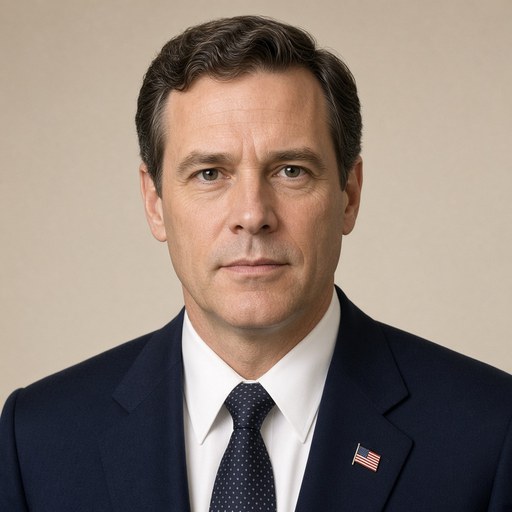
MSC 1973 — Jerry W. Friedheim
 Jerry W. Friedheim · Assistant Secretary of Defense for Public Affairs
- Context
- Jerry W. Friedheim delivered a speech at the Munich Security Conference on 15 February 1973, amid Cold War tensions and discussions on European security.
- Main themes
- Nixon Doctrine, NATO burden-sharing, mutual and balanced force reductions, US national security strategy, strategic nuclear deterrence, US Defence Budget 1974, European defence improvement programme
- Duration
- ~24 min
- Words
- 2,824
- Sentences
- 127
- Readability
- 39
- Grade
- 13.2
- Syntax
- 2.93
- Vocabulary
- 2.19
The broad sphere of national life a sentence belongs to. Every sentence has an Arena, so it is the denominator the other indices are read against.
Other127 sentences in 60 paragraphs
Assistant Secretary of Defense of the United States of America
In his speech at the 10th Wehrkunde Conference in 1973, Jerry W. Friedheim highlighted the common threats faced by the US and its European NATO allies.
I was pleased to accept an invitation to present the United States paper to this Wehrkunde Conference on “The Role of Europe in US Policy,” a subject both important and timely because of our mutual need to maintain a strong defense posture during the ongoing negotiations concerning security and cooperation in Europe and mutual and balanced force reductions.
As you are well aware, US national security strategy is designed to move us toward President Nixon’s goal of lasting world peace achieved and maintained through strong deterrence, based on strength, on partnership with our allies, and on a willingness to negotiate.
For 25 years after World War II our international role was shaped by a belief that the responsibility for world peace, stability, and prosperity rested largely on the United States. But what was true for the two decades following World War II is no longer feasible for the 1970s. The United States must no longer be the free world’s only policeman. Increasingly, the domestic and international conditions — which once warranted such a role — have changed, and that change has called for a new role for the United States in international affairs.
Our President’s international policy — the Nixon Doctrine — is a statement of the new US role. And, at our Department of Defense our national security strategy, called realistic deterrence, provides the defense tool to implement the President’s policies. The Nixon Doctrine defines a new partnership — a more realistic sharing of roles and responsibilities — between us and other nations in the building of our common peace, stability and prosperity.
Our policy can be summed up in three statements:
First, the United States must continue to play a major role in world affairs. Our own security and well-being demand it. Our sheer weight in the international scheme of this make it unavoidable. Any US withdrawal into some sort of modern-day isolationism would be a recipe for disaster — disaster for us and the other nations of the free world. Our objective — and our responsibility — is and must be to work in concert and cooperation with other nations to build a stable, peaceful international order.
Second, the United States cannot and should not do everything itself. As President Nixon has said, “No nation has all the wisdom, and all the understanding, and all the energy required to act wisely on all problems at all times and in every part of the world.”
Moreover, the American people are realists, and they believe we must place realistic limits on our world role in light of our own interests and our own domestic needs. And it is clear to all free nations that in the long run, no free society can pursue and sustain international policies which its citizens do not support.
Third, other nations can and must assume greater responsibility than they have in the past in helping to provide for mutual security and economic well-being, and in building a peaceful and prosperous world order. Thus, we have the concept of NATO burden-sharing.
The post-war economic and political recovery here in Europe, and also in Japan, has long been an accomplished fact. Further, many of the newer nations of the world already have demonstrated that they have the resilience and the resources required to assume a greater share of the burden for their own security and well-being.
But, important as it may be that others are capable of doing more than they have done, there is an even more substantive reason for asking a greater degree of burden-sharing from them. It is our own view that unless a nation feels itself primarily responsible for its own security and well-being, it will leave the task to others and fail to marshal its resources and political will in its own defense.
For those nations which demonstrate that will and require technical assistance and materiel resources to assure their own security, the United States will continue to provide security assistance. But as President Nixon said in his recent inaugural address, “Let us measure what we will do for others by what they will do for themselves.”
Apart from what a nation does for itself, there is the larger question of its responsibility for maintaining the peace. International order can be stable only if nations have a stake in its maintenance. Nations will not have such a stake unless they have participated in building that order.
These principles — these broad directions — guide current US defense efforts.
In developing our national security strategy of realistic deterrence, we have sought answers to these basic questions: What should be the relative responsibilities of the United States and its allies for deterring threats? What resources can and should each nation concerned contribute to the common defense? How can we make optimum use under a total force concept of all available military and related resources to meet the requirements of the common security?
The answers to these questions, and the implementing actions taken delineate what has been accomplished over the past four years and what remains to be done in the years ahead.
First, deterrence of nuclear threats, both to the United States and its allies, has been and will continue to be primarily the responsibility of the United States. No other nation can maintain sufficient strategic nuclear power on the scale required to deter attack, threats or blackmail from the other nuclear superpower. Without a continued US nuclear deterrent for the common security of our allies, they might have neither the will nor the reason to do what can and must be done to deter conventional war.
But, while US nuclear power is essential to the common security, it is not sufficient to deter the full spectrum of potential conflict and potential threats to US and allied interests. Thus, the new Nixon Doctrine international policy concept of partnership and the new total force concept of our security strategy comes into full play.
In Asia, we face jointly with our allies the problem of how to deter major theater conventional conflict and at the same time deter sub-theater or localized conventional threats.
There is, of course, a tendency on the part of some persons — on both sides of the Atlantic — to see in the new era of negotiations a reason or an excuse to reduce defense efforts. Yet it must be apparent to thoughtful students of international security that free world and NATO military strength helped bring this new era about by effectively closing all paths except that of negotiation. And it must be equally apparent in Europe that Western positions and interests cannot be adequately protected and advanced in negotiations unless the West shows continued will and ability to maintain its military strength.
President Nixon in 1969 recognized the need to re-examine our collective NATO strategy to see if it was still viable in the light of new circumstances and new realities. We knew there were weaknesses and imbalances in NATO’s conventional capabilities vis-à-vis those of the Warsaw Pact. The status of United States Forces in Europe has, before 1969, been affected by our troop commitments to Southeast Asia. It also was important to clear away some of the misunderstandings between the US and its allies which have arisen over the years and to work together to revitalize the cohesion of the Great Alliance.
Together, we carried out in NATO an exhaustive study of Alliance defense problems for the 1970s in which we reaffirmed the validity of our current military strategy and agreed on ways in which to improve NATO forces, their armaments, logistics, supporting infrastructure, and our ability to consult on their possible use in a crisis.
President Nixon has emphatically reaffirmed the American commitment to NATO. He has firmly said that, given a similar approach by our allies, the US will maintain and will improve its forces deployed in the European area. We will keep that pledge.
But in the years immediately ahead, it will be very difficult to support an undiminished American troop presence in Europe if some of our partners whittle down the effectiveness of their own forces — whether by budget reductions, manpower reductions, or shorter terms of service.
At the NATO Defense Ministers’ meeting two months ago our Secretary of Defense based his major intervention on burden-sharing and the need for more of it. Beyond his admonition that defense expenditures must grow in real terms and that funds must be used more efficiently in support of our common defense, he called for a continued European defense improvement program effort and a decreased United States cost share of NATO’s infrastructure program. These suggestions will be difficult to realize but the time is right, and our allies must understand the need to relieve us of some of the defense burden.
The era of negotiations is well upon us with agreements we already have concluded — such as SALT I and Berlin — and with CSCE preparatory talks and MBFR initial talks underway. And, in the light of this intricate complex of East-West discussions, we are beginning to hear a great deal from politicians and writers about some sort of profound and lasting shift in the basic attitude and approach of the Soviet Union toward the West.
This talk is premature, and détente without adequate defense is delusion. Profound differences and disagreements continue between the East and ourselves. These differences cannot simply be ascribed to historical accident or misunderstanding. They are rooted in different conceptions of the rights and responsibilities of men and of governments, and in different approaches to dealing with other nations.
Not dare we ignore other facts of international life. We cannot discount the large, highly capable and improving Warsaw Pact armed forces in Europe.
We cannot shut our eyes to the rapid, sustained and growing Soviet arms expansion and arms improvement programs. We cannot ignore the worldwide expansion of Soviet maritime forces and activity, including the construction of an aircraft carrier. We cannot safely disregard growing Soviet military presence in areas adjacent to NATO such as the Middle East and the Indian Ocean.
The simple fact is that as we meet here in early 1973 the Soviet military buildup, conventional as well as nuclear, continues with vigorous momentum.
Unless we face this strategic and political reality and make this recognition the starting point for our negotiating efforts, we jeopardize the chances of achieving peace, while subjecting our vital interests and our people to serious danger.
This is not to say why we should be totally unprepared to consider certain reasonable risks for peace. On the contrary, we should seek prudently and carefully to build a new relationship, if possible, with the Soviet Union and the nations of Eastern Europe. It should be a relationship based on reciprocal self-restraint and on accommodation of mutual interests. But that relationship only can be built on the foundation of a strong and unified West.
This era of negotiations is, in many ways, more dangerous, difficult and demanding than the previous era of confrontation. But the United States is confident that NATO is equal to the challenge. Some persons have expressed concern about our ability to manage MBFR and other negotiations while maintaining allied cohesion. But however great a challenge MBFR may be for us, in many ways, it will be an even more severe test for the East.
Whatever our problems here in the West, the mutual understanding and trust that have long prevailed among us will be a great asset over the months ahead as we negotiate with our adversaries. It is an asset all of us must guard with care.
Let us now briefly consider the US Defense Budget for fiscal year 1974, which continues funding for a strong defense posture essential to the security of the United States and its allies in support of negotiations. It is an austere budget that reflects no real increase in total funds allocated for defense over fiscal year 1973. The transition from support of US Force involvement in Southeast Asia to Vietnamization is substantially completed.
This permits in the fiscal year 1974 Budget the further modernization of our peacetime or “baseline forces” consistent with the principles of the Nixon Doctrine without affecting the size and strength of US Forces in Europe. The budget provides a program balance between personnel, modernization and technology. And for the first time, it stabilizes the growth of personnel and related costs in order to preserve this balance.
Some of the more important points to be noted are:
Financial: Total budget authority requested for fiscal year 1974 is $85 billion, an increase of $4.1 billion over fiscal year 1973. This cost increase largely represents military and civilian pay increases. Nixon Doctrine Military Assistance Programs are budgeted at $1.3 billion — an increase of $300 million over fiscal year 1973.
Major Program Changes: Strategic Force funding remains level at $7.4 billion between fiscal year 1973 and fiscal year 1974. Major strategy weapons systems funding, however, reflects increases for research and development work of Trident ballistic missile submarines and significant decreases for Safeguard missile defense. Poseidon submarines and the proposed short-range attack missile.
General Purpose Forces program levels will increase slightly. This is the net result of decreases in funding for support of Southeast Asia offset by pay increases and modernization programs. Significant modernization program increases cover funding for the F-15 fighter and the F-4J fighter, a new attack aircraft, another nuclear-powered aircraft carrier, and a new series of destroyers.
Forces and Personnel: Strategy Missile Forces remain stable with programs continuing for the Minuteman III modernization and the conversion of Polaris to Poseidon submarines.
Strategic Bomber Forces are reduced from 30 squadrons to 28 squadrons, reflecting fact-of-life retirements of older B-32’s that have reached the end of their structural life.
Naval General Purpose Forces continue to reflect decreases as older, less effective ships and submarines are retired and replaced in lesser numbers by new, highly effective ships. Principal reductions are in destroyers and diesel submarines. Two nuclear ships and four nuclear attack submarines will join the fleet along with five destroyers’ escorts and a missile frigate.
General Purpose Ground and Air Forces remain substantially at the level programmed for fiscal year 1973.
Military personnel are programmed to decrease by 58,000 to a total of 2,233,000 during fiscal year 1974. This is in part attributable to programmed reductions in Southeast Asia support and in part to efficiencies in overall staffing.
Secretary of Defense Elliot Richardson reported, in response to questions last month by a member of the US Congress, that the most recent Department of Defense estimate of costs for the US Forces and Support Programs earmarked for NATO is roughly $16 billion annually — about one fifth of our total Defense Budget. This estimate is defined as the annual savings to the Defense Department Budget that would accrue if all of the following did not exist: All of the US General Purpose Forces (both active and reserve) that are formally committed to NATO but are not in Europe.
Variable costs of US-based support including training, individual support and logistics for the above forces.
Military assistance for European countries and the NATO infrastructure program. About $7 billion of the $16 billion is related to the cost of US combat forces actually in Europe and to their US-bases support.
I have described for this Wehrkunde Conference the dominant defense implications of the Nixon Doctrine which has guided US national security planning and actions over the past four years, particularly as they related to Europe. By any standard of measurements, we have covered together a good part of the security road that we must continue to travel together. And it is in the nature of the enterprise that the first steps were the hardest. For they entailed reorienting long-held views and patterns of actions, not only on our part, but on yours. For a quarter century, we had all believed that it was fitting and feasible for the United States to assume primary responsibility for countering all threats to the common security. The lesson we have learned together over the past four years is that partnership, not predominance — sharing, not supremacy — is in our common interest.
“Shared Sufficiency” is what it is all about. The Alliance has been and remains the world’s mightiest force for peace. And as President Nixon has said, for the United States this year is the “Year of Europe.”
Related content
Chapter 1: The Formative Years (1963–1979) More
Chapter 1: The Formative Years (1963–1979)
John G. Tower (1970) Photo credit: Dave Mathias/The Denver Post via Getty Images More
John G. Tower (1970)
Photo credit: Dave Mathias/The Denver Post via Getty Images
J. William Middendorf II (1976) More
J. William Middendorf II (1976)