




- Context
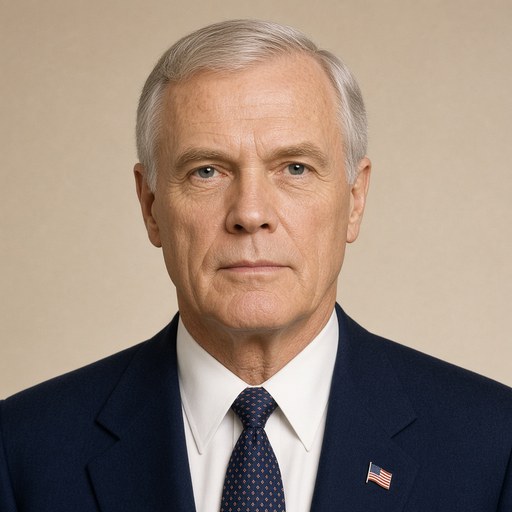
- John Glenn delivered a speech at the Munich Security Conference on 15 February 1982, amid Cold War tensions between the United States and the Soviet Union.
- Main themes
- NATO defence commitments, Soviet military expansion, resource dependency vulnerabilities, burden sharing among NATO allies, strategic mobility and conventional forces, US-European relations, threat analysis including resources
- Duration
- ~12 min
- Words
- 1,450
- Sentences
- 84
- Readability
- 50
- Grade
- 10.5
- Syntax
- 2.65
- Vocabulary
- 2.22
The broad sphere of national life a sentence belongs to. Every sentence has an Arena, so it is the denominator the other indices are read against.
Other84 sentences in 26 paragraphs
United States Senator from Ohio
In this speech at the 19th Wehrkunde Conference, John Glenn called on European NATO members to refrain from cutting back on defence commitments at a time of historic challenges.
Defense Minister Apel refers to this gathering as a symposium. One definition of a symposium given by my Webster’s Unabridged Dictionary is that of “a meeting following the banquet proper, usually with music, singing, and dancing.” There may be little music, singing, and dancing about subjects we discuss here today. I am concerned that NATO is preparing for one particular threat, but that there is another threat of equal importance that has crept up on us that is not being adequately considered, even though it affects us all.
When NATO was established, the major Soviet threat in Europe was a land attack on the central front. I would submit that this started changing at the time of the Cuban missile crisis. The Soviets went home in embarrassment and decided to build their military capabilities. And they built — not defensive forces — but power projection forces. Where they were capable previously only of land attack from their homeland, they became capable slowly over the past 15 years or so of airmobile and amphibious operations continents away.
And the Kremlin leaders have used these projection forces. You saw the original coup in Afghanistan, for instance. Major help then followed for Syria and Iraq. After this came the use of a new military experiment — surrogates. Cubans with Soviet equipment used that equipment in such places as Angola, Zaire, Ethiopia, Somalia, South Yemen, and doubled their presence in the Indian Ocean and the islands north of Japan with an additional 12,000 troops. The Soviets gave major help to the Vietnamese in their invasion and occupation of Cambodia and followed that up with a military takeover in Afghanistan. So we are seeing them move without hesitation in these areas as they have developed their strategic mobility and conventional forces.
So why should we of NATO be concerned with what the Soviets do in other areas? While NATO has remained focused on the central European front, we have seen our resources dependency expand at a tremendous rate. Oil is but one example. While we get some 20 percent of our oil in the Persian Gulf, Europe gets approximately 60 percent from the same source and Japan gets over 75 percent.
But we are not vulnerable solely because of energy dependence. We in the United States have some 90 materials we consider to be of strategic and critical importance. Two-thirds of them are minerals. We are self-sufficient in two, mellithemum and magnesium. We are close to sufficiency in two more, copper and lead. But we have virtually no US production in four of the most critical — cobalt, manganese, chromium and platinum. Just to use one example, on our F-100 jet engines, we use some 1,485 pounds of chromium for each engine. Significant amounts of aluminum, cobalt, columbium, manganese, nickel, tantalum, and titanium are also required. We have a US dependency on overseas supply for between 77 and 100 percent of all those metals. The same thing can be said across the board of our industrial base and for the industrial base of the rest of the free world, including, of course, Germany and Europe.
So the Soviet Union can now threaten resources that are absolutely necessary to our society. Indeed, if one looks at the map and plots those African areas where the Soviets have made their move with their Cuban surrogates one will find an ominous alignment with the sources of these vital resources.
The United States has been trying to come to grips with this new vulnerability and to protect the West from this changed threat. I myself came to this conference from a visit around the Persian Gulf area. But NATO still concentrates on the central front. At last year’s conference, Minister Apel stressed that NATO had no business getting outside of its traditional area unless there are individual commitments that particular nations wish to make. This year in the English version of his paper, Herr Apel says in part “… we should bear in mind that expanding NATO area is out of question.” I would submit that NATO needs to do a new threat analysis that now includes resources. The United States is expanding its commitments to benefit all of the three major free world economic centers — Europe, Japan and the United States. But Americans expect our European and Asian allies to increase their share of the new burdens we must all bear.
Let me give a view of things from the United States and what I think this may well result in — perhaps even this year. I’m sure that many here recall that back 12 or 13 years ago, Mike Mansfield annually introduced a bill in the Senate to force the United States’ withdrawal from NATO. Senator Mansfield believed we had been here too long, and he thought it was right that we withdraw our forces from NATO. He did not get broad support for the proposal. But I think there is a change in the United States today.
I think that Americans expect a greater degree of burden sharing and are willing to press in the same directions outlined by Senator Mansfield. If we see that move coming, I think many politicians may be obliged to follow. It would not surprise me at all to see such an amendment this year. I am personally not for it. I think it would send all the wrong signals. But I am being very blunt and straightforward in saying that I think it would be possible, perhaps even this year with the mood of the people in the United States with regard to burden sharing, that there will be a reduction of our European commitment unless there is some sort of additional help or aid for our Middle East expenses and our commitment there.
I am not making threats, but I think I am being realistic in saying that Americans believe that we are reaching the limits of our resources by taking on broader global commitments. There are commitments that we see benefiting all NATO and all free industrial world nations. But we see far too little additional burden sharing by our allies.
Now how much is enough for defenses? Well, that is difficult to say. I think too often we set up a balance sheet between the social and the military programs as though military spending is merely some sort of sop to a special interest constituency of generals, admirals, and defense contractors and that somehow military budgets ought never exceed what is spent on social welfare programs. I wish it were that simple. I am reminded during America’s first Constitutional Convention in 1787, one of the delegates wanted to make it law that America’s army would forever be limited to 5,000 men. George Washington, the presiding officer, turned to another delegate and whispered, “Amend the motion to provide no foreign enemy shall invade the United States with more than 3,000 soldiers at any one time.”
We cannot benefit from balanced budgets if we are subjugated from abroad. We cannot prosper if we are deprived of critical raw materials. And we cannot survive unless we remember that the most important social service a democracy owes all its citizens is to keep them free of oppression.
The major cause of our inaction, perhaps, lies in the fact that the locale of Soviet advances fits the indirect strategy so clearly described by B. H. Liddell-Hart. NATO wakes each day to find itself increasingly threatened by yet another Soviet move in areas outside the European arena. Areas in which our traditional patterns of thinking do not prepare us to respond in any meaningful way. Our energy supply lines and critical materials are more threatened now than ever before. The economies of Western Europe, Japan and the United States could literally be devastated without a shot being fired at the Fulda Gap. The Soviet arms build-up has clearly challenged the alliance where it is the most vulnerable.
What is the purpose of the alliance? It seems to me the purpose of the alliance is to protect against the threats to our collective and individual freedoms. The threat has advanced; the NATO response has not kept pace.
Photo credit: picture-alliance / dpa
Related content
Chapter 2: Expanding Horizons (1980–1989) More
Chapter 2: Expanding Horizons (1980–1989)
Frank C. Carlucci (1981) Photo credit: SZ-Archiv More
Frank C. Carlucci (1981)
Photo credit: SZ-Archiv
Robert C. Byrd (1988) Photo credit: Bettmann Archive/Getty Images More
Robert C. Byrd (1988)
Photo credit: Bettmann Archive/Getty Images