




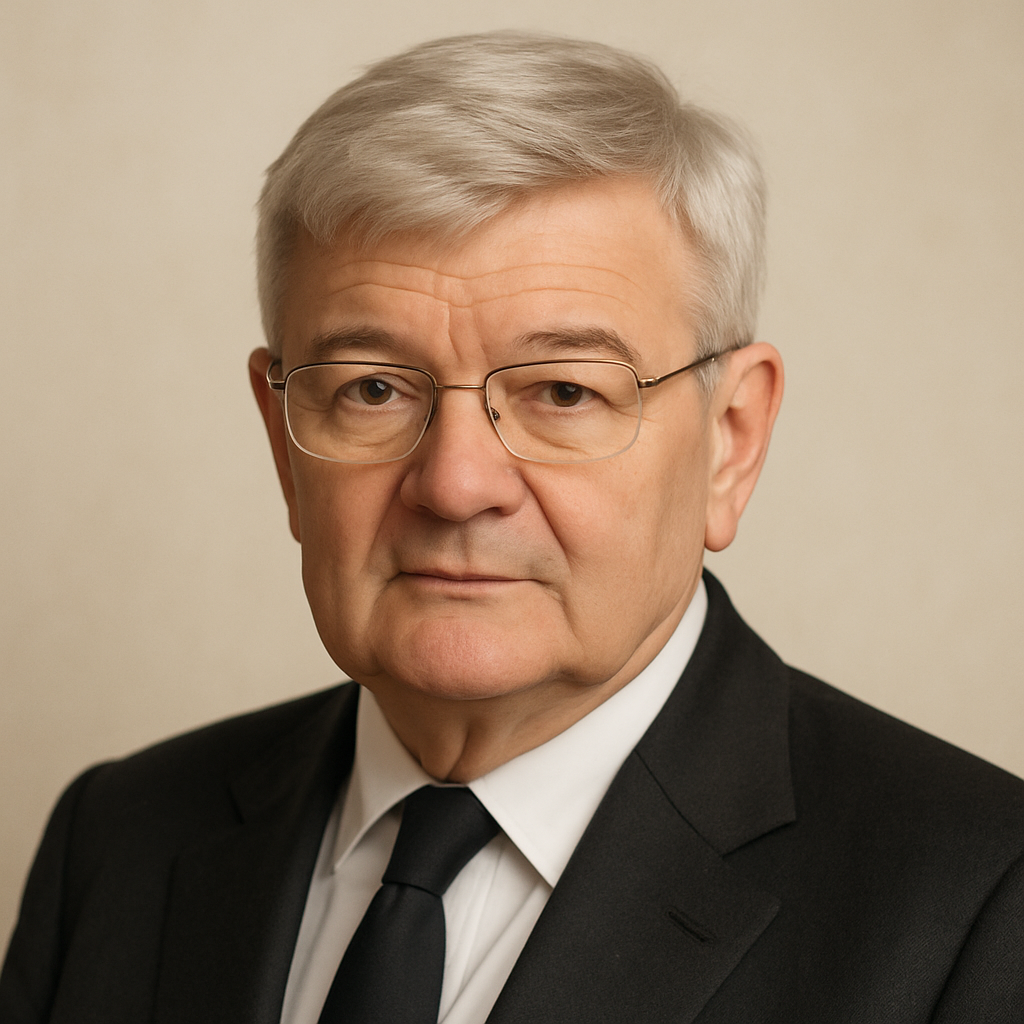
MSC 2003 — Joschka Fischer
 Joschka Fischer · Federal Minister for Foreign Affairs and Vice-Chancellor of Germany
- Context
- German Foreign Minister Joschka Fischer delivered a speech at the Munich Security Conference on 15 February 2003, amid international debates over the impending Iraq War.
- Main themes
- Military action in Iraq, transatlantic relations, September 11 aftermath, Afghanistan mission, North Atlantic Alliance strategy, preventive strategy debate, United Nations role
- Duration
- ~24 min
- Words
- 2,918
- Sentences
- 194
- Readability
- 51
- Grade
- 9.8
- Syntax
- 2.73
- Vocabulary
- 2.21
The broad sphere of national life a sentence belongs to. Every sentence has an Arena, so it is the denominator the other indices are read against.
Other194 sentences in 46 paragraphs
Minister of Foreign Affairs of the Federal Republic of Germany
In reaction to Donald Rumsfeld , Joschka Fischer used his speech at the 39th Munich Conference on Security Policy to present a passionate defense of his government’s skeptical position towards military action in Iraq, emphasizing that he was “not convinced” by the case for war.
When we discuss today the dangers that lie ahead, the Iraq crisis, and the challenge of terrorism, I believe this is an excellent opportunity to address these issues in the context of transatlantic relations — just as Secretary of Defense Rumsfeld has explained — among friends, among old friends. I think few would contest this characterization.
From my perspective, the critical turning point is September 11, and we understand all too well the emotions, concerns, and even the anger of our American friends in the aftermath of that day. These emotions, concerns, and anger are not the only ones we have shared but continue to share.
Allow me to make one thing clear at this point. Today, I find myself in the position of having to engage in two debates: one domestic and one transatlantic. I will focus on the transatlantic dimension. However, let me briefly address a domestic point. It has been suggested that the leadership question was the key issue. During the election campaign, as my colleague Mr. Pflüger noted, the opposition stated, “If we had won...” Well, you didn’t win, and your positions played a significant role in that outcome. You had every opportunity to make your stance clear during the campaign, and I believe the result would have been even more decisive had you done so. This is a central point, and I will leave it at that.
Secretary Rumsfeld, it is simply not accurate to claim that the issue is exclusively about whether a government supports or opposes the Iraq strategy. Instead, it is about the balance of public opinion. If you examine the numbers, you will find no substantial difference in public opposition between countries such as the UK and Germany, or France and Spain.
We do not need to engage in a fundamental debate about whether we are pursuing pacifist illusions or whether there are serious questions regarding the strategy. A strategic disagreement is different from embracing a pacifist approach. I say this as someone in a government that has risked its existence three times on questions of war and peace. The first was in Kosovo, where we were convinced that, after exhausting all other means, confronting Milosevic militarily was the only option left to prevent a second Srebrenica. Personally, I fought for Germany to stand alongside our American and European democratic allies for human rights and strategic European interests — for peace and stability on our continent. Kosovo was not about force; it was the last resort. And if I regret anything, it is that action did not come sooner. A credible threat in 1991 would likely have sufficed.
For me, the crucial point is this: In Kosovo, we combined military strength with a political vision and strategy. The alternative to nationalism’s rule in post-Cold War Yugoslavia was not merely military opposition but a political offer — a perspective on Europe. Strength and political vision must go hand in hand, formulated and implemented in strategy.
Allow me to address the analysis. On this point, the U.S. and we are not far apart. I agree that after September 11, the status quo is no longer acceptable; it is too dangerous. We are indeed facing a new type of threat. It is no longer Imperial Japan, Nazi Germany, or the Soviet Union under Stalin. The threat is asymmetrical.
Yet, when we look back, why did we misjudge this danger together? Even in the 1990s, there were warnings — the first attempt to bomb the World Trade Center, the attacks on U.S. embassies in East Africa, and the USS Cole. Why did we not grasp the scale of the threat? We underestimated the emergence of a new form of totalitarianism, one rooted not in Europe but within the cultural and ideological framework of the Arab-Muslim world. This totalitarianism, though different in origin, poses an equally severe challenge.
Afghanistan, as the weak territorial base of Al-Qaeda, exemplifies this. After September 11, it was clear that we had to confront this territorial base. And so, Germany stood in solidarity with its American friends. A few years ago, the idea of German troops in the Hindu Kush would have seemed unimaginable. Today, we have nearly 3,000 soldiers there, serving under essential missions like ISAF and Operation Enduring Freedom.
Let us not be under any illusions: Afghanistan is a long-term commitment, just like the Balkans. Without nation-building, which may take decades, terrorism will return. The political conditions in Afghanistan remain precarious and could lead to renewed instability and terror.
This brings me to my first critical question: Why prioritize Iraq now? We are far from completing our mission in Afghanistan, and the dismantling of Al-Qaeda remains unfinished. None of us knows whether tomorrow might bring another devastating terrorist attack — not from Saddam Hussein but from the corner where the greatest threat still lurks: Islamist terrorism.
This is why I struggle to understand the current prioritization. To me, it remains unclear.
Saddam Hussein is a terrible dictator; we have all known this for a long time. He used weapons of mass destruction against Iran during the Iran-Iraq war, invaded Iran, and fired Scud missiles at Israel. He brutally suppresses opposition and his own population — this is well-established. Furthermore, he is attempting to acquire weapons of mass destruction. However, does this justify the prioritization of this issue in light of the threats we have faced since September 11? That is my first major question. And I must say, I have participated in three significant democratic debates — Kosovo, Macedonia, and the most challenging one, Afghanistan — where we truly put our coalition to the test. Three times.
We owe the USA our democracy. The USA is indispensable for peace and stability, but for Germany, it plays a particularly special role because we did not liberate ourselves from the Nazis, nor did we rebuild our democracy without its help. However, my generation has learned something important: You have to make the case! And in a democracy, to make a case, you must convince others on your own merit. Excuse me, but I am not convinced. That is the problem — I cannot address the public and advocate for war on grounds that I do not personally believe in. This is why we must have this discussion.
My second major question is why we have not systematically conducted this strategic discussion — one I deem urgently necessary — within the framework of the North Atlantic Alliance. Let me be clear: since September 18/19, 2001, during a visit to Washington, I have been having this conversation with our American friends. They are aware of my deep skepticism. They know I have questions about Iraq that I find have not been satisfactorily answered. The ambassador is also well aware of this, as we have had ongoing discussions about it over the months.
Now, let me address the second point — the world after September 11. When trying to decode the grammar of terror, while simultaneously examining shifts in the world order, we observe that the Cold War world, though highly dangerous, was defined by a global system of “stability through deterrence.” It was akin to two massive electromagnets that absorbed all peripheral conflicts into the gravitational pull of the central conflict.
Since 1989/90, this dynamic has completely changed. Back then, we had a unidimensional political space defined by the central conflict. Today, we operate in a three-dimensional political space. At the global level, major powers and their alliances shape global stability. At the regional level, we have regional conflicts. And at the basement level, we face collapsed states and asymmetric conflicts.
Security is now defined across all three levels. If we examine the root causes of September 11, it is the forgotten conflict in Afghanistan, the underestimation of the threat posed by a new form of totalitarianism that established a regional base there, and its evolution into a global threat — not only to the people and government of the USA but to world peace. This means that when we discuss security and stability, we must act across all three levels — global, regional, and in addressing asymmetric conflicts and failing states — combining strength with political perspective. Strength alone will not yield a political solution. Without a political solution, negative, destructive, and even terrorist energies will be emboldened. This is the critical point we must continue to debate.
In this context, I agree with those who say that we face a crisis in the Islamic-Arab world — a loss of order. While Europe has experienced great gains in order since the end of World War II, the Middle East faces enormous losses in order. This raises the question: How do we restore order? There is a need for robust discussion on this point — not necessarily dissent, but certainly the need for dialogue.
From my perspective, Secretary Rumsfeld, the correct strategy would have been to say: Afghanistan is non-negotiable. We must fight Al-Qaeda because no alternative exists; we must dismantle terrorist structures — this is indisputable. But then, I believe, the next step should have been to pursue the Saudi initiative related to the Middle East conflict, aiming for a difficult compromise in the Israeli-Palestinian conflict. Why? Because I believe achieving that difficult peace, which we must work on together, would change the entire environment in the region, creating a new foundation of support — even for tougher measures, if necessary.
This is now water under the bridge, but I want to clarify our concerns, questions, and alternative perspectives. These are not rooted in anti-Americanism, questioning our alliance, or Germany seeking to step away from its commitments. Far from it.
Today, we face a different situation under UN Security Council Resolution 1441. Decisions have been made. However, I must raise some questions that are critical for us. This brings me to the topic of the preventive strategy. Is what Secretary Rumsfeld described an isolated case, or is it part of a longer-term strategy? If it is the latter, then there is a significant need for discussion because this will have profound implications for the transatlantic relationship.
I must also address the high levels of public opposition in our country. I predict that even those celebrated eight leaders who published a letter in the Wall Street Journal supporting the U.S. stance would face significant challenges without open debate. In the long run, a democratically elected government cannot act in opposition to the overwhelming majority of its population. That is the essence of democracy, and I find it both important and correct.
And therefore, I believe we must carefully discuss the consequences of a preventive strategy. Questions:
Is the preventive strategy being discussed exclusively based on the threat analysis of the United States and the consequences derived from it? Is it tied to principles? Will there be universally binding rules? Will these rules be consulted? Or is this exclusively a discussion taking place within the United States?
This is a crucial question for us within the alliance, and we must prepare for it, regardless of how you perceive these matters. However, this discussion needs to take place. Naturally, this also applies to other consequences. What are the plans for the Middle East? What do you think will work in terms of a democratization strategy there? What if an intervention in Iraq, in the medium term, actually fosters a trend towards Islamization? That is my major concern. Will democracy ultimately prevail, or will we face an Islamization movement of a more long-term nature? That would result in a loss of stability and security with which we Europeans, as well as Israel and moderate Arab states, would then have to contend significantly.
Thus, the questions are reversed and directed toward us: What are the consequences of inaction? I can only underline what several others have said: if we base our analysis on these risks, we must utilize every possible means to mitigate or eliminate them. These must include both instruments of strength and political alternatives. Neither strength alone nor the renunciation of strength, and political alternatives alone will achieve results. Only a combination of the two can be effective, in my view, and that must be repeatedly clarified.
In this context, allow me to ask a question about weapons of mass destruction. Let’s consider the threat analysis. If what Secretary Rumsfeld or my esteemed friend Colin Powell recently presented is accurate — and I listened very carefully — if it is the case that states we consider dangerous and non-democratic possess weapons of mass destruction, what are the implications of that? I look around, and while I won’t name names, I examine missile capacities, nuclear programs, and programs for weapons of mass destruction. A lot comes to mind. What does this mean in practice? This needs to be urgently discussed.
Now I turn to the second threat analysis: terrorism. I look at where terrorism truly originates, where the breeding grounds are, where the activists come from, where the ideology originates, and where the financial support stems from. A lot comes to mind here as well. This must all be brought together. This is precisely where the mistrust in our populations arises — that things don’t add up. That is the crucial point. It’s not about governments being unwilling. For us, it would be much easier if this aligned with public sentiment. Because we naturally see the alliance interests on the other side. But the population senses that things don’t align.
This is why we believe that we urgently need a discussion about the consequences of this threat analysis and its political implications. This is necessary to avoid greater dissent, which currently primarily revolves around the use of force. This must be seen very clearly, in my opinion. Therefore, I also advise not to exaggerate this dissent, which must be discussed but can simultaneously be transformed into a productive consensus.
Allow me to briefly address the current situation with Resolution 1441. Iraq is now under greater control than ever before. Let me be very clear: Saddam Hussein must unconditionally guarantee the implementation of Resolution 1441. It is now up to Baghdad to avert a major tragedy. He must not possess weapons of mass destruction, and he must fully cooperate with the inspectors. That is the issue at hand. But given the risks that cannot be ruled out, I ask: when weighing the risks of war against the risks posed by Iraq today, can we truly say we have exhausted all other means? I believe we have not. That is the proposal our French friends made, which we support — that with a stricter inspection regime we still have options beyond entering a war. Given the risks of war, which you also cannot dismiss, it is urgently necessary to deploy all these instruments and resources and to take the time needed. We must not fall under the logic of military mobilization but must use the time required by the inspectors. We need to develop alternatives so that it becomes entirely clear what is at stake.
Lastly, Mr. Teltschik, the role of the United Nations. The United States is indispensable, and let there be no doubt about that. The notion that France and Germany could or would want to challenge the United States is unfounded. Beyond feasibility, I believe it would be wrong because the United States is indispensable for regional and global peace and stability. Its power is indispensable. But on the other hand, the United Nations — yes, decisions there sometimes leave me shaking my head, I admit that openly. Some examples were mentioned. But conversely, do you believe peace can be achieved without the United Nations? I do not think so. As difficult as the United Nations can be, we will need it more than ever in the 21st century.
This is not the retreat of a weak country into the United Nations or multilateralism. This opposition, as framed by Kagan, a return to Hobbes, is, for me, a nightmare. A Hobbesian world in the 21st century would be catastrophic for us all, for peace and stability. Incidentally, Hobbes dealt with civil war. Thus, if Kagan’s position is taken seriously, he becomes the prophet of a global civil war — a nightmare for us all. Kant, on the other hand, addressed the peace of sovereign states and developed a corresponding system. This is not a critique but simply to say that Kagan is fundamentally off the mark here.
The United Nations, for all the reasons I have mentioned, is indispensable to me. Its role, combined with the dominant power of the United States — the cradle of democracy and human rights — is the formula for success in a 21st-century world order. This formula cannot be dissolved into either — only U.S. power — or only the United Nations.
Photo credit: SZ-Archiv
Related content
Chapter 4: Great Promises, Greater Perils (2000–2009) More
Chapter 4: Great Promises, Greater Perils (2000–2009)
Donald Rumsfeld (2003) Photo credit: Wolfgang Truckenbrodt/Getty Images More
Donald Rumsfeld (2003)
Photo credit: Wolfgang Truckenbrodt/Getty Images
Abdullah II Ibn Al Hussein (2004) Photo credit: Ralph Orlowski/Getty Images More
Abdullah II Ibn Al Hussein (2004)
Photo credit: Ralph Orlowski/Getty Images