




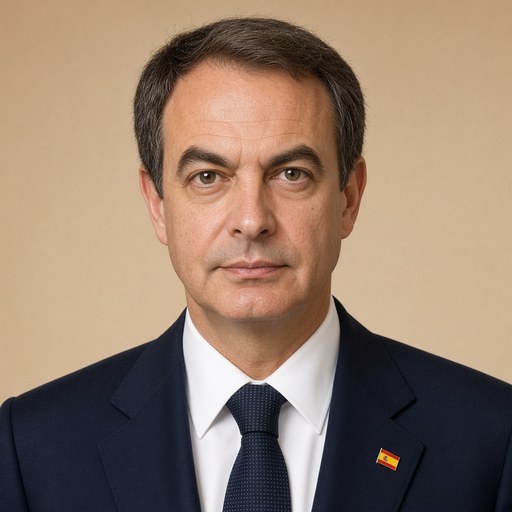
Speech by President of the Government at an investor meeting in Singapore
 José Luis Rodríguez Zapatero · Prime Minister of Spain
- Context
- Zapatero addressed investors at a Singapore breakfast meeting in April 2011, outlining Spain's reform program and economic outlook amid the Eurozone debt crisis.
- Main themes
- Spanish economic reforms, Eurozone sovereign debt crisis, global financial crisis, structural imbalances, fiscal consolidation, competitiveness recovery, investor confidence, Spain's economic track record, role of Asia in recovery, Economic and Monetary Union weaknesses, Portugal bailout impact, foreign direct investment
- Duration
- ~9 min
- Words
- 1,075
- Sentences
- 30
- Readability
- 35
- Grade
- 17.3
- Syntax
- 3.63
- Vocabulary
- 2.10
The broad sphere of national life a sentence belongs to. Every sentence has an Arena, so it is the denominator the other indices are read against.
Other30 sentences in 10 paragraphs
Thank you very much for this breakfast in this very distinctive building with such special views of Singapore.
I would like to give a brief speech about the state of the economy in the Eurozone and, in particular, in Spain after nearly three years - two and a half - of economic and financial crisis in the world that has had such a serious impact in the Eurozone. You are aware that this crisis has had, above all, three main elements: firstly, its origins that lie in the United States, which were fundamentally financial in nature and which, from there, basically spread to Europe and to the rest of the world; secondly, there was a major economic crisis, with a fall in growth, particularly in 2009; and thirdly, this economic crisis, derived from the financial crisis, which received a coordinated response through the G-20 comprised of fiscal stimuli which in some areas, such as the Eurozone, resulted in a sovereign debt problem as a result of the efforts made by public actions at fiscal stimuli. Together with these three characteristics of the crisis that we have been through, the crisis, as tends to happen in these cyclical phenomena, has brought to light certain structural factors which have resulted in changes in the context of the global economy, of the international economy.
What new factors have we seen? There are three main factors: firstly, the weighting of Asia in an international context, because without Asia the recession would have hit three times as hard and recovery would have been less vigorous; secondly, the Economic and Monetary Union, which was set up in Europe in 1999 with certain structural weaknesses which were brought to light during this crisis; and thirdly, the crisis has brought to light, as tends to occur during major economic crises, those countries that have suffered from economic imbalances during a prior period of growth, during a cycle of expansion and growth.
Spain is just such an example. After fifteen years of strong economic growth and major job creation, it had acquired structural imbalances, principally the foreign trade deficit and a loss of competitiveness.
That is why we have implemented, over the last year and a half, an ambitious programme of reforms in order to restructure and renew the Spanish economy and its productive fabric. We have implemented a raft of intense reforms over the last year and a half, such as hasn't been seen in the last thirty years. These affect our entire productive fabric: reform of the financial system; labour reform; pension reform; reform of the structure of public expenditure and the control of public expenditure, sector reforms to increase the offer; reforms to liberalise markets and reforms to introduce more competition.
In the short term, this raft of reforms is enabling the Spanish economy to stabilise and the international markets to recover confidence in our strength, in our solvency and, consequently, in our economic future. This has been very telling as regards the events of the last few weeks in Portugal. Portugal is the third country in the Eurozone that has had to request aid from the rest of the countries in the Eurozone and from the International Monetary Fund. We have discovered how, despite the forecasts or what might have been thought a few months ago, the external aid that Portugal has requested has not affected our risk premium, which remains at improved levels close to the German bond.
During this reform process, the reforms in Spain are reforms of a country which, at an economic level, has a successful track record over the last thirty years, we should remember that. During these last thirty years Spain has experienced a major transformation whereby levels of income have increased five-fold and now exceed the European average. In these thirty years, our economy has opened up to the world in an irreversible manner. Our open rate has doubled to its current level of 60% of GDP, and changes in the job market have result in an enormous number of women joining it.
Furthermore, Spain today presents one of the soundest panoramas in matters of infrastructures and transport thanks to a sustained effort over the last few years, which translates into us having the leading European network of motorways and high-speed railways, with high levels of technology, and one of the most complete networks of airports, seaports and other major infrastructures. From a point of view of human capital, I will give you one figure: our young people have a higher education rate of 41%, 10 points above than the European average. In short, the potential of our physical capital, human capital and technological capital has done nothing but grow. As a consequence of this great growth, we now have companies that are leaders in various sectors of activity, such as the financial sector, the agri-food sector, civil construction, renewable energies and the re-use and treatment of water.
In this process of reforms and changes, there is plenty of room for the investment possibilities that Spain would like to see in the financial sector. Spain has one of the most banking-orientated economies in the world and it has had and indeed continues to have a strong, solvent and resistant financial sector. The best evidence of this is that it has borne out this acute financial crisis, in comparative terms, better than the vast majority of the financial systems of other European countries. The percentage, the volume of public funds injected into our financial entities stands at around 1%, a figure well below the majority of large European countries and, of course, well below the United States of America. This resistance on the part of our financial system is as a result of regulation and supervision, which has shown that whilst it is demanding, it is also useful and effective, since it has allowed us to weather the storm.
But the financial crisis could not be in vain, it couldn't happen without having its consequences. The result is that we have excessive installed financial capacity and we have had to restructure and reduce the number of financial entities, particularly the so-called 'savings banks', which have historically had a composition of a predominantly public nature and which have now gone through a dual transformation: on the one hand, we have gone from 45 to 13 savings banks, in other words a reduction through mergers, and on the other, they are being transformed into commercial banks.