




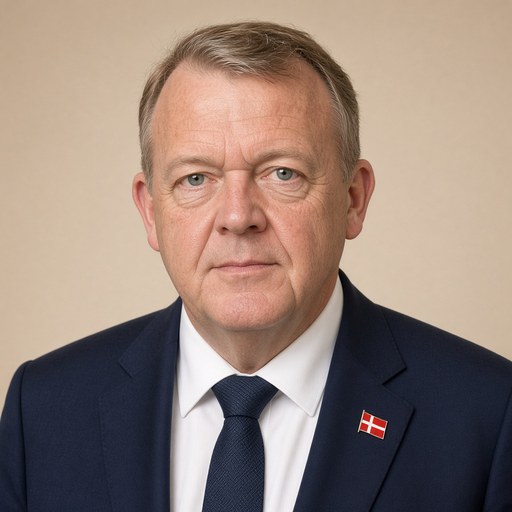
The Prime Minister's speech at the Liberal Party's climate conference "Denmark as a Green Winner Nation" on May 5, 2009.
 Lars Løkke Rasmussen · Prime Minister of Denmark
- Context
- Rasmussen addressed the Liberal Party's climate conference in Denmark on May 5, 2009, arguing for Denmark's role as a green economic leader ahead of COP15.
- Main themes
- Green economy transition, climate change and CO2 emissions, Denmark as a green leader, energy security, green growth and competitiveness, liberal market-based environmental policy, renewable energy opportunities, global prosperity and sustainability, tax policy for environmental goals
- Duration
- ~14 min
- Words
- 1,653
- Sentences
- 138
- Readability
- 60
- Grade
- 7.9
- Syntax
- 2.40
- Vocabulary
- 2.01
Translated from Danish
The broad sphere of national life a sentence belongs to. Every sentence has an Arena, so it is the denominator the other indices are read against.
Other138 sentences in 62 paragraphs
Thank you for the invitation to speak today. And thanks to Lars Christian and to the Liberal Party's network for the great work in organizing this conference.
I can see from the program that you have covered a lot of ground throughout the day.
1. Denmark must lead on the green agenda
The green challenge is high on the Liberal Party's agenda. And it will remain there. We are in the midst of a serious economic crisis. This causes some countries to scale back their green ambitions. But that is a very short-sighted strategy.
There are several compelling reasons why we must hold on to the green agenda.
Climate.
We are about 500 million Europeans and 300 million Americans who, over the past half-century, have experienced an explosive increase in our prosperity. A prosperity that is built on technology driven by polluting fuels. And which has left its mark on the Earth's climate.
In 2020, there will be about 700 million Chinese in the ranks of the well-off compared to only around 100 million in 2006. And now it is really starting to accelerate. In 10-15 years, it is expected that millions of Indians will also join.
That is how it should be. It is, of course, very positive that more and more people are sharing in growth and prosperity. But it means that we must turn the CO2 curve at a time when we are increasingly driving development in the wrong direction.
Therefore, there is only one way forward: We must transition to a green economy, where we ultimately make ourselves completely independent of polluting fuels such as oil, coal, and gas.
Security.
The security angle pulls in the same direction. In Denmark, we are self-sufficient in oil and gas, but only for another 5-10 years. Then the party is over. Then we, like most other Western countries, can become dependent on energy imports from unstable regimes. That is certainly not in our interest.
Growth.
The transition to a green society is not only necessary for the sake of climate and security. It will also drive future growth. That is also why we must hold on to the green agenda, even though the crisis is biting.
The good news is that the green economy is actually possible, without us having to roll back development. We must use our knowledge, initiative, and new ideas to continue to become richer – just without destroying the earth we live on.
I note that there is a clear and encouraging point in the cold figures for CO2 emissions: There is no clear correlation between a country's prosperity and CO2 emissions.
Each American emits 20 tons of CO2 per year. How much do you and I emit? 10 tons each. The CO2 emissions per Dane are therefore only half that of an American, even though we are roughly equally wealthy.
One can thus achieve the same prosperity for 10 tons as for 20 tons. How can we then get down to 4 or 2, without it affecting prosperity? That is the big question for the future all over the world.
The regions, countries, and companies that can answer that question will also be at the forefront of future competition. Those who are ahead of the game with the green agenda will also have the greatest prosperity in 10, 15, and 20 years.
And Denmark is far ahead. So far that President Obama recently mentioned the Danish example as a model for the USA.
The transition to a green economy offers Denmark great opportunities. When the crisis turns, everyone will return to the green agenda. Therefore, we must hold on so that we are ready to take on the competition.
Let me give some examples.
If the USA increases its share of wind power from 1 percent of energy production to 20 percent, it can cut CO2 emissions by 10 percent.
If China uses more efficient pumps in homes and industry, the Chinese can cut CO2 emissions by 25 percent. And save what corresponds to a three-digit billion amount in Danish kroner every year.
If European buildings are better insulated, Europe can reduce energy consumption in buildings by 20 percent. And, once the investment is paid back, consumers can save 600 billion Danish kroner a year.
Here is a global market for Danish wind turbines, pumps, and insulation materials.
2. The green agenda must be liberal
The green is not a hippie movement. It is a green growth movement. And thus, it is a clear liberal task to push for green changes.
We must combine considerations for the environment and climate with growth and private initiative. Therefore, the green agenda is not red. It is blue.
The market:
The government will not tie itself down with rigid requirements. We will use market forces to get the most environmental benefit for the money. We will set clear and transparent rules so that the market itself pulls in the right direction. This ensures the transition to a climate-friendly economy. Not only in Denmark. Not only in the EU. But globally.
That is exactly what we are doing in the tax area. It is smart to have high taxes on what we want less of – pollution – and low taxes on what we want more of – work.
We must also use the international market. It is tenfold better that we lift a rule that applies across the EU, rather than only thinking about tightening the rules here at home. It means more for the environment because Denmark is, after all, only a small part of the world. And it is also better for dynamism and competitiveness.
Knowledge:
We must invest in knowledge and research so that we can realize the growth opportunities in the green economy.
Denmark must be a green technology laboratory, where we research, develop, test, and demonstrate new technologies. Just as we are already among the best in wind turbines, biomass, hydrogen, and fuel cells.
Credibility:
It is no easy task to ramp up green ambitions. The art is to make it realistic and credible.
The government has set the ambitious goal that Denmark must ultimately be completely independent of polluting fuels such as coal, oil, and gas.
We will present a proposal before the next election on how we can achieve this goal. It should not be just talk and grand words. It should be based on professional foundations, socially sustainable, and technically feasible.
It should be classic Liberal: Visionary and realistic.
3. The government is fully engaged
The government is fully engaged in the first steps towards a green economy.
In the spring of 2008, we entered into an ambitious and broad energy agreement that lays new tracks for Danish energy policy.
We have launched a green transport initiative. An initiative that resulted in the most politically broad transport agreement to date on sustainable transport and better infrastructure.
We have presented a strategy for how to reduce energy consumption by three-quarters in new buildings by 2020.
We will present a business climate strategy that combines continued greenhouse gas reductions with new growth opportunities for businesses.
Last Thursday, we published an environmental and agricultural initiative on green growth. An initiative where new green requirements for agriculture go hand in hand with new growth opportunities.
I am fully aware that we are touching on a sensitive issue within the Liberal Party. Are we being too hard on agriculture? I can understand the concern.
But the initiative actually contains a number of improvements for agriculture. We make it easier to expand production. We support the expansion of biogas. We allocate far more money to organic farming.
At the same time, we will solve the environmental problems that actually exist. With waterways that receive too much nitrogen. With pesticide use that has gone in the wrong direction for too many years. With a nature that could be better off.
I believe that we have collectively found a good balance between nature, the environment, and the growth opportunities of agriculture.
The government is therefore fully engaged in the national effort. We are also fully engaged in the groundwork for the major international effort. The climate summit in Copenhagen.
I will say it plainly. It will be a difficult task to reach an agreement. Not least in a time of economic crisis. But at the same time, I note that climate remains high on the international agenda, despite the crisis.
We have seen this in the USA with new clear statements. We have most recently seen it with the statements from the G20 meeting in London.
The government is tirelessly working to ensure that we succeed in reaching an ambitious agreement in Copenhagen in December. Much of my time in the next six months will be spent on preparation. In July, I will participate in a summit with President Obama, the UN Secretary-General, and the world's 17 largest economies.
But the climate summit in Copenhagen is not only a task for the government. It is a task that involves broad groups in society. It is a unique opportunity to brand the entire Danish society.
It is not every day that 2,500 people from almost 80 countries participate in a climate research conference in Copenhagen. They did so in February.
It is not every day that Copenhagen hosts an international business climate summit with 700 business people from around the world. That will happen in May.
It is not every day that we have an international conference for regions and municipalities with the participation of 1,500 people. We have that in June.
I experience a very broad engagement behind the entire green agenda. Denmark is already strong in the future competition for smart green technology and solutions for future consumers and businesses. We must hold on to and develop that strength.
How do we do that best? I am glad to have the opportunity to discuss that with you here today.
The original Danish. The tags above are read on the English translation's sentences.
Tak for invitationen til at tale i dag. Og tak til Lars Christian og til Venstres netværk for det store arbejde med at få konferencen stablet på benene.
Jeg kan se af programmet, at I er kommet vidt omkring i løbet af dagen.
1. Danmark skal ligge i front på den grønne dagsorden
Den grønne udfordring er højt på Venstres dagsorden. Og der bliver den stående. Vi er midt i en alvorlig økonomisk krise. Det får nogle lande til at skrue ned for de grønne ambitioner. Men det er en meget kortsigtet strategi.
Der er flere tungtvejende grunde til, at vi skal holde fast i den grønne dagsorden.
Klima.
Vi er omkring 500 millioner europæere og 300 millioner amerikanere, der gennem det seneste halve århundrede har oplevet en eksplosiv stigning i vores velstand. En velstand, der bygger på en teknologi drevet af forurenende brændsler. Og som har sat sit fingeraftryk på jordens klima.
I 2020 vil der være ca. 700 millioner kinesere i de velstilledes rækker sammenlignet med kun omkring 100 millioner i 2006. Og nu begynder det at gå rigtig stærkt. Om 10-15 år må det forventes, at millioner af indere også kommer med.
Sådan skal det være. Det er selvfølgelig meget positivt, at stadig flere mennesker får del i vækst og velstand. Men det betyder, at vi skal vende CO2-kurven på et tidspunkt, hvor vi bliver flere og flere, der driver udviklingen den forkerte vej.
Derfor er der kun én vej frem: Vi må omstille os til en grøn økonomi, hvor vi på sigt gør os helt uafhængige af forurenende brændsler som olie, kul og gas.
Sikkerhed.
Sikkerhedsvinklen trækker i samme retning. I Danmark er vi selvforsynende med olie og gas, men kun 5-10 år endnu. Så er den fest forbi. Så kan vi ligesom de fleste andre vestlige lande blive afhængige af energiimport fra ustabile regimer. Det er bestemt ikke i vores interesse.
Vækst.
Omstillingen til et grønt samfund er ikke alene nødvendig af hensyn til klima og sikkerhed. Den vil også drive fremtidens vækst. Også derfor skal vi holde fast i den grønne dagsorden, selvom krisen kradser.
Den gode nyhed er, at den grønne økonomi faktisk er mulig, uden vi behøver at rulle udviklingen tilbage. Vi skal bruge vores viden, initiativ og nye idéer til fortsat at blive rigere – bare uden at ødelægge den jord, vi bor på.
Jeg hæfter mig ved, at der i de kolde tal for CO2-udledning er en klar og opmuntrende pointe: Der er ikke nogen klar sammenhæng mellem et lands velstand og CO2 udledning.
Hver amerikaner udleder 20 tons CO2 om året. Hvor meget udleder du og jeg? 10 tons hver. CO2-udledningen per dansker er altså kun den halve af amerikanerens, selvom vi er cirka lige rige.
Man kan altså få den samme velstand for 10 tons som for 20 tons. Hvordan kan man så komme ned på 4 eller på 2, uden det går ud over velstanden? Det er fremtidens store spørgsmål over hele verden.
De regioner, lande og virksomheder, der kan svare på spørgsmålet, de vil også ligge allerforrest i fremtidens konkurrencekapløb. De, der er helt fremme i skoene med den grønne dagsorden, vil også have den største velstand om 10, 15 og 20 år.
Og Danmark er langt fremme i skoene. Så langt, at præsident Obama for nylig nævnte det danske eksempel som et forbillede for USA.
Omstillingen til grøn økonomi giver Danmark store muligheder. Når krisen vender, vender alle tilbage til den grønne dagsorden. Derfor skal vi holde fast, så vi er klar til at tage konkurrencen op.
Lad mig give nogle eksempler.
Hvis USA øger deres andel af vindkraft fra 1 procent af energiproduktionen til 20 procent, så kan de skære 10 pct. på CO2 udledningen.
Hvis Kina bruger mere effektive pumper i boliger og industri, kan kineserne skære CO2-udledningen med 25 procent. Og hvert år spare, hvad der svarer til et trecifret milliard beløb i danske kroner.
Hvis europæiske bygninger bliver bedre isoleret, kan Europa reducere energiforbruget i bygninger med 20 procent. Og, når investeringen er betalt tilbage, kan forbrugerne spare 600 milliarder danske kroner om året.
Her er et verdensmarked for danske vindmøller, pumper og isoleringsmateriale.
2. Den grønne dagsorden skal være liberal
Det grønne er ikke en hippiebevægelse. Det er en grøn-vækst-bevægelse. Og dermed er det en klar liberal opgave at skubbe på de grønne forandringer.
Vi skal kombinere hensyn til miljø og klima med vækst og privat initiativ. Derfor er den grønne dagsorden ikke rød. Den er blå.
Markedet:
Regeringen vil ikke snøre til med firkantede krav. Vi vil bruge markedskræfterne til at få mest miljø for pengene. Vi vil fastsætte klare og gennemsigtige regler, så markedet selv trækker den rigtige vej. Det sikrer overgangen til klimavenlig økonomi. Ikke kun i Danmark. Ikke kun i EU. Men på verdensplan.
Det er præcis, hvad vi gør på skatteområdet. Det er smart at have høj skat på det, vi vil have mindre af – forurening – og lav skat på det, vi vil have mere af – arbejde.
Vi skal også bruge det internationale marked. Det er tifold bedre, at vi får løftet en regel, der gælder i hele EU, frem for kun at tænke på at skærpe reglerne herhjemme. Det betyder mere for miljøet, fordi Danmark trods alt kun er en lille del af verden. Og det er også bedre for dynamik og konkurrenceevne.
Viden:
Vi skal investere i viden og forskning, så vi kan realisere vækstmulighederne i den grønne økonomi.
Danmark skal være et grønt teknologilaboratorium, hvor vi forsker, udvikler, afprøver og demonstrerer nye teknologier. Ligesom vi allerede er blandt de bedste inden for vindmøller, biomasse, brint og brændselsceller.
Troværdighed:
Det er ingen sag at skrue op for de grønne ambitioner. Kunsten er at gøre det realistisk og troværdigt.
Regeringen har sat det ambitiøse mål, at Danmark på langt sigt skal være helt uafhængigt af forurenende brændsler som kul, olie og gas.
Vi vil inden næste valg præsentere et oplæg til, hvordan vi kan nå målet. Det skal ikke være bragesnak og store ord. Det skal være fagligt funderet, samfundsøkonomisk bæredygtigt og teknisk muligt.
Det skal være Venstre-classic: Visionært og realistisk.
3. Regeringen er i fuld gang
Regeringen er i fuld gang med de første skridt mod en grøn økonomi.
Vi indgik i foråret 2008 en ambitiøs og bred energiaftale, der lægger nye spor for dansk energipolitik.
Vi har lanceret et grønt transportudspil. Et udspil, som resulterede i den hidtil politisk bredeste transportaftale om bæredygtig transport og bedre infrastruktur.
Vi har præsenteret en strategi for, hvordan man reducerer energiforbruget med tre fjerdedele i nye bygninger frem mod 2020.
Vi vil præsentere en erhvervsklimastrategi, som kombinerer fortsatte drivhusgasreduktioner med nye vækstmuligheder for erhvervslivet.
I torsdags offentliggjorde vi et miljø- og landbrugsudspil om grøn vækst. Et udspil, hvor nye grønne krav til landbruget går hånd i hånd med nye vækstmuligheder.
Jeg er helt klar over, at vi her rører ved hjerteblod i Venstre. Går vi for hårdt til landbruget? Jeg kan godt forstå bekymringen.
Men udspillet indeholder faktisk en række forbedringer for landbruget. Vi gør det lettere at udvide produktionen. Vi støtter udbygning af biogas. Vi sætter langt flere penge af til økologi.
Samtidig vil vi løse de miljøproblemer, som rent faktisk er der. Med vandløb, der får for meget kvælstof. Med et pesticidforbrug, der i for mange år er gået i den forkerte retning. Med en natur, der kunne have det bedre.
Jeg mener, at vi samlet har fundet en god balance mellem natur, miljø og landbrugets vækstmuligheder.
Regeringen er altså i fuld gang med den nationale indsats. Vi er også i fuld gang med forarbejdet til den store internationale indsats. Klimatopmødet i København.
Jeg vil sige det ligeud. Det bliver en vanskelig opgave at nå frem til en aftale. Ikke mindst i en økonomisk krisetid. Men samtidig hæfter jeg mig ved, at klimaet fortsat er højt på den internationale dagsorden, trods krisen.
Det har vi set i USA med nye klare udmeldinger. Det har vi senest set med udmeldingerne fra G20-mødet i London.
Regeringen arbejder utrætteligt for, at det skal lykkes at få en ambitiøs aftale i København i december. Meget af min tid det næste halve år vil gå med forberedelsen. Til juli deltager jeg i et topmøde med præsident Obama, FN’s generalsekretær og verdens 17 største økonomier.
Men klimatopmødet i København er ikke alene en opgave for regeringen. Det er en opgave, der involverer brede grupper i samfundet. Det er en unik mulighed for at brande hele det danske samfund.
Det er ikke hver dag 2.500 mennesker fra næsten 80 lande deltager i en klimaforskningskonference i København. Det gjorde de i februar.
Det er ikke hver dag, København arrangerer et internationalt erhvervsklimatopmøde med 700 erhvervsfolk fra hele verden. Det sker i maj.
Det er ikke hver dag, vi har en international konference for regioner og kommuner med deltagelse af 1.500 mennesker. Det har vi i juni.
Jeg oplever et meget bredt engagement bag hele den grønne dagsorden. Danmark står allerede stærkt i fremtidens konkurrence om smart grøn teknologi og løsninger til fremtidens forbrugere og virksomheder. Den styrke skal vi holde fast i og udvikle.
Hvordan gør vi det bedst? Det er jeg glad for at få lejlighed til at diskutere med jer her i dag.