




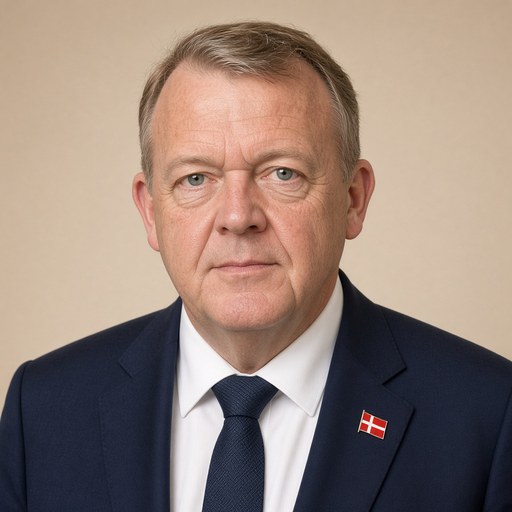
The Prime Minister's speech at the Danish Business Annual Day on May 19, 2009.
 Lars Løkke Rasmussen · Prime Minister of Denmark
- Context
- Rasmussen addressed the Danish Business Annual Day on May 19, 2009, outlining the government's response to the global financial crisis in his first appearance as Prime Minister.
- Main themes
- Economic crisis management, globalization challenges, Danish business competitiveness, government crisis response measures, international economic coordination, unemployment, export and trade decline, financial system support, tax reduction, business liquidity, G20 and EU cooperation, uncertainty in economic forecasting
- Duration
- ~24 min
- Words
- 2,835
- Sentences
- 237
- Readability
- 62
- Grade
- 7.6
- Syntax
- 2.52
- Vocabulary
- 2.10
Translated from Danish
The broad sphere of national life a sentence belongs to. Every sentence has an Arena, so it is the denominator the other indices are read against.
Other237 sentences in 87 paragraphs
Thank you for the invitation to speak at Dansk Erhverv's Annual Day. I am pleased to have this opportunity to meet a significant and broad circle of businesses. For the first time in my new role as Prime Minister.
Is Denmark ready for the challenges of globalization? That is the theme you have set on the agenda today. A theme that is significant, even though we are in the midst of a serious economic crisis. Yes, not least because we are in a crisis.
For most of you business leaders, both the crisis and globalization are fundamental conditions in your daily work. They are also fundamental conditions in my and the government's work.
1. Managing the economic crisis is the absolutely dominant task
Managing the crisis is the government's most important task. We must defend and develop Danish society in the face of the greatest economic storm in generations. It is a situation that calls for strong leadership.
The government will do everything in our power to get Denmark, the Danes, and Danish businesses through the crisis with the fewest possible scars, with the fewest possible unemployed, and with the fewest possible human costs.
We will do everything we can. But I cannot promise any miracle cure.
I will say it plainly. The task is difficult. It is so for three reasons: The crisis is global. The crisis is deep. And it is characterized by great uncertainty.
The crisis is global:
The crisis has spread incredibly quickly. It has hit most countries in the world at once. This is a significant difference from the economic crisis of the 1930s, when countries were not as tightly woven together.
On the positive side, it is worth noting that countries around the world are largely managing to work together to contain the crisis. Both within the EU and globally under the auspices of the G20.
Here, the situation today differs again from the 1930s. Back then, countries closed themselves off and thereby put the world economy further in reverse. This is an important historical lesson we must learn from. We must not shut down the global dynamics.
That the crisis is global sets some limits on Denmark's capabilities. We have strengthened access to export credit. But small Denmark cannot boost export markets. That goes without saying. We cannot prevent an export company like Vestas from having to lay off employees, as we saw last month. We might as well say it as it is.
The crisis is deep:
We are facing the deepest global crisis in generations. In almost all rich countries, production has fallen in the last six months. The OECD expects a global production decline of up to 3 percent this year and a decline in world trade of over 13 percent.
In Denmark, we have created our wealth and prosperity through trade with other countries. Therefore, the international downturn also casts dark shadows through the Danish economy and Danish businesses.
This applies not only to traditional export companies. All types of businesses are dependent on the outside world. The crisis is therefore also affecting Dansk Erhverv's member companies – for trade, for consultants, for the experience industry, for transport, and for services. You unfortunately know all about that.
Since last summer, unemployment in Denmark has increased by 35,000 people. And for the company that must downsize. For the person who loses their job. For the family that is affected, it is infinitely uninteresting that the increase has occurred from a historically low level. It is a very serious situation. And it will get worse before it gets better.
The crisis is characterized by uncertainty:
How deep will the crisis be? When will it turn around? I do not know. You do not know. Experts around the world do not know. We might as well honestly acknowledge that to each other. And act accordingly.
The crisis is therefore both global, deep, and uncertain. And that places high demands on the policy we can and must pursue.
The government is working for an actively internationally coordinated crisis policy – because the crisis is global.
The government prioritizes managing the crisis above all other tasks – because the situation is serious.
The government is constantly monitoring developments closely and intervening where needed – because the crisis is characterized by uncertainty.
We have
a responsible growth strategy with a long series of targeted interventions:
We have supported the financial system by making up to 100 billion DKK available as responsible capital.
We have reduced taxes in 2009.
We have increased business liquidity by approximately 60 billion DKK by extending credit periods for VAT and payroll tax. This has been a request from Dansk Erhverv. The longer credit periods can be felt in many businesses. And the government has just proposed to extend the scheme through the autumn – when it was initially only until August.
We have also improved the export credit scheme by 30 billion DKK.
We have allowed for the withdrawal of special pension savings. We do not yet know how many will take advantage of this. But it seems that the release could increase household consumption by perhaps up to 9 billion DKK.
We have passed historically large personal tax cuts, which initially stimulate the economy by up to 15 billion DKK in 2010. But which are of course fully financed in the long term.
We have lifted the municipal investment framework, accelerated public investments, and allocated one and a half billion DKK to a renovation fund.
Overall, this long series of initiatives means that we are pursuing a very expansive policy in Denmark. One of the most expansive in all of the EU.
At the same time – and perhaps most importantly – we still have economic room for new interventions if it proves necessary. We have not exhausted our options. For example, we can discuss accelerating investments when we negotiate about the municipalities' finances. And in connection with the finance bill for 2010. But as I said, that is something we will assess continuously.
I know that some in the debate believe that we should implement a large crisis package here and now. But I do not believe that a sum, a snap of the fingers, or a magic trick can make the crisis go away. I believe it would lead to a situation of irresponsible indebtedness. And harm businesses' ability to compete.
It is crucial that the economic easing occurs in the right scope and at the right time.
Therefore, it is the government's policy to act continuously and purposefully. We must use the entire toolbox. Not just the big hammer. We must keep Denmark on track.
So far, we have succeeded quite well. This is shown by the many international surveys where Denmark ranks at the top: We are the most attractive and open country in the world for foreign investments. We are in the top 3 in the world in terms of business conditions, reform capacity, and competitiveness.
2. Globalization reform - The government has shown timely prudence and will continue to develop the reform
The world economy is downshifting, but it will rev up again, and we must be ready for global competition. Through globalization, Denmark has gained good opportunities to offer the whole world our ideas and our services. We must take advantage of that.
In the old-fashioned closed societies, people lived their own lives with limited opportunities and limited risks. The merchant stayed at his counter. A son followed in his father's footsteps. That is no longer the case. And that is a good thing.
In modern open societies, the rewards are enormous if we are skilled enough. Conversely, we risk losing jobs and prosperity if we fail to be competitive.
In the global world, the merchant's daughter can become a lawyer in New York – or sell goods to the entire world market. Provided, of course, that the business is run at a world-class level. We must – to stay with the metaphor – be right at the front of the counter and have top-notch pencils to keep up.
All countries are tightening their belts. Countries like China and India. And that is a positive development for both them and us. For their new prosperity equals new markets for us.
But at the same time, these new countries are breathing down our necks. And to keep ourselves at the forefront, Denmark must invest massively in education, research, and knowledge. Here, the government has shown timely prudence with the globalization reform, which we launched three years ago, and whose 350 initiatives we are in the process of implementing.
Prior to the strategy, there was a broad and open debate, to which Dansk Erhverv also contributed and continues to contribute. A debate that has helped ensure that Danes today stand out significantly from the rest of Europe when it comes to attitudes towards globalization.
In recent years, Danes have become significantly more enthusiastic about globalization – while the rest of the EU has unfortunately become significantly more concerned.
In Denmark, 8 out of 10 see globalization as a positive opportunity. In the entire EU, it is only 4 out of 10. Denmark is a clear winner in terms of readiness for globalization. This picture is confirmed by the survey that Dansk Erhverv has conducted.
With the globalization reform, the government has allocated nearly 40 billion DKK up to 2012 for education, research, innovation, entrepreneurship, and adult and continuing education. It is a long-term investment. It is an investment in the future. But we can already see the first results sprouting from primary school to universities.
We have made significant efforts to improve the academic level in primary schools
. This is now reflected in the results for reading in the lower grades. We must continue down this path. We must give all children the opportunity to develop to the fullest extent of their curiosity.
Twenty years ago, 8 out of 10 Danes completed a youth education
. That was good enough back then. Today, it is still 8 out of 10. And that is not nearly good enough for future competition.
The government has set the ambitious goal that nearly all young people should complete a youth education. And we are pushing to ensure that it goes in the right direction.
We have reformed vocational education. We have introduced basic courses with fixed classes and close teacher contact. We have introduced mentoring schemes and tiered education. And dropout rates are on the decline.
But young people must also be able to get an internship. Therefore, it is concerning that in the past year, 3,600 fewer internships have been created than the year before. We risk – if we do not focus sufficiently on this – that a number of young people will be squeezed out by the crisis.
Therefore, we are now – together with the parties behind the globalization agreement – providing businesses with a helping hand to create more internships. Companies that create internships will now receive a subsidy of 2,000 DKK per month for the first 3 months of the trial period. And then a bonus of 10,000 DKK if they hire the young person – a total of 16,000 DKK. This is a helping hand that I strongly encourage you to take advantage of.
And here it is very positive that Dansk Erhverv is running a student campaign together with HK. Crisis or not. You will need well-educated labor when we are on the other side again.
We need educated labor at all levels. Twenty years ago, one-third of Danes completed a higher education
. That was world-class back then. Today, more is needed to stay at the forefront. We are now up to 47 percent. That is approaching world-class.
We are pushing forward. The proportion is increasing. It is going in the right direction towards the government's ambitious goal: That at least half of a youth cohort should complete a higher education by 2015.
Everyone should have the opportunity to pursue a good education. But we must also be prepared to continually further educate ourselves or change paths. Nearly one in three adult Danes continues their education. In the entire EU, it is less than one in ten. We are therefore more than three times above the EU average. That is impressive. And it is necessary.
In a global world, we must learn from abroad
. The government has made it possible for students to take the money it would cost to educate them in Denmark to a university abroad. Last year, 8,300 Danes studied abroad. And we have 15,300 foreign students in Denmark. That is quite respectable for a small non-English speaking country.
And we must also attract educated labor from outside. Immigration of highly educated labor has increased in recent years. Just in the past two years, twice as many job cards and green cards have been issued to foreign specialists and others that we need here in the country. And despite the crisis, there are more foreign researchers and specialists in Denmark than ever before.
We have thus achieved good results with the globalization reform throughout the education system. But we must also always be ready to adjust course and implement new initiatives. Here, I completely align with the analysis that Dansk Erhverv has published for today's conference.
We have continuously followed up on the work in the Globalization Council, where Dansk Erhverv also participates. Just as I and the other ministers in the government are in close dialogue with Dansk Erhverv on these issues. As on the day today. I place great importance on that.
In the autumn, we plan to allocate more funds from the globalization pool. Here, we must think about how we can do something extra to achieve the ambitious goals in the education sector.
We must do even more to ensure that the weak and school-weary students who today drop out of vocational education receive a youth education. And we must ensure even more that the education is tailored to this group – and not the other way around, trying to fit the young people into the education system.
We must not let anyone fall through the cracks. And certainly not now, when we have better opportunities to reach the young than we have had in many years.
3. The government will continue to strengthen integration in the Øresund region
We live in a world where the global citizen, the global employee, and the global company are no longer limited by the chalk lines of nation-states.
We have an example of this right outside the doors of the Bella Center: The Øresund region.
I will conclude with this very concrete case of the joys and challenges of globalization. A case that also has the attention of Dansk Erhverv.
The Øresund region is one of the most integrated cross-border regions in Europe. More than 17,000 people commute daily between homes on one side of the strait and work on the other.
This entire development has emerged because citizens and businesses see the opportunities in integration. Think globally – and act regionally.
As Danish service companies, you are an important driving force behind the integration. Many of you have Swedes employed – especially in shops and restaurants. Several of you are established in Sweden. Many of you collaborate with Swedish companies.
The political task is to make the movement across the strait as smooth as possible. Citizens and businesses must not stumble over tax rules, social rules, and so on.
The task is not easy. After all, it is two of the world's most highly regulated societies that an increasing number of people are commuting between.
But it is not insurmountable either. For we do not need to harmonize all rules. We must primarily eliminate uncertainty. We need to clarify which rules apply in which situations – and provide clear information about it. So that you as businesses and employers know what you have to adhere to.
And it has been successful in solving a number of practical problems, especially in the labor market. For example, regarding tax, illness, and parental leave. Problems that Dansk Erhverv has helped to raise.
Of course, there are still stones in the shoe. But all in all, it has actually been possible to create an integrated region in just 10-15 years. And the integration will become closer and closer in the coming years as well. Because citizens and businesses see the opportunities.
The Øresund region is a Danish-Swedish internal market where goods, labor, and knowledge should be able to move freely. It is the same issue that you will discuss this afternoon – just on an EU level.
My point is that globalization is not just trade with China on the other side of the globe. It is also when the Swedish employee in Fields – just around the corner – greets us with a "hejsan."
Globalization is right here.
Wishing you a continued successful annual meeting. Thank you for the floor.
The original Danish. The tags above are read on the English translation's sentences.
Tak for invitationen til at tale på Dansk Erhvervs Årsdag. Jeg er glad for denne lejlighed til at møde en vigtig og bred kreds af virksomheder. For første gang i mit nye job som statsminister.
Er Danmark parat til globaliseringens udfordringer? Det er det tema, I har sat på dagsordenen i dag. Et tema, som er væsentligt, selvom vi er midt i en alvorlig økonomisk krise. Ja, ikke mindst fordi, vi er midt i en krise.
For de fleste af jer virksomhedsledere er både krisen og globaliseringen grundvilkår i jeres daglige arbejde. Det er også grundvilkår i mit og regeringens arbejde.
1. Håndteringen af den økonomiske krise er den helt dominerende opgave
Håndteringen af krisen er regeringens absolut vigtigste opgave. Vi skal forsvare og udvikle det danske samfund under det største økonomiske stormvejr i generationer. Det er en situation, der kalder på et stærkt lederskab.
Regeringen vil gøre alt, der står i vores magt, for at få Danmark, danskerne og dansk erhvervsliv gennem krisen med færrest mulige skrammer, med færrest muligt ledige og med færrest muligt menneskelige omkostninger.
Vi vil gøre alt, hvad vi kan. Men jeg kan ikke love nogen mirakelkur.
Jeg vil sige det ligeud. Opgaven er vanskelig. Det er den af tre grunde: Krisen er global. Krisen er dyb. Og den er præget af stor usikkerhed.
Krisen er global:
Krisen har bredt sig utroligt hurtigt. Den har ramt størstedelen af verdens lande på én gang. Det er en væsentlig forskel fra den økonomiske krise i 30’erne, hvor landene ikke var lige så tæt vævet ind i hinanden.
På den positive side tæller, at verdens lande i høj grad formår at spille sammen om at dæmme op for krisen. Både inden for EU og globalt i regi af G20.
Her adskiller situationen i dag sig igen fra 30’erne. Dengang lukkede landene sig om sig selv og satte dermed verdensøkonomien yderligere i bakgear. Det er en vigtig historisk erfaring, vi skal lære af. Vi må ikke lukke og slukke for den globale dynamik.
At krisen er global, sætter nogle grænser for Danmarks formåen. Vi har styrket adgangen til eksportkredit. Men lille Danmark kan ikke booste eksportmarkederne. Det siger sig selv. Vi kan ikke forhindre, at en eksportvirksomhed som Vestas må afskedige medarbejdere, som vi så det i sidste måned. Det kan vi lige så godt sige, som det er.
Krisen er dyb:
Vi står i den dybeste globale krise i generationer. I næsten alle de rige lande er produktionen faldet i de sidste 6 måneder. OECD forventer på verdensplan et fald i produktionen på op mod 3 procent i år og et fald i verdenshandelen på over 13 procent.
I Danmark har vi skabt vores rigdom og velstand i samhandel med andre lande. Derfor trækker den internationale nedtur også mørke spor gennem dansk økonomi og dansk erhvervsliv.
Det gælder ikke alene de traditionelle eksportvirksomheder. Alle typer af virksomheder er afhængige af omverdenen. Krisen kradser derfor også for Dansk Erhvervs medlemsvirksomheder – for handelen, for rådgiverne, for oplevelsesindustrien, for transport og for service. Det ved I desværre alt om.
Siden sidste sommer er ledigheden i Danmark vokset med 35.000 mennesker. Og for den virksomhed, der må indskrænke. For det menneske, der mister sit arbejde. For den familie, der bliver berørt, er det uendelig uinteressant, at stigningen er sket fra et historisk lavt niveau. Det er en meget alvorlig situation. Og det bliver værre, før det bliver bedre
Krisen er præget af usikkerhed:
Hvor dyb bliver krisen? Hvornår vender det? Jeg ved det ikke. I ved det ikke. Alverdens eksperter ved det ikke. Det kan vi lige så godt ærligt erkende over for hinanden. Og handle derefter.
Krisen er altså både global, dyb og usikker. Og det stiller høje krav til den politik, vi kan og skal føre.
Regeringen arbejder for en aktiv internationalt koordineret krisepolitik – fordi krisen er global.
Regeringen sætter håndteringen af krisen over alle andre opgaver – fordi situationen er alvorlig.
Regeringen følger hele tiden udviklingen tæt og griber ind, hvor der er brug for det – fordi krisen er præget af usikkerhed.
Vi har
en ansvarlig vækststrategi med en lang række målrettede indgreb:
Vi har understøttet det finansielle system ved at stille op imod 100 mia. kr. til rådighed som ansvarlig kapital
Vi har lettet skatten i 2009.
Vi har øget erhvervslivets likviditet svarende til omkring 60 mia. kr. ved at forlænge kredittiderne for moms og a-skat. Det har været et ønske fra Dansk Erhverv. De længere kredittider kan mærkes i mange virksomheder. Og regeringen har netop foreslået at forlænge ordningen gennem efteråret – hvor det først kun var til august.
Vi har også forbedret eksportkreditordningen med 30 mia. kr.
Vi har givet mulighed for at få udbetalt den særlige pensionsopsparing. Vi ved ikke endnu, hvor mange der vil gøre brug af det. Men det ser ud til, at frigivelsen kan øge husholdningernes forbrug med måske op til 9 mia. kr.
Vi har vedtaget historisk store personskattelettelser, som i første omgang stimulerer økonomien med op mod 15 mia. kr. i 2010. Men som naturligvis er fuldt finansierede på sigt.
Vi har ophævet den kommunale anlægsramme, fremrykket offentlige investeringer og afsat halvanden mia. kr. til en renoveringspulje.
Samlet betyder hele denne lange række af initiativer, at vi fører en meget ekspansiv politik i Danmark. En af de allermest ekspansive i hele EU.
Samtidig – og nok allervigtigst – har vi stadig økonomisk råderum til nye indgreb, hvis det viser sig at være nødvendigt. Vi har ikke udtømt vores handlemuligheder. Fx kan vi drøfte fremrykning af investeringer, når vi forhandler om kommunernes økonomi. Og i forbindelse med finansloven for 2010. Men det er som sagt noget, vi vil vurdere løbende.
Jeg ved godt, at nogle i debatten mener, at vi burde sætte ind med en stor krisepakke her og nu. Men jeg tror ikke på, at et beløb, et fingerknips eller et trylleslag kan få krisen til at gå væk. Jeg tror, det ville føre ud i en situation med uansvarlig gældsætning. Og skade virksomhedernes mulighed for at konkurrere.
Det er afgørende, at de økonomiske lempelser sker i rette omfang og på rette tidspunkt.
Derfor er det regeringens politik at sætte ind løbende og målrettet. Vi skal bruge hele værktøjskassen. Ikke bare den store hammer. Vi skal holde Danmark på sporet.
Det er hidtil lykkedes ganske godt. Det viser de mange internationale undersøgelser, hvor Danmark ligger i top: Vi er det land i verden, der er mest attraktivt og åbent for udenlandske investeringer. Vi er i verdens top 3 målt på erhvervsvilkår, reformevne og konkurrenceevne.
2. Globaliseringsreform - Regeringen har vist rettidig omhu og vil fortsat udvikle reformen
Verdens økonomi er nede i gear, men den kommer i omdrejninger igen, og så skal vi være klar til den globale konkurrence. I kraft af globaliseringen har Danmark fået gode muligheder for at tilbyde hele verden vores ideer og vores ydelser. Det skal vi udnytte.
I de gammeldags lukkede samfund levede man sin egen tilværelse med begrænsede muligheder og begrænset risiko. Købmanden blev ved sin disk. En søn fulgte i sin fars fodspor. Sådan er det ikke længere. Og godt for det.
I de moderne åbne samfund er gevinsterne enorme, hvis vi er dygtige nok. Omvendt risikerer vi at miste jobs og velstand, hvis vi ikke evner at være konkurrencedygtige.
I den globale verden kan købmandens datter blive advokat i New York – eller sælge varer til hele verdensmarkedet. Hvis forretningen vel at mærke drives i verdensklasse. Vi skal – for at blive i billedet – være helt fremme over disken og have topspidse blyanter for at følge med.
Alle lande strammer sig an. Lande som Kina og Indien. Og det er en positiv udvikling for både dem og os. For deres nye velstand er jo lig med nye markeder for os.
Men samtidig puster de nye lande os i nakken. Og for at holde os fremme i feltet, må Danmark satse massivt på uddannelse, forskning og viden. Her har regeringen vist rettidig omhu med globaliseringsreformen, som vi lancerede for tre år siden, og hvis 350 initiativer vi er ved at have ført ud i livet.
Forud for strategien gik en bred og åben debat, som også Dansk Erhverv bidrog til og fortsat bidrager til. En debat, der har medvirket til, at danskerne i dag skiller sig markant ud fra resten af Europa, når det gælder holdninger til globaliseringen.
Danskerne er i de senere år blevet markant mere globaliseringsbegejstrede – mens resten af EU desværre er blevet markant mere bekymrede.
I Danmark ser 8 ud af 10 globaliseringen som en positiv mulighed. I hele EU er det kun 4 ud af 10. Danmark er en klar vinder på globaliseringsparathed. Det billede bekræftes af den undersøgelse, Dansk Erhverv har udarbejdet.
Med globaliseringsreformen har regeringen tilført tæt på 40 mia. kr. frem til 2012 til uddannelse, forskning, innovation, iværksætteri og voksen- og efteruddannelse. Det er en langsigtet investering. Det er en investering i fremtiden. Men vi kan allerede se de første resultater spire frem hele vejen fra folkeskole til universiteter.
Vi har sat kraftigt ind for at forbedre det faglige niveau i
folkeskolen
. Det viser sig nu i resultaterne for læsning i de mindre klasser. Vi skal videre af den vej. Vi skal give alle børn mulighed for at udvikle sig helt ud til egen grænse af deres videbegærlighed.
For 20 år siden gennemførte 8 ud af 10 danskere en
ungdomsuddannelse
. Det kunne være godt nok dengang. I dag er det stadig 8 ud af 10. Og det er slet ikke godt nok til fremtidens konkurrence.
Regeringen har sat det ambitiøse mål, at så godt som alle unge skal gennemføre en ungdomsuddannelse. Og vi skubber på, så det kan gå den rigtige vej.
Vi har reformeret erhvervsuddannelserne. Vi har indført grundforløb med faste hold og tæt lærerkontakt. Vi har indført mentorordninger og trindeling. Og frafaldet er på vej ned.
Men de unge skal også kunne få en praktikplads. Derfor er det bekymrende, at der det seneste år er oprettet 3.600 færre praktikpladser end året før. Vi risikerer – hvis ikke vi har tilstrækkelig fokus på det - at en række unge bliver klemt af krisen.
Derfor giver vi nu – sammen med partierne bag globaliseringsaftalen – virksomhederne en håndsrækning til at skaffe flere praktikpladser. Virksomheder, der opretter praktikpladser, får nu et tilskud på 2.000 kr. om måneden de første 3 måneder i prøvetiden. Og så en bonus oven i hatten på 10.000 kr. , hvis man ansætter den unge – altså i alt 16.000 kr. Det er en håndsrækning, som jeg kraftigt vil opfordre jer til at tage imod.
Og her er det meget positivt, at Dansk Erhverv er i gang med en elevkampagne sammen med HK. Krise eller ej. I får brug for veluddannet arbejdskraft, når vi er ude på den anden side igen.
Vi har brug for uddannet arbejdskraft på alle niveauer. For 20 år siden gennemførte en tredjedel af danskerne en
videregående uddannelse
. Det var verdensklasse dengang. I dag skal der mere til for at ligge i front. Vi er nu oppe på 47 procent. Det nærmer sig verdensklasse.
Vi skubber på. Andelen er stigende. Det går den rigtige vej mod regeringens ambitiøse mål: At mindst halvdelen af en ungdomsårgang skal gennemføre en videregående uddannelse i 2015.
Alle skal have mulighed for at tage en god uddannelse. Men vi må også være parate til hele tiden at
videreuddanne os
eller skifte spor. Næsten hver tredje voksne dansker efteruddanner sig. I hele EU er det mindre end hver tiende. Vi ligger altså mere end tre gange over EU-gennemsnittet. Det er flot. Og det er nødvendigt.
I en global verden skal vi
lære af udlandet
. Regeringen har gjort det muligt, at studerende kan tage de penge, det ville koste at uddanne dem i Danmark, med til et universitet i udlandet. Sidste år studerede 8.300 danskere i udlandet. Og vi har 15.300 udenlandske studerende i Danmark. Det er ret pænt for et lille ikke-engelsktalende land.
Og vi skal også tiltrække uddannet arbejdskraft udefra. Indvandringen af højtuddannet arbejdskraft er steget de senere år. Bare inden for de seneste to år er der givet dobbelt så mange jobkort og greencards til udenlandske specialister og andre, som vi har brug for her i landet. Og trods krisen er der flere udenlandske forskere og specialister i Danmark end nogensinde før.
Vi har altså opnået gode resultater med globaliseringsreformen hele vejen gennem uddannelsessystemet. Men vi skal også hele tiden være klar til at justere kursen og sætte ind med nye indsatser. Her er jeg helt på linje med den analyse, Dansk Erhverv har offentliggjort til dagens konference.
Vi har løbende fulgt op på arbejdet i Globaliseringsrådet, hvor Dansk Erhverv også deltager. Lige som jeg selv og regeringens øvrige ministre er i tæt dialog med Dansk Erhverv om disse temaer. Som på dagen i dag. Det lægger jeg stor vægt på.
Til efteråret skal vi efter planen udmønte flere midler fra globaliseringspuljen. Her må vi tænke ind, hvordan vi kan gøre noget ekstra for at nå de ambitiøse mål på uddannelsesområdet.
Vi skal gøre endnu mere for, at også de svage og skoletrætte elever, der i dag dropper ud af erhvervsuddannelserne, får en ungdomsuddannelse. Og vi skal i endnu højere grad sikre uddannelser, der er tilpasset denne gruppe - og ikke den anden vej rundt, forsøge at passe de unge ind i uddannelsessystemet.
Vi må ikke tabe nogen på gulvet. Og slet ikke nu, hvor vi har bedre muligheder for at få fat på de unge, end vi har haft i flere år.
3. Regeringen vil fortsat styrke integrationen i Øresundsregionen
Vi lever i en verden, hvor den globale borger, den globale medarbejder og den globale virksomhed ikke længere lader sig begrænse af nationalstaternes kridtstreger.
Det har vi et eksempel på lige her uden for Bella Centerets døre: Øresundsregionen.
Jeg vil runde af med denne helt konkrete case på globaliseringens glæder og udfordringer. En case, som også har Dansk Erhvervs opmærksomhed.
Øresundsregionen er en af de mest integrerede grænseoverskridende regioner i Europa. Mere end 17.000 mennesker pendler dagligt mellem bolig på den ene side af Sundet og arbejde på den anden.
Hele denne udvikling er vokset frem, fordi borgere og virksomheder ser mulighederne i integrationen. Tænker globalt – og handler regionalt.
Som danske servicevirksomheder er I en vigtig drivkraft bag integrationen. Mange af jer har svenskere ansat – især inden for butikker og restauranter. Flere af jer er etableret i Sverige. Flere af jer samarbejder med svenske virksomheder.
Den politiske opgave er at gøre bevægelsen over sundet så gnidningsfri som muligt. Borgere og virksomheder må ikke snuble over skatteregler, sociale regler og så videre.
Opgaven er ikke let. Det er trods alt to af verdens absolut mest gennemregulerede samfund, som et stigende antal mennesker pendler imellem.
Men den er heller ikke uoverkommelig. For vi skal jo ikke harmonisere alle regler. Vi skal først og fremmest eliminere usikkerheden. Vi skal afklare, hvilke regler der gælder i hvilke situationer – og give klar information om det. Så I som virksomheder og arbejdsgivere ved, hvad I har at holde jer til.
Og det er lykkedes at løse en række praktiske problemer, især på arbejdsmarkedet. Fx om skat, sygdom og barsel. Problemer som Dansk Erhverv har været med til at rejse.
Selvfølgelig er der stadig sten i skoen. Men alt i alt er det faktisk lykkedes at skabe en integreret region i løbet af bare 10-15 år. Og integrationen vil blive tættere og tættere også i de kommende år. Fordi borgere og virksomheder ser mulighederne.
Øresundsregionen er et dansk-svensk indre marked, hvor varer, arbejdskraft og viden skal kunne bevæge sig frit. Det er samme problemstilling, som I skal diskutere i eftermiddag – bare på EU-plan.
Min pointe er, at globalisering ikke alene er handel med Kina på den anden side af kloden. Det er også, når den svenske medarbejder i Fields – her rundt om hjørnet – hilser os med et ”hejsan”.
Globaliseringen er lige her.
Fortsat godt årsmøde. Tak for ordet.