




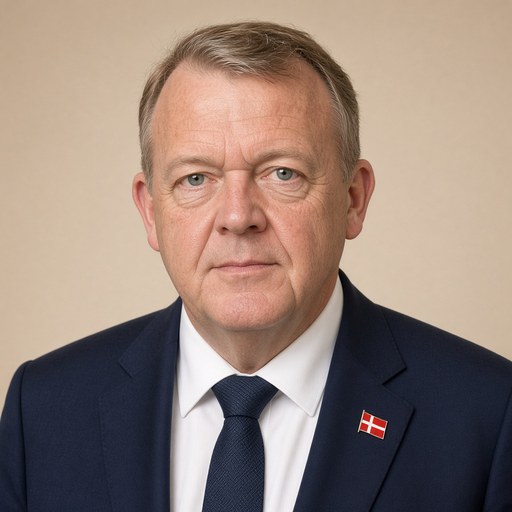
Prime Minister Lars Løkke Rasmussen's speech at DI's business policy summit "Don't stop thinking about tomorrow" on September 29, 2009.
 Lars Løkke Rasmussen · Prime Minister of Denmark
- Context
- Rasmussen addressed the Danish Industry (DI) business policy summit in Copenhagen on September 29, 2009, outlining Denmark's economic crisis response and growth strategy.
- Main themes
- Economic crisis management, growth and recovery, youth unemployment, business support measures, public investment, Danish industry competitiveness, climate summit, fiscal responsibility, internship placements, government-business cooperation
- Duration
- ~18 min
- Words
- 2,148
- Sentences
- 157
- Readability
- 60
- Grade
- 8.2
- Syntax
- 2.61
- Vocabulary
- 2.04
Translated from Danish
The broad sphere of national life a sentence belongs to. Every sentence has an Arena, so it is the denominator the other indices are read against.
Other157 sentences in 69 paragraphs
Thank you for the invitation to speak at the Danish Industry summit today.
You have put tomorrow on the agenda. And you could hardly have found a better setting for that theme: a former bottling hall converted into a conference and cultural venue.
You have also found good timing. Last night, we held the first meeting of the government's Growth Forum. And there is no doubt that the major political theme in the coming year – in the wake of a hopefully successful climate summit – will be how we ensure that Danish society is ready for renewed growth after the crisis.
Or to use the chairman's metaphor: We must be ready to hit the gas when the road is clear again. And that requires that both the car, the navigation, and our sense of direction are top-notch – otherwise, things can go terribly wrong.
1. The short term: Managing the economic crisis remains the highest priority
Before we lift our gaze to the horizon, I want to emphasize that it is too early to call off the economic crisis. The crisis remains our greatest challenge here and now. I have no doubt that you are fully aware of this and feel it in your daily work.
There is light at the end of the tunnel. And it does not come from an oncoming train. Economists predict a certain renewed growth. But we must be careful not to be blinded by the more positive economic indicators. There is still a long way to go before we reach the sun.
I can illustrate this with the figures for world trade. Trade is beginning to stabilize. But this is happening after a 20 percent decline compared to the level before the crisis.
We also see the first tentative signs in Denmark that consumers are more optimistic. Well aided by the government's easing measures: tax cuts, payouts from the SP, renovation grants... When you put it all together, we get a private purchasing power that is historic. And which will have an increasing effect throughout the autumn.
The government has brought forward investments, so the growth in public investments this year and next year will be greater than in any other two-year period since the happy 60s.
The government has implemented a bank package and a credit package, which we can see clear signs of beginning to work.
We have just, with the Danish People's Party, agreed on a new Business Package with improvements to export credit schemes, growth guarantees, and access to risk capital for new businesses. In total, the Business Package amounts to more than 4 billion kroner.
I think that is a lot of money. Some would have liked to have more. But the status is that when we put all efforts together, Denmark is in the lead among the countries that are doing the most to support the economy.
When we have been able to act so powerfully, it is because we had a healthy economy when the crisis hit us. We acted responsibly in the good times, even though there was no shortage of calls to spend freely. Therefore, we had room to maneuver when the crisis set in. But even room to maneuver has its limits.
There has been a significant change in the bottom line of public finances. We have gone from several years of large surpluses to significant deficits.
This means that the time has come for us to act with caution. We must be careful.
This has been the principle behind the government's crisis policy all along. The government has chosen to implement our initiatives gradually, in a measured and targeted manner. And based on careful monitoring of developments. And we intend to continue as we have started.
In the coming period, the government will have a special focus on youth unemployment. We must expect that unemployment will continue to rise. And there is a particular risk that it may become entrenched among the young.
Therefore, the government is launching a significant package to prevent youth unemployment.
An important part of the package is that we must ensure that young people who are well on their way with an education do not fall by the wayside because they have difficulty finding an internship.
In the spring, we entered into an internship agreement that expanded access to school internships in 2009 by about 1,500 places. But more is needed. This summer, 50 percent more than last year applied for internships. But the number of places has fallen by 27 percent. That is a challenge.
Therefore, we are now allocating 1 billion kroner in 2010 for an extraordinary, targeted effort. This allows for up to 5,000 more internship places.
But money alone will not solve the problem. Therefore, I would like to take this opportunity today, as I stand in a room packed with employers, to strongly urge you to take your share of the responsibility, even in a time when I know it is difficult. So that we do not lose a generation. We must seize the side benefit of the crisis – that we now have the young workforce that we were crying out for just a year or two ago.
We all – both the government and the business community – have a responsibility to ensure that young people in vocational education have full assurance that they can complete their education.
2. The long term: Denmark must be prepared for the post-crisis era
The efforts in the short term are closely linked to the fact that in the long term we must be ready for renewed growth when the global economy picks up again. Our efforts to engage the young also mean that they are ready to get to work when times change.
The government will not let up on crisis management. But we also have a strong focus on our long-term competitiveness.
In the government's budget proposal, we aim for a continued strengthening of knowledge and education. We have a goal of spending one percent of our gross national product on research. We exceed that goal in the budget proposal.
It is also encouraging that, according to the latest figures, nearly 47,000 young people have enrolled in higher education – a record high and 6,000 more than last year. This is the sunny side of the crisis that we must hold on to.
Since 2001, the government has implemented a series of reforms that have moved Denmark forward and strengthened our competitiveness.
We have gradually reduced taxes on work. We have implemented a tax reform of historic dimensions. This has created dynamism and a desire to act.
We have carried out an ambitious globalization reform, where we invest massively in our education and research.
We have gradually reformed the labor market: with stricter availability rules. The 300-hour rule, which has been extended to a 450-hour rule. A cap on unemployment benefits. And a higher retirement age.
I will allow myself to call this government a reform government. And we will continue down the path of reform, step by step.
To further emphasize the forward-looking agenda, the government has established a Growth Forum consisting of 27 forward-thinking women and men. Including participation from Danish Industry. And with a significant representation of top business leaders.
Last night, the government's Growth Forum, as mentioned, held our first meeting at Marienborg.
The purpose of the meeting was to set the framework for our work. To have an open discussion about where Denmark's challenges and strengths lie as we move forward with growth after the crisis. And based on that discussion, to determine where the Growth Forum should focus in our further work.
We must prepare for the fact that the world that emerges after the economic crisis will be changed. The crisis has pushed forward a development that was already underway. A development where Asia is advancing in relation to Europe and the USA. A development where jobs are moving from high-cost countries like Denmark to countries with lower costs.
I see three main challenges for future growth:
First, we face a paradox: Denmark has some of the best framework conditions in the world. This is shown by one recognized international study after another. Yet we can see that Danish productivity has grown less since the mid-90s than in most other OECD countries.
It is a growth paradox that we must find a way out of.
Second, Denmark's competitiveness is under pressure because wages are rising faster than productivity growth allows.
We must have wages and productivity meet.
Third, the financial crisis has put pressure on public finances. Therefore, we cannot just allocate billions to new ideas. I say this not only as a former finance minister but also as the current prime minister.
The rule of the game is a sustainable economy.
Given these challenges, the task for the Growth Forum – and for you top business leaders – is to answer the question: How will it continue to be interesting to run a business and create jobs in Denmark?
The answer requires rethinking. For the crisis has led to job losses that we cannot recreate. Instead, we must innovate.
That is the background for why I have chosen a think tank approach to the work. The Growth Forum does not necessarily have to reach consensus. We do not need to cut down to the lowest common denominator. The purpose is to become wiser. To let the ideas grow.
And last night's meeting showed that the Growth Forum is a fertile ground for ideas. We discussed a number of things. It would be too much to refer to everything, but I will highlight two topics that we will initially give political focus: the public school system and green exports.
I have noted that both the education sector and the green agenda are also important points in the growth plan that Danish Industry has just presented.
Education was a major focus in our discussion last night. We decided to start where the first seeds are sown: in the public school system.
The public school must be the launch pad for first youth education and then further education. With that perspective, the government will initiate a 360-degree review of the public school system, which can serve as input for an upcoming meeting in the Growth Forum.
The next meeting in the Growth Forum will be about the green agenda.
An agenda that is indeed competitive – not least globally.
Had I stood here a year ago, I would probably have given a thunderous speech about all the benefits of green growth. At that time, there were still many who hesitated regarding the opportunities that green growth offers.
Today, the story is quite different. The economic crisis has proven not to be a brake but rather a "kick-starter" for green growth.
Recently, I was in India, which is planning massive investments in solar energy – about 20 billion US dollars over the next 30 years.
India is also doing well in the wind sector. The world's third-largest wind turbine manufacturer is Indian. And the undergrowth is growing. In 2004, India had 7 wind turbine manufacturers – today there are 18!
In China, a new wind turbine is erected every hour. A wind turbine every hour! And it is far from only Vestas turbines. China has seen the opportunities and invested large resources in research and development. And China is now the world's largest exporter of low-energy solutions.
So it is not only the green market that is growing dramatically – international competition is also increasing. The race for the green jersey is well underway.
And Danish companies have good opportunities to be well positioned in the race. In the wind energy market, we are still at the forefront, although competition has intensified significantly.
Danish companies are also at the forefront in the development of biofuels and fuel cells. And in the building sector, Danish companies can provide insulation, window, and other energy-efficient housing solutions of world-class quality.
But we are also challenged, and we must tighten our belts to maintain our position in the race.
Therefore, the government, as part of our green initiative, will present a business climate strategy.
And therefore it is positive that Danish Industry has engaged so strongly in the climate summit in Copenhagen. With DI's roundtable conference in February, where it succeeded in engaging leading business and industry organizations from around the world in the climate agenda. And with your strong commitment to the climate consortium. A commitment for which I would like to say thank you.
* * *
We must together prepare for tomorrow.
This requires that both the government and the business community are fully engaged. I can guarantee you that. I have great confidence that Danish businesses will also live up to their part.
Thank you for your attention. And I wish you all a successful summit.
The original Danish. The tags above are read on the English translation's sentences.
Tak for invitationen til at tale på Dansk Industris topmøde i dag.
I har sat morgendagen på dagsordenen. Og I kunne næppe have fundet en bedre ramme til det tema: en forhenværende tappehal bygget om til konferencer og kultur.
I har også fundet en god timing. I går aftes holdt vi det første møde i regeringens Vækstforum. Og der er ingen tvivl om, at det store politiske tema i det kommende år – i kølvandet på et forhåbentligt veloverstået klimatopmøde – vil blive, hvordan vi sikrer, at det danske samfund står klar til fornyet vækst efter krisen.
Eller for at gribe formandens metafor: Vi skal være klar til at trykke speederen i bund, når der igen er fri bane på vejen. Og det kræver, at både bil, vejvisning og retningssans er i top – ellers kan det gå grueligt galt.
1. Den korte bane: Håndteringen af den økonomiske krise har fortsat højeste prioritet
Før vi løfter blikket mod horisonten, vil jeg dog understrege, at det er for tidligt at afblæse den økonomiske krise. Krisen er fortsat vores største udfordring her og nu. Det er jeg ikke i tvivl om, at I er fuldt opmærksomme på og mærker i jeres daglige arbejde.
Der er lys for enden af tunnelen. Og det kommer ikke fra et modkørende tog. Økonomerne forudser en vis fornyet vækst. Men vi skal passe på ikke at blive blændet af de mere positive nøgletal. Der er stadig lang vej, før vi når ud i solen.
Jeg kan illustrere det ved tallene for verdenshandelen. Handelen er ved at stabilisere sig. Men det sker efter et fald på 20 procent i forhold til niveauet før krisen.
Også i Danmark ser vi de første spæde tegn på, at forbrugerne er mere optimistiske. Godt hjulpet på vej af regeringens lempelser: Skattesænkninger, udbetaling af SP, renoveringstilskud... Når man lægger det hele sammen, får vi en privat købekraft, som er historisk. Og som får stigende effekt hen over efteråret.
Regeringen har fremrykket investeringer, så væksten i de offentlige investeringer i år og til næste år bliver større end i nogen anden to-årig periode siden de glade 60’ere.
Regeringen har gennemført en bankpakke og en kreditpakke, som, vi kan se klare tegn på, er begyndt at virke.
Vi har netop, med Dansk Folkeparti, aftalt en ny Erhvervspakke med forbedringer af eksportkredit-ordningerne, vækstkautionen og adgangen til risikovillig kapital for nye virksomheder. Samlet er Erhvervspakken på mere end 4 milliarder kroner.
Jeg synes, det er mange penge. Nogle ville gerne have haft flere. Men status er, at når vi lægger alle indsatser sammen, så er Danmark i førerfeltet blandt de lande, der gør allermest for at understøtte økonomien.
Når vi har kunnet sætte så kraftfuldt ind, så skyldes det, at vi stod med en sund økonomi, da krisen væltede ind over os. Vi handlede ansvarligt i de gode tider, selvom det ikke skortede på opfordringer til at bruge løs. Derfor havde vi råderum, da krisen satte ind. Men selv et råderum har sine grænser.
Der er sket en markant forandring på bundlinjen af statsfinanserne. Vi er gået fra en årrække med store overskud til markant underskud.
Det betyder, at tiden er kommet, hvor vi må gebærde os med omtanke. Vi skal være påpasselige.
Det har hele vejen igennem været princippet bag regeringens krisepolitik. Regeringen har valgt at gennemføre vores initiativer løbende, veldoseret og målrettet. Og på baggrund af en nøje overvågning af udviklingen. Og vi agter at fortsætte, som vi er startet.
I den kommende tid vil regeringen have et særligt fokus på ungdomsledigheden. Vi må forvente, at ledigheden fortsat vil stige. Og der er en særligt risiko for, at den kan bide sig fast blandt de unge.
Derfor sætter regeringen ind med en markant pakke for at forebygge ungdomsledighed.
En vigtig del af pakken er, at vi skal sikre, at unge, der er godt i gang med en uddannelse, ikke falder af i svinget, fordi de har svært ved at finde en praktikplads.
I foråret indgik vi en praktikpladsaftale, der udvidede adgangen til skolepraktik i 2009 med ca. 1.500 pladser. Men der er behov for mere. Her i sommer har 50 procent flere end sidste år søgt om praktikplads. Men antallet af pladser er faldet med 27 procent. Det er en udfordring.
Derfor sætter vi nu 1 milliard kroner af i 2010 til en ekstraordinær, målrettet indsats. Det giver mulighed for op til 5.000 flere praktikpladser.
Men penge gør det ikke alene. Derfor vil jeg benytte lejligheden i dag, hvor jeg står i en sal tæt pakket med arbejdsgivere, til kraftigt at opfordre jer til at tage jeres del af ansvaret, også i en tid, hvor jeg ved, det er svært. Så vi ikke taber en generation på gulvet. Vi skal udnytte den sidegevinst, der er ved krisen – at vi nu har den unge arbejdskraft, som vi gik og skreg efter for bare et år eller to siden.
Vi har alle – både regering og erhvervsliv – et ansvar for, at de unge på erhvervsuddannelserne får fuld tryghed for, at de kan gennemføre deres uddannelse.
2. Den lange bane: Danmark skal være rustet til tiden efter krisen
Indsatsen på den korte bane hænger tæt sammen med, at vi på den lange bane skal være klar til fornyet vækst, når der igen kommer gang i verdensøkonomien. Vores indsats for at gribe de unge betyder jo også, at de står klar til at tage fat, når tiderne skifter.
Regeringen slipper ikke opmærksomheden om krisehåndteringen. Men vi har også et stærkt fokus på vores langsigtede konkurrenceevne.
I regeringens finanslovudspil lægger vi op til en fortsat styrkelse af viden og uddannelse. Vi har et mål om at bruge én procent af vores bruttonationalprodukt på forskning. Den målsætning overopfylder vi i finanslovforslaget.
Det er også glædeligt, at der, ifølge de seneste tal, er optaget næsten 47.000 unge på en videregående uddannelse – det er rekordhøjt og 6.000 flere end sidste år. Det er krisens solside, som vi skal holde fast i.
Siden 2001 har regeringen gennemført en stribe af reformer, der har flyttet Danmark og styrket vores konkurrencekraft.
Vi har skridt for skridt lettet skatten på arbejde. Vi har gennemført en skattereform af historiske dimensioner. Det har givet dynamik og virkelyst.
Vi har gennemført en ambitiøs globaliseringsreform, hvor vi investerer massivt i vores uddannelser og i forskningen.
Vi har skridt for skridt reformeret arbejdsmarkedet: Med strammere rådighedsregler. 300 timers reglen, som er udvidet til en 450-timers regel. Loft over kontanthjælpen. Og højere pensionsalder.
Jeg vil tillade mig at kalde denne regering en reformregering. Og vi fortsætter ad reformvejen, skridt for skridt.
For at sætte yderligere vægt bag den fremadrettede dagsorden har regeringen nedsat et Vækstforum, der består af 27 fremsynede kvinder og mænd. Herunder med deltagelse af Dansk Industri. Og med en vægtig repræsentation af erhvervslivets topfolk.
I går aftes holdt regeringens Vækstforum, som nævnt, vores første møde på Marienborg.
Formålet med mødet var at sætte rammen for vores arbejde. At få en fordomsfri diskussion af, hvor Danmarks udfordringer og styrker ligger, når vi skal videre med vækst efter krisen. Og ud fra den diskussion fastlægge, hvor Vækstforum skal lægge vægten i vores videre arbejde.
Vi må forberede os på, at den verden, der dukker frem efter den økonomiske krises rasen, er forandret. Krisen har skubbet til en udvikling, som allerede var i gang. En udvikling, hvor Asien stormer frem i forhold til Europa og USA. En udvikling, hvor arbejdspladser flytter ud fra højomkostningslande som Danmark til lande med lavere omkostninger.
Jeg ser tre hovedudfordringer for fremtidens vækst:
For det første står vi med et paradoks: Danmark har nogle af verdens bedste rammevilkår. Det viser den ene anerkendte, internationale undersøgelse efter den anden. Alligevel kan vi se, at dansk produktivitet siden midt 90’erne er vokset mindre end i de fleste andre OECD-lande.
Det er et vækst-paradoks, som vi skal finde en vej ud af.
For det andet er Danmarks konkurrenceevne under pres, fordi lønningerne stiger hurtigere, end produktivitetsudviklingen giver plads til.
Vi må have løn og produktivitet til at mødes.
For det tredje har finanskrisen lagt pres på de offentlige finanser. Derfor kan vi ikke bare sætte milliarder af til nye idéer. Det siger jeg ikke alene som tidligere finansminister, men også som nuværende statsminister.
Spillereglen er en holdbar økonomi.
Givet disse udfordringer er opgaven for Vækstforum – og for jer topfolk i erhvervslivet – at besvare spørgsmålet: Hvordan bliver det ved med at være interessant at drive virksomhed og skabe arbejdspladser i Danmark?
Svaret kræver nytænkning. For krisen har medført tab af arbejdspladser, som vi ikke kan genskabe. Vi skal derimod nyskabe.
Det er baggrunden for, at jeg har valgt en tænketanks-indgang til arbejdet. Vækstforum skal ikke nødvendigvis blive enige. Vi behøver ikke at skære ned til laveste fællesnævner. Formålet er at blive klogere. At få idéerne til at vokse op.
Og mødet i går aftes viste, at Vækstforum er en frugtbar grobund for idéer. Vi diskuterede en række ting. Det fører for vidt at referere det hele, men jeg vil trække to emner frem, som vi i første omgang vil give politisk fokus: Folkeskolen og grøn eksport.
Jeg har noteret mig, at både undervisningsområdet og det grønne også er vigtige punkter i den vækstplan, Dansk Industri netop har fremlagt.
Uddannelse fyldte meget i vores diskussion i går aftes. Vi besluttede at starte dér, hvor de første frø sås: i folkeskolen:
Folkeskolen skal være affyringsrampen til først ungdomsuddannelse og dernæst videre uddannelse. Med de briller på vil regeringen igangsætte et 360 graders eftersyn af folkeskolen, som kan være et input til et kommende møde i Vækstforum.
Det førstkommende møde i vækstforum bliver om den grønne dagsorden.
En dagsorden, der i den grad er konkurrence om – ikke mindst globalt.
Havde jeg stået her for et år siden, ville jeg formentlig have holdt dundertale om alle gevinsterne ved grøn vækst. På det tidspunkt var der stadig mange, der tøvede i forhold de muligheder, grøn vækst giver.
I dag er historien en helt anden. Den økonomiske krise har vist sig ikke at være en bremse, men derimod en ”kick-starter” af grøn vækst.
For nylig var jeg i Indien, der planlægger massive investeringer i solenergi - ca. 20 milliarder US dollars over de næste 30 år.
Også på vindområdet er inderne godt med. Verdens tredjestørste vindmølleproducent er indisk. Og underskoven vokser. I 2004 havde Indien 7 vindmølleproducenter – i dag er der 18!
I Kina bliver der rejst en ny vindmølle i timen. En vindmølle i timen! Og det er langt fra kun Vestas-møller. Kina har set mulighederne og kastet store ressourcer ind i forskning og udvikling. Og Kina er i dag verdens største eksportør af lavenergiløsninger.
Det er altså ikke kun det grønne marked, der vokser dramatisk – det gør den internationale konkurrence også. Kampen om den grønne førertrøje er godt i gang.
Og netop danske virksomheder har gode muligheder for at ligge lunt i opløbet. På vindenergimarkedet er vi fortsat forrest i feltet, selvom konkurrencen er skærpet betydeligt.
Danske virksomheder er også helt fremme i udviklingen af biobrændsler og brændselsceller. Og på bygningsområdet kan danske virksomheder levere isolerings-, vindues- og andre energieffektive boligløsninger i verdensklasse.
Men vi er også udfordret, og vi skal stramme os an for at holde placeringen i opløbet.
Derfor vil regeringen, som et led i vores grønne satsning, fremlægge en erhvervsklimastrategi.
Og derfor er det positivt, at Dansk Industri har engageret sig så stærkt i klimatopmødet i København. Med DI’s rundbordskonference i februar, hvor det lykkedes at engagere ledende erhvervs- og industriorganisationer fra hele verden i klimadagsordenen. Og med jeres store engagement i klimakonsortiet. Et engagement, jeg gerne vil sige tak for.
* * *
Vi skal sammen ruste os til i morgen.
Det kræver, at både regeringen og erhvervslivet er helt fremme i skoene. Jeg kan garantere jer for det første. Jeg har stor tiltro til, at dansk erhvervsliv også vil leve op til jeres del.
Tak for ordet. Og fortsat godt topmøde til jer alle sammen.