




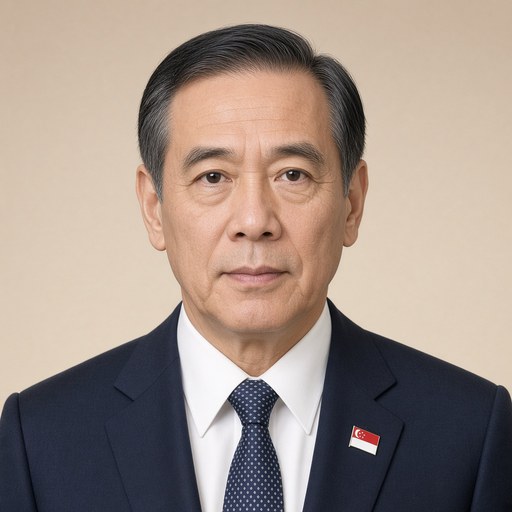
PM Lee Hsien Loong at the 100th Anniversary Dinner of Chin Kang Huay Kuan
 Lee Hsien Loong · Prime Minister of Singapore
- Context
- Lee addressed the 100th Anniversary Dinner of Chin Kang Huay Kuan in Singapore on 1 April 2018, celebrating the clan association's century of community service.
- Main themes
- Chin Kang Huay Kuan centenary, Chinese immigrant heritage, community associations, early Chinese migrants' contributions to Singapore, eldercare and community service, youth engagement, cultural preservation, Singapore bicentennial, clan associations' evolution, global Jinjiang network
- Duration
- ~1 min
- Words
- 1,563
- Sentences
- 55
- Readability
- 36
- Grade
- 15.2
- Syntax
- 3.39
- Vocabulary
- 2.47
Translated from Chinese
The broad sphere of national life a sentence belongs to. Every sentence has an Arena, so it is the denominator the other indices are read against.
Other55 sentences in 29 paragraphs
Mr Pok Ching Chong, President of the Chin Kang Huay Kwan, fellow compatriots of Jinjiang ancestry, distinguished guests from Singapore and abroad, good evening, everyone!
Today is a joyous occasion as the Chin Kang Huay Kwan celebrates the 100th anniversary of its founding, and I feel deeply honoured to be part of this grand event.
The hundred-year history of the Chin Kang Huay Kwan shows us that, although times have changed, many of our long-established Chinese community organisations remain true to their original aspirations, striving to fulfil their mission of serving their clansmen and contributing to society.
According to some records, in 1821, the year after Raffles landed in Singapore, the first Chinese junk arrived in Singapore from Xiamen, and there are also records saying that this junk was a "Wucao" vessel from Jinjiang in Quanzhou.
After that, large numbers of Chinese junks came south from the Fujian and Guangdong regions one after another, providing the labour that Raffles and the British East India Company needed to develop Singapore into a trading port.
Among the early migrants from Jinjiang in China to Singapore, many worked as "coolies" at the wharves along the Singapore River, doing the hard labour of loading, unloading and carrying goods. These coolies made immense contributions, through their toil, to Singapore's development into a thriving port of commerce.
These early migrants built new homes in an unfamiliar foreign land. Here they put down roots, raised families and branched out, labouring quietly in every trade and profession. And they did not forget to look after their fellow clansmen and to serve the community: those with money contributed money, those with strength contributed strength, and together they set up clan associations, founded schools, and advanced the development of their communities and of society.
These "unsung heroes" played an indispensable part in the remarkable achievements Singapore has attained today. Next year Singapore will commemorate its bicentennial, and we will pay tribute to the early migrants of all communities. I hereby call on the clansmen of the Chin Kang Huay Kwan and other clan associations to take an active part in the related activities, and to learn about the contributions our Chinese pioneers made to Singapore's prosperity. I further hope that young Singaporeans will continue to uphold our forebears' spirit of hard work, perseverance, unity and mutual help, and keep striving for our nation and for their families.
In step with the changing times, our local clan associations have continued to adapt the content of their activities so as to better serve the nation, society and the public. The Chin Kang Huay Kwan is one such example.
For instance: Singapore's elderly population is growing year by year, and I am very happy to see that the Chin Kang Huay Kwan often works with community partners, making care for seniors a focus of its activities and striving to pass on the virtue of respecting the elderly and honouring the worthy. Since its Youth Group was set up in 2008, the association has regularly organised members to take part in the activities of various charitable organisations, extending its founding purpose of caring for needy clansmen to caring for the vulnerable groups in our community. In June last year, the Chinese Development Assistance Council specially presented the Chin Kang Huay Kwan with a ten-year Long-Term Partnership Award, in recognition of the association's long-standing mobilisation of volunteers to support the CDAC's various activities. Thank you all very much for your contributions in jointly building a warm and united society.
At the same time, the Chin Kang Huay Kwan has also actively reached out to fellow Jinjiang clansmen around the world through the World Jinjiang Association and the World Jinjiang Youth Friendship Association, strengthening exchanges in culture, economics, trade and other areas, and doing its part for Singapore's cultural and economic development. The World Jinjiang Youth Raffles Forum held this morning is a fine example.
To help the younger generation of Singaporeans gain an understanding of clan association culture, the Chin Kang Huay Kwan also welcomes young people who are not of Jinjiang descent to take part in its Youth Group's activities. In the past two years, in conjunction with the Singapore Heritage Festival, it has also opened the association's premises to visits by the public.
I hope that other clan associations, like the Chin Kang Huay Kwan, will also respond to the needs of the times and develop their activities, particularly in two areas: caring for the elderly and introducing traditional culture to the younger generation.
Finally, I wish the Singapore Chin Kang Huay Kwan's centennial celebration every success, and may the association's work flourish ever more and achieve another century of glory. Thank you.
Explore related topics
The original Chinese. The tags above are read on the English translation's sentences.
晋江会馆会长卜清钟先生,各位祖籍晋江的同胞们、海内外嘉宾、大家晚上好!
今天是晋江会馆庆祝成立一百周年的喜庆日子,能够躬逢其盛,我感到非常荣幸。
我们从晋江会馆所走过的百年历史可以看到,尽管时代变迁,本地许多历史悠久的华社团体,至今依然秉持初衷,努力负起服务乡亲,贡献社会的使命。
根据一些记载,在莱佛士登陆新加坡后的第二年,也就是1821年,第一艘中国帆船从厦门抵达新加坡,那也有记载说,那艘帆船,是来自泉州晋江的“乌槽”船。
在那之后,有大批中国帆船陆续从闽粤地区南来,为莱佛士和英国东印度公司将新加坡开辟为贸易港口,提供了所需的劳动力。
早年从中国晋江到新加坡的移民当中,有许多是在新加坡河的码头做“苦力”,从事起卸货物和搬运的粗活。新加坡能够发展成为繁荣的商港,这些估俚(苦力)劳苦功高。
这些早期移民在陌生的异乡,建立起了新的家园。他们在这里落地生根、开枝散叶,在各行各业中,默默耕耘。而他们也不忘照顾同乡,服务社稷,大家有钱出钱,有力出力,成立会馆,兴办学校,推动社群和社会的发展。
新加坡今天能够取得非凡的成就,这些“无名英雄”功不可没。明年新加坡庆祝开埠200周年,我们将向所有族群的早期移民致敬。在此,呼吁晋江会馆以及其他会馆的宗亲积极参与相关的活动,了解我国华人先驱为新加坡的繁荣所做出的贡献。我更寄望年轻国人,会继续秉持先辈们刻苦耐劳和团结互助的精神,继续为国家,为家人努力拼搏。
配合时代的发展,本地宗乡会馆持续在活动内容方面做出了调整,以便更好地为国家、社会和大众服务。晋江会馆便是如此。
比方说:新加坡的老年人口正逐年增加,我非常高兴看到晋江会馆经常同社区伙伴合作,将关怀乐龄作为活动重点,努力传承敬老尊贤的美德。会馆的青年团自 2008年成立以来,时常会组织会员参加多家慈善机构的活动;将会馆照顾贫困乡亲的宗旨,延伸到关怀社群里的弱势群体。去年6月, 华社自助理事会特地给晋江会馆颁发了十年长期伙伴奖,以表扬会馆长期动员义工,支持华助会的各项活动。非常感谢大家的付出,共同建设一个温馨团结的社会。
另一方面,晋江会馆也积极通过世界晋江同乡总会和世界晋江青年联谊会,与世界同乡联谊,加强大家在文化经贸等方面的交流,为新加坡的文化与经济发展尽一份力。今天上午举办的世界晋江青年莱佛士论坛,就是一个很好的例子。
为了让年轻一代的新加坡人对会馆文化有所认识,晋江会馆也接纳非晋江籍的青年,参加青年团的活动。过去两年也配合新加坡文化遗产节,开放会馆让公众参观。
我希望其它的宗乡团体,也能像晋江会馆一样,顺应时代所需,推展活动,特别是关爱年长者还有向年轻一代介绍传统文化这两方面。
最后,我要恭祝新加坡晋江会馆百年庆典圆满成功,会务蒸蒸日上,再创百年辉煌。谢谢。
Explore related topics