




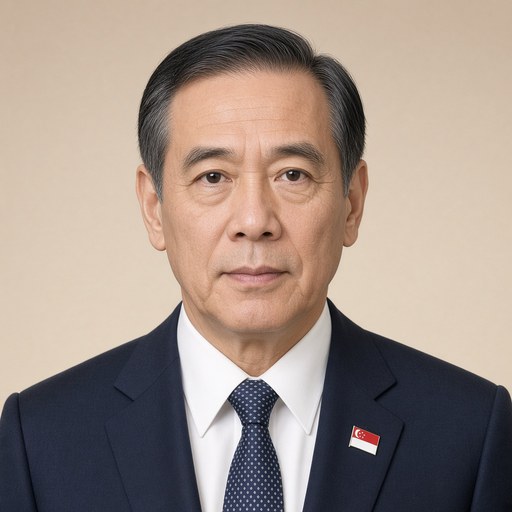
PM Lee Hsien Loong at the Boao Forum for Asia Opening Plenary
 Lee Hsien Loong · Prime Minister of Singapore
- Context
- Lee addressed the 2018 Boao Forum for Asia on April 10, speaking on openness, China's reforms, and US-China trade tensions before regional leaders.
- Main themes
- Asian economic openness, multilateral trading system, China's rise and reform, Belt and Road Initiative, AIIB, US-China trade frictions, regional economic integration, globalisation, WTO, rules-based international order, economic interdependence
- Duration
- ~15 min
- Words
- 1,798
- Sentences
- 100
- Readability
- 41
- Grade
- 12.0
- Syntax
- 2.94
- Vocabulary
- 2.27
Translated from Multiple languages
The broad sphere of national life a sentence belongs to. Every sentence has an Arena, so it is the denominator the other indices are read against.
Other100 sentences in 23 paragraphs
Your Excellency President Xi Jinping and Madam Peng Liyuan, fellow leaders, ladies and gentlemen,
The theme of this year’s Boao Forum, "An Open and Innovative Asia for a World of Greater Prosperity", is appropriate and timely. I thank President Xi for his keynote address and my fellow leaders for their insights and perspectives from each of their different positions on the shared issues that we all face.
Asia has outperformed the global economy because of openness. Individual economies have liberalised and opened up. Notably, China with its 改革开放 – liberalisation and opening up – over 40 years. Others too, like India and the ASEAN countries in Southeast Asia, have pursued similar economic policies, and thrived. They have benefitted from an open, rules-based international order and a multilateral trading system. This has fostered economic cooperation within the region, and deepened interdependence between the Asian countries, the US, Europe and the rest of the world.
Asia’s economic prospects are good. This year, the World Bank forecasts that East Asia and the Pacific will grow by 6.2 per cent. It is double the expected global growth of 3.1 per cent. But to sustain Asia’s economic dynamism, countries have to remain open and connected to one another, and the multilateral WTO system must hold up as the basis for global trade and commerce. This cannot be taken for granted. To keep this international framework in good order, countries will have to adjust with the times. They must bring up to date their policies and international institutions to account for changes in the strategic and economic balance.
Perhaps the most far-reaching change thus far has been the rise of China. Since China joined the WTO in 2001, its weight in the global economy and its share of world trade have grown enormously. This has greatly benefitted China itself, and many other countries in the world, including Singapore. China’s role in the international economy will grow larger. This has shifted the overall strategic balance. It has also raised expectations from other countries of what China should do – to liberalise its markets further, and contribute to the multilateral trading system.
Indeed, China itself recognises that it has been a major beneficiary of globalisation, and it will lose out if the existing multilateral, rules-based order falters. In Davos last year, President Xi Jinping laid out clearly China’s approach and policies, upholding openness and multilateralism. The Asian Infrastructure Investment Bank (AIIB) and the Belt and Road (B&R) Initiative are two major efforts by China to contribute to the regional structure and regional prosperity. They aim to strengthen trade and investment ties, and enhance integration and interdependence. These are constructive, effective strategies for a growing China to integrate with the regional economy, and engage its neighbours through win-win cooperation. This is why Singapore was a founding member of the AIIB and a strong and early supporter of B&R.
Since the Lianghui, the recent two meetings in Beijing, Chinese leaders and officials have declared China’s determination to liberalise further. Today, I was very glad to hear President Xi reaffirm this, and announce further steps in financial sector reforms, in opening up foreign investment rules, in protecting intellectual property and increasing automobile imports. We look forward to seeing these strategies elaborated, implemented, and bearing fruit.
This is the broader context of the recent trade frictions between the US and China. The US has announced a series of unilateral tariffs on imports, many targeted at China. China has responded correspondingly, as it has to do. China’s response has been careful and calibrated. Nevertheless, a serious dispute is now joined. Everyone still hopes that before these tariffs are implemented, the two countries will be able to work out an accommodation and head off further escalation.
This year's Boao Forum is timely themed "Open and Innovative Asia, Prosperous and Developing World." I thank President Xi Jinping for his keynote speech and other national leaders for sharing their insights and perspectives on the common challenges we face from their respective positions.
The key to Asia's economic growth outperforming the global average lies in openness to the outside world. Economies have adopted free and open trade policies. For instance, China's reform and opening-up has progressed for 40 years, and other countries like India and ASEAN member states have also adopted similar economic policies. Countries have benefited from an open, rules-based international order and multilateral trading system, which has promoted economic cooperation among countries in the region and deepened economic interdependence between Asian countries and the United States, Europe, and the rest of the world.
The economic outlook for Asia is promising. The World Bank predicts that East Asia and the Pacific region will achieve 6.2% economic growth this year, which is double the global economic growth forecast of 3.1%. However, to maintain economic vitality, Asian countries must continue to uphold openness and connectivity, using the World Trade Organization's multilateral trading system as the foundation for international trade and business activities. We cannot take this for granted. To ensure that this international framework operates effectively, countries around the world must adapt their policies and international mechanisms to align with the changing strategic and economic balance.
Perhaps the most significant change to date has been the rise of China. Since China joined the WTO in 2001, its share of the global economy and international trade has significantly increased. China has benefited greatly from this, and many other countries, including Singapore, have also reaped rewards. China's role in the international economy will become increasingly important, prompting adjustments in the overall strategic balance. Other countries' expectations of China have also risen; they hope for further market opening and contributions to the multilateral trading system.
China itself recognizes that it is a major beneficiary of globalization, and if the existing multilateral trading system and rules-based order are undermined, China will also suffer losses. President Xi Jinping clearly articulated China's relevant policies and commitment to supporting openness and maintaining the multilateral system at the World Economic Forum in Davos last year. The Asian Infrastructure Investment Bank and the Belt and Road Initiative are major plans through which China contributes to regional architecture and prosperity. These initiatives aim to strengthen trade and investment relations among countries and promote regional integration and interdependence. These are constructive and effective strategic projects that allow a strengthening China to connect with the region's economy and establish ties with neighboring countries through win-win cooperation. This is also why Singapore became one of the founding members of the AIIB and has strongly supported the Belt and Road Initiative from the outset.
After the "Two Sessions," Chinese leaders and officials conveyed a firm determination to further open up to the outside world. I am pleased that President Xi has once again reiterated China's commitment to openness and announced further measures for financial reform, easing foreign investment regulations, protecting intellectual property rights, and enhancing automobile imports. We look forward to the details of these strategies, their successful implementation, and fruitful outcomes.
This is the backdrop to the recent trade frictions between the United States and China. The United States has unilaterally imposed a series of tariffs on imported goods, many of which target China. China has had to respond accordingly. China's response has been cautious and well-considered, but serious disputes have still arisen between the two countries. Everyone hopes that before the tariffs are implemented, both sides can compromise to avoid further escalation of the disputes.
Singapore does not believe that imposing unilateral tariffs is the correct solution. Unilateral measures are not compliant with WTO rules. Trade disputes should be resolved within the WTO framework. More fundamentally, as economists point out, the focus on the bilateral trade imbalance between the US and China is misplaced. What matters to a country is not its bilateral trade balance with a specific trading partner, but its overall trade balance with the rest of the world. Furthermore, the cause of a trade deficit is an imbalance in the domestic economy. In particular, a trade deficit happens when a country consumes more than it produces.
Nevertheless, we have to recognize that there is broad political support in the US for these measures. This is a change in the mood. What is it due to? Trade arrangements and concessions made in the past when China was only 5 percent of the world’s GDP are less readily accepted today, when China makes up 15 percent of the world’s GDP and is expected to grow this share even further. US companies that previously advocated for China when it joined the WTO in 2001 now feel disadvantaged. They perceive that the playing field is not level for all companies, in terms of market access or investment restrictions, especially in technology sectors. These pressures are not new and have been building for some time.
A trade war between China and the US is still far from inevitable. But if one does happen, it will undermine the multilateral trading system which has underpinned global prosperity. Countries big and small will be affected.
It is reassuring that most Asia Pacific countries remain committed to multilateral trade and economic cooperation, for example through the Comprehensive and Progressive Agreement for Trans-Pacific Partnership (CPTPP) and the Regional Comprehensive Economic Partnership (RCEP) negotiations. These trade initiatives are important, but they will not compensate for the damage from a trade war, which will extend way beyond the economic loss that they cause.
China and the US have the most important bilateral relationship in the world. A trade war must damage these bilateral ties in many areas. Surely it will make it much harder for the two countries to cooperate on climate change, non-proliferation, regional security, and denuclearization of the Korean Peninsula. None of these issues can be solved without the full participation of both countries. If the disputes escalate and destabilize US-China relations, the consequences for the world could be catastrophic.
There will always be competition between the major powers. But it makes all the difference whether competition takes place within a framework of interdependence and generally accepted rules of the game. Because what is ultimately at stake is war and peace, the security and stability of the world.
In international affairs, one of China’s strengths has always been its ability to take a strategic long-term view. It is in China’s fundamental interests to contribute more to strengthening multilateralism, in keeping with its larger weight in the world. It is vital that China does so now, at this testing moment in international relations. I am confident that China will handle this challenge well, safeguard its own interests, and keep the global system open and inclusive. This will create an international environment that will enable China to attain its two centenary goals, and other countries to grow and prosper in a stable and peaceful world.
Thank you.
The original Multiple languages. The tags above are read on the English translation's sentences.
Your Excellency President Xi Jinping and Madam Peng Liyuan, fellow leaders, ladies and gentlemen,
The theme of this year’s Boao Forum, "An Open and Innovative Asia for a World of Greater Prosperity", is appropriate and timely. I thank President Xi for his keynote address and my fellow leaders for their insights and perspectives from each of their different positions on the shared issues that we all face.
Asia has outperformed the global economy because of openness. Individual economies have liberalised and opened up. Notably, China with its 改革开放 – liberalisation and opening up – over 40 years. Others too, like India and the ASEAN countries in Southeast Asia, have pursued similar economic policies, and thrived. They have benefitted from an open, rules-based international order and a multilateral trading system. This has fostered economic cooperation within the region, and deepened interdependence between the Asian countries, the US, Europe and the rest of the world.
Asia’s economic prospects are good. This year, the World Bank forecasts that East Asia and the Pacific will grow by 6.2 per cent. It is double the expected global growth of 3.1 per cent. But to sustain Asia’s economic dynamism, countries have to remain open and connected to one another, and the multilateral WTO system must hold up as the basis for global trade and commerce. This cannot be taken for granted. To keep this international framework in good order, countries will have to adjust with the times. They must bring up to date their policies and international institutions to account for changes in the strategic and economic balance.
Perhaps the most far-reaching change thus far has been the rise of China. Since China joined the WTO in 2001, its weight in the global economy and its share of world trade have grown enormously. This has greatly benefitted China itself, and many other countries in the world, including Singapore. China’s role in the international economy will grow larger. This has shifted the overall strategic balance. It has also raised expectations from other countries of what China should do – to liberalise its markets further, and contribute to the multilateral trading system.
Indeed, China itself recognises that it has been a major beneficiary of globalisation, and it will lose out if the existing multilateral, rules-based order falters. In Davos last year, President Xi Jinping laid out clearly China’s approach and policies, upholding openness and multilateralism. The Asian Infrastructure Investment Bank (AIIB) and the Belt and Road (B&R) Initiative are two major efforts by China to contribute to the regional structure and regional prosperity. They aim to strengthen trade and investment ties, and enhance integration and interdependence. These are constructive, effective strategies for a growing China to integrate with the regional economy, and engage its neighbours through win-win cooperation. This is why Singapore was a founding member of the AIIB and a strong and early supporter of B&R.
Since the Lianghui, the recent two meetings in Beijing, Chinese leaders and officials have declared China’s determination to liberalise further. Today, I was very glad to hear President Xi reaffirm this, and announce further steps in financial sector reforms, in opening up foreign investment rules, in protecting intellectual property and increasing automobile imports. We look forward to seeing these strategies elaborated, implemented, and bearing fruit.
This is the broader context of the recent trade frictions between the US and China. The US has announced a series of unilateral tariffs on imports, many targeted at China. China has responded correspondingly, as it has to do. China’s response has been careful and calibrated. Nevertheless, a serious dispute is now joined. Everyone still hopes that before these tariffs are implemented, the two countries will be able to work out an accommodation and head off further escalation.
Singapore does not believe that imposing unilateral tariffs is the correct solution. Unilateral measures are not compliant with WTO rules. Trade disputes should be resolved within the WTO framework. More fundamentally, as economists point out, the focus on the bilateral trade imbalance between the US and China is misplaced. What matters to a country is not its bilateral trade balance with a specific trading partner, but its overall trade balance with the rest of the world. Furthermore, the cause of a trade deficit is an imbalance in the domestic economy. In particular, a trade deficit happens when a country consumes more than it produces.
Nevertheless, we have to recognise that there is broad political support in the US for these measures. This is a change in the mood. What is it due to? Trade arrangements and concessions made in the past when China was only 5 per cent of the world’s GDP are less readily accepted today, when China makes up 15 per cent of the world’s GDP and is expected to grow this share even further. US companies that previously advocated for China when it joined the WTO in 2001, now feel disadvantaged. They perceive that the playing field is not level for all companies, in terms of market access or investment restrictions, especially in technology sectors. These pressures are not new, and have been building for some time.
A trade war between China and the US is still far from inevitable. But if one does happen, it will undermine the multilateral trading system which has underpinned global prosperity. Countries big and small will be affected.
It is reassuring that most Asia Pacific countries remain committed to multilateral trade and economic cooperation, for example through the Comprehensive and Progressive Agreement for Trans-Pacific Partnership (CPTPP) and the Regional Comprehensive Economic Partnership (RCEP) negotiations. These trade initiatives are important, but they will not compensate for the damage from a trade war, which will extend way beyond the economic loss that they cause.
China and the US have the most important bilateral relationship in the world. A trade war must damage these bilateral ties in many areas. Surely it will make it much harder for the two countries to cooperate on climate change, non-proliferation, regional security, and denuclearisation of the Korean Peninsula. None of these issues can be solved without the full participation of both countries. If the disputes escalate and destabilise US-China relations, the consequences for the world could be catastrophic.
There will always be competition between the major powers. But it makes all the difference whether competition takes place within a framework of interdependence, and generally accepted rules of the game. Because what is ultimately at stake is war and peace, the security and stability of the world.
In international affairs, one of China’s strengths has always been its ability to take a strategic long-term view. It is in China’s fundamental interests to contribute more to strengthening multilateralism, in keeping with its larger weight in the world. It is vital that China does so now, at this testing moment in international relations. I am confident that China will handle this challenge well, safeguard its own interests, and keep the global system open and inclusive. This will create an international environment that will enables China to attain its two centenary goals, and other countries to grow and prosper in a stable and peaceful world.
Thank you.
- - - - - - - - -
(Chinese translation provided by zaobao.com.sg )
zaobao.com.sg
今年的博鳌论坛以“开放创新的亚洲,繁荣发展的世界”为主题,十分切合时宜。我感谢习近平主席的主旨发言以及其他国家领导人从他们各自不同的立场,对我们共同面对的问题,分享他们的见解和观点。
亚洲的经济增长能够优于全球表现,关键在于对外开放。各个经济体采取了自由开放的贸易政策。例如,中国改革开放已经推进40年,其他国家如印度以及东南亚的亚细安成员国也采取了类似的经济政策。各国从一个开放、基于规则的国际秩序和多边贸易体系中受益,这促进了本区域国家之间的经济合作,也加深了亚洲国家与美国、欧洲和世界其他国家之间的经济依存关系。
亚洲的经济前景良好。世界银行预测东亚和太平洋地区今年可取得6.2%的经济增长,比全球经济3.1%的增长预测高一倍。但要维持经济活力,亚洲各国就必须继续保持开放和互联互通,并以世界贸易组织多边贸易体系作为国际贸易和商业活动的基础。我们不能将这一切视为理所当然。要确保这一国际架构能够有效运行,世界各国必须顺应时代发展作出调整,更新各自的政策和国际机制,以配合战略和经济平衡格局的改变。
或许至今为止最重大的改变,就是中国的崛起。中国自2001年加入世贸组织之后,在全球经济所占的比重和在国际贸易所占的份额都大幅度增加。中国从中获益良多,许多其他国家包括新加坡在内亦从中受惠。中国在国际经济上扮演的角色将更为重要,这促使国际整体的战略平衡格局出现了调整。其他国家对中国的期望也因此提高,他们希望中国进一步开放市场,为多边贸易体系作出贡献。
中国本身也认同自己是全球化的主要受益者,而倘若现有的多边贸易体系和以规则为基础的秩序受挫,中国也会有所损失。中国国家主席习近平去年在达沃斯举行的世界经济论坛上,已清楚阐明中国的相关方针和政策,坚持支持对外开放并维护多边体系。亚洲基础设施投资银行和“一带一路”倡议是中国为区域架构和繁荣作出贡献的主要计划。这些计划旨在加强各国之间的贸易和投资关系,以及推进本区域一体化和各国的相互依存关系。这些都是具建设性和有效的战略项目,让综合国力不断加强的中国,同本区域的经济接轨,并通过双赢合作同邻国建立联系。这也是为什么新加坡会成为亚投行的创始成员国之一,并且一开始就大力支持“一带一路”倡议。
中国在“两会”后,中国领导人和官员向世界传递了要进一步对外开放的坚定决心。我很高兴习主席今天再一次阐明中国对外开放的决心,并宣布在金融改革、放宽外国投资条例、保护知识产权和加强汽车入口方面的进一步开放举措。我们期待这些战略的详细内容,成功落实并取得丰硕成果。
这是美国和中国最近出现贸易摩擦的背景。美国单方面对进口商品征收一系列关税,它们当中有许多是针对中国的。中国不得不作出相应回应。中国的回应是谨慎而经过深思熟虑的,但是中美之间还是出现了严重的争端。大家都希望在关税实施前,两国能够彼此作出妥协,避免争端进一步升级。
新加坡不认为美国单方面征收关税是解决问题的正确做法。单方面采取措施并不符合世贸组织的规则。贸易纠纷应该在世贸组织框架内进行协商,解决分歧。更重要的是,正如经济学家所指出的,中美两国对双边贸易平衡课题的焦点摆错了地方。对一个国家来说,重要的不是与某一个贸易伙伴的双边贸易平衡,而是与世界各国的整体贸易平衡。其实,造成贸易赤字的主因是国内经济失衡,尤其当一个国家的消费超出它的产出的时候。
不过,我们注意到美国的这些措施在美国国内获得广泛的政治支持。因为社会气氛改变了,为什么呢?在中国国内生产总值(GDP)只占世界经济比重5%的时期所做的贸易安排和优惠措施,在中国GDP已增长至世界经济比重15%并还将继续增长的今时今日,已经较难被接受。过去支持中国加入世贸组织的美国企业,如今却觉得在中国做生意处于不利形势。美国企业认为在市场准入或投资设限,尤其是在科技领域,中国并没有为所有企业提供公平竞争的环境。这方面的压力并非新近形成,而是已经持续好一段时间。
中美贸易战目前还远未到无可避免的阶段。不过,贸易战一旦开打,支撑国际经济繁荣发展的多边贸易体系将受到冲击。届时,无论大国小国都会受到影响。
让人宽心的是,多数的亚太地区国家仍坚持支持多边贸易体系,以及致力于推动经济合作,并通过签署“跨太平洋伙伴全面进展协定”(CPTPP)和谈判“区域全面经济伙伴关系协定”(RCEP)等行动来表达决心。这些都是重要的贸易协定,但却无法抵补贸易战可能带来的损失,因为贸易战所造成的破坏将远超于经济方面。
中美关系是全球最重要的双边关系。贸易战必然在多方面损害中美关系。中国和美国将更难在气候变化、阻止核武扩散、区域安全以及朝鲜半岛无核化等课题展开合作。如果缺乏中国和美国的全面参与,这些问题将无法解决。而且争端一旦升温,并造成中美关系不稳定,全球都可能面对灾难性的后果。
大国之间永远会有竞争,但这些竞争是否是在互相依存的框架下,并遵循被普遍接受的规则展开,将带来很不同的结果。因为关系到的是战争或和平,攸关世界的安全与稳定。
在处理国际事务上,中国向来能够高瞻远瞩,采取长远且具有战略性的视角。为加强多边贸易作出更多贡献,符合中国的根本利益,也切合中国在世界舞台上扮演的更重要角色。国际关系如今正面对严峻考验,中国为强化多边贸易主义作出更大贡献至关重要。我有信心,中国能处理好这项挑战,能够在捍卫国家利益的同时,也继续确保国际体系的开放和包容。这将营造让中国能够达成“两个一百年”奋斗目标的国际环境,也让世界各国在稳定、安全的世界里,继续繁荣发展。
A Chinese translation of the speech can be viewed below.
Your Excellency President Xi Jinping and Madam Peng Liyuan, fellow leaders, ladies and gentlemen,
The theme of this year’s Boao Forum, "An Open and Innovative Asia for a World of Greater Prosperity", is appropriate and timely. I thank President Xi for his keynote address and my fellow leaders for their insights and perspectives from each of their different positions on the shared issues that we all face.
Asia has outperformed the global economy because of openness. Individual economies have liberalised and opened up. Notably, China with its 改革开放 – liberalisation and opening up – over 40 years. Others too, like India and the ASEAN countries in Southeast Asia, have pursued similar economic policies, and thrived. They have benefitted from an open, rules-based international order and a multilateral trading system. This has fostered economic cooperation within the region, and deepened interdependence between the Asian countries, the US, Europe and the rest of the world.
Asia’s economic prospects are good. This year, the World Bank forecasts that East Asia and the Pacific will grow by 6.2 per cent. It is double the expected global growth of 3.1 per cent. But to sustain Asia’s economic dynamism, countries have to remain open and connected to one another, and the multilateral WTO system must hold up as the basis for global trade and commerce. This cannot be taken for granted. To keep this international framework in good order, countries will have to adjust with the times. They must bring up to date their policies and international institutions to account for changes in the strategic and economic balance.
Perhaps the most far-reaching change thus far has been the rise of China. Since China joined the WTO in 2001, its weight in the global economy and its share of world trade have grown enormously. This has greatly benefitted China itself, and many other countries in the world, including Singapore. China’s role in the international economy will grow larger. This has shifted the overall strategic balance. It has also raised expectations from other countries of what China should do – to liberalise its markets further, and contribute to the multilateral trading system.
Indeed, China itself recognises that it has been a major beneficiary of globalisation, and it will lose out if the existing multilateral, rules-based order falters. In Davos last year, President Xi Jinping laid out clearly China’s approach and policies, upholding openness and multilateralism. The Asian Infrastructure Investment Bank (AIIB) and the Belt and Road (B&R) Initiative are two major efforts by China to contribute to the regional structure and regional prosperity. They aim to strengthen trade and investment ties, and enhance integration and interdependence. These are constructive, effective strategies for a growing China to integrate with the regional economy, and engage its neighbours through win-win cooperation. This is why Singapore was a founding member of the AIIB and a strong and early supporter of B&R.
Since the Lianghui, the recent two meetings in Beijing, Chinese leaders and officials have declared China’s determination to liberalise further. Today, I was very glad to hear President Xi reaffirm this, and announce further steps in financial sector reforms, in opening up foreign investment rules, in protecting intellectual property and increasing automobile imports. We look forward to seeing these strategies elaborated, implemented, and bearing fruit.
This is the broader context of the recent trade frictions between the US and China. The US has announced a series of unilateral tariffs on imports, many targeted at China. China has responded correspondingly, as it has to do. China’s response has been careful and calibrated. Nevertheless, a serious dispute is now joined. Everyone still hopes that before these tariffs are implemented, the two countries will be able to work out an accommodation and head off further escalation.
Singapore does not believe that imposing unilateral tariffs is the correct solution. Unilateral measures are not compliant with WTO rules. Trade disputes should be resolved within the WTO framework. More fundamentally, as economists point out, the focus on the bilateral trade imbalance between the US and China is misplaced. What matters to a country is not its bilateral trade balance with a specific trading partner, but its overall trade balance with the rest of the world. Furthermore, the cause of a trade deficit is an imbalance in the domestic economy. In particular, a trade deficit happens when a country consumes more than it produces.
Nevertheless, we have to recognise that there is broad political support in the US for these measures. This is a change in the mood. What is it due to? Trade arrangements and concessions made in the past when China was only 5 per cent of the world’s GDP are less readily accepted today, when China makes up 15 per cent of the world’s GDP and is expected to grow this share even further. US companies that previously advocated for China when it joined the WTO in 2001, now feel disadvantaged. They perceive that the playing field is not level for all companies, in terms of market access or investment restrictions, especially in technology sectors. These pressures are not new, and have been building for some time.
A trade war between China and the US is still far from inevitable. But if one does happen, it will undermine the multilateral trading system which has underpinned global prosperity. Countries big and small will be affected.
It is reassuring that most Asia Pacific countries remain committed to multilateral trade and economic cooperation, for example through the Comprehensive and Progressive Agreement for Trans-Pacific Partnership (CPTPP) and the Regional Comprehensive Economic Partnership (RCEP) negotiations. These trade initiatives are important, but they will not compensate for the damage from a trade war, which will extend way beyond the economic loss that they cause.
China and the US have the most important bilateral relationship in the world. A trade war must damage these bilateral ties in many areas. Surely it will make it much harder for the two countries to cooperate on climate change, non-proliferation, regional security, and denuclearisation of the Korean Peninsula. None of these issues can be solved without the full participation of both countries. If the disputes escalate and destabilise US-China relations, the consequences for the world could be catastrophic.
There will always be competition between the major powers. But it makes all the difference whether competition takes place within a framework of interdependence, and generally accepted rules of the game. Because what is ultimately at stake is war and peace, the security and stability of the world.
In international affairs, one of China’s strengths has always been its ability to take a strategic long-term view. It is in China’s fundamental interests to contribute more to strengthening multilateralism, in keeping with its larger weight in the world. It is vital that China does so now, at this testing moment in international relations. I am confident that China will handle this challenge well, safeguard its own interests, and keep the global system open and inclusive. This will create an international environment that will enables China to attain its two centenary goals, and other countries to grow and prosper in a stable and peaceful world.
Thank you.
- - - - - - - - -
(Chinese translation provided by zaobao.com.sg )
zaobao.com.sg
今年的博鳌论坛以“开放创新的亚洲,繁荣发展的世界”为主题,十分切合时宜。我感谢习近平主席的主旨发言以及其他国家领导人从他们各自不同的立场,对我们共同面对的问题,分享他们的见解和观点。
亚洲的经济增长能够优于全球表现,关键在于对外开放。各个经济体采取了自由开放的贸易政策。例如,中国改革开放已经推进40年,其他国家如印度以及东南亚的亚细安成员国也采取了类似的经济政策。各国从一个开放、基于规则的国际秩序和多边贸易体系中受益,这促进了本区域国家之间的经济合作,也加深了亚洲国家与美国、欧洲和世界其他国家之间的经济依存关系。
亚洲的经济前景良好。世界银行预测东亚和太平洋地区今年可取得6.2%的经济增长,比全球经济3.1%的增长预测高一倍。但要维持经济活力,亚洲各国就必须继续保持开放和互联互通,并以世界贸易组织多边贸易体系作为国际贸易和商业活动的基础。我们不能将这一切视为理所当然。要确保这一国际架构能够有效运行,世界各国必须顺应时代发展作出调整,更新各自的政策和国际机制,以配合战略和经济平衡格局的改变。
或许至今为止最重大的改变,就是中国的崛起。中国自2001年加入世贸组织之后,在全球经济所占的比重和在国际贸易所占的份额都大幅度增加。中国从中获益良多,许多其他国家包括新加坡在内亦从中受惠。中国在国际经济上扮演的角色将更为重要,这促使国际整体的战略平衡格局出现了调整。其他国家对中国的期望也因此提高,他们希望中国进一步开放市场,为多边贸易体系作出贡献。
中国本身也认同自己是全球化的主要受益者,而倘若现有的多边贸易体系和以规则为基础的秩序受挫,中国也会有所损失。中国国家主席习近平去年在达沃斯举行的世界经济论坛上,已清楚阐明中国的相关方针和政策,坚持支持对外开放并维护多边体系。亚洲基础设施投资银行和“一带一路”倡议是中国为区域架构和繁荣作出贡献的主要计划。这些计划旨在加强各国之间的贸易和投资关系,以及推进本区域一体化和各国的相互依存关系。这些都是具建设性和有效的战略项目,让综合国力不断加强的中国,同本区域的经济接轨,并通过双赢合作同邻国建立联系。这也是为什么新加坡会成为亚投行的创始成员国之一,并且一开始就大力支持“一带一路”倡议。
中国在“两会”后,中国领导人和官员向世界传递了要进一步对外开放的坚定决心。我很高兴习主席今天再一次阐明中国对外开放的决心,并宣布在金融改革、放宽外国投资条例、保护知识产权和加强汽车入口方面的进一步开放举措。我们期待这些战略的详细内容,成功落实并取得丰硕成果。
这是美国和中国最近出现贸易摩擦的背景。美国单方面对进口商品征收一系列关税,它们当中有许多是针对中国的。中国不得不作出相应回应。中国的回应是谨慎而经过深思熟虑的,但是中美之间还是出现了严重的争端。大家都希望在关税实施前,两国能够彼此作出妥协,避免争端进一步升级。
新加坡不认为美国单方面征收关税是解决问题的正确做法。单方面采取措施并不符合世贸组织的规则。贸易纠纷应该在世贸组织框架内进行协商,解决分歧。更重要的是,正如经济学家所指出的,中美两国对双边贸易平衡课题的焦点摆错了地方。对一个国家来说,重要的不是与某一个贸易伙伴的双边贸易平衡,而是与世界各国的整体贸易平衡。其实,造成贸易赤字的主因是国内经济失衡,尤其当一个国家的消费超出它的产出的时候。
不过,我们注意到美国的这些措施在美国国内获得广泛的政治支持。因为社会气氛改变了,为什么呢?在中国国内生产总值(GDP)只占世界经济比重5%的时期所做的贸易安排和优惠措施,在中国GDP已增长至世界经济比重15%并还将继续增长的今时今日,已经较难被接受。过去支持中国加入世贸组织的美国企业,如今却觉得在中国做生意处于不利形势。美国企业认为在市场准入或投资设限,尤其是在科技领域,中国并没有为所有企业提供公平竞争的环境。这方面的压力并非新近形成,而是已经持续好一段时间。
中美贸易战目前还远未到无可避免的阶段。不过,贸易战一旦开打,支撑国际经济繁荣发展的多边贸易体系将受到冲击。届时,无论大国小国都会受到影响。
让人宽心的是,多数的亚太地区国家仍坚持支持多边贸易体系,以及致力于推动经济合作,并通过签署“跨太平洋伙伴全面进展协定”(CPTPP)和谈判“区域全面经济伙伴关系协定”(RCEP)等行动来表达决心。这些都是重要的贸易协定,但却无法抵补贸易战可能带来的损失,因为贸易战所造成的破坏将远超于经济方面。
中美关系是全球最重要的双边关系。贸易战必然在多方面损害中美关系。中国和美国将更难在气候变化、阻止核武扩散、区域安全以及朝鲜半岛无核化等课题展开合作。如果缺乏中国和美国的全面参与,这些问题将无法解决。而且争端一旦升温,并造成中美关系不稳定,全球都可能面对灾难性的后果。
大国之间永远会有竞争,但这些竞争是否是在互相依存的框架下,并遵循被普遍接受的规则展开,将带来很不同的结果。因为关系到的是战争或和平,攸关世界的安全与稳定。
在处理国际事务上,中国向来能够高瞻远瞩,采取长远且具有战略性的视角。为加强多边贸易作出更多贡献,符合中国的根本利益,也切合中国在世界舞台上扮演的更重要角色。国际关系如今正面对严峻考验,中国为强化多边贸易主义作出更大贡献至关重要。我有信心,中国能处理好这项挑战,能够在捍卫国家利益的同时,也继续确保国际体系的开放和包容。这将营造让中国能够达成“两个一百年”奋斗目标的国际环境,也让世界各国在稳定、安全的世界里,继续繁荣发展。
Explore related topics