




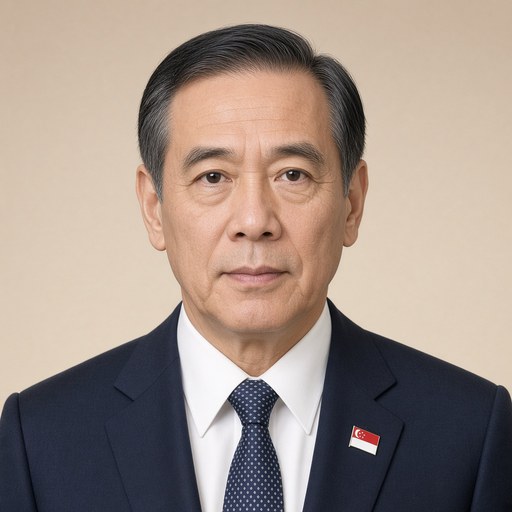
Prime Minister Lee Hsien Loong at the 100th Anniversary Gala Dinner of Nanyang Family of Schools.
 Lee Hsien Loong · Prime Minister of Singapore
- Context
- Lee addressed the 100th Anniversary Gala Dinner of the Nanyang Family of Schools in Singapore on 29 July 2017, celebrating the centenary of Nanyang Girls' High School and its affiliated institutions.
- Main themes
- Centenary celebration, Nanyang family of schools history, women's education, school founders and principals, alumni community, Singapore's national development, school motto and values, dedication to nation and society, Chinese education heritage
- Duration
- ~24 min
- Words
- 2,891
- Sentences
- 156
- Readability
- 58
- Grade
- 9.6
- Syntax
- 2.97
- Vocabulary
- 2.23
Translated from Multiple languages
The broad sphere of national life a sentence belongs to. Every sentence has an Arena, so it is the denominator the other indices are read against.
Other156 sentences in 35 paragraphs
Madam Honorary Chair of the Nanyang Schools Board, Ms. Huang Meiyun, Chair of the Board, Ms. Hong Fangfang, President of the Alumni Association, Ms. Cai Yingying, distinguished guests, alumni, principals, teachers, and students,
Good evening everyone!
I am very happy to gather here with all of you tonight to celebrate the centenary of the three Nanyang schools. Here, I wish Nanyang a happy centenary. After a century, the three Nanyang schools have produced countless talents; I know that among the guests present, there are many alumni who have come from afar. Welcome to you all for coming to join in this celebration!
The first time I participated in a school anniversary event was 60 years ago. At that time, I was still a student at Nanyang Kindergarten. In 1957, the three Nanyang schools celebrated their 40th anniversary. The school erected a stone tablet inscribed with the four characters "发扬光大" (to promote and carry forward). This stone tablet was in front of the library of the old school building on Keng Lee Road. Old classmates may remember it. Today, both the library and the stone tablet are no longer there. Fortunately, there are photos to commemorate it. If you are interested, you can see the stone tablet and the grandeur of that anniversary celebration on page 41 of the Chinese version of the centenary commemorative booklet.
After a cycle of sixty years, to once again celebrate with my alma mater and reunite with teachers and classmates feels particularly warm. I believe I am not the only one who has always been concerned about Nanyang along this journey. Surely there are alumni and teachers present who also participated in that 40th anniversary celebration. Please, those alumni and teachers who have walked with Nanyang for sixty years, stand up and wave your hands! Your feelings for your alma mater are especially precious.
Since its establishment in 1917, Nanyang Girls' High School has always adhered to the spirit of its founders, aiming to cultivate well-rounded women of the new era.
Throughout this century-long journey, the school has witnessed Singapore's experiences of war and peace, colonialism and independence, mergers and separations, and the prosperity and stability following turmoil. The early school was located in a shophouse in the Thomson Triangle, with only about 100 students. Through the wholehearted dedication of successive principals, board members, alumni, and staff, the three schools gradually developed into the well-known Nanyang Girls' High School, Nanyang Primary School, and Nanyang Kindergarten today. Today, the total number of students in the three Nanyang schools has reached 5,000, and the three schools are regarded as excellent institutions by parents and the public. Tens of thousands of graduates also remember the school motto "勤、慎、端、朴" (Diligence, Prudence, Integrity, Simplicity), excelling in their respective fields and contributing to the nation.
The one who established this school motto was Ms. Liu Yunxian, who served as principal for forty years. You may know that Principal Liu is the grandmother of Minister Fu Haiyan. Tonight, alumni Minister Fu and her father are also attending the dinner. So, Principal Liu's family is here as well. Principal Liu firmly believed that women's education is very important, and that women should have equal rights to education; therefore, she was determined to establish Nanyang Girls' High School as an outstanding institution. During Principal Liu's tenure, she established a high school division, founded a kindergarten, and formed the Nanyang family of schools. Principal Liu dedicated her life to Nanyang Girls' High School and to Chinese education, which is why she is known as the "Mother of Nanyang." Principal Liu pursued not only academic excellence but also hoped that students could help the needy, assist others, and give back to society, laying the foundation for the spirit of "dedication to the nation and society" at the three Nanyang schools. For the school, Principal Liu worked tirelessly. In 1940, on her 40th birthday, she said: "In the first twenty years of my life, I spent all my time on myself; between the ages of twenty and forty, I devoted half my time to myself and the other half to the school; from now on, I have decided to dedicate all my time to the school." I remember when I was in Nanyang, I was called to the principal's office a few times to meet Principal Liu. The principal was not very stern, but her attitude towards handling matters and treating people naturally made us respect her and treat her with reverence. When I arrived at the principal's office, I would sit properly and upright in the chair, not daring to move at all.
The spirit of "dedication to the nation and society" is not only embodied by Principal Liu but by every principal of the three Nanyang schools. The expansion of Nanyang from a shophouse in Thomson to today's three campuses is not taken for granted, but is due to the efforts of the principals, who have strived for the best in education and for the teachers and students. I am very pleased to see many former and current principals participating together tonight, and I would like to take this opportunity to thank all the principals for their contributions to the three Nanyang schools and to Singapore's education sector. Thank you, principals!
In fact, I have deep roots in Nanyang, and I take pride in its reputation. I became part of the Nanyang family when I was just three years old. At that time, my parents decided to send me to Nanyang Kindergarten. When I enrolled, I was younger than many of my classmates, so I was said to be a bit mischievous. In the joyful learning environment, my three years in kindergarten quickly passed, and I moved up to Nanyang Primary School. Like Nanyang Kindergarten, Nanyang Primary School was also a co-educational school, where I spent six happy years.
The selfless dedication and exemplary teaching of the principals and teachers deeply influenced me. The values and principles they instilled in us have followed me throughout my life, benefiting me greatly. For me and for the alumni of the three Nanyang schools, the teachers are not just staff on campus; they are our idols. I am very glad that my primary school teachers, Ms. Chen Xiuqi and Ms. Cai Fengai, could attend the centenary celebration tonight, giving me the opportunity to say thank you to them, "Teachers."
I come from an English-speaking family, while my classmates were mostly from Chinese-speaking or dialect-speaking families. In school, all subjects were taught in Chinese, and the language of communication among classmates was also Chinese. In such an environment, I, at a young age, easily and happily learned Chinese. This laid the foundation for my language skills, allowing me to use Chinese fluently in the future.
Today, the medium of instruction in the three Nanyang schools is English, and most students come from English-speaking families. Many parents send their children to the three Nanyang schools because Nanyang maintains the tradition of Chinese schools and a conducive learning environment, and is also a preferred school. Parents hope their children can develop an interest in Chinese in this bilingual and bicultural environment and learn Chinese well. I hope the three Nanyang schools will continue to strive and maintain their leading position in bilingual and bicultural education.
The achievements of the three Nanyang schools today are also due to the full support of the Board for the school's philosophy, as well as the enthusiastic contributions of the Alumni Association and the generous assistance from various parties.
I hope everyone can continue to "work together to uplift the spirit and dedicate themselves to the nation and society," contributing to Singapore! The fruits of our labor speak for themselves, and the melodies of a hundred years begin anew. Finally, I wish the three Nanyang schools continued success and the nurturing of outstanding talents. Thank you, everyone!
Next, let me say a few words in English.
Good evening ladies and gentlemen, I switch to English now. Delighted to join you tonight to celebrate the centenary year for the three Nanyang schools.
It is important for schools like Nanyang to make an extra effort to remain accessible, to get their students to interact with others of different races and social backgrounds.
PM Lee Hsien Loong
I have been a member of the Nanyang family almost all my life. When I was three years old, my parents sent me to Nanyang Kindergarten, and then to Nanyang Primary School. As I recounted in my Chinese speech earlier, I took part in Nanyang’s 40th anniversary celebrations in 1957, 60 years ago. The kindergarten students put up a musical performance. We were all given different instruments to play. I was hoping to be assigned a drum, or at least a triangle but I remember I was given a tambourine instead, somewhat to my disappointment. This evening when I was invited to dinner, I thought it was a school anniversary, perhaps they would give me a drum or a triangle but instead they asked me to give a speech.
When I was a student in Nanyang, it was a Chinese medium school. Every subject was taught in Chinese. The students conversed in Chinese; we were thoroughly immersed. The student profile was also quite different from what it is today. They came from Chinese-speaking homes – almost everyone – and we all spoke to each other in Mandarin.
When I was in kindergarten I would take the school bus home from school every day. I remember the bus would travel all over town. We visited many working class neighbourhoods, to drop off my classmates but today, the student profile at Nanyang is different, and less varied, especially in the primary school. Most students come from English speaking homes. Most Primary 1 students are admitted based on some past or present association with the school. Many of the parents are professionals. That is the primary school. For Nanyang Girls High, the student profile is somewhat more diverse, because it admits students based on their PSLE scores, and takes in good students from other primary schools.
Nanyang is not the only school that has become like this. It has happened to other popular schools in Singapore too. That is why MOE changed the Primary 1 admission rules to require every primary school to put aside 40 places for children who have no connections with the school so that all the schools, including popular ones like Nanyang, should remain open, and will not become closed communities.
It is important for schools to have strong identities, to be proud of their histories. These are vital to the character of the school, and the support it gets from its alumni and supporting community, and Nanyang certainly has this identity and pride. But it is also important for schools like Nanyang to make an extra effort to remain accessible, to get their students to interact with others of different races and social backgrounds.
As a SAP school, Nanyang should purposefully reach out to non-Chinese communities, and expose its students to the richness of our multi-racial society. Only then can the students grow up understanding the broader context of Singapore society, while acquiring a strong grounding in Chinese culture and values. I am glad that Nanyang has been doing this. For example, all the Secondary 2 students are required to do project work with community groups and primary school students are working with the National Environment Agency to regularly visit hawker centres to remind members of the public to return their food trays and to clean up after themselves.
The Nanyang family of schools today are well resourced, with excellent facilities. I remember opening the new primary school building in 2004, and marvelling at how different things had been in my time. When I was in school, the facilities were very basic. All we had was a music room with a piano, and the room was also the place where the school kept its zoological specimens. So we had bottles with crabs, snakes, toads – all kinds of creatures preserved in formalin – and we sat on wooden benches in there and learnt to sing. I am not sure, on hindsight, the strong smell of formaldehyde was helpful to our singing.
Today, the Nanyang schools have good libraries and specialised facilities like drama theatres, and modern boarding facilities and you are regularly updating and renewing them. We are opening new school buildings this evening. I asked Ms Chua Eng Eng what these new buildings are. She said the old ones are being knocked down. And after some conversation, I learnt that the old buildings were built after I have left the school. So to me, they are new buildings which I have not seen or used. My children used them but now, they too (the buildings) after 30, 40 years have reached their end of life and we renew them and we are building new buildings. So we are keeping the infrastructure up to date.
I am happy that Nanyang has been able to do this, able to use its resources wisely, and improved its facilities in a practical and restrained manner. It reflects the hard work by the School Board, School Management Committee, the Nanyang Schools Alumni Association, and the Parent-Teacher Association. In particular, the older alumni, in the early days had to toil to get the attention of the business community. Nanyang enjoys good support from the Chinese community because of its history, because it was founded at the suggestion of Dr Sun Yat Sen to give girls a good education. But still, I do not think it is a secret that if I tell you, when it comes to fund raising, girls’ schools have to work harder than boys’ schools. The girls’ schools principals and the Board worked very hard and brought Nanyang to where it is today.
The board members have served with dedication for many years, and we are recognising them tonight. For example, Mr Ong Pang Boon was Vice-Chairman of the Board until 2008, and remains on the board till today, in his late 80s. Mr Tang See Chim, also in his late 80s, has also been the legal advisor to the Board for many, many years. We should be especially grateful because neither of them are Nanyang alumni. In fact, Mr Tang is from an English school but they were impressed by the Nanyang spirit and supported the school in their own ways.
Perhaps because of this sustained collective effort, Nanyang has an exceptionally strong and tight-knit school community. Many Nanyang alumni went well beyond fund raising, to make major contributions to the school. One prime example is the late Mdm Ling Siew May (Mrs Ong Teng Cheong). She was both an architect, and chairman of the School Management Committee. She was the prime mover behind the secondary campus on Linden Drive. She raised funds for it, designed it, and oversaw its construction herself, even when she was very ill.
Another example is Mdm Wee Bee Hoon, who has been a strong supporter of the Nanyang family for over 40 years. She has been a Board Member, Chairperson of the Board and now Honorary Patron. She was the driving force behind the re-establishment of the Alumni Association in 1982. She is tireless in her efforts to support the fund-raising efforts of all three schools, and personally attends many of the school events. We thank her, and we hope she inspires younger generations of alumni to serve with similar passion and commitment. Thank you all, who have contributed to Nanyang.
As an alumnus, I am very proud of Nanyang, and what it has achieved but from the national point of view, we want every school to be a good school. That is why the Government invests heavily in every school. We staff them with dedicated teachers and principals. We support them with ample resources and good facilities. And we encourage each school to build its own special programmes and traditions, its own identity and community.
Recently, the Public Service Commission (PSC) sent me a report on the PSC scholarships which they awarded this year. So I decided to count how many primary schools the scholars came from. I was encouraged to see a good spread of primary schools. This year the PSC awarded 71 overseas scholarships. I am sure you will want to know how many came from Nanyang, and the answer: four of them were admitted to Nanyang Primary School in Primary 1, and eight from Nanyang Girls High School, of whom one had attended Nanyang Primary School. So Nanyang is doing well. But what made me most happy was that many other schools were also producing scholars. The scholars were admitted to 48 different primary schools in Singapore, including many neighbourhood schools. So when MOE says that “every school is a good school”, it is an aspiration, but there is also truth in it. In Singapore, every school can be special in its own way, and every student can be proud of his or her school.
Once again, finally, may I congratulate the Nanyang family on your 100th birthday. May you continue your good work, and nurture many more bilingual leaders, thinkers and creators, who have the right values and attitude, for Singapore, for many years to come, “发扬光大”.
Thank you very much.
The original Multiple languages. The tags above are read on the English translation's sentences.
Explore by topics
Multi-Racial and multi-religious society
南洋三校董事会荣誉主席黄美云女士, 董事会主席洪芳芳女士, 校友会会长蔡莹莹女士, 各位嘉宾、校友、校长、老师以及同学们,
大家晚上好!
今晚十分女高兴和大家欢聚在这里,共同庆祝南洋三校百年华诞。在此,我恭祝南洋创校百年快乐。 走过一世纪,南洋三校桃李满天下;我知道在座的来宾当中,有好多远道而来的校友。欢迎你们特地前来参与其盛!
我第一次参加校庆活动是60年前。当时,我还是南洋幼稚园的学生。1957年,南洋三校庆祝40周年纪念。学校立了石碑,上面刻了“发扬光大”四个大字。 这石碑是在京士路旧校舍的图书馆前面。老同学可能记得。今天,图书馆和石碑都已经不在了。可是幸好有照片留念。有兴趣的话,百年周年纪念册中文版的第41页,可以看到石碑和当年周年庆的风采。
过了一个甲子,再次能够与母校助庆,与老师和同班同学重逢,感觉特别温馨。相信不只我一个人这一路来都一直心系着南洋。肯定在座有校友和老师们也参加了那年的四十周年校庆。请那些与南洋走过花甲之年的校友和老师们站起来,挥一挥手! 你们对母校的情怀,特别可贵。
自1917年建校以来,南洋女子中学校一直秉承先贤创校的精神,以培养德才兼备的新时代女性为目标。
在这百年历程中,学校见证了新加坡所经历的战争与和平,殖民与独立,合并与分家,动乱后的繁荣与安定。早期的校舍位于多美歌三角埔的一间店屋,学生人数也只有大约100名。在历任校长、董事、校友以及教职员的全心付出下,三校逐渐发展成为今天众所周知的南洋女子中学校、南洋小学和南洋幼稚园。今天,南洋三校的学生人数加起来已有5000名,而三所学校更是家长和国人心目中的优良学府。数以万计的毕业生也谨记“勤、慎、端、朴”的校训,在各自的领域发挥所长,为国家作出贡献。
当年定下这个校训的就是担任校长长达四十年的刘韵仙女士。大家或许知道,刘校长是傅海燕部长的祖母。今晚,校友傅部长和她的父亲都出席了晚宴。所以刘韵仙校长的家人也在这里。刘校长深信妇女的教育是非常重要的,女子应该享有同等的教育权利,因此她决心把南洋女中兴办成为杰出学府。在刘校长任职期间,她增设了高中部、创办了幼稚园,组成了南洋三校这个大家庭。刘校长为南洋女中、为华文教育贡献了她的一生,也之所以能称为“南中之母”。刘校长追求的不只是学业方面的好成绩,也希望学生能够扶贫济困,帮助他人,回馈社会,为南洋三校奠定了“献身国家社会”的精神。为了学校,刘校长鞠躬尽瘁。1940年,她在40岁生日的那一天,说了这番话:“在我生命中的前二十年,我将所有的时间都花在自己身上;二十到四十岁之间,我把一半的时间留给自己,另一半的时间留给学校;从现在开始,我决定将所有的时间都奉献给学校。”记得就读南小时,我有几次被召到到校长办公室见刘校长。校长并不是很严肃,不过她处事待人的态度,会让我们自然而然地在她面前肃然起敬,恭敬地对待她。到了校长办公室,我都会规规矩矩,很端正地坐在椅子上,丝毫不敢乱动。
有着 “献身国家社会” 的精神不只是刘校长,而是南洋三校的每一位校长。南洋能从多美歌的一座店屋扩大至今天的三所校园并非理所当然,而是归于校长们的功劳,极力为教育、为师生争取最好的。 今晚很高兴能够看到多位历任和现任的校长们能一同参与,也要借此感谢各位校长对南洋三校, 对新加坡教育界的贡献。谢谢校长们!
其实我南洋桃李成荫,我南洋校誉光荣。我是个三岁幼童的时候,就和南洋这个大家庭结缘了。当时,我的父母决定把我送到南幼读书。入学时,我比班上的许多同学都来得小,所以听说比较调皮。在玩乐学习中,三年的幼稚园生活很快就过去了,我升上了南小。和南幼一样,南小也是男女混合学校,我在那里度过了六年的快乐时光。
校长和老师们的无私奉献以及言传身教,都深深地影响了我。他们灌输给我们的价值观和为人处事的道理,一直跟随着我,让我终身受惠。对我,对南洋三校的校友而言,老师们不只是校园里的教职员,他们是我们心目中的偶像。很高兴今晚我的小学级任陈秀奇老师和蔡凤爱老师能够出席华诞,让我有机会对陈老师和蔡老师说一声谢谢“老师”。
我来自讲英语的家庭,我当年的同学们几乎都是来自讲华语或讲方言的家庭。在学校里,所有的课程都是以华语教导,同学们的沟通语言也是华语。年纪还很小的我浸濡在这样的环境里,轻松并愉快地学习华文华语。这奠定了我的语文基础,让我日后能自如地运用华文华语。
今天,南洋三校里的教学媒介语是英语,多数学生也来自讲英语的家庭。许多家长把孩子送到南洋三校,因为南洋保持着传统华校的风范和学习环境,也是特选学校。家长们希望孩子能在这个双语双文化的环境里对华文产生兴趣,并把华文华语学好。希望南洋三校能再接再厉,继续在双语双文化教育中处于领先地位。
南洋三校能够有今天的成就,也要归功于董事会全力支持南洋三校的办校理念、以及校友会的热心奉献和各方人士的慷慨相助。
希望大家能够继续“共同努力振起精神,献身国家社会”,为新加坡做出贡献!桃李不言满庭芳,弦歌百年今又始。最后,我祝愿南洋三校继续发扬光大,乐育英才。谢谢大家!
接下来让我用英语讲几句话。
Good evening ladies and gentlemen, I switch to English now. Delighted to join you tonight to celebrate the centenary year for the three Nanyang schools.
It is important for schools like Nanyang to make an extra effort to remain accessible, to get their students to interact with others of different races and social backgrounds.
PM Lee Hsien Loong
I have been a member of the Nanyang family almost all my life. When I was three years old, my parents sent me to Nanyang Kindergarten, and then to Nanyang Primary School. As I recounted in my Chinese speech earlier, I took part in Nanyang’s 40th anniversary celebrations in 1957, 60 years ago. The kindergarten students put up a musical performance. We were all given different instruments to play. I was hoping to be assigned a drum, or at least a triangle but I remember I was given a tambourine instead, somewhat to my disappointment. This evening when I was invited to dinner, I thought it was a school anniversary, perhaps they would give me a drum or a triangle but instead they asked me to give a speech.
When I was a student in Nanyang, it was a Chinese medium school. Every subject was taught in Chinese. The students conversed in Chinese; we were thoroughly immersed. The student profile was also quite different from what it is today. They came from Chinese-speaking homes – almost everyone – and we all spoke to each other in Mandarin.
When I was in kindergarten I would take the school bus home from school every day. I remember the bus would travel all over town. We visited many working class neighbourhoods, to drop off my classmates but today, the student profile at Nanyang is different, and less varied, especially in the primary school. Most students come from English speaking homes. Most Primary 1 students are admitted based on some past or present association with the school. Many of the parents are professionals. That is the primary school. For Nanyang Girls High, the student profile is somewhat more diverse, because it admits students based on their PSLE scores, and takes in good students from other primary schools.
Nanyang is not the only school that has become like this. It has happened to other popular schools in Singapore too. That is why MOE changed the Primary 1 admission rules to require every primary school to put aside 40 places for children who have no connections with the school so that all the schools, including popular ones like Nanyang, should remain open, and will not become closed communities.
It is important for schools to have strong identities, to be proud of their histories. These are vital to the character of the school, and the support it gets from its alumni and supporting community, and Nanyang certainly has this identity and pride. But it is also important for schools like Nanyang to make an extra effort to remain accessible, to get their students to interact with others of different races and social backgrounds.
As a SAP school, Nanyang should purposefully reach out to non-Chinese communities, and expose its students to the richness of our multi-racial society. Only then can the students grow up understanding the broader context of Singapore society, while acquiring a strong grounding in Chinese culture and values. I am glad that Nanyang has been doing this. For example, all the Secondary 2 students are required to do project work with community groups and primary school students are working with the National Environment Agency to regularly visit hawker centres to remind members of the public to return their food trays and to clean up after themselves.
The Nanyang family of schools today are well resourced, with excellent facilities. I remember opening the new primary school building in 2004, and marvelling at how different things had been in my time. When I was in school, the facilities were very basic. All we had was a music room with a piano, and the room was also the place where the school kept its zoological specimens. So we had bottles with crabs, snakes, toads – all kinds of creatures preserved in formalin – and we sat on wooden benches in there and learnt to sing. I am not sure, on hindsight, the strong smell of formaldehyde was helpful to our singing.
Today, the Nanyang schools have good libraries and specialised facilities like drama theatres, and modern boarding facilities and you are regularly updating and renewing them. We are opening new school buildings this evening. I asked Ms Chua Eng Eng what these new buildings are. She said the old ones are being knocked down. And after some conversation, I learnt that the old buildings were built after I have left the school. So to me, they are new buildings which I have not seen or used. My children used them but now, they too (the buildings) after 30, 40 years have reached their end of life and we renew them and we are building new buildings. So we are keeping the infrastructure up to date.
I am happy that Nanyang has been able to do this, able to use its resources wisely, and improved its facilities in a practical and restrained manner. It reflects the hard work by the School Board, School Management Committee, the Nanyang Schools Alumni Association, and the Parent-Teacher Association. In particular, the older alumni, in the early days had to toil to get the attention of the business community. Nanyang enjoys good support from the Chinese community because of its history, because it was founded at the suggestion of Dr Sun Yat Sen to give girls a good education. But still, I do not think it is a secret that if I tell you, when it comes to fund raising, girls’ schools have to work harder than boys’ schools. The girls’ schools principals and the Board worked very hard and brought Nanyang to where it is today.
The board members have served with dedication for many years, and we are recognising them tonight. For example, Mr Ong Pang Boon was Vice-Chairman of the Board until 2008, and remains on the board till today, in his late 80s. Mr Tang See Chim, also in his late 80s, has also been the legal advisor to the Board for many, many years. We should be especially grateful because neither of them are Nanyang alumni. In fact, Mr Tang is from an English school but they were impressed by the Nanyang spirit and supported the school in their own ways.
Perhaps because of this sustained collective effort, Nanyang has an exceptionally strong and tight-knit school community. Many Nanyang alumni went well beyond fund raising, to make major contributions to the school. One prime example is the late Mdm Ling Siew May (Mrs Ong Teng Cheong). She was both an architect, and chairman of the School Management Committee. She was the prime mover behind the secondary campus on Linden Drive. She raised funds for it, designed it, and oversaw its construction herself, even when she was very ill.
Another example is Mdm Wee Bee Hoon, who has been a strong supporter of the Nanyang family for over 40 years. She has been a Board Member, Chairperson of the Board and now Honorary Patron. She was the driving force behind the re-establishment of the Alumni Association in 1982. She is tireless in her efforts to support the fund-raising efforts of all three schools, and personally attends many of the school events. We thank her, and we hope she inspires younger generations of alumni to serve with similar passion and commitment. Thank you all, who have contributed to Nanyang.
As an alumnus, I am very proud of Nanyang, and what it has achieved but from the national point of view, we want every school to be a good school. That is why the Government invests heavily in every school. We staff them with dedicated teachers and principals. We support them with ample resources and good facilities. And we encourage each school to build its own special programmes and traditions, its own identity and community.
Recently, the Public Service Commission (PSC) sent me a report on the PSC scholarships which they awarded this year. So I decided to count how many primary schools the scholars came from. I was encouraged to see a good spread of primary schools. This year the PSC awarded 71 overseas scholarships. I am sure you will want to know how many came from Nanyang, and the answer: four of them were admitted to Nanyang Primary School in Primary 1, and eight from Nanyang Girls High School, of whom one had attended Nanyang Primary School. So Nanyang is doing well. But what made me most happy was that many other schools were also producing scholars. The scholars were admitted to 48 different primary schools in Singapore, including many neighbourhood schools. So when MOE says that “every school is a good school”, it is an aspiration, but there is also truth in it. In Singapore, every school can be special in its own way, and every student can be proud of his or her school.
Once again, finally, may I congratulate the Nanyang family on your 100th birthday. May you continue your good work, and nurture many more bilingual leaders, thinkers and creators, who have the right values and attitude, for Singapore, for many years to come, “发扬光大”.
Thank you very much.
Explore related topics