




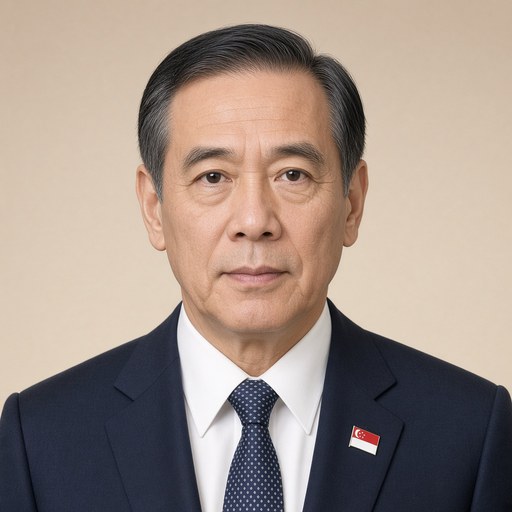

- Context
- Lee addressed a Business China event in Singapore on 27 November 2013, accepting a patron role and speaking on China's reforms and Singapore-China business opportunities.
- Main themes
- China's economic development, Third Plenary Session of the 18th Central Committee, Singapore-China business relations, Business China initiative, China's reform agenda, Asia-Pacific regional stability, China's peaceful rise, bilateral opportunities for Singapore, Chinese economy transformation, long-term development outlook
- Duration
- ~16 min
- Words
- 1,952
- Sentences
- 121
- Readability
- 36
- Grade
- 12.1
- Syntax
- 2.82
- Vocabulary
- 2.17
Translated from Multiple languages
The broad sphere of national life a sentence belongs to. Every sentence has an Arena, so it is the denominator the other indices are read against.
Other121 sentences in 29 paragraphs
Ladies and gentlemen, good evening!
Thank you, Chairman Cai.
First of all, congratulations to Chairman Cai, the three former presidents, Liu Yanling, Yang Limin, and Chen Zhenquan, as well as the Business China team for making Business China a vibrant and successful initiative.
Business China was established in 2007. Since then, the international economic environment has undergone tremendous changes, and China's influence on the world is now markedly different. Therefore, Business China has become a valuable resource for Singaporean businesses and Singaporeans doing business in China. Hence, I am also very pleased to accept the invitation from Business China to become a patron. Tonight, I also welcome Secretary Liang Baohua back to Singapore. It is a rare opportunity to gather with old friends today, and I feel particularly happy.
In the past few years, Western developed countries – the United States and Europe – have fallen into economic difficulties. Although the economic situation has stabilized, they still face quite serious long-term problems. In contrast, the development situation in Asia is relatively stable and optimistic, especially in China, which has become the world's second-largest economy. China is a vast market and a major producer and competitor in the world.
China is a large country with a large population and vast territory, with diverse social needs, and it is also a country in transition. Whether in terms of economic, social, or other reforms, there are still many complex issues that have not reached a consensus or solution. In fact, some problems may not be resolved hastily. Rapid adjustments or inadequate responses may lead to unstable consequences. To control and manage a large country, one must exercise great caution. The entire development process is bound to be bumpy. Therefore, we should broaden our perspective and not remain stuck in a short-sighted view of China's future.
Let’s start with the Third Plenary Session of the 18th Central Committee. Before the meeting, the media and political commentators were very interested in the content of the session, even holding high expectations. After the communiqué was released, the initial reaction was somewhat disappointing. Commentators felt that the content of the communiqué was not clear enough, and that Chinese leaders were unwilling to implement bold reforms. The market reacted similarly, with various indices declining one after another. However, the immediate reaction is not necessarily the correct one. A few days later, after the Central Committee's decision on several major issues concerning comprehensively deepening reforms was announced, the public and media quickly reversed their reactions, becoming positive, and the stock market rebounded. Commentators also changed their tune, affirming the leadership philosophy of President Xi Jinping and Premier Li Keqiang. Therefore, when we track current events in China, we must remember to measure its progress against China's long-term trends.
The reform proposals launched at the Third Plenary Session of the 18th Central Committee reflect the determination of Chinese leaders to implement the transformation of the Chinese economy, enabling it to sustain long-term development. The upcoming reforms and developments in China face many challenges. However, I am confident about China's future. This is because the Chinese people are hardworking, and the quality of their officials is high. China is striving for progress and development, and this strong momentum can be seen in all provinces and cities across the country. This is a strong driving force for China's development and modernization. Of course, China's future is also closely related to the strategic situation in the Asia-Pacific region. A peaceful and stable Asia is conducive to China's reform and development. Therefore, all Asian countries look forward to China's peaceful rise and hope that China's friendly foreign policy will allow all countries to share a safe regional environment.
Singapore can gain new opportunities from China's development. For example, our companies can diversify their investments in China, as there are business opportunities in various industries, provinces, cities, and towns. Singaporean companies can participate in many different projects to promote China's economic development. Singapore can also be a new base for Chinese companies to enter regional and international markets. The flow is two-way: Singaporean companies go to China to develop markets, while Chinese companies come to Singapore to reach the world. Our two governments can also share management insights in various fields, including environmental awareness, social governance, and inclusive economic development. Despite different national conditions and scales, the challenges faced by both countries have commonalities. There is much room for mutual exchange here.
To fully seize these opportunities, Singapore must deepen and expand our multifaceted cooperative relationship with China. The government will strengthen the cooperation mechanism of the Singapore-China bilateral relationship, which includes promoting various Singapore-China cooperation projects. The joint committee we co-hosted recently met under the leadership of Vice Premier Zhang Gaoli from China and our Deputy Prime Minister Teo Chee Hean, comprehensively discussing the areas of bilateral cooperation.
At the same time, our companies must prepare to enter the Chinese market. They must first grasp the actual situation of the Chinese market, understand the operational requirements in various aspects, and recognize the experts and their strengths. They should also enhance their language skills, cultural customs, and business etiquette. We cannot afford to relax, as we face increasingly strong competitors. Our competitors are not only companies from within China but also many enterprises from other countries. They are also eyeing the Chinese market and are working hard to master the Chinese language and understand China's national conditions. Therefore, we must continue to strive.
Business China is a good partner in helping Singaporean companies integrate into the Chinese market. First, it continues to promote the Chinese language and Chinese culture in our diverse society. Second, it provides accurate business information and analysis about China for local enterprises. Finally, it develops various partnerships that are beneficial for Singapore-China development. Therefore, Business China has a long way to go.
Business China Achievement Award
The success of Business China is not solely due to its own efforts but relies on the hard work of good friends and supporters from China and Singapore. One of these good friends is former Jiangsu Party Secretary Mr. Liang Baohua. He is a good friend of Singapore and also my old friend; I have known him for fifteen years. Mr. Liang Baohua was formerly the Secretary of the Suzhou Municipal Committee and concurrently served as the Chinese co-chair of the Joint Working Committee for the Singapore-Suzhou Industrial Park. The successful development of the industrial park relied heavily on Secretary Liang's leadership and support. After long negotiations, Secretary Liang and the Singapore side jointly formulated a win-win cooperation framework that allowed both sides to smoothly develop the industrial park together. This work laid a successful foundation for the Suzhou Industrial Park, which ultimately became a model for China's economic development. Later, when Secretary Liang served as a leader in Jiangsu Province, his determination and proactive efforts allowed the cooperation between Singapore and Jiangsu to flourish. Today, Singapore and Jiangsu have established a very close and substantive relationship, becoming a model.
Here, I would like to thank Secretary Liang for his many contributions to Singapore-China cooperation. I am very pleased that Business China will present this year's Achievement Award to Secretary Liang Baohua. Congratulations to Secretary Liang, and congratulations to the other award recipients!
Now, let me say a few words in English.
Distinguished guests, ladies and gentlemen,
SEIZING NEW OPPORTUNITIES
The global economy has undergone tumultuous changes since Business China was formed back in 2007. The US and Europe have had a difficult time – their economies have stabilized, but they still have long-term problems with debt and employment. Asia has continued to grow, particularly China which has become the world’s second largest economy. The outlook for Asia is bright, despite challenges in individual countries.
China’s path, I believe, will continue to be upwards. But it is natural for such a big and complex country, that its path will also have ups and downs. But we should not be caught up with short-term sentiments. We should step back and take a long-term view. I am optimistic about China’s potential. Its people are hungry, driven and keen to take their place on the world stage. Its leaders are clear-minded about their goals, yet conscious of China’s enormous challenges, and committed to reforms.
The next stage of reforms will not be easy. As Premier Li Keqiang has said, reforms are more difficult because they will have to tackle vested interests. But China overcame similarly difficult challenges in the past, e.g. restructuring their SOEs, reforms to prepare itself to enter WTO ten years ago.
So I am confident that China has the capability to do it again. One major factor in China’s success will be the strategic situation in the Asia Pacific. A stable regional environment will enable China to focus on its domestic priorities and reforms. Hence all Asian countries look forward to China’s peaceful development, and hope that China’s friendly relations with its neighbours will contribute to a stable and peaceful environment for all.
China’s next phase of development will be different from the past. Domestically, it is emphasizing on sustainable development, urbanisation and social governance. These issues concern Singapore too. Hence our experience may be relevant to China, just as their solutions will be of interest to us. At the same time, we must find new solutions as our own circumstances change so we can continue to improve Singaporeans' lives and remain relevant to other countries, including China. Internationally, more Chinese companies are expanding to the region and to the West. Singapore is a suitable launchpad for them – we are familiar with Chinese culture, operating in a Western business environment and connected to the global economy. So many Chinese companies have taken advantage of Singapore’s unique position to connect to the international marketplace. We will maintain our pro-business environment and welcome high quality investments to thrive here and create better jobs for Singaporeans.
On the Government's part, we are continually updating and enhancing our partnership with China. We are strengthening the Joint Council for Bilateral Cooperation (JCBC) as the umbrella platform to coordinate our activities. The JCBC just met in Singapore, under new Chinese co-chair Vice Premier Zhang Gaoli and DPM Teo Chee Hean. Singapore is making progress in our flagship projects: Suzhou Industrial Park, Tianjin Eco-city, Guangzhou Knowledge City, etc. We are pursuing new cooperation under our seven provincial business councils, including with Jiangsu. We are developing new opportunities inland, e.g. in Chengdu and Chongqing, in line with China’s emphasis on opening up the western provinces.
Our companies must take advantage of these opportunities and adapt to China’s changing needs and circumstances. They must ensure products and services anticipate the demands of the Chinese market, e.g. Singapore's Cordlife Group gearing up to take advantage of relaxation of one child policy, expecting new babies to be born, new cord blood to be stored away. Companies also need to develop staff to understand China – language, customs, traditions, business practices, etc.
Business China continues to play a very important role to them, by promoting Chinese language and culture, helping our businesses gain useful insights and access in China and forging partnerships to benefit our enterprises.
Business China Excellence Award
Tonight’s awards pay tribute to the partnerships that have benefitted Business China and Singapore. I am especially pleased to be presenting this year’s Excellence Award to former Jiangsu Party Secretary Mr Liang Baohua.
Business China has made valuable contributions despite its short history. I am honoured to be Patron of Business China. I look forward to helping Business China continue its good work. We have a long journey to go and much work to do. I wish Business China all the best, and every success for the future!
The original Multiple languages. The tags above are read on the English translation's sentences.
先生们,女士们,晚上好!
谢谢蔡主席
首先,恭喜蔡主席,三位前总裁,刘燕玲、杨莉明和陈振泉,还有通商中国团队把通商中国办得有声有色 。
通商中国于2007年成立。 至今,国际经济大环境已经有了巨大的改变,中国对世界的影响也截然不同 。因此,通商中国成了新加坡企业,还有在中国从商的新加坡人的一个宝贵的资源 。因此,我也很乐意接受通商中国的邀请,成为赞助人 。今晚也欢迎梁保华书记再次来到新加坡 。今天能跟老朋友们相聚,是难得的机会 ,感到特别快乐。
过去几年,西方发达国家 – 美国及欧洲 – 陷入了经济困境。 虽然经济局势已经稳定下来,不过他们还面对相当严重的长期问题 。相比之下,亚洲的发展局势较稳定及乐观,尤其是中国,已经成为世界第二大的经济体。中国是庞大的市场,也是世界主要的出产国和竞争者 。
中国是个大国,人多地广,社会需求多,也是正在转型的国家 。无论是经济,社会或是其他方面的改革,还有很多错综复杂的问题,还未达成共识或是解决方案 。其实,有些问题也不一定能仓促的解决。过快的调整,或不周详的应对措施,可能带来不稳定的后果。一个大国,要控制它,要操纵它,必须非常谨慎的行驶。整个发展过程不平坦是必然的 。所以我们应该放远视角,而不停留在以短浅的目光看中国的未来 。
就从十八三中全会谈起 。开会前,媒体与政治评论家对全会的内容深感兴趣,甚至抱有很高的期望 。全会公报出炉后,初步反应是对全会有点失望。评论家觉得公报内容不够明确,中国领导人不愿意大刀阔斧地进行改革。市场也做出了相同的反应,各项指数相继下滑 。可是第一时间的反应不一定是正确的反应。过了几天,中共中央关于全面深化改革若干重大问题的决定公布后,公众、媒体等反应很快扭转过来了,成为一个积极的反应,股市也回弹了。评论家也换了调子,肯定了习近平主席和李克强总理的领导理念 。所以当我们跟踪中国时事时,必须记得以中国的长期动向来衡量它的进展 。
十八届三中全会推出的改革议案,反映了中国领导人的决心,要落实中国经济的转型,使它能够长期持续性,发展下去 。中国接下来的改革开发,挑战不少。不过我对中国的未来有信心。因为中国人民肯拼博、干部素质高。中国求进,求上,发展势头很强,在全国各省市都可以看到。这对中国的发展和现代化是一股很强的推动力 。当然,中国的前途也跟亚太区域的战略局势息息相关 。亚洲能维持和平稳定,有利于中国改革发展 。因此亚洲各国都期待中国的和平崛起,也希望中国的睦邻外交政策,将让所有的国家共享一个平安的区域环境 。
新加坡可以从中国发展得到新的机遇,例如 我们的公司可以在中国有多样化的投资,各行各业、各省各市、各城各镇、都有商机。新加坡公司能参与许多不同的项目,促进中国的经济发展 。新加坡也可以是中国企业走向区域和国际市场的新基地 。流动是双方面的,新加坡公司到中国去开发市场,中国公司到新加坡来,走向世界。我们两国的政府也可以分享不同领域的管理心得,其中包括环保意识、社会治理、还有包容性的经济发展。尽管国情不同,规模不一样,不过两国应对的挑战有共同点。这里有很多互相交流的空间 。
如果要充分利用这些机遇,新加坡必须深化和扩大我们跟中国多方面合作的关系 。政府将加强中新双边关系的合作机制,这包括促进各项中新合作项目。我们双方连办的联委会,最近,在中国张高丽副总理和我国张志贤副总理的领导下开了会议,全面地讨论了双边的合作领域 。
同时,我国企业也要为进军中国市场做好准备 。先掌握好中国市场的实际情形,了解各方面的运作须知,认识行家还有他们的实力 。再配合加强语言能力、文化习俗、商业礼仪等资讯 。我们不能松懈下来, 因为我们面对日益强大的竞争对手 。跟我们竞争的不单是来自中国国内的公司,还有其他许多国家的企业 。它们也放眼中国市场,他们也努力掌握华语,了解中国国情 。所以,我们必须继续努力。
通商中国是帮助新加坡企业融入中国市场的好伙伴。首先是在我们多元社会里,继续推广华语还有华族文化 。其次是为本地企业提供准确的中国商业资讯和分析 。最后是开拓各种有利于中新发展的伙伴关系 。所以,通商中国任重道远。
通商中国成就奖
通商中国的成功不是单靠自己的力量,而有赖于中国和新加坡的好朋友还有支持者的努力 。其中的一位好朋友就是原江苏省委书记梁保华先生 。他是新加坡的好朋友,也是我的老朋友,我认识他已经十五年了 。梁保华先曾经是苏州市委书记,同时兼任新中苏州工业区联合 工作委员会的中方主席 。工业园最后能顺利开发,多靠梁书记的领导与支持 。经过长期的磋商,梁书记和新方共同制定了一个双赢的合作架构,让中新方可以顺利的共同开发工业区。这项工作让苏州工业区奠下了成功的基础,最后成了中国经济发展的一个典范。过后,梁书记任职江苏省领导时,通过他的魄力与积极推动,使新加坡与江苏的合作能茁壮起来 。如今,新加坡与江苏建立了非常密切,并且具有实质性的的关系,是佼佼者。
在此,我要感谢梁书记对中新合作的许多贡献 。我很高兴通商中国将把今年度的成就奖颁给梁保华书记 。恭喜梁书记,也恭喜其他得奖者!
现在,让我用英语讲几句话 。
Distinguished guests, ladies and gentlemen
SEIZING NEW OPPORTUNITIES
The global economy has undergone tumultuous changes since Business China was formed back in 2007. The US and Europe have had a difficult time – their economies have stabilised, but they still have long-term problems with debt and employment. Asia has continued to grow, particularly China which has become the world’s second largest economy. The outlook for Asia is bright, despite challenges in individual countries.
China’s path, I believe, will continue to be upwards. But it is natural for such a big and complex country, that its path will also have ups and downs. But we should not be caught up with short-term sentiments. We should step back and take a long-term view. I am optimistic about China’s potential. Its people are hungry, driven and keen to take their place on the world stage. Its leaders are clear-minded about their goals, yet conscious of China’s enormous challenges, and committed to reforms.
The next stage of reforms will not be easy. As Premier Li Keqiang has said, reforms are more difficult because they will have to tackle vested interests. But China overcame similarly difficult challenges in the past, e.g. restructuring their SOEs, reforms to prepare itself to enter WTO ten years ago.
So I am confident that China has the capability to do it again. One major factor in China’s success will be the strategic situation in the Asia Pacific. A stable regional environment will enable China to focus on its domestic priorities and reforms. Hence all Asian countries look forward to China’s peaceful development, and hope that China’s friendly relations with its neighbours will contribute to a stable and peaceful environment for all.
China’s next phase of development will be different from the past. Domestically, it is emphasizing on sustainable development, urbanisation and social governance. These issues concern Singapore too. Hence our experience may be relevant to China, just as their solutions will be of interest to us. At the same time, we must find new solutions as our own circumstances change so we can continue to improve Singaporeans' lives and remain relevant to other countries, including China. Internationally, more Chinese companies are expanding to the region and to the West. Singapore is a suitable launchpad for them – we are familiar with Chinese culture, operating in a Western business environment and connected to the global economy. So many Chinese companies have taken advantage of Singapore’s unique position to connect to the international marketplace. We will maintain our pro-business environment and welcome high quality investments to thrive here and create better jobs for Singaporeans.
On the Government's part, we are continually updating and enhancing our partnership with China. We are strengthening the Joint Council for Bilateral Cooperation (JCBC) as the umbrella platform to coordinate our activities. The JCBC just met in Singapore, under new Chinese co-chair Vice Premier Zhang Gaoli and DPM Teo Chee Hean. Singapore is making progress in our flagship projects: Suzhou Industrial Park, Tianjin Eco-city, Guangzhou Knowledge City, etc. We are pursuing new cooperation under our seven provincial business councils, including with Jiangsu. We are developing new opportunities inland, e.g. in Chengdu and Chongqing, in line with China’s emphasis on opening up the western provinces.
Our companies must take advantage of these opportunities and adapt to China’s changing needs and circumstances. They must ensure products and services anticipate the demands of the Chinese market, e.g. Singapore's Cordlife Group gearing up to take advantage of relaxation of one child policy, expecting new babies to be born, new cord blood to be stored away. Companies also need to develop staff to understand China – language, customs, traditions, business practices, etc.
Business China continues to play a very important role to them, by promoting Chinese language and culture, helping our businesses gain useful insights and access in China and forging partnerships to benefit our enterprises.
Business China Excellence Award
Tonight’s awards pay tribute to the partnerships that have benefitted Business China and Singapore. I am especially pleased to be presenting this year’s Excellence Award to former Jiangsu Party Secretary Mr Liang Baohua.
Business China has made valuable contributions despite its short history. I am honoured to be Patron of Business China. I look forward to helping Business China continue its good work. We have a long journey to go and much work to do. I wish Business China all the best, and every success for the future!
Explore related topics