




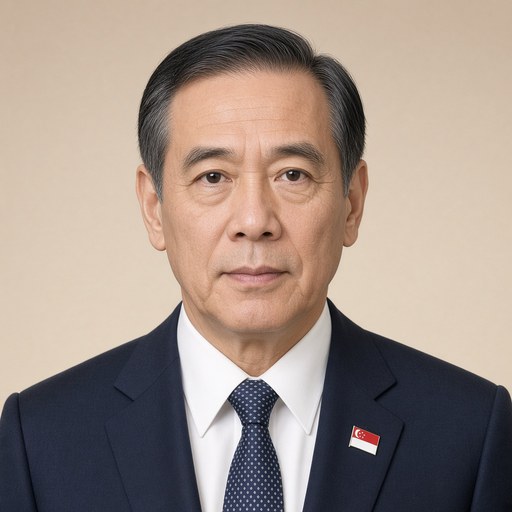
PM Lee Hsien Loong at Zaobao 90th Anniversary and Launch of Zaobao.sg
 Lee Hsien Loong · Prime Minister of Singapore
- Context
- Lee addressed guests at the Lianhe Zaobao 90th anniversary celebration and launch of Zaobao.sg in Singapore on 22 November 2013.
- Main themes
- Zaobao's 90th anniversary, role of Chinese-language newspapers in Singapore, digital media transformation, social media challenges, cybersecurity and hacking, cyber-bullying and online harassment, China coverage and regional perspective, Chinese culture transmission, new media consumption habits
- Duration
- ~18 min
- Words
- 2,208
- Sentences
- 89
- Readability
- 50
- Grade
- 9.7
- Syntax
- 2.80
- Vocabulary
- 2.35
The broad sphere of national life a sentence belongs to. Every sentence has an Arena, so it is the denominator the other indices are read against.
Other89 sentences in 45 paragraphs
Mr Lim Jim Koon Editor-in-Chief, Chinese Newspapers Division, SPH Mr Goh Sin Teck Editor, Lianhe Zaobao Distinguished guests, ladies and gentlemen
Congratulate Zaobao on its 90th birthday!
90 YEARS OF ZAOBAO
Zaobao has come a very long way over past 90 years a. One of the longest surviving Chinese newspapers in the world. Hope that it will remain one of the world’s leading Chinese newspapers in another 90 years’ time b. Most widely-read Chinese newspaper in Singapore, with almost 800,000 readers. Number of Zaobao.com readers also rising c. Highly regarded in the region and Asia – its articles are often quoted in Chinese newspapers in the region
Zaobao has done well by staying true to several fundamental principles:
a. Reporting news as a Singapore newspaper, with a special emphasis on our Chinese community i. A dependable newspaper for older readers who have witnessed the growth and evolution of Zaobao ii. A trusted alternative for younger readers who turn to Zaobao for a different perspective from the English media b. Helping Singaporeans interpret global developments, especially in China i. e.g. coverage of the recent Third Plenum ii. Cogent summary of communiqué, showing that the Plenum covered not just economic, but also social and political issues iii. As a long-time observer of China, Zaobao could put across the key outcomes of the Plenum in simple terms, highlight the differences between this communiqué and the one issued at the Third Plenum of the 16th National Congress a decade ago, and help readers understand the implications of the next stage of China’s reforms iv. This is how Zaobao adds value c. Overseas readers turn to Zaobao for two reasons:
i. It gives them a perspective from a Southeast Asian country; Singapore’s views differ from the perspectives of the media in China, Hong Kong and Taiwan ii. Zaobao provides objective and comprehensive reports. Hence overseas readers who are interested in Singapore, regional affairs and China, read Zaobao d. Besides reporting the news, Zaobao plays an important role transmitting Chinese culture and values i. Not only through its reporting, but also by organising cultural activities ii. Activities are very popular, e.g. Singapore River Hongbao, 九。歌 cultural performance at Fort Canning Park
Happy birthday and well done!
NEW MEDIA LANDSCAPE
The media landscape has been completely transformed since Zaobao began a. Globalisation and technology have drawn the world closer together, but led to more rapid changes and uncertainty b. Social media is transforming our lives c. Readership and consumption habits have evolved i. Number of Singaporean readers is stagnating; their median age is rising ii. Interests more diverse, including greater demand to hear different points of view – not just for serious news, but entertainment and lifestyle too iii. Many people no longer read the papers or news online, but rather rely on friends’ recommendations via social media iv. Media “pulled” on demand rather than “pushed” to captive audiences v. Preference for shorter, quicker snippets than comprehensive analyses – 140-character limit on Weibo and Twitter makes it an impossible challenge to report serious stories!
vi. More sources of news, many of which are free. More readers using free news aggregators, thus putting pressure on paid providers like Zaobao
These trends bring many benefits, but also new challenges a. Benefits:
i. Easier to share information, connect with one another, keep abreast of latest trends ii. People may be physically far apart, but they can connect instantly to family, friends and colleagues, e.g. “virtual” reunions over Chinese New Year iii. People are using new media to organise themselves for common causes (1) e.g. disaster relief efforts for “Typhoon Haiyan” in the Philippines (2) Humanitarian assistance could be quickly organised because of new media (3) What would have taken many days now takes minutes b. Challenges:
i. News that travels fastest may not be the most accurate ii. Immediate consensus views may not gel with considered analyses iii. Easier to coalesce in narrower groups, and hence harder to forge a national consensus
Abuse of new media is a big challenge facing many countries, including Singapore, e.g.
a. Criminal activity, including hacking i. Witnessed multiple attacks recently – in Singapore and our neighbours ii. Hacking is a serious threat. Not just a prank but can cause grave harm, e.g. shutting down essential government services, or crashing a hospital management system. Hence it is a crime iii. We will deal with the culprits fully under the law b. Cyber-bullying i. A growing problem ii. Young are especially vulnerable – victims may end up depressed or suicidal iii. We need laws to combat cyber-bullying and other forms of internet harassment c. Trolling i. Phenomenon of discussion and debate degenerating into abuse and hate-mongering ii. Issue is not about whether people agree or disagree online – trolls deter serious readers from participating, and ruin the overall atmosphere in cyberspace iii. Such behaviour is totally unacceptable face to face, and should be totally unacceptable online too iv. One factor behind trolling: Online anonymity (1) Studies have shown that anonymity increases unethical behaviour and contempt, because they feel that no one will know who they are and hence can do whatever they want v. Many overseas sites have grappled with this issue. Some have installed safeguards to manage the problem, e.g. (1) Requiring log-ins for posting comments – YouTube, New York Times (2) Banning comments altogether – Popular Science vi. In Singapore, we see much constructive engagement online, but also no lack of trolling vii. We must fight back against trolling, and provide a safe, responsible online environment which promotes constructive participation viii. TODAYonline.com now requires readers to log-in using their FB accounts before posting comments – this has worked well and raised the quality of discussion ix. Government will do likewise – REACH will require log-ins from mid-December
These challenges are not easy to solve. But the new media is already a reality and an indispensable part of our lives a. We must do more to harness its potential to improve our lives, while reducing its downsides
The Government is harmonising our New Media rules with our rules for mainstream media, e.g.
a. Requiring online news sites that exceed a certain readership to be licensed under the Broadcasting Act b. Requiring news and current affairs sites not to receive foreign funding
Government also leveraging new media to engage Singaporeans better a. Almost every ministry and MP has an FB account b. Including me (plus Twitter and IG too!)
c. Because young Singaporeans tell me, “Facebook is for the older generation (20-30 years old); I use IG!”
d. I find them effective channels of communications, which allow me to engage Singaporeans directly and quickly i. My recent FB post about a barn owl which flew into the Istana garnered 500,000 views within a day!
ZAOBAO.SG
Mainstream media like Zaobao must also adapt to the new landscape. Zaobao.com is Zaobao’s response to the new media a. A tremendous success since its establishment b. More are reading Zaobao using mobile apps or online c. Zaobao.com receives four million pageviews daily, mostly from Singapore and China d. Because their tastes and needs are different, Zaobao has launched two versions of its website, to customise the same content for Singapore and foreign readers e. Zaobao has launched Zaobao.sg for its Singapore readers f. Zaobao.sg contains serious and quality commentaries g. Singaporeans who wish to understand Singapore through the Chinese media now have a new source of information h. Wish Zaobao.sg every success!
HOW ZAOBAO CAN CONTINUE TO THRIVE
Zaobao.sg will not be Zaobao’s last venture into the new media a. Readers’ tastes and needs will continue to change, e.g. citizen journalism, greater demand for interactive media b. Technology will continue to advance rapidly, especially as bandwidth and mobile technology become faster and cheaper c. No one knows what novel programmes, gadgets or applications will take off in the future, and how they will transform our lives d. Hence Zaobao has to continually experiment and innovate to be current with the latest developments, and to find the best way to meet the information needs of a new generation
In terms of content, Zaobao must continue to uphold the core principles that have enabled it to succeed, while adapting them to a new age and generation of readers a. Agree with Jim Koon that Zaobao and the Singapore mainstream media must maintain high levels of public trust, while adapting to the new environment b. This is the value of Zaobao and of Singapore’s media
Within this context, I have some suggestions on how Zaobao can continue to thrive in the future Reflect diverse views objectively and responsibly
First, because Singapore is a multi-cultural society, Zaobao must reflect our society’s increasingly diverse views and needs a. Yet also promote a shared understanding of national issues and challenges b. Zaobao must represent the tone and temper of our society c. Separate news reports and opinion pieces, and set things in proper context i. Zaobao has often done this well, e.g. Budget and NDR. Zaobao captured the key points, translated it to Chinese, explained them and their implications clearly to Singaporeans and highlighted their reactions, all within limited pages. I take my hat off to the journalists who do this!
d. How Zaobao reports news is important, because it can shape perceptions and fan emotions i. Especially when dealing with sensitive or emotional issues, careful reporting is important to maintaining social cohesion in Singapore e. Naturally, this applies to all newspapers, not just Zaobao Provide a Singaporean Perspective on the Region
Second, continue to provide a Singaporean perspective on China and Northeast Asia a. Zaobao has an advantage because it is a Singapore Chinese newspaper, otherwise it would be no different from the media in China, Hong Kong or Taiwan b. Many Chinese counterparts tell me they read Zaobao for its reports and analyses on current affairs and on China. Sometimes they would read Zaobao before their own dailies
As China’s global influence grows, natural that Zaobao focus more on China a. Given the number of readers, the Chinese market will account for a bigger share of Zaobao’s earnings
To retain its competitive edge, Zaobao must continue to take a detached, balanced and Singaporean perspective when reporting a. This will also allow Zaobao to continue fulfilling its important function as a Singaporean newspaper
I know Zaobao takes this responsibility very seriously a. But I feel it is useful to remind ourselves, as this is a very important consideration Transmit Chinese culture and values
Third, continue to transmit Chinese culture and values a. This is important to our Chinese community b. Many Zaobao readers are also concerned about Chinese culture’s place in Singapore. I see this in readers’ letters to Zaobao’s Forum page, e.g. on mother tongue policy, translation standards, and the languages used on public signs
Fully understand community’s concerns a. Government doing utmost to preserve Chinese culture, e.g.
i. Promoting mother tongues in schools and at work ii. Upgrading our SAP schools, e.g. St Nicholas Girls’ School, whose new campus I just opened iii. Building Singapore Chinese Cultural Centre iv. Working with Business China to help Singaporeans succeed in China v. Zaobao partners us in many initiatives – thank you Zaobao!
b. Even as we celebrate our heritage, we must ensure that it keeps up with the times so as not to lose the younger generation c. In this regard, Zaobao has continued to find new ways to celebrate our heritage which appeal to younger Chinese Singaporeans, e.g. 九。歌 concert included a joint performance between the Tang Quartet and Kun Opera – a new interpretation of East and West classics
As we preserve our Chinese culture, we must remember that ours is a multi-racial and multi-ethnic society a. We have worked hard to build a Singaporean identity, so we are all Singaporeans first, regardless of race or religion b. Hence, even as we celebrate our own ethnic culture, we must continue to safeguard our common secular space and the use of our common language, English. Hope you understand that we need to find the right balance
CONCLUSION
We are experiencing a strategic shift in the media landscape a. Our rules and norms have not yet caught up with this new reality b. Over time, we need to develop a framework which will help us take full advantage of the new media i. Widen the space for constructive discourse and participation among Singaporeans ii. Allow different perspectives to surface, not just those of a vocal minority iii. Protect responsible users from those who abuse cyberspace, especially anonymously
Besides the Government and media, individuals too must adapt to the new landscape a. Learn, and relearn to adapt to rapid changes, and not become digital dropouts b. Raise our “digital quotient” and learn to synthesize and understand information from a wide range of sources, especially since the volume of information we receive will only increase
I am confident that Zaobao will evolve with the times a. No one knows what form Zaobao will take 90 years from now b. But so long as Zaobao retains public trust, leverages its strength as a Singapore Chinese newspaper and moves with the times, it can remain one of the world’s leading Chinese newspapers
Thank you!
Explore related topics