




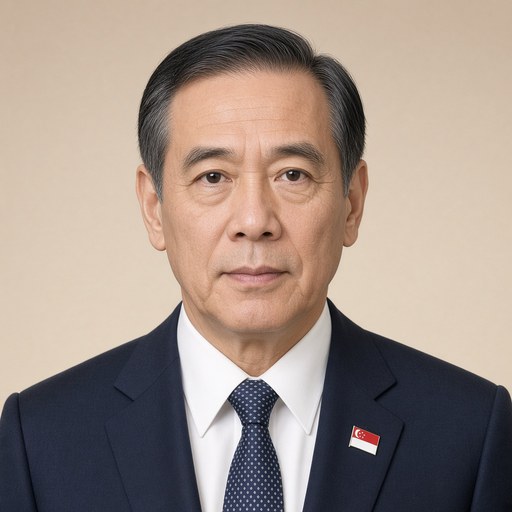
PM Lee Hsien Loong on the COVID-19 situation in Singapore on 3 April 2020
 Lee Hsien Loong · Prime Minister of Singapore
- Context
- PM Lee addressed Singaporeans on 3 April 2020 to announce strict circuit breaker measures in response to rising COVID-19 cases and new community clusters.
- Main themes
- COVID-19 circuit breaker measures, workplace closures, safe distancing, school home-based learning, foreign worker dormitory clusters, community transmission, government support, national unity, essential services, movement restrictions
- Duration
- ~39 min
- Words
- 4,721
- Sentences
- 307
- Readability
- 59
- Grade
- 8.9
- Syntax
- 2.78
- Vocabulary
- 2.42
Translated from Multiple languages
The broad sphere of national life a sentence belongs to. Every sentence has an Arena, so it is the denominator the other indices are read against.
Other307 sentences in 86 paragraphs
My fellow Singaporeans, good afternoon.
Update on current situation.
I last spoke to you on COVID-19 three weeks ago.
Since then, the number of new cases daily has begun to rise. We used to see fewer than 10 new cases a day. But in the last two weeks, despite our best efforts, we have routinely had more than 50 new cases daily.
Initially, many of the new cases were imported from overseas, mostly returning Singaporeans. Then last week, we began to have more local cases. Furthermore, despite our good contact tracing, for nearly half of these cases, we do not know where or from whom the person caught the virus. This suggests that there are more people out there who are infected, but who have not been identified. And they may be passing the virus unknowingly to others.
In the last few days, we have also discovered several clusters at foreign worker dormitories, and one at a nursing home. These are very worrying, because large numbers of people live together in dormitories and nursing homes. A single case can quickly lead to a large cluster. Furthermore, nursing home patients are mostly old and frail, and very vulnerable to the virus.
Applying a circuit breaker.
As the situation developed over the past weeks, we have tightened our safe-distancing measures progressively. Singaporeans have responded well, calmly and responsibly, and made adjustments in their daily lives. By working together, we have kept the outbreak under control.
But looking at the trend, I am worried that unless we take further steps, things will gradually get worse, or another big cluster may push things over the edge. I discussed this with the Multi-Ministry Task Force (MTF). We have decided that instead of tightening incrementally over the next few weeks, we should make a decisive move now to pre-empt escalating infections. We will therefore impose significantly stricter measures. This is like a circuit breaker.
It will help reduce the risk of a big outbreak occurring. And it should also help to gradually bring our numbers down. This in turn will allow us to relax some of the measures. This circuit breaker will apply for one month, in the first instance. The Task Force is holding a Press Conference immediately after I finish speaking to you to explain the details. But let me give you the key points.
First, we will close most workplaces, except for essential services and key economic sectors. Food establishments, markets and supermarkets, clinics, hospitals, utilities, transport and key banking services will remain open. These are essential services. We also should not disrupt economic sectors that are strategic, or form part of a global supply chain. People working in these industries can continue to go to work, with safe-distancing measures in place. But most other work premises must close. If the person can work from home, he should do so — telecommute. But others will not be able to, including foreign workers on construction sites and in shipyards. These workers live in dormitories, and we will make arrangements to look after them. The closure of workplaces will take effect from next Tuesday. This will ensure that most of our workforce stay at home and limit their physical interaction to as few people as possible.
Second, we will also move to full home-based learning in our schools and Institutes of Higher Learning (IHLs). We started with one day of home-based learning this week. This has gone smoothly, with some teething issues being resolved. The Ministry of Education (MOE) will work with the schools to implement full home-based learning starting next Wednesday. All preschool and student care centres will also be closed, but will provide limited services for children of parents who have to continue working and are unable to make alternative care arrangements.
Third, we will tighten restrictions on movements and gatherings of people. It boils down to three things. First, stay at home, as much as possible. Second, avoid socialising with others beyond your own household. Gatherings should be confined to your household. Avoid visiting even your extended families who are not staying with you, especially if they are elderly or vulnerable. Third, go out only to do essential things. For work, if you are in essential services or key economic sectors. To buy food at markets, or to take out from restaurants and hawker centres. Or to exercise in the neighbourhood park, keeping a safe distance from others.
The spirit of these measures is to get all of us to minimise physical contact. If we do not go out, if we avoid contact with others, then the virus will not be able to spread. It is as simple as that.
I know this is very hard to do. As a practical matter, in places like hawker centres and wet markets, it is difficult to practise safe-distancing, especially on the weekends when it is crowded. It will help if we all adjust our habits. For example, do our marketing on weekdays instead of weekends to avoid the crowd. We will also deploy more Safe-Distancing Ambassadors to encourage people not to crowd together, so please cooperate with them.
Safe-distancing is also hard for a psychological and emotional reason: it goes very much against our human instincts. It is in our nature to want to socialise, to be close to those we are talking to, to take comfort in the warmth and company of friends and family. I fully understand this. But I hope you will also understand why we all have to take social distancing extremely seriously in this period. This is the only effective way to slow the transmission of the virus, so that we gradually bring our numbers down. It is also the best way to keep our families safe, and particularly to protect our seniors from getting ill. So please bear with the painful adjustments that we have to make. Each and every one of us can, and must do our part, to keep everyone in Singapore safe from COVID-19.
Each and every one of us can, and must do our part, to keep everyone in Singapore safe from COVID-19.
PM Lee Hsien Loong.
Let me now say a few words in Malay and Mandarin.
Saudara saudari sekalian.
Dalam beberapa minggu lepas, bilangan kes baru COVID-19 telah meningkat. Kami memantau perkembangan ini dengan teliti, dan mengetatkan langkah berjaga-jaga secara beransur-ansur.
Rata-rata, rakyat Singapura mematuhi arahan. Bagi masyarakat Melayu/Islam, anda telah membuat beberapa pengorbanan dan penyesuaian yang besar, seperti kaum lain juga. Anda faham kenapa masjid ditutup, anda mengamalkan Salam Mufti, dan menundakan majlis keramaian yang penting seperti majlis perkahwinan. Seperti yang diterangkan Mufti, masyarakat Islam juga perlu membuat penyesuaian bagi Ramadan dan bulan Syawal yang bakal menjelang. Saya sendiri kecewa kita tidak akan ada bazar di Geylang Serai tahun ini. Kesal sekali! Tetapi ini tidak boleh dielakkan. Terima kasih kerana memberikan kerjasama anda.
Keadaan masih terkawal. Tetapi Pemerintah bimbang sekiranya kes baru terus meningkat, mungkin kemudian bilangan kes akan melonjak dengan tinggi. Oleh itu, kami telah memutuskan untuk melaksanakan langkah berjaga-jaga yang lebih ketat, selama sebulan.
Kami akan menutup sebahagian besar tempat kerja, sekolah dan pra-sekolah. Tetapi perkhidmatan penting seperti pasar dan pasar raya, tempat makan, dan pengangkutan awam akan terus dibuka. Anda masih boleh mendapatkan barang-barang dapur anda, dan masih boleh membeli makanan di pusat penjaja.
Kami juga akan menutup sekolah dan pusat pra-sekolah. Saya harap ibu bapa akan terus membimbing anak-anak anda ketika di rumah, supaya pendidikan mereka tidak terjejas.
Kami akan perketat langkah-langkah untuk memastikan jarak selamat. Sebelum ini kami pernah katakan bahawa orang ramai boleh berkumpul, asalkan tidak melebihi 10 orang. Tetapi sekarang, kami mahu anda duduk di rumah jika boleh, dan elakkan daripada bergaul selain daripada lingkungan keluarga anda sendiri.
Saya tahu ini suatu yang sangat susah untuk dilakukan, kerana kita semua mahukan teman dan berhubung dengan orang lain, serta berbual dan beramah tamah bersama rakan-rakan dan saudara-mara kita. Tetapi saya harap anda boleh bersabar dengan apa yang kita harus laksanakan, dan patuhi peraturan demi keselamatan anda sendiri dan kita semua.
各位同胞
过去几个星期,冠状病毒的确诊病例逐步增加。我们密切关注事态的发展,并且随着疫情的演变,逐步加紧防控措施,以保障国人的健康。非常感谢大家的合作,遵守相关的规定。
现在的情况继续受到控制。但我担心,如果这种趋势持续下去,我们迟早会面临病例大幅度增加的风险。因此,我们决定暂时采取更严格的措施,尽量减少人与人之间的接触,防止病毒扩散。这些措施将为期一个月。
我们将下令暂时关闭,提供非必要服务的商店。但是巴刹、超市、小贩中心、餐馆和公共交通等基本服务将照常营业。你还是可以买到日常用品,蔬菜,肉类等,也还可以向摊主购买食物,带回家享用。
我们也将关闭学校和学前教育中心。但我们会给你时间去安排,在关闭期间孩子由谁照料。我们会为那些还是需要工作,或是无法安排人手照顾孩子的父母亲提供协助。教育部长稍后会详细说明。
此外,我们将加强安全距离措施。过去的做法是,人们可以继续有聚会,只要人数不超过十个。但现在,我们希望你尽可能留在家里,除了与一起同住的家庭成员以外,请避免出门参加社交活动。我知道有些是大家庭,亲人也住得很近,不过在这一个月,也请大家忍耐一下,在这期间请不要互相拜访、串门或搬来搬去住,请暂时把住所定在一个地方。但希望大家继续以其他方式保持联络,例如视讯聊天或打电话,甚至可以写信。
我知道要严格遵守安全距离措施,并不容易。毕竟社交活动是我们日常生活的一个重要部分,我们都需要通过社交,感受到亲情和友情的温暖,都渴望有亲人和朋友在身边陪伴,相互扶持,排忧解闷,谈天说地。尤其是我们的乐龄人士,之前政府不得已,已经取消了大部分他们喜欢参与的活动,他们不能去上课、跟老朋友一起喝茶聊天、唱歌、跳舞、做运动,可能会觉得生活很单调。幸好,网上和电视上有很多节目让年长人士在家也可以继续过精彩的生活。例如华文媒体集团每天就推出一系列网上直播,邀请人民协会的教练和老师继续陪大家晨运、学习烹饪和唱歌。8频道也有电视节目教大家运动,分享保健贴士等等,让人们呆在家里也不会无聊。所以,在对抗疫情的非常时期,为了全民的健康,请大家必须暂时忍一忍,没有必要的话就不要出门。这么做既是照顾好自己,也是为了保护好我们的年长家人以及体弱的人士,避免他们受到感染。
我吁请大家积极配合这些新的防疫措施,齐心对抗疫情,保障我们的家人和新加坡的安全。
I decided to speak to you directly today to explain why we need to make this major move now, but also to reassure you that things will be alright. Essential services will continue running so that all of us can cope in this new situation, as we batten down to fight this virus. We have enough food supplies to last us through this period and beyond. You can still shop at the supermarket or wet market. And you need not rush to stock up for weeks at a time. You can still buy food from your favourite hawker centres or coffee shop, though you will have to take out and eat at home with your own family, rather than hang out and eat outside with your friends.
I know these measures will impact our workers and businesses severely. This is already a very difficult time for them. We will help them come through this. On Monday in Parliament, DPM Heng Swee Keat will announce additional support for households and businesses, over and above what was provided in the two earlier Budgets. We will also legislate to require landlords to pass on property tax rebates fully to their tenants. We will also pass new temporary legislation to let businesses and individuals defer certain contractual obligations for a period, such as paying rent, repaying loans, or completing work.
Face Masks.
Besides implementing this circuit breaker, we also are rethinking our advice on face masks.
Up to now, the Government has advised the general public that you only need to wear a mask if you are not feeling well, and this is to protect others from your germs. This was based on scientific advice and guidelines from the World Health Organization (WHO). We also did not have community spread in Singapore then, so it was very unlikely for you to run into anyone with COVID-19 on the street, much less be infected by them. Nevertheless, the Government gave each household four surgical masks, to use in case you got sick, and to give people peace of mind.
Now, the situation is changing. We now think there are some cases out there in the community going undetected, though probably still not that many. We also now have evidence that an infected person can show no symptoms, and yet still pass on the virus to others. This is why the WHO is reviewing the issue of face masks, and so is the US Centers for Disease Control and Prevention (CDC).
Therefore, we will no longer discourage people from wearing masks. Wearing a mask may help to protect others, in case you have the virus but do not know it. This is so that you keep your droplets to yourself — when you sneeze or speak or cough. It can also protect yourself a little better, especially if you are elderly, or vulnerable because of pre-existing health conditions.
We still want to conserve surgical masks for the people who really need them – healthcare workers in clinics and hospitals. For everyone else, in a community setting, alternatives like reusable masks will give some added protection. So from this Sunday, the Government will distribute reusable masks to all households. Meanwhile, many community groups have been making and distributing reusable masks for the elderly and vulnerable. I applaud these efforts. They show our community spirit and mutual care.
But remember, mask or no mask, you still need to wash your hands, and keep a safe distance away from other people.
Conclusion.
The next few weeks will be pivotal. Even after these stepped-up measures, the number of cases will quite likely still go up in the next few days. They can be cases who have already been infected earlier, except they have not yet shown symptoms, or not yet gone to see their doctor. But if we keep our efforts up, within a few weeks we should be able to bring the numbers under control, bring the numbers down, and get into a more sustainable position.
We will keep on doing our utmost to protect every Singaporean from COVID-19. Many people have been working tirelessly for the past two months — our nurses and doctors, our contact tracers and healthcare staff. We thank them all for their efforts and sacrifices. Now we are all enlisted to join them on the frontline.
It will be a long fight. But if any country can see this through, it is Singapore. We have the resources. We have the determination. We are united. By helping one another through this, we will prevail, and emerge stronger.
Thank you.
It will be a long fight. But if any country can see this through, it is Singapore.
PM Lee Hsien Loong.
Many of the new cases were initially imported from abroad, and most of them were our fellow citizens returning to Singapore. However, just last week, there has been an increasing trend in local infections. We have also found that, although we are doing quite well in terms of contact tracing, we are unable to determine where nearly half of the new cases were infected or who the transmitters are. This means that there may be some individuals in the community who are infected with the virus but have not yet been detected, and they may inadvertently spread the virus.
In addition, in the past few days, we have identified several clusters of infections in foreign worker dormitories and one cluster in a nursing home. This situation is very concerning because many people live together in these places. Once a case appears, it can quickly lead to a large-scale outbreak. Moreover, most residents in nursing homes are elderly and physically weak, making them more susceptible to the virus.
Blocking the Transmission of the Virus
In light of the changes in the situation over the past few weeks, we have gradually strengthened our safe distancing measures. Singaporeans have generally remained calm in response to these measures. People have responsibly cooperated and made adjustments in their daily lives. Through everyone's collective efforts, the situation has largely been brought under control.
However, based on the current trend, I am concerned that if we do not further strengthen our precautions, the situation may gradually worsen, or a large-scale outbreak may occur, which would overwhelm the entire system. After discussions with the government inter-agency task force, we have decided that rather than gradually adjusting measures in the coming weeks, we should take decisive action now before the number of infections continues to rise. Therefore, we will implement stricter measures in the coming period to block the transmission of the virus.
This is to reduce the risk of large-scale transmission of the virus locally. At the same time, it should gradually reduce the number of infected individuals in our country. If the numbers can decrease, we can also lift some measures. These measures aimed at blocking the transmission of the virus will be implemented for one month. After I finish speaking, the inter-agency task force will hold a press conference to announce the details. However, let me briefly summarize the key points.
First, most places providing non-essential goods or services will be temporarily closed, but places providing essential services and industries that are part of the main economic sectors can continue to operate. Food establishments and food-related businesses, hawker centers, wet markets, supermarkets, major banking services, clinics, hospitals, utilities, and transport services will continue to operate as usual, as these are essential services. Industries that are strategically important to the country or part of the global supply chain will also not be affected by the new measures and will continue to operate. Those working in these sectors can continue to go to work but must comply with safe distancing measures. All other workplaces must close. If employees can work from home, they should do so. However, there are some individuals whose work nature does not allow them to work from home, including foreign workers on construction sites and shipyards. We will make proper arrangements to take care of these foreign workers living in dormitories. This measure will take effect next Tuesday and will ensure that most of our workforce stays at home, minimizing contact with others as much as possible.
Second, we will have students in schools and Institutes of Higher Learning (IHLs) attend classes from home. We just started allowing students to learn from home one day a week this week. This trial has gone relatively smoothly, although there were some minor issues that have been resolved. The Ministry of Education will work with schools to fully implement home-based learning from next Wednesday. We will also close all preschool education centers and student care centers, but we will provide limited services for parents who need to continue working and cannot find someone to care for their children.
Third, we will strengthen public movement control and limit gatherings. We will implement these measures through three aspects. First, everyone should stay at home as much as possible and avoid going out. Second, do not meet or interact with individuals outside your family. Gatherings and interactions should be limited to members of your household. Please try to avoid visiting family members who do not live with you, especially older family members and those with weakened immune systems. Third, only go out when necessary. For example, if you work in essential services or major economic sectors and must go to work, or if you need to go to the market to buy groceries, or to restaurants and hawker centers to take away food, or to exercise in neighborhood parks, but remember to maintain safe distancing from others.
The purpose of these measures is to reduce close contact with others. As long as we do not go out, we will not come into contact with others. As long as we do not come into contact with others, the virus will not have the opportunity to spread. This principle is very simple.
Although everyone understands this, it is not easy to ask everyone to comply. In reality, places like hawker centers and wet markets tend to be crowded on weekends, making it difficult to maintain safe distancing. But if we can all adjust our habits, it will help prevent the spread of the virus, for example, by choosing to go grocery shopping on Sundays to avoid the crowds. Next, we will also deploy more "safe distancing ambassadors" across the island to remind people to strictly adhere to the regulations, and I ask everyone to listen to their advice and cooperate.
But I understand that maintaining safe distancing goes against human nature, and it may take time for us to adjust psychologically and emotionally. It is human nature to enjoy social interaction with others, and we cannot be too far apart when talking and communicating. In life, we inevitably crave the company of family and friends, supporting each other and providing warmth. I completely understand this. But I hope everyone can understand why it is necessary to take these safe distancing measures very seriously during this critical time. Because this is the most effective way to slow down the spread of the virus and gradually reduce the number of infected individuals in our country. It is also the best way to protect the safety of our families and prevent our elderly from falling ill. Therefore, please make the difficult but necessary adjustments and temporarily endure some inconveniences to make these measures effective. Each of us must and can do our part to be cautious in our prevention efforts and protect the safety of ourselves and others.
The reason I decided to speak again today is to personally explain to everyone why we need to take this significant measure now.
It is also to reassure everyone and tell the public that we have made arrangements, and there will not be major issues ahead. We will ensure that essential services can continue to operate, allowing everyone to quickly adapt to the new situation and prepare mentally for the long-term battle. We have sufficient food supplies to get us through this period and beyond. You can still go to supermarkets or wet markets to buy things. Supermarkets will continue to restock, so you do not need to rush to hoard food and essentials for the future. You can still enjoy the food from your favorite hawker centers or coffee shops. However, we will ask you to take it home to eat with your family instead of dining out with friends.
I know these measures will have a severe impact on our workers and businesses. They are already in a very difficult situation during this time. We will stand shoulder to shoulder with them to help them through this tough time. When Parliament reconvenes next Monday, Deputy Prime Minister Heng Swee Keat will announce additional support for families and businesses. This will be a support package beyond the previously announced budget and supplementary budget. We will also legislate to require property owners to pass on the full property tax rebates they receive to tenants, as well as introduce temporary assistance measures to help businesses and individuals who are temporarily unable to fulfill contractual obligations due to the pandemic, so they do not have to worry about being unable to pay rent, repay loans, or complete work.
Masks
In addition to implementing measures to block the transmission of the virus, we are also revisiting the recommendations on the use of masks.
The government has always advised the public to wear masks only when they are unwell, as this protects others from being infected by the germs you may spread. This is based on the guidelines from the World Health Organization and has scientific backing. Moreover, there was no community transmission at that time, so it was unlikely for the general public to come into contact with COVID-19 patients while walking on the street, let alone be infected by them. Nevertheless, the government earlier distributed four masks to each household to provide reassurance.
However, the current situation has evolved. We now believe that there are some cases in the community with unknown sources, although the numbers should not be too high yet. At the same time, we have evidence that some individuals are infected with the virus but do not show symptoms and may be transmitting the virus to others. This is why the World Health Organization and the Centers for Disease Control and Prevention in the United States are reviewing the issue of masks.
Therefore, we will no longer advise people not to wear masks if they are not sick, as doing so may help protect others in case they are unknowingly infected and inadvertently spray droplets on others while sneezing, talking, or coughing. At the same time, it also provides an extra layer of protection for oneself, especially for those who are elderly or have underlying health conditions and weakened immune systems.
Even so, we still want to reserve surgical masks for those who need them most—such as healthcare workers in hospitals and clinics. For the general public, in normal circumstances, reusable masks can be worn to provide additional protection. Therefore, starting this week, the government will distribute reusable masks to every household. During this period, many community organizations have also voluntarily made and distributed reusable masks for the elderly and those with weakened immune systems. Their actions reflect the warmth and compassion of the community and are commendable.
But please remember—whether or not you wear a mask, we must continue to wash our hands frequently and maintain safe distancing from others.
Conclusion
The next few weeks are critical. Although we are implementing these stricter measures and ramping up our prevention efforts, the number of confirmed cases in our country is expected to increase in the coming days. These cases may be individuals who were already infected earlier but have not yet shown symptoms or have not sought medical attention. As long as we continue to work hard, we should be able to slow the development of the outbreak within a few weeks, reduce the number of new cases, and reach a more sustainable state.
We must persevere in the fight against the virus and do our utmost to protect every Singaporean. Over the past two months, many people have been working tirelessly on the front lines of our prevention efforts—our nurses and doctors, contact tracing teams, and caregivers. We thank them for their hard work. Now is the time for us to stand shoulder to shoulder with them on the front lines.
This will be a long battle. Looking at the world, Singapore is one of the countries most likely to weather this crisis because we have the resources, the determination, and our people are united. Let us come together as one, embodying the spirit of mutual support and solidarity that defines Singapore. Together, we will ultimately defeat the virus, achieve victory, and grow stronger through this challenge.
Thank you.
Face masks, apart from implementing these immediate safety measures, we are also considering our advice regarding face masks. Until now, the government has advised the public that you should wear a face mask only if you are unwell. This arrangement is to protect others from the germs you may have. This advice was based on scientific evidence and guidelines received from the World Health Organization. At that time, there was no community transmission of the virus in Singapore. Therefore, the chance of encountering anyone infected with COVID-19 while you are out on the street was very rare. Moreover, the likelihood of you contracting the virus from such individuals was also very low. However, for the purpose of using them if you fall ill and to provide peace of mind to the public, the government has provided four surgical masks to each household.
But now the situation is changing. We believe that there are some individuals in the community who are infected with the virus but have not been identified. Even if that number may not be high. We now have evidence that an infected person may show no symptoms at all, and in such circumstances, they can still spread the virus to others. This is why the World Health Organization and the Centers for Disease Control and Prevention in the United States are re-evaluating their stance on face masks.
Therefore, we will no longer discourage people from wearing face masks. If you are infected and unaware of it, wearing a mask will help protect others. It will help keep your droplets to yourself. It will also help protect you in a slightly better way. Especially if you are elderly or someone who is more susceptible due to previous medical issues.
We still think that surgical masks should be reserved for those who truly need them – healthcare workers in pharmacies and hospitals. Alternative measures, such as reusable masks, provide a bit of extra protection for everyone else in the community. Therefore, starting this Sunday, the government will distribute reusable masks to all households. At the same time, many community groups are producing reusable masks and distributing them to the elderly and those who are more susceptible. I commend their efforts. They reflect our community's strength and compassionate thinking.
But remember, whether you have a mask or not, you must continue to wash your hands; you must maintain a safe distance from others.
The next few weeks will be very important. Even with these increased measures, the number of infected individuals may continue to rise in the coming days. They may have been previously infected. They may have shown no symptoms or may not have visited their doctors. But if we continue our efforts, within a few weeks, we can reduce the number of infected individuals and reach a sustainable state.
We will continue to do everything we can to protect every Singaporean from the COVID-19 virus. For the past two months, many have been working tirelessly. Our healthcare workers – doctors, contact tracers, and healthcare staff. Our gratitude goes to their efforts and sacrifices. Now, we all join them in this work.
This will be a long struggle. But if any country can overcome this successfully, it will be Singapore. We have the resources. We have the resolve. We are united. By helping one another, we will emerge stronger.
The original Multiple languages. The tags above are read on the English translation's sentences.
Chinese
Tamil
My fellow Singaporeans Good afternoon
Update on current situation
I last spoke to you on COVID-19 three weeks ago.
Since then, the number of new cases daily has begun to rise. We used to see fewer than 10 new cases a day. But in the last two weeks, despite our best efforts, we have routinely had more than 50 new cases daily.
Initially, many of the new cases were imported from overseas, mostly returning Singaporeans. Then last week, we began to have more local cases. Furthermore, despite our good contact tracing, for nearly half of these cases, we do not know where or from whom the person caught the virus. This suggests that there are more people out there who are infected, but who have not been identified. And they may be passing the virus unknowingly to others.
In the last few days, we have also discovered several clusters at foreign worker dormitories, and one at a nursing home. These are very worrying, because large numbers of people live together in dormitories and nursing homes. A single case can quickly lead to a large cluster. Furthermore, nursing home patients are mostly old and frail, and very vulnerable to the virus.
Applying a circuit breaker
As the situation developed over the past weeks, we have tightened our safe-distancing measures progressively. Singaporeans have responded well, calmly and responsibly, and made adjustments in their daily lives. By working together, we have kept the outbreak under control.
But looking at the trend, I am worried that unless we take further steps, things will gradually get worse, or another big cluster may push things over the edge. I discussed this with the Multi-Ministry Task Force (MTF). We have decided that instead of tightening incrementally over the next few weeks, we should make a decisive move now to pre-empt escalating infections. We will therefore impose significantly stricter measures. This is like a circuit breaker.
It will help reduce the risk of a big outbreak occurring. And it should also help to gradually bring our numbers down. This in turn will allow us to relax some of the measures. This circuit breaker will apply for one month, in the first instance. The Task Force is holding a Press Conference immediately after I finish speaking to you to explain the details. But let me give you the key points.
First, we will close most workplaces, except for essential services and key economic sectors. Food establishments, markets and supermarkets, clinics, hospitals, utilities, transport and key banking services will remain open. These are essential services. We also should not disrupt economic sectors that are strategic, or form part of a global supply chain. People working in these industries can continue to go to work, with safe-distancing measures in place. But most other work premises must close. If the person can work from home, he should do so — telecommute. But others will not be able to, including foreign workers on construction sites and in shipyards. These workers live in dormitories, and we will make arrangements to look after them. The closure of work places will take effect from next Tuesday. This will ensure that most of our workforce stay at home and limit their physical interaction to as few people as possible.
Second, we will also move to full home-based learning in our schools and Institutes of Higher Learning (IHLs). We started with one day of home-based learning this week. This has gone smoothly, with some teething issues being resolved. The Ministry of Education (MOE) will work with the schools to implement full home-based learning starting next Wednesday. All preschool and student care centres will also be closed, but will provide limited services for children of parents who have to continue working and are unable to make alternative care arrangements.
Third, we will tighten restrictions on movements and gatherings of people. It boils down to three things. First, stay at home, as much as possible. Second, avoid socialising with others beyond your own household. Gatherings should be confined to your household. Avoid visiting even your extended families who are not staying with you, especially if they are elderly or vulnerable. Third, go out only to do essential things. For work, if you are in essential services or key economic sectors. To buy food at markets, or to take out from restaurants and hawker centres. Or to exercise in the neighbourhood park, keeping a safe distance from others.
The spirit of these measures is to get all of us to minimise physical contact. If we do not go out, if we avoid contact with others, then the virus will not be able to spread. It is as simple as that.
I know this is very hard to do. As a practical matter, in places like hawker centres and wet markets, it is difficult to practise safe-distancing, especially on the weekends when it is crowded. It will help if we all adjust our habits. For example, do our marketing on weekdays instead of weekends to avoid the crowd. We will also deploy more Safe-Distancing Ambassadors to encourage people not to crowd together, so please cooperate with them.
Safe-distancing is also hard for a psychological and emotional reason: it goes very much against our human instincts. It is in our nature to want to socialise, to be close to those we are talking to, to take comfort in the warmth and company of friends and family. I fully understand this. But I hope you will also understand why we all have to take social distancing extremely seriously in this period. This is the only effective way to slow the transmission of the virus, so that we gradually bring our numbers down. It is also the best way to keep our families safe, and particularly to protect our seniors from getting ill. So please bear with the painful adjustments that we have to make. Each and every one of us can, and must do our part, to keep everyone in Singapore safe from COVID-19.
Each and every one of us can, and must do our part, to keep everyone in Singapore safe from COVID-19.
PM Lee Hsien Loong
Let me now say a few words in Malay and Mandarin.
Saudara saudari sekalian.
Dalam beberapa minggu lepas, bilangan kes baru COVID-19 telah meningkat. Kami memantau perkembangan ini dengan teliti, dan mengetatkan langkah berjaga-jaga secara beransur-ansur.
Rata-rata, rakyat Singapura mematuhi arahan. Bagi masyarakat Melayu/Islam, anda telah membuat beberapa pengorbanan dan penyesuaian yang besar, seperti kaum lain juga. Anda faham kenapa masjid ditutup, anda mengamalkan Salam Mufti, dan menundakan majlis keramaian yang penting seperti majlis perkahwinan. Seperti yang diterangkan Mufti, masyarakat Islam juga perlu membuat penyesuaian bagi Ramadan dan bulan Syawal yang bakal menjelang. Saya sendiri kecewa kita tidak akan ada bazar di Geylang Serai tahun ini. Kesal sekali! Tetapi ini tidak boleh dielakkan. Terima kasih kerana memberikan kerjasama anda.
Keadaan masih terkawal. Tetapi Pemerintah bimbang sekiranya kes baru terus meningkat, mungkin kemudian bilangan kes akan melonjak dengan tinggi. Oleh itu, kami telah memutuskan untuk melaksanakan langkah berjaga-jaga yang lebih ketat, selama sebulan.
Kami akan menutup sebahagian besar tempat kerja, sekolah dan pra-sekolah. Tetapi perkhidmatan penting seperti pasar dan pasar raya, tempat makan, dan pengangkutan awam akan terus dibuka. Anda masih boleh mendapatkan barang-barang dapur anda, dan masih boleh membeli makanan di pusat penjaja.
Kami juga akan menutup sekolah dan pusat pra-sekolah. Saya harap ibu bapa akan terus membimbing anak-anak anda ketika di rumah, supaya pendidikan mereka tidak terjejas.
Kami akan perketat langkah-langkah untuk memastikan jarak selamat. Sebelum ini kami pernah katakan bahawa orang ramai boleh berkumpul, asalkan tidak melebihi 10 orang. Tetapi sekarang, kami mahu anda duduk di rumah jika boleh, dan elakkan daripada bergaul selain daripada lingkungan keluarga anda sendiri.
Saya tahu ini suatu yang sangat susah untuk dilakukan, kerana kita semua mahukan teman dan berhubung dengan orang lain, serta berbual and beramah tamah bersama rakan-rakan dan saudara-mara kita. Tetapi saya harap anda boleh bersabar dengan apa yang kita harus laksanakan, dan patuhi peraturan demi keselamatan anda sendiri dan kita semua.
各位同胞
过去几个星期,冠状病毒的确诊病例逐步增加。我们密切关注事态的发展,并且随着疫情的演变,逐步加紧防控措施,以保障国人的健康。非常感谢大家的合作,遵守相关的规定。
现在的情况继续受到控制。但我担心,如果这种趋势持续下去,我们迟早会面临病例大幅度增加的风险。因此,我们决定暂时采取更严格的措施,尽量减少人与人之间的接触,防止病毒扩散。这些措施将为期一个月。
我们将下令暂时关闭,提供非必要服务的商店。但是巴刹、超市、小贩中心、餐馆和公共交通等基本服务将照常营业。你还是可以买到日常用品,蔬菜,肉类等,也还可以向摊主购买食物,带回家享用。
我们也将关闭学校和学前教育中心。但我们会给你时间去安排,在关闭期间孩子由谁照料。我们会为那些还是需要工作,或是无法安排人手照顾孩子的父母亲提供协助。教育部长稍后会详细说明。
此外,我们将加强安全距离措施。过去的做法是,人们可以继续有聚会,只要人数不超过十个。但现在,我们希望你尽可能留在家里,除了与一起同住的家庭成员以外,请避免出门参加社交活动。我知道有些是大家庭,亲人也住得很近,不过在这一个月,也请大家忍耐一下,在这期间请不要互相拜访、串门或搬来搬去住,请暂时把住所定在一个地方。但希望大家继续以其他方式保持联络,例如视讯聊天或打电话,甚至可以写信。
我知道要严格遵守安全距离措施,并不容易。毕竟社交活动是我们日常生活的一个重要部分,我们都需要通过社交,感受到亲情和友情的温暖,都渴望有亲人和朋友在身边陪伴,相互扶持,排忧解闷,谈天说地。尤其是我们的乐龄人士,之前政府不得已,已经取消了大部分他们喜欢参与的活动,他们不能去上课、跟老朋友一起喝茶聊天、唱歌、跳舞、做运动,可能会觉得生活很单调。幸好,网上和电视上有很多节目让年长人士在家也可以继续过精彩的生活。例如华文媒体集团每天就推出一系列网上直播,邀请人民协会的教练和老师继续陪大家晨运、学习烹饪和唱歌。8频道也有电视节目教大家运动,分享保健贴士等等,让人们呆在家里也不会无聊。所以,在对抗疫情的非常时期,为了全民的健康,请大家必须暂时忍一忍,没有必要的话就不要出门。这么做既是照顾好自己,也是为了保护好我们的年长家人以及体弱的人士,避免他们受到感染。
我吁请大家积极配合这些新的防疫措施,齐心对抗疫情,保障我们的家人和新加坡的安全。
I decided to speak to you directly today to explain why we need to make this major move now, but also to reassure you that things will be alright. Essential services will continue running so that all of us can cope in this new situation, as we batten down to fight this virus. We have enough food supplies to last us through this period and beyond. You can still shop at the supermarket or wet market. And you need not rush to stock up for weeks at a time. You can still buy food from your favourite hawker centres or coffee shop, though you will have to take out and eat at home with your own family, rather than hang out and eat outside with your friends.
I know these measures will impact our workers and businesses severely. This is already a very difficult time for them. We will help them come through this. On Monday in Parliament, DPM Heng Swee Keat will announce additional support for households and businesses, over and above what was provided in the two earlier Budgets. We will also legislate to require landlords to pass on property tax rebates fully to their tenants. We will also pass new temporary legislation to let businesses and individuals defer certain contractual obligations for a period, such as paying rent, repaying loans, or completing work.
Face Masks
Besides implementing this circuit breaker, we also are rethinking our advice on face masks.
Up to now, the Government has advised the general public that you only need to wear a mask if you are not feeling well, and this is to protect others from your germs. This was based on scientific advice and guidelines from the World Health Organization (WHO). We also did not have community spread in Singapore then, so it was very unlikely for you to run into anyone with COVID-19 on the street, much less be infected by them. Nevertheless, the Government gave each household four surgical masks, to use in case you got sick, and to give people peace of mind.
Now, the situation is changing. We now think there are some cases out there in the community going undetected, though probably still not that many. We also now have evidence that an infected person can show no symptoms, and yet still pass on the virus to others. This is why the WHO is reviewing the issue of face masks, and so is the US Centers for Disease Control and Prevention (CDC).
Therefore, we will no longer discourage people from wearing masks. Wearing a mask may help to protect others, in case you have the virus but do not know it. This is so that you keep your droplets to yourself — when you sneeze or speak or cough. It can also protect yourself a little better, especially if you are elderly, or vulnerable because of pre-existing health conditions.
We still want to conserve surgical masks for the people who really need them – healthcare workers in clinics and hospitals. For everyone else, in a community setting, alternatives like reusable masks will give some added protection. So from this Sunday, the Government will distribute reusable masks to all households. Meanwhile, many community groups have been making and distributing reusable masks for the elderly and vulnerable. I applaud these efforts. They show our community spirit and mutual care.
But remember, mask or no mask, you still need to wash your hands, and keep a safe distance away from other people.
Conclusion
The next few weeks will be pivotal. Even after these stepped-up measures, the number of cases will quite likely still go up in the next few days. They can be cases who have already been infected earlier, except they have not yet shown symptoms, or not yet gone to see their doctor. But if we keep our efforts up, within a few weeks we should be able to bring the numbers under control, bring the numbers down, and get into a more sustainable position.
We will keep on doing our utmost to protect every Singaporean from COVID-19. Many people have been working tirelessly for the past two months — our nurses and doctors, our contact tracers and healthcare staff. We thank them all for their efforts and sacrifices. Now we are all enlisted to join them on the frontline.
It will be a long fight. But if any country can see this through, it is Singapore. We have the resources. We have the determination. We are united. By helping one another through this, we will prevail, and emerge stronger.
Thank you.
It will be a long fight. But if any country can see this through, it is Singapore.
PM Lee Hsien Loong
Chinese Translation of the remarks In English by PM Lee Hsien Loong on the COVID-2019 Situation on 3 April 2020
各位同胞,大家下午好!
目前的最新情况
我上一次针对2019冠病疫情发表全国讲话,是在三个星期前。
此后,新加坡每一天的新确诊病例开始增加。之前,我国每一天的新病例一般上少过十起。但是,过去这两个星期,即便我们调整了措施,加强防范,却仍然会看到一天内出现50多起新病例的情况。
许多的新病例最初是境外输入的,而当中大多数是回返新加坡的同胞。不过,就在上个星期,本土感染病例却有增加的趋势。我们也发现,虽然在疫情追踪方面我们做得还不错,但有近一半的新病例,我们无法确定他们是在哪里受到感染,传播者是谁。这意味着,社区里可能有一些人已感染到病毒,但仍未被发现,而他们或许在无意间把病毒传开。
此外,过去几天,我们也在客工宿舍发现几个感染群,在安老院也出现一个感染群。这个情况令人十分担忧,因为这些地方有很多人居住在一起。一旦出现一个病例,就可能快速形成一个大规模的感染群。更何况,安老院的住户多数年纪大,身体也较弱,很容易感染病毒。
阻断病毒的传播途径
鉴于疫情在过去几个星期的变化,我们也逐步加强了保持安全距离的措施。新加坡人也大致上保持冷静,应对这些措施。人们也很负责任地配合,在日常生活上作出调整。在大家的齐心努力之下,疫情大致上受到控制。
不过,按照目前的趋势来看,我担心如果不进一步加强防范,疫情会逐渐恶化,或是有一个大规模的感染群出现,而这会导致整个体系无法负荷。我与政府跨部门工作小组讨论之后决定,与其在接下来几周逐步调整措施,我们现在就应该在感染人数不断上升之前,采取果断的行动 。因此,我们将在今后一段时期内采取更严格的措施,以阻断病毒的传播途径。
这是为了减低病毒在本地大规模传播的风险。 同时也应该会让我国受感染的人数逐渐减少 。人数若能下降,我们也就能解除一些措施。这些旨在阻断病毒传播的措施,将先实行一个月。在我的发言结束之后,跨部门工作小组会立即举行记者会,公布详情。不过,让我简单地概括其中的要点。
首先,大部分提供非必需品或服务的场所将暂时关闭 ,不过提供必要服务的场所和属于主要经济领域的行业可以继续运作。饮食场所和饮食相关的商家、小贩中心、巴刹和超市、主要银行服务、诊所、医院、公用事业和交通服务等将照常营业,这些都是提供必要服务的场所。那些对国家具有战略意义的经济领域,又或者是全球供应链的行业之一,也不会受新措施影响,这些领域会继续运作。从事这些行业的人,可继续上班,但须遵守安全距离措施 。所有其他的工作场所都要关闭。如果能够在家办公,员工都应这么做。但也有一些人的工作性质,让他们无法在家办公,其中包括在建筑工地和船厂工作的客工。我们会做出妥善的安排,照顾这些住在宿舍的客工。这项措施会在下个星期二生效,并将确保我们的劳动队伍大多数都留在家里,尽可能避免与他人见面和接触。
第二,我们也将让学校和高等院校(IHLs),的学生们在家里上课 。我们刚刚在这个星期开始让学生每周一天在家中学习 。这次的测试还算顺利,虽然碰到了一些小问题,但已获得解决。教育部将和学校合作,从下个星期三起让学生全面在家里上课。我们也将关闭所有的学前教育中心和学生托管中心,但会为需要继续工作并找不到人手照顾孩子的家长,提供有限的服务。
第三,我们将加强民众的行动管制以及限制聚会的措施。我们会通过三方面推行这些措施。第一,大家应尽可能留在家中,不要外出。第二,不要和家人以外的人士见面和互动。聚会和互动应只限于你家中的成员。请尽量不要上门拜访不和自己住在一起的家人,尤其是年纪较大和免疫力较弱的家人。第三,只在有必要的时候才出门。例如,如果你是在必要服务和主要经济领域工作,而必须外出上班、到巴刹买菜,或到餐馆和小贩中心打包食物、或是到邻里公园运动,但切记要和他人保持安全距离。
这些措施的用意,是要大家都减少与人有近距离的接触。只要我们不出门,就不会和他人接触。只要不和他人接触,病毒就不会有机会传播。这个道理很简单 。
尽管大家都懂,但要求人人都做到,并不容易。实际上,像小贩中心和湿巴刹这类场所,到了周末,到那里的人会多,会拥挤,这一来就很难保持安全距离了。但如果我们都可以调整生活习惯,这将有助于防范病毒传播,比如,选择在周日去买菜,避开人潮。接下来,我们也会调派更多“安全距离大使”到全岛各地,提醒人们严格遵守规定,请大家听从他们的劝告, 给予配合。
但我明白,要保持安全距离,也有违人之常情,因此会让我们在心理上和情绪上一时难以适应。人的本性是喜欢与他人社交互动,而且与人谈话交流,总不能距离太远。在生活中,我们难免渴望有亲人和朋友在身边陪伴,相互扶持,互相取暖。这些,我完全能够理解 。但我希望大家能明白,为什么有必要在这个非常时期,非常认真地看待这些安全距离措施 。因为,这是减缓病毒传播速度最有效的方法,以逐步减少我国受感染的人数。这也是保护我们家人的安全,以及避免家中长辈染病的最佳方式。因此,请大家做出困难但必要的调整,暂时忍受一些不便,让这些举措行之有效。我们每一个人都必须、也能够尽自己的一份力,谨慎防疫,共同保护你我的安全。
我之所以决定在今天再度发言,是为了亲自向大家解释我们为什么需要现在就采取这一重大举措 。
同时也是为了让大家放心,告诉国人,我们已有所安排,接下来不会出现大问题 。我们将确保基本服务能够持续运行,让大家可以迅速适应新的情况,做好长期应战的心理准备。我们有足够的食物供应,可供我们度过这段时期和更长的时间。你还是可以到超市或湿巴刹买东西。超市也会继续补货,因此你不必为了日后所需,急着大量囤积食物和必需品。你也依旧可以吃到自己喜爱的小贩中心或咖啡店的美食。但我们会要求你打包回家和家人一起吃,而不是与朋友一起到这些地方用餐 。
我知道,这些措施会对我们的工友和企业造成严重的影响。他们在这段时间的处境已经相当困难。我们会与他们肩并肩,帮助他们渡过难关。下个星期一国会复会时,副总理王瑞杰将宣布为家庭和企业提供额外援助。这是之前财政预算案和追加预算案之外的援助配套。我们也将立法规定业主把享有的产业税回扣全数转给租户,以及立法推出临时援助措施,帮助因受到疫情影响而暂时无法履行合约义务的企业和个人,让他们不必为无法缴交租金、偿还贷款或完成工作而感到担忧。
口罩
除了采取阻断病毒传播的措施,我们也重新探讨使用口罩的建议。
一直以来,政府建议公众只有在生病时,才要戴上口罩,这能保护他人不会因你散播的细菌而染病。这是按照世界卫生组织指导原则所提出的建议,并且有科学根据。而且,本地当时还没有出现社区传播的情况,所以一般人走在街上,是不太可能接触到冠病患者,更不可能被他们感染。尽管如此,政府较早前还是给每户家庭分发了4个口罩,好让大家安心。
但是,目前的疫情已经有所演变。我们现在认为,社区已出现了一些来源不明的病例,不过人数应该还没那么多。同时,我们也有证据显示一些人已感染病毒,却没有出现症状,并且可能把病毒传给别人。这也就是为什么世界卫生组织和美国疾病控制与预防中心都在检讨口罩的问题。
因此,我们今后不会再建议人们没有生病就无需戴口罩,因为这么做或许有助于保护他人,以防自己染病却不知道,而无意间在打喷嚏、说话或咳嗽时,把飞沫喷到别人身上或脸上。同时,这也给自己多添一层保护,尤其是那些年长或已患有其他疾病、免疫力较弱的人。
即便这样,我们还是要尽可能把手术口罩保留给最需要它们的人——如医院和诊所的医护人员。对大众来说,在一般情况下,则可以戴上能够重复使用的口罩,让自己有多一份保障。因此,政府会从这个星期日起,向每户家庭分发可重复使用的口罩。这段期间也有许多社区组织自动自发,为年长和免疫力较弱的人士制作和分发可重复使用的口罩。他们的举止体现了社区有温情和人情味的一面,很值得表扬。
但请大家记住–不管戴不戴口罩,我们还须勤洗手,并且与其他人保持安全距离。
总结
接下来的几个星期非常关键。尽管我们采取这些更严格的措施,加紧防疫,接下来的几天我国的确诊人数预料还会增加。这些病例或许是之前已经受到感染的人,只不过他们还没有出现症状,或者还没去看医生。只要我们继续努力,我们应该能够在几个星期内减缓疫情的发展,让新病例有所减少,并达到一个更可持续的状态。
我们必须坚持下去,同病毒对抗,竭尽所能保护每一个新加坡人。过去两个月,有许多人在防疫的前线日以继夜、不眠不休地工作我们的护士和医生、追踪小组的人员以及护理人员。我们感谢他们的辛劳付出。现在是我们和他们在前线并肩作战的时刻。
这会是一场长期的战役。纵观全世界,新加坡是最可能挺过这次危机的国家之一,因为我们有资源,有决心,人民也团结一致。让我国上下一心,发挥互助互爱,同舟共济的新加坡精神。这样,我们终将击败病毒,取得胜利,越战越勇 。
谢谢。
Tamil Translation of the remarks In English by PM Lee Hsien Loong on the COVID-2019 Situation on 3 April 2020
என் சக சிங்கப்பூரர்களே, இனிய மாலை வணக்கம்!
தற்போதைய நிலவரம் குறித்த ஆக அண்மைத் தகவல் நான் கடைசியாக உங்களிடம், கொவிட்-19 கிருமித்தொற்று பற்றி, மூன்று வாரங்களுக்கு முன்னர் பேசியிருந்தேன்.
அப்போது முதல், அன்றாடம் கிருமித்தொற்றால் புதிதாக பாதிக்கப்படுபவர்களின் எண்ணிக்கை அதிகரிக்கத் தொடங்கியுள்ளது. நாம், நாள் ஒன்றுக்கு 10-க்கும் குறைவானவர்கள் கிருமித்தொற்றால் பாதிக்கப்படும் போக்கைக் கண்டு வந்தோம். ஆனால், கடந்த இரண்டு வாரங்களில், நாம் மிகச் சிறந்த முயற்சிகளை மேற்கொண்ட போதிலும் கூட, அன்றாடம் 50-க்கும் அதிகமானோர் கிருமித்தொற்றால் பாதிக்கப்படும் வழக்கம் நம்மிடையே ஏற்பட்டுள்ளது.
தொடக்கத்தில், இவ்வாறு பாதிக்கப்பட்டவர்களில் பெரும்பாலானோர், வெளிநாடுகளிலிருந்து வந்தவர்களாக இருந்தனர். அவர்களில் பெரும்பாலானோர், நாடு திரும்பிய சிங்கப்பூரர்கள். பின்னர், கடந்த வாரத்தில், உள்ளூரில் கிருமித்தொற்று ஏற்பட்டவர்கள் நம்மிடையே அதிகம் இருக்கத் தொடங்கினர். கிருமித்தொற்றால் பாதிக்கப்படுபவர்களுடைய தொடர்புகளின் தடங்களைக் கண்டறிவதில் நாம் சிறப்பாகச் செயல்பட்டாலும் கூட, உள்ளூரில் பாதிக்கப்பட்டவர்களில், சுமார் பாதிக்கும் மேற்பட்டவர்களுக்கு, எங்கிருந்து அல்லது யாரிடமிருந்து கிருமித்தொற்று ஏற்பட்டது என்பது பற்றி நமக்குத் தெரியவில்லை. மேலும் அதிகமானோர் கிருமித்தொற்றால் பாதிக்கப்பட்டுள்ளனர்; ஆனால், அவர்கள் இன்னும் அடையாளம் காணப்படவில்லை; அவர்கள் பிறருக்கு அந்தக் கிருமியைப் பரப்பி வருகிறார்கள் என்பதையே இது எடுத்துக் கூறுகின்றது.
கடந்த சில தினங்களில், வெளிநாட்டு ஊழியர்கள் தங்கும் விடுதிகளிலும், ஒரு தாதிமை இல்லத்திலும், கிருமித்தொற்றுக் குழுமங்கள் பலவற்றை, நாம் கண்டறிந்துள்ளோம். இவை மிகுந்த அக்கறைக்குரியவை. ஏனெனில், ஊழியர் தங்கும் விடுதிகளிலும் தாதிமை இல்லங்களிலும், பெரிய எண்ணிக்கையிலான மக்கள் ஒன்றாக வசிக்கிறார்கள். கிருமித்தொற்றால் ஒருவர் பாதிக்கப்பட்டால், விரைவில் பெரியதொரு கிருமித்தொற்றுக் குழுமம் உருவாவதற்கு, அது வித்திடக்கூடும். மேலும், தாதிமை இல்லத்தில் உள்ள நோயாளிகள், பெரும்பாலும், வயதானவர்கள்; நலிவடைந்தவர்கள்; கிருமியால் எளிதில் பாதிப்படையக்கூடியவர்கள்.
உடனடிப் பாதுகாப்பு நடவடிக்கைகளை மேற்கொள்ளுதல் கடந்த சில வாரங்களில், நிலைமை மாற்றம் கண்டு வருவதால், நாம், நமது பாதுகாப்பான தூர இடைவெளி சார்ந்த நடவடிக்கைகளைப் படிப்படியாக அதிகரித்துள்ளோம். சிங்கப்பூரர்கள், இந்த நடவடிக்கைகளை நல்ல முறையில் பின்பற்றி வருகிறார்கள். அவர்கள் அமைதியாகவும் பொறுப்புணர்வுடனும், தங்கள் அன்றாட வாழ்க்கையில் மாற்றங்களைச் செய்துகொண்டுள்ளனர். ஒன்றிணைந்து செயல்படுவதன் மூலம், நாம் நிலைமையைக் கட்டுக்குள் வைத்திருக்கிறோம்.
ஆனால், இந்தப் போக்கைப் பார்க்கும்போது, நாம் மேற்படி நடவடிக்கைகள் எடுக்காவிட்டால், நிலைமை படிப்படியாக மோசமடையும் அல்லது பெரியதொரு கிருமித்தொற்றுக் குழுமம் நிலைமையை கைமீறச் செய்துவிடக்கூடும் என்று எனக்கு பயமாக உள்ளது. நான் இதுபற்றிப் பல அமைச்சுகளுக்கு இடையிலான பணிக்குழுவிடம் கலந்து பேசினேன். கிருமித்தொற்றுப் பரவல் மேலும் அதிகரிப்பதைத் தடுக்க, அடுத்த சில வாரங்களில், கட்டுப்பாட்டு நடவடிக்கைகளைப் படிப்படியாக அதிகரிக்காமல், இப்போதே தீர்க்கமானதொரு முடிவை நாம் எடுத்தாகவேண்டும் என்று நாங்கள் முடிவெடுத்துள்ளோம். ஆகவே, உடனடிப் பாதுகாப்பு நடவடிக்கைகளாக, நாம் கணிசமான, மேலும் கெடுபிடியான நடவடிக்கைகளை அமுல்படுத்தவிருக்கிறோம். கிருமித்தொற்று பெரிய அளவில் பரவும் அபாயத்தையும் அது குறைக்கும். நம்மிடையே கிருமித்தொற்றால் பாதிக்கப்படுபவர்களின் எண்ணிக்கையையும் அது படிப்படியாகக் குறைத்துவிடக்கூடும். அத்தகைய சூழல், சில நடவடிக்கைகளைத் தளர்த்த நமக்குத் துணைபுரியும். முதற்கட்டமாக, இந்த உடனடிப் பாதுகாப்பு நடவடிக்கைகள், ஒரு மாதக் காலத்திற்கு நடப்பில் இருக்கும். நான் உங்களுடன் பேசி முடித்த பின்னர், அந்த நடவடிக்கைகள் பற்றி விவரிக்க, பணிக்குழு, செய்தியாளர் கூட்டம் ஒன்றுக்கு ஏற்பாடு செய்துள்ளது. ஆனால், அதுபற்றிய முக்கியத் தகவல்களை நான் உங்களுக்கு வழங்குகிறேன்.
முதலாவதாக, நாம் பெரும்பாலான வேலையிடங்களை மூடவிருக்கின்றோம் – அத்தியாவசிய சேவைகள் மற்றும் முக்கியப் பொருளியல் துறைகள் தவிர்த்து, உணவுக் கடைகள், சந்தைகள் – பேரங்காடிகள், மருந்தகங்கள், மருத்துவமனைகள், பயனீட்டுச் சேவைகள், போக்குவரத்துச் சேவைகள், முக்கிய வங்கிச் சேவைகள் ஆகியவை தொடர்ந்து செயல்படும். அவை அத்தியாவசியச் சேவைகள் ஆகும். நாம், உத்திபூர்வ அல்லது அனைத்துலக விநியோகச் சங்கிலியில் அங்கம் வகிக்கும் பொருளியல் துறைகளுக்கு இடையூறு விளைவிக்கக்கூடாது. இந்தத் துறைகளைச் சேர்ந்த ஊழியர்கள், பாதுகாப்பான தூர இடைவெளி சார்ந்த நடவடிக்கைகள் நடைமுறைபடுத்தப்பட்ட நிலையில், தொடர்ந்து வேலைக்குச் செல்வார்கள். ஆனால், பெரும்பாலான இதர வேலையிடங்கள் மூடப்படவேண்டும். ஊழியர்கள் வீட்டிலிருந்து பணிபுரிய முடியுமெனில், அவ்வாறு செய்யவேண்டும். ஆனால், கட்டுமானத் தளங்களிலும் கப்பல் தளங்களிலும் பணிபுரியும் வெளிநாட்டு ஊழியர்கள் உள்ளிட்ட பலரால் அவ்வாறு செய்ய இயலாது. இந்த ஊழியர்கள் தங்கும் விடுதிகளில் வசிக்கின்றனர். அவர்களைக் கவனித்துக்கொள்ள நாம் ஏற்பாடுகள் செய்யவிருக்கின்றோம். இது அடுத்த வாரம் / செவ்வாய்க்கிழமை முதல் நடப்புக்கு வரும். நமது ஊழியர் அணியில் பெரும்பாலானோர் வீட்டில் இருப்பதையும், கூடுமானவரை குறைவானவர்களுடன் நேரடித் தொடர்பைக் கொண்டிருப்பதையும் நாம் உறுதிசெய்யவேண்டும்.
இரண்டாவதாக, நாம் நமது பள்ளிகளையும் உயர்கல்வி நிலையங்களையும், வீட்டிலிருந்து கற்கும் நடைமுறைக்கு முழுமையாக மாற்றவிருக்கின்றோம். இந்த வாரம், நாம் வீட்டிலிருந்து கற்கும் நடைமுறையை, ஒரு நாள் அடிப்படையில் தொடங்கியுள்ளோம். இது சுமூகமாக நடந்தேறியுள்ளது. சில முதற்கட்டப் பிரச்சனைகளுக்குத் தீர்வு காணப்பட்டு வருகின்றன. கல்வி அமைச்சு, பள்ளிகளுடன் இணைந்து பணியாற்றி, அடுத்த புதன்கிழமை முதல் வீட்டிலிருந்து கல்வி கற்கும் நடைமுறையை முழுமையாகச் செயல்படுத்தவிருக்கின்றது. அனைத்து பாலர் பள்ளிகளும் மாணவர் பராமரிப்பு நிலையங்களும் கூட மூடப்படும். ஆனால், தொடர்ந்து வேலை செய்யவேண்டிய சில பெற்றோர்களால் தங்கள் பிள்ளைகளைக் கவனித்துக்கொள்வதற்கான மாற்று ஏற்பாடுகளைச் செய்ய இயலாமல் போகலாம். அத்தகையோரின் பிள்ளைகளின் குறிப்பிட்ட சில சேவைகள் வழங்கப்படும்.
மூன்றாவதாக, நாம் மக்களின் நடமாட்டம் மற்றும் ஒன்றுகூடல் தொடர்பான கட்டுப்பாடுகளை மேலும் கடுமையாக்கவிருக்கின்றோம். இது மூன்று முக்கிய அம்சங்களைக் கொண்டுள்ளது. முதலாவதாக, கூடுமானவரை, வீட்டிலேயே இருக்கவும். இரண்டாவதாக, உங்கள் வீட்டிற்கு அப்பால் உள்ள மற்றவர்களுடன் தொடர்புகொள்வதைத் தவிர்க்கவும். ஒன்றுகூடல்கள், உங்கள் வீட்டிற்கு உட்பட்டவையாக மட்டுமே இருக்கவேண்டும். உங்கள் வீட்டிற்கு அப்பால் உள்ள, மற்ற உறவினர்களைச் சென்று பார்ப்பதையும் தவிர்க்கவும்; குறிப்பாக, அவர்கள் முதியவர்களாகவும் எளிதில் பாதிப்புக்கு ஆளாகக்கூடியவர்களாகவும் இருக்கும் பட்சத்தில். மூன்றாவதாக, அத்தியாவசிய வேலைகளுக்காக மட்டுமே வெளியே செல்லவும் - நீங்கள் அத்தியாவசிய அல்லது முக்கிய பொருளியல் துறைகளில் பணிபுரிந்து வந்தால்; சந்தைகளில் உணவு வாங்குவதற்கு அல்லது உணவகங்கள் மற்றும் உணவங்காடி நிலையங்களில் உணவு வாங்கி, வீட்டிற்கு எடுத்துச் செல்வதற்கு; பிறருடன் பாதுகாப்பான தூர இடைவெளியுடன் அக்கம்பக்கப் பூங்காக்களில் உடற்பயிற்சி செய்வதற்கு.
இந்த நடவடிக்கைகளின் நோக்கம், நாம் அனைவரும் பிறருடனான நேரடித் தொடர்பைக் குறைத்துக்கொள்ளவேண்டும் என்பதே ஆகும். நாம் வெளியே செல்லாவிட்டால், பிறருடன் நேரடித் தொடர்பைக் குறைத்துக்கொண்டால், அந்தக் கிருமியால் பரவ இயலாது. அது அவ்வளவு சுலபமான காரியமே ஆகும்.
இது கடினமான செயல் என்று எனக்குத் தெரியும். எதார்த்த அடிப்படையில், உணவங்காடி நிலையங்கள், ஈரச் சந்தைகள் போன்ற இடங்களில் பாதுகாப்பான தூர இடைவெளியைக் கடைப்பிடிப்பது சிரமமான செயலாகும் – குறிப்பாக, வாரயிறுதி நாட்களில். அப்போதுதான் அங்குக் கூட்ட நெரிசலாக இருக்கும். நாம் அனைவரும் நமது பழக்க வழக்கங்களை மாற்றிக்கொண்டால், அது உதவியாக இருக்கும். உதாரணத்திற்கு, கூட்ட நெரிசலைத் தவிர்க்கும் பொருட்டு, வாரயிறுதி நாட்களில் அல்லாமல், வாரநாட்களில் பொருட்களை வாங்கச் செல்லவும். மக்கள் கூட்டமாக இருப்பதை மேலும் கடுமையாக வலியுறுத்தும் வகையில், நாம் பாதுகாப்பான தூர இடைவெளிக்கான தூதர்களையும் பணிக்கவிருக்கின்றோம். ஆக, தயவுசெய்து, அவர்களுடன் ஒத்துழைக்கவும்.
மனோரீதியாக, உணர்வுப்பூர்வ அடிப்படையிலும் கூட, பாதுகாப்பான தூர இடைவெளியைக் கடைப்பிடிப்பது சிரமமான செயலாகும்: அது நமது மனித உள்ளுணர்வுகளுக்கு எதிரானது. பிறருடன் தொடர்புகொள்வது, நாம் பேசுபவர்களுடன் நெருக்கமாக இருப்பது, நண்பர்கள் மற்றும் குடும்ப உறுப்பினர்களின் அரவணைப்பில் ஆறுதல் அடைவது ஆகியவை நமது இயற்கையான சுபாவம். எனக்கு இது முழுமையாக புரிகின்றது. ஆனால், இந்தக் காலகட்டத்தில் நாம் அனைவரும், சமூகத்தில் தூர இடைவெளியைக் கடைப்பிடிப்பதற்கான காரணத்தை, நீங்கள் அனைவரும் புரிந்துகொள்வீர்கள் என்று நான் நம்புகிறேன். கிருமிப் பரவலை மெதுவடையச் செய்வதற்கான, சிறப்பான ஒரே வழி இதுதான். அப்போதுதான், நம்மிடையே கிருமித்தொற்றால் பாதிக்கப்படுபவர்களின் எண்ணிக்கையை நம்மால் படிப்படியாகக் குறைக்கமுடியும். நமது குடும்பங்களைப் பாதுகாப்பாக வைத்திருப்பதற்கும், குறிப்பாக நமது மூத்தோர் நோய்வாய்ப்படாமல் பாதுகாப்பதற்கும் இதுதான் மிகச் சிறந்த வழி. ஆகவே, தயவுசெய்து நாம் கொண்டு வரும், சிரமமான மாற்றங்களைப் பொறுத்துக்கொள்ளவும். சிங்கப்பூரில் உள்ள அனைவரையும் கொவிட்-19 கிருமித்தொற்றிலிருந்து பாதுகாப்பாக வைத்திருக்க, நாம் ஒவ்வொருவரும், நமது பங்கை ஆற்றமுடியும், ஆற்றவேண்டும்.
நாம் இந்த முக்கியமான நடவடிக்கையை மேற்கொள்வதற்கான அவசியத்தை விளக்கவே, இன்று உங்களுடன் நேரடியாக பேச, நான் முடிவெடுத்தேன்.
அனைத்தும் சரியாகிவிடும் என்று உங்களுக்கு மீண்டும் உத்தரவாதம் அளிப்பதற்காகவும் தான். அனைத்து அத்தியாவசிய சேவைகளும் தொடர்ந்து இயங்கும். அப்போதுதான், நாம் இந்தக் கிருமியை எதிர்த்துப் போராடும் வேளையில், நம்மால் இந்தப் புதிய சூழலைச் சமாளிக்க முடியும். இந்தக் காலகட்டத்திலும், இதற்கு அப்பாலும் நீடிக்கும் அளவிற்கு, போதுமான உணவுப்பொருட்கள் நம்மிடம் உள்ளன. நீங்கள் பேரங்காடிகள் அல்லது ஈரச் சந்தைகளில் தொடர்ந்து பொருட்களை வாங்கலாம். நீங்கள், பல வாரங்களுக்குத் தேவையான உணவுப்பொருட்களை ஒரே நேரத்தில் வாங்கிக் குவிக்கவேண்டி, அவசரப்பட வேண்டியதில்லை. நீங்கள் தொடர்ந்து உங்களுக்கு விருப்பமான உணவங்காடிக் கடைகள் அல்லது காப்பிக் கடையில் உணவு வாங்கலாம். ஆனால், நீங்கள் உணவை வீட்டிற்கு வாங்கிச் சென்று, உங்கள் குடும்பத்தினருடன் சாப்பிடவேண்டி இருக்கும். நீங்கள், உங்கள் நண்பர்களுடன் வெளியே உணவருந்த இயலாது.
இந்த நடவடிக்கைகள், நமது ஊழியர்களையும் வர்த்தகங்களையும் கடுமையாகப் பாதிக்கும் என்று எனக்குத் தெரியும். இது, ஏற்கனவே அவர்களுக்கு மிகவும் சிரமமான காலகட்டம். அவர்கள் இதனைக் கடந்து வர, நாங்கள் துணைபுரிவோம். திங்கட்கிழமையன்று, நாடாளுமன்றத்தில் துணைப் பிரதமர் ஹெங், குடும்பங்களுக்கும் வர்த்தகங்களுக்கும் கூடுதலான ஆதரவு பற்றி அறிவிக்கவிருக்கிறார். முன்னர் அறிவிக்கப்பட்ட இரண்டு வரவுசெலவுத் திட்டங்களில் குறிப்பிடப்பட்ட ஆதரவுத் திட்டங்கள் போக, அவை வழங்கப்படும். சொத்து உரிமையாளர்கள், சொத்து வரித் தள்ளுபடிகள் முழுவதையும் தங்கள் சொத்துகளில் வாடகைக்கு இருப்போரிடம் முழுமையாகக் கொடுக்கவேண்டும் என்பதை நாங்கள் சட்டமாகவும் அறிவிக்கவுள்ளோம். வாடகை செலுத்துதல், கடன்களைத் திரும்பக் கொடுத்தல், வேலையை நிறைவு செய்தல் முதலான ஒப்பந்தக் கடப்பாடுகளை, வர்த்தகங்களும் தனிநபர்களும் ஒரு குறிப்பிட்ட காலத்திற்கு ஒத்திவைக்க அனுமதிக்கும் புதிய தற்காலிக சட்டங்களையும் அமுல்படுத்தவிருக்கிறோம்.
முகக் கவசங்கள் இந்த உடனடிப் பாதுகாப்பு நடவடிக்கைகளை அமுல்படுத்துவது தவிர்த்து, முகக் கவசங்கள் குறித்த எங்களது ஆலோசனையையும் நாங்கள் பரிசீலித்து வருகிறோம். இதுவரை, உங்களுக்கு உடல் நலமில்லை என்றால் மட்டுமே, நீங்கள் முகக் கவசம் அணியவேண்டும் என்று அரசாங்கம் பொதுமக்களுக்கு அறிவுறுத்தி வந்தது. உங்களிடத்தில் இருக்கும் கிருமிகளிலிருந்து மற்றவர்களைப் பாதுகாக்கவே இந்த ஏற்பாடு. உலக சுகாதார அமைப்பிடமிருந்து கிடைக்கப்பெற்ற அறிவியல் அடிப்படையிலான ஆதாரங்கள், வழிகாட்டி முறைகள் ஆகியவற்றின் பேரில் இந்த ஆலோசனை அமைந்திருந்தது. அப்போது, சிங்கப்பூரில் சமூக அளவில் கிருமித்தொற்று ஏற்படும் சூழலும் நம்மிடையே இல்லை. ஆக, நீங்கள் சாலையில் செல்லும்போது, கொவிட்-19 கிருமித்தொற்றால் பாதிக்கப்பட்ட எவரையேனும் சந்திப்பதற்கான வாய்ப்பு மிகவும் அரிதாக இருந்தது. அதிலும், அத்தகையோரால் உங்களுக்குக் கிருமித்தொற்று ஏற்படும் சாத்தியமும் மிகக் குறைவாக இருந்தது. இருப்பினும், நீங்கள் நோய்வாய்ப்பட்டால் பயன்படுத்துவதற்காகவும், மக்களுக்கு மன நிம்மதி அளிப்பதற்காகவும், அரசாங்கம் ஒவ்வொரு குடும்பத்திற்கும், அறுவை சிகிச்சைகளுக்குப் பயன்படுத்தப்படும் நான்கு முகக் கவசங்களைக் கொடுத்தது.
ஆனால், இப்போது நிலைமை மாறிக்கொண்டு இருக்கின்றது. சமூகத்தில் கண்டறியப்படாத, கிருமித்தொற்றால் பாதிக்கப்பட்ட சிலர் இருப்பதாக, நாங்கள் எண்ணுகிறோம். அந்த எண்ணிக்கை அதிகமாக இருக்காது என்ற போதிலும் கூட. கிருமித்தொற்றால் பாதிக்கப்பட்ட ஒருவர் எவ்வித அறிகுறியும் இல்லாமல் இருக்கலாம் என்றும், அத்தகைய சூழலிலும் அவர் அந்தக் கிருமியைப் பிறருக்குப் பரப்பலாம் என்றும் தற்போது நம்மிடம் ஆதாரம் உள்ளது. இதனால்தான், முகக் கவசங்கள் குறித்து உலக சுகாதார அமைப்பும், அமெரிக்காவின் நோய்கள் கட்டுப்பாடு மற்றும் தடுப்பு நிலையங்களும் மறுபரிசீலனை செய்து வருகின்றன.
எனவே, மக்கள் முகக் கவசங்கள் அணிவதை நாங்கள் இனியும் தடுக்கப் போவதில்லை. உங்களுக்குக் கிருமித்தொற்று ஏற்பட்டு, அதுபற்றி நீங்கள் அறியாமல் இருந்திருந்தால், முகக் கவசம் அணிவது, மற்றவர்களைப் பாதுகாக்க உதவும். உங்களது நீர்த்துளிகளை உங்களிடத்திலேயே வைத்துக்கொள்ள அது உதவும். அது உங்களையும் சிறிது மேம்பட்ட வகையில் பாதுகாக்க உதவும். குறிப்பாக, நீங்கள் முதியவராக அல்லது எளிதில் பாதிப்புக்கு ஆளாகக்கூடியவராக இருந்தால் – முன்னர் இருந்த மருத்துவப் பிரச்சனைகளின் காரணமாக.
நாங்கள், அறுவை சிகிச்சைக்குப் பயன்படுத்தப்படும் முகக் கவசங்களை, அவை உண்மையிலேயே தேவைப்படுவோருக்காக ஒதுக்கிவைக்கவே இன்னும் எண்ணுகிறோம் – மருந்தகங்களிலும் மருத்துவமனைகளிலும் உள்ள சுகாதாரப் பராமரிப்பு ஊழியர்கள் சமூக சூழலில் உள்ள மற்ற அனைவருக்கும், மீண்டும் பயன்படுத்தக்கூடிய முகக் கவசங்கள் போன்ற மாற்று வழிமுறைகள், சிறிதளவு கூடுதல் பாதுகாப்பை அளிக்கும். ஆக, வரும் ஞாயிற்றுக்கிழமை முதல், அரசாங்கம் மீண்டும் பயன்படுத்தக்கூடிய முகக் கவசங்களை அனைத்து வீடுகளுக்கும் விநியோகிக்கும். அதே வேளையில், பல சமூகக் குழுக்கள் மீண்டும் பயன்படுத்தக்கூடிய முகக் கவசங்களை உருவாக்கி, அவற்றை மூத்தோருக்கும் எளிதில் பாதிப்புக்கு ஆளாகக்கூடியவர்களுக்கும் விநியோகம் செய்து வருகின்றன. அவர்களின் முயற்சிகளை நான் பாராட்டுகிறேன். அவர்கள், நமது சமூக ஆற்றலையும் பரிவு மிகுந்த சிந்தனையையும் வெளிப்படுத்துகின்றனர்.
ஆனால், நினைவிருக்கட்டும். முகக் கவசம் உண்டோ இல்லையோ, நீங்கள் தொடர்ந்து, உங்கள் கைகளைக் கழுவவேண்டும்; பிறரிடமிருந்து பாதுகாப்பான தூர இடைவெளியைக் கொண்டிருக்கவேண்டும்.
முடிவுரை அடுத்த சில வாரங்கள் மிகவும் முக்கியமானவையாக இருக்கும். அதிகரிக்கப்பட்ட இந்த நடவடிக்கைகளுடனும் கூட, கிருமித்தொற்றால் பாதிக்கப்பட்டவர்களின் எண்ணிக்கை, அடுத்த சில நாட்களுக்குத் தொடர்ந்து அதிகரிக்கக்கூடும். அவர்கள், முன்னதாகவே கிருமித்தொற்றால் பாதிக்கப்பட்டவர்களாகவும் இருக்கக்கூடும். அவர்கள் எவ்வித அறிகுறிகளையும் வெளிப்படுத்தாமல் இருந்திருக்கலாம் அல்லது தங்களுடைய மருத்துவர்களைச் சென்று பார்க்காமல் இருந்திருக்கலாம். ஆனால், நாம் நமது முயற்சிகளைத் தொடர்ந்தால், சில வாரங்களுக்குள், கிருமித்தொற்றால் பாதிக்கப்படுபவர்களின் எண்ணிக்கையை, நம்மால் குறைத்து, நீடித்து நிலைக்கவல்ல ஒரு நிலையை அடையமுடியும்.
கொவிட்-19 கிருமித்தொற்றிலிருந்து, ஒவ்வொரு சிங்கப்பூரரையும் பாதுகாக்க, நாம் நம்மால் இயன்ற அனைத்தையும் தொடர்ந்து செய்து வருவோம். கடந்த இரண்டு மாதமாக, பலர் அயராது உழைத்து வருகின்றனர். நமது தாதியர் - மருத்துவர்கள், தொடர்புகளின் தடங்களைக் கண்டறிபவர்கள் மற்றும் சுகாதாரப் பராமரிப்புத் துறை ஊழியர்கள். அவர்களது முயற்சிக்கும் தியாகத்திற்கும், நமது நன்றிகள் உரித்தாகுக. இப்போது, நாம் அனைவரும் அவர்களுடன் இந்தப் பணியில் இணைகிறோம்.
இது ஒரு நீண்ட போராட்டமாக இருக்கும். ஆனால், எந்த நாடாவது இதனை வெற்றிகரமாகக் கடந்து செல்லுமெனில், அது சிங்கப்பூராகவே இருக்கும். நம்மிடம் வளங்கள் உள்ளன. நம்மிடம் மனவுறுதி உள்ளது. நாம் ஒன்றுபட்டு இருக்கிறோம். இதில் ஒருவருக்கு ஒருவர் உதவுவதன் மூலம், நாம் மேலும் வலிமையாக மீண்டு வருவோம்.
Explore related topics