




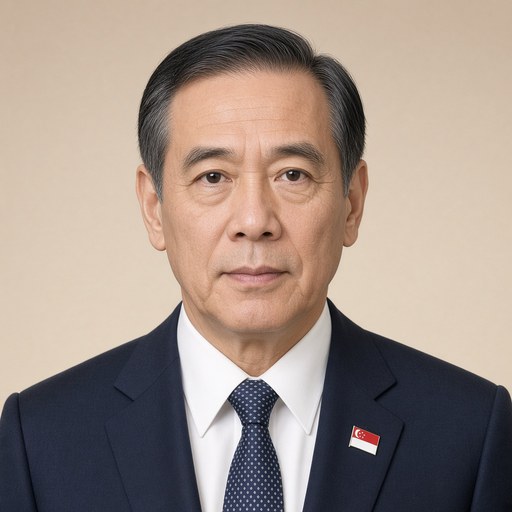
PM Lee Hsien Loong on the COVID-19 situation in Singapore on 21 April 2020
 Lee Hsien Loong · Prime Minister of Singapore
- Context
- Lee Hsien Loong addressed Singaporeans on 21 April 2020 to announce the extension and tightening of circuit breaker measures amid rising COVID-19 cases in migrant worker dormitories.
- Main themes
- COVID-19 circuit breaker extension, migrant worker dormitory outbreaks, community transmission and unlinked cases, tightening of safe distancing measures, government support for businesses and workers, incremental reopening strategy, testing scale-up, contact tracing technology, public compliance and social responsibility, pandemic timeline and vaccine development
- Duration
- ~61 min
- Words
- 7,292
- Sentences
- 480
- Readability
- 62
- Grade
- 8.3
- Syntax
- 2.78
- Vocabulary
- 2.01
The broad sphere of national life a sentence belongs to. Every sentence has an Arena, so it is the denominator the other indices are read against.
Other480 sentences in 230 paragraphs
My fellow Singaporeans, today I am speaking to you again to update you on the COVID-19 situation in Singapore, and to explain some of the measures that we will be taking from now on.
We are now about two weeks into the circuit breaker. Generally, Singaporeans have been cooperative; they stay at home, work from home, have shifted to home-based learning and have not met other family members and friends for the time being. This is not easy, but the majority of Singaporeans have made sacrifices and adjustments for the safety of everyone.
Currently, we have about 20 to 30 new community cases daily. This shows that the circuit breaker is working. I thank everyone for your cooperation.
Now, COVID-19 transmission is mainly taking place in migrant worker dormitories. The Government is very concerned about the outbreak in the migrant worker dormitories, and is taking active steps to contain its spread, to ensure that the workers receive appropriate medical treatment.
I am heartened to see many groups and individuals stepping forward to help, such as collecting donations and supplies for our migrant worker friends to help them through this challenging period.
Apart from the situation in the migrant worker dormitories, we also need to pay attention to the fact that there are still a number of unlinked cases in community cases – we do not know how they got infected, or from whom.
This suggests there could be many cases in the wider community that we have not detected, which is worrying.
Hence, I have discussed with the Multi-Ministry Task Force on the next steps to take. We have two objectives, to bring down the community numbers decisively to ensure that transmission in the migrant worker dormitories is under control and does not spread further to the community.
To achieve these objectives, we have made two important decisions
First, we will further tighten the current circuit breaker measures until 4 May.
We will continue to ask Singaporeans to stay at home. You should go out only for essential needs, like buying food or necessities. Otherwise, please stay at home. If you need to go out, put on a mask, and only one person from every household should be away from home at any one time.
We will also tighten access at hotspots like wet markets and supermarkets to ensure sufficient safe distancing.
We will also close more workplace premises to minimise contact among the workers. Only shops, supermarkets, factories and others which are providing the most essential services will remain open.
The Multi-Ministry Task Force will share more details at the press conference later.
We hope these new measures will significantly reduce transmissions in the community. However, we have assessed that we will not be able to achieve our intended objectives by ending the circuit breaker on 4 May.
Hence, the second decision that we have made is to extend the circuit breaker for four more weeks, i.e. until 1 June. This is to keep everyone in Singapore safe.
The Government understands the impact of these decisions on our businesses and workers. Thus, the support measures announced earlier will be extended. The Government will do all it can to help our business and workers through this difficult time.
Once again, I urge Singaporeans to continue to work with the Government, especially our seniors who are more vulnerable to the virus. Please stay at home and do not go out so as not to be infected.
Some say if they fall sick, it is their problem. However, if you are sick and pass the virus to others, it becomes everyone's problem. Hence, please do not take this virus lightly. Please take all preventive measures seriously and observe them strictly
Let us all be socially responsible and protect ourselves to keep our families safe.
Conclusion
Let me conclude in English.
You will naturally ask – where does this lead us? How do we exit from the circuit breaker?
Nobody knows how long the pandemic will last. Most likely it will take more than a year, before effective treatments and vaccines become available. So we have to take things one step at a time.
To exit from the circuit breaker, we need to do three things.
First, we must open up incrementally, in small steps, making sure that we are safe each step of the way. This is what New Zealand and Germany are beginning to do, very cautiously. They believe that they have broken the chain of transmission, but they want to be extra careful. They do not want to open up prematurely after lock downs, only to find COVID-19 coming back, and then be forced to lock down a second time. It has happened in Hokkaido. We should try our best to avoid this.
Second, we need to scale up testing for COVID-19 substantially, so that we can quickly detect any new cases that pop up. This we are progressively doing, not only by procuring test kits and equipment from other countries, but also by developing and manufacturing our own test kits.
Third, we will need to make full use of IT, so that when we discover COVID-19 cases, we can trace more efficiently where they have been, and whom they have been in contact with.
We have the TraceTogether app, and we are currently developing other apps for this purpose. For these apps to work, we will need everyone's cooperation to install and use them, like what the South Koreans have done. There will be some privacy concerns, but we will have to weigh these against the benefits of being able to exit from the circuit breaker and stay open safely.
I know this has not been an easy time for everyone. We are making progress, but we have not yet succeeded by a long way. The results show that the circuit breaker is working.
Now we all need to do a little bit more, make best use of the next two weeks of the tightened circuit breaker, and the four weeks of the extension and beyond. I ask for your support and cooperation. I ask for your trust and your confidence. Let us go all out to beat the virus, and break the chain of transmission.
We will overcome this together. Thank you.
I ask for your support and cooperation. I ask for your trust and your confidence. Let us go all out to beat the virus, and break the chain of transmission.
PM Lee Hsien Loong
Malay Translation of the remarks in English by PM Lee Hsien Loong on the COVID-2019 situation on 21 April 2020
Brothers and sisters, all of you
I would like to explain to you once again the developments in the COVID-19 situation. We are now into our second week of the measures to break the chain of COVID-19 infection.
On the whole, we have been able to adapt. Many have played our part, by staying at home and complying with the instructions. We have adapted to working from home and learning at home. When outside the home, we wear masks and keep a safe distance. And we limit our interactions to family members living in the same household and avoid gathering with other family members and friends.
The number of new cases in the local community has fallen to below 30 cases a day. This is the result of the circuit breaker measures, and the combined efforts of everyone.
But as you know, the total number of new cases has continued to rise sharply since I spoke to you just ten days ago. Today alone, we recorded more than 1,100 new cases. Almost all the new cases were identified in the foreign worker dormitories, through more aggressive testing.
Foreign workers
The high number of cases in the dormitories is a serious problem. We have launched more aggressive testing among those living in the dormitories to assess the situation there. Not only those who reported that they were sick, or showed symptoms of fever or flu. But also those who are well and show no symptoms at all.
Almost all the infected foreign workers show only mild symptoms. This is not surprising because on average they are still young, so their likelihood of becoming seriously ill from COVID-19 infection is low. Our doctors, nurses and healthcare staff are also working harder, isolating patients at an early stage, and taking good care of them. The progress we see is still at an early stage, but we are grateful that among the new cases involving foreign workers, none has required breathing support or intensive care.
Earlier we reported a case of a Bangladeshi worker who had been treated in the Intensive Care Unit (ICU) for two months. This is case 42. We never gave up in our efforts to treat him. His condition began to stabilise last week. He has been moved from the ICU to a general ward. His recovery will take time. Hopefully he will be able to meet his newborn child in the near future.
We hope this situation will continue in the foreign worker dormitories: most of those infected have mild illness, and only a small number need breathing support or intensive care. All the major dormitories are supported by dedicated teams of doctors and nurses. To protect the health of our foreign workers, we will multiply the medical resources in the dormitories. We will deploy more medical staff, to ensure that anyone with symptoms of fever or flu will receive appropriate and timely medical treatment. We will house mild cases of infection where they currently live, in isolated facilities within the dormitories, or in community care facilities elsewhere. And we will ensure that those who need more intensive treatment receive immediate attention, and can be sent to hospital for treatment as quickly as possible.
We will give special attention to older workers, because they are a more vulnerable group. We are moving them to separate dormitories, where they can be monitored more closely.
To our foreign workers, let me stress once again: We will take care of you just as we take care of Singaporeans. We thank you for your cooperation during these difficult times. We will take care of your health, your welfare and your livelihood. We will work with your employers to make sure that you get your salary, and that you can send money home. And we will help you to stay in touch with your friends and family.
The month of Ramadan will begin soon. We will make sure that Muslim workers can fast and perform your worship. When Hari Raya Aidilfitri comes next month, we will celebrate it together with our Muslim friends, just as we celebrated the New Year for the Indian community last week. This is our duty and responsibility to you, and your families.
Apart from the workers living in dormitories, we are also monitoring developments among two other groups of foreign workers. First, the workers living in shophouses, private homes, or HDB flats. Second, the workers in essential services. This group has continued working during this circuit breaker period, so that we can carry on with daily life in Singapore. Some clean HDB void decks or hawker centres. Others maintain essential infrastructure such as our broadband network. If workers move in and out of the dormitories, this could potentially become a two-way channel for the virus to spread. So we have housed these essential services workers separately. We are also testing them to make sure that they are healthy, and to identify any infection as quickly as possible.
So far, the infected clusters in the dormitories have on the whole been contained, and have not spread to the wider population. We will do our utmost to keep it this way.
Community
Among the wider population, the circuit breaker measures have begun to show their effect. The number of cases in the local community has been falling lately. This is the result of the efforts of everyone, who have made sacrifices and complied with the circuit breaker instructions. But we must not become complacent. We must be firm in continuing this effort. To reduce the infection rate sharply, to single digits, or to zero if possible. And to reduce the unlinked infection cases: cases where we do not know how they were infected, or from whom. Because unfortunately the number of unlinked cases has not yet come down. This means there is a large number of COVID-19 cases among the population, which are the source of the unlinked cases and which have not yet been detected.
I have discussed with the Multi-Ministry Task Force (MTF) the next steps. We agreed to bring down the number of cases decisively. We also want to make sure that if there is any spread of infection from the dormitories to the community outside, we can detect and control it immediately, and prevent new clusters from spreading and then getting out of control. To achieve these two goals, we need to tighten the circuit breaker measures.
We have asked all Singaporeans to stay at home. Go out only for essential matters, such as buying food or groceries. Otherwise, please stay at home. If you need to go out, do it alone, and not in groups or with your family. Even when exercising outside, you should do it alone, and only in your neighbourhood. Please remember: it is not merely about obeying the law outwardly. The intention behind these guidelines is to reduce movement as much as possible, and to prevent people from leaving their homes and gathering in the community. This is the way to protect yourself, your family and others. So I hope everyone can cooperate and play your part
Some key places, such as popular wet markets, are still causing problems. Crowds continue to gather at these places, so it is harder to ensure safe distancing measures. These places will impose entry restrictions to further reduce the number of people at the markets.
You can also play your part. Go to the market on weekdays and not weekends, and do not bring your whole family to shop for groceries. When you go out to do essential errands, go alone, get what you need, and go home straight away. We will also close more workplaces, so only the most essential services will continue to operate. This will further reduce the number of workers needed to keep these essential services going, and reduce the risk of infection among workers. This will affect some services – for example, grass-cutting services will be reduced in our HDB estates.
But I hope we all understand why this must be done. We will implement these tightened measures until 4 May. But we cannot end the circuit breaker completely, and have everything go back to the way it was. So we will extend the circuit breaker period after 4 May for four more weeks, that is until 1 June. Once the number of local transmissions has come down, we will make adjustments and consider relaxing some of these measures. In this way, we can feel more confident that we have made progress and are in a strong position.
Many will be disappointed with the extended circuit breaker period. Especially our businesses and workers, who have been badly affected. But I hope you understand that this short-term pain is meant to eliminate this virus, protect the health and safety of our loved ones, and enable us to restore our economy.
The Government will do its utmost to help our businesses and workers to cope with this extended circuit breaker period. We will give support to workers and businesses just as we are doing now.
The ministers will hold a press conference right after this to explain the details.
Allow me to conclude in English. Surely you will ask – where are we headed after this? How do we end these circuit breaker measures? No one knows how long this COVID-19 outbreak will continue. Most likely it will take more than a year, before effective treatments and vaccines can be produced. So we must take things step by step.
To end this circuit breaker, we must do three things. First, we must move to the next stage gradually, by taking small steps, and making sure that safety is assured at every step taken. This is being done by New Zealand and Germany, with great caution. They are confident that they have broken the chain of infection, but they want to be extra vigilant. They do not want a situation where the full movement restrictions are lifted too early and the COVID-19 outbreak spreads again, so that the full movement restrictions have to be imposed a second time. This has happened in Hokkaido. We must strive earnestly to avoid this happening.
Second, we need to further scale up testing for COVID-19, so that we can detect new cases quickly. We have begun doing so progressively, not only by buying test kits and equipment from other countries, but also by developing and manufacturing our own test kits.
Third, we need to make full use of information technology, so that when we identify a COVID-19 case, we can trace where these individuals have been, and whom they have been in contact with, more effectively. We have the TraceTogether app, and we are developing other apps to achieve this goal. To make sure they are effective, we need everyone's cooperation to install and use these apps, like what the South Koreans have done.
Of course this raises concerns about personal information, but we must weigh this against the benefits to be gained if the circuit breaker ends as soon as possible and we can keep Singapore open in a safe way.
I understand that this is a difficult time for everyone. We have made progress, but we cannot yet consider ourselves to have succeeded. The circuit breaker measures have borne fruit. Now we all need to step up our efforts, to do our best during the circuit breaker period in the next two weeks, and for the following four weeks.
I ask for your support and cooperation. I ask that you place your confidence and trust. Let us pour all our energy into defeating this virus, and breaking its transmission. Together, we will overcome it.
Thank you.
Chinese Translation of the remarks in English by PM Lee Hsien Loong on the COVID-2019 situation on 21 April 2020
Fellow citizens and friends who have long lived in Singapore
Today I am speaking again, hoping to explain to everyone the latest situation of the COVID-19 outbreak in Singapore. Our country has been implementing circuit breaker measures for two weeks now. On the whole, people have so far been able to adapt to and cope with the new situation. Most people have done their part, staying at home and complying with the relevant rules. We have gradually adapted to working and learning from home. When out and about, we also put on masks and keep a safe distance from others. At the same time, we only have contact with members of our own household, and avoid gathering with other relatives and friends.
The situation of community transmission has tended to stabilise, and the number of new cases each day is now fewer than 30. This shows that the circuit breaker measures have taken effect, and it is also the result of Singaporeans actively cooperating and working together. But I think everyone also knows that since I last spoke, in just ten days, the total number of confirmed cases locally has kept soaring. Today alone, we have more than 1,100 new cases. Almost all the new cases come from foreign worker dormitories, and were found by us through active testing.
Foreign workers
Many people being infected with the virus in foreign worker dormitories is a serious problem. In order to assess the extent of the virus's spread in foreign worker dormitories, we have actively launched testing. Regardless of whether the workers are sick or show symptoms of fever or flu. Even if they are in good health and show no symptoms, we test all of them for the virus. Almost all the confirmed foreign workers have only mild symptoms. This is not surprising, because the workers are generally younger, and even if confirmed to be infected with COVID-19, they are less likely to become seriously ill.
Our doctors, nurses and medical personnel are doing their utmost to help them, including separating sick and healthy workers as early as possible and providing medical care to patients. Although it is still too early to say, among the new foreign worker cases, so far no one has needed additional oxygen or admission to intensive care.
One of them, a Bangladeshi worker who fell ill earlier, was in intensive care for as long as two months. He is our 42nd case. We never gave up treating him. Just last week, his condition finally stabilised. And he left intensive care and was moved to a general ward. Although he still needs some more time to fully recover. But we hope he can recover soon, and soon be able to see his newborn child and experience the joy of becoming a father for the first time.
We hope to maintain this situation, where most cases have mild symptoms and only a few need oxygen or intensive care treatment. All the large foreign worker dormitories locally have medical centres, with dedicated teams of doctors and nurses responsible for caring for the workers.
To further protect the health of foreign workers, we will put more medical resources into the foreign worker dormitories. We will deploy more medical personnel to each dormitory, to ensure that anyone who shows symptoms of fever or flu can receive proper and timely treatment. For those patients with mild symptoms, we may let them continue to stay in the dormitory but isolate them, or move them to community isolation facilities for treatment. We will ensure that those patients who need further treatment can see a doctor immediately, and send them to hospital for treatment quickly. As for those workers with weaker resistance, such as the older ones among them, we have already moved them in advance to another dormitory, so as to keep a close watch on their health.
I want to stress again to our foreign worker friends: the Singapore Government will take care of you just as it takes care of Singaporeans: we thank you for your full cooperation in this difficult period; we will take care of your health, welfare and livelihood; I will also work with your employers to ensure that you receive your wages and can remit money home. We will help you stay in touch with your family and friends.
In a few more days it will be the fasting month. We will make proper arrangements for our foreign worker friends who are Muslim. Just as we celebrated the Indian New Year with the Indian community last week, at Hari Raya Puasa next month we will also celebrate together with our Muslim friends. This is our responsibility and duty to you and your families.
Apart from foreign workers living in dormitories, we are also closely watching the situation of two other groups of foreign workers. The first group is foreign workers living in shophouses, private residences and HDB flats. The second group is foreign workers providing essential services for us. During the circuit breaker, these workers have continued to work, ensuring that Singapore keeps its basic functions running. Among them, some are responsible for keeping places such as HDB flats and hawker centres clean, while others ensure that important facilities such as the broadband network run as normal.
These workers travel between their workplaces and dormitories every day, and this could lead to cross-infection. Therefore, we will move these foreign workers providing essential services out of the foreign worker dormitories to live elsewhere, and at the same time test them, to ensure that they are healthy and to detect those infected with the virus early.
So far, the infection clusters in the foreign worker dormitories have largely spread only within the dormitories, with no signs of large-scale spread to the community. We will do all we can to maintain the status quo.
Community
On the other hand, the current situation of community transmission shows that the circuit breaker measures have already achieved some results. Recently, the number of new community infection cases in our country each day has been falling.
This is the result of us jointly observing the circuit breaker measures, sacrificing the individual for the greater good, but we must not let our guard down. We must persevere in order to see the daily new cases drop sharply, to single digits or even zero cases. And to reduce cases of unknown source, that is, cases where we do not know how they were infected, or whom they came into contact with.
Because unfortunately, these cases have not decreased. This means our community may have many COVID-19 cases that have not yet been discovered or detected, and these are the source of these unlinked cases.
I held discussions with the Government's Multi-Ministry Task Force on what our country should do next. First, we must take decisive action to reduce community infection cases. Second, should the outbreak in the foreign worker dormitories spread to the community, we must promptly find the source and control the outbreak, to prevent new clusters from emerging and breaking out.
To achieve these two goals, we must persevere and continue to implement strict circuit breaker measures without letting a single drop leak through. We have already called on all Singaporeans to stay at home. You should only go out when necessary, for example to buy food or daily necessities. Otherwise, please stay at home.
If you need to go out, please go alone, not in groups or with the whole family. Even when going outdoors to exercise, you must do it alone, and only exercise within your neighbourhood. Please remember, this is not only a question of obeying the law.
The intention of these rules is, more importantly, for everyone to avoid moving around in the community, so as to minimise the flow of people and contact between people. In this way, you can protect yourself, protect your family, and protect everyone.
So, I hope everyone can cooperate and play their part well. There are still some crowded places in our community, such as some wet markets that people like to go to. The situation in these places may pose problems for our circuit breaker measures. Many people still gather in these places, making it very hard for us to implement safe distancing measures. Therefore, we will further restrict people's entry to these places, hoping thereby to reduce the crowds.
You can also do your part for this. For example, go to the market on weekdays rather than weekends, and do not go out as a whole family to buy necessities. You only need to send one member of your household out to buy the items needed, and go home immediately after buying them.
In addition, we will also temporarily close more workplaces, and only places providing the most critical essential services will remain open. This is to further reduce the number of workers maintaining these essential services, and the risk of the virus spreading among these workers. This may mean that the level of some services will be reduced, for example, grass cutting in HDB estates will be done less often. I hope everyone can understand why we must do this.
We will implement these stricter circuit breaker measures until 4 May. But judging from the current outbreak, it is impossible for us at this stage to fully lift all the circuit breaker measures and let everything return to normal. Therefore, we will extend the circuit breaker period by 4 weeks, until 1 June.
Once we succeed in reducing community transmission cases, we can make further adjustments and consider relaxing some measures. By then, we will be more certain that our country has achieved significant results in fighting the outbreak and that the situation has stabilised, and we can be more at ease when relaxing measures.
I know many people will be disappointed with the extension of the circuit breaker period. Especially businesses and workers who have already been severely affected. But I hope you can understand that, as the saying goes, short pain is better than long pain; we must first break the transmission of the virus, so that we can safeguard the health and safety of our loved ones around us, and give us the ability to restart the economy.
The Government will continue to help businesses and workers through the difficult period of the extended circuit breaker. In addition, the assistance provided to workers and businesses will also remain unchanged. The ministers will hold a press conference later to announce the details.
Finally, I will conclude in English. You may ask: where do we go from here? How can we lift the circuit breaker measures?
No one knows how long the COVID-19 outbreak will last. We will probably have to wait a year or longer before effective treatments and vaccines become available. So we can only take it one step at a time.
To lift the circuit breaker measures, we must do three things.
First, we need to advance step by step, lifting the circuit breaker measures cautiously and gradually; we must make sure everything is safe before further relaxing measures. New Zealand and Germany have now begun lifting the strict measures they implemented earlier, but they remain very cautious; although they have reason to believe they have broken the virus's chain of transmission, they still dare not let their guard down; they do not want to lift measures too early and give the virus a chance to make a comeback, only to end up having to lock down the country again. Hokkaido in Japan faced just such a situation. We must do our best to avoid a similar situation happening in our country.
Second, we need to greatly strengthen virus testing, so as to quickly detect new cases. We have been progressively carrying out work in this area, not only procuring from abroad, but also developing and producing test kits ourselves.
Third, we need to make full use of information technology, so that after confirmed cases are found, we can more quickly find out where they have been and whom they have been in contact with.
We currently already have the "TraceTogether" mobile app, and are also developing other apps to help us. We also need everyone's full cooperation, like the South Koreans, to download and use these apps together, for them to play their proper role. Some people may worry that this infringes on personal privacy, but we need to weigh the pros and cons, and think about which matters more compared with lifting the circuit breaker measures as soon as possible and staying open safely.
I know this period has not been easy for everyone. We have made some progress, but we are still a long way from success. The current situation shows that the circuit breaker measures are taking effect.
Everyone now needs to work a little harder still, making full use of the next two weeks of strengthened circuit breaker measures, and the following four weeks of the extended circuit breaker. I earnestly ask everyone to support and cooperate with the Government's actions. I also ask everyone to trust us and have confidence in us. Let us go all out and work together to break the transmission of the virus.
As long as we are united in heart and work together, we will surely get through this difficult time. Thank you!
Tamil Translation of the remarks in English by PM Lee Hsien Loong on the COVID-2019 situation on 21 April 2020
Fellow Singaporeans, residents of Singapore!
I am speaking to you again – to give you the latest information on the COVID-19 situation.
It has been two weeks since we implemented the circuit breaker plan to break the spread of the disease.
On the whole, people have been coping well with the situation.
Most of us have played our part – staying at home and complying with the restrictions.
We have adapted ourselves to working and studying from home.
When outside, we wear masks and keep a safe distance from others.
We stay only with family members in our household – we have avoided gatherings with other relatives and friends.
New infection cases arising in the local community have reached a level of fewer than 30 a day.
This is the result of the circuit breaker plan – and also because all of us are working together.
But, you would know. The total number of people affected by the infection has risen greatly – compared with when I last spoke to you – ten days ago.
Today alone, we have more than 1,100 new infection cases.
Almost all of them were detected in our foreign worker dormitories – through aggressive testing.
Foreign workers
The large number of infection cases in the dormitories is a major problem.
To assess the extent of the spread of the virus, we have tested aggressively.
Not only those who reported being unwell or those with symptoms of cold and fever
But also those who appeared healthy, without any symptoms
Almost all the affected foreign workers had only mild symptoms.
This is not surprising. Because, in general, they are young. So, the likelihood of them becoming seriously ill from COVID-19 infection is low.
Our doctors, nurses and healthcare workers are working hard. They are treating the workers early; they are taking good care of them.
This is the beginning. Still, fortunately, so far no foreign worker has needed extra oxygen or intensive care.
Earlier, there was a Bangladeshi worker. He was in the intensive care unit for 2 months.
He is the 42nd person affected by the infection. We did not give up hope on him. Last week, his condition stabilised. He was moved from the intensive care unit to a general ward. It will take some more time for him to recover fully. With luck, soon, he may see his newborn son.
Let us hope the situation in the foreign worker dormitories will remain like this: most are mildly affected; very few need intensive care.
All the large dormitories have teams of their own doctors and nurses.
To protect the health of our foreign workers, we are going to increase the medical resources in the dormitories.
We will deploy more medical staff – to ensure that everyone with cold and fever symptoms gets proper medical treatment in good time.
We will house the mildly affected in the same place, or in a separate section of the dormitory, or in community care facilities elsewhere.
We will also ensure that those who need more treatment are attended to immediately. They will be sent to hospital quickly to recover.
We will also pay special attention to older workers. They are more vulnerable. As a precaution, we are moving them to another dormitory. There they will be closely monitored.
To our foreign workers, I emphasise again: we will care for you – just as we care for our Singaporeans.
Thank you for your cooperation during this difficult period.
We will take care of your health, welfare and livelihood.
We will work with your employers – to ensure that you get your salary; so that you can send money to your family.
We will help you stay in touch with your friends and family.
The month of Ramadan will begin in a few days. We will ensure that proper arrangements are made for our Muslim workers. Next month, during Hari Raya Puasa, we will celebrate with our Muslim friends – just as we celebrated the New Year with our Indian friends last week.
This is our duty and responsibility – to you and your families.
Apart from the workers living in dormitories, we are closely monitoring foreign workers in two other categories.
First, workers living in shophouses, private homes or Housing and Development Board flats.
Second, workers in essential services.
This group works even while the circuit breaker plan is in force – helping Singapore keep running.
Some clean Housing and Development Board blocks or hawker centres
Others manage important infrastructure such as our broadband networks
If these workers come and go from the dormitories, they could spread the virus.
So, we have housed these workers in essential services separately.
We are also testing them – to ensure that they are healthy. To detect any infection early, if there is any.
So far, the infection clusters that have arisen in the dormitories have largely been contained. They have not spread to the community.
We will do everything we can – to keep the situation this way.
Community
In the community, this circuit breaker plan has begun to produce good results.
The number of people affected by the infection in the community has fallen in recent days.
The reason for this is that we all worked together; we made sacrifices; we complied with the circuit breaker plan.
We must not be complacent.
We must keep striving.
To substantially reduce the number of daily infection cases – to a single digit or even to zero
We must reduce the number of infected people who have no links at all: we do not know how, or from whom, they caught the virus.
Because their number has not yet fallen.
This shows that there are even more hidden infection cases in the community. That is the cause of these infection cases with no links to anything. We have not yet detected them.
I consulted the Multi-Ministry Task Force – on the next steps.
We must greatly reduce the number of people affected by the infection in the community.
We also want to ensure the following: if the infection spreads from the foreign workers to the community, it must be identified early and contained; new infection clusters must be prevented from forming out of control.
To reach these two goals, we must all stay safe and follow the tightened measures of our circuit breaker plan.
We have asked all Singaporeans to stay at home.
Go out only for essential needs – such as buying food or groceries. Otherwise, please stay at home.
If you need to go out, go alone; do not go as a group or as a family.
When exercising outside, do it alone, and only in your neighbourhood.
Remember: this is not merely about following the law.
The purpose of the rules is to reduce movement to the minimum and to avoid wandering about in the community.
This is the way to protect yourself, your family, and everyone.
So, I trust that everyone will cooperate and play your part.
Some places where the infection can spread more – such as some popular wet markets – are still a problem.
People continue to crowd into these places in large numbers. Because of this, keeping a safe distance becomes difficult.
These places will impose entry restrictions. Only then can we further reduce the crowds.
You too can play your part
Go to the markets on weekdays – instead of weekends. Do not take all your family members along to buy groceries.
When you go out to do errands, go alone. Buy what you need, and return straight home.
We are going to close more workplaces. In that way, only the most essential services will remain open.
This will help to further reduce the number of workers working to keep essential services running, and reduce the risk of the infection spreading among workers.
Because of this, we can take it that the quality of some services will be affected. For example, grass-cutting work in Housing and Development Board estates will be reduced.
But I trust that we will all understand why this must be done.
We will implement these tightened measures until 4 May.
But after that, we cannot completely stop these restrictions and return to normal.
So, we will extend the circuit breaker plan by 4 more weeks, that is until 1 June.
If the number of infection cases in our community falls, we can make further changes; we can consider relaxing some measures.
In this way, we can be definite and more sure that we have made progress and maintained our position.
Many may be disappointed about the extension of the circuit breaker plan.
Especially our businesses and workers – they have been badly affected.
But I trust that you will understand that this short-term pain is necessary – to wipe out the virus – to ensure the health and safety of our loved ones, and to revive the economy.
The Government will continue to help – our businesses and workers, to cope during the extended circuit breaker plan.
We will give our workers and businesses the same level of support as now.
The ministers will, right after this, hold a press conference and release the details.
I will conclude in English.
You may naturally ask – where does this lead us? How do we get out of this circuit breaker plan?
No one knows how long this outbreak will last.
Probably, it may take more than a year – before effective treatments and vaccines become available
So, we must make our efforts step by step.
To get out of the circuit breaker plan, we must do 3 three things.
First, we must start our activities gradually – in small amounts – we must make sure that we are safe at each stage.
This is what New Zealand and Germany have begun to do – very carefully.
They believe that they have broken the chain of the disease's spread. Still, they want to be extra careful.
They do not want to start activities thoughtlessly and mistakenly after the lockdown. Then, if COVID-19 rears its head again, they would have to be pushed into lockdown a second time.
That has happened in Hokkaido.
We must try as far as possible - so that this does not happen to us.
Second, we must substantially increase testing for COVID-19 infection. Only then can we quickly detect infection cases that may newly appear.
We have begun to do this – not only by purchasing test kits and equipment from other countries, but we are also developing and producing our own test kits.
Third, we must make full use of information technology. Only then, when we detect COVID-19 infection cases, can we better find details such as where and from whom it spread.
We have the TraceTogether app. Currently, we are also developing other apps for this.
For these to work, we need everyone's cooperation – these apps must be downloaded and used – just as the South Koreans did.
There will be some concerns about confidential information. But we must weigh these – against getting out of the circuit breaker plan early and staying safe in the open.
I know. This is not an easy period for everyone.
We are making progress. Still, we have not yet succeeded.
The results show that the circuit breaker plan is working.
Now, we all must make a little more effort – we must make the best use of the next two weeks of the further tightened circuit breaker plan, and the four weeks after that.
I seek your support and cooperation.
I ask that you have trust and self-confidence.
Let us make every effort – to wipe out this virus – to break the chain of the disease's spread.
We will face this together, united.
Listen to Tamil Murasu's dub of PM Lee's speech here: https://youtu.be/6z-Oz9BPe8A
Explore related topics