




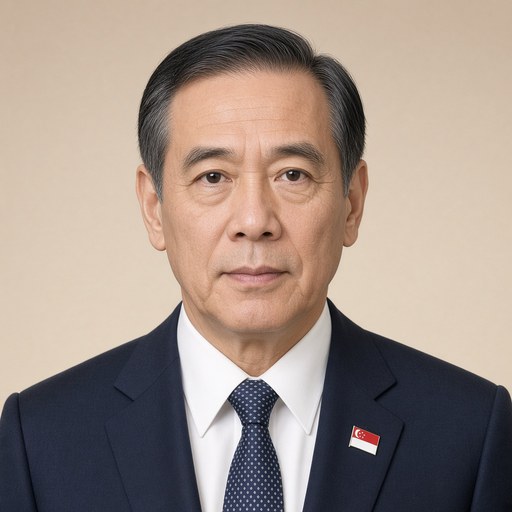
PM Lee Hsien Loong at the Nanyang Khek Community Guild 80th Anniversary Gala Dinner
 Lee Hsien Loong · Prime Minister of Singapore
- Context
- Lee addressed the Nanyang Khek Community Guild's 80th Anniversary Gala Dinner in Singapore on 13 December 2009, celebrating Hakka heritage and community contributions.
- Main themes
- Hakka heritage and history, Nanyang Khek Community Guild 80th anniversary, Hakka migration and diaspora, Hakka cultural preservation, community contributions to Singapore, engaging youth in cultural activities, Hakka resilience and values, Chinese clan associations, DNA research on Hakka origins, international Hakka connections
- Duration
- ~1 min
- Words
- 1,148
- Sentences
- 65
- Readability
- 53
- Grade
- 10.2
- Syntax
- 2.82
- Vocabulary
- 2.28
Translated from Chinese
The broad sphere of national life a sentence belongs to. Every sentence has an Arena, so it is the denominator the other indices are read against.
Other65 sentences in 13 paragraphs
Fellow clansmen,
Distinguished guests,
Good evening, everyone.
I am very happy to be able to celebrate with all of you the 80th anniversary of the founding of the Nanyang Khek Community Guild. The Guild has come a long way and continues to contribute to society, and this is worth celebrating. The Guild is rooted in Singapore, yet it has also actively built links overseas. Among tonight's guests are many Hakka clansmen from abroad. I would like to extend a warm welcome to them.
Looking back at history, it is not hard to see that the Hakka people are "guests everywhere, and at home everywhere". They truly make the whole world their home. Over the centuries, the Hakka people have spread their branches and leaves across the world, yet they still keep a common language and culture. They understand one another's Hakka dialect and can enjoy Hakka mountain songs together. They are one big family.
The Hakka ancestors came from the Central Plains, the area around today's Henan Province. To escape war and social upheaval, the Hakka kept migrating south. Many of the Hakka who moved south finally settled in Fujian and Guangdong, and some moved further to places such as Guangxi and Sichuan. Because they arrived late, they were regarded as settlers from outside, and so they were called "Hakka", meaning "guest people". They were not natives. Most of them settled in places with poor soil, where living conditions were harsh and life was hard. To defend themselves together against outside enemies and to look after one another, the Hakka who settled in Fujian built the famous and historically valuable earthen buildings, the tulou, also known as walled houses. Last July, some of the surviving tulou were inscribed on the World Heritage List by the United Nations Educational, Scientific and Cultural Organization, UNESCO. This is also a source of pride for Hakka people all over the world.
As everyone knows, Hakka women generally did not bind their feet, because they had to go up the hills to cut firewood and work in the fields, sharing the heavy work of the men. Of course, some Hakka women say that they work more diligently and harder than the men. In any case, we are very grateful to Hakka women. Men and women alike, the Hakka have the virtues of diligence, thrift and endurance, and a spirit that dares to pioneer and take risks. This comes from the tempering of long migrations and constant adaptation to new surroundings, and from the experience of surviving in adversity. Many Hakka also crossed the seas to settle in places such as Hong Kong, Macau, Thailand, Burma, Indonesia and Malaysia. That is why tonight we have Hakka from all these places. They came to Singapore in the early 19th century. At first, the Hakka here were mainly farmers, growing crops such as pepper and gambier. Later, many Hakka traded in Chinese medicinal herbs and opened pawnshops, which is why in Singapore many pawnshops are run by Singaporeans, right up to today.
DNA (deoxyribonucleic acid) tests recently carried out by scientists show that the historical records of Hakka migration are well founded. This scientific study is a research report produced jointly by scientists from several Asian countries, and it has just been published. According to reports last week, the mapping of the genetic profile of the Han Chinese confirmed that the Hakka came from northern China. So you can see from their DNA that it is relatively similar to the DNA of northerners, not southerners. So the fact that their faces are not entirely the same also has a genetic basis.
As for Hakka people today, whether in China or elsewhere, they are often still a minority community in the places where they live. In Singapore's Chinese community, the Hakka can also be called a minority. However, this has not stopped them from getting ahead and building careers, because the Hakka have great tenacity and perseverance. There are outstanding Hakka talents in every field. They have contributed a great deal to their local societies. Singapore's Hakka are no exception. In politics, among past and present Cabinet ministers, the Hakka include Minister Mentor Lee Kuan Yew, Mr Hon Sui Sen, Dr Hu Tsu Tau and Mr How Yoon Chong. Among the younger generation of Members of Parliament there is no shortage of Hakka either: Mr Lee Yi Shyan, Ms Grace Fu and Dr Lam Pin Min. Of course, there are also many outstanding Hakka professionals and businessmen. We are all proud of them and take pride in them.
As the largest Hakka association in Singapore, the Guild's mission is to ensure that Hakka culture and spirit are preserved and passed on. We should help young Hakka explore their history and learn about how their ancestors worked hard to build their homes, so that they can inherit their ancestors' indomitable, unyielding and resolute spirit. This spirit is very precious and never goes out of date. Especially in this era of ever fiercer competition, we must have this indomitable spirit all the more in order to open up a new world.
The Guild is one of the oldest Chinese associations in our country, and also a pillar of our Chinese community. I call on the Guild and other Hakka organisations to help the Chinese community promote traditional Chinese culture. The Guild and other Chinese associations should understand the interests of young people and organise activities that will attract them to take part. If we want to win young people over to take part in our activities, we must first master the ability to communicate with them. Whether in Mandarin or in English, young people have their own ways of using language. We should also reach the younger generation through the Internet and other new channels of communication. In short, we should inject fresh vitality into traditional culture and bring forth the new from the old, so that the younger generation finds it easy to approach and is willing to approach it, and finds it interesting, meaningful and of value to them.
As the Guild continues to shoulder its responsibility to benefit society, it naturally should not forget to renew itself and strive to forge ahead. The Guild should keep abreast of changes in the world, recruit more new members, keep renewing its leadership, maintain an international outlook, and actively keep up its links with clansmen in China and elsewhere. Over eighty years, the Guild has gone through major changes in society and is still able to play an active role, and it has always had the support and backing of its clansmen. This is an achievement to be proud of. I hope the Guild will stay vigorous and keep working hard, so that it can continue to benefit its Hakka clansmen and at the same time make a greater contribution to the nation. Thank you, everyone.
Explore related topics
The original Chinese. The tags above are read on the English translation's sentences.
各位乡亲
各位来宾
大家晚上好
非常高兴能够跟大家一起庆祝南洋客属总会创办八十周年纪念。客属总会走过漫长的岁月,继续对社会作出贡献,值得我们庆贺。客总扎根于新加坡,也积极建立海外的联系。今晚的来宾之中,就有不少来自海外的客家乡亲。我要对他们表示热烈的欢迎。
我们回顾历史,不难发现客家人“处处作客,处处为家”,真的是以天下为家,以世界为家。千百年来,客家人在世界各地开枝散叶,但是仍旧保持共同的语言和文化,听得懂彼此的客家话,能够一起欣赏客家山歌,是一个大家庭。
客家先民源自中原,就是今天的河南省一带。为了逃避战争和社会动乱,客家人不断往南方迁移。许多南迁的客家人最终在福建和广东定居,有些更迁移到广西、四川等地方。他们是迟来的,所以被视为外来的定居者,所以被称为“客家人”。不是原住民。他们大多定居在土壤贫瘠的地方,居住环境恶劣,生活艰苦。为了共同抵御外敌和互相关照,在福建定居的客家人建造了著名、并且很有历史价值的土楼,或者围屋。去年七月,现存的一些土楼被联合国教科文组织UNESCO列入“世界遗产名录”,这也是全世界客家人的骄傲。
众所周知,客家妇女一般上不缠足,因为她们必须上山砍柴,下田劳作,分担男人的粗活。当然,有些客家妇女说,他们工作比男人更勤劳、更努力。无论如何,我们非常感谢客家妇女。无论男女,客家人都有勤俭刻苦的美德,勇于开拓和冒险的精神。这是来自长期迁徙、不断适应环境的磨练,以及在逆境中求生存的经验所产生的。许多客家人也飘洋过海,到香港,澳门,泰国,缅甸,印尼和马来西亚等地定居。所以今晚都有来自这些地方的客家人。他们在19世纪初来到新加坡。开始时,这里的客家人以务农为主,譬如种植胡椒和甘蜜。不少客家人后来买卖中药材和开设当铺,所以在新加坡,有许多当店是新加坡人开的,直到今天。
最近科学家进行的DNA(脱氧核糖核酸)检测显示,历史记载的客家人的迁移是有根据的。这个科学研究,是好几个亚洲国家的科学家合作所做的研究报告,刚发表的。根据上个星期的报道,我们发现,汉族的基因图谱的构建,确定客家人是来自中国的北方,所以DNA里面可以看得出他们的DNA和北方人的DNA比较相似,不是南方人的。所以面孔不完全相同,也有其基因的根据。
以现代的客家人来说,无论是在中国,还是在其他地方,他们往往还是当地的少数社群。在新加坡的华族社会里,客家人也可说是少数民族。不过,这不妨碍他们出人头地,建立事业,因为客家人具备坚韧的毅力。各个领域都有杰出的客家人才。他们对当地社会作出很多贡献。新加坡人的客家人也不例外,从政的在前任和现任内阁部长中,客家人就有李光耀资政,韩瑞生先生,胡赐道博士和侯永昌先生。在较年轻一代国会议员也不乏客家人,他们是李奕贤先生,杨莉明女士,蓝彬明医生。当然,杰出的客家专业人士或商人也不少。我们都为他们骄傲,以他们为豪。
作为新加坡客家人最大的社团,客属总会的使命是确保客家文化和精神得以保存和传承下去。我们应该帮助年轻客家人探寻历史,了解祖先辛勤建立家园的事迹,进而继承祖先那种百折不挠、坚韧不拔的精神。这种精神非常宝贵,永不过时,特别是在这个竞争越来越激烈的时代,我们更必须要有这个百折不挠的精神,才能开创新的世界。
客属总会是我国历史最悠久的华族社团之一,也是我国华社的一个支柱。我吁请客总和其他客家团体协助华社发扬华族传统文化,客总和其他华族团体应该了解年轻人的兴趣,组织能够吸引他们参加的活动。我们要争取年轻人参加活动,必须先掌握跟他们沟通的能力。不论是华语,还是英语,年轻人都有他们的语言习惯。我们也应该通过互联网和其他新的沟通渠道,向年轻一代传达信息。总括来说,我们应该为传统文化注入新鲜活力,推陈出新,让年轻一代感到容易亲近,也愿意亲近,觉得有趣,有意义,对他们有价值。
客属总会也继续肩负造福社会的责任,自然也不应该忘记自我更新,力争上游。客总应该掌握世界局势的变化,争取更多新会员和不断更新领导班子,并且保持国际视野,积极地维持跟中国和其他地方的乡亲的联系。八十年来,客总在经历社会重大的变迁之后,仍能发挥积极的作用,并且一直取得乡亲的支持和拥护。这是值得自豪的成就,我希望客总保持朝气,继续努力,以便继续造福客家乡亲,同时为国家作出更大的贡献。谢谢大家。
Explore related topics