




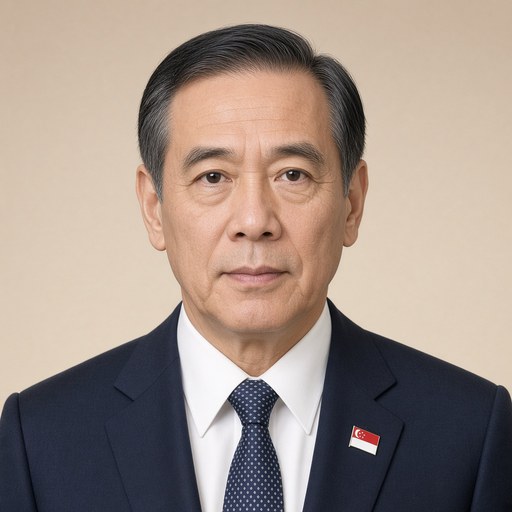
PM Lee Hsien Loong at the Singapore Buddhist Federation Diamond Jubilee and Opening of New Building
 Lee Hsien Loong · Prime Minister of Singapore
- Context
- Lee Hsien Loong addressed the Singapore Buddhist Federation's 60th anniversary celebration and opening of its new premises on 20 November 2009.
- Main themes
- Singapore Buddhist Federation Diamond Jubilee, religious harmony, Buddhism's community contributions, multicultural society, education and youth engagement, social welfare services, separation of religion and state, globalization and inter-Buddhist exchanges, Nalanda University revival, tolerance and compassion, shared spaces in Singapore
- Duration
- ~8 min
- Words
- 931
- Sentences
- 55
- Readability
- 29
- Grade
- 13.4
- Syntax
- 2.92
- Vocabulary
- 2.39
Translated from Multiple languages
The broad sphere of national life a sentence belongs to. Every sentence has an Arena, so it is the denominator the other indices are read against.
Other55 sentences in 16 paragraphs
Distinguished guests
Good morning everyone
I am very pleased to attend the 60th anniversary celebration of the Singapore Buddhist Federation and the opening ceremony of its new premises. The completion of the new premises of the Federation is an important milestone in the development of Buddhism in our country, and it is something we should be grateful for. Over the years, the Buddhist community in our country, the Federation, and various Buddhist organizations have not only actively promoted the Dharma but have also played a constructive role in various sectors of society. I would like to express the government's gratitude for this.
The Federation has always actively advocated for cultural education and the nurturing of young students. The Federation has established schools, student care centers, and Buddhist youth groups. What is commendable is that these schools and facilities also accept non-Buddhists. The Bodhi School and Manjusri Secondary School, organized by the Federation, have nurtured many young students of various religious beliefs. The Federation also embodies the spirit of compassion and saving lives. Through the foundation it has established, it provides various social welfare services to our less fortunate fellow citizens. This includes providing medical services through clinics and healthcare centers, as well as raising funds to support cultural and educational initiatives, among others.
In promoting religious harmony, the Federation has also spared no effort. For example, the Federation strongly supports the activities of the Inter-Racial and Religious Confidence Circles, which help maintain racial and religious harmony and play an important role in Singapore's multi-ethnic and multi-religious society.
We should not take racial and religious harmony for granted. I discussed this topic in detail at this year's National Day Rally, so I will not repeat it today. However, I did raise several key points, including four principles for maintaining peace and stability in our society: fostering a spirit of tolerance and self-restraint, maintaining the separation of religion and state, upholding a secular government, and preserving our shared spaces. These principles are conducive to maintaining social peace and also help strengthen the sense of identity and cohesion among Singaporeans. For over forty years, various ethnic groups and adherents of different religions in our country have coexisted harmoniously. Buddhists and Taoists are the largest religious groups in our country, and they have always exhibited a spirit of inclusiveness, thus setting a stable tone for society. In fact, the fundamental spirit of Buddhism is equality among all beings, tolerance, and compassion.
The number of people practicing Buddhism around the world is increasing. In the context of globalization, exchanges and cooperation among Buddhists in different regions have become more frequent, and the same phenomenon is observed among other religions. Religious believers are also more actively exploring historical connections and re-establishing these relationships. For instance, in recent years, political leaders, Buddhists, and scholars from India, China, Japan, and Southeast Asia have engaged in a meaningful collaborative project. They plan to rebuild Nalanda University. Nalanda was an important Buddhist academy and academic center in ancient India, where the monk Xuanzang traveled and studied. Of course, while we participate in transnational collaborative projects, we should not overlook the essence of our society's multi-religious nature.
In recent years, the number of Buddhists in Singapore has been on the rise. I have noticed that Buddhist organizations have successfully attracted many young followers. The Federation's youth group is adept at using the internet and organizes concerts, community activities, and overseas study trips, which have received a very positive response and garnered support from many young people.
Looking ahead, I believe that our Buddhist community will remain active, make greater contributions to the nation, and continue to benefit society and unite various communities, making Singapore a warmer and more cohesive society. Thank you all.
The Venerable Sik Kwang Sheng, President of Singapore Buddhist Federation
Distinguished guests
Ladies and Gentlemen
May I congratulate the Singapore Buddhist Federation on its Diamond Jubilee and the opening of its new building. Buddhists form one of the largest religious groups in Singapore. You contribute to the basic tone for Singapore and the general mood of tolerance and understanding in our society. This has helped to maintain our racial and religious harmony.
The Singapore Buddhist Federation, as the apex umbrella body for the Buddhist community, has taken on a strong community role. It has run schools and childcare centres, student care centres, clinics and a rehabilitation centre. It has raised funds for many good causes – SARS, earthquake relief, cultural organisations. These efforts have benefitted all Singaporeans, regardless of race, language or religion.
The Buddhist Federation is also a valued partner in our community engagement efforts. You have representatives who sit on various national forums: the Presidential Council for Religious Harmony, the National Steering Committee on Racial and Religious Harmony, and so on. And your affiliates support our Inter-Racial and Religious Confidence Circles (IRCCs). I would like to thank all of you, and particularly the Venerable Sik Kwang Sheng, for your support and leadership, and we look forward to your continued cooperation and contributions in many fields.
Buddhism is growing in Singapore. It is reaching out to younger Singaporeans, through music, Facebook, community services and overseas visits, just like other religious groups are doing. It is linking up with Buddhist communities in other parts of the world, some of whom are represented today at this 60th Anniversary Diamond Jubilee. I wish the Singapore Buddhist Federation every success going forward. I am confident that the Singapore Buddhist community will remain considerate, moderate and accommodating, good Singaporeans who will keep Singapore a harmonious, cohesive and compassionate society. Thank you very much.
The original Multiple languages. The tags above are read on the English translation's sentences.
各位来宾
大家早上好
我很高兴能够出席新加坡佛教总会创会60周年庆典,以及新会所的落成典礼。佛总新会所的落成,是我国佛教事业发展上的一个重要里程碑,值得我们庆幸的。多年来,我国的佛教社群,佛总以及各个佛教团体,除了积极弘扬佛法,也在社会各领域扮演建设性的角色。我要代表政府对此表示感激。
佛总向来积极提倡文化教育,和栽培莘莘学子。佛总设立了学校,学生托管中心和佛教青年团。可贵的是,这些学校和设施也接纳非佛教徒,佛总主办的菩提学校和文殊中学,就栽培了许多各宗教信仰的年轻学子。佛总也发挥慈悲为怀、救世济人的精神。通过它所设立的基金会,为较贫困的各族同胞提供各种的社会福利服务。这包括通过施诊所和医护中心提供医药服务,并且筹募善款资助文化和教育事业等等。
在促进宗教和谐的工作上,佛总也向来不遗余力。譬如,佛总很支持族群与宗教互信圈的活动,族群与宗教互信圈能够帮助维持种族与宗教和谐,在多元种族、多元宗教的新加坡社会里,扮演重要的角色。
我们不应该把种族与宗教和谐当作是理所当然的一回事。我在今年的国庆群众大会上,就详尽地讨论了这个课题,所以今天不必再说一遍。不过我所提出了这几个要点,包括维持我国社会安宁和稳定的四项原则:发挥容忍和自我克制的精神、维持政教分离、保持世俗化的政府,以及维持我们共同的空间。 这些原则有利于维持社会安宁,也有助加强新加坡人之间的认同感和凝聚力。四十多年来,我国各个族群和各宗教信仰者和睦相处。佛教徒和道教徒是我国最大宗教群体,他们向来具有包容的精神,因此为社会定下了稳定的基调。事实上,众生平等、宽容、慈悲为怀,正是佛法的基本精神。
在世界各地信仰佛教的人越来越多。在全球化的趋势下,各地佛教徒之间的交流和合作也更加频繁,其他宗教也出现了同样的现象。宗教信仰者也更积极地探寻历史的联系,并且重新建立这些关系。比如近年来,印度,中国,日本和东南亚的政治领袖、佛教徒和学者进行了一项很有意义的合作计划。他们计划重建那烂陀大学。那烂陀是古代印度重要的佛教学府和学术中心,是唐玄奘和尚去过、在那里学习过的地方。当然,我们参与跨国合作计划的同时,也不应该忽略我国社会多元宗教的本质。
近年来,新加坡的佛教徒有增无减。我注意到佛教团体成功争取了不少年轻的信徒,佛总的青年团善于使用互联网,并且主办音乐会、社区活动和海外考察团,反应十分良好,得到许多年轻人的支持。
展望未来,我相信我国佛教社群将保持活跃,对国家做出更大的贡献,同时继续造福社会和团结各个社群,使新加坡变成一个更温馨和更有凝聚力的社会。谢谢各位。
The Venerable Sik Kwang Sheng, President of Singapore Buddhist Federation
Distinguished guests
Ladies and Gentlemen
May I congratulate the Singapore Buddhist Federation Non its Diamond Jubilee and opening of its new building. Buddhists form one of the largest religious groups in Singapore. You contribute to the basic tone for Singapore and the general mood of tolerance and understanding in our society. This has helped to maintain our racial and religious harmony.
The Singapore Buddhist Federation, as the apex umbrella body for the Buddhist community, has taken on a strong community role. It has run schools and childcare centres, student care centres, clinics and a rehabilitation centre. It has raised funds for many good causes – Sars, earth-quake relief, cultural organisations. These efforts have benefitted all Singaporeans, regardless of race, language or religion.
The Buddhist Federation is also a valued partner in our community engagement efforts. You have representatives who sit on various national forums: the Presidential Council for Religious Harmony, the National Steering Committee on Racial and Religious Harmony, and so on. And your affiliates support our Inter-Racial and Religious Confidence Circles (IRCCs). I would like to thank all of you, and particularly the Venerable Sik Kwang Sheng, for your support and leadership, and we look forward to your continued cooperation and contributions in many fields.
Buddhism is growing in Singapore. It is reaching out to younger Singaporeans, through music, Facebook, community services and overseas visits, just like other religious groups are doing. It is linking up with Buddhist communities in other parts of the world, some of whom are represented today at this 60th Anniversary Diamond Jubilee. I wish the Singapore Buddhist Federation every success going forward. I am confident that the Singapore Buddhist community will remain considerate, moderate and accommodating, good Singaporeans who will keep Singapore a harmonious, cohesive and compassionate society. Thank you very much.
Explore related topics