





- Context
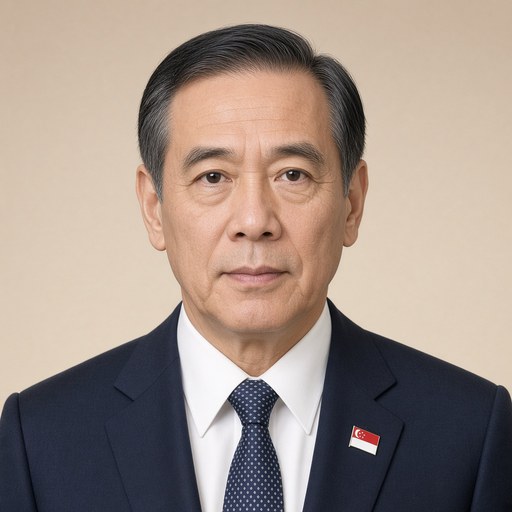
- Lee addressed Singaporeans at the 2006 National Day Rally, outlining the government's priorities on jobs, healthcare, and population after the May general elections.
- Main themes
- Job creation, healthcare affordability, population growth, economic competitiveness, income inequality, workforce retraining, globalisation, Singapore's long-term development, manufacturing and service sectors, social support for low-income families
- Duration
- ~15 min
- Words
- 1,848
- Sentences
- 137
- Readability
- 60
- Grade
- 8.3
- Syntax
- 2.71
- Vocabulary
- 2.04
The broad sphere of national life a sentence belongs to. Every sentence has an Arena, so it is the denominator the other indices are read against.
Other137 sentences in 35 paragraphs
INTRODUCTION
The General Elections in May have settled the direction for Singapore. Our new team has received a strong mandate from the people. We will do our best to bring Singapore forward. We enjoy a stable and favourable international environment. Asia is the fastest growing region in the world. There is tremendous potential in China and India. Several Southeast Asian countries face difficulties but the overall outlook in Asia is good. Let us seize the opportunities, sharpen Singapore's competitiveness, and improve the lives of all Singaporeans.
While the outlook is positive, we face strong competitive pressures. You may ask: Will there be a place for Singapore in the world? Will I have a place in Singapore? The answer is yes - we have a bright future ahead. This is not a prediction, but a common goal for us all to work together to achieve.
We are part of the Singapore family, and must support one another to achieve our goals. For its part, the Government will do its best to look after every Singaporean, and ensure that everyone can share in the nation's prosperity.
As we strive to move forward together, some Singaporeans may find it hard to keep up. Because of globalisation, our income distribution is stretching out. This is a problem faced by all countries.
The Government will do its best to tackle this problem. In every Budget, we have measures to help low-income families and the elderly. This year, we gave out the Progress Package for all Singaporeans. These measures provide some relief for the poor. But to solve the problem at its root, we need to educate and train all Singaporeans, so that they can earn a better living for themselves, and take care of their families. At the same time, we must raise Singapore's competitiveness and create good jobs that pay better.
While the Government has to tackle the bread-and-butter issues, we cannot focus narrowly on them, and ignore the longer-term issues. Tonight, I would like to discuss three major issues that concern our livelihood and Singapore's long-term development. First, creating jobs; second, providing good and affordable medical care, and third, growing our population.
ECONOMIC PROSPECTS & EMPLOYMENT OUTLOOK
First, let me talk about creating jobs. I am confident that the economy will continue to grow and create jobs. In the last two years, we created a record high of more than 200,000 jobs. This shows that our policies are working. The business community has confidence in Singapore. Hence, they are putting major investments here and creating many high-quality jobs.
One example is the Marina Bay IR project. The IR will create over 30,000 jobs, with 10,000 in the resort, and another 20,000 in other hotels, restaurants and shopping malls. There will be a wide range of jobs available, including jobs at the top-end and jobs for ordinary workers. These jobs are suitable for both young and old Singaporeans. However, for the project to be successful, we need to raise our service standards, and nurture a service culture, so that visitors feel at home in Singapore and will visit our city over and over again.
Besides the service industry, the manufacturing sector also has many vacancies waiting to be filled. These jobs require shift work and the hours are long, hence they are unattractive to Singaporeworkers. However, the working environment is not bad and the pay is good. I hope that people will give it a try.
For example, we have major investments in semi-conductors, but cannot find enough Singaporeans to work in wafer-fabs. This is because the plants operate on 12-hour shifts and workers must put on clean room suits (making them look like astronauts), and work in clean rooms. Some people do not like it because they cannot talk to one another and find it taxing. But workers are in an air-conditioned environment and enjoy good pay. It should not be difficult to get used to these conditions.
We are restructuring our electronics industry. Low-tech activities are phasing out while high-tech industries are thriving. At the same time, we are equipping workers for high-tech areas like wafer-fabs. In this way, they can keep their jobs and earn a better pay.
NTUC is working closely with employers and employees to re-train workers and help them meet the new job requirements. For example, it is helping some 300 factory workers in ST Microelectronics to learn new skills and work in a wafer plant. We must do more of such re-training and upgrading to help workers stay employed in a changing environment.
PROVIDING GOOD AND AFFORDABLE HEALTHCARE
Next, I would like to touch on medical costs. Our population is ageing. We all see friends and relatives getting ill, and start worrying about ourselves.
In fact, people all over the world share these concerns. Our healthcare system is not perfect. But compared to other countries, it is quite good.
The Government is doing its best to keep healthcare affordable for every Singaporean. Our approach is to combine government subsidies with the 3Ms (Medisave, MediShield and Medifund).
Overall, this 3M framework is sound. I know it may not be so easy to understand. In fact, one senior MOH doctor told me that he took a year and a half to figure it out. But the system is working. Nowadays, PAP MPs see fewer MPS cases needing help with medical bills. This is true also of opposition MPs.
We are paying special attention to the lower income groups. Hence in the public hospitals, the Class C and B2 wards are heavily subsidised. With Medisave, you should not have problems with these hospital bills. For those who still find it difficult to cope, Medifund provides a safety net.
We will also take care of the needs of the middle- and upper-income. They prefer to stay in higher-class wards, where the hospital bills will naturally cost more. The increase in Medisave limits this year has helped them. This group generally has healthy balances in their Medisave accounts to cover their bills, but find the current rules on Medisave and MediShield too restrictive. So we should be able to improve our Medisave and MediShield schemes to meet the needs of these patients. Khaw Boon Wan is studying this.
We are also helping patients with chronic illnesses to pay their medical bills. Those with chronic illnesses such as diabetes and hypertension will be able to use Medisave for their outpatient treatment. This is not just to help lighten your financial burden. It is also to encourage patients to get early treatment for their illnesses and avoid complications later. In seeking treatment, patients and their families should cooperate with the doctors. If the doctor says your cholesterol count is too high, please listen to him and eat less fatty food. Eat less fatty pork and have plain fish, or eat less chicken rice and have chicken porridge instead. It is not only healthier but will also help to save money. Better to do this now, than to end up with a heart bypass and pay a higher price later.
The Government hopes that everyone will take care of his own health. Lead a healthy lifestyle, eat wisely, and exercise regularly. The Government cannot do this for you. The senior citizens' groups are often the most active among the grassroots organisations. Taiji quan , brisk walking and line dance are very popular activities. Stay healthy, and you will not only save on medical costs, but also lead a happier life. As the former Vice-Premier of China, Mr Li Lanqing said, "自己不受罪,家庭不受累,减少医药费,有利全社会。" (Spare yourself the suffering and avoid becoming a burden to your family. Reduce your medical bills and the whole society will benefit).
GROWING OUR POPULATION
Finally, let me talk about a major problem we face — population shortage. To keep our society lively and vibrant, we not only need our people to be healthy, but must also maintain our population.
More and more Singaporeans are going abroad to study, work or live. This is one aspect of globalisation. We must accept this reality. We should keep in close contact with our overseas Singaporeans, and embrace them as part of our Singapore family. They can provide us with information and help us explore business opportunities and engage in cultural exchanges. At the same time, we hope that the Singaporeans who have been abroad for many years will return to Singapore eventually.
To sustain our growth and prosperity, we need to have enough people living and working in Singapore. This means that we must encourage families to have more children, and also attract more new immigrants here.
Two years ago, we introduced major policy changes to encourage couples to have more babies. So far the results have been very modest. I understand why some Singaporeans do not want to have more children. But I have not given up hope and will continue to think of ways to encourage couples to have more babies.
Let me explain why we need new immigrants. To maintain a population of 4 million, Singapore needs at least 50,000 babies a year. Last year, we had 36,000 babies. This means that we are short by 14,000 babies. No matter how hard we try, it would be hard to produce another 14,000 babies. Hence we need to attract more immigrants.
I know some Singaporeans worry that the new immigrants will compete with them for jobs. However, we should not see the new immigrants as a threat. If Singapore's population were to shrink like that of Japan's, then we would face a major crisis. On the other hand, if we have a growing population with talents in every field, the economy will become more vibrant and will create more jobs for all.
Look at Hong Kong. It has a population of 7 million, almost twice as many as Singapore. This makes Hong Kong a more vibrant city. Its retail and service sectors are thriving and creating many jobs for its people.
Even if we keep out immigrants, it does not mean that our jobs are safe. In my recent trip to New Zealand, I met a businessman who used to run a high-tech factory in Singapore, but subsequently moved it back to New Zealand. He did this because New Zealand had attracted several high-quality immigrants from China, who were willing to work hard in his plant, and even do shifts.
The most important factor in attracting immigrants is not the Government's policies but the attitude of Singaporeans. We must welcome immigrants warmly with a big heart, encourage them to set up families and establish careers here, and help them to integrate into our society. The new immigrants on their part must also make an effort to fit in and sink their roots in Singapore.
CONCLUSION
In my English speech, I will elaborate on some of the longer term challenges we face. The Government will consult widely to work out solutions for these problems, and secure Singapore's continued growth and development. As Singapore progresses year after year, we want all Singaporeans to move forward together and enjoy the fruits of our shared success.