





- Context
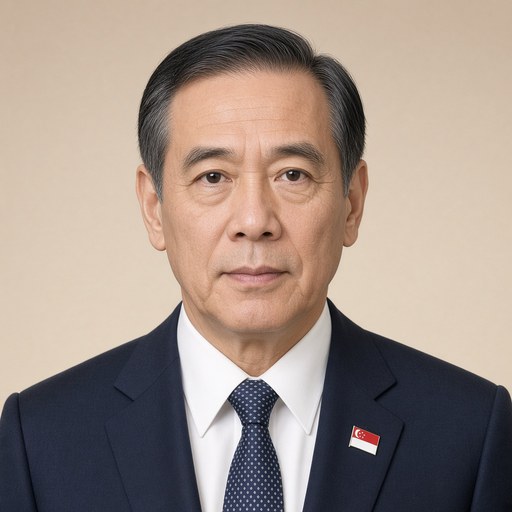
- Lee Hsien Loong delivered the 2011 National Day Rally address in Malay, outlining Singapore's post-election national priorities and Malay community concerns on 14 August 2011.
- Main themes
- National development direction, Malay community progress, economic growth and resilience, education and youth opportunities, housing and public transport improvements, ageing society and social safety nets, racial integration and multiculturalism, foreign workers and immigration management, Tertiary Tuition Fee Subsidy (TTFS) review, Malay cultural heritage preservation, community-specific challenges, government policy reforms
- Duration
- ~9 min
- Words
- 1,040
- Sentences
- 69
- Readability
- 51
- Grade
- 9.9
- Syntax
- 2.75
- Vocabulary
- 2.28
The broad sphere of national life a sentence belongs to. Every sentence has an Arena, so it is the denominator the other indices are read against.
Other69 sentences in 17 paragraphs
Singapore has done well these last few years. We survived a major financial crisis, grew the economy, preserved jobs, and transformed our city. This is the first National Day Rally after the General Elections. We should set the direction for Singapore for the next five years.
Our tasks are clear. Many other countries have not recovered from the effects of the recession since 2009. We have emerged from the recession quickly and need to keep growing our economy, to improve all our lives. This is particularly important as we face an uncertain global economy.
We need to educate young Singaporeans for the jobs and opportunities of tomorrow. We need to prepare for an ageing society by improving our medical services and social safety nets. We need to reach out more to different groups in society, to build Singapore together. We need to stand united to create a better future for all Singaporeans.
At the same time, the government will tackle the problems that have arisen in the last few years. We are building many more HDB flats, so that young couples can get their flats sooner. We are enhancing public transport by constructing new MRT lines and improving bus services. We are managing the inflow of foreign workers and immigrants, so that Singaporeans feel more at home in our own country. The results will take a while to show, but we are making progress.
The Malay community fully shares these national concerns and contributes to the solutions. This reflects our success at integrating our different communities. Political, community, and religious leaders set the right tone, building closer ties and fostering understanding between communities. The Malay/Muslim community has shown that it is not mutually exclusive for a good Muslim to be a good Singaporean. We have increased mutual trust and confidence in handling sensitive issues. All groups understand the need for give and take and mutual accommodation in our multi-racial society.
Another reason the Malay community’s perspective has become more national is because Malays have shared in Singapore’s progress. All levels have seen improvement, year by year. At the top, small but growing numbers of Malays are reaching new heights of excellence in the professions and other fields. They are winning scholarships, excelling in national examinations, and holding key posts in the public and private sectors. We are all proud of their achievements.
I fully support all the efforts of Malay parents to steer their kids to success, in its various forms. I want to see more young Malays seize the opportunities and do well. This requires hard work, but as many of you have shown, you can do it.
The Government will continue to create opportunities for all Singaporeans to excel. We will continue to open opportunities for Malays to serve the nation, and enable the community to contribute to and participate fully in Singapore’s development and progress.
Even as you are focussed on national issues, you are also concerned with some issues specific to the community. Some are new challenges arising from the Malay community’s progress. For instance, as Malays become more qualified, and take up more senior positions, they increasingly have to compete globally, not merely within Singapore. Other issues arise from the changes in our society, including concerns about the impact of foreign workers and immigrants on the Malay community. Yet others are perennial issues which we have been working on, such as households who encounter financial difficulties and lose their HDB homes. I understand these concerns and we will continue to address them together.
The Tertiary Tuition Fee Subsidy (TTFS) Scheme is another example of an issue arising from the Malay community’s progress. Today, more Malay students are making it to universities and polytechnics, and more are helped by the scheme. The undisbursed sums are not kept by the Government. Instead, they are used by Mendaki for programmes to help uplift the Malay community.
However, the TTFS income criteria have not changed since the scheme was introduced 20 years ago. By today’s standards, some Malay families who have to pay fees may not be considered to be well-off. Some families may have more than one child studying in tertiary institutions at the same time, and the fees may be a financial burden to them. Minister Yaacob has suggested reviewing this. I agree with him. The Government will study the problem with Mendaki and the Malay community, and revise the TTFS income criteria so cover more Malay families. But the key principle will remain - Malay students from poorer households enjoy free education, while the better off have to pay fees.
Another issue that concerns the Malay community is preserving its heritage in the midst of rapid development. Right now during Ramadan, Geylang Serai bustles with the Hari Raya bazaar. The community has strong emotional attachment to Geylang. The older ones may have lived and played there, and have many precious memories of the kampung spirit. As the Malay proverb says: One remembers fondly one's childhood home.
There is presently a "Malay Village" in Geylang. Its lease expires soon. The Government plans to develop a new civic centre and plaza on part of the current site. The working name for the centre is Wisma Geylang Serai. It will house Geylang Serai CC and a heritage gallery to remind us of the old Geylang Serai.
We will also do up the neighbourhood with Malay architectural designs and touches, especially along Geylang Road. Even as Geylang is modernised and upgraded, we will retain its Malay feel and character and its special place in the community's heart. Dr Maliki Osman will oversee this project.
The Malay community has come a long way. You have integrated yourself into our multi-racial society, achieved tremendous progress and yet remained rooted to your heritage and history. You are a successful Community of Excellence and a working model of a moderate Muslim minority that has progressed together with the nation.
I urge community leaders, Malay/Muslim organisations, as well as individuals to come forward and continue working with me and my team, especially the Malay MPs. Together we can work on national and community issues, and achieve a better future for all of us.
Thank you, and my best wishes for Muslims during the fasting month.