





- Context
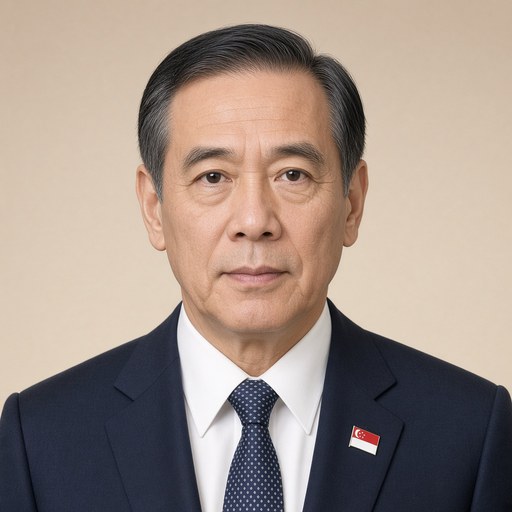
- Lee addressed Singaporeans in his National Day Rally speech on 14 August 2011, reflecting on the May general election and key policy challenges facing the nation.
- Main themes
- Foreign talent and immigration policy, economic resilience and recovery, housing and public services, university admissions and foreign students, government accountability, Singapore's international competitiveness, social cohesion, post-election governance
- Duration
- ~25 min
- Words
- 2,947
- Sentences
- 163
- Readability
- 41
- Grade
- 12.0
- Syntax
- 2.87
- Vocabulary
- 2.12
Translated from Chinese
The broad sphere of national life a sentence belongs to. Every sentence has an Arena, so it is the denominator the other indices are read against.
Other163 sentences in 27 paragraphs
Dear fellow citizens, good evening.
We held a general election in early May. My team and I have been entrusted by the people once again, and we will do our utmost to serve everyone. We have already begun addressing various short-term and long-term issues.
Over the past five years, many Singaporeans have faced difficulties in their lives. We have experienced a severe international economic storm, with the economy fluctuating greatly. The government prioritized the overall interest while handling the crisis. We took bold and decisive measures. As a result, we stabilized the economy, preserved jobs, and achieved a strong economic rebound. However, these bold measures have their negative impacts and may cause adaptation issues for the people. Moreover, we cannot fully address the difficulties faced by every household. Therefore, some people feel that the pressure of life has increased.
It is like flying in an airplane. We occasionally encounter bad weather, and the pilot must make quick decisions to change the flight's direction, altitude, or speed. Although the pilot does their best, the plane inevitably experiences turbulence, causing discomfort for passengers and possibly even a bit of dizziness. Now that the storm has passed, the plane has returned to smooth flying. However, good times may not last long, as we may encounter strong winds and turbulence again. The debt issues in Europe and the United States are concerning, and the economic outlook is uncertain. We should fasten our seatbelts in preparation for another storm and be mentally prepared.
The government will do its best to shield the people from the wind and rain, and we are also addressing some unresolved issues, including housing, transportation, and the influx of foreigners. We do not have immediate solutions because these are complex issues that require time to address, and we hope everyone can understand.
The government's policies have always prioritized the interests of Singaporeans. The starting point of these policies is good, aimed at improving people's lives. However, the benefits of some policies may be indirect or take time to become apparent. In the short term, these policies may give the impression that the disadvantages are visible before the benefits. A clear example is the issue of foreign talent, foreign students, and foreign workers.
I explained this policy in detail at last year's rally, and I believe people rationally understand the long-term benefits of this policy. However, they directly feel the crowding and pressure in workplaces, schools, or public places, leading to a psychological sense of resistance.
The government must handle this tricky issue with caution, and we hope to find a compromise solution. Tonight, I want to explain this issue from another perspective.
Let me start with the issue of our universities accepting foreign students. Some people criticize us for accepting foreign university students and providing scholarships to some of them. Some readers of Lianhe Zaobao recently had a heated discussion on this topic. One reader said that the government is "going too far"; another reader asked, "Isn't the family flower more fragrant than the wild flower?"
I understand the dissatisfaction of these readers. However, I hope they can view this issue from a broader perspective. The primary responsibility of our universities is to cultivate local talent. While we admit outstanding foreign students, this does not deprive local students of the opportunity to further their education and enter universities. In fact, the number of Singaporean students gaining admission to universities has been increasing year by year. The scholarships awarded to foreign students come with conditions. After graduation, they must stay in Singapore to work for a few years according to their contracts, contributing to our economy. Our records show that the majority of foreign students fulfill their contracts. In the long run, if these foreign students stay in Singapore, it will strengthen our talent pool. If, after some time, they return to their home countries, they can become part of our network, helping us establish extensive international connections and expand our business opportunities. Such personal connections and relationships are especially important in China.
We know that outstanding foreign students bring competitive pressure to local students. However, competition is not entirely a bad thing. It helps raise the standards of local students and broadens our international perspective, making us realize that "there are heavens beyond heavens, and there are people beyond people."
However, we will take public feedback seriously and review the actual effects of this policy. We will strive to maximize the benefits while minimizing the drawbacks. We must maintain an open policy but control the number of foreign students moderately. We will also pay more attention to local students. We will increase university enrollment to benefit more local students. Recently, we added the Singapore Institute of Technology (SIT) and the Singapore University of Technology and Design (SUTD) to provide more opportunities and pathways for local students. With more opportunities, pathways, and choices have increased. This means a larger proportion of Singaporean students will have the chance to attend university. Our longstanding commitment is that no one will be unable to attend university due to economic issues. Therefore, the number of Singaporean students will increase, and the government will provide more scholarships and financial aid to local students. At the same time, we will strive to maintain the unique characteristics of our universities: to promote an open and inclusive spirit while preserving our unique learning culture to strengthen the connection between universities and our society. These are Singapore's universities, so they must embody Singapore's ethos, traditions, and values. They are not universities from the West, not from India, and not from Beijing or Shanghai; they are Singapore's universities.
In addition to foreign university students, the government is also very concerned about foreign workers and immigration issues. We have slowed the influx of foreign workers to cushion the impact on local workers. We have also raised the criteria for applying for citizenship and permanent residency to ensure that new immigrants possess higher qualifications and can contribute more to Singapore. These are practical, valuable, and necessary adjustments.
However, we should be self-aware and not go to extremes, becoming exclusionary and shutting out all foreigners. Our open and confident attitude has successfully attracted a large amount of foreign investment. For high-end enterprises, talent is their most critical competitive advantage. Let me give an example: we successfully attracted American tech companies Microsoft and Google to establish regional offices in Singapore, but unfortunately, they set up high-end research and development centers in some cities in China and India instead of Singapore. The reason is simple: these two countries have a larger talent pool and lower talent costs. Therefore, we must moderately introduce foreign talent to strengthen our overall talent pool to attract more high-end investments. Additionally, we should also pay attention to mitigating the negative impacts brought by foreign workers: reducing foreign workers will weaken the economy's vitality and growth rate, leading to labor shortages for businesses. Therefore, the government must carefully weigh the pros and cons to avoid causing too much disruption to the economy. We must pay attention to the situation of small and medium-sized enterprises, as they may bear the brunt of the impact. They rely heavily on foreign labor, and if we tighten regulations too much, local small business owners will face problems. Therefore, the government will help them change their business practices to save labor and adapt to the new economic environment.
In addition to foreign workers and immigration, another issue of concern for Singaporeans is the security of our personal lives. In recent years, economic fluctuations have weakened people's sense of security. They worry about losing their jobs and losing their livelihoods. Older individuals may also be concerned about their lives after retirement. The government is also paying attention to this issue and will strengthen the social safety net.
We are equally concerned about the needs of the younger generation and the elderly. The government must cultivate the younger generation well because young people are the hope of the nation. However, we also strive to help the elderly solve their life issues, in gratitude for their contributions to the country, which reflects the principle of remembering the source of the water we drink. Young people grow up in the internet age and are very familiar with everything new on the internet. In contrast, older individuals may feel outdated and left behind by the times, having to go to community centers to learn computers and seek help from young people. However, the elderly possess knowledge and experience, having personally witnessed the tremendous changes in our society, so their experience, judgment, and wisdom are valuable. I hope the younger generation can humbly learn from the elderly. There is a saying: "If you do not listen to the words of the elderly, you will suffer losses in front of you." This saying holds true. The life wisdom of the elderly can help us make fewer mistakes and avoid unnecessary detours.
The government has taken many concrete measures over the years to help older Singaporeans, such as allowing the elderly to receive more dividends when sharing financial surpluses, as well as contributions to the Central Provident Fund and healthcare savings. The elevator upgrading program we have implemented in various housing estates has provided great convenience for countless elderly individuals.
In the coming years, the government will intensify efforts to address the healthcare issues of the elderly. Our population is rapidly aging, and the number of elderly and sick individuals is gradually increasing. If elderly individuals unfortunately suffer from dementia or are bedridden for a long time, it will place a heavy economic burden on their families, and not just an economic burden, but also a long-term mental strain. I have seen some families caring for sick elderly relatives for a long time, and it is truly not easy. The government will provide more assistance to these families. For low-income families, we will provide more subsidies for long-term patients receiving home care through the healthcare fund, Medifund, such as funding for rehabilitation treatments, etc. We will also expand nursing and rehabilitation services to help nursing homes increase their bed capacity and expand services. The government needs to develop a comprehensive plan because this is not just about increasing subsidies. It is a complex and sensitive social issue.
We should learn from the experiences of other countries. Recently, there was a report in The New York Times. The report stated that people have traditionally thought that nursing homes are a phenomenon unique to Western societies, and that filial piety in Asian cultures means that people would not send their elderly parents to nursing homes. However, in recent years, many nursing homes have appeared in major cities in China. This is a new phenomenon, indicating that the population in China is aging, and family structures are changing. Clearly, times have changed, and traditional family values are gradually fading. Singapore may also face the same problem. Therefore, we must handle the policies for assisting the elderly and sick with caution to avoid leading people to shirk their responsibilities and abandon their parents in hospitals or nursing homes.
Thus, we must develop a comprehensive plan to address population aging. A ministerial committee was established a few years ago to find countermeasures. Under the leadership of Mr. Lim Wen Heng, the committee has done considerable work. Recently, Minister Janil Puthucheary succeeded Lim Wen Heng as the committee chair, and the committee will delve deeper into the issue of population aging and then formulate specific plans.
Let me give a practical example. We are implementing an experimental program to care for the elderly in Marine Parade, which is a project that Senior Minister Goh Chok Tong is particularly concerned about. Through this program, we will identify the needs of the elderly in the area and then seek to improve infrastructure, policies, and mechanisms to enable the elderly to live more comfortably and make their family lives warmer. Multiple government departments are collaborating on this plan, conducting a large-scale survey to understand the needs of the elderly in the Marine Parade area. Then, we will study how to better care for these elderly individuals and address their life difficulties. I encourage public figures and organizations to actively participate in this plan: to provide suggestions, engage in actions, and implement all feasible recommendations. If these suggestions and ideas can be realized and prove effective, we will promote them to other communities so that every elderly person in Singapore can benefit.
The government is the servant of the people. Our duty is to do our best to solve various problems for the people. This is the responsibility of the departments and also of us civil servants. The government's requirement for civil servants is that they should continuously improve services, flexibly handle the requests of the people, and fully consider individual circumstances, avoiding rigid adherence to rules. However, I hope the people understand that civil servants cannot meet every request. They must act impartially and treat all citizens equally. In recent months, some frontline civil servants have reported to me that some members of the public have been very harsh in their tone and quite aggressive when interacting with them. Although such cases are a minority, there seems to be an increasing trend. Let me give a practical example: not long ago, a person went to a government hospital for medical treatment and requested a doctor to prescribe a certain medication for him. After examining his condition and checking his body, the doctor kindly informed him, "You do not need this medication." Unexpectedly, the patient became furious, loudly scolding the doctor and even using profanity; he also said he would sue the doctor!
Please think about it: if you were this doctor, how would you respond to such a request? You could choose to appease the patient, but that would violate professional ethics and be harmful to the patient. We require doctors, and even other civil servants, to possess professionalism and maintain objectivity and fairness. If they cannot meet the public's requests, they should politely and clearly explain to the other party. At the same time, I hope that when you seek medical treatment at hospitals or deal with government departments, you can treat civil servants with courtesy, mutual respect, and calm discussions, as this is very helpful in resolving issues. Because whether it is a doctor or a civil servant, their intention is to help you solve problems as much as possible.
In the long run, I hope to establish a good interactive relationship between the government and the people. The government will strive to find the best solutions to various livelihood issues; however, I hope the people can also take the initiative and provide suggestions and ideas to the government. Our society is becoming increasingly mature, and the government should not micromanage everything, even matters like cats and dogs. A few weeks ago, people discussed the issue of "the minister catching cats." One reader of Lianhe Zaobao said that Minister Vivian Balakrishnan has more important matters to attend to and should not be troubled by catching cats. I think this reader has a point. However, when I recently met with the public in the Teck Ghee area, I had to personally handle a case of catching a dog. I met with a resident, a young lady, who happened to encounter a stray dog and liked it very much, but unfortunately, she had no place at home to adopt it. Later, this dog was caught by the authorities, and she immediately launched a rescue operation because the authorities said that if the owner was not found within three days, the dog would be euthanized. So she asked me to help her write a letter requesting the Agri-Food & Veterinary Authority to give the dog a few more days. After hearing her story, I felt sympathetic, so I helped her write a letter. Later, I heard that the dog was adopted in time, and this rescue operation was thus successful.
Whether it is "the minister catching cats" or "the prime minister rescuing dogs," we have a responsibility to address the big and small matters that concern the people. However, I hope everyone understands that some issues and disputes may not be within the government's control or may not be handled well. In the future, I hope the government can manage fewer matters, and the people can handle more. The more proactive the general public is, the stronger our society's adaptability will be, giving us greater confidence to face international competition and overcome various difficulties and challenges.
Let me summarize tonight's speech. The government will review various livelihood policies to reduce the negative aspects of these policies. However, I hope the people can also pay attention to longer-term issues and the impact of external circumstances on Singapore. To maintain a long-term competitive advantage, we must continuously improve education levels and productivity, and we must fully maintain social harmony and political stability. These are fundamental factors that must be done well so that we can address the pressing issues at hand and maintain a long-term, correct direction for progress. We should take care of the needs of all age groups and communities, ensuring that everyone can share in the fruits of national progress while adapting to the changes of the times and updating governance methods to make the people feel more involved and clearer about our direction forward.
These are all long-term goals that require careful planning, thorough organization, and the cooperation of the people. Regardless, our prospects are bright. Let us unite as one and overcome difficulties together, implementing these plans one by one to create a better future for ourselves. Thank you all.
The original Chinese. The tags above are read on the English translation's sentences.
各位亲爱的同胞,大家晚上好。
我们在五月初举行了大选。我和我的团队得到人民重新的委托,必将竭尽所能为大家服务。我们已经开始处理各种短期和长期的问题。
过去五年,许多新加坡人的生活都遇到了困难。我们经历了很严峻的国际经济风暴,经济大起大落。政府在处理危机时,以大局为重,以整体利益为先。我们采取了大刀阔斧的、果断的措施。结果,我们稳定了经济,保住了工作,经济取得强劲的回弹。不过大刀阔斧的措施,有它负面的影响,可能为人民带来适应的问题。而且,我们无法完全兼顾每家每户所面对的困难。因此,一些人觉得生活压力有增无减。
这有如乘坐飞机一样。我们偶尔会遇上恶劣的天气,机师必须当机立断,迅速改变飞行的方向、高度或速度。机师虽然尽了全力,但是飞机难免会受到冲击,引起震动,令乘客感到不安,甚至可能有点头昏。现在,这场风暴过去了,飞机恢复平稳飞行了。可是,好景不长,我们又可能遇上强风、气流。欧洲和美国的债务问题令人担心,经济前景不明朗。我们应该扣好安全带,以防备另一场风暴,做好心理准备。
政府将尽力为人民遮风挡雨,并且还在处理一些有待解决的问题,包括住屋、交通和外国人涌入的各种问题。我们没有立竿见影的方案,因为这些是复杂的问题,需要一些时间处理,希望大家能够谅解。
政府的政策向来把新加坡人的利益放在第一位。政策的出发点都是好的,都是为了改善人民的生活。然而,一些政策的好处是间接的,或者需要一些时日才看得比较明显。在短期内,这些政策给人的感觉或许是:未见其利,先见其弊。一个明显的例子是有关外来人才、外国学生和外劳的问题。
我在去年的群众大会上详细地解释了这个政策,我想人们理智上明白这个政策长远的好处。但是,他们在工作场所、学校里,或者在公共场所,直接感受到拥挤和压力,因此心理上就产生了抗拒感。
政府必须谨慎地处理这个棘手的问题,我们希望找到折中的解决方案。今晚,我要从另外一个角度解释这个问题。
让我先从我国大学接受外国学生的问题谈起。有些人批评我们接受外国大学生,并且提供奖学金给一部分的外国学生。《联合早报》的一些读者不久前就热烈讨论这个课题。其中有一位读者说,政府这样做“太过火了”;另外一位读者也问:“难道家花不比野花香?”
我理解这些读者不满意的原因。但是,我希望他们能从更宽阔的角度看待这个问题。我国大学的首要职责是栽培本地的人才。我们虽然招收优秀的外国学生,但是这并没有剥夺本地学生升学,进入大学的机会。实际上,考进大学的新加坡学生逐年增加,每年都有增无减。外国学生所获得的奖学金是有附带条件的。他们在毕业之后,必须依据合约留在新加坡工作几年,为我们的经济做出贡献。我们的记录显示,多数外国学生都履行了合约。长远来说,如果这些外国学生在新加坡留下来,那会加强我们人才的阵容。如果过了一段时间,他们回到自己的国家,他们可以成为我们的人脉网络,帮助我们建立广泛的国际联系,拓展我们的商贸机会。而这样的个人联系,这样的关系在中国尤其重要。
我们知道优秀的外国学生给本地的学生带来竞争的压力。可是,竞争不完全是一件坏事。因为它有助提高本地学生的水平,并且拓展我们的国际视野,使我们认识到“天外有天,人外有人”。
不过,我们会重视民众的反映,并且检讨这个政策实际的效果。我们将尽量做到取其利,去其弊。我们必须维持开放的政策,但是适度地控制外国学生的数目。我们也将更加照顾本地学生。我们将增加大学学额,让更多本地学生受惠。我们最近还增添了新加坡科技学院(SIT)和新加坡科技设计大学(SUTD),给本地学生提供更多升学的机会和渠道。机会比较多,途径和选择也增加了。这意味着,更大比例的新加坡学生将有机会升上大学。我们向来的承诺是,没有人会因为经济问题上不了大学。因此,新加坡学生将增加,而政府也将提供更多奖助学金给本地学生。同时,我们将尽力维持我国大学的特色:既要发扬开放兼容的精神,又要保留我们特有的学习风气,以加强大学和我国社会的联系。这些是新加坡的大学,所以必须有新加坡的风气,新加坡的传统,新加坡的价值观。这些不是欧美的大学,不是印度的大学,不是中国北京或者上海的大学,是新加坡的大学。
除了外国大学生之外,政府也很关注外劳和移民的问题。我们已经放慢外劳流入的速度,以缓冲对本地工人的冲击。我们也提高了申请公民权和永久居留权的条件,确保新移民具备更高的素质,更能够为新加坡作出贡献。这些是实际和有价值、有必要的调整。
不过,我们应该自我警惕,不要走向极端,变成排外,把所有的外国人都拒在门外。我们开放和自信的态度,使我们成功地吸引了大量的外来投资。对高端企业来说,人才是他们最关键的竞争的优势。让我举一个例子:我们成功争取到美国科技企业微软(Microsoft)和谷歌(Google)在新加坡设立区域营业中心,但是美中不足的是,它们把高端的研发中心设立在一些中国和印度的城市,而不是设立在新加坡。理由很简单,因为这两个国家人才比较多,人才成本也很低。所以,我们必须适度引进外来人才,加强我们整体的人才阵容,这样才能吸引更多高端的投资。此外,我们也应该注意削减外劳所带来的负面的影响:因为削减外劳将削弱经济的活力和增长的速度,导致企业面对人工短缺的问题。因此,政府必须很谨慎地权衡得失,以免对经济造成太大的冲击。我们必须关注中小型企业的处境,因为他们所承受的冲击可能是最大的。他们最依靠外来劳工,如果我们抓得太紧,本地小老板将面对问题。所以,政府将帮助它们改变营业方式,以节省人力,以及适应新的经济环境。
除了外劳和移民,新加坡人关注的另一个课题是我们个人生活的保障。近年来,经济起落不定,削弱了人民的安全感。他们担心失去工作,生活失去依靠。而年纪较大的人则可能为退休后的生活操心。政府也很注意这个问题,并且将加强社会安全网。
我们同样关注年轻一代和年长一辈的需要。政府要好好栽培年轻的一代,因为年轻人是国家的希望。但是我们也尽量帮助年长一辈解决生活上的问题,借以感激他们对国家的贡献,这就是饮水思源的体现。年轻人生长于网络时代,很熟悉互联网上一切新鲜的事。相比之下,老年人可能觉得落伍了,被时代抛在后头,还要到联络所学习电脑,向年轻人学。不过,年长者有的是知识和经验,更亲身经历了我国社会巨大的变迁,所以他们的经验,他们的判断力,他们的理智是有价值的。我希望年轻一代能够虚心地向年长一辈学习。俗语说:不听老人言,吃亏在眼前。这话是有道理的。年长者的生活智慧,能够让我们少犯一点错误,少走一点冤枉路。
政府多年来采取了很多具体的措施帮助年长的新加坡人,譬如在分享财政盈余的时候,我们让老年人享有更多的分红,以及公积金填补和保健储蓄的填补。我们在各组屋区开展的电梯翻新计划,为无数老年人提供了很大的方便。
在未来的几年,政府将加紧处理老年人的医药保健问题。我国人口迅速老化,老弱病人的数目逐渐增加。如果老年人不幸患上老人痴呆症,或者长期卧病在床,那将为他们的家庭带来非常沉重的经济负担,并且不止是经济负担,而且是一种长期的精神压力。我看过一些家庭长期照顾患病长辈,真的是不容易。政府将为这些家庭提供更多的援助。对低收入家庭,我们将通过保健基金,那就是Medifund,为在家疗养的长期病患者提供更多的津贴,譬如资助他们进行康复治疗等等。我们也将扩大护理和康复服务,帮助疗养院增加病床和扩充服务。政府需要制定周详的计划,因为这不只是增加津贴的问题。这是一个很复杂的、敏感的社会问题。
我们应该从其他国家经验吸取教训。最近,美国《纽约时报》有这么的一篇报道。报道说,人民向来的印象是:养老院是西方社会特有的现象,讲究孝道的亚洲人不会把老弱的父母送到养老院去的。但是近年来,中国各大城市都出现了许许多多的养老院。这是全新的现象,说明中国人口正在老化,家庭结构正在改变。显然的,时代不同了,传统的家庭价值观也渐渐淡薄了。新加坡也可能面对同样的问题。因此,我们必须很谨慎地处理援助年老病人的政策,避免导致人们推卸责任,将父母遗弃到医院或者疗养院去。
所以,我们必须制定一套应付人口老化的全盘方案。我们在几年前成立了一个部长级委员会负责寻找对策。委员会在林文兴先生领导下,已经做了不少工作。最近,颜金勇部长接替林文兴出任委员会主席,委员会将更深入探讨人口老化的问题,然后制定具体的方案。
让我举一个实际的例子。我们正在马林百列推行一项照顾老人的实验性计划,这是吴作栋资政特别关注的一个项目。我们将通过这个计划,确定该区老年人的需要,然后设法改善基础设施、政策和机制,使老年人能够生活得更自在,也使他们的家庭生活更温馨。多个政府部门配合这项计划,展开了一项大规模的调查,以了解马林百列区老年人的需要。然后,我们将研究如何更好的照顾这些老年人,更好的替他们解决生活上的困难。我鼓励公众人士和团体踊跃参加这项计划:提出建议,参与行动,落实所有可行的建议。如果这些建议和构想能够付诸实现,证明有效,我们将把它推广到其他社区,使新加坡每一个老年人都能够受惠。
政府是人民的公仆。我们的职责是尽心尽力为人民解决各种问题。这个是部门的责任,也是我们公务员的责任。政府对公务员的要求是,你们应该不断改善服务,灵活处理人民的要求,充分考虑个别人士的情况,避免照章行事。然而,我希望人民谅解的是,公务员不可能有求必应。他们必须秉公办事,对所有人民一视同仁。最近几个月,一些前线公务员向我反映,一些公众人士与他们接触的时候,语气很重,态度相当强硬。这样的案例虽然只佔少数,但是好像有增加的趋势。让我举个实际例子,这是不久前发生的:有一位人士到某个政府医院求医,他要求医生配一种药给他。医生研究了他的病情,检查了他的身体之后,好意地告诉他:“你不需要这种药。”不料,这名病人勃然大怒,高声大骂医生,连粗话都用上了;他还说,要告医生一状!
请大家想一想,如果你是这位医生的话,你应该怎样回应这样的要求?你可以选择息事宁人,但是这将违背职业道德,对这位病人有害无益。我们要求医生,甚至其他公务员具备专业精神,保持客观和公正。如果他们不能接受公众的要求,应该客气地和清楚地向对方解释。与此同时,我也希望大家到医院求医,或者到政府部门办事的时候,能够和公务员以礼相待,互相尊重,心平气和地互相磋商,这对解决问题很有帮助。因为不管是医生或者公务员,他们的用意都是尽量帮助你解决问题。
长远来说,我希望政府和人民之间能够建立起良好的互动关系。政府将尽力为各种民生问题寻找最好的解决办法,然而,我希望人民也能够自动自发,并且向政府提建议,出主意。我们的社会已经越来越成熟,政府不应该凡事都管,连猫和狗这一类的事都要管。几个星期前,人们就讨论了“部长抓猫”的事。一位早报读者说,许文远部长还有更重要的事要办,不应该为抓猫的事烦恼。我想这位读者说得有理。但是,我最近在德义区接见民众的时候,也不得不亲自处理一件抓狗的事。我接见了一位居民,一名年轻的女士,她偶然碰见一只野狗,非常喜欢,可惜家里没地方,没办法领养。后来这只狗被当局抓走了,她马上展开救狗行动,因为当局说,三天之内如果找不到狗主,就把这只狗人道毁灭。所以她要求我帮她写信,要求农粮与兽医局给这只狗多几天的时间。我听了之后感到同情,所以帮她写了一封信。后来,我听说这只狗及时被人领养,这个救狗行动因此大告成功。
无论是“部长抓猫”,还是“总理救狗”,我们都有责任处理人民关心的大事和小事。但是,我希望大家体谅的是,有些问题,有些纠纷,政府未必管得了,也未必做得好。在未来,我希望政府能够少管一点事,人民多办一点事。一般民众的主动性越强,社会的应变能力就越强,使我们更有信心应付国际竞争,克服各种艰难和各种挑战。
让我总结今晚的谈话。政府将检讨各项民生政策,以减少这些政策的负面的问题。不过,我希望人民也能关注更长远的问题,并且注意外界形势对新加坡的影响。为了维持长久的竞争优势,我们必须不断提高教育水平和生产力,也必须全力保持社会和谐与政治稳定。这些是基本的因素,必须做得好,我们才能处理这些眼前的燃眉之急,才能维持长远的、正确的方向,向前迈进。我们应该照顾各个年龄层、各个社群的需要,确保人人都能分享国家进步的成果,同时顺应时代的变迁,更新治国的方式,使人民更有参与感,更明了我们前进的方向。
这些都是长远的目标,需要精心的计划,周详的组织和人民通力的合作。无论如何,我们的前景是光明的。让我们上下一心,一起克服困难,将这些计划一一落实,让我们的前途更美好。谢谢各位。