




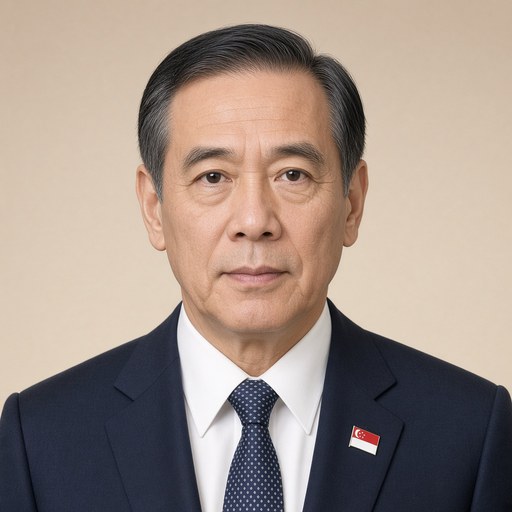

- Context
- Lee addressed Singaporeans at the 2013 National Day Rally, held at ITE College Central in Ang Mo Kio, reviewing national progress and economic challenges.
- Main themes
- Singapore's economic transformation, SME challenges and foreign worker policy, productivity and restructuring, intergenerational progress, education and social mobility, globalisation and competition, government support schemes, community development in Ang Mo Kio
- Duration
- ~20 min
- Words
- 2,409
- Sentences
- 176
- Readability
- 61
- Grade
- 8.2
- Syntax
- 2.63
- Vocabulary
- 2.07
The broad sphere of national life a sentence belongs to. Every sentence has an Arena, so it is the denominator the other indices are read against.
Other176 sentences in 32 paragraphs
Fellow Singaporeans,
Good evening!
I have held my National Day Rally at the University Cultural Centre for many years. This year, I have changed the venue to ITE Headquarters and College Central located in Ang Mo Kio. I think you will all agree that this is a beautiful campus, a good place for study. It is a beautiful addition to Ang Mo Kio.
Before Singapore became independent, Ang Mo Kio was a rural area, with mainly farms, plantations and attap huts. Everyone lived in kampongs, where the living conditions were poor and there were no facilities. In half a century, Ang Mo Kio has become a modern and vibrant estate. It now has a full range of amenities: Schools, community clubs, a stadium, polytechnic and many others. It has high-rise HDB flats, bustling malls and the scenic Bishan-Ang Mo Kio Park – it should be called Ang Mo Kio-Bishan Park, in our opinion.
Many families in Ang Mo Kio have lived here for over 30 years. They have become close friends. It is a warm community. I see many familiar faces during my walkabouts, for example, Mrs Lim from Block 409 Market. Mrs Lim has managed her stall for more than 10 years. She is always smiling when I see her. She has three children. Two of them have gone to university, of whom one has graduated. Her business is good, and her stall often overflows with vegetables. Sometimes she takes up too much space and the Town Council fines her. So when we meet, she would ask me to persuade the Town Council to be lenient. I said I will try hard, but I will need to see if there are mitigating circumstances, and that I hope she will work with the Town Council. She replied that she will try. I feel happy for Mrs Lim. Her children are well educated and she need not worry about her basic needs. In one generation, you can see their lives have improved.
The Lims’ story is shared by many Singaporeans. Our parents’ generation scrimped and saved to give their children a good education and better lives. In many ways, they have achieved this. The lives of their children have improved in many ways, be it in their education levels, economic wellbeing, job opportunities or life expectancy.
We must continue to work hard so that the next generation can do better than us. We have the experience and resources. We can do it!
We need a new approach to keep moving forward. There will be stiffer competition in our next phase. Globalisation and technology will pose more challenges.
Other countries face these situations too. In recent years, many developed countries have implemented tough reforms to overcome their difficulties and generate growth. Many European countries face serious structural economic problems and severe unemployment. Youth unemployment in several southern European nations is more than 50%. But European countries have tightened their belts, restructured their economies and come through the most difficult phase. I believe that European economies will recover. The prospects for China are good, but there are also many difficulties. China is producing more university graduates. There will be seven million graduates this year alone, more than Singapore’s population! The Chinese government is doing their best to create suitable jobs for these graduates. Chinese leaders know that they must strengthen reforms so as to solve this problem. Fortunately, the youth in China have fighting spirit, and they are talented. In time, they will change China, and change the world.
Singapore is in a good position – we have a stable economy and high employment. But we need to continue to strive, to learn from other countries and persevere. Of course, there will be downsides as we transform our economy.
SMEs, in particular, face many challenges. They have tried hard to raise productivity, improve service standards and reduce labour costs. But they have limited resources and cannot do this on their own. SMEs rely a lot on foreign workers. Hence, the biggest challenge for SMEs is manpower. Many SMEs complain that they have business but they cannot find workers. Actually, we did not stop the inflow of foreign workers; we have only adjusted the rate at which they are brought in. The economy is still growing, and the number of foreign workers is still rising. But the demand for foreign workers is high and some businesses will be affected by the slowdown in the inflow of foreign workers. The Government understands the difficulties that businesses have, and will try our best to help. However, we need to control foreign worker numbers; otherwise it will lead to serious consequences.
The Government is now helping businesses to upgrade and transform. In Budget 2013, we rolled out a 3-year Transition Support Package, costing $5.3 billion, to help businesses reduce costs and raise productivity. SPRING Singapore’s mission is to help SMEs. They have many schemes to do so.
MP Yeo Guat Kwang, who is Chairman of the Migrant Workers’ Centre, had an interesting dialogue with business owners on foreign workers recently. The dialogue was jointly organised by Shin Min Daily and the Bosses’ Network. It took place on board a cruise ship. Mr Yeo used popular Chinese song titles to make his point. He said business owners like three songs: 《往事只能回味》 “The Past Is But A Memory” (on foreign workers); 《我是一只小小鸟》“I Am A Little Bird”, whose lyrics are “I am a tiny little bird, I try to fly but how high can I fly? I am looking for a warm embrace. Is this really too much to ask for?”; and 《月亮惹的祸》“It Is The Moon’s Fault”. Mr Yeo joked that some say it is the lightning’s (i.e. the PAP’s) fault. Mr Yeo also used three songs to describe what the Government feels: 《你知道我在等你吗?》“Do You Know I Am Waiting For You?”; 《我在你左右》“I Am By Your Side”; and the third and most important song, 《明天你是否依然爱我?》“Will You Still Love Me Tomorrow?”.
Jokes aside, the foreign worker issue is complex. The Government cannot meet all the demands and there is no perfect solution. But we will help SMEs find a way to make it. Minister of State for Trade and Industry Teo Ser Luck will chair a workgroup to help SMEs. The workshop will meet different business representatives to find out how to better support them.
We hope to better understand the peoples’ concerns, move with our changing social needs and support all Singaporeans.
PM Lee Hsien Loong
Besides helping SMEs, the Government has also been helping Singaporeans to deal with the challenges and stresses of daily living. Over the last few years, we have introduced many schemes to help people in need, especially low income families. For example, we have GST Vouchers to help with cost of living; Workfare to top up the wages and CPF savings of low wage workers; and the Special Employment Credit to encourage employers to hire older workers. These are long-term support schemes which are already institutionalised. They are not stop-gap measures. They strengthen our social safety net and give families more security.
Taken together, these measures also represent a fundamental shift in strategy. This Government will undertake a new approach, and a different mindset. Over the next few years, we will continue along this new direction. We hope to better understand the peoples’ concerns, move with our changing social needs and support all Singaporeans.
After half a century’s development, Singapore is at a turning point. Our goals have not changed: We want our people to have good jobs and better lives. To do so, we need to renew our approach and ideas to governing. Most importantly, we have to strike a new balance between the roles of the Government, community and the individual. The Government and community will share a larger part of individuals’ burdens. Let me give you an example to illustrate this new thinking. This is about how we help the elderly. Many elderly are immobile and need help daily. The Government has thus set up the Seniors’ Mobility and Enabling Fund, to subsidise the purchase of equipment needed by our seniors, such as wheelchairs, hearing aids, special reading glasses and mattresses. (Referring to picture) This photo shows ESM Goh giving a new shower chair to an elderly resident. The Government is prepared to reduce families’ and individuals’ burdens. This is a start; we will do more in the future.
At the same time, we also hope the community and the individual will do more to complement what the Government is doing. We want to build a caring community with vitality and energy. I am heartened that Singaporeans do not lack the spirit of giving and many Singaporeans are helping others. The Lions Food Distribution Project is a good example. The project was founded by Mr Looi Im Heok in 1988. He started to collect unsold vegetables and fruits from hawkers and business owners once a week and distribute them to charities across Singapore. At first he did it alone, and encountered many difficulties. But his perseverance touched many people, and they joined him in this meaningful endeavour. It has been 25 years, and Mr Looi is now 85 years old, but he still goes down to the collection centre every week to help. I met Mr Looi at a recent Lions Club dinner to celebrate the 25th anniversary of the project. Together, we commended Mr Looi’s compassion and commitment.
Striking this new balance between Government, community and people is a process and it cannot be done overnight. We need to work on it, step by step, over many years. We will start with the immediate issues, including education, healthcare and housing. We want to reduce the risks for the people in their daily lives, especially for healthcare. I will expand on this in my English speech.
We need to help those with less, to strengthen social cohesion. We have to ensure that society does not become divided between the rich and poor. We have to think of ways to raise the income of low income families, and help them buy their own flat, to help them accumulate more savings and assets.
We need to keep our system open so that regardless of background, everyone can move up, especially through education. The Lims I mentioned are a good example. A good education has changed their circumstances and their children can look forward to better lives. The Government will help children from less fortunate backgrounds get to the same starting line as others, so they do not fall behind because of their circumstances. Hence, we decided last year to invest heavily in pre-school education. We gave low-income families more subsidies, so that their children can receive good pre-school education. There is a high demand for childcare facilities, especially in new estates like Sengkang and Punggol, where there are many young families with both parents working. We are working on a solution. Over the next five years, we will add 20,000 childcare places so that parents can be assured that their children are well cared for, when they are at work.
Apart from helping needy families, the Government will also take special care of elderly Singaporeans. They are Singapore’s Pioneer Generation. Without them, there would be no Singapore. It is our duty to look after them. I know many Singaporeans are filial and they look after their parents. Their parents enjoy the love and support. But not all seniors are so fortunate. I meet a growing number of “empty nesters” during my house visits. Some elderly couples only have each other; some elderly live alone and have no family; some have no children, no one to rely on. To better look after the elderly, and to show them our appreciation, the Government will strengthen our social safety net, and reduce their worries. Their housing needs are taken care of – many elderly own their flats and have paid off the mortgage. The homes are their retirement nest egg. We know the elderly are most worried about medical bills. For this generation, their wages were low. Hence they have limited savings in their Medisave accounts. They are worried that they will not be able to afford the medical fees if they should fall ill. The Government will revamp our healthcare system, and set up a special package for the elderly, to lessen their healthcare costs. Naturally, all of us are concerned about healthcare. The new healthcare system will also look after the others, so do not worry. In Singapore, everyone will be taken care of.
Our youth are optimistic about the future. We should create more opportunities for them to achieve their potential.
PM Lee Hsien Loong
This is how the Government will help with the cost of living. But even as we are dealing with current problems, we need to take a longer view of the future, to continue to build and find new opportunities for growth. Our forefathers have left us a strong foundation, and we now enjoy a vibrant economy, harmonious society and good infrastructure. There is a Chinese saying, “Forefathers planted the tree, descendants enjoy the shade”. It is our turn to create a better tomorrow for our next generation, to invest in our future to give our children and grandchildren the best chances to thrive.
Our youth are optimistic about the future. We should create more opportunities for them to achieve their potential. We want to make Singapore a great home for them to live, work, play and have families. We are determined and have the resources to achieve this.
CONCLUSION
To sum up, we have made important shifts in how we govern, and we have used the new approach to relook at how we craft social policies. Our priority for the next few years will be to implement these policies, to resolve the challenges that people face and help improve Singaporeans’ lives. Our goal is to ensure that everyone benefits. To achieve this, we need to take special care of those who are in difficult circumstances, especially low income families and the elderly. At the same time, we will also strive to give the younger generation a better future. The Government will do its utmost, but we need your support and for you to work together with us. Singaporeans can look forward to (quoting song titles) “a better tomorrow”, because “we will be there for you”.
Thank you!
National Day Rally 2013 (Mandarin Speech with English dub + Sign language)