





- Context
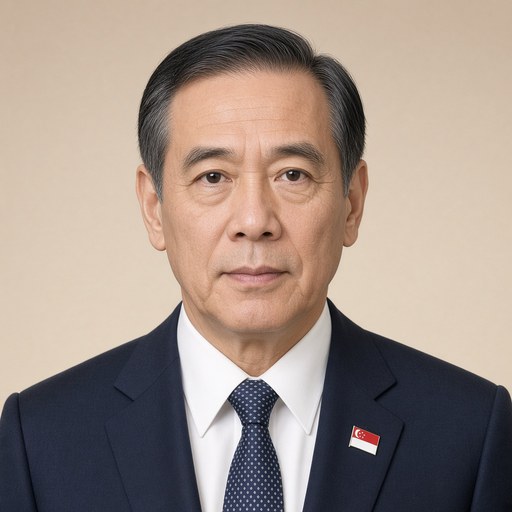
- Lee Hsien Loong delivered the 2019 National Day Rally address to the Malay community on 18 August 2019, reflecting on Singapore's bicentennial and Malay progress.
- Main themes
- Malay community progress in Singapore, education and skills development, Singapore bicentennial commemoration, national identity and multiculturalism, early childhood education, community character and values, Islam in multicultural society, Malay cultural heritage and history, social mobility, volunteerism and community spirit
- Duration
- ~13 min
- Words
- 1,601
- Sentences
- 119
- Readability
- 51
- Grade
- 9.6
- Syntax
- 2.63
- Vocabulary
- 2.47
Translated from Malay
The broad sphere of national life a sentence belongs to. Every sentence has an Arena, so it is the denominator the other indices are read against.
Other119 sentences in 32 paragraphs
National Day Rally 2019
Brothers and sisters, Happy National Day!
This year, we commemorate 200 Years of Singapore. I am delighted to see many community groups organizing various activities to reflect on the rich history of our nation over the centuries. For example, last April, the Pentas Karyawan group from the Republic Polytechnic presented "The Lost Century," a story about the Kingdom of Singapore in the 14th century. This coming October, the Malay Heritage Centre will also hold a special festival and exhibition that tells the diverse origins of the Malay community.
The Malays arrived in large numbers in Singapore since the arrival of Stamford Raffles. They include the Orang Laut, Malays from Johor and Riau, Minangkabau, Bugis, Javanese, Bawean, as well as Arabs from Yemen and some from India.
Here is a picture of a Bawean family in the early 20th century in their traditional attire. Known as the Boyan people, they come from Bawean Island in East Java. The Bawean people were very close-knit and used to live in clusters in huts, such as in the Rochor and Tanjong Pagar areas. Today, the Bawean people have become an integral part of the Malay community in Singapore. The same goes for other ethnic groups.
Your cultural and historical ties with our neighboring countries enable Singapore to understand and build good relations with them. At the same time, your influence on Singaporean society helps us to clearly shape our national identity as a multi-racial country in Southeast Asia. Throughout this time, the Malays of Singapore have successfully built a distinct identity, different from other Malays in the region and other Muslim communities in the world. Just from the way you speak, you can tell, ah, this is a Singaporean Malay!
This identity is driven by several noble values. Recently, Minister Masagos referred to them as the three Ks – Citizenship, Skills, and Character. Tonight, I will touch on two Ks:
a. Skills, which is the awareness of the importance of education in uplifting the Malay community; and b. Character, which is how Islam is practiced in the context of Singapore's multi-racial society.
Education
First, skills or education. As a result of the emphasis on education, the progress of the Malay community is increasingly evident. Generation after generation, we see more and more Malays attaining higher qualifications, with better jobs, and a more prosperous and meaningful quality of life. As the saying goes, little by little, eventually becomes a hill. In fact, it is becoming a mountain!
There are many examples I can mention. For instance, in this picture from 2007. So we all look young, yes! There were only 7 recipients of the Mountaineer Award who graduated with first-class honors. But, look at this picture taken last year. The number has increased to over 70! So, in just 10 years, the number has skyrocketed tenfold! Congratulations to the Malay community!
It is evident that the younger generation of Malays is excelling and now plays an important role in society. Among them are scholarship recipients such as CE MUIS, the Mufti, and their respective deputies.
And this year, a Malay child, Muhammad Dhafer Muhammad Faishal, was awarded the President's Scholarship. Dhafer not only excels academically but also has a community spirit. In his free time, Dhafer does volunteer work. This is Dhafer helping younger children at Pertapis Children's Home with their schoolwork. To Dhafer and his family, including his father, SPS Faishal Ibrahim, congratulations! And his grandfather too, yes.
More Malay parents are now aware of the need to send their children for preschool education as it gives them a good start before entering primary school. And more Malay parents, along with their children, are participating in the KMM program, or KelasMateMatika@CC organized by M3. However, it would be even better if parents start sending their children for preschool education at an earlier age, such as 3 or 4 years old. We have improved the quality of preschool education and ensured that costs remain affordable. In fact, with government support, the fees for kindergarten and full-day preschool for children from low-income families can be as low as $3! $3 a month, yes, not a day.
We will also ensure that preschool education remains affordable for middle-income families. I will share more in my English speech shortly.
Malay students are also showing better results throughout their schooling. More Malay children are now obtaining diplomas and bachelor's degrees. Some are also upskilling after graduating from ITE or polytechnic. This helps them advance in their careers and gives them a wider range of job options.
For example, Mohammad Abdillah, in this picture. Abdillah failed the PSLE exam twice. He then studied at Northlight School. On his first day at Northlight, when asked by the teachers about his aspirations, Abdillah replied, "Designer." In fact, deep down, Abdillah was not confident he could achieve his dream. But with encouragement from his teachers, he excelled at Northlight and then went to ITE to study animation. At ITE, Abdillah also excelled and moved on to Nanyang Polytechnic where he graduated with a diploma in motion graphics. Let's take a look at a montage of Abdillah's works. Very interesting! I am confident Abdillah will become a successful graphic designer. Well done, Abdillah!
Abdillah is not alone. Many other ITE graduates are improving themselves. This is very important, as the demand for workers with higher skills and knowledge continues to rise. Among ITE students, 7 out of every 10 Nitec graduates are now pursuing further education throughout their careers. This statistic is very good, but it would be even better if it were 10 out of 10! The Ministry of Education will announce more opportunities for ITE students to improve themselves.
In general, more students are now eligible to enter polytechnics and universities. And many of them are not from well-off families. Therefore, we will ensure that polytechnic and university fees are as affordable for students as possible, especially for students from low-income families. I will explain more in my English speech later.
Religion
Another pillar of the Malay community is your religious beliefs. Islam is one of the foremost religions in the world. It emphasizes peace and is the faith of nearly two billion people worldwide. Muslim communities in countries around the world practice Islam according to their own histories and traditions.
In Singapore's multi-racial society, Islam is practiced with a spirit of mutual respect, tolerance, and inclusivity. Our asatizah play an important role in nurturing this progressive Muslim community in Singapore.
One of the asatizah with these characteristics is Ustaz Zahid Zin. As the CEO of the Muslim Youth Forum (MYF), he takes a fresh approach in organizing his religious classes. This includes inviting non-Muslims to share perspectives with Muslim youth. Deputy Prime Minister Heng Swee Keat has participated in one of these sessions.
Not only that, Ustaz Zahid is also actively involved in activities organized by MESRA and is a member of the M3 Advisory Council. Recently, his brother, a non-Muslim, passed away. Ustaz Zahid visited his brother's family to pay his last respects. The ceremony was conducted according to Buddhist rites. In his Facebook post, Ustaz Zahid wrote about how all cultures and beliefs must be respected, and that his experience was a valuable moment for him to teach his children. In fact, it is a lesson for all of us, regardless of our beliefs or age.
Last year, Ustaz Zahid received the MUIS50 Inspirational Youth Award. I hope he will continue to be a source of inspiration for all of us. Can we, Ustaz Zahid? Of course!
We want high-quality asatizah who will be confident leaders in the future. Dr. Maliki Osman is leading a committee to study ways to enhance the professionalism of asatizah, as a continuation of the Asatizah Recognition Scheme (ARS). I look forward to their recommendations.
MUIS plays an important role in the Malay/Islamic community in Singapore. Next year, MUIS will launch the Postgraduate Certificate in Islam in Contemporary Society (PCICS). This course is for religious graduates from abroad when they return here. This is so that they are trained to apply what they have learned in the context of Singapore. We also hope to explore new approaches and pedagogies in the teaching and learning of Islam. This will help shape a model for our own Islamic college, which will train a new generation of asatizah in Singapore.
Because of our success in building cross-racial and interfaith relationships, the Malay/Islamic community here is admired as an example for minority Muslim communities around the world. Recently, we hosted the International Conference on United Communities (ICCS). Our scholars and academics had the opportunity to exchange ideas with participants from foreign countries. This conference serves as a reminder to ourselves to steadfastly work towards strengthening our religious harmony, even though issues of race and religion often spark serious conflicts in other societies.
Conclusion
Brothers and sisters, you should be proud of all your achievements. Over the centuries, you have built a strong community and enriched our history. The Malay community has progressed alongside Singapore's advancement. Now, as Malays, you hold firmly to your own identity. At the same time, you unite with other communities and possess the instinct and identity as sons and daughters of Singapore. The effort to commemorate this bicentennial is an opportunity for all of us to recognize the contributions of the Malays to Singapore and to celebrate your achievements. I am confident that the Malay community will continue to thrive, year after year.
The government will continue to stand with you, supporting your aspirations to become a Glorious Community.
Thank you!
The original Malay. The tags above are read on the English translation's sentences.
PM Lee Hsien Loong spoke in Malay and Mandarin, followed by English. For the English translation and video with English dub, please see below.
Rapat Umum Hari Kebangsaan 2019
Saudara saudari sekalian, Selamat Hari Kebangsaan!
Tahun ini, kita memperingati 200 Tahun Singapura. Saya gembira melihat banyak kumpulan masyarakat menganjurkan pelbagai aktiviti untuk mengimbas kembali kekayaan sejarah negara kita sepanjang beberapa abad. Sebagai contoh, April lalu, kumpulan Pentas Karyawan, Politeknik Republik mempersembahkan “Kurun Yang Hilang”, kisah tentang Kerajaan Singapura pada abad ke-14. Pada Oktober ini, akan datang, Taman Warisan Melayu juga akan mengadakan satu pesta dan pameran khas yang menceritakan kepelbagaian asal usul masyarakat Melayu.
Orang Melayu tiba secara beramai-ramai di Singapura sejak kedatangan Stamford Raffles. Mereka termasuklah Orang Laut, orang Melayu dari Johor dan Riau, orang Minang, Bugis, orang Jawa, Bawean, serta orang Arab dari Yaman dan sebahagian orang dari India.
Ini dia gambar sebuah keluarga Bawean pada awal abad ke-20 dengan pakaian tradisional mereka. Dikenali sebagai orang Boyan , mereka berasal dari Pulau Bawean di Jawa Timur. Orang Bawean sangat akrab dan dahulu, tinggal berkelompok di pondok-pondok, seperti di kawasan Rochor dan Tanjong Pagar. Kini, orang Bawean sudah sebati menjadi sebahagian daripada orang Melayu dan Singapura. Begitu juga dengan suku kaum lain.
Pertalian budaya dan sejarah anda dengan negara-negara jiran kita membolehkan Singapura memahami dan menjalin hubungan baik dengan mereka. Pada masa yang sama, pengaruh anda ke atas masyarakat Singapura, membantu kita mencorak dengan jelas identiti nasional kita, sebagai sebuah negara berbilang kaum di Asia Tenggara. Sepanjang waktu itu, orang Melayu Singapura berjaya membina identiti yang tersendiri, berbeza daripada orang Melayu lain di rantau ini dan masyarakat Islam lain di dunia. Dari pertuturan sahaja, anda boleh kenal, ah, ini orang Melayu Singapura!
Identiti ini didorong beberapa nilai murni. Baru-baru ini, Menteri Masagos menyebutnya sebagai tiga K – Kewarganegaraan, Kemahiran dan Keperibadian. Malam ini, saya akan sentuh tentang dua K:
a. Kemahiran, iaitu kesedaran tentang peri pentingnya pendidikan bagi meningkatkan masyarakat Melayu; dan
b. Keperibadian, iaitu bagaimana Islam diamalkan dalam konteks masyarakat majmuk Singapura.
Pendidikan
Pertama, kemahiran atau pendidikan. Hasil daripada penekanan terhadap pendidikan, kemajuan orang Melayu semakin ketara. Generasi demi generasi, kita lihat kian ramai orang Melayu berkelayakan lebih tinggi, dengan pekerjaan yang lebih baik, serta mutu hidup yang lebih makmur dan bermakna. Bak kata peribahasa, sedikit-sedikit, lama-lama jadi bukit. Malah semakin menjadi gunung!
Banyak contoh yang boleh saya sebutkan. Misalnya, seperti dalam gambar tahun 2007 ini. Jadi kita semua nampak muda, ya! Penerima Anugerah Mendaki yang lulus dengan ijazah kepujian kelas pertama, hanya 7 orang sahaja. Tetapi, lihat gambar ini yang diambil tahun lalu pula. Jumlahnya lebih 70 orang! Jadi, dalam masa 10 tahun sahaja, jumlahnya melonjak naik 10 kali ganda! Syabas masyarakat Melayu!
Terbukti generasi muda Melayu cemerlang dan kini memegang peranan penting dalam masyarakat. Di kalangan mereka, ada yang merupakan penerima biasiswa seperti CE MUIS, Mufti dan timbalan masing-masing.
Dan tahun ini, seorang anak Melayu, Muhammad Dhafer Muhammad Faishal, dianugerahkan Biasiswa Presiden. Dhafer bukan sahaja cemerlang dari segi akademik, tetapi juga berjiwa masyarakat. Pada masa lapangnya, Dhafer melakukan kerja sukarela. Ini Dhafer ketika membantu adik-adik di Rumah Kanak-Kanak Pertapis dengan kerja sekolah mereka. Kepada Dhafer sekeluarga, termasuk bapanya, SPS Faishal Ibrahim, tahniah! Dan datuknya juga, ya.
Lebih ramai ibu bapa Melayu kini sedar perlunya menghantar anak-anak bagi pendidikan prasekolah kerana ia memberi mereka permulaan yang baik sebelum melangkah ke sekolah rendah. Dan semakin ramai ibu bapa Melayu bersama anak-anak mereka, menyertai program KMM, atau KelasMateMatika@CC anjuran M 3 . Akan tetapi, lebih baik lagi jika ibu bapa mula menghantar anak mereka bagi pendidikan prasekolah pada usia yang lebih awal, seperti 3 atau 4 tahun. Kami telah memperbaiki mutu pendidikan prasekolah dan memastikan kos kekal berpatutan. Sebenarnya, dengan sokongan Pemerintah, yuran tajaka dan tadika sepenuh hari bagi anak dari keluarga kurang mampu, boleh serendah $3 sahaja! $3 sebulan ya, bukan sehari.
Kami akan memastikan juga bahawa pendidikan prasekolah kekal dimampui oleh keluarga bergaji pertengahan. Saya akan berkongsi lebih lanjut dalam ucapan Bahasa Inggeris saya sebentar lagi.
Pelajar Melayu juga menunjukkan keputusan yang lebih baik sepanjang persekolahan mereka. Lebih ramai anak Melayu kini meraih diploma dan ijazah sarjana muda. Ada pula yang meningkatkan kemahiran selepas tamat ITE atau politeknik. Ini membantu mereka maju meniti tangga kerjaya, dan memberi mereka pilihan kerja yang lebih luas.
Contohnya, Mohammad Abdillah, dalam gambar ini. Dua kali, Abdillah gagal peperiksaan PSLE. Beliau kemudian belajar di Sekolah Northlight. Pada hari pertamanya di Northlight, ketika ditanya guru-guru tentang cita-citanya, Abdillah menjawab “Pereka”. “Designer”. Sebenarnya, jauh di lubuk hatinya, Abdillah tidak yakin boleh mencapai impiannya. Tetapi dengan galakan guru-guru, beliau cemerlang di Northlight dan kemudian ke ITE untuk belajar animasi. Di ITE, Abdillah juga cemerlang dan melangkah ke Politeknik Nanyang di mana beliau lulus dengan diploma dalam bidang motion graphics . Mari kita lihat petikan montaj karya-karya Abdillah. Menarik sekali! Saya yakin Abdillah akan menjadi seorang pereka grafik yang berjaya. Syabas Abdillah!
Abdillah tidak sendirian. Ramai lagi lulusan ITE yang meningkatkan diri mereka. Ini sangat penting, kerana permintaan bagi pekerja dengan kemahiran dan pengetahuan yang lebih tinggi, terus meningkat. Di kalangan pelajar ITE, 7 daripada setiap 10 lulusan Nitec kini melanjutkan pendidikan sepanjang kerjaya mereka. Perangkaan ini sangat baik, tetapi lebih baik lagi jika ia 10 dalam 10! Kementerian Pendidikan akan umumkan lebih banyak peluang bagi pelajar ITE meningkatkan diri.
Secara amnya, lebih ramai pelajar kini layak masuk ke politeknik dan universiti. Dan ramai daripada mereka bukan dari keluarga senang. Oleh itu, kami akan pastikan bahawa yuran politeknik dan universiti, dimampui pelajar seberapa mungkin, lebih-lebih lagi bagi pelajar dari keluarga kurang mampu. Saya akan terangkan lebih lanjut dalam ucapan Bahasa Inggeris nanti.
Agama
Satu lagi tunggak masyarakat Melayu ialah pegangan agama anda. Islam adalah antara agama yang ulung di dunia. Ia menekankan kedamaian dan menjadi agama kepada hampir dua bilion umat di seluruh dunia. Masyarakat Islam di negara-negara dunia mengamalkan Islam mengikut sejarah dan tradisi masing-masing.
Dalam masyarakat majmuk Singapura, Islam diamalkan dengan semangat saling menghormati, toleransi serta bersikap inklusif. Asatizah kita berperanan penting dalam memupuk masyarakat Islam Singapura yang progresif ini.
Salah seorang asatizah dengan ciri-ciri ini ialah Ustaz Zahid Zin. Sebagai CEO Forum Belia Islam (MYF), beliau mengambil pendekatan segar dalam menganjurkan kelas-kelas agamanya. Ini termasuk mengundang orang bukan Islam untuk berkongsi perspektif dengan belia Islam. Timbalan Perdana Menteri Heng Swee Keat pernah mengambil bahagian dalam salah satu sesi begini.
Bukan setakat itu sahaja, Ustaz Zahid juga aktif menyertai kegiatan anjuran MESRA dan menjadi anggota Majlis Penasihat M 3 . Baru-baru ini, saudaranya, seorang bukan Muslim, meninggal dunia. Ustaz Zahid menziarahi keluarga saudaranya untuk memberi penghormatan terakhir. Upacara itu mengikut agama Buddha. Dalam catatannya di Facebook, Ustaz Zahid menulis bagaimana semua budaya dan kepercayaan mesti dihormati, dan pengalamannya itu merupakan detik berharga untuk beliau mengajar anak-anaknya. Sebenarnya, ia satu pengajaran untuk kita semua, tidak kira apa kepercayaan kita, atau umur kita.
Tahun lalu, Ustaz Zahid menerima Anugerah Belia Inspirasi MUIS50. Saya harap beliau akan terus menjadi sumber inspirasi kepada kita semua. Boleh, Ustaz Zahid? Tentu boleh!
Kita mahu golongan asatizah yang bermutu tinggi dan menjadi pemimpin yang konfiden pada masa depan. Dr Maliki Osman sedang mengetuai sebuah jawatankuasa bagi mengkaji cara-cara meningkatkan profesionalisme asatizah, sebagai lanjutan daripada Skim Pengiktirafan Asatizah (ARS). Saya nanti-nantikan saranan mereka.
MUIS memainkan peranan penting dalam masyarakat Melayu/Islam Singapura. Tahun depan, MUIS akan melancarkan Sijil Pos Siswazah Islam dalam Masyarakat Kontemporari (PCICS). Kursus ini adalah bagi siswazah agama di luar negara apabila mereka pulang ke sini. Ini supaya mereka dilatih untuk menerapkan apa yang mereka pelajari dalam konteks Singapura. Kami juga berharap untuk meneroka pendekatan dan pedagogi baru dalam pengajaran dan pembelajaran Islam. Ini akan membantu dalam mencorak model untuk kolej Islam kita sendiri, yang bakal melatih generasi asatizah yang baru di Singapura.
Oleh kerana kejayaan kita dalam membina hubungan silang kaum dan agama, masyarakat Melayu/Islam di sini dikagumi sebagai contoh bagi masyarakat Islam minoriti di dunia. Baru-baru ini, kita menganjurkan Persidangan Antarabangsa Mengenai Masyarakat Bersatu Padu (ICCS). Ulama dan ahli akademik kita berpeluang bertukar-tukar idea dengan rakan peserta dari negara asing. Persidangan ini adalah satu peringatan kepada diri kita sendiri, untuk cekal berusaha dalam mengukuhkan keharmonian agama kita, walaupun isu-isu kaum dan agama sering mencetuskan konflik yang serius dalam masyarakat lain.
Penutup
Saudara saudari sekalian, anda harus berbangga dengan segala pencapaian anda. Sepanjang beberapa abad, anda membina sebuah masyarakat yang kukuh dan memperkaya sejarah kita. Masyarakat Melayu telah berkembang maju seiring kemajuan Singapura. Sekarang, sebagai orang Melayu, anda berpegang teguh kepada identiti anda tersendiri. Pada masa yang sama, bersatu-padu dengan masyarakat lain dan memiliki naluri serta jati diri sebagai anak watan Singapura. Usaha memperingati dwiabad ini adalah peluang untuk kita semua mengiktiraf sumbangan orang Melayu kepada Singapura dan meraikan pencapaian anda. Saya yakin masyarakat Melayu akan bertambah maju, tahun demi tahun.
Pemerintah akan terus bersama anda, mendukung aspirasi anda menjadi Masyarakat Gemilang.
Terima kasih!
National Day Rally 2019 (Malay Speech with English Dub)