




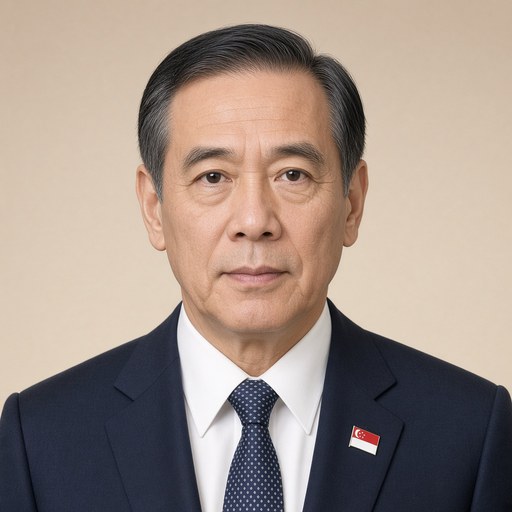

- Context
- Lee addressed Singaporeans on National Day 2019, marking the bicentennial of Singapore's founding and tracing the Chinese community's evolving identity and contributions.
- Main themes
- Singapore bicentennial, Chinese immigrant history, identity and loyalty, nation-building, Singaporean Chinese community, Tongmenghui and Sun Yat-sen, anti-Japanese movement, post-WWII decolonization, national service, overseas Chinese identity, clan associations, founding generation
- Duration
- ~30 min
- Words
- 3,596
- Sentences
- 191
- Readability
- 38
- Grade
- 12.3
- Syntax
- 3.02
- Vocabulary
- 2.19
Translated from Chinese
The broad sphere of national life a sentence belongs to. Every sentence has an Arena, so it is the denominator the other indices are read against.
Other191 sentences in 54 paragraphs
Good evening, fellow citizens!
200th Anniversary of Singapore's Founding
This year marks the 200th anniversary of Singapore's founding.
1819 was a turning point in our nation's development. That year, Raffles landed in Singapore and established a free trade port here, attracting a large number of immigrants from Southeast Asia, India, and China to seek a livelihood. Our Chinese ancestors came from Guangdong, Chaoshan, and Fujian in China, as well as from nearby regions such as Penang, Malacca, and the Riau Islands. When they first arrived, most could only work as laborers, barely making ends meet. However, through hard work and perseverance, they eventually found their footing and settled down here. Some later started small businesses, while those with higher education became teachers or journalists. Others became large landowners or established banks and trading firms.
They can be considered our "founding generation," making significant contributions to this place. The leaders of the Chinese community at that time established clan associations and chambers of commerce to help fellow countrymen integrate into local life and assist them in starting their businesses. These "headmen" also rallied the entire Chinese community to contribute money and effort to establish hospitals and schools, and to build temples, benefiting their compatriots.
At that time, our ancestors maintained close ties with their homeland. When they came to Nanyang, they regarded themselves as mere transients here, believing that one day they would return to their roots. They were still Chinese, loved their hometown and country, and participated in political movements in China, sacrificing their lives in revolutions and wars.
More than a hundred years ago, the Tongmenghui founded by Dr. Sun Yat-sen had its Southeast Asia headquarters in Singapore. The Tongmenghui devoted all its efforts to overthrowing the Qing government, and several armed uprisings were planned in the late Qing period at the garden of late Qing.
In the 1930s, when Japan invaded China, the Chinese community in Singapore organized again to join the anti-Japanese movement. Community leader Tan Kah Kee led fundraising efforts and called on overseas Chinese to support China's resistance against Japan, which included many South Chinese workers who returned to China to participate in the war. This is why, after Japan occupied Singapore, a large-scale crackdown was launched, and tens of thousands of Chinese faced reprisals from the Japanese army.
After World War II, the People's Republic of China was established. In this historical tide, many idealistic and passionate young people in Southeast Asia were inspired by the founding of New China and joined the anti-colonial struggles across Southeast Asia. At that time, the identity of overseas Chinese was ambiguous; some were in Nanyang but had their hearts in China. Their loyalty was questioned, leading to tensions between China and Southeast Asian countries.
Starting in the 1950s, China began to distinguish between "overseas Chinese" and "Chinese nationals." "Overseas Chinese" refers to those who chose to retain their Chinese nationality, while "Chinese nationals" refers to those who adopted the nationality of their host country. At that time, Chinese Premier Zhou Enlai clearly stated that once one adopted the nationality of the host country, these Chinese nationals no longer held Chinese nationality and should be loyal to the country they were naturalized in.
During that time, our ancestors had to make a significant life choice: to continue staying in Singapore or to return to their homeland. In the end, most chose to stay in Singapore and, together with other ethnic groups, built a multi-ethnic society and an independent nation.
In the 1960s, as Singapore moved towards independence, the Chinese community organizations collaborated with the government to actively promote the social and economic development of our country, as well as national defense. In 1967, to encourage citizens to support the newly implemented national service policy, the Singapore Chinese Chamber of Commerce produced medals for the first two batches of young men who enlisted. The front of the medal features five stars and a crescent representing Singapore, along with the words "Singapore Chinese Chamber of Commerce," while the back displays "National Service" and the four characters "Loyalty to the Country." This medal is a limited edition and holds significant commemorative value.
In 1968, the government established a defense fund to encourage citizens to donate to support national defense. The fundraising target at that time was 10 million dollars, and the Chinese Chamber of Commerce raised over 1 million dollars. This shows that the local Chinese community had already begun to shift their sense of loyalty to Singapore, identifying with their new identity as Singapore citizens.
Thus, it can be seen that the Chinese in Singapore have gradually formed their identity over the course of two hundred years. The contributions and sacrifices made by our ancestors for their homeland are a noble sentiment and a spiritual heritage that we should cherish. To commemorate the deeds of our ancestors, we have designated the late Qing garden as a national monument and erected a statue there to honor the South Chinese workers.
Similarly, to express our respect for the victims of World War II, every year on February 15, people from all ethnic groups gather to attend a solemn memorial ceremony to commemorate those who sacrificed their lives in the war, including innocent civilians from different races and heroes of the resistance. The painful experience of the Japanese occupation of Singapore ignited a sense of national consciousness among all races and strengthened our determination to take charge of our own destiny.
The Malay and Indian communities have had similar experiences in establishing their identities. When they first arrived in Singapore, they also saw themselves as transients. During the anti-colonial struggle, Indians were deeply influenced by the Indian independence movement, while Malays were influenced by the Indonesian and Malayan nationalist movements. The slogan we used to rally the masses in our fight for independence – Merdeka! – came from the political movements in Indonesia and Malaya. Although everyone maintained close ties with their respective homelands, the local Malays, Indians, and Eurasians ultimately, like the Chinese, chose to put down roots here. Thus, they transformed from "returning to their roots" to "taking root," gradually developing an identity with Singapore. Similarly, today's new immigrants also need time to fully integrate into local society and identify with and pledge loyalty to Singapore.
Now, as the world enters a tumultuous period, Singapore also faces severe challenges. Understanding our nation's history can help us comprehend how Singapore's national consciousness has formed. This also aids us in understanding the current global situation and Singapore's perspectives on international issues.
Sino-American Disputes
I believe everyone has been paying close attention to the increasingly tense relationship between China and the United States. The disputes between these two major powers have put countries around the world in a difficult position, as no one wants to take sides in the China-U.S. rivalry, and Singapore is no exception. Therefore, tonight I would like to discuss the Sino-American disputes and their impact on Singapore.
Since China's reform and opening up, it has developed rapidly and risen to become the world's second-largest economy. From various perspectives, China's rise has brought tremendous benefits to itself and the world, but it has also created a new international landscape.
As the world's number one power, the United States must accommodate a more influential and increasingly powerful China. The U.S. must also accept that blocking China's rise is impossible and unwise. The U.S. must seek a constructive relationship with China and an economically interdependent relationship.
Having become a world power, China itself should also consider the interests and feelings of other countries. Only then can China coexist peacefully with countries around the world and become a tolerant and generous nation, as well as a partner in mutual benefit.
Competition between China and the U.S. is inevitable, but at the same time, both sides must strengthen mutual trust and handle unavoidable friction through appropriate mechanisms.
Unfortunately, China and the U.S. have yet to find a "magic bullet" to resolve their conflicts. This is concerning. Such tensions are unlikely to ease in the short term, which will affect the global landscape.
Impact on Singapore – Foreign Relations
As for the impact on Singapore, we can discuss it from two aspects. First, our foreign relations, especially with China and the U.S. Second, our economy.
Let me first talk about foreign relations. Singapore is a good friend of China and also a good friend of the United States. We hope to continue to maintain friendly relations with both countries.
The U.S. is our main defense security partner. We purchase advanced military equipment from the U.S., including aircraft and missiles. Our armed forces also frequently conduct joint training with the U.S. military. Although Singapore is not a U.S. ally, at any given time, we have over a thousand Singapore Armed Forces personnel training in the U.S., which is more than any U.S. ally. In counter-terrorism, the two countries also have close cooperation. We hope the U.S. continues to pay attention to the Asia-Pacific and maintain peace and stability in the region. This helps ensure the security and prosperity of the entire region.
The U.S. is also an important economic partner for us. The amount and scale of U.S. investment in Singapore far exceed that of other countries, creating many quality job opportunities for our people. At the same time, we have engaged in numerous collaborations with U.S. institutions, companies, and experts in innovation, research, and development, from which we have greatly benefited.
In terms of Singapore-China relations, both countries have agreed to establish a "forward-looking comprehensive partnership." This name is long, but the content is rich. We engage in extensive economic cooperation with China, including three cooperation projects between governments, in addition to interconnectivity projects in Suzhou and Tianjin, both sides are also conducting cooperation projects in Chongqing. These are high-level cooperation projects between governments. Furthermore, China is also our largest export market. Singaporean companies have considerable investments in China, and China has also invested significantly in Singapore.
The Singapore-China relationship is unique. Apart from China, Singapore is the only country in the world with a Chinese majority. This advantage of shared language and culture helps us continue and deepen people-to-people and cultural exchanges, fostering friendly relations and mutual understanding between the two countries. However, in conducting exchanges and cooperation, we must remember that we are still Singaporeans. We have our own history and culture, so we must have our own views and positions. On diplomatic issues, being a country with a Chinese majority can sometimes make our situation particularly difficult, as other countries may easily misunderstand Singapore's position.
Especially when conflicts arise between China and the U.S. If we support China, the U.S. and other countries may think we do so because the Chinese make up the majority in Singapore, and thus we are beholden to China. On the other hand, if we support the U.S., China may not necessarily understand. In the past, when Singapore took different positions from China on certain issues, some Chinese friends would ask us, "Since we share the same culture, ancestry, and language, why do you disagree?" This is a very subtle but crucial question, and we must be clear in our stance and explain it well.
Our position is: we must act according to principles and not be swayed by emotions. Regardless of who the subject is, whether in Singapore, Beijing, or Washington, our expressed views are consistent. When we should agree, we will agree; when we should not agree, we must maintain and explain our position. We hope other countries clearly understand that Singapore is a multi-ethnic independent country with its own stance. Of course, our citizens must also clearly understand Singapore's interests and the government's considerations.
Impact on Singapore – Economy
In addition to affecting international relations, the tensions between China and the U.S. will also have negative impacts on the global economy. This will not only disrupt supply chains but also restrict investment and research and development, as well as affect people-to-people exchanges.
Let me give an example to illustrate. The smartphones in your hands are made up of many components, which are designed, manufactured, and assembled in various countries. This is true for both Apple and Huawei phones. However, if the U.S. does not allow its companies to use components made in China and does not permit them to sell chips to China, then Chinese and American companies will have to manufacture their own components and chips, develop their own smartphones, and create their own telecommunications systems. As a result, when we travel abroad, we may have to carry several phones, just as a few years ago, when we went to Japan, we had to prepare a CDMA phone because Singapore was then using a GSM system. In a world where two camps operate independently, we still hope to communicate and connect easily with all our friends. We also hope to continue engaging and befriending all countries. Therefore, the most troubling question is, which telecommunications system should Singapore adopt? Should it be the American one or the Chinese one? China will certainly develop its own telecommunications system because they will not accept a world with only one system.
Singapore is a small and open economy, and globalization has brought us tremendous benefits. If China and the U.S. cannot establish mutual trust and the world continues to divide, Singapore's economic growth will be hampered, and the outlook will become dimmer. Many local companies that primarily target the Chinese market will be impacted, and those Singaporean companies that have factories in China and export goods to the U.S. will also suffer. Some believe that foreign companies unwilling to set up factories in China will consider investing in Singapore, but that is not the case. These foreign companies will choose to set up factories in countries with lower costs or closer to the U.S. and China. For example, clothing manufacturers may move their factories to Vietnam or Bangladesh, electronics factories may relocate to Mexico, and furniture factories may go to the Philippines. These companies will not choose to set up factories in Singapore. Overall, the continued deterioration of Sino-American relations is not good news for the world, nor is it a good thing for Singapore.
The tensions between China and the U.S. have already shaken global confidence, but the deeper and broader impacts I mentioned will take some time for us to feel. Nevertheless, we must prepare now to adapt our country to this new international landscape.
Current Economic Situation
This year, our economy has significantly slowed down. This is mainly due to a decline in international demand and trade, which has impacted local manufacturing and trade-related services. The electronics industry has temporarily declined, affecting overall economic performance, especially industries related to electronics, such as precision engineering and wholesale trade. The retail sector continues to face pressure from online shopping.
Fortunately, so far, other sectors have not been impacted, and layoffs and unemployment rates remain low. Recently, I discussed this issue with the Secretary-General of the National Trades Union Congress, Ng Chee Meng, and union leaders. They said that while workers are worried about their jobs, fortunately, the economic slowdown has not significantly affected their employment situation so far. Therefore, we do not currently need to introduce an economic stimulus package. However, if the situation worsens, we will certainly take appropriate measures in a timely manner to protect workers' jobs. The government, like union leaders, is closely monitoring economic trends. We are prepared. In the past, we have faced economic recessions multiple times, and this time we are also confident that we can calmly respond to the challenges ahead.
Although the current external environment is not favorable to us, let us not forget that Singapore still possesses significant advantages. Compared to other countries, our situation is much better. This year, we have attracted several important investment projects, one of which is from the Finnish oil company Neste. The company is investing over 2 billion Singapore dollars to expand its local factory to produce renewable energy. This is a massive project and will create many quality job opportunities for Singaporeans. The president of Neste explained that they chose Singapore because of our excellent geographical location, favorable business environment, advanced technology, infrastructure, and logistics systems. More importantly, we have the best workforce in the world. The company especially appreciates the planning and support from the Singapore Economic Development Board, which is why Neste trusts the EDB, trusts our employees, and trusts Singapore. Here, let me quote the president of Neste, who said, "The most valuable resource in the world is trust. To earn others' trust, we must fulfill our promises and make greater efforts to safeguard that trust. We (meaning Neste) have found a trustworthy partner in Singapore."
From this statement, we can see that Singapore indeed enjoys a high level of credibility in the eyes of investors. Given the uncertain economic outlook, we must work hard to maintain investors' trust in us.
Supporting Businesses and Workers
At the same time, we will continue to strengthen the foundation of our economy and consolidate our long-term competitiveness. The economic transformation efforts led by Deputy Prime Minister Heng Swee Keat and several young ministers have already begun to show results. Local businesses, with the government's assistance, are innovating and adapting, utilizing digital technology to improve operations, expand overseas markets, and train employees.
Tonight, I would like to share a success story of a business transformation using the popular chili crab dish. In fact, the delicious chili crab involves a lot of skill and business philosophy. The Jumbo Group started with chili crab. They have over thirty years of history and are now a listed group that has successfully entered the international market in recent years. Jumbo has achieved its current success because both the owner and employees place great importance on training. Now, let us watch a video.
This is a program made two years ago, featuring chef Huang Ziyang, who has learned a lot about kitchen management over the years from his mentor Huang Zhongli and has also received other training. Ziyang has now been promoted to become one of the executive chefs of the group, managing more restaurants. I am very happy that Ziyang has now started a family; he met his wife at Jumbo, and they now have two lovely children. Jumbo not only excels in chili crab but also takes care of its employees' lifelong matters.
Jumbo's investment in employee development has allowed the company to successfully retain many Singaporean employees like Zhongli and Ziyang. This is quite rare in the restaurant industry, which often faces high turnover rates. Many Singaporeans are reluctant to join the restaurant industry, feeling that the work is tough and the hours are long. However, if the working environment in the restaurant industry can be improved, employees can receive training, and the company provides them with development opportunities, then working in the restaurant industry can also be a good choice.
Recently, Jumbo's owner, Huang Jianming, has also set an example by attending "classes." He participated in the "Scale-Up SG" program launched by Enterprise Singapore (ESG). This is a new initiative to assist promising local businesses in accelerating their expansion and becoming leaders in their respective fields. The first batch of 25 companies participating in the program comes from various sectors, including food and beverage, education, healthcare, interior design, furniture, and maintenance. If we gather them together, they could provide comprehensive services for a town! Under the arrangement of the EDB, Jianming and other business owners and executives went to the U.S. to participate in a business leadership course, gaining valuable insights and learning many practical skills. They became friends and sparked ideas, and I hope these sparks will ignite more opportunities for collaboration. In addition to this program, the government has various initiatives for everyone to learn a wide range of skills, and we welcome both owners and employees to participate.
I shared Jumbo's experience for several reasons—first, to remind employees to participate in training; second, to encourage companies to actively transform, enhance their businesses, soar, and expand overseas; third, to inform companies and employees that the government will fully support them; fourth, to promote the restaurant industry, hoping more people will consider joining it; and finally, of course, to encourage young people to start families, get married, and have children, as children are delightful, and the more, the better. So, Jumbo is a "multi-faceted example," or as we say in English, a "Jumbo Example"!
Conclusion
Tonight, I took some time to trace our nation's history and share my views on the global situation and economic landscape. The government is closely monitoring the impact of international developments on our country and the direction of our economy. The high level of trust that countries and multinational companies have in Singapore is one of our key advantages and a valuable asset. We should carefully safeguard this trust and pass it down from generation to generation. This is essential to ensure that Singapore can continue to prosper and that the lives of our citizens are secured for the long term.
I am very concerned that the next decade will present more uncertainties than the past decade, much like unpredictable weather, with bright sunshine one moment and dark clouds the next. Therefore, we must prepare for the future, upholding the fearless and striving spirit of our ancestors, working together to overcome difficulties. I firmly believe that as long as the government and the people unite, Singaporeans will enjoy a better life, and Singapore will continue to shine on the world stage.
Thank you!
The original Chinese. The tags above are read on the English translation's sentences.
各位同胞,大家晚上好!
新加坡开埠200周年纪念
今年是新加坡的开埠200周年。
1819年是我国发展史的转捩点。那一年,莱佛士登陆新加坡,并且在这里设立了自由贸易港,吸引了大批移民从东南亚、印度和中国到这里谋生。我们的华族先辈有的来自中国广东、潮汕和福建,有的则来自邻近地区如槟城、马六甲和廖内群岛。他们刚来时,大多只能做苦力,勉强糊口。不过,他们刻苦拼搏,结果都找到立足之地,在这里安家立业。一些后来做起小生意,教育程度比较高的会当老师、做记者。有些则成了大园主,或者创办了银行和贸易行。
他们可以说是我们的“开埠一代”,为这里做出巨大的贡献。当年的华社领袖就设立宗乡会馆和商会,帮助同乡融入本地生活,以及协助他们创业。这些“头家”也号召整个华社出钱出力,创办医院和学校、建造庙宇等,让同胞受惠。
当时,我们的先辈与自己的祖国保持密切的联系。他们来到南洋时,只把自己当成这里的过客,总有一天要落叶归根。他们还是中国人,也热爱着自己的家乡和祖国,并且参与中国的政治运动,在革命与战争中付出了生命。
百多年前,孙中山先生创立的同盟会,南洋总支部就设在新加坡。同盟会倾全力推翻满清政府,好几次的武装起义就是在晚晴园里策划的。
30年代,当日本入侵中国时,新加坡华社再次组织起来,加入抗日运动。华社领袖陈嘉庚带头筹钱,并号召华侨支援中国抗战,这包括许多回到中国参与抗战的南侨机工。这就是为什么,日本占领新加坡后,展开了大检证,数以万计的华人遭到日军报复。
二战结束后,新中国成立了。在这个历史的大洪流中,东南亚许多充满理想的热血青年受到新中国成立的启发,也加入了东南亚各地的反殖民斗争。当时,海外的华人身份认同模糊,有些身在南洋,却心在中国。他们的效忠意识受到质疑,也造成了中国与东南亚国家的矛盾。
从50年代开始,中国就将海外的华人区分为“海外华侨”和“华人”。“海外华侨”指的是选择保留中国国籍的人。“华人”指的却是加入所在国国籍的人。当时的中国总理周恩来先生就明确地表明,一旦加入所在国的国籍,这些华人就不再拥有中国国籍,应当效忠入籍的国家。
在那个时候,我们的先辈必须做出人生中的重大抉择,要继续留在新加坡,还是回去祖国。最后,他们大多数选择留在新加坡,并且和其他种族一起建立一个多元种族的社会和独立的国家。
60年代,新加坡走向独立,华社组织也和政府合作,积极推动我国的社会和经济发展,以及国防建设。在1967年,为了鼓励国人支持新推行的国民服役政策,新加坡中华总商会就为头两批入伍的青年制作了奖章。奖章的正面,有代表新加坡的五颗星星和一个月亮,以及“新加坡中华总商会”的字样,背面显示的是“National Service”(国民服役),以及“尽忠报国”这四个字。这个奖章是限量版的,很有纪念价值。
1968年,政府设立了国防基金,鼓励国人捐款支持国防建设。当时的筹款目标是1000万元,而中华总商会就筹到超过100万元。这显示,本地华人从那个时候,已经开始把他们的效忠意识转移到新加坡,认同新加坡公民的新身份。
由此可见,新加坡华人是经过了两百多年,才逐渐形成自己的身份认同。我们的先辈为自己的祖国所做出的奉献与牺牲,是一种高贵的情操,也是值得我们珍惜的精神遗产。为了纪念先辈的事迹,我们把晚晴园列为国家古迹,也在那里竖立雕像纪念南侨机工。
同样的,为了表达我们对二战时期死难人民的敬意,每年的2月15日,各族同胞也会一同出席庄严的悼念仪式,纪念那些在战争中牺牲,来自不同种族的无辜老百姓和抗战英雄。日本占领新加坡的惨痛经历,激发了各个种族的国家意识,也坚定了我们要当家作主的决心。
马来和印度社群在建立身份认同方面也有相同的经历。他们刚来新加坡的时候,也把自己当作过客。在反殖民斗争中,印度人深受印度独立斗争的影响,马来人则深受印尼和马来亚民族运动的影响。我们当年争取脱离殖民地统治,号召群众的口号 – Merdeka! (独立!)– 就来自印尼和马来亚的政治运动。尽管大家与各自的祖国有密切的联系,本地的马来人、印度人和欧亚裔人最终也和华人一样,选择在这里落地生根。就这样,他们从“落叶归根”变成“落地生根”,逐渐对新加坡产生认同。同样的,今天的新移民也需要一段时间,才会完全融入本地社会,认同与效忠新加坡。
现在,世界进入了多事之秋,新加坡也面临着严峻的考验。知道我国的发展史,能够帮助我们了解新加坡的国家意识是怎么形成的。这也有助于我们理解当今的世界局势,以及新加坡在国际问题上的观点。
中美纠纷
相信,大家最近都很关注中美两国日益紧张的关系。两个大国的纠纷,使世界各国陷入一个困难的处境,大家都不想在中美之间选边站,新加坡也不例外。因此,今晚我想谈一谈中美纠纷,以及它对新加坡的影响。
中国改革开放以来,发展迅速,晋升为世界第二大经济体。从各方面来看,中国的腾飞对中国本身乃至全世界,都带来了巨大好处,但这也产生了新的国际格局。
作为世界头号强国的美国,必须容纳一个更有影响力的、日益强大的中国。美国也必须接受,阻挡中国的崛起,是不可能的,也是不明智的。美国必须与中国寻求建设性的关系,以及在经济上互相依存的关系。
成为一个世界强国之后,中国本身也应该设身处地,考虑到其他国家的利益和感受。这样,中国才能和世界各国和平相处,才能成为大家眼中一个宽容大度的国家,以及一个共谋福利的伙伴。
中美之间有竞争是必然的,但同时,双方也必须加强互信,并且通过适当的机制处理无可避免的摩擦。
遗憾的是,中国和美国至今还没有找到化解矛盾的“灵丹妙药”。这是令人担忧的。这样的紧张关系在短期内不会纾解 ,这将影响整个世界的格局。
对新加坡的影响 – 外交
至于对新加坡的影响,我们可以从两个方面来谈。首先,是我们的对外关系,尤其是与中美两国的关系。第二,是我们的经济。
让我先谈一谈对外关系。新加坡是中国的好朋友,也是美国的好朋友。我们很希望同两国继续保持友好关系。
美国是我们主要的国防安全伙伴。我们向美国购买先进的军事装备,包括军机、导弹等。我们的武装部队也经常和美军举行联合训练。新加坡虽然不是美国的盟国,但在任何时候,我们都有一千多名新加坡武装部队军人在美国受训,这比美国的任何盟国都来得多。在反恐方面,两国也有密切的合作 。我们希望美国继续关注亚太,继续维护区域的和平与稳定。这有助于保障整个区域的安全与繁荣。
美国也是我们的重要经济伙伴。美国公司在新加坡的投资数额与规模远远超越其他国家,为国人创造了许多优质的工作机会。在这同时,在创新、科研和开发方面,我们与美国的机构、企业和专家展开了多项合作,从中获益良多。
在新中关系方面,我们两国都同意建立“与时俱进的全方位合作伙伴关系”。这个名称很长,内容也很丰富。我们与中国进行广泛的经济合作,包括政府与政府之间的三个合作项目,除了在苏州和天津,双方也在重庆开展互联互通合作项目。这些都是政府与政府之间高级别的合作项目。此外,中国还是我国最大的出口市场 。新加坡企业在中国的投资相当可观,中国在新加坡的投资也不少。
新中关系是独特的。除了中国以外,新加坡是世界上唯一一个以华人占多数的国家。这种同文同种的优势,有助于我们延续并加深民间与文化上的交流,帮助两国建立友好的关系,了解彼此并成为合作伙伴。但是,在进行交流与合作时,我们要记得我们还是新加坡人。我们有自己的历史和文化,所以必须有自己的观点和立场。在外交问题上,作为一个华人居多的国家,有时候会使到我们的处境格外困难,因为其他国家很容易误解新加坡的立场。
尤其是当中美之间产生矛盾的时候。如果我们支持中国,美国和其他国家可能会认为我们这么做,是因为在新加坡华人占多数,所以我们对中国有求必应。另一方面,如果我们支持美国,中国不一定会理解。过去,当新加坡与中国在某些课题上,采取不同立场的时候,有一些中国朋友就这样问我们:“既然同文、同宗、同祖、同言、同语,那么你们为什么不同意?”这是一个很微妙的问题,但也是一个很关键的问题,我们必须立场分明,解释清楚。
我们的立场是:我们必须依据原则办事,不能受情感左右。不论对象是谁,无论是在新加坡、北京或华盛顿,我们所表达的观点都是一致的。该同意的时候,我们会同意;不该同意的时候,我们就必须维持并解释我们的立场。我们希望其他国家都清楚明白,新加坡是个多元种族的独立国家,有自己的立场。当然,国人也必须明确了解新加坡的利益和政府的考量。
对新加坡的影响 – 经济
除了影响国际关系,中美之间的紧张局势,也将对全球经济构成负面的影响。这不只会打乱供应链,也会使投资和研发受到限制,以及影响民间的交流。
让我举个例子说明,大家手中的智能手机是由许多零件组成,而这些零件又是在各个不同的国家设计、制造和组装成的。苹果手机是这样,华为手机也是如此。但是,如果美国不允许自己的企业使用中国制造的零件,也不让它们售卖芯片给中国,那中美企业就必须各自制造自己的零件和芯片,研发自己的智能手机,并开发自己的电信系统。这样一来,我们出国时,就必须携带好几部手机,就像几年前,我们去日本时,需要特别准备一部CDMA网路的手机,因为新加坡当时使用的是GSM系统。在这样一个井水不犯河水,两个阵营各做各的世界里,我们仍然希望能够很方便的和所有的朋友沟通与联系。我们也希望能够和所有的国家继续打交道、做朋友。因此,令人最头痛的是,新加坡应该安装哪一种电信系统呢?究竟是美国的,还是中国的?中国肯定会开发自己的电信系统,因为他们不会接受世界上只有一个系统。
新加坡是一个小型和开放的经济体,全球化给我们带来了巨大的好处。如果中美彼此无法建立互信,世界继续分化,那新加坡的经济增长将受到拖累,前景会变得更加暗淡。很多以中国为主要市场的本地公司会受到冲击,而那些在中国设厂、出口货品到美国的新加坡公司也会遭殃。有些人认为,不愿到中国设厂的外国公司会考虑来新加坡投资,但情况并非如此。这些外国公司会选择到成本较低的国家,或者更靠近美国和中国的地方设厂。比如说,制造衣服的公司会将他们的工厂搬到越南或孟加拉,电子厂可能会搬到墨西哥,而制造家具的工厂会搬到菲律宾。这些公司是不会选择来新加坡设厂的。总的来说,中美关系持续恶化,对世界来说不是一个好消息,对新加坡来说也不是一件好事。
中美之间的紧张关系已经打击了全球信心,但是我所谈到的更深、更广的影响,我们还需要一段时间才能感受到。尽管如此,我们必须现在就做好准备,让我国适应这个新的国际格局。
目前经济局势
今年,我们的经济已经显著放缓。这主要是因为国际需求和贸易下降,打击了本地制造业以及与贸易相关的服务。电子业暂时下滑,影响了整体经济表现,尤其是同电子业相关的行业,如精密工程和批发贸易。零售业也继续受到网上购物带来的压力。
幸好,到目前为止,其他领域没有受到冲击,裁员和失业率也保持在低的水平。最近,我和职总秘书长黄志明也和工会领袖讨论了这个问题。他们说,工友虽然很担心自己的饭碗,但是幸好到目前为止,经济放缓还没有显著影响到工友的就业情况。所以,我们目前还不需要推出刺激经济的配套。但是,如果情况恶化,我们当然会及时采取适当的应对措施,保住工友的饭碗。政府和工会领袖一样,正在密切关注经济走势。我们已经做好准备。过去,我们曾经多次面对经济衰退,这一次我们也有信心,能够沉着应对眼前的挑战。
虽然,现在大环境对我们不太有利,但是别忘了,新加坡还是拥有重要的优势。跟其他国家相比,我们的情况好多了。今年,我们吸引了好几个重要的投资项目,其中一个就是芬兰石油公司纳斯特(Neste)。公司投资超过20亿新元在本地扩建工厂,制造再生能源。这是一个庞大的项目,并且为新加坡人创造许多优质的工作机会。纳斯特的总裁解释,他们选择新加坡,是因为我们拥有优越的地理位置和良好的经商环境,以及先进的科技、基础设施和物流系统。更重要的是,我们拥有全世界最好的劳动队伍。公司尤其赞赏新加坡经济发展局的规划与支持,所以纳斯特信任经发局、信任我们的员工、信任新加坡。在这里,让我引述纳斯特的总裁的话,他说:“世界上最宝贵的资源是信用。要赢得别人的信任,我们必须兑现承诺,并付出更大的努力去守护这份信用。我们(也就是纳斯特)在新加坡找到了可以信任的伙伴。”
从这番话,我们可以看出,新加坡在投资者心目中确实享有很高的信誉。经济前景充满变数,我们更要努力维护投资者对我们的信任。
支持企业和工友
在这同时,我们也会不断加强经济的基础,巩固我国的长期竞争力。王瑞杰副总理和多位年轻部长领导的经济转型工作,已经开始看到成效。本地企业在政府的帮助下,纷纷创新求变,利用数码科技改善运作,开拓海外市场和培训员工。
今晚,我想要用大家所喜欢的辣椒螃蟹,来讲一个企业成功转型的故事。其实,好吃的辣椒螃蟹,它背后有很多的功夫,很多的经营哲学。珍宝餐饮集团就是以辣椒螃蟹起家的。他们已经有三十多年的历史,现在是一家上市集团,最近几年还成功打入国际市场。珍宝能取得今天的成就,因为老板和员工都很重视培训。现在,我们先看一段视频。
这是两年前制作的一个节目,里头受访的厨师黄紫扬,多年来和他的师父黄种礼学到很多管理厨房的功夫,也接受其他的培训。紫扬现在已经升职了,成为集团的其中一位执行总厨,掌管更多间餐馆。我很高兴,紫扬现在已经成家,他和太太是在珍宝认识的,现在有两个可爱的孩子。珍宝不但辣椒螃蟹做得好,连员工的终身大事也照顾到。
珍宝对员工的栽培,让公司成功留住许多像种礼和紫扬这样的新加坡籍员工。对于员工流失率很高的餐饮业,这是非常难得的。很多新加坡人不愿意加入餐饮业,觉得工作辛苦、时间又长。但其实,如果餐饮业的工作环境能够改善,员工可以接受培训,公司也给他们发展的机会,那在餐饮业工作也是个不错的选择。
珍宝的老板黄建铭最近也以身作则,去“上课”了。他参加了新加坡企业发展局(Enterprise Singapore, ESG)推出的“企业腾飞计划(Scale-Up SG)”。这是一项新的计划,协助有潜力的本地企业加速扩展,成为他们所在领域的佼佼者。第一批参与计划的25家公司来自各个领域,包括餐饮、教育、医疗、室内设计、家具、维修等。如果把他们聚集起来,就可以为一个市镇提供完善的服务了!在企发局的安排下,黄建铭和其他企业的老板和主管到了美国,参加了一项企业领导课程,获益不浅,也学到了不少真功夫。他们成为了朋友,也擦出了火花,我希望这些火花会点燃更多合作的机会。除了这项计划,政府还有各种计划让大家来学习十八般武艺,欢迎老板和员工来参加。
我谈了珍宝的经验,其实有好几个目的—— 第一,提醒员工参加培训;第二,鼓励公司积极转型、提升业务、展翅腾飞、拓展海外;第三,告诉公司和员工,政府会全力支持你们;第四,为餐饮业打广告,希望更多人考虑加入这个行业;最后,当然也不忘记鼓励年轻人早日成家,结婚生子,孩子是很可爱的,多多益善。所以,珍宝是一个“一箭多雕”、包罗万象的例子,用英语说的话就是个“Jumbo Example”!
总结
今晚,我花了一些时间追溯我国的历史,也和大家分享我对世界局势和经济形势的看法。政府正密切关注国际局势对我国的影响,以及我们经济的走向。世界各国和跨国公司对新加坡的高度信任,是我们的关键优势之一,也是我们宝贵的资产。我们应该小心守护这份信任,一代又一代的传下去。这才能确保新加坡能够持续繁荣,国人的生活长久获得保障。
我很担心,未来的十年会比过去的十年,有更多的未知数,就如变幻莫测的天气一样,一下子艳阳高照,一下子乌云密布。因此,我们必须为将来做好准备,秉持先辈毫无畏惧、力争上游的精神,齐心协力,一同克服困难。我坚信,只要政府和人民团结一致,新加坡人就能够享有更好的生活,新加坡也能够在世界舞台上继续发光发亮。
谢谢!
National Day Rally 2019 (Mandarin Speech with English Dub)