




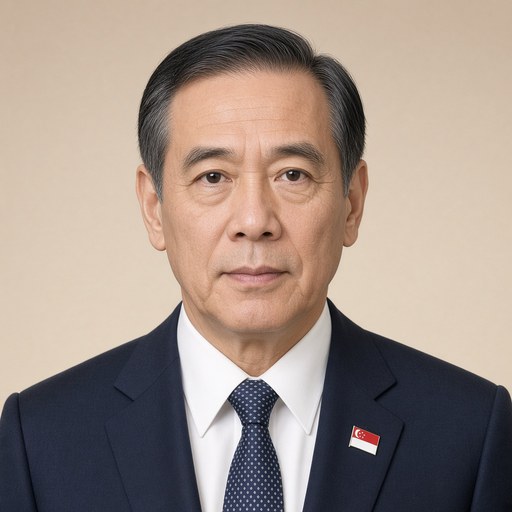
PM Lee Hsien Loong at the Official Opening of the Singapore Chinese Cultural Centre
 Lee Hsien Loong · Prime Minister of Singapore
- Context
- Lee addressed guests at the official opening of the Singapore Chinese Cultural Centre on 19 May 2017, celebrating Chinese culture's role in Singapore's multicultural identity.
- Main themes
- Singapore Chinese Cultural Centre opening, Chinese cultural identity in Singapore, multiculturalism and racial harmony, preservation of Chinese heritage, traditional Chinese values, bilingual education, community contributions, Eastern and Western cultural exchange, Singapore Chinese unique identity, arts and cultural development
- Duration
- ~22 min
- Words
- 2,595
- Sentences
- 128
- Readability
- 35
- Grade
- 13.3
- Syntax
- 3.14
- Vocabulary
- 2.20
Translated from Multiple languages
The broad sphere of national life a sentence belongs to. Every sentence has an Arena, so it is the denominator the other indices are read against.
Other128 sentences in 30 paragraphs
I hope the SCCC will strengthen the Singapore Chinese arts and cultural scene. Make it accessible to all races and appeal to all ages, and ensure that Singaporeans remain rooted in our multi-cultural identity for many years to come. Now let me say a few words in Mandarin.
No race or culture in Singapore is coerced into conforming with other cultures or identities, let alone that of the majority.
PM Lee Hsien Loong
Mr Chua Thian Poh, Chairman of the Singapore Chinese Cultural Centre, and members of the SCCC Board, distinguished guests and friends: Hello everyone.
I am deeply honored and moved to be invited to the opening of the Singapore Chinese Cultural Centre tonight. This new cultural landmark is the result of the efforts of individuals and groups who care about the development of local Chinese culture over the past five years. It represents a cultural sentiment that the people living on this island have upheld for many years, and it also shows that our cultural confidence is growing stronger. Of course, Chinese culture is an important element of Singapore's culture, which is why the government fully supported the plan to build the Singapore Chinese Cultural Centre from the very beginning. I would like to take this opportunity to thank all the individuals and groups who assisted in establishing this center, especially Chairman Chua Thian Poh, the board members, the management, all the staff, as well as the sponsors, sponsoring organizations, volunteers, and various arts groups and partner institutions.
The opening of the Singapore Chinese Cultural Centre prompts us to rethink a topic that has been discussed for some time: What kind of local Chinese culture do we hope to develop?
The people of every country develop their own unique cultural identity due to geographical environment and historical and cultural relationships, and Singaporeans are no exception. As Singapore Chinese, we already have our own unique characteristics, which have gradually developed over generations in a specific social environment. This mainly comes from three influences.
First, our Chinese ancestors have passed down many excellent traditional values through their words and actions. For example, from our ancestors who came from Tangshan to Nanyang and the founding generation, we see a particularly valuable attitude towards life. That is the spirit of hard work and perseverance. Even in difficult circumstances, they still worked diligently to create a better tomorrow for the next generation. They believed that hard work pays off. The Chinese community is also very concerned about cultural education and charitable causes, always willing to contribute money and effort. In terms of interpersonal relationships, they respect the elderly and value the virtuous, care for the weak, and believe that we should treat all elders as we treat our own parents, and all children as our own children. These excellent traditions of our Chinese ancestors are what we hope the younger generation will inherit.
Second, the values that have been internalized by Singapore Chinese include the concept of embracing multiculturalism. Since independence, Singapore has been committed to building a harmonious society with multiple races and religions. This concept has received support from all races. Although the Chinese are the majority, there is absolutely no demand for other racial compatriots to accept Chinese cultural customs or even to use the Chinese language. Each race retains its own cultural traditions, and everyone respects each other and lives in harmony. At the same time, various races have the opportunity to communicate in many common spaces. Over time, different cultures have subtly influenced each other, and "multicolored" has thus become a unique mark of Singapore Chinese culture. For example, the repertoire of the Singapore Chinese Orchestra includes classic Malay songs such as "Singapura," "Chan Mali Chan," or "Rasa Sayang." These songs are Malay songs, but when played with Chinese musical instruments, the effect is very different. Similarly, non-Chinese artists also draw creative inspiration from Chinese culture. In the "New Creativity" special exhibition organized by the Singapore Cultural Centre, local outstanding sound media artist Zulkifle Mahmod has brought us such a work. He cleverly plays melodies similar to Chinese pop music using his brass installation art, capturing the different sounds of the city. You will have the opportunity to appreciate this shortly.
Third, the economic policies that connect with the international community and the implementation of bilingual education have allowed Singapore Chinese to have the opportunity to access both Eastern and Western cultures. Being proficient in both Chinese and English makes it easier for us to communicate with friends from different cultural backgrounds and understand their perspectives. Local Chinese and non-Chinese can engage in deeper exchanges, and we can also communicate conveniently with friends from other Southeast Asian countries and regions in Asia.
When positioning Singapore Chinese culture, the most important point is that after half a century of nation-building, the shared experiences and collective memories of various races have strengthened the sense of identity among the people of Singapore. When discussing identity recognition, people will first affirm that they are Singaporeans, and only then will they consider their racial identity. Therefore, our identity is that of Singapore Chinese. This is also our identity on the world stage.
In summary, Singapore Chinese culture encompasses both aspects of traditional Chinese culture and the characteristics of Singapore's multiculturalism. In the paintings, music, dance, and films created by local artists, one can see the influence of Nanyang style, as well as styles that blend Eastern and Western cultures or other local colors.
There are already many representatives and groups of Singapore Chinese culture. For example, Singaporean singers are very popular in the Chinese music scene – singers like Stefanie Sun, JJ Lin, Tanya Chua, and Kit Chan enjoy high recognition in the Chinese-speaking world. In terms of drama, we have excellent theater companies such as Practice Theatre, The Theatre Practice, and Nine Years Theatre, while traditional opera includes Dunhuang Theatre, Tao Rong Ru Yue Society, and the Traditional Arts Centre, among others. In dance, we have the Dance Ensemble Singapore and the Singapore Chinese Dance Theatre, etc. In film, from the early works of Jack Neo's "I Not Stupid," to Royston Tan's "881," and more recently, Anthony Chen's "Ilo Ilo," local filmmakers have brought us many wonderful masterpieces. Some of these works have even received international recognition, bringing pride to Singapore.
Therefore, the local Chinese culture developed by the Singapore Chinese Cultural Centre will be based on a Singaporean-centered positioning. The Centre has already actively engaged in work to prepare a variety of exciting activities for everyone. These activities are very diverse, and the languages used are not limited to Chinese. For example, the audience can enjoy authentic Teochew or Cantonese operas, and Western scholars will also be invited to share their research insights. I hope that groups with different language habits will actively participate in these activities. For the younger generation, the Centre also adopts different methods to encourage their participation. For example, the opening event "Sing•Wave Concert" invited representatives of new wave music and local singers to present classic new wave songs. I hope that more cultural workers and groups will actively utilize the venue here to host events and performances, leading more people into the wonderful world of Chinese culture. Additionally, I hope that talents in the cultural and arts field can contribute their skills to help the Centre enhance its activities and pass on the cultural torch together.
I have high expectations for the Singapore Chinese Cultural Centre, hoping it can become a hub for the people to understand, participate in, and appreciate Chinese culture. Carrying on the past and opening up the future; the Singapore Chinese Cultural Centre has a long way to go. It needs the strong support of the Chinese community and those who care about Chinese culture to fulfill its mission. I wish the Singapore Chinese Cultural Centre all the best! Thank you, everyone.
I hope the SCCC will strengthen the Singapore Chinese arts and cultural scene. Make it accessible to all races and appeal to all ages, and ensure that Singaporeans remain rooted in our multi-cultural identity for many years to come. Now let me say a few words in Mandarin.
No race or culture in Singapore is coerced into conforming with other cultures or identities, let alone that of the majority.
PM Lee Hsien Loong
Chairman of the Singapore Chinese Cultural Centre, Mr. Tan Chuan-Jin, board members, distinguished guests, and friends: Hello everyone.
I am deeply honored and moved to be invited to the opening of the Singapore Chinese Cultural Centre tonight. This new cultural landmark is the result of the efforts of individuals and groups who care about the development of local Chinese culture over the past five years. It represents a cultural sentiment that the people living on this island have upheld for many years, and it also shows that our cultural confidence is growing stronger. Of course, Chinese culture is an important element of Singapore's culture, so the government has fully supported the plan to build the Singapore Chinese Cultural Centre from the very beginning. I would like to take this opportunity to thank all the individuals and groups who assisted in establishing this center, especially Chairman Tan Chuan-Jin, the board members, the management, all the staff, as well as the sponsors, sponsoring organizations, volunteers, various arts groups, and collaborating institutions.
The opening of the Singapore Chinese Cultural Centre allows us to rethink a topic that has been discussed for a long time: What kind of local Chinese culture do we hope to develop?
People in every country develop their own unique cultural identity due to geographical environment and historical and cultural relationships, and Singaporeans are no exception. As Singapore Chinese, we already have our own unique characteristics, which have gradually developed over generations in a specific social environment. This mainly comes from three aspects of influence.
First, our Chinese ancestors passed down many excellent traditional values through their words and actions. For example, from our ancestors who came from Tangshan to Nanyang and the founding generation, we see a particularly valuable attitude towards life. That is the spirit of hard work and perseverance. Even in difficult circumstances, they still worked diligently to live and strived to build a better tomorrow for the next generation. They believed that hard work is rewarded. The Chinese community is also very concerned about cultural education and charitable causes, always contributing money and effort. In terms of interpersonal relationships, they respect the elderly and honor the virtuous, care for the weak, and believe that one should treat others as one would treat their own. These excellent traditions of our Chinese ancestors are hoped to be inherited by the younger generation.
Second, the values that have been internalized by Singapore Chinese include the concept of embracing multiculturalism. Since independence, Singapore has been committed to building a harmonious society with multiple races and religions. This concept has received support from all ethnic groups. Although the Chinese community is the majority, there is absolutely no demand for other ethnic groups to accept Chinese cultural customs or even to use Mandarin. Each ethnic group retains its own cultural traditions, and everyone respects each other and lives in harmony. At the same time, various ethnic groups have the opportunity to communicate in many common spaces. Over time, different cultures subtly influence each other, and "multicolored" has thus become a unique mark of Singapore Chinese culture. For example, the repertoire of the Singapore Chinese Orchestra includes classic Malay songs such as "Singapura," "Chan Mali Chan," or "Rasa Sayang." These songs are Malay, but when played with Chinese musical instruments, the effect is very different. Similarly, non-Chinese artists also draw creative inspiration from Chinese culture. In the "New Creativity" special exhibition organized by the Singapore Cultural Centre, local outstanding sound media artist Zulkifle Mahmod has brought us such a work. He cleverly plays melodies similar to Chinese pop music using his brass installation art, capturing different sounds from the city. You will have the opportunity to appreciate it shortly.
Third, the economic policies that align with international standards and the implementation of bilingual education have allowed Singapore Chinese to have the opportunity to access both Eastern and Western cultures. Being proficient in both Chinese and English makes it easier for us to communicate with friends from different cultural backgrounds and understand their perspectives. Local Chinese and non-Chinese can engage in deeper exchanges, and communication with friends from other Southeast Asian countries and regions in Asia is also convenient.
When positioning Chinese culture in Singapore, the most important point is that after half a century of nation-building, the shared experiences and collective memories of various ethnic groups have strengthened the sense of identity among Singaporeans. When discussing identity recognition, Singaporeans first affirm that they are Singaporeans, and only then do they consider their ethnic identity. Therefore, our identity is Singapore Chinese. This is also our identity on the world stage.
In summary, Singapore Chinese culture has both aspects of traditional Chinese culture and characteristics of Singapore's multiculturalism. In the paintings, music, dance, and films created by local artists, one can see the influence of Nanyang style, as well as styles that blend Eastern and Western cultures or other local colors.
There are already many representatives and groups of Singapore Chinese culture. For example, Singaporean singers are very popular in the Chinese music scene – singers like Stefanie Sun, JJ Lin, Tanya Chua, and Kit Chan enjoy high recognition in the Chinese-speaking world. In terms of drama, we have excellent theater companies such as Practice Theatre, The Theatre Practice, and Nine Years Theatre, while traditional opera includes Dunhuang Theatre, Tao Rong Ru Yue Society, and the Traditional Arts Centre, among others. In dance, we have the Dance Ensemble and the Singapore Chinese Dance Theatre, etc. In film, from the early works of Jack Neo's "I Not Stupid," to Royston Tan's "881," and more recently, Anthony Chen's "Ilo Ilo," local filmmakers have brought us many wonderful masterpieces. Some of these works have even received international recognition, bringing pride to Singapore.
Therefore, the local Chinese culture developed by the Singapore Chinese Cultural Centre will be based on a Singaporean-centered positioning. The Centre has actively engaged in work and prepared a variety of exciting activities for everyone. These activities are very diverse, and the languages used are not limited to Mandarin. For example, audiences can enjoy authentic Teochew or Cantonese operas, and Western scholars will also be invited to share their research insights. I hope that groups with different language habits will actively participate in these activities. For the younger generation, the Centre also adopts different methods to encourage their participation. For example, the opening event "Sing•Wave Concert" invited representatives of the new wave and local singers to present classic new wave songs. I hope that more cultural workers and groups will actively utilize the venue here to host events and performances, leading more people into the wonderful world of Chinese culture. Additionally, I hope that talents in the cultural and arts field can contribute their skills to help the Centre enhance its activities and pass on the cultural torch together.
I have high expectations for the Singapore Chinese Cultural Centre, hoping it can become a hub for the public to understand, participate in, and appreciate Chinese culture. Carrying on the past and opening up the future; the Singapore Chinese Cultural Centre has a long way to go. It needs the strong support of the Chinese community and those who cherish Chinese culture to fulfill its mission. I wish the Singapore Chinese Cultural Centre all the best! Thank you, everyone.
The original Multiple languages. The tags above are read on the English translation's sentences.
Mr Chua Thian Poh, Chairman of the Singapore Chinese Cultural Centre, members of the SCCC Board, ladies and gentlemen.
I am very happy to be here today in this beautiful, new building for the official opening of the Singapore Chinese Cultural Centre.
A civilisation is defined as much by its arts and culture as it is by its technology, its power or its prosperity. Creating jobs, attracting investments, training and upgrading workers, staying competitive in the world economy – these are all essential. But “man does not live by bread alone”. Human beings need the arts and culture to nourish our souls. We are moved by beauty, we feel empathy and love for others, we yearn to “see a world in a grain of sand, and a heaven in a wild flower”, as the English poet William Blake put it. We certainly do not wish Singapore to be a first-world economy but a third-rate society, with a people who are well off but uncouth. We want to be a society rich in spirit, a gracious society where people are considerate and kind to each other, and as Mencius said, where we treat all elders as we treat our own parents, and other children as our own children. We have made progress in these respects, but we are far from perfect. From time to time, we still come across Singaporeans who behave deplorably, like recently when a frail old man was shoved around at a hawker centre. But I was relieved that people were outraged by this behaviour. It could have been worse: Singaporeans might have regarded such behaviour as normal. After all, in many countries, if you do not jostle to get to the front of the queue, you will simply be elbowed aside. If you put your tissue paper there to “chope” it, it will just be swept away. It was not too long ago that Singaporeans did the same, as those of you my age may remember. We have come a long way, indeed. Today we are a modern and developed society, but remain rooted in our Asian cultures. This sense of rootedness gives us a sense of identity and confidence.
We are also a multiracial, multi-religious, and multi-cultural society. This diversity is a fundamental aspect of our respective identities. Our aim is integration, not assimilation. No race or culture in Singapore is coerced into conforming with other cultures or identities, let alone that of the majority. Ours is not a melting pot society, with every race shorn of its distinctiveness. Instead, we encourage each race to preserve its unique culture and traditions, while fostering mutual appreciation and respect among all of them. Being Singaporean has never been a matter of subtraction, but of addition; not of becoming less, but more; not of limitation and contraction, but of openness and expansion.
So over time, each race has retained and evolved its own culture and heritage; but each has also allowed itself to be influenced by the customs and traditions of other races. The result has been distinctive Singaporean variants of Chinese, Malay, Indian, and Eurasian cultures, and a growing Singaporean identity that we all share, suffusing and linking up our distinct individual identities and ethnic cultures. So much so that when we travel overseas – whether to neighbouring countries like Malaysia and Indonesia, or further afield like China and India – we can tell if someone is Singaporean just by the way they speak and act. When we deal with nationals from these countries, we are confident of our own Singaporean cultures and identities, even as we are conscious that we are ethnic Chinese, Malays, Indians or Eurasians. Thus, the Chinese Singaporean is proud of his Chinese culture – but also increasingly conscious that his “Chineseness” is different from the Chineseness of Malaysian and Indonesian Chinese, or the Chineseness of people in China, Hong Kong or Taiwan. Indeed, we now speak of a Singaporean Chinese culture. In the same way, we can speak of a Singaporean Malay culture, and a Singaporean Indian culture. For a country that is just over 50 years old, which is a very short time compared to the ancient civilisations from which we spring, this is quite an achievement.
Cultures reflect and express a people’s deep values as well as their collective experiences; individual talent as well as tradition; the old and the new merging to create fresh forms and new recognitions. Therefore, cultures grow, change and evolve naturally and organically; they cannot be planned, directed or ordered into being.
But that does not mean the Government has no role to play. It can encourage gracious behaviour and foster positive social norms. It can recognise cultural achievements and support the arts. For the arts do not always pay for themselves. In our schools, we offer not just math and science, but also literature, drama and music. We encourage students to participate in co-curricular activities like dance, symphonic orchestra, Chinese orchestra and calligraphy. We support institutions like the Nanyang Academy of Fine Arts, the LaSalle College of the Arts and the Yong Siew Toh Conservatory of Music. We have also created facilities like the National Gallery and the Esplanade, as well as supported the activities of arts and cultural groups.
So when the Chinese community proposed setting up the SCCC, the Government was happy to support this endeavour. The SCCC now has an 11-storey state-of-the-art building. As you can see, it is a beautiful and handsome building. But what matters are the people who will use these spaces and facilities, and give it life. Those who perform and display their efforts here, as well as those who come to appreciate, enjoy, and encourage Chinese arts and culture.
I hope the SCCC will strengthen the Singapore Chinese arts and cultural scene. Make it accessible to all races and appeal to all ages, and ensure that Singaporeans remain rooted in our multi-cultural identity for many years to come. Now let me say a few words in Mandarin.
No race or culture in Singapore is coerced into conforming with other cultures or identities, let alone that of the majority.
PM Lee Hsien Loong
新加坡华族文化中心主席蔡天宝先生及董事会成员, 各位嘉宾和朋友们: 大家好。
今晚受邀为新加坡华族文化中心开幕,我感到万分荣幸和感动。这座新文化地标,是关心本地华族文化发展的人士和团体,过去5年来努力的成。 它代表了生活在这个岛屿的人们,多年来所坚持的一种文化情怀,也显示了我国的文化自信越来越强。 当然,华族文化是新加坡文化的重要元素,所以政府一开始便全力支持兴建新加坡华族文化中心的计划。 借此感谢所有协助建立这个中心的人士和团体,尤其是主席蔡天宝先生、董事们、管理层、全体职员,以及赞助人、赞助机构、义工、各艺术团体和合作机构。
新加坡华族文化中心的启用,让我们重新思索一个讨论多时的课题,那就是:我们希望发展出怎样的本土华族文化?
每个国家的人民,因为地理环境和历史与文化的关系,都会发展出自身独特的文化身份,新加坡人也不例外。 作为新加坡华人,我们已经有了本身的独特面貌,这是历经几代人之后,在特定的社会环境中所逐渐发展出来的文化身份。 这主要来自三方面的影响。
首先是我们的华族先辈,通过他们的言行举止,给我们传递了许多优良的传统价值观。 例如:在当年从唐山到南洋的华族先辈还有建国一代身上,我们看到特别可贵的生活态度。 那就是认真打拼,刻苦耐劳的刚毅精神。即使环境艰苦,他们依然勤恳努力生活,设法为下一代建设更美好的明天。他们相信天道酬勤。 华社人士也十分关心文化教育和慈善公益,总是有钱出钱,有力出力。待人处事方面,他们敬老尊贤,爱护弱小,相信做人应该老吾老以及人之老,幼吾幼以及人之幼。 华族先辈这些优良传统,希望年轻一代能加以继承。
第二、在新加坡华人已经内化的价值观里,包含了拥抱多元文化的观念。新加坡自从独立以来,不断致力建设多元种族、多元宗教的和谐社会。这个理念,获得各种族的支持。 华族虽然占多数,但是在文化、生活习俗等方面,并绝对没有要求其他种族同胞接受华族文化习俗,甚至使用华语。 每个种族都各自保留自己的文化传统,大家彼此互相尊重,和谐相处。 在这同时,各种族也有机会在许多共同空间进行交流。日子久了,不同文化之间在潜移默化中相互影响,而“多元色彩” 也因此成了新加坡华族文化的独特印记。 例如: 新加坡华乐团的曲目就包括经典的马来歌曲 – Singapura, Chan Mali Chan 或Rasa Sayang。 歌曲是马来歌,不过用华乐乐器演奏这些歌曲,效果非常不同。 同样的,非华族艺术工作者也从华族文化中汲取创作灵感。 在新加坡文化中心所策划的《新‧创艺》 特展里,本地杰出声音媒体艺术家Zulkifle Mahmod就给大家带来了这样的一件作品。他把城市里不同的声音,通过他的铜管装置艺术品,巧妙地奏出类似华人流行音乐的曲调。 待会儿大家就有机会去欣赏了。
第三、与国际接轨的经济政策和双语教育的推行,让新加坡华人同时有机会接触东西方文化。 由于通晓中英文,我们更容易与不同文化背景的朋友们交流、了解他们观点。 本地华族和非华族之间可以更深入交流,跟其他东南亚国家和亚洲地区的朋友也可以方便沟通。
在为新加坡华族文化定位时,最为重要的一点是:在建国半个世纪后, 各种族的共同经验和集体回忆,加强了国人对新加坡的认同感。 在谈到身份认同时,国人首先会肯定自己是新加坡人,然后才是种族身份。 所以,我们的身份是新加坡华人。 这也是我们在世界舞台上的身份。
总的来说,新加坡华族文化既有中华传统文化的面向,也有新加坡多元文化的特色。 在本地艺术工作者创作的绘画、音乐、舞蹈和电影作品中,可以看到南洋风,也可以看到融合中西文化的风格或是其他本土色彩。
新加坡华族文化已经有不少代表人物和团体了。 例如新加坡歌手在华语乐坛就十分受欢迎 – 孙燕姿、林俊杰、蔡健雅、陈洁仪等歌手,在华人世界享有很高的知名度。 在戏剧方面,我们有实践剧场、戏剧盒,九年剧场等优秀的剧团,传统戏曲则有敦煌剧坊、陶融儒乐社、传统艺术中心等等。 在舞蹈方面,我们有聚舞坊和新加坡华族舞蹈剧场等等。 在电影方面,从早期梁志强的《小孩不笨》、陈子谦的《881》、到近几年陈哲艺的《爸妈不在家》,本地的电影工作者为我们带来了许多精彩杰作。当中一些作品更是在国际上获得肯定,为新加坡带来骄傲。
因此,新加坡华族文化中心所发展的本土华族文化,将是从以新加坡人为本位的定位出发。 中心已经积极投入工作,为大家准备了多项精彩的活动。 这些活动十分多元化,所使用的语言也不局限于华语。 例如观众可以欣赏到原汁原味的潮州或广东大戏,西方学者也将受邀发表他们的研究心得。希望不同语言习惯的群体,能踊跃参与这些活动。 针对年轻的一代,中心也采用不同的方式来鼓励他们参与。 例如开幕活动的《Sing•浪演唱会》,就邀请了新谣代表人物和本地歌手呈献经典新谣歌曲。 我希望有更多文化工作者和团体,会积极利用这里的场地主办活动、呈献表演,引领更多的人走进精彩的华族文化世界。 另外,也希望文化艺术领域的人才,能贡献他们的才能,协助中心加强活动内容,一起传递文化薪火。
我对新加坡华族文化中心充满期许,希望它能成为国人认识、参与和欣赏华族文化的重镇。 承先启后,继往开来;新加坡华族文化中心可说是任重道远。 它需要华社以及爱护华族文化人士的鼎力支持,才能完成使命。 在此祝愿新加坡华族文化中心一切顺利! 谢谢大家。
Explore related topics