




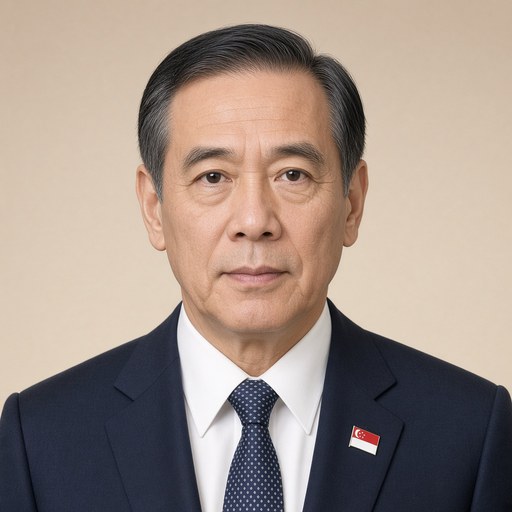
PM Lee Hsien Loong at the Singapore Kwangtung Hui Kuan 80th Anniversary Lunch
 Lee Hsien Loong · Prime Minister of Singapore
- Context
- Lee addressed the Singapore Kwangtung Hui Kuan's 80th anniversary lunch on 28 May 2017, celebrating the clan association's contributions to Chinese culture and community welfare.
- Main themes
- Singapore Kwangtung Hui Kuan's 80th anniversary, role of clan associations in Chinese community, cultural heritage preservation, traditional Cantonese culture promotion, digital technology for community organisations, overseas Chinese community ties, intangible heritage documentation, youth engagement, charitable work, Singapore Chinese Cultural Centre collaboration
- Duration
- ~14 min
- Words
- 1,739
- Sentences
- 85
- Readability
- 40
- Grade
- 12.4
- Syntax
- 3.05
- Vocabulary
- 2.39
Translated from Chinese
The broad sphere of national life a sentence belongs to. Every sentence has an Arena, so it is the denominator the other indices are read against.
Other85 sentences in 33 paragraphs
Explore by topics
Arts and culture
Mr Ho Kwok Choi, President of the Singapore Kwangtung Hui Kuan; Mr Thomas Chua, President of the Singapore Federation of Chinese Clan Associations; representatives of Kwangtung Hui Kuan from around the world; distinguished guests, good evening, everyone!
I am very happy to join close to a thousand friends from Singapore and abroad in celebrating the 80th anniversary of the Singapore Kwangtung Hui Kuan. I would like to welcome our overseas guests who have travelled from afar, and to offer my sincere congratulations to the Kwangtung Hui Kuan on its 80th anniversary!
Ever since the early days of Singapore's founding, clan associations have played an important role in Chinese society. As organisations based on place of origin and on kinship, the associations were where early immigrants in a foreign land connected with fellow villagers or clansmen. As the saying goes, "Within the four seas, all men are brothers." When our forefathers crossed the seas to Nanyang, mutual support among members of the same clan and the same hometown was vital. For immigrants who had left their homes to make a living overseas, the associations provided a source of emotional support. When they faced problems with jobs, housing, healthcare, education and other matters, the associations and their fellow villagers would readily lend a hand.
With a history of 80 years, the Kwangtung Hui Kuan was founded jointly by community leaders from the four major dialect groups, Cantonese, Teochew, Hakka and Hainanese, making it an association that cuts across dialect groups. Since its founding, the Kwangtung Hui Kuan has made it its mission to unite the four groups, promote culture, and care for the poor, the elderly and the weak in society. Over all these years, the association's commitment to serving society has never changed. In its charitable work, the association gives out red packets to the elderly every year. On this joyous occasion today, the association has also raised more than two million dollars for Kwong Wai Shiu Hospital. Thank you to the association for its efforts and support.
In promoting traditional culture, the Kwangtung Hui Kuan regularly organises celebrations of traditional festivals, and runs Cantonese opera training classes, Cantonese language courses and so on.
In the past, some people were worried about the future of our local clan associations. They felt that modern society had changed and no longer needed the welfare the clan associations provided. The clan associations' historical mission had been fulfilled, and they would eventually be reduced to places where old folks played mahjong and sang karaoke.
But time has shown that many of our local clan associations have successfully kept pace with the times. Besides continuing to foster fellowship, care for the vulnerable in society, and help promote traditional culture, the associations now also play an active role in promoting exchanges and cooperation between the local Chinese community and overseas Chinese. For example, in 2000 the Kwangtung Hui Kuan organised the first World Kwangtung Fellowship Convention. Kwangtung folk from all over the world gathered in Singapore, and it was a grand occasion. Today's grand event has likewise invited many overseas friends to take part. Here, I also encourage all clan associations to work closely with the newly opened Singapore Chinese Cultural Centre to jointly promote our local Chinese culture.
In this digital age, clan associations can harness the power of technology to better develop their activities. The rise of social media has changed the way people communicate, and the associations can seize this opportunity to attract more young people and promote their activities more effectively. Clan associations can also use digital technology to preserve and treasure the nursery rhymes, folk songs, local performing arts, historical photographs and so on of the various dialect groups, so that they can be passed down from generation to generation. I know that a few years ago the Kwangtung Hui Kuan published an "Anthology of Singapore Dialect Nursery Rhymes", accompanied by a CD containing 50 dialect nursery rhymes from the Cantonese, Teochew, Hakka, Hainanese and Hokkien traditions. For instance, the Cantonese children's song "The Moon Shines Bright, Lighting Up the Courtyard" is one some of you may have heard your grandparents hum.
The moon shines bright, lighting up the courtyard; on New Year's Eve, we pick the betel nuts
In this digital age, clan associations can harness the power of technology to better develop their activities.
PM Lee Hsien Loong
These nursery rhymes are all part of our cultural heritage, and I thank the Kwangtung Hui Kuan for preserving these precious records and memories for us. The National Heritage Board is also gathering feedback from the public on how to systematically document and preserve our tangible and intangible cultural heritage, such as traditional opera and folk literature, and is involving Singaporeans in drawing up a master plan for Singapore's cultural heritage. In this regard, the clan associations can also play a pivotal role in helping to raise Singaporeans' appreciation of culture across generations and across ethnic groups.
Finally, once again, congratulations to the Kwangtung Hui Kuan on its 80th anniversary. I wish your association continued progress and ever greater success! Keep up the good work and scale new heights!
Thank you, everyone.
. . . . .
Explore related topics
The original Chinese. The tags above are read on the English translation's sentences.
Explore by topics
Arts and culture
新加坡广东会馆会长何国才先生,新加坡宗乡总会主席蔡天宝先生,世界各地的广东会馆代表,各位来宾,大家好!
很高兴能和近千名海内外的朋友,一起欢庆新加坡广东会馆成立八十周年。我在此向远道而来的海外嘉宾表示欢迎,并向广东会馆八十周年大庆献上诚挚的祝贺!
早从新加坡开埠时期开始,宗乡会馆就在华人社会里扮演重要角色。作为地缘性组织和血缘性组织,会馆是早期移民在异乡联系乡亲或宗亲的地方。正所谓“四海之内皆兄弟”,先辈们漂洋过海来到南洋,同族同乡之间的互相支持是至关重要的。对离乡背井,到海外谋生的移民来说,会馆提供了一种心灵的依靠。当面对就业、住房、医疗和教育等各方面的问题时,会馆和乡亲们都会热心帮忙。
拥有80年历史的广东会馆,由广府、潮州、客家和海南,四大方言群的社会贤达共同成立,是个跨方言群的会馆。自创立以来,广东会馆便一直以团结四大族群,弘扬文化及照顾社会贫困老弱为服务宗旨。这么多年来,会馆服务社会的宗旨始终不变。在慈善事业方面,会馆每年都会派发红包给老人。在今天这个喜庆日子,会馆更是为广惠肇留医院筹得了两百多万元善款。感谢会馆的努力和支持。
在推广传统文化方面,广东会馆不时会举办传统节日庆祝活动,以及主办粤剧训练班和粤语课程等。
过去,一些人曾对本地宗乡会馆的未来感到担忧。他们认为现代社会改变了,已经不再需要宗乡会馆所提供的福利。宗乡会馆的历史任务已经完成了,会馆最终只会沦为老人家打麻将、唱卡拉OK的地方。
但是,时间证明,本地许多宗乡会馆都成功与时并进。除了延续联络感情,照顾社会中的弱势群体,以及协助推广传统文化,会馆如今也在促进本地华社与海外华人的交流与合作上,发挥积极的作用。例如,广东会馆曾在2000年举办了第一届世界广东同乡联谊大会。四海之内的广东乡亲都在新加坡聚首,场面盛大。今天的盛会同样也邀请了众多海外朋友来参加。在这里,我也鼓励所有的宗乡会馆和刚开幕的新加坡华族文化中心紧密合作,共同发扬本土华族文化。
在这个数码科技时代,宗乡会馆可以借助科技的力量,更好地发展会务。社交媒体的兴起改变了人们的沟通方式,会馆可以利用这个契机,吸引更多年轻人,更有效地推广会馆的活动。宗乡会馆也可以利用数码技术,将各方言群的童谣、山歌、地方曲艺、历史图片等保存珍藏,这样才能代代相传。我知道广东会馆几年前曾经出版一本《新加坡方言童谣选集》,并且还附上光碟,里头收录了50首源自广东、潮州、客家、海南和福建的方言童谣。 像:《月光光,照地堂》 这首广东儿歌,有些人就可能曾经听他们的爷爷奶奶哼唱过。
月光光,照地堂 年卅晚,摘槟榔
在这个数码科技时代,宗乡会馆可以借助科技的力量,更好地发展会务。
PM Lee Hsien Loong
这些童谣都是我们文化遗产的一部分,感谢广东会馆为我们保留了这些珍贵记录和回忆。文物局也正在听取社会大众的反馈,探讨如何有系统地记录和保存物质和非物质文化遗产,如传统戏曲、民间文学等,让国人参与拟定新加坡文化遗产总蓝图。在这方面,各个宗乡会馆也能扮演举足轻重的角色,协助提升国人对跨时代、跨族群文化的鉴赏能力。
最后,再次恭贺广东会馆成立80周年,祝贵会馆不断进步,越办越好!继续努力,再攀高峰 !
谢谢各位。
. . . . .
Explore related topics