




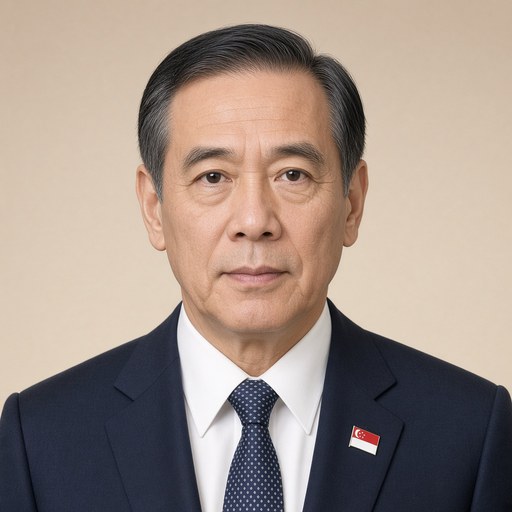
SM Lee Hsien Loong at the Suzhou Industrial Park 30th Anniversary Commemorative Event
 Lee Hsien Loong · Prime Minister of Singapore
- Context
- Lee addressed the 30th anniversary commemorative event of the China-Singapore Suzhou Industrial Park in Suzhou, China, on 25 November 2024.
- Main themes
- Suzhou Industrial Park 30th anniversary, China-Singapore bilateral cooperation, government-to-government projects, economic development and reform, Singapore's development experience, industrial park growth and achievements, urban planning and township development, China's reform and opening up, personal reflections on SIP history, Deng Xiaoping and Lee Kuan Yew legacy
- Duration
- ~40 min
- Words
- 4,798
- Sentences
- 261
- Readability
- 36
- Grade
- 12.8
- Syntax
- 2.89
- Vocabulary
- 2.28
Translated from Multiple languages
The broad sphere of national life a sentence belongs to. Every sentence has an Arena, so it is the denominator the other indices are read against.
Other261 sentences in 81 paragraphs
Your Excellency He Lifeng, Vice Premier of the State Council of the People's Republic of China, esteemed guests, ladies and gentlemen,
Good afternoon, everyone!
In 1994, the China-Singapore Suzhou Industrial Park broke ground on May 12.
Today, I am very pleased to gather here with all of you to celebrate the 30th anniversary of the development and construction of the park.
This is a milestone worth celebrating. The success achieved by the Suzhou Industrial Park over these 30 years reflects the growth of our two countries over the years and shows us how China-Singapore cooperation has branched out with our respective developments.
The teams from China and Singapore, whether from government agencies or private enterprises, have worked together with a shared goal, continuously seeking breakthroughs and striving for excellence, to jointly create a high-quality and vibrant industrial park.
Thanks to everyone's efforts and contributions, we have the achievements we celebrate today. Here, I congratulate our Chinese partners, business colleagues, and the new and old friends who have participated in the project over the years. Happy 30th anniversary to the Suzhou Industrial Park! I hope everyone will continue to work hard and create even greater brilliance.
Next, please allow me to speak in English.
SIP: From modest beginnings
I am very happy to be back in Suzhou today, to commemorate the 30th anniversary of the China-Singapore Suzhou Industrial Park (SIP).
30 years ago, Singapore and China launched the SIP. This was our first Government-to-Government (G-to-G) project. At that time, China’s journey of reform and opening up was just gathering pace. The story traces back to 1978, when Mr. Deng Xiaoping visited Singapore. After seeing what Singapore had done, Mr. Deng felt that China could adapt elements of Singapore’s development experience to its own reform and development journey. Years later, during his 1992 Southern Tour, Mr. Deng reiterated this message. On Singapore’s part, Mr. Lee Kuan Yew was likewise keen to see how we could support China’s development. Mr. Lee happened to visit Suzhou in 1992 and saw its potential role in China’s reform and development. With this meeting of minds and shared political will, China and Singapore established the SIP in 1994. The aim was to develop a high-quality industrial township in China, to be a vehicle to adapt Singapore’s experience of economic development, investment promotion, and urban planning to China’s national circumstances – a project that is replicable, adaptable, and promotable. This would offer China a useful possible model as it pursued its reforms and opening up. And it also allowed Singapore to better understand China’s industries, market, and economy, as it opened up to the world.
SIP: Personal reflections
I was personally involved in the early years of the project. I had the honour of co-chairing the first seven SIP Joint Steering Council (JSC) meetings with then-Vice Premier Li Lanqing, and subsequently then-Vice Premier Wu Yi. Together we developed the concept, settled the strategic direction, secured the necessary approvals, and got the project moving. Along the way, we had some differences in perspectives and approach, but these were part of our collective learning journey. Both sides worked together in good faith and resolved these differences through close consultations and mutual adjustments. After the first few years, the Chinese side increasingly took the lead, eventually becoming the senior partner. They carried the project forward with energy and imagination and built SIP up way beyond what we had dared to hope.
When I visited the SIP on its 10th anniversary in 2004, I was deeply impressed by how well it had developed. Low-lying farmland had been transformed into a beautiful and well-managed township, with thriving industries, excellent infrastructure, a high-quality living environment, and a growing, thriving population.
Now in its 30th year, the SIP continues to thrive. It now occupies 278 km², extending well beyond the Singapore-China collaborative area of 80 km². It is consistently ranked as one of China’s most competitive industrial parks. Its GDP has grown ten-fold, from about RMB 40 billion in 2003 to almost RMB 400 billion in 2023. The SIP has also catalysed Suzhou’s economic growth, making Suzhou the sixth largest city in China by GDP last year.
Earlier, I had a chance to tour the SIP, and see what it had matured into. Seeing how our initial concepts and dreams had become a living, vibrant reality filled me with pride and joy. We stopped by a viewpoint to admire the industrial park. From there, we could see the SIP stretching around Jinji Lake, extending in all directions. In particular, we could see the entire central axis – leading through the township all the way to the Suzhou Center and the Gate of the Orient, which fronts onto the lake. I remembered the first Joint Steering Council meeting in Singapore in 1994, when both sides discussed the master plan for the township, sitting around a scale model of the SIP. The planners highlighted to us this central axis, which then-Vice Premier Li Lanqing described as the torch. We talked about how one day this axis would become the bustling core of a modern township. Today this central thoroughfare is fully built, surrounded by the modern buildings of the SIP – graceful, well laid out precincts, full of life and activity. The torch is shining brightly. From master plan to reality: a blueprint drawn to completion. And for this, we have to thank the generations of officials on both sides, the companies who participated in the project, the businesspeople who believed in it and pushed it, and all of the teams who worked together to make this a reality and a success. Thank you all very much.
Throughout the years, the SIP has kept itself relevant and competitive by moving up the value chain into higher tech, higher value-adding industries, such as biotechnology, nanotechnology, and AI. From nothing to something, from something to excellence. Beyond manufacturing, SIP has also attracted many research centres. Including two collaborative projects with Singapore entities: the A*STAR Partners’ Centre and the National University of Singapore (Suzhou) Research Institute, which both renewed their agreements in the SIP this year. But for all the progress we have made, I am glad to see that the SIP still produces some traditional products – for example, the best hairy crabs in China still come from the SIP, Yangcheng Lake, and should therefore be counted among SIP’s high-quality, high value-added exports!
SIP: a pathfinder for cooperation
The SIP has greatly benefitted both our countries. For China, it has become a model for a high-quality investment ecosystem that attracts foreign investments. It has become a household name in China. Officials from across China have come to see and study Suzhou’s success. They have taken inspiration from SIP, to adapt and apply similar ideas in their own cities and provinces. On Singapore’s part, the SIP gave us a stake in a major project in the heart of the Yangtze River Delta, a key node of China’s transformation and development. It enabled us to participate deeply in China’s journey of reform and opening up. It showed how we had worked closely with China on a major project and seen it through to fruition. It earned us international credibility. It also helped build up our reputation all over China, opening many doors for us. Many Singapore companies have invested in China. They have been welcomed and have generally done well. We have also learned much from each other over the years. We shared with China our experience from our own development journey – the importance of planning and execution, and the crucial need to build and maintain the trust of international partners, clients, and investors. At the same time, Singapore learnt from China the challenges of operating at scale, and dealing with the complexity of developing a project in an economy that was still in transition. These achievements are captured in the commemorative SIP 30 sculpture “Flying” on the banks of Jinji Lake, which symbolises success, friendship, and win-win cooperation.
Beyond its intrinsic value, the SIP has catalysed the broader Singapore-China partnership. The SIP Joint Steering Council led to the creation of the Joint Council for Bilateral Cooperation (JCBC), which is the apex bilateral platform coordinating the multi-dimensional cooperation between Singapore and China today. The JCBC is now co-chaired by Vice Premier Ding Xuexiang and DPM Gan Kim Yong. Two weeks ago, they met in Singapore, and marked the Council’s 20th anniversary with a substantial slate of deliverables. SIP’s success gave our governments the confidence to launch further joint G-to-G projects – the Tianjin Eco-City, and the Chongqing Connectivity Initiative. These have helped our two countries to grow alongside each other, understand each other better, and work more closely together for mutual benefit.
Through the SIP, we have not only built a very successful township, but also developed a deep and strong friendship, underpinned by mutual trust and understanding. SIP did not become a success overnight. It took unremitting effort from thousands of leaders, officials, and businessmen on both sides, working closely to understand problems, come up with creative solutions, forge consensus and move the project forward. On this 30th anniversary, we recognise them, and extend our heartfelt appreciation for everyone’s hard work and contributions. Thank you very much!
Challenges ahead
After nearly half a century of rapid progress, China is facing very different challenges from when it first started its journey of reform and opening up. For domestic reasons alone, China’s growth will likely be slower than before. This is to be expected as the economy is now more mature, and incomes many times higher. The population has peaked, constraining the size and composition of its workforce. There are also some structural issues in the economy that the Chinese government is actively tackling. For an example, the oversupply in the property market, and the management of local government debt, and the need to boost domestic consumption. At the same time, China’s external environment has become more complicated. Geopolitical tensions have made conditions everywhere much less conducive to growth than before. Cross-border trade and investments are particularly affected. This affects China too. Because its economy relies on a stable global multilateral framework, as well as trade and investments with partners all around the world. Facing these external pressures and uncertainties, China has placed more emphasis on political, social, and national security considerations. Economic development is still of high importance, but it is no longer the pre-eminent national priority. Policy trade-offs are unavoidable and will imply less exuberant growth for China.
Confidence in China
But it would be short-sighted and unwise to write off China. China’s development is an enterprise that will take a century. China has shown that it can take a strategic perspective – to maintain consistent policies and direction over the long term, riding through transient ups and downs in its development journey. Its economy retains considerable capacity to grow. There is still untapped potential in its workforce. As people stay healthy longer, and remain active and work longer, this will boost the workforce. As the population continues to urbanise, and shift from the rural agricultural sector to the urban manufacturing or service economy, productivity should go up. China’s tech industry is also highly competitive and advanced. Chinese companies are already market leaders in some industries, for example Electric Vehicles, batteries, and solar panels. Increasingly, Chinese companies are competing as equals, rather than from a catch-up position. In fact, in some industries Chinese companies have been so successful that it is causing concern to China’s trading partners. Finally, we must never underestimate the Chinese people’s determination for their nation to succeed and stand tall in the world. This is a driving ambition. Its impact cannot be captured in economic statistics, but it will make all the difference.
Singapore continues to have confidence in China’s future. We believe that a growing and prospering China can and should play a major constructive role internationally – contributing to the prosperity and well-being of other countries, and a stable international order where all countries big and small co-exist peacefully together. Therefore, we wish China well in its efforts to transform its economy, integrate into the global economy, and enhance win-win relations with regional partners and other major powers.
Singapore remains committed to deepening our bilateral cooperation with China. And our cooperation in the SIP will continue to be a significant part of this. Singapore’s Ministry of Trade and Industry and China’s Ministry of Commerce have developed a 10-year cooperation blueprint to chart the next phase of our cooperation in the SIP. We plan to grow emerging sectors like green development, the digital economy, and biomedical sciences. Upcoming projects such as the China-Singapore Green Digital Hub and the China-Singapore Life Sciences Park will help the SIP to stay relevant and attract high-quality investments both from China and beyond. More broadly, as the SIP continues to develop under the blueprint, it will continue to demonstrate how China can deliver high standards of economic and urban management and sustain a high-quality modern township over the long term. SIP’s model will be a reference and inspiration for other tech and industrial parks across the country. It will also demonstrate China’s continuing openness to the world and its desire to welcome investors. In an era of uncertainty and anxiety, it will be a beacon of cooperation and hope.
Conclusion
Last year, Singapore and China upgraded our bilateral relationship to an “All-Round High-Quality Future-Oriented Partnership.” We can be proud that we have built a successful “All-Round High-Quality Future-Oriented” industrial park here in Suzhou to match.
As we commemorate the SIP’s 30th anniversary, may I again congratulate it on reaching this important milestone. Together, China and Singapore have embarked on a journey, and at thirty, we stand firm and create new opportunities. With the continued wise guidance and full support from leaders from both sides, the hard work of our officials and the zest of our businesses, I am confident that the SIP will continue to be a pathfinder for bilateral cooperation, to achieve greater successes for the next 30 years and beyond!
Thank you very much.
Thirty years ago, Singapore and China jointly developed the Suzhou Industrial Park. This was our first intergovernmental cooperation project. At that time, China was beginning to accelerate its reform and opening-up process. The development of the Suzhou Industrial Park can be traced back to 1978, when Mr. Deng Xiaoping visited Singapore. He saw the achievements that Singapore had made at that time and believed that China could also learn from Singapore's experience to advance its own reform and development. Mr. Deng Xiaoping reiterated this point during his southern tour in 1992.
At that time, Singapore's founding Prime Minister Mr. Lee Kuan Yew was also very interested in how Singapore could support China's development. When Mr. Lee Kuan Yew visited Suzhou in 1992, he recognized the potential of Suzhou to advance China's reform and development.
The leaders of both countries shared the same ideas and beliefs, and on this basis, China and Singapore jointly developed the Suzhou Industrial Park in 1994.
The purpose of developing the park was to allow Singapore to share its experience in economic development, investment promotion, and urban planning with China through this platform, enabling China to create a high-quality industrial town based on its national conditions, in a manner that is replicable and scalable.
The development model of the park can serve as a reference for other cities to advance China's reform and opening-up process. As China gradually moves towards the world, it also provides Singapore with the opportunity to gain a deeper understanding of China's industries, markets, and economy.
Suzhou Industrial Park: Personal Reflections
I was involved in the early construction of the park. At that time, I was honored to serve as the chair of the first seven joint coordinating councils alongside former Chinese Vice Premier Li Lanqing and former Vice Premier Wu Yi.
Together, we conceived and formulated strategic development directions, sought the necessary approvals for the development of the park, and ensured the smooth progress of the project. During this process, we inevitably had differences of opinion, but we learned from each other and adapted. Both sides cooperated sincerely and resolved differences through close communication and mutual consultation.
After several years of cooperation, the Chinese side gradually took the lead in the development of the park, assuming the responsibilities of a major shareholder. With great enthusiasm and rich imagination, they drove the progress of the project, allowing us to see the results of the industrial park far exceeding our expectations.
When the Suzhou Industrial Park celebrated its 10th anniversary in 2004, I visited the park and was deeply impressed by its vigorous development. The area, once a low-lying land and farmland by Jinji Lake, has transformed into a beautiful and well-managed town, with a thriving industry, complete infrastructure, and a high-quality living environment, along with a growing urban population.
Now, as we celebrate its 30th anniversary, the park will continue to strive for excellence. Today, the park covers an area of 278 square kilometers, far exceeding the 80 square kilometers developed during the initial cooperation between Singapore and China. The Suzhou Industrial Park continues to be recognized as one of the most competitive industrial parks in China.
The park's gross output value has also increased tenfold over the past twenty years, rising from approximately 40 billion yuan in 2003 to nearly 400 billion yuan in 2023. The Suzhou Industrial Park has accelerated Suzhou's economic growth. In 2023, Suzhou became the sixth city in China in terms of regional GDP.
I just had the opportunity to visit the Suzhou Industrial Park and witness the development of the park over the years. When I saw how we have gradually turned our initial vision into reality, I felt an immense sense of pride and joy.
We paused at a scenic spot in the park to admire the landscape of the Suzhou Industrial Park. There, we could see the park surrounding Jinji Lake and expanding outward. We could even see the central axis running through the entire town, with numerous high-rise buildings flanking either side, and from Jinji Lake, the end of the central axis is marked by the city's landmark—the Gate of the Orient.
I still remember participating in the first joint coordinating council meeting held in Singapore in 1994. At that time, both sides discussed the overall planning blueprint for the Suzhou Industrial Park around a scale model of the park.
The planning team at that time highlighted this central axis to us. Then Vice Premier Li Lanqing likened it to a torch. We remarked that one day, this axis would develop into a bustling core area of a modern town.
Today, this central area has been fully developed, surrounded by modern buildings of the park. The environment is elegant, with well-planned and convenient layouts in various areas, all filled with vitality and energy. This torch burns brightly and brilliantly.
Thirty years ago, the team planned the development of the park by hand-drawing. Comparing the past and present, the real photos of the park thirty years later perfectly replicate the planning drawings, which truly reflects the dedication and teamwork that have led to the park's current success.
Over the years, the Suzhou Industrial Park has kept pace with the times by enhancing its value chain and developing higher-end technologies, as well as industries with higher added value such as biotechnology, nanotechnology, and artificial intelligence. The park's development can be described as evolving from nothing to something, and from something to excellence.
In addition to developing manufacturing, the park has also attracted many research centers to establish themselves here. This includes two collaborative projects set up with Singaporean institutions, namely the Singapore Research Enterprise Collaboration Center and the Suzhou Research Institute of the National University of Singapore. They also renewed their cooperation agreement with the Suzhou Industrial Park this year.
We have made many breakthroughs and achieved remarkable accomplishments along the way. I am also pleased to see that the park continues to produce traditional goods, including the famous hairy crabs from Yangcheng Lake, which should be regarded as one of the high-quality, high-value export products of the Suzhou Industrial Park!
Suzhou Industrial Park: A Pioneer of Bilateral Cooperation Model
The achievements of the Suzhou Industrial Park have benefited both Singapore and China greatly.
In China, the park has attracted foreign investment through its high-quality investment ecosystem, becoming a well-known and iconic project. Officials from various regions in China have visited to learn from it. They have drawn inspiration from it and returned to their respective provinces and cities to apply what they have learned in their own ways.
The Suzhou Industrial Park has provided Singapore with the opportunity to participate in significant projects located in the heart of the Yangtze River Delta. This region is a key hub for China's transformation and development. It has allowed us to engage deeply in China's reform and opening-up process. The success of the Suzhou Industrial Park also demonstrates how we can closely cooperate with China on major projects, successfully implement projects, and achieve results. This not only enhances Singapore's credibility on the international stage but also establishes our reputation across China, bringing many opportunities to Singapore. Many Singaporean companies have invested in China. They are well-received and have performed well.
Over the years, Singapore and China have also learned from each other and benefited greatly. We have shared our accumulated experiences from our nation-building journey, the importance of planning and execution, and the necessity of establishing and maintaining credibility among international partners, clients, and investors. At the same time, Singapore has also learned from China's experiences regarding the challenges faced in large-scale operations and how to address the complex issues encountered when undertaking projects in a transitioning economy.
The recently unveiled "Flying" sculpture, located on the right bank of Jinji Lake to commemorate the 30th anniversary of the Suzhou Industrial Park, embodies the achievements we have made together. It symbolizes our success, friendship, and win-win cooperation.
The Suzhou Industrial Park, in addition to its own value, has also promoted the establishment of a broader partnership between Singapore and China.
The Joint Coordinating Council of the Suzhou Industrial Park facilitated the establishment of the Joint Bilateral Cooperation Committee (JCBC) between Singapore and China. The JCBC is the highest-level bilateral platform for coordinating multi-faceted cooperation between the two countries, currently co-chaired by Chinese Vice Premier Ding Xuexiang and Singaporean Deputy Prime Minister Heng Swee Keat. Two weeks ago, they met in Singapore and achieved fruitful results on the occasion of the 20th anniversary of the JCBC.
The success of the Suzhou Industrial Park has given a boost of confidence to both governments, encouraging them to further promote intergovernmental cooperation projects, such as the Tianjin Eco-City and the China-Singapore (Chongqing) Strategic Connectivity Demonstration Project. These projects are mutually beneficial, promoting the common development of both countries, deepening mutual understanding, and fostering closer cooperation.
Through the Suzhou Industrial Park project, we have not only built a successful park but also established a deep friendship based on mutual trust and understanding. However, the Suzhou Industrial Park was not built overnight; its success is based on the tireless efforts of thousands of leaders, officials, and business people from both sides. They worked closely together to identify problems, propose innovative solutions, reach consensus, and drive the project forward.
On the occasion of the 30th anniversary of the Suzhou Industrial Park, I would like to take this opportunity to express my heartfelt gratitude to everyone who has contributed their efforts to this project. Thank you!
Future Challenges
China has experienced nearly half a century of rapid development and is now facing challenges that are markedly different from those at the beginning of its reform and opening-up. Economic growth may slow down due to domestic economic factors. This is to be expected. China has now become a mature economy, and people's incomes are several times higher than before.
In addition, China's total population has peaked, which will limit the scale and structure of its labor force. The Chinese government is also actively addressing some structural issues in the domestic economy, such as oversupply in the real estate market, local government debt management, and the need to stimulate domestic consumption.
At the same time, China's external environment has also become more complex. Geopolitical tensions have made the conditions for economic growth in various countries less favorable than before. Cross-border trade and investment are particularly affected.
China is no exception, as its economy relies on a stable global trade multilateral framework and trade and investment with partners around the world.
In light of these external pressures and uncertainties, China is placing greater emphasis on political, social, and national security considerations. While economic development is certainly important, it is no longer the country's top priority. Policy trade-offs are inevitable, which also means that China's robust economic growth will gradually slow down.
Singapore's Confidence in China
Nevertheless, it is shortsighted and unwise to hastily dismiss China's influence.
China's development is a long-term endeavor. China has proven that it can take a strategic perspective, maintain consistent long-term policies and directions, and respond calmly to the temporary fluctuations in the development process.
China's economy still has considerable room for growth. Its labor force has untapped potential. As long as the Chinese people live longer, healthier lives, remain active, and continue to work, the labor force will increase. As the population continues to urbanize and shifts from rural agriculture to urban manufacturing or services, productivity should also improve.
On the other hand, China's technology industry is highly competitive and advanced. Today, Chinese companies are leading in some sectors, such as electric vehicles, batteries, and solar panels. Chinese enterprises are gradually no longer in a position of catching up but are competing on equal footing with their peers. In fact, the successes achieved by Chinese enterprises in some industries have attracted the attention of China's trading partners.
We must not underestimate the determination of the Chinese people to achieve national success and stand tall in the world. This ambition drives them, and while its influence cannot be measured by economic data, it will play a crucial role.
Singapore remains confident in China's future. We believe that in the process of continuous development and prosperity, China can and should play an important constructive role on the international stage, contributing to the prosperity and well-being of all countries, and to building a stable international order where countries of all sizes can coexist peacefully. Therefore, we wish China success in its economic transformation, integration into the global economy, and strengthening bilateral cooperation with regional partners and other major powers for mutual benefit.
Singapore will continue to commit to deepening its bilateral cooperation with China. Our cooperation in the Suzhou Industrial Park will continue to be an important part of this process. The Singapore Ministry of Trade and Industry and the Chinese Ministry of Commerce have already developed a ten-year cooperation blueprint, outlining the next phase of cooperation between the two countries in the Suzhou Industrial Park. We plan to develop emerging fields such as green development, digital economy, and biomedical sciences. Future cooperation projects, such as the China-Singapore Green Digital Port and the China-Singapore Life Sciences Park, will assist the Suzhou Industrial Park in keeping pace with the times and attracting high-quality investments from both China and abroad.
More broadly, as the Suzhou Industrial Park continues to develop under this blueprint, it will continue to showcase how China achieves high standards in economic and urban management, ensuring the long-term sustainable development of a high-quality modern town. The model of the Suzhou Industrial Park will provide references and inspiration for other technology parks and industrial parks in China. It will also demonstrate China's continued openness to the world and its welcoming attitude towards investors. In an era filled with uncertainty and anxiety, the Suzhou Industrial Park will illuminate the path of cooperation and hope.
Conclusion
Last year, Singapore and China upgraded our bilateral relationship to a "comprehensive, high-quality, and forward-looking partnership." We can proudly say that we have successfully built a comprehensive, high-quality, and forward-looking industrial park that matches our bilateral relationship.
On the occasion of the 30th anniversary of the Suzhou Industrial Park, let me once again congratulate the Suzhou Industrial Park on reaching this important milestone. Together, Singapore and China have embarked on a journey, standing firm at thirty, and creating new opportunities. Under the wise guidance and full support of the leaders of both countries, the hard work of officials from both sides, and the drive of enterprises from both countries, I am confident that the Suzhou Industrial Park will continue to be a pioneer of bilateral cooperation between the two countries, achieving even greater success in the next 30 years and beyond! Thank you, everyone!
The original Multiple languages. The tags above are read on the English translation's sentences.
中华人民共和国国务院副总理何立峰阁下 尊敬的来宾 女士们、先生们,
大家下午好!
1994年,中-新苏州工业园区于5月12日破土启动。
今天,我很高兴和各位在这里齐聚一堂,一同庆祝园区的开发建设30周年。
这是一个值得庆祝的里程碑。苏州工业园区在这30年内所取得的成功,反映了两国这些年来的成长,更是让我们看到了新中合作如何随着彼此的发展开枝散叶。
中国与新加坡的团队,无论是政府单位或是私人企业,大家都在目标一致的前提下同心协力、不断寻求突破、精益求精,共同打造了高品质、 充满活力的工业园区。
有了大家的付出和贡献,我们才有今天的成就。在此,我祝贺我们的中方伙伴们、商界同仁们、以及这些年来参与项目的新朋友和老朋友,苏州工业园区三十周年快乐!希望各位再接再厉,再创辉煌。
接下来,请让我用英语发言。
SIP: From modest beginnings
I am very happy to be back in Suzhou today, to commemorate the 30th anniversary of the China-Singapore Suzhou Industrial Park (SIP).
30 years ago, Singapore and China launched the SIP. This was our first Government-to-Government (G-to-G) project. At that time, China’s journey of reform and opening up was just gathering pace. The story traces back to 1978, when Mr Deng Xiaoping visited Singapore. After seeing what Singapore had done, Mr Deng felt that China could adapt elements of Singapore’s development experience to its own reform and development journey. Years later, during his 1992 Southern Tour, Mr Deng reiterated this message. On Singapore’s part, Mr Lee Kuan Yew was likewise keen to see how we could support China’s development. Mr Lee happened to visit Suzhou in 1992 and saw its potential role in China’s reform and development. With this meeting of minds and shared political will, China and Singapore established the SIP in 1994. The aim was to develop a high-quality industrial township in China, to be a vehicle to adapt Singapore’s experience of economic development, investment promotion, and urban planning to China’s national circumstances – 可借鉴、可复制、可推广的项目. This would offer China a useful possible model as it pursued its reforms and opening up. And it also allowed Singapore to better understand China’s industries, market, and economy, as it opened up to the world.
SIP: Personal reflections
I was personally involved in the early years of the project. I had the honour of co-chairing the first seven SIP Joint Steering Council (JSC) meetings with then-Vice Premier Li Lanqing, and subsequently then-Vice Premier Wu Yi. Together we developed the concept, settled the strategic direction, secured the necessary approvals, and got the project moving. Along the way, we had some differences in perspectives and approach, but these were part of our collective learning journey. Both sides worked together in good faith and resolved these differences through close consultations and mutual adjustments. After the first few years, the Chinese side increasingly took the lead, eventually becoming the senior partner. They carried the project forward with energy and imagination and built SIP up way beyond what we had dared to hope.
When I visited the SIP on its 10th anniversary in 2004, I was deeply impressed by how well it had developed. Low-lying farmland had been transformed into a beautiful and well-managed township, with thriving industries, excellent infrastructure, a high-quality living environment, and a growing, thriving population.
Now in its 30th year, the SIP continues to thrive. It now occupies 278 km 2 , extending well beyond the Singapore-China collaborative area of 80 km 2 . It is consistently ranked as one of China’s most competitive industrial parks. Its GDP has grown ten-fold, from about RMB 40 billion in 2003 to almost RMB 400 billion in 2023. The SIP has also catalysed Suzhou’s economic growth, making Suzhou the sixth largest city in China by GDP last year.
Earlier, I had a chance to tour the SIP, and see what it had matured into. Seeing how our initial concepts and dreams had become a living, vibrant reality filled me with pride and joy. We stopped by a viewpoint to admire the industrial park. From there, we could see the SIP stretching around 金鸡湖, extending in all directions. In particular, we could see the entire central axis – leading through the township all the way to the Suzhou Center and the Gate of the Orient, 东方之门, fronting onto the lake. I remembered the first Joint Steering Council meeting in Singapore in 1994, when both sides discussed the master plan for the township, sitting around a scale model of the SIP. The planners highlighted to us this central axis, which then-Vice Premier Li Lanqing described as the torch (or 火炬). We talked about how one day this axis would become the bustling core of a modern township. Today this central thoroughfare is fully built, surrounded by the modern buildings of the SIP – graceful, well laid out precincts, full of life and activity. The torch is shining brightly. From master plan to reality: 一张蓝图绘到底. And for this, we have to thank the generations of officials on both sides, the companies who participated in the project, the businesspeople who believed in it and pushed it, and all of the teams who worked together to make this a reality and a success. Thank you all very much.
Throughout the years, the SIP has kept itself relevant and competitive by moving up the value chain into higher tech, higher value-adding industries, such as biotechnology, nanotechnology, and AI. 从无到有、从有到优 . Beyond manufacturing, SIP has also attracted many research centres. Including two collaborative projects with Singapore entities: the A*STAR Partners’ Centre and the National University of Singapore (Suzhou) Research Institute, which both renewed their agreements in the SIP this year. But for all the progress we have made, I am glad to see that the SIP still produces some traditional products – for example, the best hairy crabs in China still come from the SIP, 阳澄湖, and should therefore be counted among SIP’s high-quality, high value-added exports!
SIP: a pathfinder for cooperation
The SIP has greatly benefitted both our countries. For China, it has become a model for a high-quality investment ecosystem that attracts foreign investments. It has become a household name in China – 远近闻名. Officials from across China have come to see and study Suzhou’s success. They have taken inspiration from SIP, to adapt and apply similar ideas in their own cities and provinces. On Singapore’s part, the SIP gave us a stake in a major project in the heart of the Yangtze River Delta, a key node of China’s transformation and development. It enabled us to participate deeply in China’s journey of reform and opening up – 深度参与中国的改革开放进程. It showed how we had worked closely with China on a major project and seen it through to fruition. It earned us international credibility. It also helped build up our reputation all over China, opening many doors for us. Many Singapore companies have invested in China. They have been welcomed and have generally done well. We have also learned much from each other over the years. We shared with China our experience from our own development journey – the importance of planning and execution, and the crucial need to build and maintain the trust of international partners, clients, and investors. At the same time, Singapore learnt from China the challenges of operating at scale, and dealing with the complexity of developing a project in an economy that was still in transition. These achievements are captured in the commemorative SIP 30 sculpture “飞翔” on the banks of the金鸡湖, which symbolises success, friendship, and win-win cooperation.
Beyond its intrinsic value, the SIP has catalysed the broader Singapore-China partnership. The SIP Joint Steering Council led to the creation of the Joint Council for Bilateral Cooperation (JCBC), which is the apex bilateral platform coordinating the multi-dimensional cooperation between Singapore and China today. The JCBC is now co-chaired by Vice Premier Ding Xuexiang and DPM Gan Kim Yong. Two weeks ago, they met in Singapore, and marked the Council’s 20th anniversary with a substantial slate of deliverables. SIP’s success gave our governments the confidence to launch further joint G-to-G projects – the Tianjin Eco-City (TEC), and the Chongqing Connectivity Initiative (CCI). These have helped our two countries to grow alongside each other, understand each other better, and work more closely together for mutual benefit.
Through the SIP, we have not only built a very successful township, but also developed a deep and strong friendship, underpinned by mutual trust and understanding. SIP did not become a success overnight. It took unremitting effort from thousands of leaders, officials, and businessmen on both sides, working closely to understand problems, come up with creative solutions, forge consensus and move the project forward. On this 30th anniversary, we recognise them, and extend our heartfelt appreciation for everyone’s hard work and contributions. Thank you very much!
Challenges ahead
After nearly half a century of rapid progress, China is facing very different challenges from when it first started its journey of reform and opening up. For domestic reasons alone, China’s growth will likely be slower than before. This is to be expected as the economy is now more mature, and incomes many times higher. The population has peaked, constraining the size and composition of its workforce. There are also some structural issues in the economy that the Chinese government is actively tackling. For an example, the oversupply in the property market, and the management of local government debt, and the need to boost domestic consumption. At the same time, China’s external environment has become more complicated. Geopolitical tensions have made conditions everywhere much less conducive to growth than before. Cross-border trade and investments are particularly affected. This affects China too. Because its economy relies on a stable global multilateral framework, as well as trade and investments with partners all round the world. Facing these external pressures and uncertainties, China has placed more emphasis on political, social, and national security considerations. Economic development is still of high importance, but it is no longer the pre-eminent national priority. Policy trade-offs are unavoidable and will imply less exuberant growth for China.
Confidence in China
But it would be short-sighted and unwise to write off China. China’s development is an enterprise that will take a century – 百年大计. China has shown that it can take a strategic perspective – to maintain consistent policies and direction over the long term, riding through transient ups and downs in its development journey. Its economy retains considerable capacity to grow. There is still untapped potential in its workforce. As people stay healthy longer, and remain active and work longer, this will boost the workforce. As the population continues to urbanise, and shift from the rural agricultural sector to the urban manufacturing or service economy, productivity should go up. China’s tech industry is also highly competitive and advanced. Chinese companies are already market leaders in some industries, for example Electric Vehicles, batteries, and solar panels. Increasingly, Chinese companies are competing as equals, rather than from a catch-up position. In fact, in some industries Chinese companies have been so successful that it is causing concern to China’s trading partners. Finally, we must never underestimate the Chinese people’s determination for their nation to succeed and stand tall in the world. This is a driving ambition. Its impact cannot be captured in economic statistics, but it will make all the difference.
Singapore continues to have confidence in China’s future. We believe that a growing and prospering China can and should play a major constructive role internationally – contributing to the prosperity and well-being of other countries, and a stable international order where all countries big and small co-exist peacefully together. Therefore, we wish China well in its efforts to transform its economy, integrate into the global economy, and enhance win-win relations with regional partners and other major powers.
Singapore remains committed to deepening our bilateral cooperation with China. And our cooperation in the SIP will continue to be a significant part of this. Singapore’s Ministry of Trade and Industry and China’s Ministry of Commerce have developed a 10-year cooperation blueprint to chart the next phase of our cooperation in the SIP. We plan to grow emerging sectors like green development, the digital economy, and biomedical sciences. Upcoming projects such as the China-Singapore Green Digital Hub and the China-Singapore Life Sciences Park will help the SIP to stay relevant and attract high-quality investments both from China and beyond. More broadly, as the SIP continues to develop under the blueprint, it will continue to demonstrate how China can deliver high standards of economic and urban management and sustain a high-quality modern township over the long term. SIP’s model will be a reference and inspiration for other tech and industrial parks across the country. It will also demonstrate China’s continuing openness to the world and its desire to welcome investors. In an era of uncertainty and anxiety, it will be a beacon of cooperation and hope.
Conclusion
Last year, Singapore and China upgraded our bilateral relationship to an “All-Round High-Quality Future-Oriented Partnership” (全方位,高质量的前瞻性伙伴关系). We can be proud that we have built a successful “All-Round High-Quality Future-Oriented” industrial park here in Suzhou to match.
As we commemorate the SIP’s 30th anniversary, may I again congratulate it on reaching this important milestone. 新中携手,苏州开启,三十而立,再创新机. With the continued wise guidance and full support from leaders from both sides, the hard work of our officials and the zest of our businesses, I am confident that the SIP will continue to be a pathfinder (探路者) for bilateral cooperation, to achieve greater successes for the next 30 years and beyond!
Thank you very much.
Mandarin translation of the English speech
苏州工业园:一步一脚印 回顾三十年
我非常高兴今天能和各位在苏州一起庆祝中新苏州工业园区成立30周年。
30年前,新加坡和中国共同开发了苏州工业园区。这是我们第一个政府间的合作项目。当时,中国正开始加快改革开放的步伐。苏州工业园区的开发,可从1978年,邓小平先生访问新加坡谈起。他看到了新加坡当时所取得的成就,认为中国也可以借鉴新加坡的经验来推进自身的改革和发展。邓小平先生之后在1992年南巡之行时也重申了这一点。
当时,新加坡建国总理李光耀先生对于新加坡可以如何支持中国的发展也同样感兴趣。李光耀先生在1992年访问苏州时,就意识到苏州有助推进中国改革与发展的潜力。
两国领导人有着相同的想法和信念,在这基础上,中国和新加坡在1994年共同开发了苏州工业园区。
开发园区的目的在于让新加坡通过这个平台和中国分享经济发展、促进投资和城市规划的经验,让中国依据国情,在可借鉴、可复制、可推广的情况下,打造一个优质的工业城镇。
园区的发展模式可以为其他的城市所借鉴,以推进中国改革开放的步伐。随着中国逐渐走向世界,这也让新加坡有机会更深入地了解中国的产业、市场和经济。
苏州工业园:个人反思
我参与了园区初期的建设工作。当时,我很荣幸能和中国前副总理李岚清和前副总理吴仪相续一起担任首七个联合协调理事会的主席。
我们一同构思、制定战略性发展方向、征询发展园区所需的批准,项目才得以顺利进行。在这过程中,我们难免会有意见分歧的时候,但我们从中学习,相互磨合。双方真诚地合作,并通过紧密的联系和相互磋商来化解分歧。
经过几年的合作,中方逐渐主导园区的发展,承担大股东的责任。他们带着满腔热忱和丰富的想象力,推动着项目的进展,我们才能看到工业园区如今远超预想的成果。
苏州工业园区在2004年庆祝成立10周年之际,我参观了园区,对当时的蓬勃发展留下了深刻的印象。由昔日金鸡湖畔的洼地与农田,变成了今日环境优美、管理有序的城镇,这里有着蓬勃发展的工业、完善的基础设施、优质的生活环境,城市人口也有所增长。
如今,在庆祝其成立30周年之际,园区也会继续精益求精。今天,园区面积已达278平方公里,远远超出了新中初期合作时开发的80平方公里地段。苏州工业园区也持续被列为中国最具竞争力的工业园区之一。
园区的生产总值也在过去二十年增长十倍,从2003年的约400亿元人民币增至2023年的近4000亿元人民币。苏州工业园区加速推动了苏州的经济增长。2023年,苏州成了中国地区生产总值排名第六的城市。
我方才有机会参观苏州工业园区,目睹了园区多年来的发展面貌。当我看到我们是如何一步一脚印地将当时的构想付诸于实践时,心中感到无比的自豪与喜悦。
我们在园区内的一个景点驻足欣赏苏州工业园区的景观。在那里,我们可以看到园区环绕金鸡湖,并向四周扩展。我们甚至可以看到贯穿整个城镇的中央轴线,众多高楼向两侧排开,而从金鸡湖一眼望去,中轴线的尽头就是这座城市的地标——东方之门。
我还记得,我在1994年参与了在新加坡举行的首次联合协调理事会会议。当时,双方就围着苏州工业园区的比例模型,针对该园区的总规划蓝图进行讨论。
当时的策划团队向我们重点介绍了这条中轴线。时任李岚清副总理将其比作一把火炬。我们当时就说,有朝一日,这条轴线将发展成为一个现代城镇的繁忙核心地段。
如今,这条中央地段已全面发展,环顾四周都是园区的现代建筑物。这里环境优雅,各个区域布局周详便利,一切充满着生机与活力。这把火炬熊熊燃烧,璀璨夺目。
三十年前,团队以手绘的方式规划园区的发展。今昔对比,三十年后的园区实景照片完全复制规划图,这还真是以一张蓝图绘到底,是团队的用心和通力合作造就了园区如今的成功。
多年来,苏州工业园区与时并进,通过提升价值链、发展更高端科技、附加值更高的生物科技、纳米科技和人工智能等产业,保持竞争力。园区的发展,可说是从无到有、从有到优。
除了发展制造业以外,园区也吸引了许多研究中心设立于此。这包括两个与新加坡机构设立在这里的合作项目,即新*科研企业合作中心和新加坡国立大学苏州研究院。他们也在今年与苏州工业园区续签了双方的合作协议。
我们一路走来,取得了许多的突破,也有傲人的成就。我也很高兴看到园区仍然出产传统货品,这其中就有来自阳澄湖,全中国最美味的大闸蟹,这应该被视为苏州工业园区高质量、高附加值的出口产品之一!
苏州工业园区:双边合作模式的探路者
苏州工业园区所取得的成就,让新中两国都获益良多。
在中国,园区通过优质的投资生态环境吸引外资,成为了家喻户晓且具标志性的项目。来自各地的中国官员都前去参观学习。他们从中得到启发,再回到各自的省市以各自的方式应用所学。
苏州工业园区给了新加坡契机,让我们参与位于长江三角洲中心地带的重大项目。该区域是中国转型与发展的关键枢纽。这让我们能够深度参与中国的改革开放进程。苏州工业园区的成功案例,也向大家展示了我们如何与中国在重大项目上密切合作,圆满地落实项目并取得成果。这不但提升了新加坡在国际舞台上的诚信,也让我们在中国各地树立声誉,为新加坡带来许多机遇。许多新加坡公司都到中国进行投资。他们深受欢迎,而且做得不错。
这些年来,新中两国也互相学习,获益良多。我们与中方分享了我们建国历程中所累积的经验,规划与执行的重要性,以及在国际合作伙伴、客户及投资者间建立并维护公信力的必要性。与此同时,新加坡也从中国的经验中学习到大规模运作所面对的挑战,以及如何处理在一个处于转型期经济体在开展项目时所面对的复杂问题。
刚在今年10月揭幕,坐落在金鸡湖畔右岸的苏州工业园区成立30周年纪念雕塑“飞翔”,就凝结了我们两国共同取得的成就。它寓意着双方的成功、友谊及双赢合作。
苏州工业园区除了自身价值,也推动了新中两国建立更广泛的伙伴关系。
苏州工业园区联合协调理事会促成了新中双边合作联合委员会(简称JCBC)的成立。JCBC是协调新中两国多层面合作的最高层级双边平台,目前由中国国务院副总理丁薛祥及新加坡副总理颜金勇担任联合主席。两个星期前,他们在新加坡会面,并在JCBC成立20周年之际达成了丰硕的成果。
苏州工业园区的成功为两国政府打了一支强心针,让他们有信心进一步推展政府间的合作项目,如天津生态城和中新(重庆)战略性互联互通示范项目。这些项目互惠互利,不但促进了两国的共同发展,加深了对彼此的了解,也让两国更紧密地合作。
通过苏州工业园区项目,我们不仅打造了一座成功的园区,更是在互信和相互了解的基础上,建立了深厚的友谊。但是,苏州工业园区并非一蹴而就,它的成功是建立在双方数千名领导人、官员和商界人士不懈努力的基础上。他们紧密合作以找出问题、提出创新的解决方案、达成共识,并推动项目向前发展。
苏州工业园区成立30周年之际,我想借此机会向每个曾为这个项目付出努力与贡献的人表示衷心的感谢。谢谢你们!
未来的挑战
中国经历了近半个世纪的快速发展,如今正面临着与改革开放之初迥然不同的挑战,经济增长因国内的经济因素而可能放缓。这在预料之中。中国如今已成为成熟经济体,人民的收入也比以前高了好几倍。
此外,中国人口总数已达到顶峰,这将限制中国劳动力的规模和结构。中国政府也正在积极解决国内经济所存在的一些结构性问题。例如房地产市场供过于求、地方政府的债务管理,以及刺激国内消费的必要。
同时,中国的外部环境也变得更复杂了。地缘政治的紧张局势使得各国的经济增长条件比以往更不利。跨境贸易与投资更是首当其冲。
中国也不例外,因为它的经济仰赖一个稳定的全球商贸多边框架,以及与世界各地伙伴的贸易和投资。
基于这些外部压力及不确定因素,中国更加重视政治、社会和国家安全方面的考量。经济发展固然非常重要,但不再是国家的首要任务。政策上的取舍在所难免,这也意味着中国蓬勃的经济增长会逐渐放缓。
新加坡对中国仍有信心
尽管如此,草率否定中国的影响力是目光短浅和不明智的做法。
中国的发展是一项百年大计。中国已经证明,它可以采取战略视角,维持一贯的长期政策和方向,沉稳应对发展过程中的短暂起伏。
中国经济仍具有相当大的增长空间。它的劳动力存在着还未开发的潜力。只要中国人民更长寿更健康、保持身心活跃并持续就业,劳动队伍就会增加。随着人口持续城市化,并从农村农业转向城市制造业或服务业,生产力也应该会随之提高。
另一方面,中国的科技产业具有高度竞争力,并十分先进。如今,中国企业在一些行业,例如电动汽车、电池和太阳能板,已经是各中的领头羊。中企逐渐不再处于追赶,而是以平等的地位与同行竞争。实际上,中企在一些行业所取得的成功已引起中国贸易伙伴的关注。
我们绝不能低估中国人民渴望国家成功、屹立于世界之林的决心。这份雄心壮志驱动着他们,其影响力虽然无法以经济数据来衡量,但它将发挥至关重要的作用。
新加坡对中国的未来仍充满信心。我们相信,中国在不断发展和繁荣昌盛的进程中,能够也应该在国际舞台上扮演重要的建设性角色,为各国的繁荣和福祉,以及为建设一个无论国家大小,皆能和平共处的稳定国际秩序,做出贡献。因此,我们祝愿中国在经济转型、融入全球经济,以及加强与区域伙伴和其他大国的双边合作共创双赢方面取得成功。
新加坡将继续致力于深化与中国的双边合作关系。我们在苏州工业园区的合作将继续成为这一进程的重要部分。新加坡贸工部和中国商务部已经制定了一个为期十年的合作蓝图,规划了两国在苏州工业园区的下一阶段合作。我们计划发展新兴领域,如绿色发展、数码经济和生物医药科学。如中新绿色数码港和中新生命科学园等未来合作项目,将协助苏州工业园区与时并进,并吸引来自中国和海外的优质投资。
更广泛地说,随着苏州工业园区在蓝图下继续发展,园区将继续展示中国如何实现高标准的经济和城市管理,并长期确保一个优质现代化城镇的持续发展。苏州工业园区的模式将为中国其他科技园和工业园提供参考和启发。它也将展示中国对世界的持续开放和对投资者的欢迎。在一个充满不确定性和焦虑的时代,苏州工业园区将照明合作与希望之路。
结语
去年,新中两国将我们的双边关系升级为“全方位高质量的前瞻性伙伴关系”。我们可以自豪地说,我们成功建设了一个与我们的双边关系相匹配的全方位高质量的前瞻性工业园区。
值此苏州工业园区建园30周年之际,让我再次恭贺苏州工业园区迎来这个重要的里程碑。新中携手,苏州开启,三十而立,再创新机。在两国领导人的明智指导和全力支持,双方官员的辛勤努力和两国企业的冲劲下,我有信心苏州工业园区将继续成为两国双边合作的探路者,在未来的30年乃至更远的未来,取得更大的成功!谢谢大家!
The transcript was published on Lianhe Zaobao on 26 November 2024. You can read the full Mandarin speech here .
here
Explore related topics