




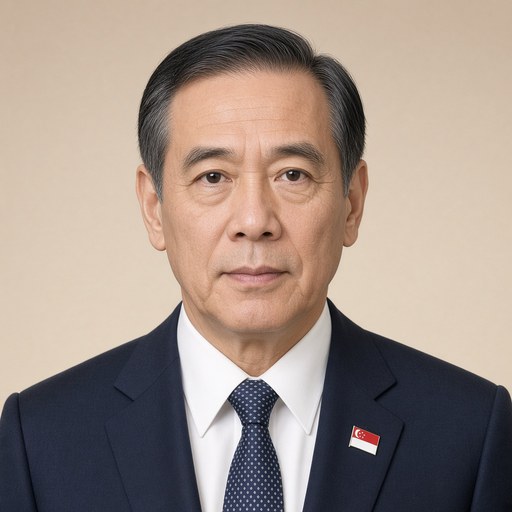
Speech by PM Lee Hsien Loong on the Report of the Committee of Privileges
 Lee Hsien Loong · Prime Minister of Singapore
- Context
- Lee addressed Singapore's Parliament on February 15, 2022, debating the Committee of Privileges report and broader principles of democratic governance and parliamentary integrity.
- Main themes
- Parliamentary democracy and norms, integrity and values in politics, Committee of Privileges report, role of Parliament, public trust in institutions, accountability of MPs, Workers' Party conduct, democratic governance in Singapore, founding ideals and generational change, norms of parliamentary conduct
- Duration
- ~143 min
- Words
- 17,099
- Sentences
- 936
- Readability
- 53
- Grade
- 10.1
- Syntax
- 2.98
- Vocabulary
- 2.20
Translated from Multiple languages
The broad sphere of national life a sentence belongs to. Every sentence has an Arena, so it is the denominator the other indices are read against.
Other936 sentences in 312 paragraphs
Mr Speaker Sir,
According to the Order Paper, we are debating what actions Parliament should take, having received the report of the Committee of Privileges (CoP).
But as the Leader of the House told us just now, the broader issue before us is how democracy should work in Singapore. What are the institutions, the norms, the values, that are essential for our democratic system to function properly? How do we apply these general principles to specific cases, like the one before us now, so as to protect these institutions, norms, and values? And how can we secure our democracy for the future, so that it can long deliver happiness, prosperity, and progress for our nation? These are the three more fundamental questions that I wish to discuss today.
Bedrock of State Institutions
The quality of a country’s democracy hinges on its people’s values: what they judge to be right or wrong, what they deem important, the causes they espouse, the ideals they embrace. Whichever example you look at, at whatever point in history, you will find that good and functioning democracies have clear, strong norms. These norms are upheld both by the governed and those who govern them, or those who aspire to govern them one day. That is how healthy democratic systems can elect good, incorruptible people with the right values, and drive a virtuous cycle where good democracy begets good governance, and good governance begets good politics.
This cycle must be underpinned and sustained by strong institutions. Parliament sits at the apex of our system of democracy. It is where the most important matters of state are discussed; laws are enacted; supplies of money are voted, with the Government setting the direction and proposing policies, while answering to the public through Parliament, and the Opposition holding the Government to account, while also being a government-in-waiting should the ruling party lose the support of the people. To fulfil its vital role, Parliament must be respected, and its members, processes and proceedings must be trusted.
Clear norms and incorruptible values are essential to protect the dignity and standing of Parliament. The system cannot work if the standing of Parliament is called into question. This is why we need to set the right norms of conduct among Parliamentarians, and guard them carefully. Tell the truth always, and do the right thing by Singapore, even when it is hard or awkward – in fact especially when it is hard or awkward. If something goes wrong, or something wrong has been done, own up and take responsibility – do not hide, dodge, or spin further lies, to obfuscate and cover up the original fib. The right norms can only be upheld by people with the right values because norms are not merely social conventions that people comply with for appearance’s sake. They have to be expressions of internal values that people believe in and hold dear.
MPs must be people with integrity at their core, who speak and act in an upright manner, always putting duty before self, and country before party. And our highest duty – our ultimate loyalty – is not to our party, but to Singapore. That is why when taking office, MPs swear “to bear true faith and allegiance to the Republic of Singapore”. In fact, this applies to everyone engaged in Singapore politics, MP or not. As Workers’ Party (WP) cadre Ms Loh Pei Ying, who was Mr Pritam Singh’s former assistant, told the Committee: “It pains me greatly, but to me, beyond anything else, it’s important to be truthful to my country”. I believe every member of this House will agree with her.
Our democratic system also depends on the people of Singapore – voters – endorsing, insisting on and backing the same norms and values. So, they can discern for themselves – as Ms Loh did – when something is wrong, and hold accountable those in power, or aspiring to power, when their actions fall short of these high standards. That is how a democracy can function properly.
Public Trust
Inculcating voters and their leaders with the right values is the work of decades. It takes unremitting effort and passion, and it does not always succeed.
Most countries are founded and start off on the basis of high ideals and noble values. But more often than not, beyond the founding leaders and the pioneer generation, over decades and generations, gradually things change. Things start off with passionate intensity. The leaders, who fought for and won independence, are often exceptional individuals of great courage, immense culture, and outstanding ability. They came through the crucible of fire and emerged as leaders of men and nations. They are the David Ben-Gurions, the Jawaharlal Nehrus, and we have our own too. Imbued with enormous personal prestige, they strive to meet the high expectations of their peoples to build a brave new world, and shape a new future for their peoples, and for their countries. But beyond that initial fervour, succeeding generations often find it hard to sustain this momentum and drive. They start out as healthy democracies, with idealism and zeal. But over time, the tone of the society changes. All too easily – a slip here, a blind eye there, a fudge, a trim – and gradually things go downhill. The texture of politics changes, respect for politicians declines. After a while, the electorate comes to think this is the norm, and you cannot expect better. So, standards get debased, trust is eroded, and the country declines further.
Many political systems today would be quite unrecognisable to their founding leaders. Ben-Gurion’s Israel has morphed into one which can barely form a government, despite four general elections in two years. Meanwhile, a stream of senior politicians and officials in Israel face a litany of criminal charges, some have gone to jail. While Nehru’s India has become one where, according to media reports, almost half the MPs in the Lok Sabha have criminal charges pending against them, including charges of rape and murder. Though it is also said that many of these allegations are politically motivated.
What is to prevent Singapore from going down the same road? Nothing. We are not intrinsically smarter or more virtuous than other countries. Modern Singapore does not come born with a fail-safe mechanism.
Our founding fathers did their best to build strong foundations and institutions. Even after the Barisan Sosialis, which was then the main opposition party, decided to vacate its seats in Parliament in 1966 and left the field entirely to the PAP, our founding fathers maintained our Parliamentary democracy and multi-party system. As Mr Lee Kuan Yew once explained, at that time, with the PAP completely dominant, he could have changed the Constitution and made this a one-party state. But he deliberately chose not to, because he knew that without the need to contest and win elections, the governing party would over time become complacent and flabby, and that would be disastrous for Singapore.
So the founding fathers took the more robust way. They kept politics contestable. They built up institutions – Parliament, the judiciary, the civil service, the police and armed forces, and later the elected President and the Council of Presidential Advisors – to enable Singapore to operate on a more resilient basis, not dependent on a few key people pulling all the levers, pushing all the buttons, making everything work. Still, to operate these institutions you need good people, and they needed to recruit, train and deploy ministers, MPs, judges, civil servants, experts in many fields. People of ability and commitment, with a sense of public service, and above all with honesty and integrity, whom Singaporeans could rely upon to do their duty, put Singapore first, and make this country succeed. And that is how the system we have today came to be.
It is incumbent on all of us – each succeeding generation – to protect and build upon this system that we have inherited. This requires us to uphold integrity, enforce rules and standards, apply the same rules equally to everyone, make sure nobody is above the law. If we can do that – consistently, persistently, unflinchingly – then we have a shot at making things work. People can trust our leaders, our systems, and our institutions. Our democracy can mature, deepen and grow more resilient, as both the governed and the governing embrace and express the right norms and values. Singapore can continue to flourish. But if we allow ourselves to slacken – loosen standards here, just a bit; overlook a lie there, just this time – the virtuous cycle will stutter and start to fail.
What is the key factor that keeps this virtuous cycle going, that keeps Singapore on the up and not on the down? It is Trust. On his 100th birthday, former US Secretary of State George Shultz reflected on this. This was a year and a bit ago, December 2020, he wrote an op-ed upon reaching 100 years old and he said it one of the most important lessons in his long life, that: “Trust is the coin of the realm”. “When trust was in the room,” he wrote, “good things happened. When trust was not in the room, good things did not happen. Everything else is details.”
We saw how this worked in the COVID-19 pandemic. Trust was a key factor why some countries did better than others. I have been saying this for two years but recently there was a study published in The Lancet, a British medical journal, which confirmed this, studied multiple countries and found that countries with high levels of trust and together with low corruption saw lower infection rates and higher vaccine coverage. Because the people’s trust in government, and their trust in each other, made much more difference to the outcome even more than the resources spent on healthcare, and even whether they had a universal healthcare system or not, what mattered most was ‘did they trust each other? Did they trust their leaders?’ Singapore is fortunate to be one of these high-trust societies. We have tried to build upon it during the pandemic, but it is something that we have today because we have nurtured it for decades and built it up patiently, assiduously, step-by-step, never allowing it to be eroded, and therefore, having this with us when we go into battle – an enormous asset.
The opposite happened in other countries, for example in the US and the UK. In the US, trust in the political system has all but broken down. Three-quarters of Republican voters have been made to believe the last presidential election in 2020 was stolen, that Mr Biden is not a legitimate President and Mr Trump should be the President today. How do you uphold a system, when a large segment of the population is convinced the elected government is illegitimate? Every issue is politicised; government becomes gridlocked; the country suffers. That is the key reason why many Americans refuse to be vaccinated, or to wear masks; why they revolt against measures to keep themselves safe; and why they have suffered so many COVID-19 deaths. Or look at the ongoing uproar in Britain about the “Partygate” scandal, in Westminster, the “Mother of Parliaments”, no less. The scandal has been attributed to “failures of leadership and judgment” in an official government report. By ignoring its own rules, the current UK government has caused a severe breakdown of trust, and lost credibility in its COVID-19 controls.
Singapore may be a high-trust society today, but nothing guarantees that we will always remain one. It is essential that we steadfastly maintain our high standards, ensure that we have leaders who embody the right values, call out wrongs when wrongs are done, mete out punishment when punishment is due, preserve the sanctity of our institutions, never take the public trust for granted, and never allow lies, half-truths and falsehoods to become the accepted norm in politics.
CoP
That is what is at stake as we deliberate Parliament’s response to the Committee of Privileges report. Ms Raeesah Khan lied in Parliament – twice on 3 Aug last year, and a third time when questioned two months later on 4 Oct. Subsequently, she admitted to lying to Parliament. To deal with this breach of Parliamentary privilege, we convened the CoP. Ms Khan was called up, as were other witnesses. The CoP deliberated extensively, before reaching a reasoned conclusion: that Ms Khan was guilty, and should be fined for each occasion she lied. I hope all Members can agree with these findings and the penalty to be imposed on Ms Khan.
But in the process of the CoP’s deliberations, two other significant issues arose. The CoP has drawn them to Parliament’s attention and suggested to Parliament how to deal with them. First, whether the three WP leaders – Mr Pritam Singh, Mr Faisal Manap and Ms Sylvia Lim – had instructed Ms Khan to continue with her lie in Parliament. If they did, this is surely as serious or more serious a misconduct as Ms Khan speaking an untruth in Parliament. Parliament will need to deal with this, but only after we have cleared the second, even graver matter. This graver matter is, as the Leader explained, whether after having taken solemn oaths to tell the truth, the three WP leaders told untruths to the CoP, in order to cover up their instructions to Ms Khan to continue lying. It became clear to the CoP that there were striking contradictions between what the three MPs claimed to the Committee were their honourable intentions, and the hard evidence of what they actually did, or very often, failed to do. And there were serious inconsistencies even between the accounts of the WP leaders.
Being untruthful under oath is no small matter. It means lying, despite solemnly affirming you will tell the truth. In this case, not once, not twice but repeatedly, over many hours of extensive questioning, and on several days. The CoP’s assessment is that these untruths were not accidental or incidental errors, but deliberate, premeditated acts, done with a definite intent to mislead and to deceive. They are not just breaches of Parliamentary privilege, but if proven in court, they amount to perjury – lying under oath. And perjury is a serious criminal offence.
So, there are two distinct problems. One, whether the three MPs instructed Ms Khan to lie; and two, whether the three MPs themselves lied under oath. Both, if established, reflect very badly on the WP leaders, and in particular, on the Leader of the Opposition. Both issues, if not dealt with properly, will dishonour Parliament, and bring this august institution into disrepute. Some ask: “Wasn’t Ms Raeesah Khan the one who lied? Why are the WP leaders being treated more harshly?”
As the Leader of the House noted just now, if the Committee is right, then Mr Singh and his fellow WP leaders themselves lied and presented untruths to the CoP. They lied under oath to protect themselves, to cover up their role, and to push the blame solely onto Ms Khan, claiming that she and other witnesses, like Ms Loh, had lied to the CoP. This is indeed more serious than what Ms Khan did, if it is so. By lying under oath, they sought to frustrate the CoP process. They displayed the same kind of misconduct that the CoP was set up to address. They betrayed the trust reposed in them as MPs – not least Mr Singh, the Leader of the Opposition. This, I hope Members appreciate, if true, is a very grave matter.
So, MPs must decide what Parliament will now do about this. Can we pretend nothing happened? Or if that is too much to stomach, given the strong evidence laid out by the CoP, perhaps we lower our standards just a little, note that untruths were told, but argue that it was after all not so serious a lie, and no harm was done?
If we do either of these things, we too would become complicit in dishonouring and demeaning Parliament. We must take the transgression seriously, and act on it. And I am glad that is the conclusion the CoP has come to and recommended to the House.
What alternative choices did the CoP have? It could have recommended to Parliament to administer a token slap on the wrist. But that would show that we were taking a very serious matter rather lightly. Worse, by lowering our norms, we would be telling Singaporeans that it is really not so bad for elected leaders to lie. Alternatively, the CoP could have recommended that Parliament itself metes out an appropriately heavy penalty. This is something that Parliament has the power to do. But had the CoP recommended that, and Parliament decided on the penalty itself, the Opposition would surely have cried foul, and accused the PAP of using its majority to persecute the Opposition. In fact, they are already insinuating this, as a smokescreen to obscure the real issue – that the WP had lied while under solemn oath.
I believe therefore, that what the CoP recommends is thus the best way forward. Since a criminal offence appears to have been committed, let Parliament refer the matter to the Public Prosecutor. Let the Public Prosecutor consider the evidence afresh, let the system work. If charges are filed, Mr Pritam Singh and also Mr Faisal Manap can defend themselves in court. The Court will have to be satisfied that their guilt has been established beyond reasonable doubt, and if they are innocent, they have nothing to fear.
I commend this course of action to the House. And if I were Mr Singh, I would vote in favour of both motions. Fine Ms Khan, because she is guilty beyond doubt. In fact, Mr Singh’s own party member Mr Dennis Tan, who was on the CoP, thinks she should be fined more heavily for the second offence. And if Mr Singh maintains that he and his fellow WP leaders have done nothing wrong, he should also vote in favour of referring his own case, and that of Mr Faisal Manap, to the Public Prosecutor. Indeed, he should demand a court trial, in order to have the full opportunity to defend himself, vindicate his reputation, and clear his name. That is what I would do if I were Mr Singh.
Regrettably, pro-Workers’ Party voices on the social media have taken quite a different tack. Before the matter can be conclusively determined, if necessary in court, they are doing their best to confuse the issues and rouse sympathy. They are asking the public to clear their names of the three MPs, suggesting that referring their case to the Public Prosecutor is political persecution. What they are really saying is this: Don’t look too carefully at what Mr Singh did, just remember who he is: He is the Opposition that you voted for; He is the Leader of the Opposition. By virtue of his position, he should not be referred to the Public Prosecutor; and any action against him must, by definition, be politically motivated; because who he is is more important than what he has done – even if he may have committed a crime.
Some people may be taken in, and sympathise with this story. They say, why not just let the matter rest? Can’t we find a compromise solution? After all, it would be easier for the government not to have to pursue this matter against the three MPs. We have a full enough agenda. But, Mr Speaker, as long as the PAP is the Government, we will not shy away from doing whatever is necessary to uphold the right norms in this House, and to imbue Singaporeans and their leaders with the values critical to sustain trust in the system, and critical to our success.
Mr Singh succeeded Mr Low Thia Kiang as Secretary General of the Workers’ Party. Mr Low served for a very long time – 30 years as an MP, 17 years as party leader. He sat opposite me, where Mr Singh now sits. Mr Low was a formidable political opponent, but he was a patriotic Singaporean. He set a different tone for the WP. He said he hoped the WP could help to build a First-World Parliament for Singapore. He must be saddened that, instead, this is what his successor has done.
Because what has happened is a betrayal of what WP claimed it stood for. But judging by Mr Low’s public comments, he is confident the party can ride this out. And it need not be a setback for our democracy either, provided we hold Mr Singh and his colleagues accountable for dishonouring the standards of this House, and also for possibly breaking the law.
Future of Singapore’s Democracy
Mr Speaker, we are all engaged in the same project – to build up Singapore’s democracy and create a political system that will serve Singaporeans well for many years to come. And to do that, we must uphold the right norms and reinforce the right values.
I know Singaporeans want to see more political contestation, and I accept that. I expect that this is the way Singapore will go, in the longer term. That is how every parliamentary democracy evolves. And it was precisely because I recognised this, that on election night in 2020, after the WP won a second GRC in Sengkang, I offered to make Mr Singh the Leader of the Opposition, and equip him with the resources and support to play his role. That is the way a responsible Government can help a credible, responsible Opposition to emerge, and contribute to the maturing of our political system. But the office of the Leader of the Opposition carries certain responsibilities – setting the tone for opposition MPs, enforcing standards of conduct on his own party, and above all, maintaining his own integrity and keeping himself beyond reproach. The Leader of the Opposition does not have a blank cheque.
Mr Speaker, integrity is the linchpin of democracy. The stakes of today’s debate might have been lower if the Opposition were a negligible presence, as they were from 1966 until the 1980s. The PAP was overwhelmingly dominant, the public generally had low expectations of opposition parties and politicians, the tone of the country and its governance was set by the PAP, and the high standards that the PAP imposed on itself. But with Singapore heading towards a more contested landscape, the competence and honesty of the Opposition is no longer an inconsequential matter. The question of “what are the right values and how should we uphold them?” becomes of fundamental importance for both the Opposition and the governing party.
Every election henceforth would be about who wins the mandate to run this country. If the system is working properly, the governing party will be re-elected so long as it remains honest, competent, and trusted. If the governing party falls short, and Singaporeans come to deem an opposition party more honest and incorruptible, more competent, and more trustworthy, then the governing party should be voted out, and that opposition party should be voted in, to form the next government. We cannot assume that the PAP will always continue in government. Nor can we assume that the WP, or some other opposition party, or any other opposition party, will always stay in the opposition.
I do not know when, or how, there will be a change of governing party in Singapore one day. My job as party leader is to make sure the PAP governs well to the best of its ability, so that it retains the mandate of the people for as many elections as possible. But my duty as the leader of the country is also to maximise the chances that whichever party wins future elections, it will uphold and be held to the same high standards of proper conduct and honesty as the PAP, so that our democratic system can continue to operate properly, whichever party is in charge, and would not go down the drain because a small island city-state like Singapore – the only one in the world like this – needs a strong, effective and good Government, whoever leads it.
With our lives and future at stake, everyone participating in the system must be held to the same standards. There can be no excuses, no double standards, and no pardoning of inexcusable behaviour, just because the offending party portrays itself as the underdog.
Mr John Major, the former British Prime Minister recently made a speech, triggered by Partygate, I am sure, lamenting the state of British politics today. It was a cri de coeur, a cry from the heart. Let me read you a few excerpts: “There has been cynicism about politics from the dawn of time. We are told that politicians are ‘all the same’, and this untruth conditions electors to condone lies as though they were the accepted currency of public life.” “But politicians are not ‘all the same’. And lies are just not acceptable.” “To imply otherwise is to cheapen public life, and slander the vast majority of elected politicians who do not knowingly mislead.” “But some do – and their behaviour is corrosive. This tarnishes both politics and the reputation of Parliament. It is a dangerous trend.” “If lies become commonplace, truth ceases to exist. What and who, then, can we believe? The risk is … nothing and no-one. And where are we then?” “If trust in the word of our leaders in Parliament is lost – then trust in government will be lost too.”
John Major’s is a Western view, but in Eastern society too, norms and values are crucial, in fact even more than in Western philosophy, because Western philosophy says checks and balances, but Eastern philosophy says your virtues, your moral standing – that is what give you the right to govern. In Confucian thought, there are four social guidelines (四维) that hold a state together: rituals, righteousness, probity, and shame (礼义廉耻). Probity, or desisting from corruption, is about upright behaviour; it is a norm that can be enforced using laws. But shame, a reaction to wrongdoing, is a moral disposition; it is about one’s own sense of right and wrong, whether we know we have done the right thing, or we know we have fallen short, even when nobody said so. That has to come from within ourselves, from our own values, and our own consciences. Absent that sense of shame, people may comply with laws for fear of punishment, but they will lack the moral compass to do the right thing simply because it is the right thing to do, and to take responsibility when they have fallen short of the standards expected of them.
What I personally find most disappointing in the WP narrative and in their response, including in this House today, is the complete absence of any admission that the three MPs have done anything wrong. There is no contrition.
Mr Speaker Sir, whether you take a Western or Eastern view, if lack of shame becomes the public norm, our political system will break down, progressively and irreversibly. The public will mistrust not only individual leaders, or particular political parties, but the whole political system. And this has happened too often elsewhere.
If that happens, what do you do? What can you do? How can democracy function when there is no one we can trust to put in charge? How do you put Humpty Dumpty together again? How do you restart from zero? Press reset? A democracy not founded on integrity stands on shaky ground, and will sooner or later totter. If instead of trust being “the coin of the realm”, as George Shultz puts it, lies become “the accepted currency of public life”, as John Major said, all the sound and fury of contestation and debate will signify nothing good for the country.
As Singapore politics grows more competitive, we must make sure that the competition is honest, impartial, and above-board. Where the system runs properly, and our institutions remain sacred and respected by all. Where good people work together constructively to serve Singaporeans, wherever they stand on the political spectrum. And, most basic of all, where Singaporeans can trust those who represent them to conduct themselves honestly and honourably, and act on behalf of the public, and of Singapore.
Closing
Mr Speaker, the CoP report is long and detailed, but the core issues are few and stark. We have scrutinised Ms Khan’s actions, and its rights and wrongs. She has admitted her wrongdoings, and will be punished appropriately for them. We thought the matter could be closed off straightforwardly. But there turned out to be a much larger problem. Online, people call this Raeesah-Gate, after Watergate. And just like in the original Watergate affair, while investigating Ms Khan’s transgressions, the CoP unexpectedly stumbled upon a cover-up by WP leaders, even more serious than the original offence. The CoP did not expect this. But now with the findings before us, it is our responsibility, Parliament’s responsibility, for the MPs to take the necessary and appropriate course of action.
Mr Speaker Sir, trust is crucial for democracy to work well. Being truthful is fundamental to establishing trust. Honesty is non-negotiable. If you tell lies, how can the public trust you? If someone in a position of responsibility tells lies, and visibly gets away with it, how can the public trust the system? And if Parliament condones lying among its own members, how can Singaporeans trust the institution of Parliament? If we let flagrant, egregious transgressions pass, it will erode trust in our leaders, respect for Parliament, and support for our whole political system, and Singapore will be heading for trouble.
As the longest serving Member of this House, I feel a greater responsibility for this than most. When I first entered this House 37 years ago, Mr Lee Kuan Yew, Mr S Rajaratnam, Dr Toh Chin Chye, Mr Ong Pang Boon, Mr E.W. Barker and Mr Jek Yeun Thong were still Members. Six of the 10 who signed the Separation Agreement on 9 August 1965. I have witnessed first-hand how the founding generation built up this place, handed it to us in good shape. For me, this is a sacred trust. And it should be a sacred trust too, for every MP. We must all never fail to serve Singaporeans to the best of our ability, responsibly and honestly, and uphold this institution of Parliament, as the foundation of a robust and healthy democracy.
I call on all Members in this House, old and new, government and opposition, elected and nominated, to weigh the facts, vote with your conscience, and join me to do your duty to Singapore.
Mr Speaker Sir, I support the motions.
We must all never fail to serve Singaporeans to the best of our ability, responsibly and honestly, and uphold this institution of Parliament, as the foundation of a robust and healthy democracy.
PM Lee Hsien Loong
Efforts to Preserve Institutions, Parliamentary Authority
Integrity among political figures is essential to uphold the democracy desired for this country, said Prime Minister Mr Lee Hsien Loong, during his speech in Parliament yesterday in the debate on the report of the Committee of Privileges (CoP). The following is an excerpt from that speech.
Mr Speaker,
We are debating what actions Parliament should take, after receiving the report from the Committee of Privileges (CoP).
However, as the Speaker has informed us, the broader issue is the function of democracy in Singapore.
What are the institutions, norms, and values that are important for a democratic system to function well?
How do we apply these general principles to specific cases, such as the one we are facing now, to protect the institutions, norms, and values? And how can we safeguard democracy in the future, so that it can create happiness, prosperity, and progress for our country? These are the three fundamental questions I would like to discuss today.
Foundation of State Institutions
The quality of democracy in a country depends on the values of its people: what they consider right or wrong, what they deem important, the struggles they support, the aspirations they hold.
In any example seen, at any moment in history, you will find that a well-functioning democracy has clear, strong norms. These norms are upheld by both the governed and the governors, or those who aspire to govern one day.
This is how a democratic system can select good individuals who are not negatively influenced, who adhere to good values and drive a virtuous cycle where good democracy produces good governance, and good governance will produce good politics.
This cycle must be maintained through strong institutions. Parliament is at the pinnacle of this democratic system.
It is the space where important national issues are discussed, laws are enacted, the use of public funds is debated, with the government setting the direction and proposing policies, while answering the public's questions through Parliament, with the Opposition holding the Government accountable, which also becomes the government if the current ruling party loses public support.
To play its important role, Parliament and its members must be respected, and its processes and proceedings must be trusted.
Clear norms are essential to protect the dignity and position of Parliament.
This system cannot function if the position of Parliament is questioned.
That is why we need to establish the right norms of conduct among Members of Parliament, and uphold them well. Always tell the truth, and do the right thing from Singapore's perspective, even if it is difficult or awkward - especially if it is difficult or awkward. If something undesirable occurs or is done, it must be acknowledged responsibly - do not hide, evade, or twist to confuse or cover up earlier lies.
Good norms can only be upheld by individuals who possess good values because norms are not merely social conventions that people adhere to just for appearances. They should be an expression of the internal values that are believed and held by individuals.
Members of Parliament (MPs) must consist of individuals with integrity, who speak and act rightly, always prioritizing their duty over themselves, and the country before the party. And our foremost duty - our primary loyalty - is not to the party but to Singapore.
That is why MPs pledge "to bear true faith and allegiance to the Republic of Singapore."
In fact, this is stipulated for all involved in Singapore politics, whether they are MPs or not.
Workers' Party (WP) staff, Ms Loh Pei Ying, who was a former personal assistant to Mr Pritam Singh, told the Committee: "It is a sad thing, but for me, it is important to be honest to my country." I believe all Members of Parliament agree with her.
Our democratic system also relies on Singaporeans - the voters - who support, advocate, and uphold the same norms and values. So they can discern for themselves - as Ms Loh has done - when something is amiss, and hold those in power, or those aspiring to power, accountable when their actions do not meet those high standards. This is how democracy can function well.
Public Trust
Instilling good values in both voters and leaders has been an effort spanning decades.
It requires significant effort and interest, and it does not always end in success.
Most countries are founded and begin on the basis of high aspirations and noble values. However, typically, unlike the founding leaders and the pioneering generation, over decades and generations, circumstances change gradually.
It usually starts with high intensity. Leaders who fought for and successfully achieved independence are special individuals with high courage, their own culture, and extraordinary capabilities. They have faced great challenges and emerged as leaders of the citizens and the nation.
They are like David Ben Gurion, Jawaharlal Nehru, and we also have our own leaders. With high prestige, they strive to meet public expectations to build a new world and shape a new future for their citizens, and for the country.
However, after that initial spirit, the next generation usually finds it more difficult to maintain that momentum and spirit. It starts as a healthy democracy, with idealism and enthusiasm.
But over time, the tone of society changes. Minor faults can easily affect that state. Political forms change, and respect for politicians diminishes. After that, voters will think that this is the norm and they cannot expect anything better. As a result, standards become lower, trust erodes, and the country deteriorates.
Many political systems today may no longer be recognizable to their founding leaders. Israel, governed by Ben Gurion, has transformed into a country that can hardly form a government, despite having four general elections in two years.
Meanwhile, a group of politicians and senior officials in Israel face various criminal charges, some of whom are imprisoned. The country of India, governed by Nehru, has become a country where, according to media reports, nearly half of the members of parliament in the Lok Sabha have faced criminal charges including charges of murder and rape.
There are also many allegations that these charges are politically motivated.
What can prevent Singapore from falling into the same situation? Nothing.
We are not smarter or better than other countries. Modern Singapore was not born with mechanisms that ensure it survives failures.
Our founding leaders did their best to develop a strong foundation and institutions. Even after the Socialist Front, which later became the main opposition party, decided to vacate its seats in Parliament in 1966 and hand over completely to the PAP, the founding leaders sought to maintain parliamentary democracy and a multi-party system.
As Mr Lee Kuan Yew explained earlier, at that time, with the PAP being dominant, he could have amended the Constitution and made Singapore a one-party state. But he deliberately chose not to do so, because he knew that without the need to compete and win elections, the ruling party would become complacent over time, and this would harm Singapore.
For that, the founding leaders chose a more robust way. They ensured that there was a need to compete in politics.
They developed institutions - Parliament, the judiciary, the civil service, the police, and the military, and later the President elected by the Presidential Advisory Council - to enable Singapore to operate more resiliently, not relying on a few powerful individuals who seek to control everything.
However, to ensure that these institutions operate well, good individuals are needed, and they must select and train ministers, MPs, judges, civil service members, and experts in various fields.
Individuals with the ability, commitment, and spirit to serve and do all that honestly and with integrity, so that Singaporeans can place their hopes in them to perform their duties well, prioritize Singapore, and ensure its success. And this is how our existing system was established.
Efforts to Protect and Build the System We Inherit
It is our duty - every generation to come - to protect and build the system that we have inherited. This requires us to uphold integrity, enforce rules and standards, apply the same rules equally to everyone, to ensure that no one is above the law. If we can do this - consistently, diligently, without wavering - then we have a chance to make something work.
This will enhance public confidence in our leaders, our system, and our institutions. Our democracy will mature, deepen, and grow more resilient, when both the governed and the governing embrace and express the right norms and values. Singapore can continue to thrive.
But if we allow ourselves to slacken - loosening standards here; overlooking lies there, just this once - this virtuous cycle will falter and begin to fail.
What is the key factor that maintains this virtuous cycle, placing Singapore above and not below? It is Trust. On its 100th birthday, former U.S. Secretary of State George Shultz reflected on this.
This was over a year ago, in December 2020, he wrote an article upon reaching the age of 100 and stated that among one of the most important lessons in his longevity was: "Trust is the coin of the realm." "When trust is in a space," he wrote, "good things happen. When trust is not in that space, good things do not happen. The rest is just detail."
We saw how this played out during the Covid-19 pandemic.
Trust is the main factor why some countries perform better than others. I have been saying this for two years, but recently there was a study published in The Lancet, a British medical journal, that confirmed it, examining several countries and finding that countries with high levels of trust and low corruption rates had lower infection rates and higher vaccination coverage.
Because of the trust of the people in the government, and in each other, the outcomes are more than the resources spent on healthcare, and whether they have universal healthcare systems or not, what matters most is 'do they trust each other?'
Trust in Leaders
Do they trust their leaders?
Singapore is fortunate to be one of these high-trust societies. We have tried to build it during the pandemic, but it is something we have today because we have nurtured it over decades and built it patiently, diligently, step by step, never allowing it to erode, and therefore, having this trust when we are at war - is a tremendous asset.
The opposite is true in other countries, for example, in the US and the UK.
In the US, trust in the political system has been shattered. Three-quarters of Republican voters believe that the last presidential election in 2020 was stolen, that Mr. Biden is not the legitimate President and that Mr. Trump should be President today.
How do you uphold a system when a large portion of the population believes that the elected government is illegitimate? Every issue is politicized; the government becomes paralyzed; the country suffers.
That is the main reason why many Americans refuse to get vaccinated, or wear masks; why they rebel against measures to keep themselves safe; and why they have experienced so many Covid-19 deaths. Or look at the ongoing uproar in Britain over the "Partygate" scandal, in Westminster, which is considered the "Mother of Parliaments."
The scandal has been linked to "failures of leadership and judgment" in an official government report. By ignoring its own rules, the current UK government has caused severe damage to trust, and lost credibility in its Covid-19 control.
Perhaps Singapore is a high-trust society today, but this does not guarantee that we will always remain so.
It is crucial for us to steadfastly maintain our high standards, ensuring we have leaders who practice the right values, call out wrongdoings when they occur, impose penalties when punishment is warranted, uphold the sanctity of our institutions, do not take lightly the trust placed in them by the public, and never allow lies, half-truths, and falsehoods to become the accepted norm in politics.
Committee of Privileges (COP)
That is what is at stake as we discuss Parliament's response to the report of the Committee of Privileges. Ms. Raeesah Khan lied in Parliament - twice on August 3 last year, and a third time when questioned two months later on October 4. Then, she admitted to lying to Parliament.
To address this breach of Parliament, we convened a COP. Ms. Khan was called, along with other witnesses. The COP discussed extensively, before reaching a reasonable conclusion: that Ms. Khan was guilty, and should be penalized for each time she lied. I hope all Members can agree with this finding and the penalty to be imposed on Ms. Khan.
But in the process of the COP discussions, two other important issues arose. The COP has brought Parliament's attention to these issues and suggested ways for Parliament to address them.
First, whether the three leaders of the Workers' Party (WP) - Mr. Pritam Singh, Mr. Faisal Manap, and Ms. Sylvia Lim - directed Ms. Khan to continue her lies in Parliament. If they did so, this would certainly be misconduct as serious or more serious than Ms. Khan's false statements in Parliament.
Parliament needs to address this matter, but only after we resolve the second, more serious issue. This more serious issue, as explained by the Leader, is whether the three leaders of the Workers' Party (WP) told untruths to the COP after taking an oath to tell the truth, to cover up their instructions to Ms. Khan to continue lying.
It became clear to the COP that there was a significant contradiction between the claims of the three Members of Parliament to the Committee to prove their noble intentions, and the strong evidence of what they actually did, or often, failed to do. And there is a serious contradiction between the explanations of the leaders of the Workers' Party (WP).
Not speaking the truth after taking an oath is not a trivial matter. It means lying, even after earnestly asserting that you will tell the truth. In this case, not once, not twice but repeatedly, for hours of in-depth questioning, and over several days.
The COP's assessment is that these lies are not unintentional mistakes or side issues, but deliberate, planned actions, done with a clear intent to mislead and deceive.
They not only violated Parliamentary Privilege, but if proven in court, it is equivalent to perjury - lying under oath. And perjury is a serious criminal offense.
Two Distinct Issues
So, there are two distinct issues.
One, whether the three Members of Parliament directed Ms. Khan to lie; and two, whether the three Members of Parliament themselves lied under oath. Both, if raised, reflect poorly on the leaders of the Workers' Party (WP), and specifically, on the Leader of the Opposition.
Both issues, if not properly addressed, will tarnish the reputation of Parliament, and undermine the standing of this great institution.
Some ask: "Isn't it Ms. Raeesah Khan who lied? Why are the leaders of the Workers' Party (WP) being treated more harshly?"
As the Speaker has stated, if the Committee is correct, then Mr. Singh and his fellow leaders of the Workers' Party (WP) themselves lied and presented untruths to the COP.
They lied under oath to protect themselves, to cover up their roles, and to shift the blame solely onto Ms. Khan, claiming that she and other witnesses, like Ms. Loh, had lied to the COP. This is indeed more serious than what Ms. Khan did, if true.
By lying under oath, they sought to undermine the COP process. They committed the same misconduct that the COP was established to address. They betrayed the trust placed in them as Members of Parliament - not least Mr. Singh, the Leader of the Opposition. This, I hope Members appreciate, if true, is a very serious matter.
So, Members of Parliament must decide what Parliament will do about this. Can we pretend that nothing has happened? Or if that is too heavy to bear, based on the strong evidence presented by the COP, perhaps we lower our standards a little, take note that untruths have been told, but argue that it is not actually such a serious lie, and does not endanger anything?
If we do either of these things, we will also be complicit in undermining the dignity and lowering the stature of Parliament. We must take these breaches seriously, and act upon them.
And I am pleased that this is the conclusion that has been reached by the COP and recommended to the House.
Options for the COP?
What alternative options does the COP have? It could recommend to Parliament to impose a light penalty. But that would suggest that we are taking something very serious rather lightly.
Moreover, by lowering our norms, it is as if we are telling the people of Singapore that it is not so bad for elected leaders to lie.
Alternatively, the COP could recommend that Parliament itself impose an appropriate penalty. This is something that Parliament has the authority to do.
But should the COP recommend that, and Parliament decides the penalty itself, the Opposition will surely vehemently reject it, and accuse the PAP of using its majority to persecute the Opposition. In fact, they have already made this claim, as a way to obscure the real issue - that the Workers' Party (WP) has lied while under oath.
Therefore, I believe that what the COP has suggested is the best way forward.
Since it appears that a criminal offense has been committed, let Parliament refer the matter to the Public Prosecutor. Let the Public Prosecutor reconsider the evidence, let the system work. If charges are filed, Mr. Pritam Singh and also Mr. Faisal Manap can defend themselves in court.
The court must be satisfied that their offenses have been proven beyond a reasonable doubt, and if they are innocent, they have nothing to fear.
What options does the COP have? It could suggest to Parliament to impose a light action or merely reprimand. But this would give the impression that we are trivializing something serious.
Worse still, lowering our norms and telling the people of Singapore that it is okay for elected leaders to lie. Alternatively, the COP could also suggest that Parliament impose a heavy fine.
This is indeed within the jurisdiction of Parliament. But should the COP suggest this and Parliament then decides on the fine itself, the Opposition will certainly condemn and accuse the PAP of using its majority power to persecute the Opposition. In fact, they have already hinted to obscure the real issue - that the WP has lied even while under oath.
However, I believe that what the COP has suggested is the best for the future. Since a criminal offense seems to have been committed, let Parliament refer the matter to the Public Prosecutor. Let the Public Prosecutor reconsider the evidence, so that the system can function.
Can Defend in Court
If charges are brought, Mr. Pritam Singh and Mr. Faisal Manap can defend themselves in court. The court will ensure that their offenses can be proven beyond any doubt, and if they are innocent, then there is nothing to worry about.
I recommend this action to Parliament. And if I were Mr. Singh, I would vote in support of both motions. Impose a fine on Ms. Khan, for there is no doubt that she is guilty. In fact, Mr. Singh's own party member, Mr. Dennis Tan, who sits on the COP believes that Ms. Khan should be fined more heavily for her second offense. And if Mr. Singh still feels that he and his fellow WP leaders have done no wrong, he should also vote in support of the motion to refer his own case, and also Mr. Faisal Manap's, to the Public Prosecutor.
In fact, he should request a trial in court to fully have the opportunity to defend himself, rather than have his reputation tarnished and preserve his good name. That is what I would do if I were in Mr. Singh's position.
Regrettably, the voices of the Workers' Party supporters on social media have taken a different stance. Before this matter is decided, if it needs to go to court, they are earnestly trying to confuse the issue to gain sympathy. They are asking the public to clear the names of all three MPs by saying that referring their cases to the Public Prosecutor is a form of political persecution.
What they are really saying is: Don't look too closely at what Mr. Singh has done, remember who he is. He is the Opposition that you chose. He is the Leader of the Opposition.
By virtue of his position, he should not be referred to the Public Prosecutor, and any action against him could be interpreted as politically motivated; because who he is is more important than what he has done - even if he may have committed a crime.
There may be some who are influenced and sympathetic to this narrative.
Why Not Drop This Case
They say, why not just drop this case? Can't we find some compromise solution? Moreover, it would be more pleasant for the government as it would not have to pursue action against the three MPs. We have a full agenda. But, Mr. Speaker, as long as the PAP is the Government, we will not hesitate to do whatever is necessary to uphold the norms in Parliament and instill in the people of Singapore and its leaders the critical values necessary to maintain trust in the system and that are critical to our success.
Mr. Singh succeeded Mr. Low Thia Kiang as the Secretary-General of the Workers' Party. Mr. Low served for a long time - 30 years as an MP and 17 years as party leader.
He sat in front of me in the seat that Mr. Singh occupies now. Mr. Low is a capable political opponent but he is a patriotic Singaporean.
He placed the WP in a different position. He said he hoped the WP could help establish a First World Parliament for Singapore. He must certainly be saddened now to see what has been done by his successor.
Because what has happened is a betrayal of what the WP stands for. But based on the comments made by Mr. Low, he is confident that his party will be able to emerge from this crisis.
And it also does not have to be a setback for our democracy, as long as we ensure that Mr. Singh and his colleagues are held accountable for their actions that demean the Parliament and possibly violate the law.
The Future of Singapore's Democracy
Mr. Speaker, we are all dealing with the same project - to build Singapore's democracy and create a political system that can serve the people of Singapore well for many years to come. And to do this, we must uphold the right norms and strengthen them with the right values as well.
I know the people of Singapore want to see more political competition, and I accept that. I anticipate that this is the direction Singapore will head in the long term.
That is also how parliamentary democracy evolves. And precisely because I acknowledge this, on the night of the 2020 election, after the WP won its second GRC in Sengkang, I offered to appoint Mr. Singh as the Leader of the Opposition and equip him with the resources and support for him to carry out his role. This is how a responsible Government can help create a credible and responsible Opposition and contribute to the maturity of our political system.
But the position of Leader of the Opposition carries certain responsibilities - to determine the stance of the opposition MPs, to enforce the standards of their own conduct, and more importantly, to uphold their credibility and maintain their own honor. The Leader of the Opposition cannot act arbitrarily.
Mr. Speaker, credibility is like a stake for democracy. The stakes for today's debate might be lower if the presence of the Opposition is not significant, as it was from 1966 to the 1980s.
The PAP dominated completely, the public also did not have much hope for opposition parties and politicians, the pattern of governance was also determined by the PAP and the high standards practiced by the PAP.
But with Singapore moving towards a more competitive landscape, the ability and integrity of the Opposition are no longer trivial matters. The question of "what are the right values and how should we uphold them" becomes a crucial pillar for both the Opposition and the ruling party.
If the ruling party fails and the people of Singapore find the opposition party to be more honest and incorruptible, more capable and more trustworthy, then the ruling party will be ousted, and the opposition party will be elected to form a new government.
We cannot assume that the PAP will continue to govern.
Likewise, we cannot assume that the WP or other opposition parties will remain as the opposition.
Ensuring the PAP Governs as Best as Possible
I do not know when, or how, there will be a change of ruling party in Singapore one day. My duty as a party leader is to ensure that the PAP governs as best as possible, so that it retains the people's mandate for as many elections as possible.
With our lives and future at stake, everyone participating in this system must adhere to the same standards. There can be no excuses, no bias, and no forgiveness for unforgivable behavior, just because the guilty party portrays itself as the underdog.
Mr. John Major, the former Prime Minister of Britain, recently made a speech, which I am sure was triggered by Partygate, regarding the political situation in Britain today. It is a cri de coeur, a cry from the heart.
Allow me to read some excerpts: "There has been a cynical view of politics for a long time.
We are told that politicians are 'all the same', and this untruth obliges voters to accept lies as if they were currency in public life."
"But politicians are not 'all the same'. And lies cannot be accepted."
"To say otherwise is to cheapen public life, and to slander the vast majority of elected politicians who do not deliberately mislead." "But some do - and their behavior erodes. This tarnishes both politics and the reputation of Parliament. It is a dangerous trend." "If lies become commonplace, the truth no longer exists. Then what and who can we trust? The risk is … nothing and no one. And where are we now?"
"If trust in the words of our leaders in Parliament is lost - then trust in the government will also be lost."
John Major's views are from the West, but in Eastern societies as well, norms and values are important, even more so than in Western philosophy, because Western philosophy prioritizes checks and balances, but Eastern philosophy emphasizes your values and moral standing - that is what gives you the right to govern.
In Confucian thought, there are four social guidelines that unify the state: ritual, truth, honesty, and a sense of shame. Honesty or avoiding corruption is about upright behavior; it is a norm that can be enforced using the law. But a sense of shame, the reaction to wrongdoing, is a moral inclination; it is about one's own feelings of right and wrong, whether we know we have done the right thing, or we know we have failed, even if no one says so.
Our Values
It must come from within ourselves, from our own values, and our own conscience. Without that sense of shame, people may comply with the law out of fear of punishment, but they will lack the moral compass to do the right thing simply because it is the right thing to do, and to take responsibility when they fail to meet the standards expected of them.
What I personally find most disappointing in the WP narrative and in their responses, including in this House today, is the complete lack of acknowledgment that the three Members of Parliament have done something wrong. There is no remorse.
Mr. Speaker, whether you take a Western or Eastern view, if the lack of a sense of shame becomes the public norm, our political system will be progressively and irreparably damaged.
People will not trust not only individual leaders, or specific political parties, but the entire political system. And this has happened too often elsewhere.
If that happens, what do you do? What can you do? How can democracy function when there is no one we can trust to be accountable? How do you put Humpty Dumpty back together again? How do you start over from scratch? Press the reset button?
A democracy that is not based on integrity is easily shaken, and sooner or later will collapse. If, on the contrary, trust becomes "something to be valued," as George Shultz said, lies become "the accepted currency in public life," as John Major said, all that is heard and the anger seen in contests and debates will not bode well for the country.
As Singapore's politics becomes increasingly competitive, we must ensure that competition is honest, unbiased, and sincere. Where the system operates correctly, and our institutions remain pure and respected by all.
Where good people work together constructively to serve the people of Singapore, wherever they may be on the political spectrum. And, most fundamentally, where the people of Singapore can trust those who represent them to behave honestly and honorably, and act on behalf of the public, and Singapore.
Conclusion
Mr. Speaker, the COP report is lengthy and detailed, but the core issues are few and clear. We have examined the actions of Ms. Khan, as well as her rights and wrongs. She has acknowledged her mistakes, and will be punished accordingly. We think this matter can be closed. But it is clear that there is a bigger problem. Online, people are calling this Raeesah-Gate, after Watergate.
And just like in the original Watergate affair, while investigating Ms. Khan's misconduct, the COP stumbled upon a cover-up by the WP leaders, even more serious than the original wrongdoing. The COP did not anticipate this.
But now with the findings before us, it is our responsibility, the responsibility of Parliament, for Members of Parliament to take the necessary and appropriate actions.
Mr. Speaker, trust is essential for democracy to function well.
Being honest is fundamental to establishing trust. Honesty cannot be negotiated. If you lie, how can the public trust you? If someone in a position of responsibility lies, and blatantly escapes from it, how can the public trust that system?
And if Parliament allows lies among its own members, how can the people of Singapore trust the institution of Parliament? If we allow blatant and major violations to pass, it will erode trust in our leaders, respect for Parliament, and support for our entire political system, and Singapore will head towards problems.
As the longest-serving Member of the House, I feel this responsibility more acutely than most. When I first entered this House 37 years ago, Mr. Lee Kuan Yew, Mr. S. Rajaratnam, Dr. Toh Chin Chye, Mr. Ong Pang Boon, Mr. E.W. Barker, and Mr. Jek Yeun Thong were still Members.
Six of the ten who signed the Separation Agreement on August 9, 1965. I have witnessed how the founding generation built this place, handing it over to us in good condition. For me, this is a sacred trust.
And it must be a sacred trust as well, for every MP. We all cannot fail to serve the people of Singapore as best as we can, responsibly and honestly, and uphold this institution of Parliament, as the foundation of a robust and healthy democracy.
I urge all Members in this House, both old and new, government and opposition, elected and nominated, to weigh the facts, to vote with your conscience, and to join me in fulfilling your duty to Singapore.
Mr. Speaker, I support the motion.
What are the key factors that allow this virtuous cycle to continue, enabling Singapore to thrive rather than decline? That is trust. Former U.S. Secretary of State George Shultz reflected on this during his centenary celebration. In December 2020, he wrote a letter to the editor on his 100th birthday, stating that the most important lesson of his long life is: "Trust is the hard currency of nations." He wrote: "When trust exists, good things happen. When trust is gone, good things do not happen. Everything else is just a sideshow."
We witnessed this truth during the COVID-19 pandemic. Some countries managed the crisis better than others, and trust was the key factor. I have reiterated this point for over two years, but a recent study published in The Lancet, a British medical journal, confirms it. The report studied multiple countries and found that those with high levels of trust and low levels of corruption had relatively slower infection rates and higher vaccination rates. Because people trust the government and trust each other, it has a more significant impact than how many resources are invested in the healthcare system. Compared to whether a country has universal healthcare, whether people trust each other and whether they trust the government are the decisive factors. Singapore is fortunate to belong to this category of high-trust societies. We continued to strengthen mutual trust during the pandemic, but what we enjoy today is the result of decades of patience, diligence, and step-by-step progress, never allowing any erosion, which has created this tremendous asset we rely on in our fight. In other countries like the United States and the United Kingdom, the opposite has occurred. In the U.S., trust in the political system has nearly collapsed. Three-quarters of Republicans have been convinced that the results of the 2020 presidential election were stolen, that Mr. Biden is not the legitimate president, and that Mr. Trump should be the current president. When a significant portion of the populace believes that an elected government is illegitimate, how can you sustain the entire political system? Every issue has become politicized, government operations have become paralyzed, and the nation has suffered. This is also why so many Americans refuse to get vaccinated, refuse to wear masks, and resist measures aimed at protecting their safety, leading to so many infections and deaths. Or look at the ongoing "Partygate" scandal in the UK, which occurred in Westminster, the "mother of parliaments." The official investigation report attributed the scandal to "failures of leadership and judgment." By ignoring the rules they set, the current UK government has severely undermined trust and lost credibility in its pandemic response.
Singapore may be a high-trust society today, but there is no guarantee that we will continue to be so. We must steadfastly maintain high standards, ensure our leaders embody the right values, promptly point out mistakes, impose strict penalties when necessary, uphold the dignity of our system, never take the trust of the people for granted, and never allow lies, false statements, or fallacies to become accepted political norms.
Privilege Committee
This is where our debate on the Privilege Committee report in Parliament becomes a matter of survival. Ms. Raeesah Khan lied in Parliament, lying twice on August 3, and a third time when questioned two months later in October. She later admitted to lying to Parliament. To address this abuse of parliamentary privilege, we established a Privilege Committee. Ms. Khan and other witnesses were summoned to testify. The committee conducted extensive deliberations before reaching a well-considered conclusion. The conclusion is that Ms. Khan is guilty and must be fined for each instance of lying. I hope all members will agree with the findings of the investigation and the punishment for Ms. Khan.
However, during the committee's investigation, two other important issues emerged. The Privilege Committee has brought these to Parliament's attention and suggested how Parliament should handle them.
First, three leaders of the Workers' Party—Mr. Pritam Singh, Mr. Faisal Manap, and Ms. Raeesah Khan—are alleged to have incited Ms. Khan to continue lying in Parliament. If this is true, this misconduct is comparable to or worse than Ms. Khan's false statements in Parliament. Parliament must address this, but it must first clarify a second, more serious issue. That is, as articulated by the Leader of the House, the three Workers' Party leaders made false statements to the Privilege Committee after swearing to tell the truth, in order to cover up their instructions to Ms. Khan to continue lying. The committee clearly found striking contradictions between the noble intentions claimed by these three members and their actual actions, or more often, their inactions. Even among the Workers' Party leaders, there are serious inconsistencies in their statements. Dishonesty after taking an oath is no small matter. It means lying, despite solemnly swearing to tell the truth. This time, not once, not twice, but repeatedly over several hours of questioning across multiple days. The committee's assessment is that these false statements were not accidental or incidental errors, but deliberate, premeditated actions aimed at misleading and deceiving. Such behavior not only violates parliamentary privilege but, once confirmed by the courts, is equivalent to perjury—lying after taking an oath, and perjury is a serious crime.
Therefore, there are two distinct questions here. First, did the three members instruct Ms. Khan to lie? Second, did the three members themselves lie after taking an oath? If both are confirmed, it would put the Workers' Party leadership in a very difficult position, especially the Leader of the Opposition, Mr. Pritam Singh. If these two questions are not properly addressed, it will bring shame to Parliament and tarnish the reputation of this solemn and noble institution.
Some may ask, "Wasn't it Ms. Khan who lied? Why are the Workers' Party leaders being treated more harshly?"
As the Leader of the House just pointed out, if the committee is correct, it means that Mr. Pritam Singh and his other Workers' Party leaders lied and provided false testimony to the Privilege Committee. They swore that what they said was true, yet they lied to protect themselves, to cover up their own wrongdoing, and shifted all the blame onto Ms. Khan, claiming that she and other witnesses like Ms. Loh lied to the Privilege Committee. If this is indeed the case, it is certainly more serious than Ms. Khan's error. Lying after taking an oath obstructs the proceedings of the Privilege Committee. They also exhibited the same improper behavior, which is precisely what the Privilege Committee is meant to address. They violated the trust entrusted to Members of Parliament—especially the Leader of the Opposition, Mr. Pritam Singh. I hope all members understand that if this is true, it is a very serious matter.
Therefore, members must decide how Parliament should now handle this matter. Can we turn a blind eye and pretend nothing has happened? Or, if this is unacceptable, based on the strong evidence provided by the Privilege Committee, perhaps we can slightly lower our standards, acknowledging that someone lied, arguing that it is not a big deal and has not caused any harm?
If we decide to take one of the above approaches, then we will also become accomplices in belittling Parliament and bringing shame to it. We must take wrongdoing seriously and take action. I am pleased that this is the conclusion reached by the Privilege Committee.
What other options does the Privilege Committee have? It can suggest to Parliament to lightly reprimand the wrongdoers. However, that would show we are treating such a serious matter lightly. Worse still, lowering our standards would mean telling Singaporeans that it is not a big deal if elected leaders lie. Another possibility is that the Privilege Committee suggests that Parliament impose appropriate severe penalties on its own. Parliament has the power to do so. But if the Privilege Committee suggests this, allowing Parliament to decide how to punish, the opposition will certainly cry foul, accusing the People's Action Party of using its majority to persecute the opposition. In fact, they have already insinuated this, using a smokescreen to obscure the real issue, which is that the Workers' Party swore to tell the truth but actually lied.
I therefore believe that the Privilege Committee's recommendation is our best way to handle this. Since it now appears that someone may have committed a criminal offense, let Parliament hand the matter over to the prosecutors. Let the prosecutors reconsider the evidence and let the system work. If the prosecutors decide to prosecute them, Mr. Pritam Singh and Mr. Faisal Manap can defend themselves in court. The court must be convinced of their guilt beyond a reasonable doubt. And if they are innocent, then they have nothing to fear.
I commend the actions proposed to Parliament. If I were Mr. Pritam Singh, I would support both motions. To fine Ms. Khan, because she is undoubtedly guilty. The fact is, Mr. Pritam Singh's fellow party member, Mr. Chen Show Mao, who is also in the Privilege Committee, believes that she should be punished more severely for her second offense. And if Mr. Pritam Singh insists that he and his Workers' Party leaders did nothing wrong, he should vote to refer his case, as well as Mr. Faisal Manap's case, to the prosecutors. The fact is, he should call for a court trial, seeking the opportunity to defend himself, clear his name, and restore his reputation. If I were Mr. Pritam Singh, I would do so.
Unfortunately, the pro-Workers' Party voices on social media are heading in a different direction. Before this matter is resolved, if necessary, it must be determined by the courts, they are trying to confuse the issue and garner sympathy. They are asking the public to exonerate the three Members of Parliament, suggesting that referring their cases to the prosecutors is political persecution.
What they really want to say is: do not scrutinize too closely what Mr. Pritam Singh has done, just remember who he is—he is the opposition party you voted for, he is the Leader of the Opposition in Parliament. Because of his position, he should not be subjected to investigation by the Attorney-General's Office; any action taken against him must be for political purposes; because who he is is more important than what he has done—even if he may have committed a crime.
Some may believe and support such a narrative. They say, why not let it go? Can't there be a compromise solution? After all, the government has many things to deal with, wouldn't it be easier not to pursue the matter against the three Members of Parliament? However, Mr. Speaker, as long as the People's Action Party is in power, we will not shy away from any necessary action to uphold the proper norms of Parliament and instill in Singaporeans and their leaders the values that are crucial for maintaining the people's trust in the system and for our success.
Mr. Pritam Singh succeeded Mr. Low Thia Khiang as the Secretary-General of the Workers' Party. Mr. Low served for a long time—he was a Member of Parliament for 30 years and the party leader for 17 years. He sat across from me in Parliament, in the position Mr. Pritam Singh now occupies. Mr. Low was a formidable political opponent, but he was a patriotic Singaporean. He set a different tone for the Workers' Party. He said he hoped the Workers' Party could help Singapore build a first-world Parliament. He must be saddened by what his successor has done.
Because what has happened contradicts the ideals espoused by the Workers' Party. But from Mr. Low's public comments, he seems confident that the Workers' Party can weather this storm. This need not become a stumbling block for our democracy, provided that Mr. Pritam Singh and his colleagues take responsibility for their tarnishing of parliamentary standards and potentially illegal actions.
The Future of Singapore's Democracy
Mr. Speaker, we are all engaged in the same endeavor—to build Singapore's democracy and a political system that can serve Singaporeans well for many years to come. To achieve this, we must adhere to the right norms and reinforce the right values.
I know Singaporeans want to see more political competition, and I accept that. In the long run, I also anticipate that this is the direction Singapore should take. This is how every parliamentary democracy evolves. It is precisely because I recognize this that on the night of the 2020 election, after the Workers' Party won a second group representation constituency in Sengkang, I proposed that Mr. Pritam Singh be appointed as the Leader of the Opposition in Parliament, to provide him with the resources and support he needs to play his role. This is how a responsible government can help the emergence of a credible and responsible opposition, thereby contributing to the maturation of our political system.
However, the position of Leader of the Opposition also carries certain responsibilities—to set the tone for opposition members, to require his party to adhere to a code of conduct, and more importantly, to uphold integrity and be above reproach; the Leader of the Opposition does not receive a blank check.
Mr. Speaker, integrity is key to democracy. If the strength of the opposition can be ignored, as it was from 1966 to the 1980s, then the stakes of today's debate would be minimal. If the People's Action Party holds an overwhelming dominant position, the public would generally not have overly high expectations of the opposition and opposition members. The tone of the nation and its governance would be set by the People's Action Party and the high standards it imposes on itself. But as Singapore moves towards a more competitive environment, the capability and integrity of the opposition become significant. The question of "what are the right values and how should we uphold them" becomes fundamentally crucial for both the opposition and the ruling party.
Therefore, every election will be about who wins the mandate to govern this country. If the system is functioning properly, the ruling party will win as long as it maintains integrity, capability, and trustworthiness. If the ruling party fails to do these, and Singaporeans believe the opposition is more honest, cleaner, more capable, and more trustworthy, then the ruling party should be ousted, and the opposition should be brought in to form the next government. We cannot assume that the People's Action Party will always be in power, nor can we assume that the Workers' Party or certain opposition parties will always be in the wilderness.
I do not know when or how the day will come when Singapore will have a change of ruling party. As the leader of the People's Action Party, my duty is to ensure that we do our utmost while in power to earn the people's mandate in as many elections as possible.
But as a national leader, my duty also includes ensuring to the greatest extent possible that in future elections, regardless of which side wins, it will adhere to and uphold the same high standards of integrity and ethics as the People's Action Party. This is how our democratic system can function correctly, and no matter which side takes control, it will not be in vain. Because a city-state like Singapore—one of a kind in the world—needs a strong, effective, and well-governed government, regardless of who leads it.
Since the stakes involve our lives and future, everyone involved in this system must adhere to the same standards. Even if the party that makes mistakes portrays itself as the victim, it cannot use that as an excuse to apply double standards or seek absolution for unforgivable actions.
Former British Prime Minister John Major recently delivered a speech prompted by the "Partygate" scandal. I am sure he was expressing heartfelt concerns about the state of British politics, a cry from the heart. Let me read you some excerpts: "There has been a cold cynicism about politics since time immemorial. We are told that politicians 'are all the same,' and this is an untruth. Voters can tolerate lies as if they are an acceptable currency in public life." "But politicians are not 'all the same.' Lies are unacceptable." "To suggest otherwise is to demean public life and slander the vast majority of politicians who do not deliberately mislead voters." "But some do, and their behavior is corrosive. It tarnishes the reputation of politics and Parliament, and it is a dangerous trend." "If lies become commonplace and truth ceases to exist, then what can we believe in and who can we trust? The risk is... that nothing and no one can be trusted. What situation will we find ourselves in?" "If we lose trust in the leaders in our Parliament—then trust in the government will also evaporate."
Major represents a Western perspective, but in Eastern societies, norms and values are equally crucial, in fact, even more important than Western philosophy, because Western philosophy speaks of checks and balances, while Eastern philosophy believes that it is your virtue, your moral standing, that grants you the right to govern. In Confucian thought, there are four social virtues (the Four Cardinal Virtues) that hold the nation together: "propriety, righteousness, integrity, and shame." Integrity in public service, rejecting corruption, is being upright; this is a norm that can be enforced by law. However, a sense of shame, the perception of wrongdoing, is a moral view that concerns an individual's sense of right and wrong, whether we know we are doing the right thing or not, even if no one says so, our values and our conscience will tell us. Those without a sense of shame may comply out of fear of legal punishment, but they will lack the moral compass to do the right thing—simply because it is the right thing to do, and when they fall short of the expected standards, they must take responsibility.
What disappoints me most is that the Workers' Party, in their narrative and responses, including today in this Parliament, has shown no acknowledgment of wrongdoing by the three members, nor any sign of remorse.
Mr. Speaker, whether from a Western or Eastern perspective, if a lack of shame becomes an acceptable norm in public life, our political system will gradually and irreversibly collapse. The public will not only distrust individual leaders or specific parties but the entire political system. This situation has occurred too frequently in many places.
If this happens, what will you do? What can you do? How can democracy function if there are no trustworthy individuals to hold accountable? How can the broken "Humpty Dumpty" be put back together again? How do we start from scratch? Press the reset button? A democracy not built on integrity is shaky and will eventually collapse. If trust is not, as George Shultz said, the "hard currency of nations," then lies, as John Major said, become "the currency that circulates in public life," and all the noise of arguments and debates will not benefit the nation at all.
As political competition in Singapore intensifies, we must ensure that the contest is honest, fair, and transparent. We want the system to function properly, the institutions to remain sacred and respected by all. We want capable individuals to work constructively together to serve Singaporeans, regardless of where they stand on the political spectrum. And most fundamentally, Singaporeans must be able to trust that those who represent them act with integrity, with a sense of honor, and that all actions are for the public and for Singapore.
Conclusion
Mr. Speaker, the Privilege Committee's report is long and detailed, but it contains only a few obvious core issues. We have carefully examined Ms. Raeesah Khan's conduct and its rightness or wrongness. She has admitted her wrongdoing and will receive appropriate punishment for it. We thought this matter could be concluded straightforwardly, but it has revealed a larger issue. Online, some have referred to it as "Raeesah-gate," drawing parallels to Watergate. Just like Watergate, while investigating Ms. Khan's wrongdoing, the Privilege Committee unexpectedly uncovered cover-up actions by the Workers' Party leadership, which are more serious than the original offense. This was unexpected for the Privilege Committee. But with this investigation result, it is Parliament's responsibility to ensure that Members of Parliament take necessary and appropriate action.
Mr. Speaker, for a democratic system to function well, trust is essential. Sincerity is the foundation of trust, and honesty leaves no room for negotiation. If you lie, how can the public trust you? If those in positions of responsibility lie and can escape punishment in plain sight, how can the public trust this system? And if Parliament condones its members lying, how can Singaporeans believe in the parliamentary system? If we easily overlook blatant and egregious errors, it will erode people's trust in leaders, respect for Parliament, and support for our entire political system, and Singapore will get into trouble.
As the longest-serving member of Parliament, I feel a greater responsibility in this regard than most. Thirty-seven years ago, I first entered this Parliament, when Mr. Lee Kuan Yew, Mr. Rajaratnam, Dr. Goh Keng Swee, Mr. Wong Peng Soon, Mr. Bakri Musa, and Mr. Yeo Ning Hong were still members. They were six of the ten signatories of the Malaysia-Singapore Separation Agreement on August 9, 1965. I have witnessed how the founding generation of this nation built this place and handed it over to us intact. For me, there is a sacred trust in this. Each of us Members of Parliament should also view it as a sacred trust. We must absolutely not fail to dedicate ourselves, fulfill our duties, and serve Singaporeans with integrity; we must uphold Parliament as a strong and sound foundation of democracy.
I call on all members, new and old, from the ruling party or the opposition, elected or appointed, to weigh these facts, vote with your conscience, and fulfill your responsibilities to Singapore alongside me.
Mr. Speaker, I support both motions. Thank you.
However, good people are needed to run these institutions. Therefore, it was necessary to bring together ministers, members of parliament, judges, government officials, and experts from various fields, to train them and place them in positions. They must be individuals whom Singaporeans can trust to prioritize duty and Singapore, with qualities such as energy, dedication, a sense of public service, and above all, integrity and respect. This is how our current governance system was established.
It is the duty of all of us to protect and continue to build upon this governance system that we have inherited. We must do this with integrity, establishing rules and standards, applying the same rules equally to everyone, and ensuring that no one is above the law.
If we can do this consistently, without interruption and without hesitation, we can achieve orderly functioning. The people will have confidence in our leaders, processes, and institutions. When those in power and those governed adhere to the right practices and values and express them in their actions, democracy will mature, take deep root, and develop resilience. Singapore will continue to prosper.
But if we allow ourselves to become complacent, if we relax standards here and there, thinking just this once, and if we let lies go unchallenged, the flawless cycle will begin to falter and fail.
What is the key reason for this flawless cycle that ensures Singapore remains at the top?
That is trust.
Singapore can today be seen as a community full of trust. However, there is no guarantee that this situation will last forever. It is essential that we have leaders who will point out mistakes with the right qualities, impose penalties when necessary, safeguard the sanctity of our institutions, and not take the public's trust for granted, allowing lies, half-truths, and false pretenses to become accepted practices in politics. It is crucial that we firmly establish our high standards.
Events leading to the inquiry by the Committee of Privileges
As we discuss what action Parliament should take regarding the report of the Committee of Privileges, these matters are at risk.
Ms. Raeesah Khan lied in Parliament. She lied twice on August 3 last year, and a third time two months later when questioned. Later, she admitted to lying in Parliament.
To address this breach of parliamentary privilege, we established an inquiry committee. Ms. Khan and other witnesses were called to testify. After thoroughly investigating, the inquiry committee reached a conclusion with justifiable reasons: Ms. Khan is guilty, and she should be penalized for each instance of her lies.
However, during the inquiry, two other significant issues arose. The inquiry committee has brought them to Parliament's attention and proposed ways to address them.
Firstly, did the three leaders of the opposition party—Mr. Pritam Singh, Mr. Faisal Manap, and Ms. Sylvia Lim—encourage Ms. Khan to continue lying in Parliament? If they did, that would also constitute a serious or even more serious breach of conduct. Parliament must address this, but only after clarifying the more serious second issue.
As the Chair explained, after taking an oath to tell the truth, did the three leaders of the opposition party mislead the inquiry committee by concealing their encouragement for Ms. Khan to continue lying?
The inquiry committee found clear contradictions between the high-minded intentions described by the three members of Parliament and what they actually did, or in many instances, failed to do. There were even serious contradictions between what the opposition party leaders said.
Speaking untruths under oath is not a trivial matter. It is an act of lying after having sworn to tell the truth. In this case, it was not once, not twice, but repeatedly established over several hours of inquiry that lies were maintained.
These lies were not accidental or circumstantial; they were premeditated statements made with a firm intention to mislead and deceive, as assessed by the inquiry committee. These are not only breaches of parliamentary privilege but, if proven in court, would constitute perjury under oath. Giving false testimony is a serious crime.
Therefore, there are two distinct issues. One is whether the three members of Parliament encouraged Ms. Khan to lie; the second is whether the three members of Parliament lied under oath.
If both are confirmed, it would reflect very poorly on the leaders of the opposition party, particularly the leader of the opposition. If both matters are not handled properly, it would undermine Parliament and tarnish the esteemed reputation of this institution.
Some ask, "Was it not Ms. Raeesah Khan who lied? Why are the leaders of the opposition being treated more harshly?"
As the Chair mentioned earlier, if the committee's conclusion is correct, then Mr. Singh and his fellow opposition leaders have lied to the inquiry committee. They have lied to protect themselves, to conceal their involvement, and to shift the entire blame onto Ms. Khan, claiming that she and other witnesses like Ms. Loh had lied to the inquiry committee under oath. This is, in fact, a much more serious act than what Ms. Khan did.
By lying under oath, they have obstructed the work of the inquiry committee. Whatever misconduct the committee was set up to investigate, they exhibited the same misconduct. They have betrayed the trust placed in them by the people regarding the members of Parliament, particularly Mr. Singh as the leader of the opposition. If this is true, it is a very serious matter.
Therefore, members of Parliament must now determine what action to take regarding this. Can we remain as if nothing is happening? Or should we, based on the strong evidence presented by the inquiry committee, slightly lower our standards and argue that even if untruths were told, they were not that serious and that no harm was done?
If we do either of these, we will become complicit in an act that undermines Parliament. We must treat this breach as a serious matter and take appropriate action. I am pleased that the conclusion reached by the inquiry committee and the recommendations made to Parliament reflect this.
What alternatives did the inquiry committee have? The committee could have recommended a warning to the opposition leaders. However, doing so would suggest that we are taking a serious matter lightly.
Worse still, if we lower the standards of our practices, we would be telling Singaporeans that it is not that serious for elected leaders to lie.
Alternatively, the committee could have recommended that Parliament impose a severe penalty. Parliament has the authority to do this. However, if the committee had made such a recommendation and Parliament had decided on the penalty itself, the opposition would certainly claim that the ruling party is using its majority to act against the opposition. The opposition has already indirectly indicated this to conceal the real matter of the opposition party leaders lying under oath.
Therefore, I believe that the recommendation of the inquiry committee is the best next step. Given that a crime has been indicated, Parliament should refer this matter to the government’s legal counsel.
Let the government’s legal counsel review the evidence and let the process do its work. If charges are filed, Mr. Pritam Singh and Mr. Faisal Manap can defend themselves in court. Their guilt must be proven beyond a reasonable doubt in court. If they are innocent, there is nothing to fear.
I recommend these resolutions to them. If I were Mr. Singh, I would vote in favor of both resolutions. Ms. Khan can be penalized because she is undoubtedly guilty. Mr. Dennis Tan, a member of Mr. Singh's own party who served on the inquiry committee, believes that Mr. Singh should also be penalized for the second offense.
If Mr. Singh and his fellow opposition leaders establish that they did not commit any wrongdoing, they should also vote in favor of the resolution to refer their case and Mr. Faisal Manap's case to the government’s legal counsel.
To protect themselves and to prove their innocence, they should seek a judicial inquiry. If I were Mr. Singh, I would do just that.
However, it is regrettable that the voices of support for the opposition party emerging on social media hold differing views. They are trying to confuse the issue and evoke sympathy as much as they can before the matter is resolved, if necessary, in court. They are telling the public that the three members of Parliament are innocent. They are claiming that referring this matter to the government’s legal counsel is a political tactic.
What they are really saying is this: Do not scrutinize what Mr. Singh did; just remember who he is: he is the opposition party you voted for; he is the leader of the opposition. Because of his position, he should not be brought before the government’s legal counsel; any action against him would be politically motivated; because, even if he did commit a crime, who he is matters more than what he did.
Some may believe this and feel sympathy for him. What if we just let this matter go? What if we consider a lenient resolution? After all, would it not be easier for the government to take no further action against these three members of Parliament? We already have full records.
However, as long as the People’s Action Party is in government, we will not shy away from doing whatever is necessary to restore the proper practices in this House and to cultivate the essential qualities of trust in our governance among Singaporeans and their leaders. These are indispensable to our success.
Mr. Singh accepted the position of Secretary-General of the opposition party from Mr. Low Thia Khiang. Mr. Low has served as a member of Parliament for 30 years and as party leader for 17 years. He sat where Mr. Singh is now sitting. Although Mr. Low was a formidable political opponent, he was a Singaporean with a strong sense of national pride. He led the opposition party in a different manner. He expressed confidence that the opposition party could help create a first-world parliament in Singapore. But he would be saddened to see what his successor has done instead.
Because the principles that the opposition party has espoused have been betrayed. Based on the comments made by Mr. Low, he remains hopeful that the party will overcome this situation. This should not be a setback for our democracy, nor should we hold Mr. Singh and his colleagues accountable for undermining the standards of this House and for the intended breach of the law.
The future of Singapore's democracy
We are all engaged in the same task. The task is to build Singapore's democracy and create a political system that can serve Singaporeans well for generations to come. To do this, we must restore proper practices and emphasize the right values.
Singaporeans want to see more competition in politics, and I accept that. I expect this to be the case for a long time in Singapore. Every democratic parliament evolves in this way. It is because I recognize this that, after the opposition party won the second group representation constituency in the 2020 elections, I immediately offered Mr. Singh the position of leader of the opposition, along with the necessary resources and support. A credible and responsible opposition party leading the way will help a responsible government contribute to the maturity of our political system.
However, there are specific responsibilities associated with the position of leader of the opposition. The leader of the opposition must guide opposition members of Parliament, establish standards for the conduct of their party, and above all, maintain their integrity and remain above reproach. The leader of the opposition cannot act however they please.
Integrity is the cornerstone of democracy. If the opposition's presence in Parliament had been less significant, as it was from 1966 to the 1980s, the importance of today's debate would have been diminished. The People’s Action Party held a dominant position, and there were generally lower expectations of opposition parties and politicians from the public. The country and its leadership were guided by the People’s Action Party and the high standards it imposed on itself.
However, as Singapore moves towards a more competitive environment, the capabilities and integrity of the opposition will no longer be disregarded.
From now on, every election will be about who will win the support to govern this country. If the system functions properly, the ruling party will be re-elected as long as it remains honest, capable, and trustworthy.
If Singaporeans decide that the ruling party has flaws and the opposition is more honest, less corrupt, more capable, and more trustworthy, they must vote for the opposition to form the next government instead of voting for the ruling party. We should not assume that the People's Action Party will always remain in government. Similarly, we should not assume that the Workers' Party or any other opposition party will always remain in opposition.
I do not know when, how, or if the ruling party of Singapore will change. As the party leader, it is my duty to ensure that the People's Action Party governs effectively to retain the support of the people in the upcoming elections.
At the same time, as the leader of the country, it is also my duty to increase the chances that whichever party wins future elections will uphold high standards of integrity and good governance, similar to those of the People's Action Party. Only then can our democratic system continue to function properly, regardless of which party is in power. Because in a small island nation like Singapore, it is essential to have a strong, effective, and stable government, no matter who is leading it.
Since our lives and future may be affected, the same standards must be expected from everyone participating in governance. There is no room for any double standards or excuses for misconduct, and there can be no forgiveness for unacceptable behavior.
What disappoints me personally, including what has transpired in this House today, is that all three Members of Parliament refuse to fully acknowledge their wrongdoing. No remorse has been expressed.
Whether viewed from a Western or Eastern perspective, if a lack of accountability becomes the norm, our political system will gradually and irreparably deteriorate. The public will lose faith not only in individual leaders or political parties but in the entire political system. This has often happened elsewhere.
If this happens, what will you do? What can you do? How can democracy function if there is no one trustworthy to hold office? How will you put Humpty Dumpty back together again? How will you start over from scratch? Will you press the reset button?
A democracy that does not base itself on integrity is bound to falter one day.
As Singapore's politics become more competitive, we must ensure that this competition is fair, unbiased, and transparent. The system must operate smoothly, and our institutions must be respected by all without blemish. Those who are capable, regardless of their position in the political arena, must work together constructively to serve Singaporeans.
At the core of everything, Singaporeans must be able to trust that their representatives will act with integrity and dignity, and will act on behalf of the people and the nation.
Although the report of the Select Committee on Deliberate Online Falsehoods is extensive and lengthy, it clearly addresses some key issues. We have examined the actions of Thiruvadi Kaan and determined what is right and wrong. He has acknowledged his mistakes. He will be punished appropriately. We thought this matter would end here.
However, it has become a significant issue. Online, in memory of the 'Watergate' affair, people have dubbed this matter 'Rayisa-gate.'
Just like the Watergate affair, the Select Committee unexpectedly discovered that the leaders of the ruling party had concealed the crimes of Thiruvadi Kaan. This is far more serious than the original offense.
The Select Committee did not anticipate this. However, since what the committee has uncovered is now before us, it is our responsibility, the responsibility of Parliament. Members of Parliament must take necessary and appropriate action.
For democracy to function well, trust is essential. It is crucial to be genuine in fostering that trust. Integrity cannot be compromised. If you lie, how will the public trust you? If someone in a position of responsibility lies and blatantly escapes accountability, how will the public trust the system? If Parliament tolerates its members lying, how will Singaporeans trust Parliament? If we allow blatant and shocking misconduct, the trust in our leaders, the respect for Parliament, and the support for the entire political system will erode, leading Singapore into a precarious situation.
As a long-serving member of this House, I believe I bear more responsibility than most. When I first stepped into this House 37 years ago, Mr. Lee Kuan Yew, Mr. S. Rajaratnam, Dr. Toh Chin Chye, Mr. Ong Pang Boon, Mr. E.W. Barker, and Mr. Jek Yuen Thong were all members. Six of the ten who signed the separation agreement on August 9, 1965, were among them.
I have witnessed firsthand how the founding generation of Singapore built this place and handed it over to us in good condition. For me, this is integrity without blemish. Every Member of Parliament must have integrity without blemish. We must never fail to serve Singaporeans with responsibility and honesty to uphold Parliament as a solid foundation for a healthy democracy.
The original Multiple languages. The tags above are read on the English translation's sentences.
Malay
Chinese
Tamil
Mr Speaker Sir,
According to the Order Paper, we are debating what actions Parliament should take, having received the report of the Committee of Privileges (CoP).
But as the Leader of the House told us just now, the broader issue before us is how democracy should work in Singapore. What are the institutions, the norms, the values, that are essential for our democratic system to function properly? How do we apply these general principles to specific cases, like the one before us now, so as to protect these institutions, norms, and values? And how can we secure our democracy for the future, so that it can long deliver happiness, prosperity, and progress for our nation? These are the three more fundamental questions that I wish to discuss today.
Bedrock of State Institutions
The quality of a country’s democracy hinges on its people’s values: what they judge to be right or wrong, what they deem important, the causes they espouse, the ideals they embrace. Whichever example you look at, at whatever point in history, you will find that good and functioning democracies have clear, strong norms. These norms are upheld both by the governed and those who govern them, or those who aspire to govern them one day. That is how healthy democratic systems can elect good, incorruptible people with the right values, and drive a virtuous cycle where good democracy begets good governance, and good governance begets good politics.
This cycle must be underpinned and sustained by strong institutions. Parliament sits at the apex of our system of democracy. It is where the most important matters of state are discussed; laws are enacted; supplies of money are voted, with the Government setting the direction and proposing policies, while answering to the public through Parliament, and the Opposition holding the Government to account, while also being a government-in-waiting should the ruling party lose the support of the people. To fulfil its vital role, Parliament must be respected, and its members, processes and proceedings must be trusted.
Clear norms and incorruptible values are essential to protect the dignity and standing of Parliament. The system cannot work if the standing of Parliament is called into question. This is why we need to set the right norms of conduct among Parliamentarians, and guard them carefully. Tell the truth always, and do the right thing by Singapore, even when it is hard or awkward – in fact especially when it is hard or awkward. If something goes wrong, or something wrong has been done, own up and take responsibility – do not hide, dodge, or spin further lies, to obfuscate and cover up the original fib. The right norms can only be upheld by people with the right values because norms are not merely social conventions that people comply with for appearance’s sake. They have to be expressions of internal values that people believe in and hold dear.
MPs must be people with integrity at their core, who speak and act in an upright manner, always putting duty before self, and country before party. And our highest duty – our ultimate loyalty – is not to our party, but to Singapore. That is why when taking office, MPs swear “to bear true faith and allegiance to the Republic of Singapore”. In fact, this applies to everyone engaged in Singapore politics, MP or not. As Workers’ Party (WP) cadre Ms Loh Pei Ying, who was Mr Pritam Singh’s former assistant, told the Committee: “It pains me greatly, but to me, beyond anything else, it’s important to be truthful to my country”. I believe every member of this House will agree with her.
Our democratic system also depends on the people of Singapore –voters – endorsing, insisting on and backing the same norms and values. So, they can discern for themselves – as Ms Loh did – when something is wrong, and hold accountable those in power, or aspiring to power, when their actions fall short of these high standards. That is how a democracy can function properly.
Public Trust
Inculcating voters and their leaders with the right values is the work of decades. It takes unremitting effort and passion, and it does not always succeed.
Most countries are founded and start off on the basis of high ideals and noble values. But more often than not, beyond the founding leaders and the pioneer generation, over decades and generations, gradually things change. Things start off with passionate intensity. The leaders, who fought for and won independence, are often exceptional individuals of great courage, immense culture, and outstanding ability. They came through the crucible of fire and emerged as leaders of men and nations. They are the David Ben-Gurions, the Jawaharlal Nehrus, and we have our own too. Imbued with enormous personal prestige, they strive to meet the high expectations of their peoples to build a brave new world, and shape a new future for their peoples, and for their countries. But beyond that initial fervour, succeeding generations often find it hard to sustain this momentum and drive. They start out as healthy democracies, with idealism and zeal. But over time, the tone of the society changes. All too easily – a slip here, a blind eye there, a fudge, a trim – and gradually things go downhill. The texture of politics changes, respect for politicians declines. After a while, the electorate comes to think this is the norm, and you cannot expect better. So, standards get debased, trust is eroded, and the country declines further.
Many political systems today would be quite unrecognisable to their founding leaders. Ben-Gurion’s Israel has morphed into one which can barely form a government, despite four general elections in two years. Meanwhile, a stream of senior politicians and officials in Israel face a litany of criminal charges, some have gone to jail. While Nehru’s India has become one where, according to media reports, almost half the MPs in the Lok Sabha have criminal charges pending against them, including charges of rape and murder. Though it is also said that many of these allegations are politically motivated.
What is to prevent Singapore from going down the same road? Nothing. We are not intrinsically smarter or more virtuous than other countries. Modern Singapore does not come born with a fail-safe mechanism.
Our founding fathers did their best to build strong foundations and institutions. Even after the Barisan Sosialis, which was then the main opposition party, decided to vacate its seats in Parliament in 1966 and left the field entirely to the PAP, our founding fathers maintained our Parliamentary democracy and multi-party system. As Mr Lee Kuan Yew once explained, at that time, with the PAP completely dominant, he could have changed the Constitution and made this a one-party state. But he deliberately chose not to, because he knew that without the need to contest and win elections, the governing party would over time become complacent and flabby, and that would be disastrous for Singapore.
So the founding fathers took the more robust way. They kept politics contestable. They built up institutions – Parliament, the judiciary, the civil service, the police and armed forces, and later the elected President and the Council of Presidential Advisors – to enable Singapore to operate on a more resilient basis, not dependent on a few key people pulling all the levers, pushing all the buttons, making everything work. Still, to operate these institutions you need good people, and they needed to recruit, train and deploy ministers, MPs, judges, civil servants, experts in many fields. People of ability and commitment, with a sense of public service, and above all with honesty and integrity, whom Singaporeans could rely upon to do their duty, put Singapore first, and make this country succeed. And that is how the system we have today came to be.
It is incumbent on all of us – each succeeding generation – to protect and build upon this system that we have inherited. This requires us to uphold integrity, enforce rules and standards, apply the same rules equally to everyone, make sure nobody is above the law. If we can do that – consistently, persistently, unflinchingly – then we have a shot at making things work. People can trust our leaders, our systems, and our institutions. Our democracy can mature, deepen and grow more resilient, as both the governed and the governing embrace and express the right norms and values. Singapore can continue to flourish. But if we allow ourselves to slacken – loosen standards here, just a bit; overlook a lie there, just this time – the virtuous cycle will stutter and start to fail.
What is the key factor that keeps this virtuous cycle going, that keeps Singapore on the up and not on the down? It is Trust. On his 100th birthday, former US Secretary of State George Shultz reflected on this. This was a year and a bit ago, December 2020, he wrote an op-ed upon reaching 100 years old and he said it one of the most important lessons in his long life, that: “Trust is the coin of the realm”. “When trust was in the room,” he wrote, “good things happened. When trust was not in the room, good things did not happen. Everything else is details.”
We saw how this worked in the COVID-19 pandemic. Trust was a key factor why some countries did better than others. I have been saying this for two years but recently there was a study published in The Lancet, a British medical journal, which confirmed this, studied multiple countries and found that countries with high levels of trust and together with low corruption saw lower infection rates and higher vaccine coverage. Because the people’s trust in government, and their trust in each other, made much more difference to the outcome even more than the resources spent on healthcare, and even whether they had a universal healthcare system or not, what mattered most was ‘did they trust each other? Did they trust their leaders?’ Singapore is fortunate to be one of these high-trust societies. We have tried to build upon it during the pandemic, but it is something that we have today because we have nurtured it for decades and built it up patiently, assiduously, step-by-step, never allowing it to be eroded, and therefore, having this with us when we go into battle – an enormous asset.
The opposite happened in other countries, for example in the US and the UK. In the US, trust in the political system has all but broken down. Three-quarters of Republican voters have been made to believe the last presidential election in 2020 was stolen, that Mr Biden is not a legitimate President and Mr Trump should be the President today. How do you uphold a system, when a large segment of the population is convinced the elected government is illegitimate? Every issue is politicised; government becomes gridlocked; the country suffers. That is the key reason why many Americans refuse to be vaccinated, or to wear masks; why they revolt against measures to keep themselves safe; and why they have suffered so many COVID-19 deaths. Or look at the ongoing uproar in Britain about the “Partygate” scandal, in Westminster, the “Mother of Parliaments”, no less. The scandal has been attributed to “failures of leadership and judgment” in an official government report. By ignoring its own rules, the current UK government has caused a severe breakdown of trust, and lost credibility in its COVID-19 controls.
Singapore may be a high-trust society today, but nothing guarantees that we will always remain one. It is essential that we steadfastly maintain our high standards, ensure that we have leaders who embody the right values, call out wrongs when wrongs are done, mete out punishment when punishment is due, preserve the sanctity of our institutions, never take the public trust for granted, and never allow lies, half-truths and falsehoods to become the accepted norm in politics.
CoP
That is what is at stake as we deliberate Parliament’s response to the Committee of Privileges report. Ms Raeesah Khan lied in Parliament – twice on 3 Aug last year, and a third time when questioned two months later on 4 Oct. Subsequently, she admitted to lying to Parliament. To deal with this breach of Parliamentary privilege, we convened the CoP. Ms Khan was called up, as were other witnesses. The CoP deliberated extensively, before reaching a reasoned conclusion: that Ms Khan was guilty, and should be fined for each occasion she lied. I hope all Members can agree with these findings and the penalty to be imposed on Ms Khan.
But in the process of the CoP’s deliberations, two other significant issues arose. The CoP has drawn them to Parliament’s attention and suggested to Parliament how to deal with them. First, whether the three WP leaders – Mr Pritam Singh, Mr Faisal Manap and Ms Sylvia Lim – had instructed Ms Khan to continue with her lie in Parliament. If they did, this is surely as serious or more serious a misconduct as Ms Khan speaking an untruth in Parliament. Parliament will need to deal with this, but only after we have cleared the second, even graver matter. This graver matter is, as the Leader explained, whether after having taken solemn oaths to tell the truth, the three WP leaders told untruths to the CoP, in order to cover up their instructions to Ms Khan to continue lying. It became clear to the CoP that there were striking contradictions between what the three MPs claimed to the Committee were their honourable intentions, and the hard evidence of what they actually did, or very often, failed to do. And there were serious inconsistencies even between the accounts of the WP leaders.
Being untruthful under oath is no small matter. It means lying, despite solemnly affirming you will tell the truth. In this case, not once, not twice but repeatedly, over many hours of extensive questioning, and on several days. The CoP’s assessment is that these untruths were not accidental or incidental errors, but deliberate, premeditated acts, done with a definite intent to mislead and to deceive. They are not just breaches of Parliamentary privilege, but if proven in court, they amount to perjury – lying under oath. And perjury is a serious criminal offence.
So, there are two distinct problems. One, whether the three MPs instructed Ms Khan to lie; and two, whether the three MPs themselves lied under oath. Both, if established, reflect very badly on the WP leaders, and in particular, on the Leader of the Opposition. Both issues, if not dealt with properly, will dishonour Parliament, and bring this august institution into disrepute. Some ask: “Wasn’t Ms Raeesah Khan the one who lied? Why are the WP leaders being treated more harshly?”
As the Leader of the House noted just now, if the Committee is right, then Mr Singh and his fellow WP leaders themselves lied and presented untruths to the CoP. They lied under oath to protect themselves, to cover up their role, and to push the blame solely onto Ms Khan, claiming that she and other witnesses, like Ms Loh, had lied to the CoP. This is indeed more serious than what Ms Khan did, if it is so. By lying under oath, they sought to frustrate the CoP process. They displayed the same kind of misconduct that the CoP was set up to address. They betrayed the trust reposed in them as MPs – not least Mr Singh, the Leader of the Opposition. This, I hope Members appreciate, if true, is a very grave matter.
So, MPs must decide what Parliament will now do about this. Can we pretend nothing happened? Or if that is too much to stomach, given the strong evidence laid out by the CoP, perhaps we lower our standards just a little, note that untruths were told, but argue that it was after all not so serious a lie, and no harm was done?
If we do either of these things, we too would become complicit in dishonouring and demeaning Parliament. We must take the transgression seriously, and act on it. And I am glad that is the conclusion the CoP has come to and recommended to the House.
What alternative choices did the CoP have? It could have recommended to Parliament to administer a token slap on the wrist. But that would show that we were taking a very serious matter rather lightly. Worse, by lowering our norms, we would be telling Singaporeans that it is really not so bad for elected leaders to lie. Alternatively, the CoP could have recommended that Parliament itself metes out an appropriately heavy penalty. This is something that Parliament has the power to do. But had the CoP recommended that, and Parliament decided on the penalty itself, the Opposition would surely have cried foul, and accused the PAP of using its majority to persecute the Opposition. In fact, they are already insinuating this, as a smokescreen to obscure the real issue – that the WP had lied while under solemn oath.
I believe therefore, that what the CoP recommends is thus the best way forward. Since a criminal offence appears to have been committed, let Parliament refer the matter to the Public Prosecutor. Let the Public Prosecutor consider the evidence afresh, let the system work. If charges are filed, Mr Pritam Singh and also Mr Faisal Manap can defend themselves in court. The Court will have to be satisfied that their guilt has been established beyond reasonable doubt, and if they are innocent, they have nothing to fear.
I commend this course of action to the House. And if I were Mr Singh, I would vote in favour of both motions. Fine Ms Khan, because she is guilty beyond doubt. In fact, Mr Singh’s own party member Mr Dennis Tan, who was on the CoP, thinks she should be fined more heavily for the second offence. And if Mr Singh maintains that he and his fellow WP leaders have done nothing wrong, he should also vote in favour of referring his own case, and that of Mr Faisal Manap, to the Public Prosecutor. Indeed, he should demand a court trial, in order to have the full opportunity to defend himself, vindicate his reputation, and clear his name. That is what I would do if I were Mr Singh.
Regrettably, pro-Workers’ Party voices on the social media have taken quite a different tack. Before the matter can be conclusively determined, if necessary in court, they are doing their best to confuse the issues and rouse sympathy. They are asking the public to clear their names of the three MPs, suggesting that referring their case to the Public Prosecutor is political persecution. What they are really saying is this: Don’t look too carefully at what Mr Singh did, just remember who he is: He is the Opposition that you voted for; He is the Leader of the Opposition. By virtue of his position, he should not be referred to the Public Prosecutor; and any action against him must, by definition, be politically motivated; because who he is is more important than what he has done – even if he may have committed a crime.
Some people may be taken in, and sympathise with this story. They say, why not just let the matter rest? Can’t we find a compromise solution? After all, it would be easier for the government not to have to pursue this matter against the three MPs. We have a full enough agenda. But, Mr Speaker, as long as the PAP is the Government, we will not shy away from doing whatever is necessary to uphold the right norms in this House, and to imbue Singaporeans and their leaders with the values critical to sustain trust in the system, and critical to our success.
Mr Singh succeeded Mr Low Thia Kiang as Secretary General of the Workers’ Party. Mr Low served for a very long time – 30 years as an MP, 17 years as party leader. He sat opposite me, where Mr Singh now sits. Mr Low was a formidable political opponent, but he was a patriotic Singaporean. He set a different tone for the WP. He said he hoped the WP could help to build a First-World Parliament for Singapore. He must be saddened that, instead, this is what his successor has done.
Because what has happened is a betrayal of what WP claimed it stood for. But judging by Mr Low’s public comments, he is confident the party can ride this out. And it need not be a setback for our democracy either, provided we hold Mr Singh and his colleagues accountable for dishonouring the standards of this House, and also for possibly breaking the law.
Future of Singapore’s Democracy
Mr Speaker, we are all engaged in the same project – to build up Singapore’s democracy and create a political system that will serve Singaporeans well for many years to come. And to do that, we must uphold the right norms and reinforce the right values.
I know Singaporeans want to see more political contestation, and I accept that. I expect that this is the way Singapore will go, in the longer term. That is how every parliamentary democracy evolves. And it was precisely because I recognised this, that on election night in 2020, after the WP won a second GRC in Sengkang, I offered to make Mr Singh the Leader of the Opposition, and equip him with the resources and support to play his role. That is the way a responsible Government can help a credible, responsible Opposition to emerge, and contribute to the maturing of our political system. But the office of the Leader of the Opposition carries certain responsibilities – setting the tone for opposition MPs, enforcing standards of conduct on his own party, and above all, maintaining his own integrity and keeping himself beyond reproach. The Leader of the Opposition does not have a blank cheque.
Mr Speaker, integrity is the linchpin of democracy. The stakes of today’s debate might have been lower if the Opposition were a negligible presence, as they were from 1966 until the 1980s. The PAP was overwhelmingly dominant, the public generally had low expectations of opposition parties and politicians, the tone of the country and its governance was set by the PAP, and the high standards that the PAP imposed on itself. But with Singapore heading towards a more contested landscape, the competence and honesty of the Opposition is no longer an inconsequential matter. The question of “what are the right values and how should we uphold them?” becomes of fundamental importance for both the Opposition and the governing party.
Every election henceforth would be about who wins the mandate to run this country. If the system is working properly, the governing party will be re-elected so long as it remains honest, competent, and trusted. If the governing party falls short, and Singaporeans come to deem an opposition party more honest and incorruptible, more competent, and more trustworthy, then the governing party should be voted out, and that opposition party should be voted in, to form the next government. We cannot assume that the PAP will always continue in government. Nor can we assume that the WP, or some other opposition party, or any other opposition party, will always stay in the opposition.
I do not know when, or how, there will be a change of governing party in Singapore one day. My job as party leader is to make sure the PAP governs well to the best of its ability, so that it retains the mandate of the people for as many elections as possible. But my duty as the leader of the country is also to maximise the chances that whichever party wins future elections, it will uphold and be held to the same high standards of proper conduct and honesty as the PAP, so that our democratic system can continue to operate properly, whichever party is in charge, and would not go down the drain because a small island city-state like Singapore – the only one in the world like this – needs a strong, effective and good Government, whoever leads it.
With our lives and future at stake, everyone participating in the system must be held to the same standards. There can be no excuses, no double standards, and no pardoning of inexcusable behaviour, just because the offending party portrays itself as the underdog.
Mr John Major, the former British Prime Minister recently made a speech, triggered by Partygate, I am sure, lamenting the state of British politics today. It was a cri de coeur, a cry from the heart. Let me read you a few excerpts: “There has been cynicism about politics from the dawn of time. We are told that politicians are ‘all the same’, and this untruth conditions electors to condone lies as though they were the accepted currency of public life.” “But politicians are not ‘all the same’. And lies are just not acceptable.” “To imply otherwise is to cheapen public life, and slander the vast majority of elected politicians who do not knowingly mislead.” “But some do – and their behaviour is corrosive. This tarnishes both politics and the reputation of Parliament. It is a dangerous trend.” “If lies become commonplace, truth ceases to exist. What and who, then, can we believe? The risk is … nothing and no-one. And where are we then?” “If trust in the word of our leaders in Parliament is lost – then trust in government will be lost too.”
John Major’s is a Western view, but in Eastern society too, norms and values are crucial, in fact even more than in Western philosophy, because Western philosophy says checks and balances, but Eastern philosophy says your virtues, your moral standing – that is what give you the right to govern. In Confucian thought, there are four social guidelines (四维) that hold a state together: rituals, righteousness, probity, and shame (礼义廉耻). Probity, or desisting from corruption, is about upright behaviour; it is a norm that can be enforced using laws. But shame, a reaction to wrongdoing, is a moral disposition; it is about one’s own sense of right and wrong, whether we know we have done the right thing, or we know we have fallen short, even when nobody said so. That has to come from within ourselves, from our own values, and our own consciences. Absent that sense of shame, people may comply with laws for fear of punishment, but they will lack the moral compass to do the right thing simply because it is the right thing to do, and to take responsibility when they have fallen short of the standards expected of them.
What I personally find most disappointing in the WP narrative and in their response, including in this House today, is the complete absence of any admission that the three MPs have done anything wrong. There is no contrition.
Mr Speaker Sir, whether you take a Western or Eastern view, if lack of shame becomes the public norm, our political system will break down, progressively and irreversibly. The public will mistrust not only individual leaders, or particular political parties, but the whole political system. And this has happened too often elsewhere.
If that happens, what do you do? What can you do? How can democracy function when there is no one we can trust to put in charge? How do you put Humpty Dumpty together again? How do you restart from zero? Press reset? A democracy not founded on integrity stands on shaky ground, and will sooner or later totter. If instead of trust being “the coin of the realm”, as George Shultz puts it, lies become “the accepted currency of public life”, as John Major said, all the sound and fury of contestation and debate will signify nothing good for the country.
As Singapore politics grows more competitive, we must make sure that the competition is honest, impartial, and above-board. Where the system runs properly, and our institutions remain sacred and respected by all. Where good people work together constructively to serve Singaporeans, wherever they stand on the political spectrum. And, most basic of all, where Singaporeans can trust those who represent them to conduct themselves honestly and honourably, and act on behalf of the public, and of Singapore.
Closing
Mr Speaker, the CoP report is long and detailed, but the core issues are few and stark. We have scrutinised Ms Khan’s actions, and its rights and wrongs. She has admitted her wrongdoings, and will be punished appropriately for them. We thought the matter could be closed off straightforwardly. But there turned out to be a much larger problem. Online, people call this Raeesah-Gate, after Watergate. And just like in the original Watergate affair, while investigating Ms Khan’s transgressions, the CoP unexpectedly stumbled upon a cover-up by WP leaders, even more serious than the original offence. The CoP did not expect this. But now with the findings before us, it is our responsibility, Parliament’s responsibility, for the MPs to take the necessary and appropriate course of action.
Mr Speaker Sir, trust is crucial for democracy to work well. Being truthful is fundamental to establishing trust. Honesty is non-negotiable. If you tell lies, how can the public trust you? If someone in a position of responsibility tells lies, and visibly gets away with it, how can the public trust the system? And if Parliament condones lying among its own members, how can Singaporeans trust the institution of Parliament? If we let flagrant, egregious transgressions pass, it will erode trust in our leaders, respect for Parliament, and support for our whole political system, and Singapore will be heading for trouble.
As the longest serving Member of this House, I feel a greater responsibility for this than most. When I first entered this House 37 years ago, Mr Lee Kuan Yew, Mr S Rajaratnam, Dr Toh Chin Chye, Mr Ong Pang Boon, Mr E.W. Barker and Mr Jek Yeun Thong were still Members. Six of the 10 who signed the Separation Agreement on 9 August 1965. I have witnessed first-hand how the founding generation built up this place, handed it to us in good shape. For me, this is a sacred trust. And it should be a sacred trust too, for every MP. We must all never fail to serve Singaporeans to the best of our ability, responsibly and honestly, and uphold this institution of Parliament, as the foundation of a robust and healthy democracy.
I call on all Members in this House, old and new, government and opposition, elected and nominated, to weigh the facts, vote with your conscience, and join me to do your duty to Singapore.
Mr Speaker Sir, I support the motions.
We must all never fail to serve Singaporeans to the best of our ability, responsibly and honestly, and uphold this institution of Parliament, as the foundation of a robust and healthy democracy.
PM Lee Hsien Loong
Usaha Pelihara Institusi, Kewibawaan Parlimen
Integriti dalam kalangan tokoh politik itu penting untuk menegakkan demokrasi yang dimahukan bagi negara ini, kata Perdana Menteri Encik Lee Hsien Loong, semasa berucap di Parlimen kelmarin dalam perbahasan laporan Jawatankuasa Hak Istimewa Parlimen (COP). Berikut adalah petikan ucapan itu.
Tuan Speaker,
Kami sedang membahaskan apakah tindakan yang perlu diambil Parlimen, selepas menerima laporan Jawatankuasa Hak Istimewa Parlimen (COP).
Namun seperti yang diberitahu Ketua Dewan, isu yang lebih luas adalah fungsi demokrasi di Singapura.
Apakah institusi, norma, dan nilai yang penting bagi sistem demokratik untuk berfungsi dengan baik.
Bagaimana kita gunakan prinsip umum ini terhadap kes-kes tertentu, seperti yang kita hadapi sekarang, untuk melindungi institusi, norma dan nilai? Dan bagaimana kita boleh melindungi demokrasi pada masa depan, supaya ia mampu mewujudkan kebahagiaan, kemakmuran dan kemajuan bagi negara kita? Ini merupakan tiga persoalan asas yang saya ingin bincangkan hari ini.
Landasan Institusi Negara
Mutu demokrasi sesebuah negara bergantung kepada nilai rakyatnya: apa yang mereka anggap betul atau salah, apa yang mereka anggap penting, perjuangan yang mereka dukung, cita-cita yang mereka miliki.
Mana-mana contoh yang dilihat, pada mana-mana detik dalam sejarah, anda akan melihat bahawa demokrasi yang berfungsi dengan baik mempunyai norma jelas yang kukuh. Norma-norma ini dipegang teguh oleh mereka yang diperintah dan pemerintah, atau mereka yang memiliki aspirasi untuk mentadbir satu hari.
Ini merupakan cara sistem demokratik dapat memilih individu yang baik dan tidak boleh dipengaruhi secara negatif yang berpegang kepada nilai baik dan memacu kitaran yang baik di mana demokrasi yang baik melahirkan pentadbiran yang baik, dan pentadbiran yang baik akan melahirkan politik yang baik.
Kitaran ini perlu dikekalkan melalui institusi yang kukuh. Parlimen berada di puncak sistem demokrasi ini.
Ia merupakan ruang di mana isu-isu negara yang penting dibincangkan, undang-undang digubal, penggunaan bekalan wang dibincangkan, dengan pemerintah menetapkan hala tuju dan mencadangkan dasar, sambil menjawab soalan-soalan orang ramai melalui Parlimen dengan Pembangkang mempertanggungjawabkan Pemerintah yang juga menjadi pemerintah sekiranya parti pemerintah sedia ada kehilangan sokongan orang ramai.
Untuk memainkan peranan pentingnya, Parlimen dan anggotanya perlu dihormati, proses dan prosidingnya perlu dipercayai.
Norma yang jelas penting untuk melindungi maruah dan kedudukan Parlimen.
Sistem ini tidak boleh berfungsi jika kedudukan Parlimen dipersoal.
Itu sebabnya kita perlu menetapkan norma tingkah laku yang betul di kalangan anggota Parlimen, dan menjaga mereka dengan baik. Sentiasa beritahu perkara yang benar, dan melakukan perkara yang betul dari sudut pandangan Singapura, walaupun ia sukar atau janggal - terutama sekali jika ia sukar atau janggal. Jika berlakunya sesuatu yang tidak diingini berlaku atau dilakukan, perlu diakui dengan sikap bertanggungjawab - jangan sembunyi, mengelak atau memutar belit untuk mengelirukan atau menutup bohong yang lebih awal.
Norma yang baik hanya boleh dipegang oleh individu yang memiliki nilai baik kerana norma bukan sekadar konvensyen sosial yang dipatuhi orang ramai hanya kerana penampilan. Ia harus menjadi ungkapan nilai dalaman yang dipercayai dan dipegang oleh individu.
Anggota Parlimen (AP) perlu terdiri daripada individu yang memiliki integriti, yang bertutur dan bertindak dengan betul, sentiasa mendahulukan kewajipan tugas mereka berbanding diri mereka sendiri, dan negara sebelum parti. Dan tugas paling utama kita- kesetiaan utama kami- bukan kepada parti tetapi kepada Singapura.
Itu sebabnya AP berikrar "untuk percaya dan setia kepada Republik Singapura".
Malah, ini ditetapkan bagi semua yang terlibat dalam politik Singapura, sama ada mereka AP atau tidak.
Kakitangan Parti Pekerja (WP), Cik Loh Pei Ying, yang merupakan bekas penolong peribadi Encik Pritam Singh, memberitahu Jawatankuasa: "Ia merupakan sesuatu yang menyedihkan, tetapi pada saya, penting untuk saya bersikap jujur kepada negara saya." Saya percaya semua anggota Parlimen bersetuju dengannya.
Sistem demokratik kita juga bergantung kepada warga Singapura - pengundi - yang menyokong, mendesak dan menyokong norma dan nilai yang sama. Jadi mereka boleh membezakan sendiri - seperti yang Cik Loh telah lakukan - apabila ada sesuatu yang tidak kena, dan bertanggungjawab kepada mereka yang berkuasa, atau bercita-cita untuk berkuasa apabila tindakan mereka tidak menepati piawai tinggi itu. Ini merupakan cara demokrasi boleh berfungsi dengan baik.
Kepercayaan Awam
Menerapkan nilai baik dalam diri pengundi dan pemimpin merupakan usaha yang dilakukan berdekad lamanya.
Ia memerlukan usaha dan minat yang tinggi, dan ia tidak selalu berakhir dengan kejayaan.
Kebanyakan negara diasaskan dan bermula atas dasar cita-cita tinggi dan nilai murni. Namun biasanya, berbeza dengan pemimpin pengasas dan generasi perintis, selama beberapa dekad dan generasi, keadaan berubah secara bertahap.
Ia biasanya bermula dengan intensiti tinggi. Pemimpin yang memperjuangkan dan berjaya mencapai kemerdekaan, mereka merupakan individu istimewa yang memiliki keberanian tinggi, budaya sendiri dan keupayaan luar biasa. Mereka telah menghadapi cabaran besar dan muncul sebagai pemimpin warga dan negara.
Mereka adalah seperti David Ben Gurion, Jawaharlal Nehru, dan kita juga mempunyai pemimpin kita sendiri. Dengan prestij yang tinggi, mereka berusaha untuk memenuhi jangkaan orang ramai untuk membina dunia baru dan membentuk masa depan baru bagi warganya, dan untuk negara.
Namun, selepas semangat awal itu, generasi akan datang biasanya mendapati ia lebih sukar untuk mengekalkan momentum dan semangat ini. Ia bermula sebagai demokrasi yang sihat, dengan idealisme dan semangat.
Tetapi lama kelamaan, nada masyarakat berubah. Kesalahan kecil akan menjejas keadaan itu dengan mudah. Bentuk politik berubah, rasa hormat terhadap ahli politik juga berkurangan. Selepas itu, pengundi akan berfikir bahawa ini merupakan norma dan mereka tidak boleh menjangkakan sesuatu yang lebih baik. Untuk itu, piawai menjadi lebih rendah, kepercayaan terhakis, dan negara semakin teruk.
Banyak sistem politik sekarang mungkin tidak lagi dapat dikenali oleh pemimpin pengasas mereka. Israel yang ditadbir Ben Gurion telah mengubah menjadi negara yang hampir tidak dapat membentuk pemerintah, meskipun berlakunya empat pilihanraya umum dalam dua tahun.
Sementara itu, sekumpulan ahli politik dan pegawai kanan di Israel menghadapi pelbagai dakwaan jenayah, ada yang dipenjarakan. Negara India yang ditadbir Nehru telah menjadi negara yang, menurut laporan media, hampir separuh anggota parlimen di Lok Sabha telah menghadapi tuduhan jenayah termasuk tuduhan membunuh dan merogol.
Terdapat juga banyak dakwaan bahawa tuduhan-tuduhan ini bermotifkan politik.
Apakah yang dapat mencegah Singapura daripada terjebak dalam perkara yang sama? Tiada apa-apa.
Kita bukan lebih pintar atau lebih baik berbanding negara lain. Singapura moden juga tidak lahir dengan mekanisme yang memastikan ia terselamat dari kegagalan.
Pemimpin pengasas kita telah melakukan yang terbaik untuk membangunkan asas dan institusi yang kukuh. Walaupun selepas Barisan Sosialis, yang kemudian menjadi parti pembangkang utama, memutuskan untuk mengosongkan kerusinya di Parlimen pada 1966 dan menyerahkan sepenuhnya kepada PAP, pemimpin pengasas untuk mengekalkan demokrasi Parlimen dan sistem pelbagai-partinya.
Seperti yang diterangkan Encik Lee Kuan Yew sebelum ini, pada masa itu, dengan parti PAP yang dominan, beliau boleh mengubah Perlembagaan dan menjadikan Singapura negara satu parti. Tetapi beliau sengaja memilih untuk tidak berbuat demikian, kerana beliau tahu tanpa keperluan bertanding dan memenangi pilihan raya, parti pemerintah akan menjadi lebih leka lama kelamaan, dan ini akan merugikan Singapura.
Untuk itu, pemimpin pengasas memilih cara yang lebih kukuh. Mereka memastikan terdapat keperluan untuk bertanding dalam politik.
Mereka membangunkan institusi-Parlimen, badan kehakiman, perkhidmatan awam, polis dan angkatan tentera dan kemudiannya Presiden yang dipilih oleh Majlis Penasihat Presiden- untuk membolehkan Singapura beroperasi secara lebih berdaya tahan, tidak bergantung kepada beberapa orang penting yang berkuasa dan berusaha untuk mengendalikan semuanya.
Namun, untuk memastikan institusi-institusi beroperasi dengan baik, individu-individu yang baik diperlukan, dan mereka perlu memilih dan melatih menteri, AP, hakim, anggota perkhidmatan awam, dan pakar dalam pelbagai bidang.
Individu yang mempunyai keupayaan, komitmen, dan semangat untuk berkhidmat dan melakukan semua itu secara jujur dan penuh integriti, supaya warga Singapura boleh meletakkan harapan terhadap mereka untuk menjalankan tugas dengan baik, mengutamakan Singapura dan memastikan ia berjaya. Dan ini merupakan cara sistem sedia ada kami ditubuhkan.
Usaha Lindungi, Bina Sistem Yang Kita Warisi
Adalah menjadi kewajipan kepada kita semua - setiap generasi yang akan datang - untuk melindungi dan membina sistem yang telah kita warisi. Ini memerlukan kita menegakkan integriti, menguatkuasakan peraturan dan piawaian, menggunakan peraturan yang sama, secara sama rata kepada semua orang, demi memastikan tiada siapa yang melebihi dari undang-undang. Jika kita boleh melakukannya - secara konsisten, gigih, tanpa goyah - maka kita mempunyai peluang untuk membuat sesuatu yang berfungsi.
Ini akan menambah keyakinan orang ramai terhadap pemimpin kita, sistem kita dan institusi kita. Demokrasi kita akan matang, mendalam dan berkembang dengan lebih daya bertahan, apabila kedua-dua yang ditadbir dan yang memerintah memeluk dan mengekspresikan norma dan nilai yang betul. Singapura boleh terus berkembang.
Tetapi jika kita membiarkan diri kita mengendur - melonggarkan piawaian di sini; terlepas pandang pembohongan di sana, satu kali ini sahaja - kitaran murni ini akan gagap dan mula gagal.
Apakah faktor utama yang mengekalkan kitaran murni ini, yang menempatkan Singapura di atas dan bukan ke bawah? Ia adalah Amanah. Pada hari lahirnya yang ke-100, bekas Setiausaha Negara AS George Shultz memberi renungan tentang perkara ini.
Ini adalah setahun lebih yang lalu, Disember 2020, dia menulis rencana apabila mencapai usia 100 tahun dan menyatakan antara salah satu pelajaran paling penting dalam umur panjangnya, ialah: "Amanah adalah syiling alam" . "Apabila kepercayaan berada di dalam sebuah ruang," tulisnya, "perkara baik berlaku. Apabila kepercayaan tidak ada di dalam ruang itu, perkara yang baik tidak berlaku. Yang lain, hanya perincian."
Kami melihat bagaimana ini berlaku sewaktu pandemik Covid-19.
Kepercayaan adalah faktor utama mengapa sesetengah negara melakukan lebih baik daripada yang lain. Saya telah mengatakannya selama dua tahun tetapi baru-baru ini terdapat kajian yang diterbitkan dalam The Lancet, jurnal perubatan British, yang mengesahkannya, mengkaji beberapa negara dan mendapati bahawa negara yang mempunyai tahap kepercayaan yang tinggi dan kadar rasuah yang rendah memperolehi kadar jangkitan yang lebih rendah dan perlindungan vaksin yang lebih tinggi.
Kerana kepercayaan rakyat terhadap kerajaan, dan mereka terhadap satu sama lain, hasilnya lebih daripada sumber yang dibelanjakan untuk penjagaan kesihatan, dan walaupun sama ada mereka mempunyai sistem penjagaan kesihatan sejagat atau tidak, apa yang paling penting ialah 'adakah mereka mempercayai setiap orang lain?
Kepercayaan Kepada Pemimpin
Adakah mereka mempercayai pemimpin mereka?
Singapura bertuah kerana menjadi salah satu daripada masyarakat yang mempunyai kepercayaan tinggi ini. Kami telah cuba membinanya semasa pandemik, tetapi ia adalah sesuatu yang kami miliki hari ini kerana kami telah memupuknya selama beberapa dekad dan membinanya dengan sabar, tekun, langkah demi langkah, tidak pernah membiarkannya terhakis, dan oleh itu, mempunyai kepercayaan ini apabila kami berperang - adalah aset yang sangat besar.
Perkara sebaliknya berlaku di negara lain, contohnya di AS dan UK.
Di AS, kepercayaan terhadap sistem politik telah musnah. Tiga perempat daripada pengundi Republikan mempercayai pilihan raya presiden terakhir pada 2020 telah dicuri, bahawa Encik Biden bukan Presiden yang sah dan Encik Trump sepatutnya menjadi Presiden hari ini.
Bagaimana anda menegakkan sistem, apabila sebahagian besar penduduk yakin pemerintah yang dipilih adalah tidak sah? Setiap isu dipolitikkan; kerajaan menjadi tersekat; negara menderita.
Itulah sebab utama mengapa ramai rakyat Amerika enggan divaksinasi, atau memakai pelitup; mengapa mereka memberontak terhadap langkah-langkah untuk menjaga keselamatan diri mereka; dan mengapa mereka telah mengalami begitu banyak kematian Covid-19. Atau lihatlah kekecohan yang berterusan di Britain mengenai skandal "Partygate", di Westminster, yang dianggap "Ibu Parlimen".
Skandal itu telah dikaitkan dengan "kegagalan kepimpinan dan penghakiman" dalam laporan rasmi kerajaan. Dengan mengabaikan peraturannya sendiri, kerajaan UK semasa telah menyebabkan kerosakan kepercayaan yang teruk, dan kehilangan kredibiliti dalam kawalan Covid-19nya.
Mungkin Singapura adalah sebuah masyarakat yang mempunyai kepercayaan tinggi hari ini, tetapi ini tidak menjamin bahawa kita akan sentiasa kekal begitu.
Ia adalah penting untuk kita teguh mengekalkan taraf tinggi kita, memastikan kita mempunyai pemimpin yang mengamalkan nilai-nilai yang betul, menyeru kesalahan apabila kesalahan dilakukan, menjatuhkan hukuman apabila hukuman diperlukan, memelihara kesucian institusi kita, tidak mengambil ringan kepercayaan yang diberikan orang ramai, dan jangan sekali-kali membenarkan pembohongan, kenyataan separuh benar dan kepalsuan menjadi norma yang diterima dalam politik.
Jawatankuasa Hak Istimewa Parlimen (COP)
Itulah yang dipertaruhkan semasa kita membincangkan maklum balas Parlimen terhadap laporan Jawatankuasa Hak Istimewa Parlimen. Cik Raeesah Khan berbohong di Parlimen - dua kali pada 3 Ogos tahun lalu, dan kali ketiga apabila disoal siasat dua bulan kemudian pada 4 Oktober. Kemudian, dia mengaku berbohong kepada Parlimen.
Untuk menangani pelanggaran Parlimen ini, kami mengadakan sidang COP. Cik Khan dipanggil, bersama-sama saksi lain. Pihak COP membincangkan secara meluas, sebelum mencapai kesimpulan yang munasabah: bahawa Cik Khan bersalah, dan harus didenda untuk setiap kali dia berbohong. Saya harap semua Ahli boleh bersetuju dengan penemuan ini dan penalti yang akan dikenakan ke atas Cik Khan.
Tetapi dalam proses perbincangan COP, dua isu penting lain timbul. COP telah menarik perhatian Parlimen kepada isu tersebut dan mencadangkan kepada Parlimen cara menanganinya.
Pertama, sama ada tiga pemimpin Parti Pekerja (WP) - Encik Pritam Singh, Encik Faisal Manap dan Cik Sylvia Lim - telah mengarahkan Cik Khan untuk meneruskan pembohongannya di Parlimen. Jika mereka berbuat demikian, ini pastinya salah laku sama serius atau lebih serius seperti Cik Khan bercakap tidak benar di Parlimen.
Parlimen perlu menangani perkara ini, tetapi hanya selepas kita menyelesaikan perkara kedua yang lebih serius. Perkara yang lebih serius ini, seperti yang dijelaskan oleh Pemimpin, sama ada ketiga-tiga pemimpin Parti Pekerja (WP) memberitahu perkara yang tidak benar kepada COP selepas mengangkat sumpah untuk berkata benar, untuk menutup arahan mereka kepada Cik Khan untuk terus berbohong.
Ia menjadi jelas kepada COP bahawa terdapat percanggahan yang ketara antara dakwaan tiga Ahli Parlimen kepada Jawatankuasa bagi membuktikan niat mulia mereka, dan bukti kukuh tentang apa yang sebenarnya mereka lakukan, atau selalunya, gagal lakukan. Dan terdapat percanggahan yang serius diantara penjelasan pemimpin Parti Pekerja (WP).
Tidak bercakap benar setelah mengangkat sumpah bukanlah perkara kecil. Ini bermakna berbohong, walaupun setelah sungguh-sungguh menegaskan anda akan berkata benar. Dalam kes ini, bukan sekali, bukan dua kali tetapi berulang kali, selama berjam-jam disoal secara mendalam, dan selama beberapa hari.
Penilaian COP adalah kebohongan ini bukanlah kesilapan yang tidak disengajakan atau sampingan, tetapi tindakan yang disengajakan, terancang, dilakukan dengan niat yang pasti untuk mengelirukan dan memperdaya.
Mereka bukan sahaja melanggar Hak Istimewa Parliamen, tetapi jika dibuktikan di mahkamah, ia sama dengan sumpah bohong - berbohong di bawah sumpah. Dan sumpah bohong adalah kesalahan jenayah yang serius.
Dua Masalah Yang Berbeza
Jadi, terdapat dua masalah yang berbeza.
Satu, sama ada ketiga-tiga ahli Parlimen itu mengarahkan Cik Khan untuk berbohong; dan dua, sama ada ketiga-tiga ahli Parlimen itu sendiri berbohong di bawah sumpah. Kedua-duanya, jika ditimbulkan, memberi cerminan buruk kepada pemimpin Parti Pekerja (WP), dan khususnya, kepada Ketua Pembangkang.
Kedua-dua isu itu, jika tidak ditangani dengan betul, akan mencemarkan nama baik Parlimen, dan menjatuhkan nama baik institusi agung ini.
Ada yang bertanya: "Bukankah Cik Raeesah Khan yang berbohong? Mengapa pemimpin Parti Pekerja (WP) diperlakukan dengan lebih keras?"
Seperti yang dinyatakan oleh Ketua Dewan, jika Jawatankuasa betul, maka Encik Singh dan rakan-rakan pemimpin Parti Pekerja (WP) sendiri berbohong dan membentangkan perkara tidak benar kepada COP.
Mereka berbohong di bawah sumpah untuk melindungi diri mereka, untuk menutup peranan mereka, dan untuk menolak kesalahan semata-mata kepada Cik Khan, mendakwa bahawa dia dan saksi lain, seperti Cik Loh, telah berbohong kepada COP. Ini memang lebih serius daripada apa yang Cik Khan lakukan, jika benar.
Dengan berbohong di bawah sumpah, mereka berusaha untuk memincangkan proses COP. Mereka membuat salah laku yang sama sepertimana COP ini ditubuhkan untuk menangani. Mereka mengkhianati kepercayaan yang diberikan kepada mereka sebagai Ahli Parlimen - tidak kurang juga Encik Singh, Ketua Pembangkang. Ini, saya harap Ahli menghargai, jika benar, adalah perkara yang sangat serius.
Jadi, Ahli Parlimen mesti memutuskan apa yang akan dilakukan oleh Parlimen mengenai perkara ini. Bolehkah kita berpura-pura tiada apa yang berlaku? Atau jika itu terlalu berat untuk ditanggung, berdasarkan bukti kukuh yang dibentangkan oleh COP, mungkin kita merendahkan sedikit piawaian kita, ambil perhatian bahawa perkara yang tidak benar telah diberitahu, tetapi mempertikaikan bahawa ia sebenarnya bukan pembohongan yang begitu serius, dan tidak membahayakan?
Jika kita melakukan salah satu daripada perkara ini, kita juga akan terlibat dalam menjatuhkan maruah dan merendahkan martabat Parlimen. Kita mesti mengambil serius pelanggaran itu, dan bertindak ke atasnya.
Dan saya senang hati itulah kesimpulan yang telah dibuat oleh COP dan mengesyorkan kepada Dewan.
Pilihan Bagi COP?
Apakah pilihan alternatif yang ada pada COP? Ia boleh mengesyorkan kepada Parlimen untuk memberikan hukuman ringan. Tetapi itu akan menunjukkan bahawa kami mengambil perkara yang sangat serius dengan agak ringan.
Lebih dari itu, dengan merendahkan norma kami, ini seakan memberitahu rakyat Singapura bahawa tidaklah teruk bagi pemimpin yang dipilih untuk berbohong.
Sebagai alternatif, COP boleh mengesyorkan bahawa Parlimen sendiri menjatuhkan hukuman yang setimpal. Ini adalah sesuatu yang Parlimen berkuasa untuk melakukan.
Tetapi sekiranya COP mengesyorkan itu, dan Parlimen memutuskan penalti itu sendiri, Pembangkang pasti akan menolak keras, dan menuduh PAP menggunakan majoritinya untuk menganiaya Pembangkang. Malah, mereka sudah pun membuat perkara ini, sebagai alasan untuk mengaburi isu sebenar - bahawa Parti Pekerja (WP) telah berbohong semasa bersumpah.
Oleh itu, saya percaya bahawa apa yang disarankan oleh COP adalah cara terbaik ke hadapan.
Oleh kerana nampaknya kesalahan jenayah telah dilakukan, biarlah Parlimen merujuk perkara itu kepada Pendakwa Raya. Biarkan Pendakwa Raya mempertimbangkan semula bukti, biarkan sistem berfungsi. Jika pertuduhan difailkan, Encik Pritam Singh dan juga Encik Faisal Manap boleh membela diri di mahkamah.
Mahkamah perlu berpuas hati bahawa kesalahan mereka telah terbukti tanpa keraguan, dan jika mereka tidak bersalah, mereka tidak perlu takut.
Apa pilihan yang ada pada COP? Ia boleh menyarankan kepada Parlimen supaya mengenakan tindakan ringan atau menegur sahaja. Tetapi ini akan memberi gambaran yang kita meremehkan perkara yang serius.
Lebih buruk lagi, merendahkan norma kita dan memberitahu rakyat Singapura bahawa tidak mengapalah para pemimpin yang dipilih berbohong. Secara alternatif, COP boleh juga menyarankan agar Parlimen mengenakan denda yang berat.
Ini memang dalam bidang kuasa Parlimen. Tetapi sekiranya COP menyarankan demikian dan Parlimen pula memutuskan sendiri tindakan denda, sudah tentu Pembangkang akan mencela dan menuduh PAP menggunakan kuasa majoritinya untuk menganiaya Pembangkang. Sebenarnya mereka sudahpun menyindir untuk mengabui isu sebenar - iaitu WP telah berbohong walaupun dibawah sumpah.
Bagaimanapun saya percaya bahawa apa yang disarankan oleh COP adalah yang terbaik untuk kedepannya. Oleh kerana satu kesalahan jenayah kelihatan telah dilakukan, biarlah Parlimen merujukkan perkara itu kepada pihak Pendakwa Raya. Biar pihak Pendakwa Raya menimbangkan semula bukti-bukti, agar sistem terlaksana.
Boleh Buat Pembelaan Di Mahkamah
Sekiranya tuduhan dikenakan, Encik Pritam Singh dan Encik Faisal Manap boleh membuat pembelaan di mahkamah. Mahkamah akan memastikan yang kesalahan mereka dapat dibuktikan tanpa sebarang keraguan, dan sekiranya mereka tidak bersalah maka tiada apa yang hendak dikhuatirkan.
Saya menyarankan tindakan ini kepada Parlimen. Dan kalau saya sebagai Encik Singh, saya akan undi menyokong kedua-dua usul ini. Kenakan denda ke atas Cik Khan, kerana tidak diragukan lagi yang beliau bersalah. Malah, anggota parti Encik Singh sendiri iaitu Encik Dennis Tan, yang duduk dalam COP berpendapat Cik Khan harus dikenakan denda yang lebih berat bagi kesalahannya yang kedua. Dan jika Encik Singh masih merasakan beliau dan rakan-rakan pemimpin WP tidak melakukan sebarang kesalahan, beliau harus juga undi menyokong usul merujuk kes nya sendiri, dan juga Encik Faisal Manap, kepada Pendakwa Raya.
Sebenarnya beliau harus meminta diadakan perbicaraan di mahkamah demi mendapatkan peluang sepenuhnya bagi membela dirinya, daripada reputasinya tercemar dan memelihara nama baiknya. Itulah yang akan saya lakukan jika saya dikedudukan Encik Singh.
Kesalnya, suara-suara penyokong Parti Pekerja di sosial media mengambil pendirian yang berlainan. Sebelum perkara ini diputuskan, jika perlu di mahkamah, mereka bersungguh-sungguh cuba mengelirukan isu ini untuk meraih simpati. Mereka meminta orang awam supaya membersihkan nama ketiga-tiga AP itu dengan mengatakan bahawa merujukkan kes mereka kepada Pendakwa Raya adalah suatu penganiayaan politik.
Sebenarnya apa yang mereka katakan adalah: Jangan terlalu melihat apa yang telah dilakukan oleh Encik Singh, ingatlah siapa beliau itu. Beliau adalah Pembangkang yang anda pilih. Beliau adalah Ketua Pembangkang.
Dengan kedudukannya itu, beliau tidak harus dirujukkan kepada Pendakwa Raya, dan sebarang tindakan terhadapnya boleh diertikan sebagai bermotifkan politik; kerana siapa beliau itu adalah lebih penting daripada apa yang telah dilakukannya - sekalipun beliau mungkin telah melakukan jenayah.
Mungkin ada sesetengah orang yang terpengaruh dan bersimpati terhadap kisah ini.
Mengapa Kes Ini Tidak Dihentikan
Mereka mengatakan, kenapa tidak dihentikan saja kes ini? Tidak bolehkah mencari suatu huraian tolak ansur? Tambahan pula adalah lebih menyenangkan bagi pemerintah kerana tidak perlu melanjutkan tindakan terhadap ketiga-tiga AP itu. Kita mempunyai agenda penuh. Tetapi, Tuan Speaker, selagi PAP menjadi Pemerintah, kita tidak teragak-agak melakukan apa sahaja yang perlu demi memelihara norma-norma dalam Parlimen dan menyemaikan ke dalam diri rakyat Singapura dan para pemimpinnya dengan nilai-nilai kritikal bagi memelihara kepercayaan terhadap sistem dan yang kritikal bagi kejayaan kita.
Encik Singh menggantikan Encik Low Thia Kiang sebagai Setiausaha Agung Parti Pekerja. Encik Low telah lama berkhidmat - 30 tahun sebagai AP dan 17 tahun selaku pemimpin parti.
Beliau duduk di hadapan saya di tempat yang Encik Singh duduk sekarang. Encik Low adalah seorang lawan politik yang berwibawa tetapi beliau adalah seorang rakyat Singapura yang patriotik.
Beliau meletakkan WP pada kedudukan yang berlainan. Beliau berkata beliau berharap WP boleh membantu mewujudkan sebuah Parlimen Dunia Pertama bagi Singapura. Beliau tentunya berdukacita sekarang melihat apa yang telah dilakukan oleh penggantinya.
Kerana, apa yang telah berlaku adalah suatu pengkhianatan terhadap apa yang menjadi pegangan WP. Tetapi berdasarkan kepada ulasan-ulasan yang dibuat oleh Encik Low, beliau yakin yang partinya akan dapat keluar daripada kemelut ini.
Dan ia juga tidak perlu menjadi satu kemunduran bagi demokrasi kita, asalkan kita pastikan Encik Singh serta rakan-rakannya dipertanggungjawabkan atas perbuatan mereka yang merendahkan taraf Parlimen dan juga kemungkinan melanggar undang-undang.
Masa Depan Demokrasi Singapura
Tuan Speaker, kita semua sedang menangani projek yang sama - untuk membangun demokrasi Singapura dan mewujudkan sebuah sistem politik yang dapat memberikan khidmat yang baik kepada rakyat Singapura buat bertahun-tahun yang akan datang. Dan untuk berbuat demikian kita mesti mempertahankan norma yang betul dan mengukuhkannya dengan nilai-nilai yang betul juga.
Saya tahu rakyat Singapura ingin melihat lebih banyak persaingan politik, dan saya terima itu. Saya menjangkakan inilah arah yang akan dituju oleh Singapura buat jangka panjang.
Itulah juga bagaimana demokrasi berparlimen berkembang. Dan tepat sekali kerana saya akui ini, iaitu pada malam pilihanraya 2020 , selepas WP memenangi GRC yang kedua di Sengkang, saya menawarkan untuk melantik Encik Singh sebagai Ketua Pembangkang dan melengkapkan beliau dengan sumber-sumber dan sokongan untuk beliau melaksanakan peranannya. Inilah caranya sebuah Pemerintah yang bertanggungjawab boleh membantu mewujudkan Pembangkang yang berwibawa dan bertanggungjawab dan menyumbang ke arah kematangan sistem politik kita.
Tetapi jawatan Ketua Pembangkang memikul tanggungjawab tertentu - menentukan pendirian AP pembangkang, menguatkuasakan taraf kelakuan parti mereka sendiri, dan lebih penting lagi memelihara kewibawaan mereka dan menjaga kehormatan mereka sendiri. Ketua Pembangkang tidak boleh berbuat sesukanya.
Tuan Speaker, kewibawaan adalah seperti pasak bagi demokrasi. Taruhan bagi perbahasan hari ini mungkin lebih rendah sekiranya kehadiran Pembangkang tidak ketara, seperti dari tahun 1966 hingga 1980an.
PAP menguasai sepenuhnya, orang awam juga tidak begitu menaruh harapan terhadap parti-parti pembangkang dan ahli-ahli politik, corak pemerintahan juga ditentukan oleh PAP dan juga taraf yang tinggi diamalkan oleh PAP.
Tetapi dengan Singapura menuju ke arah landskap yang lebih bersaing, kebolehan dan kejujuran Pembangkang bukan lagi suatu hal yang remeh. Soal "apakah nilai yang betul dan bagaimana kita harus memeliharanya" menjadi tunggak penting bagi kededua Pembangkang dan parti yang memerintah.
Sekiranya parti yang memerintah gagal dan rakyat Singapura mendapati parti pembangkang lebih jujur dan tidak rasuah, lebih berkebolehan dan lebih dipercayai, maka parti yang memerintah akan disingkirkan, dan parti pembangkang itu akan dipilih, untuk membentuk pemerintah yang baru.
Kita tidak boleh mengandaikan yang PAP akan terus kekal memerintah.
Begitu juga kita tidak boleh menganggap yang WP atau parti pembangkang lain kekal sebagai pembangkang.
Mahu Pastikan PAP Tadbir Sebaik Mungkin
Saya tidak tahu bila, atau bagaimana, akan ada pertukaran parti pemerintahan di Singapura suatu hari nanti. Tugas saya sebagai pemimpin parti ialah memastikan PAP mentadbir dengan sebaik mungkin, supaya ia mengekalkan mandat rakyat untuk sebanyak mungkin pilihan raya.
Dengan kehidupan dan masa depan kita dipertaruhkan, setiap orang yang mengambil bahagian dalam sistem ini mesti berpegang pada piawaian yang sama. Tidak boleh ada alasan, sikap berat sebelah, dan tidak ada pengampunan bagi tingkah laku yang tidak boleh dimaafkan, hanya kerana pihak yang bersalah menggambarkan dirinya sebagai pihak yang tidak mempunyai kelebihan.
Encik John Major, mantan Perdana Menteri Britain baru-baru ini membuat ucapan, yang saya pasti dicetuskan oleh Partygate, berkenaan keadaan politik di Britain hari ini. Ia adalah cri de coeur, tangisan dari hati.
Izinkan saya membacakan beberapa petikan: "Terdapat pandangan sinis tentang politik sejak dulu lagi.
Kami diberitahu bahawa ahli politik adalah 'semuanya sama', dan ketidakbenaran ini mewajibkan pemilih membenarkan pembohongan seolah-olah ia adalah mata wang yang diterima dalam kehidupan awam."
"Tetapi ahli politik tidak 'semuanya sama'. Dan pembohongan tidak boleh diterima."
"Untuk menyatakan sebaliknya adalah untuk memurahkan kehidupan awam, dan memfitnah sebahagian besar ahli politik yang dipilih yang bukan sengaja mengelirukan." "Tetapi ada yang melakukannya - dan tingkah laku mereka menghakis. Ini mencemarkan kedua-dua politik dan reputasi Parlimen. Ia adalah satu trend yang berbahaya." "Jika pembohongan menjadi perkara biasa, kebenaran tidak lagi wujud. Kemudian apa dan siapa boleh kita percaya? Risikonya adalah … tidak ada apa-apa dan tidak ada sesiapa. Dan di manakah kita sekarang?"
"Jika kepercayaan kepada kata-kata pemimpin kita di Parlimen hilang - maka kepercayaan kepada pemerintah juga akan hilang."
Pandangan John Major adalah dari Barat, tetapi dalam masyarakat Timur juga, norma dan nilai adalah penting, malah lebih daripada dalam falsafah Barat, kerana falsafah Barat mengutamakan kaedah semak dan imbang, tetapi falsafah Timur menitikberatkan nilai dan kedudukan moral anda - itulah yang memberi anda hak mentadbir.
Dalam pemikiran Confucian, terdapat empat garis panduan sosial yang menyatukan keadaan: ritual, kebenaran, kejujuran, dan rasa malu. Kejujuran atau menjauhi rasuah, adalah mengenai tingkah laku yang lurus; ia adalah satu norma yang boleh dikuatkuasakan menggunakan undang-undang. Tetapi rasa malu, reaksi terhadap perbuatan salah, adalah kecenderungan moral; ia adalah mengenai perasaan sendiri tentang betul dan salah, sama ada kita tahu kita telah melakukan perkara yang betul, atau kita tahu kita telah gagal, walaupun tidak ada sesiapa yang berkata demikian.
Nilai Kita Sendiri
Ia mesti datang dari dalam diri kita sendiri, daripada nilai kita sendiri, dan hati nurani kita sendiri. Tanpa rasa malu itu, orang mungkin mematuhi undang-undang kerana takut akan hukuman, tetapi mereka akan kekurangan kompas moral untuk melakukan perkara yang betul hanya kerana ia adalah perkara yang betul untuk dilakukan, dan untuk memikul tanggungjawab apabila mereka gagal mencapai standard yang diharapkan daripada mereka.
Apa yang, secara peribadi, saya dapati paling mengecewakan dalam naratif WP dan dalam respons mereka, termasuk dalam Dewan ini hari ini, adalah ketiadaan sama sekali pengakuan bahawa ketiga-tiga Ahli Parlimen itu telah melakukan sesuatu yang salah. Tidak ada penyesalan.
Tuan Speaker, sama ada anda mengambil pandangan Barat atau Timur, jika kekurangan rasa malu menjadi norma awam, sistem politik kita akan rosak, secara progresif dan tidak dapat dipulihkan.
Orang ramai akan tidak mempercayai bukan sahaja pemimpin individu, atau parti politik tertentu, malah seluruh sistem politik. Dan ini telah berlaku terlalu kerap di tempat lain.
Jika itu berlaku, apa yang anda buat? Apa yang boleh anda lakukan? Bagaimanakah demokrasi boleh berfungsi apabila tidak ada sesiapa yang boleh kita percayai untuk dipertanggungjawabkan? Bagaimanakah anda menggabungkan Humpty Dumpty semula? Bagaimana anda memulakan semula dari sifar? Tekan butang reset?
Demokrasi yang tidak berasaskan integriti mudah goyah, dan lambat laun akan runtuh. Jika sebaliknya kepercayaan menjadi "sesuatu yang dihargai", seperti yang dikatakan George Shultz, pembohongan menjadi "mata wang yang diterima dalam kehidupan awam", seperti yang dikatakan oleh John Major, semua yang didengar dan kemarahan yang dilihat dalam pertandingan dan perdebatan tidak akan membawa makna yang baik untuk negara.
Sedang politik Singapura kian berdaya saing, kita mesti memastikan bahawa persaingan adalah jujur, tidak berat sebelah dan tulus. Di mana sistem berjalan dengan betul, dan institusi kita kekal suci dan dihormati oleh semua.
Di mana orang yang baik bekerjasama secara membina untuk berkhidmat kepada rakyat Singapura, di mana sahaja mereka berada dalam spektrum politik. Dan, yang paling asas, di mana rakyat Singapura boleh mempercayai mereka yang mewakili mereka untuk berkelakuan jujur dan terhormat, dan bertindak bagi pihak orang ramai, dan Singapura.
Penutup
Tuan Speaker, laporan COP adalah panjang dan terperinci, tetapi isu terasnya adalah sedikit dan nyata. Kami telah meneliti tindakan Cik Khan, serta hak dan kesalahannya. Beliau telah mengakui kesalahannya, dan akan dihukum sewajarnya. Kami fikir perkara ini boleh ditutup. Tetapi ternyata ada masalah yang lebih besar. Dalam talian, orang memanggil ini Raeesah-Gate, selepas Watergate.
Dan sama seperti dalam urusan Watergate yang asal, semasa menyiasat pelanggaran Cik Khan, COP terserempak penyembunyian oleh pemimpin WP, malah lebih serius daripada kesalahan asal. COP tidak menjangkakannya.
Tetapi sekarang dengan dapatan di hadapan kita, ia adalah tanggungjawab kita, tanggungjawab Parlimen, untuk Anggota Parlimen mengambil tindakan yang perlu dan sewajarnya.
Tuan Speaker, kepercayaan adalah penting untuk demokrasi berfungsi dengan baik.
Bersikap jujur adalah asas untuk mewujudkan kepercayaan. Kejujuran tidak boleh dirunding. Jika anda bercakap bohong, bagaimana orang ramai boleh mempercayai anda? Jika seseorang dalam kedudukan yang bertanggungjawab bercakap bohong, dan secara nyata terlepas daripadanya, bagaimana orang ramai boleh mempercayai sistem itu?
Dan jika Parlimen membenarkan pembohongan dalam kalangan anggotanya sendiri, bagaimana rakyat Singapura boleh mempercayai institusi Parlimen? Jika kita membiarkan pelanggaran yang terang-terangan dan besar berlalu, ia akan menghakis kepercayaan kepada pemimpin kita, rasa hormat kepada Parlimen, dan sokongan untuk keseluruhan sistem politik kita, dan Singapura akan menuju ke arah masalah.
Sebagai Anggota Dewan yang paling lama berkhidmat, saya merasakan tanggungjawab ini lebih besar daripada kebanyakan orang. Semasa saya mula-mula memasuki Dewan ini 37 tahun yang lalu, Encik Lee Kuan Yew, Encik S Rajaratnam, Dr Toh Chin Chye, Encik Ong Pang Boon, Encik E.W. Barker dan Encik Jek Yeun Thong masih menjadi Anggota.
Enam daripada 10 yang menandatangani Perjanjian Perpisahan pada 9 Ogos 1965. Saya telah menyaksikan sendiri bagaimana generasi pengasas membina tempat ini, menyerahkannya kepada kami dalam keadaan baik. Bagi saya, ini adalah amanah yang suci.
Dan ia harus menjadi amanah yang suci juga, untuk setiap AP. Kita semua tidak boleh gagal berkhidmat kepada rakyat Singapura dengan sebaik mungkin, secara bertanggungjawab dan jujur, serta menegakkan institusi Parlimen ini, sebagai asas kepada demokrasi yang teguh dan sihat.
Saya menyeru semua Anggota dalam Dewan ini, yang lama dan baru, pemerintah dan pembangkang, dipilih dan dicalonkan, untuk menimbang fakta, supaya mengundi dengan hati nurani anda, dan menyertai saya untuk menjalankan kewajipan anda kepada Singapura.
Tuan Speaker, saya sokong usulan.
(Source: Berita Harian)
诚信是新加坡民主的基石
李显龙总理针对国会特委会报告 ● 演讲实录
议长先生:
根据今天的议程,我们辩论的是国会收到特权委员会的报告后,应该采取什么行动。
但正如国会领袖刚告诉我们的,我们面对的更大问题,是新加坡的民主应该如何运行。我们的民主制度的良好运作,需要哪些必不可少的机制、规范和价值观?我们如何把这些普遍原则贯彻到具体案例中,比如我们正面对的这一宗,来保护这些机制、规范和价值观?我们要如何为了未来而保障我们的民主,确保民主能带给我们幸福、繁荣与进步?这是三个我今天想讨论的、更本质性的问题。
国家体制的基石
一个国家的民主的品质,系于人民的价值观。人们判别是非黑白、他们认为何事重要、他们拥护什么使命、他们拥抱什么理念。不管你观察什么例子,在历史的任何时刻,你都会发现运行良好的民主都有清晰、有力的规范。这些规范被治理者和被治理者、以及有志成为治理者的人所维护。这是健全的民主制度能选出优良、有正确价值观并不会腐化的人的方法。这会启动一个良性循环,好的民主产生好政府、好政府产生好政策。
这个循环必须由牢固的机制来支撑和延续。国会位处我们的民主制度的塔尖,这里是讨论最重要的国家事务的地方,制定法律的地方,投票表决财政预算案的地方。政府在国会制定方向、提出政策,通过国会向民众负责;反对党在国会监督政府,同时若执政党失去民心,反对党就是候任政府。
为了履行这个关键职务,国会必须被尊敬,其成员、流程和程序必须被信任。
清楚的规范和不可被腐化的价值观,对于保护国会的尊严和威信至关重要。
如果国会的威信被质疑,整个系统就不能运作。这是为何我们须要对国会成员制定该有的规范,并小心维护这些规范。始终说实话,做对新加坡而言正确的事。即使有时这样做是困难或尴尬的,事实上,尤其当这样做是困难或尴尬时更需要如此。如果有事情搞砸了,或犯了错误,就要承认并负起责任,不要躲、藏、闪,或编织更多谎言,来混淆或掩盖原来的小谎言。
正确的规范,只能由有正确价值观的人来维护,因为这些规范不只是人们为了观感而遵守的社会惯例,它们必须是当事人相信与坚持的内在价值观的对外展现。
国会议员必须持心公正,以正直的风范发言和行事,始终将责任放在个人之上,把国家放在政党之上。我们的最高职责,我们终极效忠的对象不是我们的政党,而是新加坡。这是为什么在就职时,国会议员宣誓“对新加坡共和国忠诚并效忠”。事实上,这适用于所有参与新加坡政治的人,不论是不是国会议员。
毕丹星先生的前助理、工人党干部罗佩英告诉委员会:“这深深刺痛我,但对我来说,比任何事都重要的,是对我的国家诚实。”我相信这个国会里的每一个成员,都会同意她的说法。
我们的民主制度也有赖于新加坡人民、选民承认、坚持、支撑同样的这些规范和价值观。这样,他们自己就能辨识—就像罗女士一样——辨识错误发生,并在那些有权势或有志于获得权势的人的行为达不到这些高标准时,向他们追责。民主是以这样的方式来正常运行的。
公共信任
向选民与他们的领袖灌输正确的价值观,是数十年的工作,它需要不懈的努力和热情,而且不总是成功。
有许多国家在崇高的理念和价值上成立,但在多数的情况下,在建国领导人和建国一代之后,经过多年与多代人,事情就慢慢起了变化。事情开始时,都有着强烈的激情,那些奋斗并争取到独立的领导人,往往是有巨大勇气、深厚文化和突出能力的非凡个人。他们通过了火的试炼,成为国家和人民的领袖。他们是大卫·本古里安(David Ben Gurion)们、贾瓦哈拉尔·尼赫鲁(Jawaharlal Nehru)们,我们也有我们自己的建国元勋。
带着巨大的个人声望,他们立志达到人民的高要求,建设一个勇敢的新世界,为他们的人民和国家塑造一个新的未来。然而,在最初的热情之后,接班的世代往往发现很难持续这样的动力和使命。这些国家建国时是理想主义和奋发的健康民主政体,但日子久了,社会的基调就变了。这太容易了:这里一个闪失、那里一个盲点、一处敷衍、一点偷工减料,慢慢事情就走下坡了。政治的质感变了,对政治人物的尊敬减低。再过一阵子,选民就会认为这就是常态:你不能期待有更好的。于是,标准堕落了,信任被侵蚀,国家进一步衰退。
今天的很多政治体系,会让他们的建国领袖们都不太认得了。本古里安的以色列虽然在两年内举行了四次全国大选,却已变形为一个几乎组成不了政府的国家。以色列一批资深政治人物和官员面对连串的犯罪指控,其中一些人已入狱。根据一些媒体报道,在尼赫鲁的印度,人民众议院里有半数议员面对犯罪指控,其中包括强奸和谋杀罪的指控,虽然据说这些指控中有许多是政治原因驱动的。
有什么可以避免新加坡走上同样的道路吗?没有。我们在本质上并不比其他国家更聪明或更贤良。现代新加坡并非天生就有万无一失的机制。
我们的建国者竭尽所能,奠下牢固的基础,建立坚实的机构。就算在当时主要的反对党社阵1966年决定放弃议席,出走国会,把整个场子都留给人民行动党,我们的建国者坚持守护国会的民主和多党的制度。李光耀先生曾经说明,当时,在人民行动党完全主导的情况下,他原本可以修改宪法,让新加坡成为一党专政的国家。但是他刻意不这么做,因为他知道,如果没有竞争和赢得选举的必要,执政党承平日久,会变得自满松弛,而那对新加坡会是灾难性的。
我们的建国元勋因而采用了更为健全的做法。他们让政治保持竞争性。他们建设体制——国会、司法机构、公务员制度、警察部队和武装部队;之后还设立了民选总统和总统顾问理事会——让新加坡的运作更具韧性,而不仅是依靠几个关键人物操控权柄。然而,体制仍然须要合格的人来掌管,得在很多领域选贤与能——部长、议员、法官、公务员、很多领域的专家。他们必须有能力和奉献精神,有心为公共服务,更重要的诚信和正直,让新加坡人能依靠他们执行公务,以新加坡为先,让国家得以成功。这便是我们今天所拥有的制度的由来。
我们须义不容辞——每一代人皆如此——保护并完善我们所继承的制度。这需要我们刚正不阿,贯彻规定且坚持高标准,对所有人一视同仁,确保没有人享有法外特权。如果我们能这么做,且由始至终、一以贯之、毫不动摇地这么做,那我们或许有成功的机会。当被治理者和治理者共同拥抱且践行正确的规范和价值,人民就会信任我们的领袖,我们的制度,以及我们的体制。我们的民主就能够成熟、深化并变得更具韧性。新加坡便可继续茁壮成长。可是如果我们有所松懈,这里稍稍放松一下标准,那里破例对谎言视而不见,这个良性循环就不再顺滑并开始衰败。
是什么关键因素让这个良性循环循环不息,让新加坡蒸蒸日上而不是每况愈下?那就是信任。美国前国务卿乔治·舒尔茨(George Shultz)在庆祝自己百岁诞辰时,对此有所省思。那是在2020年的12月,他在百岁生日时写了一篇报章投函,说自己漫长生命的最重要教训是:“信任是国家的硬通货。”他写道:“如果信任存在,好事就会发生。如果信任荡然无存,好事便不会发生。其他都只是旁枝末节。”
我们在冠病疫情见识了这个道理。一些国家应对得比其他国家好,信任就是关键因素。我重申这点已经两年多了,但英国医学杂志《柳叶刀》最近刊登的一份研究报告证实这点。报告研究了多个国家后发现,那些信任度高且贪污现象低的国家,感染率相对慢,疫苗接种率更高。因为人民相信政府,彼此信任,比投入多少资源于医疗体系,更能产生不一样的效果。相较于国家是否有全民医疗保障,人民是否彼此信任,人民是否相信政府,才是决定性因素。新加坡很幸运,属于这类高信任感的社会。我们在疫情期间继续加强互信,但我们今天所享有的是过去几十年耐心、孜孜不倦、一步一脚印,从不允许任何侵蚀,才有了这个我们赖以投入战斗的巨大资产。在其他国家如美国和英国,相反的情况发生了。在美国,对政治体制的信任几乎瓦解。四分之三的共和党人被说服2020年的总统选举结果遭窃取,拜登先生并非合法的总统,特朗普先生应该是现任总统。当相当一部分的国民相信民选政府是非法的,你又如何支撑整个政治系统?所有议题都政治化了,政府运作陷入僵局,国家蒙受伤害。这也是为何那么多美国人拒绝接种疫苗,拒绝戴口罩,反抗旨在保护他们安全的防疫措施,导致那么多人染疫身亡。或者看看方兴未艾的英国“派对门”丑闻,发生在“议会民主之母”的西敏寺。官方调查报告把丑闻归咎于“领导力和判断力的失误”。由于漠视自己制定的规则,现任英国政府严重挫伤了信任,在防疫上失去了公信力。
新加坡今天或许是高信任度的社会,但没有任何保证我们将继续如此。我们坚定不移地保持高标准,确保我们的领导人体现正确的价值,发生错误时及时指出,该惩罚时严惩不贷,维护我们体制的尊严,不把人民的信任当作理所当然,并永远不允许谎言、不实陈述、谬误成为被接受的政治规范。
特权委员会
这是我们辩论国会对特权委员会报告的立场的存亡攸关所在。辣玉莎女士在国会撒谎,在8月3日撒谎两次,第三次是在两个月后被质问时的10月。随后,她承认对国会撒谎。为了处理这个滥用国会特权事件,我们成立了特权委员会。辣玉莎女士和其他证人被传召供证。委员会在得出几经推敲的结论前,进行了广泛的商议。结论是辣玉莎女士有罪,并须为每一次的撒谎行为罚款。我希望所有议员能同意调查结果以及对辣玉莎女士的惩罚。
但是在委员会的调查过程中,另两个重要的问题浮现了。特权委员会就此提请国会注意并建议国会如何处置。
第一,工人党三名领导人——毕丹星先生、费沙先生和林瑞莲女士——教唆辣玉莎女士继续在国会撒谎。若果真如此,这一不当行为堪比或更甚于辣玉莎女士在国会发表不实陈述。国会必须予以处理,但还必须先厘清第二件性质更为严重的问题。那就是如国会领袖所阐述的,三名工人党领导人在宣誓说真话后,对特权委员会做出不实陈述,以便掩盖他们指示辣玉莎女士继续撒谎。委员会清楚发现,这三名议员对委员会所宣称的高尚意图,以及他们的实际作为,或更多时候是不作为之间,引人注目的自相矛盾铁证。就算在工人党领导人之间,他们的说法也存在严重的不一致。在宣誓后不诚实并非小事。那意味着撒谎,尽管信誓旦旦要说真话。这一次,不是一次,不是两次,而是在连续几天多个小时的质问下反复如此。委员会的评估是这些不实陈述并非意外或偶然失误,而是刻意、有预谋的行为,目的是误导和欺骗。这种行为不仅是违反了国会特权,一旦被法庭确认,就等同于作伪证——在宣誓后撒谎,而作伪证是一种严重罪行。
因此,这里有两个不同的问题。第一,是三位议员指示辣玉莎说谎?第二,是三位议员自己在宣誓后说谎?如果这两者被证实确有其事,会让工人党领袖非常难看,尤其是国会反对党领袖。这两个问题如果没有好好处理,会让国会蒙羞,让这个庄严崇高的机构名誉扫地。
一些人问:“说谎的不是辣玉莎吗?为什么工人党领袖被更严厉地对待?”
就如国会领袖刚才表示注意到的,如果委员会是对的,那就表示毕丹星先生和他的其他工人党领袖撒了谎,向特权委员会做不实的供证。他们誓言所说属实,却为了保护自己,掩饰自己做的错事而撒谎,把错误都推到辣玉莎女士一人身上,声称她和其他证人如罗女士向特权委员会撒谎。若真是这样,这确实比辣玉莎女士的错误更严重。宣誓后撒谎,那是阻扰特权委员会的程序。那他们也展示同样是不当的行为,这正是国会特权委员会所要处理的。他们违背了交托于国会议员的信任——尤其国会反对党领袖毕丹星先生。我希望各位议员了解,这如果是真实的,是非常严重的事。
因此,各位议员必须决定国会现在要怎么处理这件事。我们可以视若无睹,佯装什么都没有发生吗?或者,如果这让人无法接受,从特权委员会提供的强而有力证据来看,或许我们可以稍稍降低要求,表示知道有人撒谎了,辩称这也不是什么大不了的谎言,也没有造成伤害?
如果我们决定采取上述其中一种方式,那么我们也会成为贬低国会,让它蒙羞的同谋。我们必须严正对待违法之举,采取行动。让我欣慰的是,这是特权委员会得出的结论。
国会特权委员会有什么其他选择?它可以向国会建议,拍打犯错者的手腕从轻发落。但是那会显示我们轻率地对待这么严重的事件。更糟的是,我们降低标准,等于在告诉新加坡人,民选领袖撒谎也真没什么大不了的。另一个可能是,特权委员会建议国会自行颁布适当的重惩。国会有权力这么做。但是如果国会特权委员会这么建议,由国会自行决定如何惩罚,反对党肯定会喊冤叫屈,指控人民行动党利用作为多数的优势迫害反对党。事实上,他们已经这样影射,用一个烟幕来模糊真正的问题,那就是工人党供证时庄严发誓,但其实撒谎。
我因此相信,国会特权委员会的建议是我们最好的处理方式。既然现在看起来,似乎有人犯下刑事罪,那么让国会把事情交给检察官。让检察官去重新考虑那些证据,让这个制度去运作。如果检察官决定提控他们,毕丹星先生和费沙先生可以在法庭上为自己辩护。法庭必须是在排除一切合理怀疑后确信他们有罪。而如果他们是清白的,那么他们也无所畏惧。
我表扬向国会建议采取的行动。如果我是毕丹星先生,我会支持这两个动议。对辣玉莎女士罚款,因为她毫无疑问有罪。事实是,毕丹星先生同一政党的议员、也在特权委员会的陈立峰先生,认为应该对她的第二个罪行罚得更重。而如果毕丹星先生坚持他和他的工人党领袖没有做错,他应该投票支持把他的案子,以及费沙先生的案子都交给检察官。事实是,他应该要求法庭审讯,争取能够有机会为自己辩护,还自己清白,恢复名声。如果我是毕丹星先生,我会这么做。
遗憾的是,社交媒体上亲工人党的声音朝的是不同的方向。在这个事件还没有定案前,如果有必要的话得由法庭裁定之前,他们设法混淆视听,博取同情。他们要求公众为三位国会议员洗刷罪名,暗示把他们的案子交给检察官是政治迫害。
他们真正想说的是:不要太仔细地审视毕丹星先生做了什么,只要记得他是谁——他是你投票支持的反对党,他是国会反对党领袖。因为他的地位,他不应该交由总检察署调查;而任何对他采取的行动必然是出于政治目的;因为他是谁,比他做了什么更重要——即便是他可能犯了罪。
有些人可能会相信并支持这样的讲法。他们说,为何不让事情过去呢?难道不能有个折中的解决方案?毕竟政府已经有很多事情要处理,不必对三名国会议员追究此事会更轻松些。然而,议长先生,只要是人民行动党执政,我们就不会回避任何必要的行动来维护国会的正确规范,并向新加坡人和他们的领袖灌输对于维持人民对制度的信任,以及对我们的成功至关重要的价值观。
毕丹星先生接替了刘程强先生担任工人党秘书长。刘先生任职了很长的一段时间——他担任国会议员30年,担任党领袖17年。他(在国会)坐在我对面,就是毕丹星现在坐的位置。刘先生是令人敬畏的政治对手,但他是一位爱国的新加坡人。他为工人党设定了不同的基调。他说他希望工人党可以帮助新加坡建立第一世界国会。他必然对他的接班人所做的感到难过。
因为所发生的事情违背了工人党所宣扬的理念。但从刘先生的公开评论看来,他有信心工人党能够渡过这一关。这也不必成为我国民主的绊脚石,前提是毕丹星先生和他的同僚为他们玷污国会标准,以及可能违法的行为负起责任。
新加坡民主的未来
议长先生,我们都在从事同一个工程——建立新加坡的民主和一个能在未来很多年能很好服务新加坡人的政治体制。要做到这点,我们必须坚持正确的规范,并强化正确的价值观。
我知道新加坡人希望看到更多的政治竞争,我能接受这一点。从长远来看,我也预期这是新加坡应该走的方向。这就是每个议会民主制度的演变方式。正是因为我认识到这一点,所以在2020年的投票之夜,在工人党在盛港赢得第二个集选区后,提出让毕丹星先生担任国会的反对党领袖,以提供他发挥作用所需的资源和支持。这就是负责任的政府,可以如何帮助一个可信、负责任的反对党的出现,进而为我们的政治制度走向成熟做出贡献。
但是反对党领袖的职务也负有一定的责任——为反对党议员定下基调,要求自己的党贯彻一套行为准则,更为重要的,自己也要秉持正直,做到无可非议,反对党领袖得到的并不是一张空白支票。
议长先生,诚信是民主的关键。如果反对党的实力,像从1966年到1980年代那样可以被忽视。那今天这场辩论的厉害关系就会很小。如果人民行动党占据压倒性的主导地位,公众对反对党和反对党人普遍上就不会有过高的期望。国家及其治理的基调,会由人民行动党,以及这个党强加给自己的高标准所确立。但随着新加坡走向一个更具竞争性的环境,反对党的能力和诚信就不是无关紧要了。“什么是正确的价值观以及我们应该如何维护”的问题,对反对党和执政党来说,在根本上变得至关重要。
因此每一次的选举,都将关乎到谁赢得授权以治理这个国家。如果系统正常运行,执政党只要保持诚信,有能力和受到信赖,它就会胜选。如果执政党做不到这些,而新加坡人认为反对党比它更诚实廉洁,更有能力,更值得信赖,那么执政党理应被淘汰,反对党会被选进来,组成下一届政府。我们不能假设人民行动党总是当政,也不能假设工人党或某些反对党将永远在野。
我不知道何时或如何,新加坡会有更换执政党的一天。我作为人民行动党的领袖,职责是确保我们执政时竭尽所能,在尽可能多的选举中,争取到人民的委托。
但作为国家领导人,我的职责也包括最大限度地,确保未来选举无论哪一方胜出,它都将坚持和遵守和人民行动党同样高标准的优良操守和诚信。这样我们的民主制度才能正确运作下去,无论是哪一方接手掌控,都不会前功尽弃。因为像新加坡这样——一个全世界唯一的城邦型小岛国,需要一个强大、有效和善治的政府,无论是谁领导它。
由于成败关系到我们的生活和未来,参与到这个系统里的每个人,都必须遵守相同的标准。哪怕犯错的一方将自己描绘成弱者,也不能把它当借口,执行双重标准,以及为不可原谅的行为寻求开脱。
英国前首相约翰·梅杰先生最近发表了一篇由“派对门”引发的演讲。我肯定,他必定是对英国政治的现状有感而发,是一种发自内心的呐喊。让我给你读一些摘录:“自开天辟地以来,就有对政治的冷嘲热讽。我们被告知政客‘都是一样的’,和这种不真实的情况。选民可以容忍谎言,就好像它们是公共生活中可以被接受的货币一样。”“但政客们并不‘都一样’。谎言是不可接受的。”“做相反的暗示,是在贬损公共生活,诽谤占绝大多数的不会刻意误导选民的从政者。”“但有些人会,而且他们的行为具有腐蚀性。这会玷污政治和国会的声誉,是一个危险的趋势。”“如果谎言变得司空见惯,真相不复存在。那么,我们可以相信什么和相信谁呢?风险是……没有任何事和人可以信了。那么我们将落入什么处境中呢?”“如果失去了对我们国会中领导人的信任——那么对政府的信任也将荡然无存。”
梅杰代表的是西方的观点,但在东方社会,规范和价值观也同样至关重要,事实上甚至比西方哲学更重要,因为西方哲学说制衡,而在东方哲学里,认为是你的美德,你的道德地位,赋予你统治的权利。在儒家思想中,有四个社会准则(四维)把国家维系在一起:即“礼义廉耻”。廉洁奉公,排斥贪污,就是为人正直;这是一个可以用法律来强推的规范。但是羞耻心,对不法行为的感知,是一种道德观,它关乎个人所抱持的是非感,我们是否知道我们做了对的事,还是做得不够好,即使没有人这么说,但我们的价值观和自己的良心会告诉我们。没有羞耻心的人,可能会因为害怕受到法律惩罚而服从,但他们会由于缺乏道德指南,去做正确的事——只因这件事是正确的,并且在无法达到预期的标准时,自我承担责任。
我个人最感到失望的,是工人党在他们的叙述和回应中,包括今天在这个国会上,丝毫没有承认三名议员做错了什么,当中没有任何的忏悔。
议长先生,无论采取西方还是东方的观点,如果缺乏羞耻成为公众可以接受的规范,我们的政治制度将逐渐且不可逆转地崩溃。公众不仅不信任个别领导人,或特定政党,而是整个政治体系。这种情况在很多地方都发生得太频繁了。
如果发生这种情况,你会怎么做?你能做什么?民主能怎么运作,如果已没有任何可以信任的人来负责?破碎了的“矮胖子”(Humpty Dumpty)如何能重新修复?如何从零开始?重新按下启动键?一个不是建立在正直基础上的民主是摇摇欲坠的,也迟早会倒塌。如果信任不是乔治·舒尔茨所说的“国家的硬通货”,谎言则如约翰·梅杰所说,成为“公共生活中可以流通的货币”,所有争吵和辩论的喧嚣都不会带给国家任何的好处。
随着新加坡政治竞争日益激烈,我们必须确保比赛是诚实、公正、光明正大的。我们要的是系统运行正常,机构仍然神圣并受到所有人的尊重。我们要的是优秀的人能建设性地合作,为新加坡人服务,无论他们是站在政治光谱的哪个位置上。而且,最为基本的是,新加坡人可以相信代表他们的人行事正直,有荣耀感,一切作为都是为了公众和新加坡。
总结
议长先生,特权委员会的报告很长、很详细,但只有几个明显的核心问题。我们仔细审查了辣玉莎女士的行为以及其对错。她承认了自己的错误行为,并将为此得到适当的惩罚。我们以为这件事可以直截了当地了结,但结果发现了更大的问题。在网上,有人根据水门事件把它称为“辣玉莎门”。就像水门事件一样,在调查辣玉莎女士的违法行为时,特权委员会意外发现了工人党领导层的掩盖行为,而这比原来的罪行更为严重。这出乎了特权委员会的意料之外。但有了这个调查结果,国会的责任是要让国会议员采取必要和适当的行动。
议长先生,民主体制要能够运作得好,信任至关重要。真诚是建立信任的基础,诚实是没有商量的余地。如果你说谎,公众怎么能够信任你?如果身负重任者撒谎,并且能在众目睽睽之下逃脱罪行,公众怎么信任这个制度?而如果国会纵容它的议员撒谎,新加坡人要怎么相信国会制度?如果我们对明目张胆、极其不该的错误轻易作罢,它将腐蚀人们对领袖的信任、对国会的尊重、对我们整个政治制度的支持,而新加坡将会招惹麻烦。
作为国会中服务时间最长的议员,我感觉自己在这方面的责任比多数人都重。37年前,我第一次进入这个国会,当时李光耀先生、拉惹勒南先生、杜进才博士、王邦文先生、巴克先生、易润堂先生都还是议员。他们是签署1965年8月9日新马分家协定10人中的六人。我亲眼见证创建这个国家的一代如何把这个地方建立起来,完好地移交给我们。对我来说,这当中有一份神圣的信任。我们每一位议员也应该把它看作是一份神圣的信任。我们绝对不能不鞠躬尽瘁、克尽厥职、诚信可靠地为新加坡人服务;维护国会这个机构,作为一个强大、健全的民主基石。
我呼吁所有议员,不论新旧,执政党或是反对党的,民选或者官委的,权衡这些事实,凭着良心投票,与我一同为新加坡履行你们的责任。
议长先生,我支持这两项动议。谢谢。
(文:联合早报)
நேர்மையே சிங்கப்பூர் அரசியலின் அடித்தளமாக அமைய வேண்டும்
முன்னாள் பாட்டாளிக் கட்சி நாடாளுமன்ற உறுப்பினர் ரயீசா கான் நாடாளுமன்றத்தில் உண்மைக்கு மாறாகப் பேசியதன் மீதான நாடாளுமன்ற சிறப்புரிமைகள் விசாரணைக் குழுவின் அறிக்கை தொடர்பாகப் பிரதமர் லீ சியன் லூங் கடந்த செவ்வாய்க்கிழமையன்று நாடாளுமன்றத்தில் பேசினார். பிரதமர் உரையின் முக்கியப் பகுதிகள் இங்கு தொகுத்தளிக்கப்பட்டுள்ளன.
நிகழ்ச்சிநிரல் அட்டவணைப்படி, நாடாளுமன்றச் சிறப்புரிமைகள் குழுவின் அறிக்கை கிடைக்கப் பெற்றதைத் தொடர்ந்து, நாடாளுமன்றம் என்ன நடவடிக்கைகளை மேற்கொள்ளவேண்டும் என்பது பற்றி நாம் விவாதிக்கிறோம்.
ஆனால் அவைத் தலைவர் சற்றுமுன்னர் நம்மிடம் சொன்னதுபோல், ஜனநாயக ஆட்சிமுறை சிங்கப்பூரில் எவ்வாறு இயங்கவேண்டும் என்ற பரந்த பிரச்சினை நம்முன் இருக்கிறது.
நமது ஜனநாயக ஆட்சிமுறை சரியாக இயங்குவதற்குத் தேவையான இன்றியமையாத அமைப்புகள், வழக்கங்கள், விழுமியங்கள் யாவை? அந்த அமைப்புகள், வழக்கங்கள், விழுமியங்கள் ஆகியவற்றைப் பாதுகாக்க, இந்தப் பொதுப்படையான கோட்பாடுகளை, தற்போது நம்முன் இருப்பதுபோன்ற குறிப்பிட்ட சூழ்நிலைகளில், எவ்வாறு செயல்படுத்தப் போகிறோம்? நம் நாடு நெடுங்காலத்திற்கு மகிழ்ச்சியும், செழிப்பும், வளர்ச்சியும் அடையும்வண்ணம், எதிர்காலத்திற்காக நமது ஜனநாயக ஆட்சிமுறையை நாம் எப்படிக் கட்டிக்காக்கப் போகிறோம்? நான் இன்று பேச விரும்பும் மேலும் மூன்று அடிப்படையான கேள்விகள் இவை.
அரசாங்க அமைப்புகளின் அடிப்படை
ஒரு நாட்டின் ஜனநாயக ஆட்சிமுறையின் தரம், அதன் மக்களின் விழுமியங்களைச் சார்ந்திருக்கிறது: அதாவது, மக்கள் எதைச் சரியென்று அல்லது தவறென்று கருதுகிறார்கள், எதை முக்கியமென நினைக்கிறார்கள், எந்த நோக்கங்களை ஆதரிக்கிறார்கள், எந்தக் கொள்கைகளைக் கொண்டிருக்கிறார்கள் என்பன. நீங்கள் வரலாற்றின் எந்தக் காலகட்டத்தை எடுத்துக்காட்டாகப் பார்த்தாலும், திறம்பட இயங்கும் ஜனநாயக ஆட்சிகளில் தெளிவான, வலுவான வழக்கங்கள் நடப்பிலிருக்கும்.
ஆட்சிக்கு உட்படுவோர், ஆட்சிப் பொறுப்பேற்றிருப்போர் ஆகிய இரு தரப்பும், அல்லது என்றாவது ஒரு நாள் ஆட்சிப் பொறுப்பேற்க முயற்சி செய்வோர் இந்த வழக்கங்களைச் சீர்தூக்கி கட்டிக்காப்பார்கள். ஆரோக்கியமான ஜனநாயக ஆட்சிமுறைகள், ஊழலுக்கு அடிபணியாத நற்பண்பாளர்களை இப்படித்தான் தேர்ந்தெடுக்கின்றன. நல்ல ஜனநாயகம் நல்ல ஆளுமையை உருவாக்கும், நல்ல ஆளுமை நல்ல அரசியலை உருவாக்கும். இந்தக் கண்ணியமான சுழல்வட்டத்திற்கு வலுவான அமைப்புகள் அடிப்படையாகத் திகழ்ந்து, நிலைநாட்டவேண்டும்.
ஜனநாயக ஆட்சிமுறையின் உச்ச அமைப்பு நாடாளுமன்றம். நாட்டின் ஆக முக்கிய விவகாரங்கள் கலந்தாராயப்படுவதும், சட்டங்கள் இயற்றப்படுவதும், நிதி ஒதுக்கீடுகளுக்கு வாக்களிக்கப்படுவதும் அங்குதான். அரசாங்கம் இவற்றுக்கான செயல்முறைகளை வகுத்து, கொள்கைகளைப் பரிந்துரைக்கும்.
அதே சமயத்தில், நாடாளுமன்றத்தின்வழி பொதுமக்களுக்கும், ஆளும் கட்சி மக்களின் ஆதரவை இழக்க நேரிட்டால் அரசாங்கத்தை அமைப்பதற்காகக் காத்திருக்கும் அதே வேளையில் அரசாங்கத்தின் செயல்பாடுகளைக் கவனிக்கும் எதிர்க்கட்சிக்கும் அரசாங்கம் பதில் அளிக்கவேண்டும்.
இந்த முக்கியப் பணியை நிறைவேற்ற, நாடாளுமன்றம் மதிக்கப்படவேண்டும். அதன் உறுப்பினர்கள், செயல்முறைகள், நடைமுறைகள் நம்பப்படவேண்டும்.
நாடாளுமன்றத்தின் நன்மதிப்பையும் நிலைப்பாட்டையும் பாதுகாக்க, தெளிவான வழக்கங்களும் ஊழலுக்கு உட்படாத பண்புகளும் அவசியம்.
நாடாளுமன்றத்தின் நிலைப்பாடு கேள்விக்குரிய ஒன்றானால், ஆட்சிமுறை இயங்க முடியாது. அதனால்தான், நாடாளுமன்ற உறுப்பினர்களின் நடத்தைக்குச் சரியான வழக்கங்களை நிலைநாட்டுவதும் அவற்றைக் கவனமாகப் பாதுகாப்பதும் அவசியம்.
எப்போதும் உண்மையே பேசவேண்டும். கடினமாக அல்லது சங்கடமாக இருந்தாலும், குறிப்பாக அப்படிப்பட்ட சூழ்நிலைகளில்தான், சிங்கப்பூருக்குச் சரியானதைச் செய்யவேண்டும். ஏதாவது தவறாக நடந்தால், அல்லது தவறு செய்யப்பட்டிருந்தால், அதற்குத் தாமாகப் பொறுப்பேற்க வேண்டும். உண்மையைத் திரித்து மறைப்பதற்காக மூடி மறைக்கவோ, சுற்றிவளைக்கவோ, அல்லது ஒரு பொய்யை மறைக்க மேலும் பொய் சொல்லவோ கூடாது.
சரியான பண்புகளைக் கொண்டவர்களால் மட்டுமே சரியான வழக்கங்களை சீர்தூக்கி கட்டிக்காக்க முடியும். ஏனெனில், வழக்கங்கள் என்பன வெளித்தோற்றத்திற்காக மக்கள் உட்படும் சாதாரண சமூக நடைமுறைகள் மட்டுமல்ல. அவை மக்கள் நம்பிக்கை வைத்து, முக்கியத்துவம் அளித்துக் கடைப்பிடிக்கும் உளப்பூர்வமான பண்புகளின் வெளிப்பாடுகளாக இருக்க வேண்டும்.
நாடாளுமன்ற உறுப்பினர்கள் அடிப்படையில் நேர்மையானவர்களாகவும், பேச்சிலும் செயலிலும் நாணயமானவர்களாகவும், எப்போதும் தம்மைவிடக் கடமைக்கும், கட்சியைவிட நாட்டுக்கும் முன்னுரிமை அளிப்பவர்களாகவும் இருக்கவேண்டும். நம்முடைய உயரிய கடமை, உச்ச விசுவாசம் நமது கட்சிமீது இல்லாமல், சிங்கப்பூர்மீது இருக்கவேண்டும். அதனால்தான் பதவி ஏற்கும் நாடாளுமன்ற உறுப்பினர்கள், “சிங்கப்பூர் குடியரசிடம் உண்மையாகவும் விசுவாசமாகவும்” இருக்க உறுதிமொழி எடுக்கின்றனர். சொல்லப்போனால், நாடாளுமன்ற உறுப்பினரோ இல்லையோ, சிங்கப்பூர் அரசியலில் ஈடுபாடுள்ள ஒவ்வொருவருக்கும் இது பொருந்தும்.
திரு பிரித்தம் சிங்கின் முன்னாள் உதவியாளரான பாட்டாளிக் கட்சி உறுப்பினர் லோ பெய் யிங் குழுவிடம் சொன்னதுபோல், “இது எனக்கு மிகுந்த மனவேதனை அளிக்கிறது. ஆனால், வேறு எதையும்விட, என் நாட்டுக்கு உண்மையாக இருப்பதே எனக்கு முக்கியமானது.” இந்த அவையில் இருக்கும் ஒவ்வொருவரும் அவர் சொன்னதை ஏற்பார்கள் என நான் நம்புகிறேன்.
இதே வழக்கங்களையும் பண்புகளையும் சிங்கப்பூர் மக்கள், வாக்காளர்கள் - ஆதரித்து, வலியுறுத்தி, நிலைநாட்டுவது நமது ஜனநாயக ஆட்சிமுறைக்கு அவசியம். அப்போதுதான், திருவாட்டி லோ செய்ததுபோல, அவர்களாலும் தவறு நடக்கும்போது அதை உணரவும், அதிகாரத்தில் இருப்பவர்களின், அல்லது அதிகாரத்தை ஏற்க விரும்புபவர்களின் செய்கைகள் இந்த உயர்தரத்தை எட்டாதபோது அவர்களைப் பொறுப்பேற்கச் செய்யவும் முடியும். ஜனநாயக ஆட்சிமுறை இப்படித்தான் சரியாக இயங்கமுடியும்.
பொதுமக்களின் நம்பிக்கை
வாக்காளர்களிடத்திலும் அவர்களது தலைவர்களிடத்திலும் சரியான பண்புகளை வளர்ப்பது பல ஆண்டுகாலப் பணியாகும். அதற்கு இடைவிடாத முயற்சியும் உளப்பூர்வமான ஆர்வமும் தேவை. ஆனால், அது எப்போதும் வெற்றி அடைவது இல்லை.
பெரும்பாலான நாடுகள் உயரிய கொள்கைகளையும் மேன்மையான பண்புகளையும் அடிப்படையாகக் கொண்டு செயல்படத் தொடங்குகின்றன. ஆனால், நாட்டைத் தோற்றுவித்த தலைவர்கள், முன்னோடித் தலைமுறையினர் ஆகியோருக்குப் பிறகு, அடுத்தடுத்த தலைமுறைகளில் நிலைமை படிப்படியாக மாறத் தொடங்குகிறது.
தொடக்கத்தில் உணர்ச்சிவசத்துடன் செயல்பாடுகள் தொடங்குகின்றன. சுதந்திரத்திற்காகப் போராடி வெற்றி பெற்ற தலைவர்கள் பெரும் துணிச்சலும், மிகுந்த கலாசார உணர்வும், தலைசிறந்த ஆற்றலும் கொண்ட தனித்துவமானவர்களாகப் பெரும்பாலும் இருப்பார்கள். அவர்கள் தீத்தணலைக் கடந்துசென்று மக்களுக்கும் நாடுகளுக்கும் தலைவர்களாகத் தலையெடுத்தனர்.
நம் நாட்டை நிறுவியவர்களும் வலுவான அடிப்படைகளையும் அமைப்புகளையும் நிர்மாணிக்க தங்களால் இயன்ற அனைத்தையும் செய்தனர். அப்போது பிரதான எதிர்க்கட்சியாக இருந்த பாரிசான் சோஷியலிஸ் கட்சி 1966ல் நாடாளுமன்றத்திலிருந்து வெளியேற முடிவெடுத்து ஒட்டுமொத்த ஆட்சிப் பொறுப்பையும் மக்கள் செயல் கட்சியிடம் விட்டுச்சென்றபோது, நம் நாட்டை நிறுவியவர்கள் நாடாளுமன்ற ஜனநாயகத்தையும் பல கட்சி ஆட்சிமுறையையும் நிலைநாட்டினார்கள்.
திரு லீ குவான் இயூ அந்தக் கட்டத்தில் ஒருமுறை விளக்கியதுபோல், மக்கள் செயல் கட்சி முழு ஆதிக்கம் பெற்றிருந்த நிலையில், அவர் அரசமைப்புச் சட்டத்தை மாற்றி, ஒரு கட்சி நாட்டை அமைத்திருக்கலாம். ஆனால், அவர் வேண்டுமென்றே அவ்வாறு செய்யவில்லை. ஏனெனில், தேர்தலில் போட்டியிட்டு வெல்ல வேண்டிய அவசியம் இல்லாமல் போனால், ஆளும் கட்சி காலப்போக்கில் மெத்தனமாகி, சிங்கப்பூர் பெரும் பாதிப்பிற்கு உள்ளாகக்கூடும் என்பதை அவர் அறிந்திருந்தார்.
அதனால்தான் அவர்கள் அதிக திடமான வழிமுறையை மேற்கொண்டனர். அரசியலில் போட்டியைத் தக்கவைத்தனர். நாடாளுமன்றம், நீதித்துறை, அரசாங்கச் சேவை, காவல்துறை, ஆயுதப்படை, பிற்பாடு தேர்ந்தெடுக்கப்பட்ட அதிபர், அதிபர் ஆலோசனை மன்றம் ஆகிய அமைப்புகளை அவர்கள் ஏற்படுத்தினர். முக்கியமான ஒரு சிலர் அனைத்து விசைகளையும் அழுத்தி, அனைத்தையும் செயல்படச் செய்வதை மட்டுமே சார்ந்து இருக்காமல், அதிக மீள்திறன்மிக்க அடிப்படையில் சிங்கப்பூர் செயல்படத் துணைபுரிவது இதன் நோக்கம்.
இருந்தாலும், இந்த அமைப்புகளை இயக்குவதற்கு நல்லவர்கள் தேவை. அதனால் அமைச்சர்கள், நாடாளுமன்ற உறுப்பினர்கள், நீதிபதிகள், அரசாங்க அதிகாரிகள், பற்பல துறைகளின் வல்லுநர்கள் ஆகியோரைச் சேர்த்து, பயிற்சி அளித்து, பணியில் அமர்த்த வேண்டிய அவசியம் அவர்களுக்கு இருந்தது. ஆற்றல், கடப்பாடு, பொதுச் சேவை உணர்வு, அனைத்திலும் மேலாக நேர்மை, கண்ணியம் ஆகிய பண்புகளுடன், கடமைக்கும் சிங்கப்பூருக்கும் முன்னுரிமை அளித்து இந்நாட்டை வெற்றி அடையச் செய்வார்கள் என சிங்கப்பூரர்களால் நம்பக்கூடியவர்களாக அவர்கள் இருக்கவேண்டும். அப்படித்தான் நமது இன்றைய ஆட்சிமுறை அமைக்கப்பட்டது.
நமக்கு வழிவழியாகக் கிடைத்த இந்த ஆட்சிமுறையைப் பாதுகாப்பதும் தொடர்ந்து நிர்மாணிப்பதும் நம் அனைவரது அடுத்தடுத்த தலைமுறைகளின் கடமை. நாம் இதைச் செய்வதற்கு நேர்மையைக் கட்டிக்காத்து, விதிமுறைகளையும் தரங்களையும் நிலைநாட்டி, அனைவருக்கும் அதே விதிமுறைகளைச் சமமாக விதித்து, யாருமே சட்டத்திற்கு அப்பாற்பட்டவர்களாக இல்லாததை உறுதி செய்யவேண்டும்.
நம்மால் இதை நிலையாகவும், இடைவிடாமலும், தயக்கமில்லாமலும் செய்ய முடிந்தால், சீரான செயல்பாட்டை நாம் அடைய முடியும். நமது தலைவர்கள், செயல்முறைகள், அமைப்புகள் மீது மக்களுக்கு நம்பிக்கை இருக்கும். ஆட்சிக்கு உட்படுவோரும் ஆட்சி புரிவோரும் சரியான வழக்கங்களையும் பண்புகளையும் கடைப்பிடித்து செய்கைகளில் வெளிப்படுத்தும்போது ஜனநாயகம் முதிர்ச்சி அடைந்து, ஆழமாக வேரூன்றி, மீள்திறனை வளர்த்துக்கொள்ளும். சிங்கப்பூர் தொடர்ந்து செழிப்படையும்.
ஆனால் நாம் நம்மை மெத்தனமடைய அனுமதித்தால் இங்கும் அங்கும், இந்த ஒருமுறை மட்டும் என நினைத்துக்கொண்டு தரங்களைக் கொஞ்சம் தளர்த்தினால், பொய்யைக் கண்டுகொள்ளாமல் விட்டால் குறைபாடற்ற சுழல்வட்டம் தட்டுத்தடுமாறி தோல்வி அடையத் தொடங்கும்.
சிங்கப்பூர் சரிந்துவிடாமல் எப்போதும் உச்சத்தில் இருப்பதை உறுதிசெய்யும் இந்தக் குறைபாடற்ற சுழல்வட்டம் நீடித்து நிலைப்பதற்கான முக்கிய காரணம் என்ன?
அதுதான் நம்பிக்கை.
சிங்கப்பூர் இன்று நம்பிக்கை மிகுந்த சமுதாயமாகத் திகழலாம். ஆனால், அந்நிலைமை என்றென்றும் நீடிக்கும் என்பதற்கு எந்த உத்தரவாதமும் இல்லை. சரியான பண்புகளுடன் தவறுகளைச் சுட்டிக்காட்டி, தேவையானபோது தண்டனை அளித்து, நமது அமைப்புகளின் புனிதத்தைக் கட்டிக்காத்து, பொதுமக்களின் நம்பிக்கையை மெத்தனமாகக் கருதாமல், பொய்களும், உண்மைக்குப் புறம்பானவையும், போலி பாசாங்குகளும் அரசியலில் ஏற்கப்படும் வழக்கங்களாகிவிட அனுமதிக்காத தலைவர்கள் நமக்கு இருப்பதை உறுதிசெய்து, நமது உயர் தரங்களை உறுதியுடன் நிலைநாட்டுவது அவசியம்.
சிறப்புரிமைகள் குழு விசாரணைக்கு இட்டுச் சென்ற சம்பவங்கள்
சிறப்புரிமைகள் விசாரணைக் குழுவின் அறிக்கைக்கு நாடாளுமன்றம் என்ன நடவடிக்கை எடுக்கவேண்டும் என்பதை நாம் விவாதிக்கையில், இவைதான் அபாயத்தில் உள்ளன.
திருவாட்டி ரயீசா கான் நாடாளுமன்றத்தில் பொய் சொன்னார். சென்ற ஆண்டு ஆகஸ்ட் மூன்றாம் தேதி இருமுறையும், இரண்டு மாதங்களுக்குப் பின்னர் கேள்வி கேட்கப்பட்டபோது மூன்றாவது முறையும் பொய் சொன்னார். பிற்பாடு, நாடாளுமன்றத்தில் பொய் சொன்னதை அவர் ஒப்புக்கொண்டார்.
நாடாளுமன்ற சிறப்புரிமைகளின் இந்த மீறலைக் கையாளுவதற்காக, விசாரணைக் குழுவை அமைத்தோம். திருவாட்டி கானும் மற்ற சாட்சிகளும் விசாரணைக்கு அழைக்கப்பட்டனர். விசாரணைக் குழு தீர விசாரித்த பிறகு, நியாயமான காரணங்களுடன் ஒரு முடிவை எட்டியது: திருவாட்டி கான் குற்றவாளி, அவர் பொய் சொன்ன ஒவ்வொரு சம்பவத்திற்கும் அபராதம் விதிக்கப்படவேண்டும்.
ஆனால் விசாரணைக் குழுவின் விசாரணையின்போது, வேறு இரு முக்கிய விவகாரங்கள் எழுந்தன. விசாரணைக் குழு அவற்றை நாடாளுமன்றத்தின் கவனத்திற்குக் கொண்டு வந்து, அவற்றைக் கையாளுவதற்கான யோசனையை முன்வைத்திருக்கிறது.
முதலாவதாக, பாட்டாளிக் கட்சியின் மூன்று தலைவர்கள் திரு பிரித்தம் சிங், திரு ஃபைசல் மனாப், திருவாட்டி சில்வியா லிம் ஆகியோர் திருவாட்டி கானை நாடாளுமன்றத்தில் தொடர்ந்து பொய் சொல்லச் சொன்னார்களா என்பது. அவர்கள் அப்படிச் செய்திருந்தால், திருவாட்டி கான் நாடாளுமன்றத்தில் உண்மைக்குப் புறம்பாகப் பேசியதுபோல் அதுவும் கடுமையான அல்லது அதைவிடக் கடுமையான ஒழுங்கீனமாகும். நாடாளுமன்றம் இதனைக் கையாளவேண்டும், ஆனால் இதைவிட மோசமான இரண்டாவது விவகாரத்திற்குத் தெளிவுகண்ட பிறகுதான்.
தலைவர் விளக்கியதுபோல், பாட்டாளிக் கட்சியின் மூன்று தலைவர்களும் உண்மையைச் சொல்வதாக சத்தியப் பிரமாணம் எடுத்த பிறகு, திருவாட்டி கானிடம் தொடர்ந்து பொய் சொல்லச் சொன்னதை மூடி மறைப்பதற்காக, விசாரணைக் குழுவிடம் உண்மைக்குப் புறம்பானவற்றைச் சொன்னார்களா என்பதே அந்த இரண்டாவது விவகாரம்.
மூன்று நாடாளுமன்ற உறுப்பினர்களும் விசாரணைக் குழுவிடம் விவரித்த அவர்களது மேன்மையான நோக்கங்களுக்கும், அவர்கள் உண்மையில் செய்தவற்றுக்கும், அல்லது பல சமயங்களில், செய்யத் தவறியவற்றுக்கும் இடையில் தெளிவான முரண்பாடுகள் இருந்தது விசாரணைக் குழுவுக்குப் புலப்பட்டது. பாட்டாளிக் கட்சித் தலைவர்கள் சொன்னவற்றுக்கு இடையிலும்கூட கடுமையான முரண்பாடுகள் இருந்தன.
சத்தியப் பிரமாணத்தின்கீழ் உண்மைக்குப் புறம்பாகப் பேசுவது சாதாரண விவகாரமல்ல. உண்மையைச் சொல்வதாகச் சத்தியம் செய்த பிறகு பொய் சொல்லும் செயல் இது. இந்த வழக்கில் ஒருமுறை, இருமுறை அல்ல, சில நாள்களுக்கு நீடித்த பல மணிநேர விசாரணையின்போது மீண்டும் மீண்டும் பொய் நிலைநாட்டப்பட்டது.
இந்தப் பொய்கள் தற்செயலானவையோ அல்லது சூழ்நிலை காரணமானவையோ அல்ல, தவறாக வழிநடத்தி ஏமாற்றவேண்டும் என்ற உறுதியான நோக்கத்துடன் வேண்டுமென்றே முன்கூட்டியே திட்டமிட்டுச் சொல்லப்பட்டவை என்பது விசாரணைக் குழுவின் மதிப்பீடு. இவை நாடாளுமன்றச் சிறப்புரிமைகளின் மீறல் மட்டுமல்ல, நீதிமன்றத்தில் மெய்ப்பிக்கப்பட்டால் சத்தியப் பிரமாணத்தின்கீழ் அளிக்கப்பட்ட பொய் சாட்சியமாகும். பொய் சாட்சியம் அளிப்பது கடுமையான குற்றச் செயலாகும்.
எனவே, இரண்டு தனித்தனி பிரச்சினைகள் உள்ளன. ஒன்று, திருவாட்டி கானிடம் மூன்று நாடாளுமன்ற உறுப்பினர்களும் பொய் சொல்லச் சொன்னார்களா என்பது; இரண்டு, சத்தியப் பிரமாணத்தின்கீழ் மூன்று நாடாளுமன்ற உறுப்பினர்களும் பொய் சொன்னார்களா என்பது.
இரண்டும் உறுதிசெய்யப்பட்டால், பாட்டாளிக் கட்சித் தலைவர்கள்மீது, குறிப்பாக எதிர்க்கட்சித் தலைவர்மீது மிகவும் மோசமாகப் பிரதிபலிக்கும். இரு விவகாரங்களும் சரியான முறையில் கையாளப்படாவிட்டால், நாடாளுமன்றத்தை அவமதித்து, பெருமைக்குரிய இந்த அமைப்பின் நன்மதிப்பைக் குலைத்துவிடும்.
சிலர் கேட்கிறார்கள்: “பொய் சொன்னது திருவாட்டி ரயீசா கான் தானே? பாட்டாளிக் கட்சித் தலைவர்கள் ஏன் அதிக கடுமையாக நடத்தப்படுகிறார்கள்?”
அவைத் தலைவர் சற்றுமுன்னர் குறிப்பிட்டதுபோல், குழுவின் முடிவு சரியாக இருந்தால், திரு சிங்கும் சக பாட்டாளிக் கட்சித் தலைவர்களும் விசாரணைக் குழுவிடம் பொய் சொல்லியிருக்கிறார்கள். தங்களைப் பாதுகாத்துக் கொள்ளவும், தங்களது பங்கை மூடி மறைக்கவும், முழுப் பழியையும் திருவாட்டி கான்மீது சுமத்தவும், அவரும் திருவாட்டி லோ போன்ற மற்ற சாட்சிகளும் விசாரணைக் குழுவிடம் பொய் சொன்னதாகச் சொல்லி, சத்தியப் பிரமாணத்தின்கீழ் பொய் சொல்லியிருக்கிறார்கள். திருவாட்டி கான் செய்ததைவிட இது உண்மையில் மிகக் கடுமையான செயல்.
சத்தியப் பிரமாணத்தின்கீழ் பொய் சொன்னதன்வழி, விசாரணைக் குழுவின் பணிக்கு இடையூறு உண்டாக்கி இருக்கிறார்கள். எந்த ஒழுங்கீனத்தை விசாரிப்பதற்காகக் குழு அமைக்கப்பட்டதோ, அதே ஒழுங்கீனத்தை அவர்கள் வெளிக்காட்டினார்கள். நாடாளுமன்ற உறுப்பினர்கள்மீது எதிர்க்கட்சித் தலைவரான திரு சிங்மீது வைக்கப்பட்டுள்ள நம்பிக்கைக்கு அவர்கள் துரோகம் இழைத்துவிட்டார்கள். இது உண்மையாக இருந்தால், மிகவும் கடுமையான விவகாரமாகும்.
எனவே, நாடாளுமன்றம் இதுபற்றி என்ன செய்யப் போகிறது என்பதை நாடாளுமன்ற உறுப்பினர்கள் இப்போது தீர்மானிக்க வேண்டும். எதுவுமே நடக்காததுபோல் நாம் இருந்துவிடலாமா? அல்லது விசாரணைக் குழு முன்வைத்த வலுவான ஆதாரங்களின்படி அது சாத்தியமில்லாவிட்டால், நமது தரங்களைச் சற்றே குறைத்துக்கொண்டு, உண்மைக்குப் புறம்பானவை சொல்லப்பட்டிருந்தாலும் அவ்வளவு கடுமையான பொய் அல்ல என்றும் எந்தத் தீங்கும் நேரவில்லை என்றும் வாதாடலாமா?
இந்த இரண்டில் ஒன்றை நாம் செய்தால், நாடாளுமன்றத்தை அவமதித்து இழிவுபடுத்தும் செயலுக்கு நாமும் உடந்தையாகிவிடுவோம். இந்த மீறலைக் கடுமையான செயலாகக் கருதி, நாம் தக்க நடவடிக்கை எடுக்கவேண்டும். விசாரணைக் குழு எடுத்திருக்கும் முடிவும் நாடாளுமன்றத்திடம் செய்து இருக்கும் பரிந்துரையும் இதுதான் என்பதில் நான் மகிழ்ச்சி அடைகிறேன்.
விசாரணைக் குழுவுக்கு இருந்த மாற்றுத் தெரிவுகள் என்ன? ஒப்புக்கு எச்சரிக்கை விடுக்கும்படி நாடாளுமன்றத்திடம் குழு பரிந்துரைத்திருக்கலாம். ஆனால், அப்படிச் செய்தால் கடுமையான ஒரு விவகாரத்தை நாங்கள் இலேசாக எடுத்துக்கொள்வதாகக் காட்டும்.
அதைவிட மோசமாக, நமது வழக்கங்களின் தரத்தைக் குறைத்தால், தேர்ந்தெடுக்கப்பட்ட தலைவர்கள் பொய் சொல்வது அப்படியொன்றும் மோசமில்லை என சிங்கப்பூரர்களிடம் நாம் சொல்வதுபோலாகிவிடும்.
இன்னொரு மாற்றாக, நாடாளுமன்றமே கடுமையான தண்டனை விதிக்கலாம் எனக் குழு பரிந்துரைத்திருக்கலாம். இதைச் செய்வதற்கு நாடாளுமன்றத்திற்கு அதிகாரம் உண்டு. ஆனால், குழு இவ்வாறு பரிந்துரைத்து, நாடாளுமன்றமும் தாமே தண்டனையை முடிவு செய்திருந்தால், மக்கள் செயல் கட்சி தனது பெரும்பான்மையைப் பயன்படுத்தி எதிர்க்கட்சிக்கு எதிராகச் செயல்படுகிறது என எதிர்க்கட்சி கண்டிப்பாகப் பழி சொல்லி இருக்கும். பாட்டாளிக் கட்சி சத்தியப் பிரமாணத்தின்கீழ் பொய் சொன்ன உண்மையான விவகாரத்தை மறைப்பதற்காக ஏற்கனவே மறைமுகமான முறையில் இதனைக் குறிப்பிட்டிருக்கிறார்கள்.
எனவே, விசாரணைக் குழுவின் பரிந்துரையே ஆகச்சிறந்த அடுத்த கட்ட நடவடிக்கை என நான் நம்புகிறேன். குற்றச்செயல் நடந்திருப்பதாகத் தெரிவதால், நாடாளுமன்றம் இந்த விவகாரத்தை அரசாங்கத் தரப்பு வழக்கறிஞரிடம் ஒப்படைக்கும்.
அரசாங்கத் தரப்பு வழக்கறிஞர் ஆதாரங்களைப் பரிசீலனை செய்யட்டும், செயல்முறை தனது பணியைச் செய்யட்டும். குற்றச்சாட்டுகள் தாக்கல் செய்யப்பட்டால், திரு பிரித்தம் சிங்கும் திரு ஃபைசல் மனாப்பும் நீதிமன்றத்தில் தங்களைத் தற்காத்துக்கொள்ளலாம். அவர்களின் குற்றம் நீதிமன்றத்தில் சந்தேகத்திற்கு இடமின்றி நிரூபிக்கப்படவேண்டும். அவர்கள் குற்றம் புரியாதவர்களாக இருந்தால், அச்சப்படுவதற்கு ஒன்றுமில்லை.
இந்தத் தீர்மானங்களை அவையிடம் நான் பரிந்துரைக்கிறேன். நான் திரு சிங்காக இருந்தால், இரு தீர்மானங்களுக்கும் ஆதரவாக வாக்களிப்பேன். திருவாட்டி கான் சந்தேகத்திற்கு இடமின்றி குற்றவாளி என்பதால் அவருக்கு அபராதம் விதிக்கலாம். திரு சிங்கின் சொந்தக் கட்சி உறுப்பினரான, விசாரணைக் குழுவில் அங்கம் வகித்த திரு டெனிஸ் டானும், இரண்டாவது குற்றத்திற்காக அவருக்குக் கூடுதல் அபராதம் விதிக்கவேண்டும் என்று நினைக்கிறார்.
திரு சிங் தாமும் சக பாட்டாளிக் கட்சித் தலைவர்களும் எந்தத் தவறும் செய்யவில்லை என்று நிலைநாட்டினால், தம்முடைய வழக்கையும் திரு ஃபைசல் மனாப்பின் வழக்கையும் அரசாங்கத்தரப்பு வழக்கறிஞரிடம் ஒப்படைக்கும் தீர்மானத்திற்கும் ஆதரவாக வாக்களிக்க வேண்டும்.
தன்னைத் தற்காத்துக் கொள்ளவும், தான் நிரபராதி என மெய்ப்பிக்கவும் முழு வாய்ப்பு பெற, நீதிமன்ற விசாரணையை அவர் கோரவேண்டும். நான் திரு சிங்காக இருந்தால் அதைத்தான் செய்திருப்பேன்.
ஆனால், சமூக ஊடகத்தில் வெளிவரும் பாட்டாளிக் கட்சியின் ஆதரவுக் குரல்கள் மாறுபட்ட கருத்தைக் கொண்டிருப்பது வருந்தத்தக்கது. இந்த விவகாரத்தின் முடிவு, அவசியமானால் நீதிமன்றத்தில் தீர்மானிக்கப்படுவதற்கு முன்னரே, பிரச்சினையைக் குழப்பவும் இரக்கத்தைத் தூண்டவும் அவர்கள் முடிந்தவரை முயற்சி செய்கிறார்கள். மூன்று நாடாளுமன்ற உறுப்பினர்களும் குற்றமற்றவர்கள் எனப் பொதுமக்களை சொல்லச் சொல்கிறார்கள். அரசாங்கத்தரப்பு வழக்கறிஞரிடம் இந்த விவகாரத்தைக் கொண்டு செல்வது அரசியல் உத்தி என்றும் சொல்கிறார்கள்.
அவர்கள் உண்மையில் சொல்வது இதைத்தான்: திரு சிங் என்ன செய்தார் என்பதைக் கூர்ந்து ஆராயாமல், அவர் யார் என்பதை மட்டும் நினைவில் கொள்ளுங்கள்: அவர்தான் நீங்கள் வாக்களித்த எதிர்க்கட்சி; அவர்தான் எதிர்க்கட்சித் தலைவர். அவரின் பதவிகாரணமாக, அவரை அரசாங்கத்தரப்பு வழக்கறிஞரிடம் கொண்டு செல்லக்கூடாது; அவருக்கு எதிரான எந்த நடவடிக்கையும் அரசியல் நோக்கம் கொண்டதாகவே இருக்கும்; ஏனென்றால், அவர் ஒரு குற்றமே செய்திருந்தாலும்கூட, அவர் செய்த செயலைவிட அவர் யார் என்பதே முக்கியம்.
சிலர் இதை நம்பி, இந்தக் கதையில் இரக்கம் கொள்ளக்கூடும். இந்த விவகாரத்தை அப்படியே விட்டுவிட்டால் என்ன? விட்டுக்கொடுக்கும் தீர்வை ஆராய்ந்தால் என்ன? எப்படியும், இந்த மூன்று நாடாளுமன்ற உறுப்பினர்களுக்கு எதிரான விவகாரத்தில் தொடர் நடவடிக்கை எடுக்காதிருப்பது அரசாங்கத்திற்கும் எளிதானதல்லவா. ஏற்கெனவே முழு நிரல்கள் நமக்கு உள்ளன.
ஆனால், மக்கள் செயல் கட்சி அரசாங்கப் பொறுப்பில் இருக்கும் வரை, இந்த அவையில் சரியான வழக்கங்களைச் சீர்தூக்கி நிலைநிறுத்துவதற்கு அவசியமான எதையும் செய்வதிலிருந்தும், ஆட்சிமுறைமீது நம்பிக்கையைக் கட்டிக்காப்பதற்கு முக்கியமான பண்புகளை சிங்கப்பூரர்களிடமும் அவர்களது தலைவர்களிடமும் வளர்ப்பதிலிருந்தும் நாங்கள் விலகிச்செல்ல மாட்டோம். இவை நமது வெற்றிக்கு இன்றியமையாதவை.
திரு சிங், பாட்டாளிக் கட்சியின் தலைமைச் செயலாளர் பதவியைத் திரு லோ தியா கியாங்கிடம் இருந்து ஏற்றுக்கொண்டார். திரு லோ 30 ஆண்டுகாலம் நாடாளுமன்ற உறுப்பினராகவும், 17 ஆண்டுகாலம் கட்சித் தலைவராகவும் நெடுங்காலம் சேவையாற்றி இருக்கிறார். அவர் எனக்கு எதிரில், திரு சிங் தற்போது அமர்ந்திருக்கும் இடத்தில், அமர்ந்திருந்தார். திரு லோ வலிமையான அரசியல் எதிராளியாக இருந்தாலும், நாட்டுப்பற்றுமிக்க சிங்கப்பூரர். அவர் பாட்டாளிக் கட்சியை மாறுபட்ட முறையில் வழிநடத்தினார். சிங்கப்பூரில் முதலாம் உலகத்தரமிக்க நாடாளுமன்றத்தை உருவாக்க பாட்டாளிக் கட்சியால் உதவ முடியும் என அவர் நம்பிக்கை தெரிவித்தார். ஆனால், அதற்குப் பதிலாக அவரது வாரிசு செய்திருப்பதைக் கண்டு அவர் வருத்தம் அடைந்திருப்பார்.
ஏனெனில், பாட்டாளிக் கட்சி சொல்லிக்கொண்ட கொள்கைகளுக்குத் துரோகம் இழைக்கப்பட்டுவிட்டது. திரு லோ வெளியிட்ட கருத்துகளின் அடிப்படையில், கட்சி இந்தச் சூழ்நிலையைக் கடந்துசென்றுவிடும் என அவர் நம்பிக்கை கொண்டிருக்கிறார். இது நம்முடைய ஜனநாயகத்திற்கு ஒரு பின்னடைவாக இருக்க வேண்டியதும் இல்லை, இந்த அவையின் தரங்களை அவமதித்ததற்கும், உத்தேச சட்டமீறலுக்கும் திரு சிங்கையும் அவரது சகாக்களையும் நாம் பொறுப்பேற்க வைத்தோமானால்.
சிங்கப்பூர் ஜனநாயகத்தின் எதிர்காலம்
நாம் அனைவரும் ஒரே பணியில் ஈடுபட்டிருக்கிறோம். சிங்கப்பூரின் ஜனநாயகத்தை நிர்மாணித்து, பல்லாண்டுகாலம் சிங்கப்பூரர்களுக்கு சிறந்த சேவை செய்யக்கூடிய அரசியல் ஆட்சிமுறையை உருவாக்குவதே அந்தப் பணி. இதைச் செய்வதற்கு, சரியான வழக்கங்களை சீர்தூக்கி நிலைநிறுத்தி, சரியான பண்புகளை வலியுறுத்தவேண்டும்.
சிங்கப்பூரர்கள் அரசியலில் அதிகப் போட்டியைக் காண விரும்புகின்றனர், அதை நான் ஏற்கிறேன். சிங்கப்பூரின் நீண்டகாலம் இப்படித்தான் இருக்கும் என்று நான் எதிர்பார்க்கிறேன். ஒவ்வொரு ஜனநாயக நாடாளுமன்றமும் இப்படித்தான் பரிணமிக்கும். இதை நான் உணர்ந்திருப்பதால்தான், 2020ஆம் ஆண்டு தேர்தலில் பாட்டாளிக் கட்சி செங்காங்கில் இரண்டாவது குழுத்தொகுதியில் வெற்றி பெற்ற பிறகு, அன்றிரவே திரு சிங்குக்கு எதிர்க்கட்சித் தலைவர் பதவியையும், அதற்குத் தேவையான வளங்களையும் ஆதரவையும் வழங்கினேன். நம்பகமான, பொறுப்பான எதிர்க்கட்சி தலையெடுத்து, நமது அரசியல் ஆட்சிமுறையின் முதிர்ச்சிக்குப் பங்களிக்க பொறுப்பான அரசாங்கம் இப்படித்தான் உதவும்.
ஆனால் எதிர்க்கட்சித் தலைவர் பதவிக்குக் குறிப்பிட்ட சில பொறுப்புகள் உள்ளன. எதிர்க்கட்சி நாடாளுமன்ற உறுப்பினர்களை வழிநடத்துதல், தனது கட்சியின் நடத்தைக்குத் தரங்களை நிலைநாட்டுதல், அனைத்திலும் மேலாக, தனது நேர்மையைக் கட்டிக்காத்து, பழிப்புரைக்கு அப்பாற்பட்டவராக இருத்தல். எதிர்க்கட்சித் தலைவர் எப்படி வேண்டுமென்றாலும் நடந்துகொள்ள முடியாது.
நேர்மையே ஜனநாயகத்தின் ஆணிவேர். நாடாளுமன்றத்தில் எதிர்க்கட்சியின் அங்கம், 1966 முதல் 1980கள் வரை இருந்ததுபோல், குறைவாக இருந்திருந்தால் இன்றைய விவாதத்தின் முக்கியத்துவமும் குறைவாக இருந்திருக்கலாம். மக்கள் செயல் கட்சி பேரளவில் ஆதிக்கம் செலுத்தியது, எதிர்க்கட்சிகள்மீதும் அரசியல்வாதிகள்மீதும் பொதுமக்களுக்குப் பொதுவாகவே குறைவான எதிர்பார்ப்புகள் இருந்தன. நாட்டையும் ஆளுமையையும் மக்கள் செயல் கட்சியும், கட்சி தனக்குத்தானே விதித்துக்கொண்ட உயர் தரங்களும் வழிநடத்திச் சென்றன.
ஆனால், அதிக போட்டிமிக்கச் சூழலை நோக்கி சிங்கப்பூர் செல்வதால், எதிர்க்கட்சியின் திறமையும் நேர்மையும் இனியும் பொருட்படாத ஒன்றாக இருக்கப் போவதில்லை.
இனி நடக்கப்போகும் ஒவ்வொரு தேர்தலும், இந்நாட்டை நடத்துவதற்கான ஆதரவை யார் வெல்லப் போகிறார் என்பதைப் பற்றியதாக இருக்கும். ஆட்சிமுறை சரியாகச் செயல்பட்டால், ஆளும் கட்சி நேர்மையாகவும், திறமையாகவும், நம்பிக்கைக்குரியதாகவும் இருக்கும் வரையில், மீண்டும் ஆட்சிப் பொறுப்புக்குத் தேர்ந்தெடுக்கப்படும்.
ஆளும் கட்சியில் குறைபாடுகள் இருந்து, எதிர்க்கட்சியே அதிக நேர்மையானது, ஊழலற்றது, அதிக திறமையானது, அதிக நம்பிக்கைக்குரியது என சிங்கப்பூரர்கள் முடிவெடுத்தால், ஆளும் கட்சிக்கு வாக்களிக்காமல், அடுத்த அரசாங்கத்தை அமைக்க எதிர்க்கட்சிக்கு வாக்களிக்க வேண்டும். மக்கள் செயல் கட்சியே எப்போதும் அரசாங்கமாக நிலைத்திருக்கும் என நாம் கருதலாகாது. அதேபோல், பாட்டாளிக் கட்சியோ, அல்லது வேறோர் எதிர்க்கட்சியோ, எப்போதும் எதிர்க்கட்சியில் நிலைத்திருக்கும் என்றும் நாம் கருதலாகாது.
சிங்கப்பூரின் ஆளும் கட்சி எப்போது, அல்லது எப்படி, அல்லது என்றாவது ஒருநாள் மாறுமா என்பது எனக்குத் தெரியாது. கட்சித் தலைவர் என்ற முறையில், மக்கள் செயல் கட்சி எதிர்வரும் தேர்தல்களிலும் மக்களின் ஆதரவைத் தக்கவைத்துக்கொள்ள, தன்னால் முடிந்தவரை திறம்பட ஆட்சி புரிவதை உறுதி செய்வது என் கடமை.
அதே சமயத்தில், நாட்டின் தலைவர் என்ற முறையில், எதிர்காலத் தேர்தல்களில் எந்தக் கட்சி வெற்றி பெற்றாலும், மக்கள் செயல் கட்சியைப்போல் உயரிய நன்னடத்தைத் தரங்களும் நேர்மையும் கட்டிக்காக்கப்படும் சாத்தியத்தை அதிகப்படுத்துவதும் என் கடமை. அப்போதுதான், எந்தக் கட்சி பதவியில் இருந்தாலும், நமது ஜனநாயக ஆட்சிமுறை தொடர்ந்து சரியாக இயங்க முடியும். ஏனெனில், சிங்கப்பூரைப் போன்ற சிறிய தீவு நாட்டில், அரசாங்கத்தை வழிநடத்திச் செல்வது யாராக இருந்தாலும், வலுவான, செயலாற்றல்மிக்க, சீரிய அரசாங்கம் கண்டிப்பாக அவசியம்.
நமது வாழ்க்கையும் எதிர்காலமும் பாதிப்படையலாம் என்பதால், ஆட்சிமுறையில் பங்குபெறும் ஒவ்வொருவரிடமும் அதே தரங்கள் எதிர்பார்க்கப்படவேண்டும். குற்றம் புரியும் தரப்பு தன்னைத் தாழ்ந்த நிலையில் காட்டிக்கொள்ளும் காரணத்திற்காக, எந்தச் சாக்குப்போக்குகளுக்கும், இரட்டைத் தரங்களுக்கும் இடமும் கிடையாது, மன்னிக்க முடியாத நடத்தைக்கு மன்னிப்பும் கிடையாது.
பாட்டாளிக் கட்சியின் கூற்றிலும் செயல்பாட்டிலும், இன்று இந்த அவையில் நடந்தவை உட்பட, எனக்குத் தனிப்பட்ட முறையில் மிகுந்த ஏமாற்றமளிப்பது, மூன்று நாடாளுமன்ற உறுப்பினர்களுமே தவறு செய்ததாக முற்றிலும் ஒப்புக்கொள்ளாமல் இருப்பதுதான். எந்த மனவருத்தமும் வெளிப்படவில்லை.
நீங்கள் மேற்கத்திய அல்லது கிழக்கத்திய கண்ணோட்டத்தில் பார்த்தாலும், அவமானமின்மை பொது வழக்கமானால், நமது அரசியல் ஆட்சிமுறை படிப்படியாகவும் சரிசெய்ய முடியாத வகையிலும் சிதைந்துவிடும். பொதுமக்கள் தனிப்பட்ட தலைவர்கள்மீது அல்லது அரசியல் கட்சிகள்மீது மட்டுமன்றி, ஒட்டுமொத்த அரசியல் ஆட்சிமுறைமீதும் நம்பிக்கையை இழந்துவிடுவர். வேறிடங்களில் இது அடிக்கடி நடந்திருக்கிறது.
இவ்வாறு நடந்தால், நீங்கள் என்ன செய்வீர்கள்? நீங்கள் என்ன செய்ய முடியும்? பதவியில் அமர்த்த நம்பிக்கைக்குரிய யாரும் இல்லாவிட்டால் ஜனநாயகம் எப்படி இயங்க முடியும்? ஹம்ப்டி டம்ப்டியை மறுபடியும் எப்படி ஒட்ட வைக்கப் போகிறீர்கள்? பூஜ்ஜியத்திலிருந்து எப்படி மீண்டும் தொடங்கப் போகிறீர்கள்? தொடக்கநிலைக்குத் திரும்பிச்செல்லும் விசையை அழுத்தியா?
நேர்மையை அடிப்படையாகக் கொள்ளாத ஜனநாயகம் தடுமாறக்கூடியது என்பதால் என்றாவது ஒரு நாள் ஆட்டம் காணும்.
சிங்கப்பூரின் அரசியல் அதிகப் போட்டிமிக்கதாக வளர்ந்து வருகையில், அந்தப் போட்டி நேர்மையாகவும், பாகுபாடில்லாமலும், வெளிப்படையாகவும் இருப்பதை நாம் உறுதிசெய்யவேண்டும். ஆட்சிமுறை சீராக இயங்கி, நமது அமைப்புகள் களங்கமின்றி அனைவராலும் மதிக்கப்படவேண்டும். திறமையானவர்கள், அரசியல் அரங்கில் எந்த இடத்தில் இருந்தாலும், சிங்கப்பூரர்களுக்குச் சேவையாற்ற ஒன்றுசேர்ந்து ஆக்ககரமாகச் செயல்படவேண்டும்.
அனைத்திற்கும் அடிப்படையாக, தங்களைப் பிரதிநிதிப்பவர்கள் நேர்மையாகவும் கண்ணியமாகவும் நடந்துகொள்வார்கள் என்றும், பொதுமக்களின், நாட்டின் சார்பில் செயல்படுவார்கள் என்றும் சிங்கப்பூரர்களால் நம்ப முடியவேண்டும்.
சிறப்புரிமைகள் விசாரணைக் குழுவின் அறிக்கை மிகவும் விரிவாகவும் நீளமாகவும் இருந்தாலும், சில முக்கிய விவகாரங்களைத் தெளிவாக எடுத்துரைக்கிறது. நாங்கள் திருவாட்டி கானின் செய்கைகளில் சரியானதையும் தவறானதையும் தீர ஆராய்ந்திருக்கிறோம். அவர் தமது தவறுகளை ஒப்புக்கொண்டார். அவற்றுக்குப் பொருத்தமான முறையில் தண்டிக்கப்படுவார். இந்த விவகாரம் இத்துடன் முடிந்துவிடும் என நினைத்தோம்.
ஆனால், இது பெரிய பிரச்சினையாக உருவெடுத்துள்ளது. இணையத்தில், ‘வாட்டர்கேட்’ விவகாரத்தின் நினைவாக, இவ்விவகாரத்துக்கு ‘ரயீசா-கேட்’ என்று மக்கள் பெயரிட்டிருக்கிறார்கள்.
அந்த வாட்டர்கேட் விவகாரத்தைப் போலவே, திருவாட்டி கானின் குற்றங்களை விசாரிக்கையில் பாட்டாளிக் கட்சித் தலைவர்கள் மூடிமறைத்ததை விசாரணைக் குழு எதிர்பாராமல் கண்டுபிடித்தது. தொடக்கத்தில் நிகழ்ந்த குற்றத்தைவிட இது மிகக் கடுமையானது.
விசாரணைக் குழு இதை எதிர்பார்க்கவில்லை. ஆனால், குழு கண்டறிந்தவை நம்முன் இப்போது இருப்பதால், இது நம்முடைய பொறுப்பு, நாடாளுமன்றத்தின் பொறுப்பு. நாடாளுமன்ற உறுப்பினர்கள் அவசியமான, பொருத்தமான நடவடிக்கையை மேற்கொள்ளவேண்டும்.
ஜனநாயகம் சிறப்பாகச் செயல்பட நம்பிக்கை அவசியம். நம்பிக்கையை வளர்க்க உண்மையாக இருப்பது அத்தியாவசியம். நேர்மைக்குப் பேரம்பேச முடியாது. நீங்கள் பொய் சொன்னால், பொதுமக்கள் எப்படி உங்களை நம்புவார்கள்? பொறுப்பு வகிக்கும் ஒருவர் பொய் சொல்லி, அதிலிருந்து அப்பட்டமாகத் தப்பினால், ஆட்சிமுறையைப் பொதுமக்கள் எப்படி நம்புவார்கள்? நாடாளுமன்றமே அதன் உறுப்பினர்கள் பொய் சொல்வதைப் பொறுத்துக்கொண்டால், நாடாளுமன்றத்தை சிங்கப்பூரர்கள் எப்படி நம்புவார்கள்? வெளிப்படையான, அதிர்ச்சிக்குரிய குற்றங்களை நாம் அனுமதித்தால், நம் தலைவர்கள் மீதுள்ள நம்பிக்கையும், நாடாளுமன்றத்தின் மீதுள்ள மரியாதையும், ஒட்டுமொத்த அரசியல் ஆட்சிமுறைக்கான ஆதரவும் புரையோடி, சிங்கப்பூர் பிரச்சினையை எதிர்நோக்கிச் செல்லும் நிலைக்கு உள்ளாகிவிடும்.
இந்த அவையில் ஆக நீண்டகாலம் சேவையாற்றிவரும் உறுப்பினர் என்ற முறையில், பெரும்பாலோரைவிட எனக்கு அதிக பொறுப்பிருப்பதாக நினைக்கிறேன். நான் 37 ஆண்டுகளுக்குமுன் இந்த அவையில் முதன்முதலாக அடி எடுத்து வைத்தபோது, திரு லீ குவான் இயூ, திரு எஸ். ராஜரத்தினம், டாக்டர் டோ சின் சாய், திரு ஓங் பாங் பூன், திரு E.W. பார்க்கர், திரு ஜெக் யுவென் தோங் ஆகியோர் உறுப்பினராக இருந்தனர். 1965, ஆகஸ்ட் 9ம் தேதி பிரிவினை உடன்பாட்டில் கையெழுத்திட்ட பத்துப் பேரில் அறுவர் இவர்கள்.
சிங்கப்பூரை நிறுவிய தலைமுறையினர் இவ்விடத்தை எவ்வாறு நிர்மாணித்து, நல்ல நிலையில் நம்மிடம் ஒப்படைத்தார்கள் என்பதை நான் நேரில் பார்த்திருக்கிறேன். என்னைப் பொறுத்தவரை, இதுதான் களங்கமில்லாத நம்பிக்கை. ஒவ்வொரு நாடாளுமன்ற உறுப்பினருக்கும் களங்கமில்லாத நம்பிக்கை இருக்கவேண்டும்.நம்மால் முடிந்தவரை சிங்கப்பூரர்களுக்குப் பொறுப்புடன் நேர்மையாகச் சேவை செய்வதிலிருந்து நாம் ஒருபோதும் தவறிவிடாமல், நாடாளுமன்றத்தைத் திடமான, ஆரோக்கியமான ஜனநாயகத்தின் அடித்தளமாக சீர்தூக்கி நிலைநிறுத்தவேண்டும்.
(Source: Tamil Murasu தமிழ் முரசு)
Explore related topics