




35th Ordinary Session of the Assembly of Heads of State and Government of the African Union
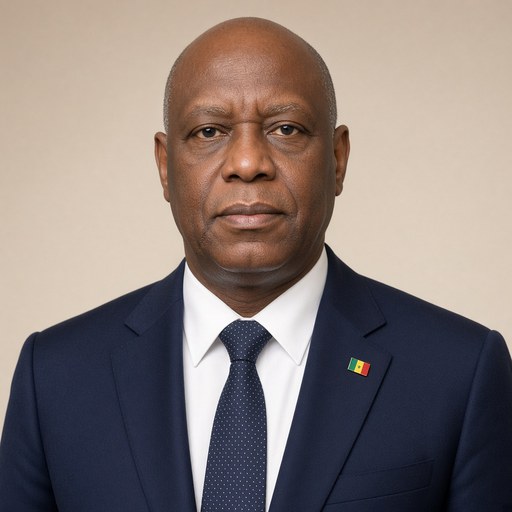
 Macky Sall · President of Senegal
- Context
- Sall addressed the 35th AU Assembly of Heads of State in Addis Ababa on February 5, 2022, upon assuming the AU Chairpersonship.
- Main themes
- African Union leadership, peace and security, terrorism and coups d'état, COVID-19 pandemic response, pharmaceutical sovereignty, African health infrastructure, cancer treatment and IAEA Rays of Hope, AfCFTA and economic development, Agenda 2063, pan-Africanism and continental unity, conflict resolution, Africa's economic potential
- Duration
- ~19 min
- Words
- 2,331
- Sentences
- 97
- Readability
- 29
- Grade
- 15.1
- Syntax
- 3.19
- Vocabulary
- 2.37
The broad sphere of national life a sentence belongs to. Every sentence has an Arena, so it is the denominator the other indices are read against.
Other97 sentences in 83 paragraphs
Excellencies, Ladies and Gentlemen, Heads of State and Government, dear colleagues,
Ministers,
Mr. President of the African Union Commission,
Ambassadors and heads of delegations,
Ladies and Gentlemen,
On your behalf and on my own, I would first like to thank the government and the people of Ethiopia for the warm welcome and hospitality they have extended to us once again in the legendary city of Addis Ababa, the cradle of our dream of African freedom and unity.
I recognize the honor and responsibility that come with the trust you have just placed in me, together with the members of the Bureau, to lead our organization’s destiny for the next year.
I thank you for this and assure you of our commitment to work in concert with all member states in the execution of our mandate.
I pay tribute to the founding fathers of the Organization. Six decades later, their bright vision continues to inspire our togetherness and illuminate our united march toward the ideal of African integration.
It is precisely in this pan-Africanist spirit that President Léopold Sédar Senghor proposed, at the OAU summit in July 1964, the establishment of a “permanent political and moral authority of the Conference of Heads of State and Government” to provide high-level impetus to the management of continental affairs.
Thus was born the role of Chairperson of our Organization; a role that President Félix Antoine Tshisekedi Tchilombo has carried out with steadfastness and dedication. Thank you, dear Félix, for the considerable efforts you have devoted in the service of our continent.
As our Union celebrates its 20th anniversary this year, we can be proud of the progress made through major initiatives such as NEPAD, PIDA, APRM, Vision 2063, institutional reform, the Great Green Wall, AfCFTA, and more recently, our coordinated response to the COVID-19 pandemic.
At the same time, our challenges remain numerous and urgent, whether in terms of peace and security, the fight against terrorism, environmental protection, health, or socio-economic development.
I cannot ignore the resurgence of the phenomenon of coups d’état, which represents a major blow to democracy and institutional stability on the continent.
The urgency of peace and security reminds us of our special responsibility in the fight against terrorism, the peaceful settlement of disputes between member countries, and the management of internal crises.
We cannot turn a blind eye to the lives lost, the grieving families, the millions of displaced or refugee persons, the closed schools and health facilities, and the disintegrated social cohesion.
These antagonisms scatter our efforts and delay us on the path to development. Common sense commands us to silence the guns and foster a culture of dialogue and consultation within the framework of African mechanisms for conflict resolution.
I call for a collective soul-searching to achieve a lasting peace, so that we can better focus on the other pressing concerns that occupy us.
This includes the health crisis linked to the COVID-19 pandemic and the need to swiftly achieve our pharmaceutical and medical sovereignty.
I sincerely thank President Cyril Ramaphosa, who, with the support of the Commission and Africa CDC, has invested greatly in the fight against COVID, both for vaccine access and for production on the African continent.
Amid the crisis, a whole ecosystem of hygienic, pharmaceutical, and medical products has emerged across the continent. Vaccine production is already underway in some countries, with others set to follow.
Beyond the COVID response, it is important to maintain this new dynamic by keeping health at the center of our agenda, in order to support the emergence of an African pharmaceutical industry capable of meeting our essential needs and confronting pandemics such as HIV/AIDS, tuberculosis, and malaria.
I also draw the attention of our summit to the devastating impact of cancer, a silent killer that causes nearly 20 million deaths worldwide each year, more than 700,000 of which occur in Africa.
Moreover, 40% of our countries do not have any radiotherapy treatment units.
In response to this worrying situation, the International Atomic Energy Agency (IAEA) has launched the “Rays of Hope” initiative to support the capacities of member states, particularly African states, in the fight against cancer, using nuclear technologies, including medical imaging, nuclear medicine, and radiotherapy.
Yesterday, we held the official launch ceremony for this campaign.
I strongly encourage our countries to support the IAEA’s Rays of Hope campaign, which will contribute to achieving the SDGs and Agenda 2063.
Our challenges are also economic. Africa continues to lag behind in development despite its enormous potential: 30 million km² of land; more than 1.3 billion inhabitants; vast water and hydrocarbon reserves; 60% of the world’s uncultivated arable land; 40% of the world’s gold reserves; 85-95% of the world’s reserves of chrome and platinum group metals; 85% of phosphate reserves; more than 50% of cobalt reserves; and one-third of bauxite reserves.
This demonstrates that, despite its handicaps, Africa has the potential needed to ensure its own emergence.
Moreover, in large part, our continent is making progress. Governments are working hard. There is a creative youth that is taking action and succeeding. Millions of men and women are working, investing, and creating wealth.
All these positive energies contribute to the structural transformation of the continent, bringing forth an Africa with road, highway, rail, port, and airport infrastructure; an Africa with power plants, agribusiness, and industrial and digital platforms.
It is precisely in the spirit of this Africa on the path to emergence that our summit’s theme, proposed by President Alassane Ouattara, fits: “Building resilience in nutrition security on the African continent: Strengthening agri-food systems, health, and social protection systems to accelerate socio-economic development and human capital.”
This theme reminds us of the urgency of achieving our food sovereignty by producing more and better in agriculture, livestock, and fisheries through:
Emerging Africa is also Africa that fully relies on its human resources: youth and women.
Youth must remain at the heart of our public policies because they represent the majority of our population, and we will only benefit from the demographic dividend if our youth receive the education and training that adequately prepares them for active life.
The status of women also calls us to action, as women represent half of our continent. Africa cannot develop while millions of women and girls continue to endure violent, unequal, and discriminatory treatment.
I commend President Félix Antoine Tshisekedi for his advocacy against violence toward women and girls through the positive masculinity initiative.
With your approval, I propose that he continue to lead this effort as the Union’s Champion in this area.
I call for greater mobilization from public authorities, opinion leaders, civil society, families, and communities against all forms of violence toward women and girls and for their empowerment. This is an essential condition for the progress of our continent and our collective well-being.
Dear colleagues, ladies and gentlemen,
While the fate of our continent lies in our hands, it also depends on global political, economic, and financial governance that makes little room for our countries.
On your behalf, I will continue our advocacy for a more open, transparent, and inclusive multilateralism; starting with more equitable representation of Africa in the United Nations Security Council, in line with the Ezulwini Consensus.
I also wish for us to focus more on the reform of global economic and financial governance to improve our countries’ access to development financing sources.
Our economies are underfunded because rigid rules and procedures hinder Africa’s access to substantial, long-term loans on sustainable terms for development financing.
Our economies are also poorly financed because they continue to pay excessively high interest rates due to an unfair system of assessing investment risk in Africa.
For instance, in 2020, while the world was bearing the full brunt of the COVID-19 pandemic, 18 of the 32 African countries rated by at least one major rating agency saw their ratings downgraded; that is 56% compared to a global average of 31%.
Moreover, studies show that at least 20% of the rating criteria for our countries are based on rather subjective factors, such as cultural or linguistic considerations, which are unrelated to the economic fundamentals determining a country’s stability.
As a result, the perception of investment risk in Africa remains higher than the actual risk, driving up insurance premiums, making credit more expensive, and penalizing the competitiveness of our economies.
With the support of the Commission, I believe it is necessary to establish a Union task force to examine the issue of financing our economies, including reforming OECD-related rules, creating a Pan-African rating agency, and establishing a Financial Stability Mechanism, which the African Development Bank is already working on.
Further efforts could focus on harmonizing our national legislations and exchanging best practices in the mining and hydrocarbon industries to better compensate our resources.
These projects may indeed take time, but it seems necessary to move from demands to actions by laying the foundations for their realization. In the immediate future, I will continue our advocacy for the reallocation of Special Drawing Rights (SDRs).
With the historic issuance of SDRs totaling $650 billion, Africa was able to secure its quota of $33 billion to strengthen its resilience. This is a significant achievement.
However, given the profound impact of the crisis, Africa needs additional financing of at least $252 billion by 2025 to cushion the shock and begin its economic recovery.
As a result, I will continue our advocacy for the reallocation of $100 billion of SDRs from wealthy countries to African nations, under modalities to be agreed upon.
In addition to the IMF, it is important that a portion of the Special Drawing Rights (SDRs) be reallocated through the African Development Bank (AfDB), given its practical and effective experience in financing development in Africa.
Furthermore, in order to expand our financing possibilities for large development projects, similar to IDA 20, the time has come to amend the Agreement establishing the African Development Fund (ADF); this will allow it to access capital markets and raise $33 billion, in addition to its own funds of $25 billion.
With more resources, the ADF will be able to further support the development efforts of our countries.
Consequently, I call on our partners to engage with us in the modernization of the ADF, like other similar institutions, especially since its status has remained virtually unchanged since its creation in 1972.
Dear colleagues,
On your behalf, I am also firmly committed to raising our message for renewed, fairer, and more equitable partnerships.
More than 60 years after its first independence, Africa is more determined than ever to take its destiny into its own hands.
Our continent should not be the hunting ground for some against others. We are open to all partnerships, without exclusion or exclusivity, provided they are mutually beneficial and respectful of our development priorities and societal choices.
In this spirit, I commend the excellent outcomes of the Forum on China-Africa Cooperation in November 2021 and the Turkey-Africa Summit last December.
I hope that our upcoming meetings with the European Union in a few days, and with Korea, Russia, Japan, and the Arab world later this year, will follow the same dynamic.
Another challenge calls us: that of the energy transition in the context of the fight against climate change, in which Africa is a participant.
On the sidelines of COP26 in Glasgow, some countries unilaterally decided to end external financing for fossil fuel energies, even clean ones like gas, while some of them continue to use highly polluting sources such as coal and oil.
At a time when, with the significant discoveries of recent years, gas opens up real prospects for universal access to electricity and support for industrialization for our countries, halting financing for the gas sector would severely undermine our efforts for economic and social development.
That is why, while remaining committed to the fight against climate change according to the principle of common but differentiated responsibility, it is entirely legitimate for our countries to demand a just and equitable energy transition.
Together, let us mobilize for the success of COP27, which our brother, President Abdel Fattah Al Sisi, will host this year.
Dear colleagues, ladies and gentlemen,
The challenges before us will be met by dedicating more time to our discussions on vital issues for our countries, with renewed and streamlined working methods, in the spirit of the institutional reform we have undertaken under the dynamic leadership of President Paul Kagame.
The imperative for results compels us to implement our reforms to improve the performance of the Union, including strengthening its financial capabilities.
I am thinking of the distribution of work between the Union, the Regional Economic Communities, and the Regional Mechanisms; the reform of judicial and quasi-judicial bodies; the operationalization of the Peace Fund and the African Standby Force, as well as better coordination among the Agencies.
The Africa we want is also one that recovers its entire cultural heritage.
The restitution of our looted heritage will remain at the heart of our agenda because it is an integral part of our civilizational identity; it connects us to our past and forms the legacy we must pass on to future generations.
The Africa we want to build cannot overlook its cultural heritage.
Time cannot erase our collective memory. The weight of history and the burdens of the present cannot inhibit our will to deconstruct the prejudices and determinisms that hinder our continent’s progress.
We say yes to the “meeting of giving and receiving” through the fruitful dialogue of cultures and civilizations; but no to the civilizational injunction that would dictate our choices and behaviors.
In this spirit, I will spare no effort in defending the interests of our continent with the support of the members of our Bureau and yours.
Thus, together, we can contribute a new stone to the continental edifice of our dreams: an Africa at peace, more free, more united, and more supportive; an Africa standing and moving towards greater progress and prosperity.
Long live Africa!
Long live the African Union!
Thank you.