




Opening ceremony of the 6th World Forum on the Social Solidarity Economy
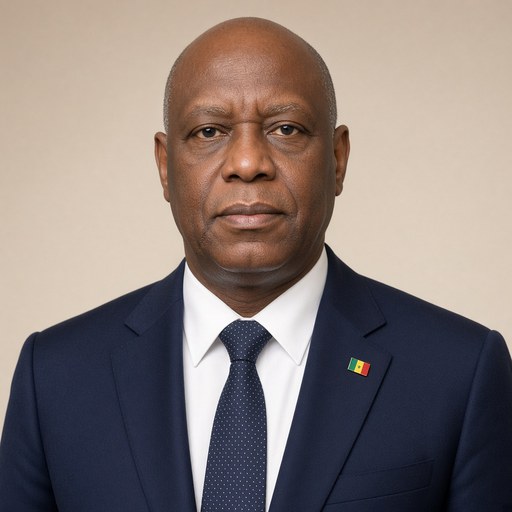
 Macky Sall · President of Senegal
- Context
- Sall addressed the 6th World Forum on the Social Solidarity Economy in Dakar on May 4, 2023, opening the international gathering focused on inclusive economic development.
- Main themes
- Social and solidarity economy, sustainable development, climate change and energy transition, youth and women empowerment, informal to collective economies, developing countries' vulnerabilities, UN resolution on solidarity economy, green economy, African Union advocacy, access to electricity in Africa, community development programs, multilateral financial cooperation
- Duration
- ~7 min
- Words
- 879
- Sentences
- 32
- Readability
- 20
- Grade
- 17.0
- Syntax
- 3.36
- Vocabulary
- 2.30
The broad sphere of national life a sentence belongs to. Every sentence has an Arena, so it is the denominator the other indices are read against.
Other32 sentences in 32 paragraphs
Ladies and gentlemen,
The social and solidarity economy, which refers to enterprises organized in the form of cooperatives, mutuals, associations, or foundations, whose functioning and activities are based on principles of solidarity and social utility, is a reality at the heart of society.
Here in Senegal, social and solidarity economy practices have long existed, notably through the so-called tontine system, where members gather based on affinity to contribute and take turns recovering their contributions.
It is therefore gratifying that the United Nations General Assembly adopted, on April 18, its very first resolution on promoting the social and solidarity economy for sustainable development.
The resolution particularly encourages multilateral, international, and regional financial institutions, as well as development banks, to participate in the efforts of member states to achieve the Sustainable Development Goals through existing and new financial instruments and mechanisms tailored to all stages of development.
I am especially pleased because this text aligns with the advocacy I have consistently made during my term at the head of the African Union for:
This indicates that in the context of an exacerbated crisis, the social economy must also be applied at the international level to enable states to access additional resources to support their internal efforts.
As the world continues to face the cumulative consequences of the pandemic and the invasion of Ukraine, I urge your Forum to draw the attention of partner countries and institutions to the particular situation of developing countries, whose structurally weak economies are undoubtedly the most destabilized by the crisis.
In the face of unprecedented challenges, innovative and solidarity-based responses are needed for a fairer and more inclusive world.
By placing your meeting under the theme of transitioning from informal economies to collective and sustainable economies for our territories, you have aimed to address current issues, including:
This dialogue seems essential to me because, clearly, the State cannot do everything alone; but without it, its branches—cities, municipalities, and other local governments—would not be able to accomplish anything.
Hence, there is a necessity to establish and maintain a constructive dialogue to mobilize action resources for the benefit of target populations.
On another note, I note with interest the priority you have given to youth and women through the pre-Forum dedicated to them.
This is an excellent initiative.
Indeed, in all countries, albeit to varying degrees, youth and women remain among the most vulnerable social groups, especially regarding empowerment, access to employment and other income-generating activities, wage treatment, and access to credit.
That is why, concerning Senegal, I established the Delegation for Women and Youth Entrepreneurship (DER/FJ) in 2018 to assist in their economic integration by providing loans, including nano credits, under soft conditions, as well as through mentoring and advice.
The DER/FJ is part of our vision for a solidarity-based development founded on social justice and territorial equity, with other instruments being the Community Development Emergency Program (PUDC), the Emergency Program for Modernization of Border Axes and Territories (PUMA), Family Security Scholarships, and Universal Health Coverage.
Ladies and gentlemen,
In reviewing the sub-themes of your Forum, I also realize that sustainable development, through the promotion of a green economy, is at the heart of your agenda.
This is significant since climate change now poses an existential threat to planet Earth, our common habitat.
At the same time, it makes sense to consider the common but differentiated responsibilities of countries in the face of climate peril.
By this, I mean that while we must all work towards achieving sustainable development through carbon-efficient economic policies, it is just and equitable to recognize the distinctions.
The least polluting countries, which are most affected by the effects of climate change and are furthest behind in the industrialization process, cannot bear the same responsibilities as industrialized countries, whose production patterns, since the Industrial Revolution at the end of the 18th century, have progressively plunged the planet into the current state of climate emergency.
This is the essence of the demand from developing countries for a fair and equitable energy transition, allowing them to have access to basic energy to enhance their economic competitiveness and achieve universal access to electricity.
For example, I would like to remind you that over 600 million Africans still live without electricity.
This means, ladies and gentlemen, that the issues you will address here, each as pressing as the next, show that beyond the social and solidarity economy, your Forum raises essential questions that call us to solidarity.
All of us, together—Northern and Southern countries, state and local authorities, private sector, opinion leaders, and citizens—must remain mobilized to contribute to finding concerted and effective solutions.
I hope that your meetings will allow us to establish another milestone in this direction, for a better world, because it is fairer and more supportive.
I congratulate Ms. Victorine Ndèye, Minister of Microfinance and Social and Solidarity Economy, and her entire team for the efforts devoted to preparing the Forum.
I also want to thank and congratulate Mr. Barthélemy Dias, Mayor of Dakar, as well as the Network of actors and local authorities in the social and solidarity economy for their contribution to organizing this meeting.
I hereby declare the 6th edition of the Global Forum on Social and Solidarity Economy open and wish you great success in your work.
Thank you.