




Unity and Solidarity: Mobilizing Financing, Investment, and Means of Implementation for Achieving the Sustainable Development Goals – UNGA78
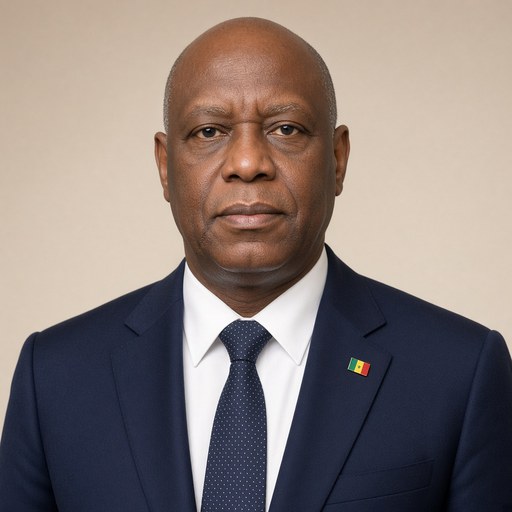
 Macky Sall · President of Senegal
- Context
- Sall addressed a UNGA78 SDG Summit roundtable on September 19, 2023, urging reform of global financing mechanisms to accelerate sustainable development.
- Main themes
- SDG financing, international financial architecture reform, Africa's underfunding and credit access, debt relief and G20 initiatives, Special Drawing Rights reallocation, investment mobilization, public development aid, tax avoidance and global minimum tax, rating agency risk perception, post-COVID recovery, solidarity and political will
- Duration
- ~4 min
- Words
- 514
- Sentences
- 28
- Readability
- 37
- Grade
- 12.7
- Syntax
- 2.83
- Vocabulary
- 2.35
The broad sphere of national life a sentence belongs to. Every sentence has an Arena, so it is the denominator the other indices are read against.
Other28 sentences in 9 paragraphs
Dear colleagues, Mr. Secretary-General, Ladies and Gentlemen,
The theme of this roundtable encapsulates the entire challenge of our countries’ actions and their interactions to jointly tackle the achievement of the Sustainable Development Goals (SDGs). We are discussing unity, solidarity, mobilization of financing, and investment. These are the key levers to achieve the SDGs. The question remains how to activate these levers to reach our goals.
The Secretary-General has once again sounded the alarm. According to his latest report on the progress of the SDGs, at least $500 billion must be mobilized annually to realize the 2030 Agenda. This is not beyond reach if sustainable development remains at the heart of our priorities. It is all a matter of political will.
Speaking of solidarity, my first observation is that we must mobilize more for the effective implementation of the G20 Debt Service Suspension Initiative. We know that, with a few exceptions, the initiative has yet to meet expectations. The same applies to the partial reallocation of Special Drawing Rights. I remind you that these two levers are meant to support the resilience and post-COVID recovery efforts of eligible developing countries.
Secondly, regarding resource mobilization, Africa is underfunded in terms of volume and poorly financed when considering the numerous obstacles it faces in accessing credit. Developing countries, particularly in Africa, bear borrowing costs up to eight times higher than developed countries. One of the main reasons for this situation is the exaggerated perception of investment risk by rating agencies, which creates a snowball effect: high insurance premiums further increase the cost of projects.
Thirdly, if we want to change the course of things, we inevitably need to reform the rules of international economic and financial governance, including the rating criteria of evaluation agencies. The conclusions of the Paris Summit for a new global financial pact certainly provide a good basis for reform, especially for mobilizing low-cost financing sources. It also involves modernizing the Arrangement on Export Credits to make it more flexible in terms of repayment and adjusting premium rates for credit risks.
Fourthly, we must learn from public development aid. It is still necessary to support certain sectors, but aid alone cannot develop a country. The financing needs of countries aspiring to emerge require massive investments far beyond the possibilities of public aid. We must promote a partnership logic, with appropriate mechanisms to support investment and adjust maturities to suit the assets being financed.
Finally, it is crucial that the proposed reform of the international financial architecture includes the fight against abusive tax practices (tax avoidance, abusive tax holidays, tax evasion) that deprive countries of the resources needed for development financing. It is encouraging that the OECD adopted in October 2021 the historic agreement on a 15% global minimum tax, marking a significant step in combating abnormal tax practices. In the same spirit, the OECD and the G20 should further promote the adherence of all to the Multilateral Convention to Implement Tax Treaty Related Measures to Prevent Base Erosion and Profit Shifting. This will help ensure taxes are paid where wealth is created.
Thank you.