





- Context
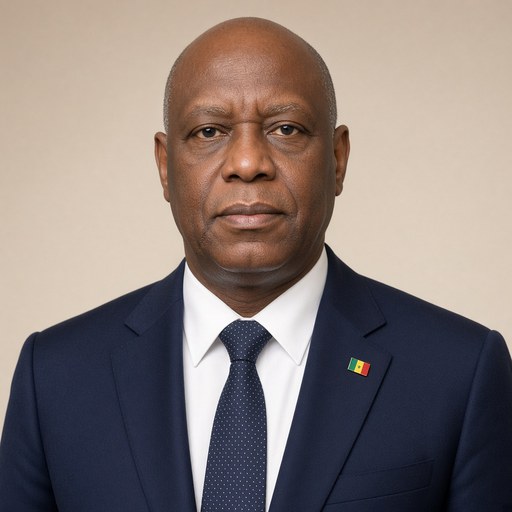
- Sall addressed Senegalese political, civil, and religious leaders at the opening of a National Dialogue convened to address electoral, security, and economic challenges facing the country.
- Main themes
- National dialogue, political stability and peace, 2024 presidential election, rule of law and democratic governance, youth employment and entrepreneurship, oil and gas resource exploitation, Sahel terrorism threat, social harmony and coexistence, COVID-19 and global crises, religious and cultural identity, violence and hate speech prevention
- Duration
- ~13 min
- Words
- 1,564
- Sentences
- 68
- Readability
- 33
- Grade
- 14.1
- Syntax
- 3.21
- Vocabulary
- 2.31
The broad sphere of national life a sentence belongs to. Every sentence has an Arena, so it is the denominator the other indices are read against.
Other68 sentences in 42 paragraphs
Mr. President of the National Assembly, Mr. Prime Minister, Madam President of the High Council of Local Authorities, Mr. President of the Economic, Social and Environmental Council, Madam President of the High Council for Social Dialogue, Mr. High Representative of the President of the Republic, Ladies and gentlemen, leaders of political parties and coalitions, Ladies and gentlemen, representatives of the business community, trade unions, and civil society, Dear religious and traditional authorities, Ladies and gentlemen, in your ranks, titles, and distinctions, My dear fellow citizens here and in the diaspora,
I would first like to thank you all, ladies and gentlemen, for responding to my call for this national dialogue, a call that I made in my address to the nation on Independence Day and reiterated on the occasion of Korité (Eid al-Fitr).
This gathering is not the first of its kind, as diisso (dialogue) is part of our socio-cultural identity. That is why I have established dialogue as a governance principle that goes beyond the face-off between government and opposition, integrating all the vital forces of the nation. This is because national life cannot be monopolized by political antagonisms alone, to the detriment of other common priorities of national interest.
This is why our previous national consultations have covered a variety of areas, such as:
In the same spirit, I established May 28th as National Dialogue Day.
Today, my dear fellow citizens, the need for consultation is even more pressing as the world continues to suffer the combined effects of the COVID-19 pandemic and a major war, whose scope and end no one can predict.
We also face the immediate threat posed by the advance of terrorism in the Sahel, which has now affected countries that had previously been spared. Additionally, the upcoming presidential election in February 2024 naturally imposes itself as a topic for dialogue.
I want to state here that the government will take all necessary steps to ensure a peaceful, democratic, free, and transparent election, as our country knows how to do so well, including in January and July 2022.
I am not forgetting the challenges of youth, training, employment, and entrepreneurship. We have made significant progress with tools such as training centers, the State-Employers Convention, the DER/FJ (a youth and women’s entrepreneurship initiative), the 3FPT (vocational training fund), the ANPEJ (National Agency for the Promotion of Youth Employment), and the XËYU NDAW ÑI program. But much remains to be done to improve youth employability and combat unemployment.
Another challenge that requires consultation is the upcoming exploitation of our gas and oil resources.
All of these issues call on us as a nation, beyond our differences and divergences. It is our duty to come together to deliberate on our common concerns, respecting our democratic achievements, the rules that underpin the Senegalese nation, the rule of law, the Republic and its institutions, our justice system, our defense and security forces, public goods and private property, and our religious faiths and their leaders.
All of these form our societal model, which we have the individual and collective responsibility to sustain and protect. The regime of freedom we have chosen goes hand in hand with the requirement of responsibility. There is no democracy without freedom, just as there can be no freedom without responsibility. Every freedom has as its counterpart the responsibility that limits its abuses.
This means that this dialogue must demonstrate our individual and collective commitment to revive the values that underpin our peaceful coexistence, stability, and social harmony.
To adhere to these values means to banish physical and verbal violence, as well as hate speech and stigmatization. Every act of physical violence, every word of hatred, every public or private property destroyed, and above all, every Senegalese person killed leaves a deep wound in our country, in our humanity, and in the Senegalese nation. I take this opportunity to once again extend my heartfelt condolences to the bereaved families and wish the injured a speedy recovery.
If reassurance is needed, I would like to assure you that the state is and will remain steadfast, to protect the nation, the Republic, and its institutions. Together, with all peace-loving socio-political forces, we have the shared duty to defend our societal model, which reflects and unites us. This is one of the fundamental reasons for this national dialogue.
It is in our common interest. As I reminded in my message of December 31, 2022, we exist because Senegal exists. No one should imagine themselves greater or stronger than this nation that shelters us all.
Ladies and gentlemen,
Here and now, it is the nation that speaks to us, because it demands peace. It is each and every one of you who speaks with your love for Senegal, as you will continue here, through your words, your suggestions, and your respect for the values of dialogue, to express our collective aspiration for peace, democracy, and an economically and socially progressive Senegal that can take charge of its future.
Ladies and gentlemen, distinguished participants,
Other challenges call for our attention, such as the exploitation of our petroleum, gas, and mineral resources. Experience in Africa has amply shown that these resources often attract covetousness, geopolitical rivalries, and malicious acts, ranging from piracy to sabotage, even terrorism.
As governing is about foresight, we hope for the best while preparing for the worst. This is why we have significantly strengthened the operational capacities of our defense and security forces so that, at all times and in all places, they are up to their mission of safeguarding our natural resources.
I would like to reiterate here my firm determination to ensure the secure, transparent, inclusive, and sustainable exploitation of our resources. According to the provisions of the Constitution resulting from the March 2016 referendum, “Natural resources belong to the people. They are used to improve living conditions. The exploitation and management of natural resources must be transparent and conducted in a way that generates economic growth, promotes the well-being of the population in general, and is environmentally sustainable.”
In applying this constitutional standard, the government has adopted a series of measures, including:
Moreover, our efforts in managing extractive resources transparently have been recognized by the EITI. I will not dwell here on the excellent assessments given in the EITI Board’s October 2021 evaluation of Senegal.
In the same dynamic, we established in 2016 the Petroleum and Gas Strategic Orientation Committee (COS-PETROGAZ), tasked with advising the President of the Republic and the government on all matters related to the petroleum and gas sectors.
I will soon chair an expanded meeting of COS-PETROGAZ to review:
I also remind you that we created the National Petroleum and Gas Institute (INPG) in 2017. The INPG has so far trained 78 engineers and technicians who are already operational. Our goal is to broaden the range of training programs to include other professions, including highly qualified legal experts in this complex field, because if we want to manage our resources optimally, we must have a diversified and high-quality human capital.
Moreover, under the Local Content Law, I wish for the national private sector to invest more in the value chain of the gas and oil sector, in order to create new opportunities for jobs and income-generating activities for our youth.
I want to reiterate here the government’s constant willingness to engage in discussions about the exploitation of our natural resources on a sound, calm, and informed basis. No question is off-limits.
In the same way, in addition to political issues and those specific to natural resources, this national dialogue could also address other topics, particularly economic and social ones.
Faced with the challenges of the COVID-19 pandemic and the war in Ukraine, and despite a difficult economic situation, the government has taken a range of measures to support households and businesses: tax measures, subsidies for essential goods, salary increases, in addition to support for the most vulnerable social groups through the Family Security Grants.
The state has also made a significant effort to reduce public spending, particularly on its own operating costs.
During this dialogue, we can discuss ways to better support our private sector, alleviate the cost of living, and optimize public spending.
Regarding the format of the dialogue, drawing from past experience, we could retain the same Commissions, namely:
As for the political dialogue, I recommend that consultations be conducted in a way that consolidates our democratic achievements through new consensus on the Electoral Code, the electoral process, and civil and political rights.
I have appointed my High Representative, Mr. Moustapha Niasse, former President of the National Assembly, to represent me in the dialogue and ensure its facilitation, should you agree.
In terms of its structure, I hope it will be inclusive, incorporating representatives from the presidential majority, the opposition, non-aligned parties, religious and traditional leaders, and civil society representatives.
For my part, I will remain attentive to your conclusions.
Once again, I thank you for the valuable time and effort you will devote to these discussions.
This is a great cause, larger than any one of us, because it is national. It binds us all and makes each of us an essential actor in our collective success.
I am confident that we can achieve this, if we draw from the wisdom of our elders and the creative genius of our people.
I strongly encourage you and wish the national dialogue every success.