





- Context
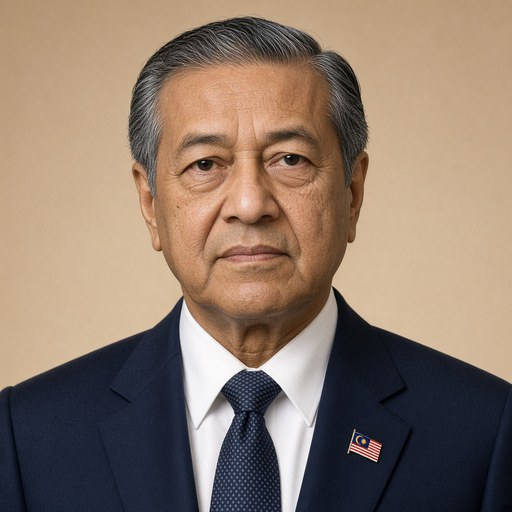
- Mahathir addressed guests at the opening of the 'Wicitra 82' handicraft exhibition in Malaysia on 26 November 1982, promoting handicrafts as economic and cultural assets.
- Main themes
- Malaysian handicrafts, rural industry development, economic potential of handicrafts, village industries, income generation for rural communities, global market expansion, mass production and marketing, cultural heritage and artistry, rural-urban migration, cottage industries
- Duration
- ~11 min
- Words
- 1,352
- Sentences
- 85
- Readability
- 55
- Grade
- 9.5
- Syntax
- 2.52
- Vocabulary
- 2.30
Translated from Malay
The broad sphere of national life a sentence belongs to. Every sentence has an Arena, so it is the denominator the other indices are read against.
Other85 sentences in 22 paragraphs
Peace be upon you and the mercy of Allah and His blessings. The Honorable Dato Sanusi Junid, Minister of National and Rural Development; The Honorable Datuk Abdullah Ahmad Badawi, Acting Minister of Culture, Youth and Sports; The Honorable Tan Sri Abdul Samad Idris, Chairman of the Malaysian Handicraft Development Corporation; Distinguished Guests; and Ladies and Gentlemen.
I am proud to be invited to open this 'Wicitra 82' Exhibition and I thank you for the opportunity to see the handicraft products showcased in this exhibition.
2. The handicraft exhibition can be viewed from several angles. Firstly, handicrafts are an art that reflects the thoughts and culture of society. Secondly, handicrafts have everyday uses in addition to serving merely as decorative items. Thirdly, in relation to aspects of art and its utility, handicrafts can be seen as economic and trade materials that can generate income. In the modern world, handicrafts should be viewed from these three perspectives. And I hope this exhibition can expose all parties to these aspects.
3. Malaysian society, especially the indigenous community in the villages, is indeed known for its artistry and handicrafts. The level of art and skill can be seen not only in the carvings of silver, copper, ceramics, weaving, kites, spinning tops, and others, but also in boats, houses, and buildings. Customs such as engagement, marriage, and others are adorned with various forms of high-quality craftsmanship. The evidence is very clear that our society is one with an artistic spirit and skill. However, unfortunately, we have yet to aggressively explore the two aspects I have mentioned, namely the aspects of utility and economy, which are closely related to trade.
4. Handicrafts are a source of income. They have economic value. There are countries that can turn handicrafts into national income. Handicraft enterprises are indeed a source of income in our society. Unfortunately, it can be said that it is limited to the domestic market only and is pursued without seriousness according to the context of modern economic needs. I am confident that our handicrafts have the potential to reach the global market if we adjust the production system and its marketing according to current needs.
5. Now is the right time for all of us to think of ways to increase the production and quality of our handicrafts. Rural residents, in particular, have a lot of free time to focus on the advancement of the handicraft industry. Some of them are involved in seasonal work such as planting rice once a year, work that does not require much supervision like coconuts and oil palms, and women can use their free time for handicraft work.
Ladies and Gentlemen,
6. The government is currently encouraging the establishment of more organized village industries, including handicraft enterprises. These efforts will be coordinated by the Ministry of National and Rural Development, along with other relevant agencies including regional development corporations.
7. The main purpose of promoting village industries is to increase the income of rural communities through the productive use of their free time. In addition, this industry can enhance the understanding of rural communities regarding the intricacies of business and the role of money in development. Village industries can also reduce the migration of our youth from villages to cities. If efforts are not organized from time to time, we will experience a shortage of labor to cultivate fields and farms in the villages. This phenomenon will also cause the urban population to grow rapidly, leading to the emergence of overcrowded, dirty, and dishonorable slum areas.
8. To achieve this objective, the handicraft industry must be organized to suit modern marketing demands. This era is the era of "mass consumption," meaning the large-scale use of goods. In the past, it was sufficient to produce a few items according to our convenience and comfort, and these items could be sold at any time in the nearby town; now, this part-time business can no longer be developed. The market now requires goods that are shaped according to buyers' tastes, in large quantities, and prepared for sale according to a schedule. The nearby town is no longer the main market. The world is the real market. Profit in modern trade does not depend on a large difference between capital and selling price but on "volume" or the size of business in a particular item or field.
9. There is a significant difference between producers and retail traders. Producers may receive a small percentage of profit compared to retailers. However, feelings of envy and deception should not arise in the hearts of producers. The percentage of profit for producers may be small, but due to the large "volume," the total profit will ultimately be substantial. Conversely, the large percentage obtained by retailers will not increase their total profit because the number of items that can be sold is unlikely to be large. In addition, retail expenses remain higher.
10. These factors need to be explained so that the handicraft trade will increase. As long as the intricacies of business in this modern era are not understood, handicrafts and village industries will remain in a state of reluctant survival.
11. The government does not aim, through its agencies, to develop village industries with villagers merely as workers. The government will not provide sites, machines, buildings, management staff, vehicles, marketing, and so on, like private factories in industrial areas where villagers work only as laborers. The real aim is for villagers themselves to own and manage their enterprises, whether as sole proprietorships, partnerships, or as companies or cooperatives. If the government has to establish its own industries, this is only as a temporary example.
12. The government will involve itself indirectly by identifying suitable enterprises, identifying resources, studying locations and their capabilities, providing trainers where necessary, training management skills, providing loan sources when private loans are not available, and possibly also supplying initial assistance related to management. The government will establish core industries to carry out initial and finishing work for the production of certain goods. For example, the core industry may be involved in cutting bamboo and rattan and digging clay as initial work, while finishing work includes packaging finished products for trade and purchasing goods produced by villagers or cooperatives or village companies.
13. The Ministry of National and Rural Development will establish a central marketing agency in Kuala Lumpur. This agency will be involved in designing handmade products, purchasing handmade products that meet certain standards, either directly or through core industries, exhibiting, and marketing in local and foreign markets. This agency will be responsible for conducting market research, demand studies, customer and buyer needs, and promotion. I hope this agency will be managed by the government only for a short time, and eventually, this agency will be operated as a commercial venture. I am confident that the government's serious efforts will attract attention and be welcomed appropriately by the villagers for their benefit and that of the nation.
Ladies and Gentlemen,
14. Speaking of the quality of these handmade goods, I am very proud of the efforts of Kraftangan Malaysia, which will provide facilities for quality recognition, or hallmark, for silver products. This quality recognition will place our silver goods at a strong competitive level. I hope that starting today, silver producers will produce quality silver items so that these products can receive quality marks or hallmarks from Kraftangan Malaysia.
15. In the speech by the Honorable Tan Sri Abdul Samad earlier, he touched on the efforts of Kraftangan Malaysia to establish a Dayacipta Center, specifically for handicrafts. I support this effort, and I hope it can be implemented in the context of village industries as I mentioned earlier.
Ladies and Gentlemen,
16. I hope this exhibition will instill a spirit among all of us to further advance the handicraft industry in Malaysia. I also hope this exhibition will be a focal point for parents and children during this school holiday.
17. With this hope, I am pleased to officially open the 'Wicitra 82' Exhibition.
With the guidance and blessings of Allah, peace be upon you and the mercy of Allah and His blessings.
The original Malay. The tags above are read on the English translation's sentences.
Assalamu 'alaikum warahmatullahi wabarakatuh.Yang Berhormat Dato Sanusi Junid, Menteri Pembangunan Negara dan Luar Bandar; Yang Berhormat Datuk Abdullah Ahmad Badawi, Pemangku Menteri Kebudayaan, Belia dan Sukan; Yang Berbahagia Tan Sri Abdul Samad Idris, Pengerusi Perbadanan Kemajuan Kraftangan Malaysia; Tetamu-Tetamu Kehormat; dan Tuan-Tuan dan Puan-Puan yang dihormati sekelian.
Saya berasa bangga kerana dijemput untuk membuka Pameran 'Wicitra 82' ini dan berterima kasih di atas peluang untuk melihat sendiri hasil kraftangan di Pameran ini.
2. Pameran kerajinan tangan yang diadakan dapat dilihat daripada beberapa sudut. Pertamanya, kraftangan merupakan satu seni yang menggambarkan alam pemikiran dan budaya masyarakat. Keduanya kraftangan mempunyai kegunaan sehari-hari selain daripada berfungsi sebagai barang hiasan semata-mata. Ketiganya, berhubung dengan aspek-aspek seni dan kegunaannya, kraftangan boleh dilihat sebagai bahan ekonomi dan perdagangan yang dapat menghasilkan pendapatan.Dalam dunia moden kraftangan harus dilihat dari ketiga-tiga sudut ini. Dan saya harap Pameran ini dapat mendedahkan semua pihak kepada aspek-aspek ini.
3. Masyarakat Malaysia, khususnya masyarakat bumiputera di desa, memang terkenal dengan kesenian dan kraftangannya.Tahap seni dan kemahiran ini bukan sahaja dapat dilihat pada ukiran barang-barang perak, tembaga, keramik, anyaman, wau, gasing dan lain-lain, bahkan pada perahu, rumah dan bangunan. Adat istiadat masyarakat seperti peminangan, perkahwinan dan lain-lain pun dihiasi dengan berbagai rupa bentuk kemahiran tangan yang bermutu tinggi. Buktinya adalah amat nyata bahawa masyarakat kita adalah masyarakat berjiwa seni dan berkemahiran. Tetapi, sayangnya kita belum menerokai secara agresif dua aspek yang saya telah sebutkan iaitu aspek-aspek kegunaan dan ekonomi, iaitu perkara yang berkait rapat dengan perdagangan.
4. Kraftangan adalah sumber pendapatan. Ia mempunyai nilai ekonomi. Ada negara yang dapat menjadikan kraftangan sebagai pendapatan negara. Perusahaan kraftangan memang merupakan sumber pendapatan dalam masyarakat kita.Malangnya ia boleh dikatakan terhad kepada pasaran dalam negeri sahaja dan diusahakan tanpa kesungguhan mengikut konteks keperluan ekonomi moden. Saya yakin, kraftangan kita mempunyai potensi untuk menjangkau pasaran dunia sekiranya kita menyesuaikan sistem pengeluaran serta pasarannya mengikut keperluan masa.
5. Sekarang adalah masa yang sesuai untuk kita semua memikirkan cara-cara meningkatkan pengeluaran dan mutu kraftangan kita. Penduduk luar bandar terutamanya mempunyai masa lapang yang banyak untuk ditumpukan kepada kemajuan industri kraftangan. Sebahagian dari mereka terlibat dengan kerja-kerja bermusim seperti menanam padi sekali setahun, kerja-kerja yang tidak banyak memerlukan pengawasan seperti kelapa dan kelapa sawit, dan kaum wanita pula boleh menggunakan masa yang terluang untuk kerja-kerja kerajinan tangan ini.
Tuan-Tuan dan Puan-Puan sekelian,
6. Kerajaan sekarang sedang menggalakkan pembukaan industri-industri kampung yang lebih tersusun, termasuklah perusahaan kraftangan. Usaha-usaha ini akan diselaraskan oleh Kementerian Pembangunan Negara dan Luar Bandar, bersama-sama dengan agensi-agensi berkenaan yang lain termasuk perbadanan-perbadanan pembangunan wilayah.
7. Tujuan utama menggalakkan industri kampung ialah untuk meningkatkan pendapatan masyarakat kampung melalui penggunaan masa lapang mereka secara produktif. Di samping itu, industri ini boleh meningkatkan kefahaman masyarakat desa mengenai selok-belok perniagaan serta peranan wang dalam pembangunan. Industri kampung juga dapat mengurangkan penghijrahan pemuda-pemudi kita dari desa ke bandar.Sekiranya usaha-usaha tidak disusun dari masa ke semasa, kita akan mengalami kekurangan tenaga pekerja untuk mengusahakan bendang dan ladang di kampung-kampung. Gejala ini juga akan menyebabkan bilangan penduduk di bandar bertambah dengan cepat sehingga tertumbuhlah kawasan-kawasan setinggan yang sesak, kotor dan mencemar kehormatan.
8. Untuk mencapai objektif ini, industri kraftangan perlulah disusun supaya sesuai dengan kehendak dan cara pemasaran moden. Zaman ini ialah zaman "mass consumption" iaitu penggunaan barang secara besar-besaran. Kalau dahulu sudah memadai jika kita menyediakan beberapa barang mengikut kelapangan dan keselesaan kita dan barang ini dijual bila-bila sahaja di bandar yang berdekatan, sekarang ini perniagaan secara sambilan ini sudah tidak lagi boleh dimajukan. Sekarang ini pasaran memerlukan barang yang bentuknya mengikut selera pembeli, dalam kuantiti yang banyak, dan disedia untuk dipasar mengikut jadual. Pekan yang berdekatan bukan lagi pasaran utama. Dunia adalah pasar yang sebenar. Keuntungan dalam perdagangan moden tidak bergantung kepada perbezaan yang besar antara modal dengan harga jualan tetapi kepada "volume" atau besarnya perniagaan dalam sesuatu barang atau bidang.
9. Ada perbezaan yang besar antara pengeluar dan peniaga runcit atau "retailer". Pengeluar mungkin dapat peratusan untung yang kecil berbanding dengan peniaga runcit. Tetapi perasaan iri hati dan tertipu tidak patut timbul dalam hati pengeluar. Peratusan keuntungan pengeluar mungkin kecil tetapi kerana "volume" yang besar jumlah keuntungan akan menjadi besar akhirnya. Sebaliknya peratusan yang besar yang diperolehi oleh peruncit tidak akan membesar jumlah keuntungannya kerana bilangan yang dapat dijual tidak mungkin besar. Di samping itu belanja peruncit tetap lebih besar.
10. Faktor-faktor ini perlu diterangkan supaya perdagangan kraftangan akan meningkat. Selagi selok-belok perniagaan di zaman moden ini tidak difahami maka selama itulah kraftangan dan industri kampung akan berada dalam keadaan hidup segan mati tak mahu.
11. Kerajaan tidak bertujuan melalui agensi-agensinya untuk dengan sendirinya membangunkan industri-industri kampung dengan orang-orang kampung hanya sebagai pekerja sahaja.Kerajaan tidak akan menyediakan tapak, menyediakan mesin, menyediakan bangunan, menyediakan kakitangan pengurusan, kenderaan, pemasaran dan sebagainya, seperti kilang-kilang swasta di kawasan perindustrian di mana orang-orang kampung bekerja sebagai buruh sahaja. Tujuan sebenar ialah supaya orang-orang kampung sendiri memiliki dan mengendalikan perusahaan mereka sama ada sebagai usaha perseorangan, perkongsian atau sebagai syarikat atau koperasi. Jika Kerajaan terpaksa mengadakan industri sendirinya, ini ialah sebagai contoh yang sementara sahaja.
12. Kerajaan akan melibatkan diri secara tidak langsung seperti mengenalpasti perusahaan yang sesuai, mengenalpasti sumber-sumber, mengkaji tempat dan kemampuannya, menyediakan jurulatih di mana perlu, melatih kemahiran pengurusan, menyediakan sumber pinjaman apabila pinjaman swasta tidak diperolehi, dan mungkin juga membekalkan bantuan awal berhubung dengan pengurusan. Kerajaan akan menubuhkan industri-industri tunjang atau 'core industries' bagi melakukan kerja-kerja awal dan penyudah bagi pengeluaran barang-barang tertentu. Misalnya, industri tunjang itu terlibat dengan pemotongan buluh dan rotan dan penggalian tanah liat sebagai kerja awal, dan kerja penyudah pula termasuklah pembungkusan hasil keluaran yang siap untuk diperdagangkan, dan pembelian barang-barang yang dihasilkan dari orang kampung atau koperasi atau syarikat kampung.
13. Kementerian Pembangunan Negara dan Luar Bandar akan menubuhkan satu 'agensi pemasaran pusat' di Kuala Lumpur.Agensi ini akan terlibat dengan rekabentuk hasil buatan, pembelian hasil buatan yang mematuhi standard tertentu, sama ada secara terus atau melalui industri-industri tunjang, mempamer, dan memasarkan di pasaran tempatan dan luar negeri. Agensi ini akan bertanggungjawab membuat kajian pasaran, kajian permintaan, kehendak pelanggan dan pembeli dan galakan atau 'promotion'. Saya berharap agensi ini akan dikendalikan oleh kerajaan hanya untuk beberapa ketika sahaja dan akhirnya agensi ini akan dikendalikan sebagai usaha perdagangan. Saya yakin usaha serius kerajaan ini akan menarik perhatian dan diberi sambutan yang sewajarnya oleh penduduk kampung untuk kepentingan mereka dan juga negara.
Tuan-tuan dan puan-puan sekelian.
14. Memperkatakan tentang mutu barang buatan ini, saya sangat berbangga dengan usaha Kraftangan Malaysia yang akan memberi kemudahan kepada pengiktirafan mutu, atau 'hallmark', hasil buatan perak. Pengiktirafan mutu ini akan menempatkan barangan perak kita ke tahap persaingan yang kukuh. Saya berharap mulai hari ini pengusaha-pengusaha perak akan mengeluarkan barang-barang perak yang bermutu supaya hasil-hasil itu dapat diberikan tanda mutu atau 'hallmark' oleh Kraftangan Malaysia.
15. Dalam ucapan Yang Berbahagia Tan Sri Abdul Samad sebentar tadi, beliau telah menyentuh tentang usaha Kraftangan Malaysia untuk menubuhkan satu Pusat Dayacipta, khusus untuk kraftangan. Saya menyokong usaha ini dan saya berharap usaha ini dapat dilaksanakan dalam konteks industri kampung seperti yang saya sebutkan tadi.
Tuan-Tuan dan Puan-Puan sekelian,
16. Saya berharap Pameran ini akan menanam semangat di kalangan kita semua untuk memajukan lagi perusahaan kraftangan di Malaysia. Saya juga berharap pameran ini akan menjadi tumpuan ibu-bapa dan anak-anak semasa cuti sekolah ini.
17. Dengan harapan ini, saya dengan sukacitanya membuka Pameran 'Wicitra 82' ini dengan rasminya.
Wabillahi taufik walhidayah, wassalamu 'alaikum warahmatullahi wabarakatuh.