




- Context
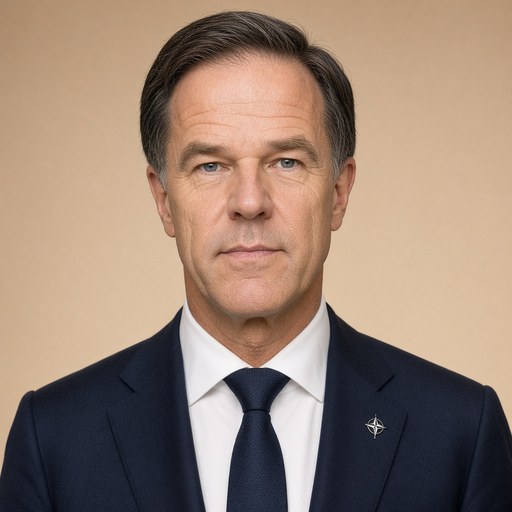
- Rutte delivered a guest lecture at a university hall named after Professor Cleveringa, reflecting on democracy's strength nearly one year after Russia's large-scale invasion of Ukraine.
- Main themes
- Democracy vs. tyranny, Russian invasion of Ukraine, support for Ukraine, democratic values, international legal order, Dutch history and identity, NATO and collective security, geopolitical positioning, rule of law, freedom and human rights, Dutch Constitution, Winston Churchill on democracy
- Duration
- ~28 min
- Words
- 3,342
- Sentences
- 205
- Readability
- 59
- Grade
- 9.1
- Syntax
- 2.86
- Vocabulary
- 1.98
Translated from Dutch
The broad sphere of national life a sentence belongs to. Every sentence has an Arena, so it is the denominator the other indices are read against.
Other205 sentences in 88 paragraphs
Why democracy will always remain 'the shining city on a hill'
Ladies and gentlemen, dear students,
As a historian, I am of course aware that the question of whether something is historical is always answered in hindsight. But I do not think I am exaggerating when I say that on February 24, 2022, a page in the book of world history was turned.
I was in Kyiv last week, and as you walk around there and hear all those heartbreaking stories, you cannot come to any other conclusion. To be honest, I am still at a loss for words.
In three days, it will be exactly one year since the large-scale Russian invasion of Ukraine.
A year of war, in which we have seen and continue to see every day how autocracy, lust for power, and a total lack of respect for human life lead to the most horrific acts and the deepest human misery.
But it is also a year that proves how powerful a president, a people, a country can be when they fight for their freedom with conviction. We can only have the utmost admiration and deepest respect for that. And we must continue to provide Ukraine with all the financial and military support.
What concerns us most after this year is the fate of Ukraine and the Ukrainians. This terrible war must come to an end, the senseless loss of human lives and the destruction of buildings and infrastructure must stop. After that, an immense task of reconstruction, truth-finding and justice, and a new future for Ukraine awaits.
There is much to think about after this year. About how we should position ourselves geopolitically in relation to countries like Russia, China, and Iran. About cooperation with our allies and partners with whom we share democratic values, both Transatlantic and European. And about how much our freedom, our rule of law, and our democracy are actually worth to us.
Very literally, what is it worth to us, what do we have materially to spare for it? Questions we did not have to ask ourselves for a long time. But now we do.
I would like to discuss this with you. But first, let me share my thoughts on why I believe that democracy will always be stronger than tyranny. And where better to argue that than in this hall, named after one of the most principled defenders of the democratic rule of law in our history, Professor Cleveringa.
Democracy is not flawless, certainly not without weaknesses, and certainly not without threats. But it is incredibly strong. Or as Winston Churchill said in that well-known quote:
“Indeed it has been said that democracy is the worst form of Government except for all those other forms that have been tried from time to time.”
And that brings me to the fact that there is strong support in the Netherlands for military and financial assistance to Ukraine. Why is that support so great and massive?
It has everything to do with democratic values and our own history. We know what it is to be threatened or trampled by a large and powerful neighboring country.
That runs very deep because of World War II. But it goes back much further.
In the time of the Republic, the threat actually came from all the European great powers around us: Spain, England, France. With the Disaster Year of 1672 as a dramatic low point. And in the years between 1795 and 1813, the Netherlands was de facto under French rule. So the David-versus-Goliath feeling, that you cannot invade a smaller neighboring country with impunity as a large country, is ingrained in us.
I think the Dutch also understand well that this war is about their own future as well. About our future.
It is a simple question: if we had let Putin have his way, would he have stopped at Ukraine? We may seriously doubt that, and thus NATO territory itself would be seriously threatened. And therefore the international legal order, as it was established after World War II.
That would hit the Netherlands at its core, both militarily and economically. Ensuring that Putin does not win this unjust war is therefore simply a hard Dutch interest.
Since February 24 of last year, there has not been a day that I have not been occupied with the war in Ukraine. Almost every day there are new developments that require a quick response. This makes it all the more important that our own Constitution contains a solid legal and international law basis for support to Ukraine.
I recently realized this again, thanks to Afshin Ellian and Bastiaan Rijpkema, who were kind enough to offer me a copy of that beautiful new book with commentaries on the Dutch Constitution. What struck me was the combination of two components.
First, the general provision, which has only been in our Constitution since last year.
It now states: “The constitution guarantees fundamental rights and the democratic rule of law.”
Secondly, our Constitution has long contained that special Article 90: “The government promotes the international legal order.”
I am convinced that these two are closely related, because the safeguarding of fundamental rights and the democratic rule of law in the Netherlands can only occur if the international legal order functions properly. And thus, the law contains an extra incentive, a mandate, to continue supporting Ukraine as part of a coalition of countries.
It is astonishing how quickly the conversation about war and peace has become normal in just a year. It seemed so far away, trenches in Europe, the shelling of civilian targets, torture and rape as the most vile weapons of war. But in hindsight, how close it was. And how much the world has changed because of it – especially ours in Europe.
During the preparation for today, I was reminded of my own student days. At that time, the Berlin Wall fell – in 1989. We now know for sure that it was a historic moment.
In that same year, Francis Fukuyama wrote his famous essay and shortly thereafter his book about the 'end of history'. In Fukuyama's thinking at that time, it revolved around the thesis that with the end of the Cold War, liberal democracy had become the ultimate form of governance. It seemed a matter of time, a historical inevitability, that our Western political system would become dominant worldwide.
Call it naïve, but it was a feeling that was widely shared at the time, even by me. We wanted to believe it.
And looking back, it may be obvious to say that the wish was the father of the thought. That we suffered from a serious form of collective wishful thinking.
But that optimism did come from somewhere. The end of the Cold War ushered in a wave of democratization worldwide. And a sense of optimism, especially when Nelson Mandela was released in 1990 and apartheid was abolished in South Africa. It seemed inconceivable that that trend towards more freedom and democracy would be reversed.
Seemed.
In recent decades, we have seen that democracy is under pressure or being pushed back worldwide. The American NGO Freedom House has seen a global trend of democratic decline for 16 years.
As in Russia, where after the Cold War, with ups and downs, the path to democracy was initiated. Putin turned back the clock – back to a totalitarian regime.
Gradually, through a web of organized lies and a step-by-step elimination of the free press, of any form of opposition, and of independent judiciary. To the point where we are now: with Putin as a dictator, waging a ruthless colonial war of conquest against a sovereign neighboring country.
That other great power, China, has never been a democracy with free elections and everything that comes with it. The country is not on that path either – on the contrary, China is becoming more autocratic. And in Iran, Myanmar, Syria, Afghanistan, North Korea, fundamental rights and human rights are trampled on in the most blatant ways every day.
And now we see how in countries that we long considered stable democracies, democratic institutions are being hollowed out from within. Who would have thought that we would have serious doubts about the rule of law in EU member states like Poland and Hungary? Or that the Capitol could be stormed in the United States?
We all watched those terrible images with disbelief and shock.
And yes, the conspiracy thinking, political distrust, and social discontent that erupted on January 6, 2021, have not simply disappeared. And yet…
And yet I am convinced that former American President Ronald Reagan is still right. He spoke of America as a champion of freedom and openness and of his country as 'the shining city on a hill'. As a beacon of hope for the world.
To refresh your memory: Ronald Reagan was a former B-movie actor and Republican who was not taken seriously in left-progressive circles, especially at the beginning of his presidency in the early 1980s. When he left office in 1989, the Cold War was over, nuclear arsenals in East and West were being reduced, and everyone knew the words 'glasnost' and 'perestroika'. A democratic wind was blowing across the world. Thanks to two men: Ronald Reagan and the Russian leader Mikhail Gorbachev.
I have always had a soft spot for Reagan. Especially because of his speeches, in which he managed to make the most difficult things understandable in a homely tone and with indestructible optimism.
Where Reagan spoke, the hope for a better future was never far away. I particularly remember the image of the 'shining city on a hill' from Reagan's farewell address, his farewell speech to the American people.
That was an impressive argument in which he told Americans that every great change in the United States began at the dinner table, with a conversation between children and their parents about what it truly means to be American. Part of that tradition for him was that children should be able to challenge their parents in that conversation.
Typical Reagan – making big things small. And perhaps also typically American, that unabashed and self-aware pride in one's own country.
You often hear it said that the 20th century was the century of America and that the 21st century will be the century of China or Asia. I think differently. I believe that this will again be the century of America. And I also think that we in the Netherlands and Europe would do well to continue investing heavily in Transatlantic cooperation.
Let me explain why I think that. And I will start with the eternal pioneering spirit that is so characteristic of Americans. With the frontier mentality, which still exists in a metaphorical sense, the idea that borders exist to be pushed back. And with that enormous American talent for change – and then again and again until it works.
Everything with the firm conviction that the future will be the superlative of the now: better, freer, more beautiful, higher.
It is no coincidence that America is the country with the most startups in the world, about 70,000 last year. India is in second place, a country with four times as many people, with 13,000 startups.
The drive to move forward is stronger in America than anywhere else. And that way of life is fed by a deeply rooted idea of freedom, which you can only understand if you know American history.
America is a country born out of resistance, out of the slogan 'no taxation without representation', out of a Constitution that does not place the government at the center but 'we the people'. As Reagan said in his farewell address: 'We the people tell the government what to do. It doesn’t tell us.' That urge for freedom is so deeply embedded in American society that you cannot push it over.
And make no mistake, we must not be naïve about the weaknesses of American society. Or about the dangers that threaten American democracy. They exist, and they are real.
But I also see something else. I see that there is a young generation of politicians in the United States who stand up for the rights of everyone and resist the erosion of democracy. That movement is broad and diverse, with moderate and more outspoken individuals.
But one person who stands out to me is Pete Buttigieg, the current Secretary of Transportation.
He is a man who, in his own campaign for the Democratic nomination, brought forth a new and young voice, with equality as a core value in his program. And with that, he is one of the people who, for the umpteenth time in history, show that democracy is inherently dynamic, self-correcting, and self-renewing.
And I see something else, namely that Americans, after the Russian invasion of Ukraine, have taken the lead again without hesitation in defending democracy, sovereignty, and freedom. Far from their own home. For the umpteenth time since World War I, butter for the fish.
Just a few weeks ago, an impressive shipment of military equipment arrived in the port of Vlissingen, for the defense of NATO's eastern border. When you see those images of hundreds of tanks and other rolling stock – 1,300 units in total – you realize how crucial Transatlantic cooperation is for our security.
No European country comes even close to this. And so – I will just say it – President Trump was right when he told Europe: you need to carry your own weight much more and spend 2 percent of your national income on defense, as agreed. That is now happening quickly, also in our country, and that is desperately needed.
And still, there is no alternative to Transatlantic cooperation, with a strong America in a strong NATO – and a strong and united Europe, that is not a playing field on the world stage, but a player. That is what we have learned this year.
And that asks something of us. Namely, that we are willing to bear the financial consequences, both in the short and long term.
Democracy is – literally – not free. Another lesson we have learned at a rapid pace this year.
We see this reflected in the national budget, with substantially more money for defense and already this year an amount of 2.5 billion euros for support to Ukraine. And we feel the effects of the war at home, in our own wallets. Gas is expensive, electricity is expensive, groceries are expensive.
The bottom line is: the Netherlands is a wealthy country and we can do a lot to alleviate financial uncertainty for people. There is a limit to that, however, because no one can predict how the war will develop and what the financial consequences will be.
We will have to deal with that uncertainty for the time being. Even if the war lasts longer, or even much longer than we currently hope, we must be willing to bear the consequences.
In peacetime, it is easy to pay lip service to democratic ideals. But when democracy is under attack, it comes down to it. It raises the question: how much are our freedom, our rule of law, and our democracy actually worth to us?
Putin counted on a divided Europe and a weak NATO. Instead, he now sees a massive bloc of countries standing firm for strong democratic values. Countries that know from experience that democracy is more than just a political system.
Democracy and freedom resonate in the economy, in culture, in the social structure of a country. Because democracy gives people the space to bring out the best in themselves – and that leads to creativity, innovation, entrepreneurship. There is therefore a direct link between a strong democratic rule of law and a prosperous and attractive country.
The historian Niall Ferguson published his groundbreaking book
Civilization. The West and the Rest in 2011. In it, he examines how it is possible that after 1500, a few relatively small countries in the most western point of Western Europe, and later the United States, could become so dominant in a short time and remain so for centuries.
His analysis is that 6 'killer applications,' as he calls them, have been decisive in this. 6 concepts that he believes were unique to the West.
He mentions, among other things, the emergence of competition as a driving force for improvement. He also mentions the importance that the West began to attach to knowledge and science and the development towards a system of rule of law, towards the modern state of law. We in the Netherlands naturally think of Hugo Grotius as the founder of international law of war and maritime law, and thus of international law as we know it today.
Inter-competition, knowledge, and rule of law historically make for a better country to live in. And they are still important pillars of the liberal democracy in which we live.
On the website freedomhouse.org, you will find a map that clearly shows the connection between freedom and rule of law on one side, and prosperity and well-being on the other side. The Netherlands belongs to a very select group of countries that scores close to 100 percent freedom. Almost 100 percent freedom – let that sink in.
And that explains to me why we always score so high on lists that measure other things, such as happiness, health, quality of life, innovation power, or average income.
If you could be born at a self-chosen time and place in world history, then the Netherlands in the 21st century is not a bad choice.
So there is something to defend in our beautiful country. And yes, there is much to improve.
Not everything is going well in the Netherlands either. In the Netherlands, the 'fear of falling,' that is, uncertainty about the future, also leads to dissatisfaction, protest, and polarization.
And I can shout very loudly that our country does not get better from polarization, that no one benefits individually from it, but ultimately there is only one thing that really helps. People who stand up to participate. People with new and fresh ideas. People who become active to change and improve things.
Recently, a woman said to me: my daughter thinks it is high time for you to step down. I can always get a bit grumpy about that, because fine of course, but what are you going to do about it? If you really think that, then take action, make use of your democratic rights, become politically active, and send me packing. That is possible in the Netherlands!
And that is also my call to you and to all young people in all educational institutions in the Netherlands. Not necessarily to send me away, of course, although that is fine.
No, what I mean is: stand up and engage. Read newspapers, follow the news, and find something. And if you then think that things need to be different and better, then also become a member of a political party.
Ukrainians, Iranians, and other peoples have to fight for freedom and democracy.
You, I, we in the Netherlands have inherited it, and that creates obligations. I understand that you want to take action on issues you are passionate about, such as climate, or student financing, or even your pension.
But politics ultimately never revolves around one issue. In politics, it is always about weighing different interests and about money that we can only spend once. So you have to make compromises. Especially in the Netherlands, the land of coalitions. And that compromise is not ugly but rather beautiful, because it brings together 2 essential characteristics of democracy: freedom and reasonableness.
That does not necessarily make the political craft easier, but from my own experience, I can say: there is little more satisfying and nothing more honorable. Democracy is a human endeavor, and ensuring that democracy continues to work requires that the best people are willing to commit to it.
Think about that.
Thank you.
The original Dutch. The tags above are read on the English translation's sentences.
Waarom democratie altijd ‘the shining city on a hill’ zal blijven
Dames en heren, beste studenten,
Als historicus realiseer ik me natuurlijk dat de vraag of iets historisch is altijd achteraf wordt beantwoord. Maar ik denk dat ik niet overdrijf als ik zeg dat er op 24 februari 2022 een pagina in het boek van de wereldgeschiedenis is omgeslagen.
Ik was vorige week in Kiev, en als je daar rondloopt en al die schrijnende verhalen hoort, kun je niet tot een andere conclusie komen. Ik ben er eerlijk gezegd nog stil van.
Over 3dagen is de Russische grootschalige invasie in Oekraïne precies een jaar geleden.
Een oorlogsjaar, waarin we zagen en nog elke dag zien hoe autocratie, machtshonger en een totaal gebrek aan respect voor mensenlevens leiden tot de meest gruwelijke daden en de diepste menselijke ellende.
Maar ook een jaar dat bewijst hoe krachtig een president, een volk, een land kunnen zijn als zij met overtuiging vechten voor hun vrijheid. Daar kunnen we alleen de allergrootste bewondering en het diepste respect voor hebben. En Oekraïne alle financiële en militaire steun blijven bieden.
Dat is wat ons na dit jaar vooral bezighoudt: het lot van Oekraïne en de Oekraïners. Er moet een eind komen aan deze afschuwelijke oorlog, aan het zinloze verlies van mensenlevens en aan de vernietiging van gebouwen en infrastructuur. Daarna wacht een immense taak van wederopbouw, van waarheidsvinding en recht, en van een nieuwe toekomst voor Oekraïne.
Er is na dit jaar veel om over na te denken. Over hoe we ons geopolitiek moeten verhouden tot landen als Rusland, China en Iran. Over de samenwerking met onze bondgenoten en partners met wie wij democratische waarden delen, Trans-Atlantisch én Europees. En over de vraag hoeveel onze vrijheid, onze rechtsstaat en onze democratie ons eigenlijk waard zijn.
Heel letterlijk, wat mag het ons kosten, wat hebben we er materieel voor over? Vragen die we onszelf lange tijd niet hoefden te stellen. Maar nu wel.
Hierover ga ik graag met jullie in gesprek. Maar eerst iets over mijn ideeën daarbij. Over waarom ik vind dat democratie altijd sterker zal zijn tirannie. En waar kan ik dat beter betogen dan in deze zaal, die is vernoemd naar een van de meest principiële verdedigers van de democratische rechtsstaat uit onze geschiedenis, professor Cleveringa.
Democratie is niet foutloos, zeker niet zonder zwaktes en al helemaal niet zonder bedreigingen. Maar wel oersterk. Of zoals Winston Churchill zei in dat overbekende citaat:
Indeed it has been said that democracy is the worst form of Government except for all those other forms that have been tried from time to time.’
En dat brengt mij bij het feit dat er in Nederland een stevig draagvlak is voor militaire en financiële steun aan Oekraïne. Waarom is die steun zo groot en massief?
Dat heeft alles te maken met democratische waarden en onze eigen geschiedenis. Wij weten wat het is bedreigd te worden of onder de voet te worden gelopen door een groot en machtig buurland.
Dat zit heel diep vanwege de Tweede Wereldoorlog. Maar het gaat veel verder terug.
In de tijd van de Republiek kwam de dreiging feitelijk van alle Europese grootmachten om ons heen: Spanje, Engeland, Frankrijk. Met het Rampjaar 1672 als dramatisch dieptepunt. En in de jaren tussen 1795 en 1813 stond Nederland de facto onder Frans bestuur. Dus het David-tegen-Goliath-gevoel, dat je niet als groot land ongestraft een kleiner buurland binnen kunt vallen, zit in ons.
Ik denk dat Nederlanders verder goed begrijpen dat deze oorlog ook over hun eigen toekomst gaat. Over onze toekomst.
Het is een simpele vraag: als we Poetin zijn gang hadden laten gaan, was hij dan bij Oekraïne gestopt? Dat mogen we serieus betwijfelen en daarmee zou het NAVO-grondgebied zelf ernstig bedreigd zijn. En dus de internationale rechtsorde, zoals die na de Tweede Wereldoorlog is opgebouwd.
Dat zou Nederland in het hart raken, militair én economisch. Zorgen dat Poetin deze onrechtvaardige oorlog niet wint, is dus gewoon een keihard Nederlands belang.
Er gaat sinds vorig jaar 24 februari geen dag voorbij dat ik niet met de oorlog in Oekraïne bezig ben. Bijna elke dag zijn er nieuwe ontwikkelingen die een snelle reactie vragen. Dat maakt het extra belangrijk dat onze eigen Grondwet een stevige juridische en volkenrechtelijke basis bevat voor de steun aan Oekraïne.
Ik heb ik me dat recent weer gerealiseerd, met dank aan Afshin Ellian en Bastiaan Rijpkema, die zo aardig waren mij een exemplaar aan te bieden van dat prachtige nieuwe boek met commentaren op de Nederlandse Grondwet. Wat mij trof, was de combinatie tussen 2 onderdelen.
Ten 1e de algemene bepaling, die pas sinds vorig jaar aan onze Grondwet vooraf gaat.
Daar staat nu: ‘De grondwet waarborgt de grondrechten en de democratische rechtsstaat.’
Ten 2e bevat onze Grondwet al veel langer dat bijzondere artikel 90: ‘De regering bevordert de internationale rechtsorde.’
Ik ben ervan overtuigd dat deze 2 nauw samenhangen, want waarborgen van grondrechten en de democratische rechtsorde in Nederland, kan alleen als de internationale rechtsorde naar behoren functioneert. En zo bevat het recht een extra aansporing, een opdracht, Oekraïne te blijven steunen, als onderdeel van een coalitie van landen.
Het is verbazingwekkend hoe snel het gesprek over oorlog en vrede in een jaar tijd normaal is geworden. Het leek zo ver weg, loopgraven in Europa, de beschieting van burgerdoelen, marteling en verkrachting als de meest smerige oorlogswapens. Maar wat was het – achteraf gezien – dichtbij. En wat is de wereld hierdoor veranderd – zeker de onze in Europa.
Ik moest tijdens de voorbereiding op vandaag terugdenken aan mijn eigen studententijd. In die tijd viel de Berlijnse Muur – in 1989. Daarvan weten we inmiddels zeker dat het een historisch moment was.
In datzelfde jaar schreef Francis Fukuyama zijn beroemde essay en iets later zijn boek over het ‘einde van de geschiedenis’. In Fukuyama’s denken van die tijd draaide het om de stelling dat met het einde van de Koude Oorlog de liberale democratie de uiteindelijke vorm van bestuur was geworden. Het leek een kwestie van tijd, een historische onvermijdelijkheid, dat ons westerse politieke systeem wereldwijd dominant zou worden.
Noem het naïef, maar het was een gevoel dat toen breed leefde, ook bij mij. We wilden het geloven.
En terugkijkend is het misschien voor de hand liggend te zeggen dat de wens hier de vader van de gedachte was. Dat we leden aan een ernstige vorm van collectief wensdenken.
Maar dat optimisme kwam wel ergens vandaan. Het einde van de Koude Oorlog luidde wereldwijd een democratiseringsgolf in. En een gevoel van optimisme, zeker toen in 1990 Nelson Mandela werd vrijgelaten en in Zuid-Afrika de apartheid werd afgeschaft. Het leek onvoorstelbaar dat die trend naar meer vrijheid en democratie gekeerd zou worden.
Leek.
De laatste decennia hebben we gezien dat de democratie wereldwijd onder druk staat of wordt teruggedrongen. De Amerikaanse ngo Freedom House ziet al 16 jaar lang een wereldwijde trend van democratische teruggang.
Zoals in Rusland, waar na de Koude Oorlog met vallen en opstaan de weg naar de democratie was ingezet. Poetin draaide de klok terug – terug naar een totalitair regime.
Sluipenderwijs, via een web van georganiseerde leugens en een stapsgewijze uitschakeling van de vrije pers, van elke vorm van oppositie en van de onafhankelijke rechtspraak. Tot het punt waar we nu zijn: met Poetin als autocraat, die een nietsontziende koloniale veroveringsoorlog voert tegen een soeverein buurland.
Die andere grootmacht, China, is nooit een democratie geweest met vrije verkiezingen en alles wat erbij hoort. Het land is daar ook niet naar op weg – integendeel, ook China wordt autocratischer. En in Iran, Myanmar, Syrië, Afghanistan, Noord-Korea worden grondrechten en mensenrechten elke dag op de meest grove manieren vertrapt.
En nu zien we hoe in landen die we lange tijd beschouwden als stabiele democratieën democratische instituties van binnenuit worden uitgehold. Wie had ooit kunnen denken dat we in de Europese Unie ernstige twijfels zouden hebben over de rechtsstaat in lidstaten als Polen en Hongarije? Of dat in de Verenigde Staten het Capitool bestormd kon worden?
We hebben allemaal met verbijstering en ongeloof naar die vreselijke beelden zitten kijken.
En ja, het complotdenken, het politiek wantrouwen en de maatschappelijke onvrede die op die 6e januari 2021 tot een uitbarsting kwamen, zijn niet zomaar verdwenen. En toch…
En toch ben ik er van overtuigd dat de Amerikaanse oud-president Ronald Reagan nog altijd gelijk heeft. Hij sprak over Amerika als kampioen van vrijheid en openheid en over zijn land als ‘the shining city on a hill’. Als een baken van hoop voor de wereld.
Om het geheugen op te frissen: Ronald Reagan was een voormalig B-acteur en Republikein die vooral aan het begin van zijn presidentschap in de vroege jaren ’80 van de vorige eeuw in links-progressieve kringen niet serieus werd genomen. Toen hij in 1989 afscheid nam was de Koude Oorlog voorbij, werden kernwapenarsenalen in Oost en West afgebouwd en kende iedereen de woorden ‘glasnost’ en ‘perestrojka’. Er waaide een democratische wind over de wereld. Met dank aan 2 mannen: Ronald Reagan en de Russische leider Michail Gorbatsjov.
Ik heb altijd een zwak voor Reagan gehad. Vooral vanwege zijn speeches, waarin hij op huiselijke toon en met een onverwoestbaar optimisme de moeilijkste dingen begrijpelijk wist te maken.
Waar Reagan sprak, was de hoop op een betere toekomst nooit ver weg. Ik herinner me dat beeld van de ‘shining city on a hill’ vooral uit Reagans farewell adress, zijn afscheidsspeech aan het Amerikaanse volk.
Dat was een indrukwekkend betoog waarin hij de Amerikanen voorhield dat elke grote verandering in de Verenigde Staten begon aan de eettafel, met een gesprek tussen kinderen en hun ouders over wat het ten diepste betekent Amerikaan te zijn. Onderdeel van die traditie was voor hem dat kinderen hun ouders in dat gesprek tegen moeten kunnen spreken.
Typisch Reagan – grote dingen klein maken. En misschien ook wel typisch Amerikaans, die onverholen en zelfbewuste trots op het eigen land.
Je hoort vaak zeggen dat de 20
e
eeuw de eeuw van Amerika was en dat de 21
e
eeuw de eeuw van China of Azië zal worden. Ik denk daar anders over. Ik denk dat dit opnieuw de eeuw van Amerika zal zijn. En ik denk ook dat wij in Nederland en Europa er goed en verstandig aan doen stevig te blijven investeren in de trans-Atlantische samenwerking.
Laat me uitleggen waarom ik dat vind. En dan begin ik bij het eeuwige pionieren dat Amerikanen zo eigen is. Bij de frontiergedachte, die in overdrachtelijke zin nog altijd bestaat, dus de gedachte dat grenzen er zijn om ze te verleggen. En bij dat enorme Amerikaanse talent om te veranderen – en dan nog een keer en nog een keer. Tot het wél lukt.
Alles in de vaste overtuiging dat de toekomst de overtreffende trap zal zijn van het nu: beter, vrijer, mooier, hoger.
Het is niet toevallig dat Amerika het land is met de meeste startups ter wereld, vorig jaar ongeveer 70.000. Op nummer 2 staat India, een land waar 4 keer zoveel mensen wonen, met 13.000 startups.
De drive om vooruit te komen is in Amerika sterker dan waar ook. En die manier van leven wordt gevoed vanuit een diepgewortelde vrijheidsgedachte, die je alleen kunt snappen als je de Amerikaanse geschiedenis kent.
Amerika is een land geboren uit verzet, uit de leuze ‘no taxation without representation’, uit een Grondwet die niet de regering centraal stelt maar ‘we the people’. Zoals Reagan zei in zijn farewell address: ‘We the people tell the government what to do. It doesn’t tell us’. Die vrijheidsdrang zit zo sterk in de Amerikaanse samenleving ingebakken, dat duw je niet omver.
En begrijp me goed, we moeten niet naïef zijn over de zwaktes van de Amerikaanse samenleving. Of over de gevaren die de Amerikaanse democratie bedreigen. Die zijn er en ze zijn reëel.
Maar ik zie ook iets anders. Ik zie dat er in de Verenigde Staten een jonge generatie politici is, die opkomt voor de rechten van iedereen en zich verzet tegen de aantasting van de democratie. Die beweging is breed en gemêleerd, met gematigde en meer uitgesproken mensen.
Maar iemand die er voor mij uitspringt, is Pete Buttigieg, de huidige minister van Transport.
Hij is een man die in zijn eigen campagne voor de democratische nominatie een nieuw en jong geluid liet horen, met gelijkwaardigheid als kernwaarde in zijn programma. En daarmee is hij 1 van de mensen die voor de zoveelste keer in de geschiedenis laten zien dat democratie per definitie in beweging is, zelfcorrigerend en zelfvernieuwend.
En ik zie nog iets, namelijk dat de Amerikanen na de Russische inval in Oekraïne zonder aarzeling opnieuw het voortouw nemen in de verdediging van democratie, soevereiniteit en vrijheid. Ver van hun eigen huis. Voor de zoveelste keer sinds de Eerste Wereldoorlog, boter bij de vis.
Nog maar een paar weken geleden kwam er in de haven van Vlissingen een indrukwekkende lading militair materieel binnen, ter verdediging van de oostgrens van de NAVO. Als je die beelden ziet van die honderden tanks en ander rollend materieel – 1300 stuks in totaal – realiseer je je hoe cruciaal de trans-Atlantische samenwerking is voor onze veiligheid.
Geen enkel Europees land komt hierbij ook maar in de buurt. En dus – ik zeg het maar gewoon – had President Trump gelijk toen hij tegen Europa zei: jullie moeten veel meer je eigen broek ophouden en 2 procent van je nationaal inkomen aan defensie besteden, zoals afgesproken. Dat gaat nu snel, ook in ons land, en dat is keihard nodig.
En dan nog is er geen alternatief voor trans-Atlantische samenwerking, met een sterk Amerika in een sterke NAVO – én een sterk en eensgezind Europa, dat geen speelveld is op het wereldtoneel, maar een speler. Dat hebben we dit jaar geleerd.
En dat vraagt iets van ons. Namelijk dat we bereid zijn de financiële gevolgen te dragen, op korte en lange termijn.
Democratie is – letterlijk – niet gratis. Nog een les die we dit jaar in hoog tempo hebben geleerd.
Dat zien we terug op de Rijksbegroting, met substantieel meer geld voor defensie en alleen dit jaar al een bedrag van 2,5 miljard euro voor steun aan Oekraïne. En we merken de gevolgen van de oorlog thuis, in onze eigen portemonnee. Gas is duur, elektriciteit is duur, boodschappen zijn duur.
De bottom line is: Nederland is een rijk land en we kunnen veel doen om de financiële onzekerheid voor mensen weg te nemen. Daar zit wel een grens aan, want niemand kan voorspellen hoe de oorlog zich ontwikkelt en wat de financiële gevolgen daarvan zijn.
Met die onzekerheid zullen we voorlopig moeten omgaan. Ook als de oorlog langer, of zelfs veel langer duurt dan we nu hopen, moeten we bereid zijn de gevolgen te dragen.
In vredestijd is het gemakkelijk lippendienst bewijzen aan democratische idealen. Maar als de democratie wordt aangevallen, dan komt het erop aan. Dan gaat het over de vraag: hoeveel zijn onze vrijheid, onze rechtsstaat en onze democratie ons eigenlijk waard?
Poetin rekende op een verdeeld Europa en een zwakke NAVO. In plaats daarvan ziet hij nu een massief blok voor zich van landen die pal staan voor harde democratische waarden. Landen die uit ervaring weten dat democratie meer is dan alleen een politiek systeem.
Democratie en vrijheid werken door in de economie, in de cultuur, in de sociale structuur van een land. Omdat democratie mensen ruimte geeft het beste uit zichzelf te halen – en dat leidt tot creativiteit, innovatie, ondernemerschap. Er is dus een direct verband tussen een sterke democratische rechtsstaat en een welvarend en aantrekkelijk land.
De historicus Niall Ferguson publiceerde in 2011 zijn spraakmakende boek
Civilization. The West and the Rest
. Daarin onderzoekt hij hoe het in hemelsnaam mogelijk is dat na 1500 een paar relatief kleine landen in het meest westelijke puntje van West-Europa, en daarna ook de Verenigde Staten, in korte tijd zo dominant konden worden en dat ook eeuwenlang konden blijven.
Zijn analyse is dat 6 ‘killer applications’, zoals hij ze noemt, daarin bepalend zijn geweest. 6 concepten die volgens hem uniek waren voor het Westen.
Hij noemt onder andere het ontstaan van competitie als drijfveer voor verbetering. Hij noemt ook het belang dat het westen ging toekennen aan kennis en wetenschap en de ontwikkeling naar een systeem van rule of law, naar de moderne rechtsstaat. Wij in Nederland denken dan natuurlijk aan Hugo de Groot als grondlegger van het internationale oorlogsrecht en zeerecht, en daarmee van het internationale volkenrecht zoals we dat vandaag kennen.
Onderlinge competitie, kennis en rechtsstatelijkheid maken historisch gezien dus een beter land om in te wonen. En het zijn nog steeds belangrijke pijlers onder de liberale democratie waarin wij leven.
Op de site freedomhouse.org vind je een kaart die overduidelijk het verband laat zien tussen vrijheid en rechtsstatelijkheid aan de ene kant, en welvaart en welzijn aan de andere kant. Nederland behoort tot een zeer select groepje landen dat richting 100 procent vrijheid scoort. Bijna 100 procent vrijheid – laat dat eens tot je doordringen.
En dat verklaart voor mij waarom we altijd zo hoog scoren op lijstjes die andere dingen meten, zoals geluk, gezondheid, kwaliteit van leven, innovatiekracht of gemiddeld inkomen.
Als je op een zelfgekozen tijd en plaats in de wereldgeschiedenis geboren zou mogen worden, dan is Nederland in de 21
e
eeuw geen gekke keuze.
Er is dus wat te verdedigen in ons mooie land. En ja, er is veel te verbeteren.
Ook in Nederland gaat lang niet alles goed. Ook in Nederland leidt de ‘fear of falling’, dus onzekerheid over de toekomst, tot onvrede, protest en polarisatie.
En ik kan wel heel hard roepen dat ons land niet beter wordt van polarisatie, dat niemand daar individueel beter van wordt, maar uiteindelijk is er maar 1 ding dat echt helpt. Mensen die opstaan om mee te doen. Mensen met nieuwe en frisse ideeën. Mensen die actief worden om dingen te veranderen en te verbeteren.
Kortgeleden zei een vrouw tegen mij: mijn dochter vindt het hoog tijd worden dat je opstapt. Ik kan daar altijd een beetje kregelig van worden, want prima natuurlijk, maar wat ga je daar dan aan doen? Als je dat echt vindt, kom dan in actie, maak gebruik van je democratische rechten, word politiek actief en stuur me de laan uit. Dat kan in Nederland!
En dat is ook mijn oproep aan jullie en aan alle jongeren op alle opleidingen in Nederland. Niet per se om mij weg te sturen natuurlijk, al mag dat best.
Nee, wat ik bedoel is: sta op en engageer je. Lees kranten, volg het nieuws en vind iets. En als je dan vindt dat dingen anders en beter moeten, word dan ook lid van een politieke partij.
Oekraïners, Iraniërs en andere volken moeten vechten voor vrijheid en democratie.
Jullie, ik, wij in Nederland, hebben het geërfd en dat schept verplichtingen. Ik begrijp dat je actie wilt voeren voor onderwerpen waar je gepassioneerd over bent, zoals het klimaat, of studiefinanciering, of desnoods je pensioen.
Maar politiek gaat uiteindelijk nooit om 1 issue. In de politiek draait het altijd om een afweging tussen verschillende belangen en om geld dat we maar één keer kunnen uitgeven. Dus moet je compromissen sluiten. Zeker in Nederland-coalitieland. En dat compromis is niet lelijk maar juist mooi, omdat er 2 essentiële kenmerken van democratie in samenkomen: vrijheid en redelijkheid.
Dat maakt het politieke handwerk niet per se makkelijker, maar uit eigen ervaring kan ik zeggen: er is weinig bevredigender en niets eervoller. Democratie is mensenwerk en zorgen dat democratie blijft werken vraagt erom dat de beste mensen zich daarvoor in willen zetten.
Denk daar maar eens over na.
Dank jullie wel.