




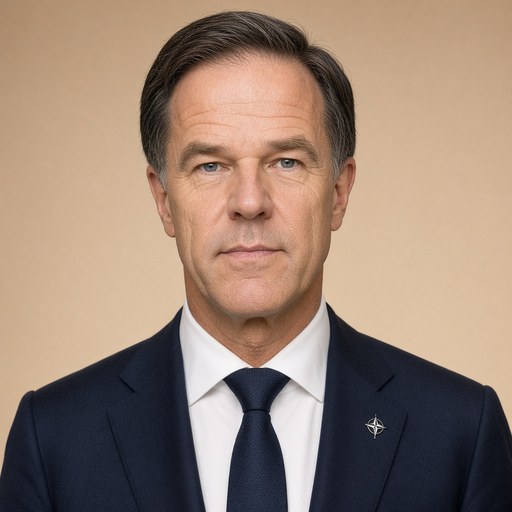
Speech by Prime Minister Mark Rutte at the opening of the exhibition '80 Years of War. The Birth of the Netherlands' at the Rijksmuseum in Amsterdam.
 Mark Rutte · Prime Minister of the Netherlands
- Context
- Rutte addressed guests at the Rijksmuseum in Amsterdam on 10 October 2018 to open the exhibition '80 Years of War. The Birth of the Netherlands'.
- Main themes
- Eighty Years' War, Dutch national history and identity, history and the present day, war and human suffering, propaganda and image formation, religion and civil conflict, cultural heritage and museums, education and youth engagement, the Dutch Revolt, peace and diplomacy, historical artifacts, national memory
- Duration
- ~8 min
- Words
- 1,017
- Sentences
- 58
- Readability
- 59
- Grade
- 9.3
- Syntax
- 2.98
- Vocabulary
- 2.17
Translated from Dutch
The broad sphere of national life a sentence belongs to. Every sentence has an Arena, so it is the denominator the other indices are read against.
Other58 sentences in 28 paragraphs
Ladies and gentlemen,
You often hear it said: history never repeats itself, but it often rhymes with the present.
And it is precisely that thought that underlies this beautiful exhibition that I have the pleasure of opening today. I do so for two reasons with the greatest pleasure.
First, because I studied history myself, of course. And I also graduated under Professor Simon Groenveld, who has studied and described the Eighty Years' War like no other.
By the way, I learned from him that it is better to talk about 'the Dutch Revolt,' but I will set that aside for today. That is more for academically trained historians among themselves.
What I have also learned is that the Eighty Years' War - or actually the whole history - is never one-dimensional. It is, of course, very tempting to interpret the Eighty Years' War as a heroic struggle for freedom against a foreign oppressor, David against Goliath, Asterix against Julius Caesar, with William of Orange as the great hero.
We used to do that, but nowadays we know better. It was also simply about power, about money and property, and about a civil war between Protestants and Catholics, with a large group in between. We didn't necessarily need Philip II and Alva for that.
The second reason why I am happy to be here today has to do with government policy. You may have heard the King say in the Speech from the Throne: 'Heritage and culture show us where we come from, hold up a mirror to us in the present, and are thus of great significance for the future of our country.'
And he also said that it is important for young people to visit museums. So I immediately thought it was a good idea to put words into action and today guide a group of students from the Spinoza Lyceum around the exhibition.
We just had that sneak preview. And what a beautiful exhibition it has become.
The creators have truly succeeded in bringing that rhyming history to life. To subtly connect the past and the present.
Even then, domestic developments had a significant European dimension. Especially when our struggle against Habsburg Spain became part of the Thirty Years' War in Central Europe.
Even then, war and violence led people to leave their homes and flee. And even then, propaganda and image formation - framing, as we would say now - was a very important tool in the struggle.
One of the most beautiful examples is that famous painting by Adriaen van der Venne, The Fishing for Souls. If I am not mistaken, it is in the permanent collection of the Rijksmuseum and is, of course, also on display in this exhibition. It depicts almost like a comic strip, like an allegorical cartoon, the struggle between Catholics and Protestants, with the latter group clearly having the upper hand.
On the Protestant side of the river, the sun shines and nature is in bloom. On the Catholic side, the trees wither and a storm threatens.
A beautiful image, through which you can explain the essence of the conflict 450 years later to anyone. And there are more striking objects to see.
The lead box in which the heart of Count Egmont was kept after his beheading. The shirt in which Hendrik Casimir of Nassau fell in 1640, with bloodstains and all. And of course, the Plakkaat van Verlatinghe from 1581, with which I once impressed President Obama when he visited our country in 2014. Then with the original manuscript, now there is a printed copy from that time.
This is what Huizinga must have meant by the 'historical sensation,' which you feel when you can almost taste, smell, and touch the past. And just to be sure: the last part is not the intention. I mean that touching is, of course, metaphorical.
The Rijksmuseum rightly pointed out in the announcement of this exhibition that the period of the Eighty Years' War has given us many icons of our national history. The Iconoclasm, the Battle of Nieuwpoort in 1600, April 1 and Den Briel, The Turf Ship of Breda, the Relief of Leiden, Piet Hein and the Silver Fleet, Kenau Hasselaar, the Twelve Years' Truce, the Peace of Münster - these are all names and concepts that are firmly embedded in our national memory.
But I think not many people can place them in the correct chronological order or explain the connection between these people and events.
De Volkskrant wrote a few weeks ago that we could certainly use a national 'refresher course.' For that reason alone, this is an important exhibition that should attract many visitors. And I can only applaud the educational setup, including the TV series.
The greatest and most important lesson may well lie in that small but telling painting by Gerard ter Borch, Soldier on Horseback. He created that work in 1634, and resignation and despair drip from it.
This is what war fatigue looks like in a conflict that has dragged on for more than 65 years and in which none of the parties is clearly winning. And that is what war is, even today, not heroism, but human suffering and despair.
By the way, I briefly thought that the soldier in the painting was Sancho Panza, the servant of Don Quixote, the most famous Spaniard in world literature. Apparently, art can also rhyme. Cervantes wrote his masterpiece at the beginning of the 17th century, and a main theme of the book is, of course, the fight against windmills, the hopeless struggle against the inevitable.
And there is also a parallel with the Eighty Years' War: a historical period in which new religious and political relations emerged. A period that has shaped our country and continues to resonate to this day.
In retrospect, we can bring line and logic to it - that is the beauty of history. But at the time, it was a tangle of events and developments that this exhibition beautifully clarifies.
And with that, I declare this exhibition officially opened with all kinds of pleasure.
Thank you.
The original Dutch. The tags above are read on the English translation's sentences.
Dames en heren,
Je hoort het regelmatig zeggen: de geschiedenis herhaalt zich nooit, maar rijmt wel vaak met het heden.
En precies die gedachte ligt ook aan de basis van deze prachtige tentoonstelling die ik vandaag mag openen. Dat doe ik om 2 redenen met het allergrootste genoegen.
Ten 1e, omdat ik zelf geschiedenis heb gestudeerd natuurlijk. En ik ben ook nog afgestudeerd bij professor Simon Groenveld, die de 80-jarige oorlog als geen ander heeft bestudeerd en beschreven.
Van hem heb ik overigens geleerd dat het beter is om over 'de Nederlandse Opstand' te praten, maar dat vergeet ik vandaag maar even. Dat is meer iets voor academisch geschoolde historici onder elkaar.
Wat ik ook heb geleerd is dat het de 80-jarige oorlog - of eigenlijk de hele geschiedenis- nooit eendimensionaal is. Het is natuurlijk heel aantrekkelijk om de 80-jarige oorlog te interpreteren als een heroïsche vrijheidsstrijd tegen een buitenlandse onderdrukker, David tegen Goliath, Asterix tegen Julius Caesar, met Willem van Oranje als grote held.
Dat deden we vroeger, maar tegenwoordig weten we beter. Het ging ook gewoon om macht, om geld en eigendom, en om een burgeroorlog tussen protestanten en katholieken, met een grote groep er tussenin. Daar hadden we Philips de Tweede en Alva niet per se voor nodig.
De 2e reden waarom ik hier vandaag graag ben, heeft te maken met het kabinetsbeleid. U hebt het de Koning misschien in de Troonrede horen zeggen: 'Erfgoed en cultuur laten ons zien waar we vandaan komen, houden ons een spiegel voor in het heden en zijn zo van grote betekenis voor de toekomst van ons land.'
En hij zei ook dat het belangrijk is dat jongeren naar het museum gaan. Ik vond het dus meteen een goed idee om de daad bij het woord te voegen en vandaag een groep leerlingen van het Spinoza Lyceum rond te leiden over de tentoonstelling.
We hebben die
sneak preview
net achter de rug. En wat is het een mooie expositie geworden.
De makers zijn er echt in geslaagd om die rijmende geschiedenis in beeld te brengen. Om verleden en heden heel subtiel met elkaar te verbinden
.
Ook toen al hadden binnenlandse ontwikkelingen een grote Europese dimensie. Zeker toen onze strijd tegen het Habsburgse Spanje onderdeel werd van de 30-jarige oorlog in Midden Europa.
Ook toen leidden oorlog en geweld ertoe dat mensen huis en haard achter zich lieten en op de vlucht sloegen. En ook toen was propaganda en beeldvorming -
framing
zouden we nu zeggen - een heel belangrijk middel in de strijd.
1 van de mooiste voorbeelden is dat beroemde schilderij van Adriaen van der Venne, De zielenvisserij. Als ik me niet vergis zit het in de vaste tentoonstelling van het Rijksmuseum en het is uiteraard ook te zien op deze tentoonstelling. Het verbeeldt bijna als een stripverhaal, als een allegorische cartoon, de strijd tussen katholieken en protestanten, waarbij de laatste groep duidelijk aan de winnende hand is.
Aan de protestantse kant van de rivier schijnt de zon en staat de natuur in bloei. Aan de katholieke kant verdorren de bomen en dreigt onweer.
Een prachtig beeld, aan de hand waarvan je de kern van het conflict 450 jaar later aan iedereen uit kunt leggen. En zo zijn er meer aansprekende objecten te zien.
De loden doos waarin het hart van de graaf Van Egmont na zijn onthoofding werd bewaard. Het hemd waarin Hendrik Casimir van Nassau sneuvelde in 1640, met bloedvlekken en al. En natuurlijk het Plakkaat van Verlatinghe uit 1581, waarmee ik al eens indruk mocht maken op President Obama toen hij in 2014 ons land bezocht. Toen met het originele handschrift, nu ligt er een gedrukt exemplaar uit die tijd.
Dit is wat Huizinga bedoeld moet hebben met de 'de historische sensatie', die je voelt wanneer je het verleden bijna kunt proeven, ruiken en aan kunt raken. En voor alle zekerheid: dat laatste is niet de bedoeling. Ik bedoel dat aanraken natuurlijk overdrachtelijk.
Terecht wees het Rijksmuseum er in de aankondiging van deze tentoonstelling al op dat de periode van de 80-jarige oorlog ons veel iconen van onze vaderlandse geschiedenis heeft opgeleverd. De Beeldenstorm, 1600 Slag bij Nieuwpoort, 1 april en Den Briel, Het turfschip van Breda, Leidens ontzet, Piet Hein en de Zilvervloot, Kenau Hasselaar, het Twaalfjarig Bestand, de Vrede van Münster - het zijn allemaal namen en begrippen die in ons nationaal geheugen vastgebakken zitten.
Maar ik denk dat niet veel mensen ze in de juiste chronologische volgorde kunnen zetten of het verband tussen deze mensen en gebeurtenissen uit kunnen leggen.
De Volkskrant schreef een paar weken geleden dat we best een nationale 'opfriscursus' konden gebruiken. Alleen daarom al is dit een belangrijke tentoonstelling die veel bezoekers moet trekken. En de educatieve opzet, met onder andere ook de tv-serie, kan ik alleen maar toejuichen.
De grootste en belangrijkste les zit misschien wel in dat kleine maar veelzeggende schilderijtje van Gerard ter Borch, Soldaat te paard. Hij maakte dat werk in 1634 en de berusting en moedeloosheid druipt er van af.
Zo ziet oorlogsmoeheid eruit in een conflict dat zich al meer dan 65 jaar voortsleept en waarin geen van de partijen duidelijk aan het winnen is. En dat is wat oorlog is, ook vandaag nog, geen heroïek, maar menselijk leed en wanhoop.
Ik dacht overigens zelf heel even dat de soldaat op het schilderij Sancho Panza was, de knecht van Don Quichot, de bekendste Spanjaard uit de wereldliteratuur. Kunst kan blijkbaar ook rijmen. Cervantes schreef zijn meesterwerk aan het begin van de 17e eeuw en een hoofdthema uit het boek is natuurlijk het gevecht tegen windmolens, de hopeloze strijd tegen het onvermijdelijke.
En ook daarin zit een parallel met de 80-jarige oorlog: een historische periode waarin nieuwe religieuze en politieke verhoudingen ontstonden. Een periode die ons land heeft gevormd en die tot op de dag van vandaag doorwerkt.
Achteraf gezien kunnen we daarin lijn en logica aanbrengen - dat is het mooie van de geschiedenis. Maar destijds was het een kluwen aan gebeurtenissen en ontwikkelingen die met deze tentoonstelling op een prachtige manier inzichtelijk wordt gemaakt.
En die verklaar ik met alle soorten van genoegen vanaf nu geopend.
Dank u wel.