




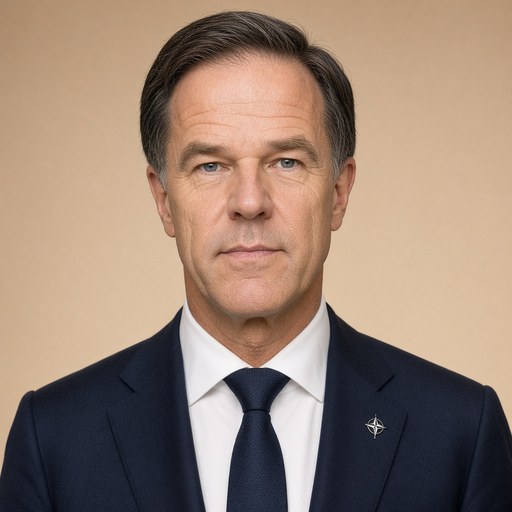
Speech by Prime Minister Mark Rutte at the start of the celebration of 75 years of freedom, Terneuzen.
 Mark Rutte · Prime Minister of the Netherlands
- Context
- Rutte addressed a ceremony in Terneuzen on September 1, 2019, marking the start of celebrations commemorating 75 years of liberation from Nazi occupation.
- Main themes
- 75th anniversary of liberation, freedom and its value, World War II memory, Battle of the Scheldt, Allied sacrifice and gratitude, veterans recognition, Dutch wartime suffering, hunger winter, responsibility to future generations, peace and democracy
- Duration
- ~5 min
- Words
- 626
- Sentences
- 50
- Readability
- 70
- Grade
- 6.6
- Syntax
- 2.52
- Vocabulary
- 2.32
Translated from Dutch
The broad sphere of national life a sentence belongs to. Every sentence has an Arena, so it is the denominator the other indices are read against.
Other50 sentences in 19 paragraphs
I am from after the war. Like most Dutch people by now. For me, for us, freedom is the norm. A given.
But if we take a moment to reflect: how special is it that we live in peace and safety? That you can be yourself, that you are allowed to be different, and that you determine that yourself? How special is it that you are free to express your opinion, that you can demonstrate, and choose your own representatives?
Do we realize enough how special it is to live in a country that has been free from war, tyranny, and coercion for almost 75 years? Perhaps you need to have experienced the horrors of war yourself to understand that.
"We have seen hell," my grandparents wrote when they saw Rotterdam burning after the devastating bombing in 1940. Their stories and those of my parents made a great impression on me as a child.
But by now, war and tyranny have become abstract concepts for most of us. We only come into contact with them through images on the news or stories from refugees.
For the residents of the village of Biervliet, just a few kilometers away, the violence of war was anything but abstract. In 1944, during the Battle of the Scheldt, Biervliet was right in the line of fire. The daughter of the village blacksmith, 22 years old, describes the terrifying scenes in her diary. On October 12, she notes:
"In our polder, hundreds of shells have already fallen. (...) The shelling is now so intense that you can no longer hear each other."
Her entire family, including her 86-year-old grandmother, is hiding in a drainage ditch under a meadow. The neighbor gives birth to a son while four shells explode above their shelter. In her diary, she writes: "Everywhere is burning. It is hell on earth."
Fortunately, thanks to the brave actions of the Allied soldiers, Biervliet is liberated a few days later. The relief is immense, but the villagers are not exuberant. "We had been through too much for that," the young woman writes in her diary.
This poignant story of the village of Biervliet, and the blacksmith's daughter, is also the story of countless other villages and towns in the Netherlands - and of countless other women, men, boys, and girls. It is the story of liberation. A story of hope. Hope to finally be freed from the horrors that the war and occupation brought with them.
But it is also a story of struggle, of hunger, and of exhaustion. The battles to liberate the Netherlands and the long hunger winter claimed thousands of lives of Dutch civilians. And thousands more Allied soldiers fell both inside and outside the Netherlands to free us from the Nazi yoke.
These are great sacrifices that have been made for our freedom. And it is important that we reflect on the fact that the freedom we have now was fought for back then. Or rather: reclaimed. Street by street, village by village, city by city. And for that, we are eternally grateful to our liberators.
To the veterans who come to Terneuzen today, I want to say on behalf of all Dutch people: thank you for giving us back our freedom. Thank you for allowing us to be free today to be who we are. Free to have our own opinions. Free to shape our lives and our country as we wish.
To us, these seem like givens, but on a day like today, we realize how special that actually is. That freedom is something we must cherish, protect, and continue to celebrate. And that we have the responsibility to pass it on to the next generations.
Thank you.
Merci.
Dziękujemy.
Tusen Tak.
Thank you.
The original Dutch. The tags above are read on the English translation's sentences.
Ik ben van na de oorlog. Zoals inmiddels de meeste Nederlanders. Voor mij, voor ons, is vrijheid de norm. Een vanzelfsprekendheid.
Maar als we er even bij stilstaan: hoe bijzonder is het dat we leven in vrede en veiligheid? Dat je jezelf kunt zijn, dat je anders mag zijn, en dat je dat zelf bepaalt? Hoe bijzonder is het dat je vrij bent om je mening te geven, dat je kunt demonstreren, en zelf je vertegenwoordigers kiest?
Beseffen we wel voldoende hoe bijzonder het is om te leven in een land dat al bijna 75 jaar vrij is van oorlog, van tirannie en van dwang? Misschien moet je daarvoor zelf de gruwelen van de oorlog meegemaakt hebben.
'We hebben de hel gezien,' schreven mijn grootouders toen ze Rotterdam zagen branden na het verwoestende bombardement in 1940. Hun verhalen en die van mijn ouders maakten als kind grote indruk op mij.
Maar inmiddels zijn oorlog en tirannie voor de meesten van ons abstracte begrippen geworden. Alleen via beelden op het journaal of door verhalen van vluchtelingen komen we er nog mee in aanraking.
Voor de inwoners van het dorp Biervliet, hier enkele kilometers vandaan, was oorlogsgeweld allesbehalve abstract. In 1944, tijdens de Slag om de Schelde, lag Biervliet midden in de vuurlinie. De dochter van de dorpssmid, 22 jaar oud, beschrijft in haar dagboek de angstaanjagende taferelen. Op 12 oktober noteert ze:
‘In onze polder zijn reeds honderden granaten gevallen. (…) Het granaatvuur is nu zo hevig, dat je elkaar niet meer kunt verstaan.’
Haar hele familie, inclusief haar oma van 86, schuilt in een waterafvoer onder een weiland. De buurvrouw bevalt van een zoon, terwijl er vier granaten boven de schuilplaats ontploffen. In haar dagboek schrijft ze: ‘Overal brandt het. Het is een hel op aarde.’
Gelukkig wordt dankzij het moedige optreden van de geallieerde soldaten ook Biervliet een paar dagen later bevrijd. De opluchting is enorm, maar uitbundig zijn de dorpelingen niet. 'Daar hadden we teveel voor meegemaakt,' schrijft de jonge vrouw in haar dagboek.
Dit aangrijpende verhaal van het dorp Biervliet, en de dochter van de smid, is ook het verhaal van ontelbare andere dorpen en steden in Nederland - en van ontelbare andere vrouwen, mannen, jongens en meisjes. Het is het verhaal van de bevrijding. Een verhaal van hoop. Hoop om eindelijk verlost te worden van de verschrikkingen die de oorlog en de bezetting met zich mee brachten.
Maar ook een verhaal van strijd, van honger en van uitputting. De gevechten om Nederland te bevrijden en de lange hongerwinter eisten duizenden levens van Nederlandse burgers. En nog eens duizenden geallieerde soldaten sneuvelden binnen en buiten Nederland om ons van het nazi-juk te bevrijden.
Het zijn grote offers die gebracht zijn voor onze vrijheid. En het is belangrijk dat we erbij stilstaan dat die vrijheid van nu, toen is bevochten. Of beter gezegd: heroverd. Straat voor straat, dorp voor dorp, stad voor stad. En daarvoor zijn we onze bevrijders eeuwig dankbaar.
Tegen de veteranen die vandaag naar Terneuzen komen, wil ik namens alle Nederlanders zeggen: dank u wel dat u ons onze vrijheid heeft teruggegeven. Dank u wel dat we vandaag vrij zijn om te zijn wie we zijn. Vrij om onze eigen mening te hebben. Vrij om ons leven en ons land in te richten zoals wij dat willen.
Voor ons lijken het vanzelfsprekendheden, maar op een dag als vandaag beseffen we hoe bijzonder dat eigenlijk is. Dat vrijheid iets is wat we moeten koesteren, beschermen en blijven vieren. En dat we de verantwoordelijkheid hebben het door te geven aan de volgende generaties.
Thank you
.
Merci.
Dziękujemy
Tusen Tak
Dank u wel.